

By Bergotte Kraftwerk did not remove human feeling from music. They did something stranger and more difficult: they found the human feeling inside the machine, and made it audible. The four men from Düsseldorf who spent the 1970s building synthesizers in a converted railway building and slowly, methodically, without apology or explanation, inventing the sonicContinue reading “What’s So Special About Kraftwerk”
Author Archives: My World of Interiors
Ask Bee #2

Ask Bee: Must I Keep a Friendship Because It Is Old? On history, loyalty and the moment patience becomes self-abandonment. Dear Bee, Thank you for everything you do and for all your wonderful writing about culture. I am an avid reader of the blog. I have a dilemma. The older I get, the less patienceContinue reading “Ask Bee #2”
The Gadfly and the Hemlock: Who We Are According to Socrates
He wrote nothing. He claimed to know nothing. He taught by pretending not to teach, questioned by pretending not to have answers, and led the most examined life in the history of Western philosophy — and then, when Athens offered him the choice between his life and his vocation, he chose the vocation. He wasContinue reading “The Gadfly and the Hemlock: Who We Are According to Socrates”
THE MOST SECRET MEMORY OF MEN

Author: Mohamed Mbougar SarrTranslated from the French by Lara VergnaudPublisher: Other PressFirst published: 2021English-language edition: 2023Pages: 496Genre: Literary Fiction / Postcolonial FictionOriginal title: La plus secrète mémoire des hommesAwards: Prix Goncourt 2021 The Writer, the Myth and the Literary Machine There are novels about writers, and there are novels that interrogate the entire machinery byContinue reading “THE MOST SECRET MEMORY OF MEN”
The City That Never Resolves

The Passenger is a weekly dispatch on travel — places, hotels, restaurants, the strange logistics of being elsewhere. It is written by Bergotte. Bangkok in November, and why the most complex city in Southeast Asia deserves more than a night before the ferry Bangkok defeats the traveller who arrives with a plan. It is tooContinue reading “The City That Never Resolves”
The Reel Argument: Satyajit Ray
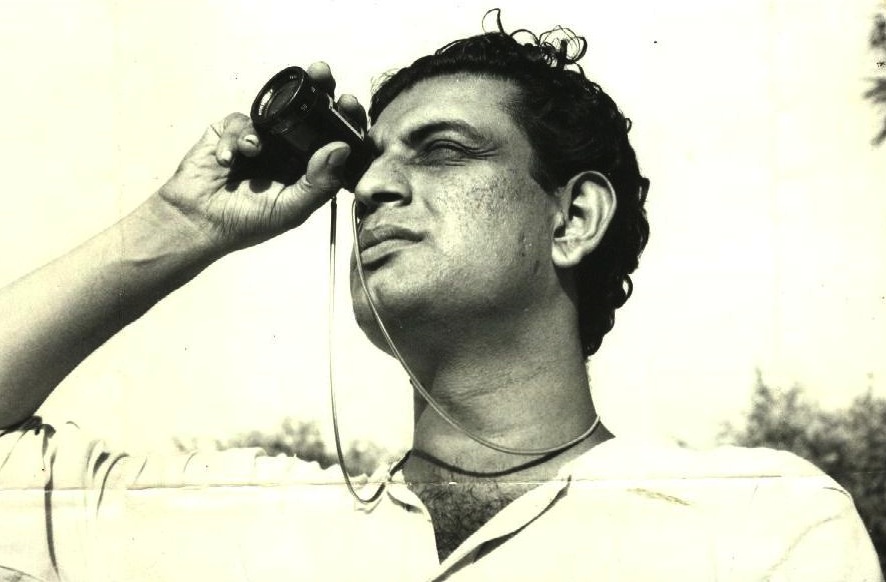
By Bergotte Satyajit Ray made his first film in 1955 with borrowed equipment, a cast of non-professional actors, and enough money for perhaps half the shooting he needed, and what he produced was one of the most complete and devastating works of art that cinema has ever seen. Pather Panchali — Song of the LittleContinue reading “The Reel Argument: Satyajit Ray”
The Human Condition According to F. Scott Fitzgerald
By Bergotte F. Scott Fitzgerald understood enchantment better than any other American writer — understood it not as a pleasant illusion to be gently corrected but as a fundamental feature of human consciousness, the capacity to project onto the world a beauty and a meaning and a promise that the world does not independently possess,Continue reading “The Human Condition According to F. Scott Fitzgerald”
Gil Schafer

Makers & Rooms — Essay VII The House That Remembers You Gil Schafer builds houses that feel as though they have always been there. This is not an accident, a stylistic affectation, or a retreat from the present. It is the result of a very particular theory about what a house is for — andContinue reading “Gil Schafer”
What’s So Special About Fela Kuti

By Bergotte Fela Anikulapo Kuti built a nightclub in Lagos, declared it an independent republic, married twenty-seven women simultaneously, recorded nearly eighty albums, was beaten, imprisoned, and raided by the Nigerian military so many times that he began to treat the violence as material, and in the process created one of the most original andContinue reading “What’s So Special About Fela Kuti”
The Weight of Being Seen

I have never much minded what people think of me. I don’t read a room for approval, and being ignored has never cost me (much) sleep. Which is what makes the last fifteen years interesting to me in a way that has almost nothing to do with vanity: I ran an accidental experiment on howContinue reading “The Weight of Being Seen”

