
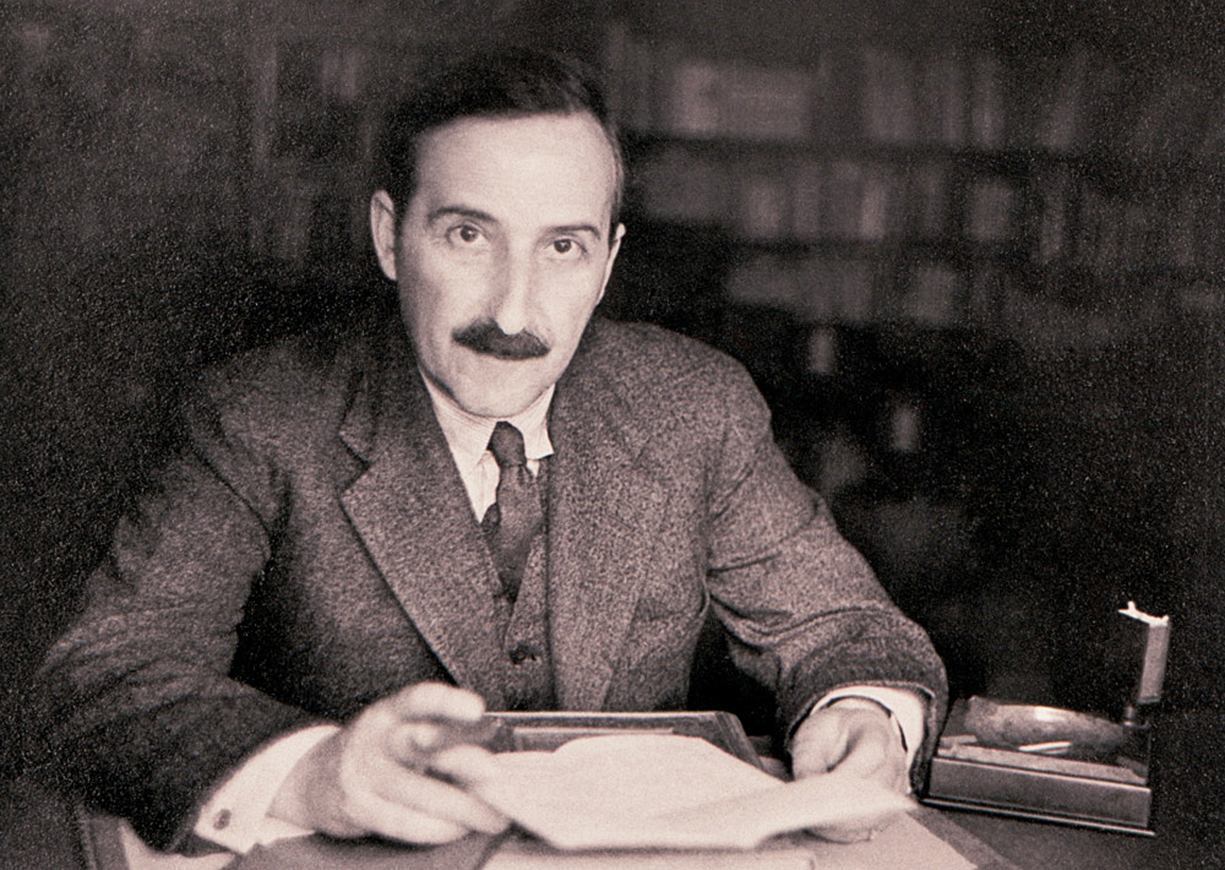
Stefan Zweig remains one of the most haunting figures of twentieth-century literature. A chronicler of human passions, a biographer of geniuses, a novelist of psychological insight, and ultimately an exile undone by history, his life reads like a parable of modernity itself: brilliance shadowed by catastrophe.
Vienna and the Belle Époque
Born in Vienna in 1881 to a prosperous Jewish family, Zweig came of age in a city at its zenith. Fin-de-siècle Vienna was a crucible of culture: Freud revolutionizing psychology, Mahler and Strauss transforming music, Klimt and Schiele reshaping art. Into this world stepped the young Zweig, precocious and insatiably curious.
He studied philosophy and literature, publishing poetry and essays while still in his twenties. Early fame came with his novellas and literary portraits, works that combined narrative elegance with psychological acuity. He belonged to a generation that believed in cosmopolitanism: a Europe united by culture and intellect rather than by borders and blood.
The Writer of Human Passions
Zweig’s prose was marked by clarity and intensity. His novellas—Amok, Letter from an Unknown Woman, Fear—were tightly wound studies of obsession, desire, and moral collapse. He had a gift for dramatizing the moment when passion overwhelms reason, when a single decision changes destiny.
Equally significant were his biographies. His portraits of Erasmus, Marie Antoinette, Magellan, and Balzac were not dry chronicles but vivid recreations, written in the style of novels. To Zweig, biography was a way of reanimating history, making figures of the past resonate with the crises of the present.
By the 1920s and early 1930s, he was one of the most widely read authors in the world. His books sold in dozens of languages; his plays were staged across Europe; his essays appeared in leading journals. He was, in many ways, Europe’s literary ambassador.
Exile and Disillusionment
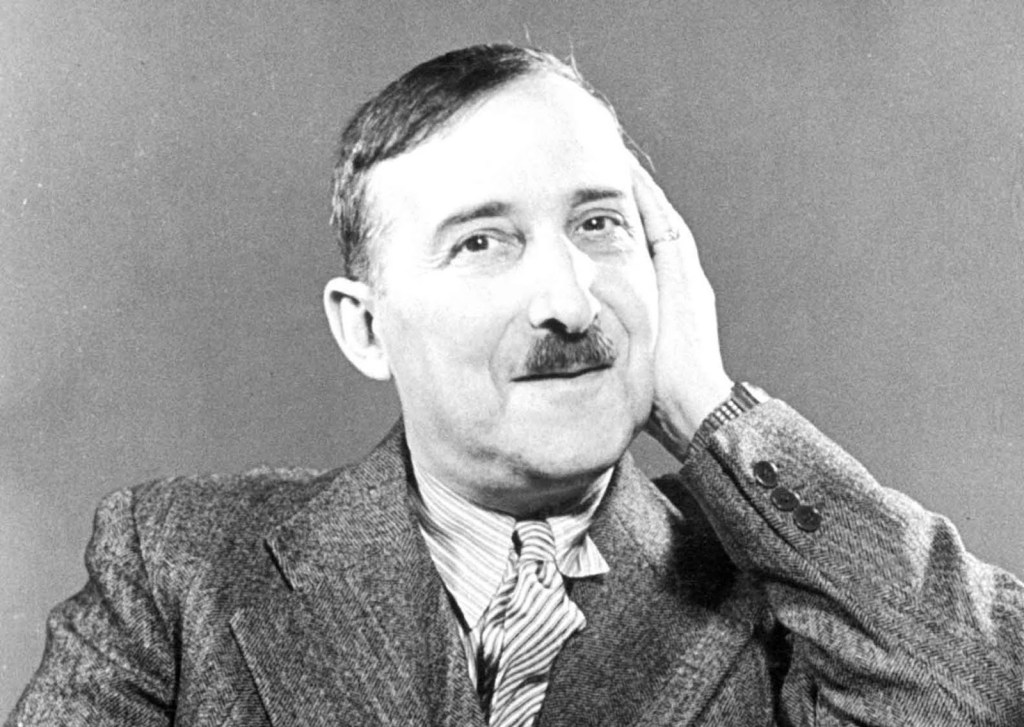
But the Europe Zweig celebrated was collapsing. The rise of fascism and virulent anti-Semitism in the 1930s destroyed the cultural world he cherished. Though assimilated and apolitical by instinct, his Jewish heritage placed him directly in danger. In 1934, after the Austrian civil war, he left Salzburg and began a life of exile.
He moved between London, Bath, and New York, eventually settling in Brazil. Though he continued to write—completing his great memoir The World of Yesterday—he felt increasingly alienated. For Zweig, the cosmopolitan dream had died; the Europe of shared culture and mutual understanding was extinguished by nationalism and barbarism.
The World of Yesterday
Published posthumously in 1942, The World of Yesterday remains his masterpiece. Part memoir, part elegy, it is one of the most evocative accounts of pre-war Europe ever written. With lyrical precision, Zweig describes the Vienna of his youth, the optimism of the Belle Époque, the devastation of World War I, and the rise of totalitarianism.
It is not just autobiography but cultural history, a testament to what was lost. In its pages, readers glimpse the ideals of tolerance, cosmopolitanism, and humanism that once seemed possible—and the devastation wrought when those ideals were betrayed.
Death in Petrópolis
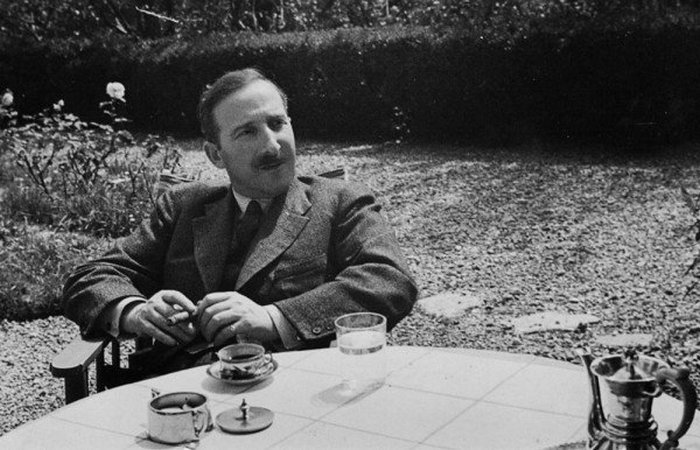
On February 22, 1942, Zweig and his second wife, Lotte, were found dead in Petrópolis, Brazil, in a double suicide. He was sixty. In his farewell letter, Zweig explained that he felt the cultural world to which he belonged had ended, and though he admired Brazil as a hospitable land, he could not begin anew.
His death symbolized the despair of exile, the grief of intellectuals uprooted by war. Yet it also crystallized his legacy: as a writer whose life embodied both the heights of European culture and the depths of its collapse.
Legacy and Rediscovery
For decades after his death, Zweig’s reputation waned. Critics dismissed his work as elegant but lightweight, overshadowed by the modernist experiments of Kafka, Musil, and Joyce. Yet in the twenty-first century, his work has been rediscovered, embraced by readers drawn to his psychological intensity and his vision of a vanished world.
The World of Yesterday is now regarded as one of the essential memoirs of the twentieth century. His novellas continue to be adapted for film and stage. And in an age once again threatened by nationalism and fragmentation, his cosmopolitan ideal resonates with renewed urgency.
The Last Humanist
Stefan Zweig’s life was a testament to both the promise and the peril of modern Europe. He believed that art could transcend borders, that culture could unify across difference, that human passions were universal. His despair at the collapse of that dream was tragic, but his works endure as reminders of what is possible—and what is at stake when civilization betrays its ideals.
Zweig remains the last cosmopolitan of a lost Europe: a voice of refinement, of empathy, of humanism. To read him today is not only to encounter great literature but also to glimpse the fragile beauty of the world he mourned, a world that still haunts us with its absence.
Suggested Reading & Viewing
- The World of Yesterday (1942) – Zweig’s great memoir, an elegy for pre-war Europe.
http://www.penguinrandomhouse.com - Letter from an Unknown Woman (1922) – Novella of obsession and anonymity.
http://www.goodreads.com - Amok (1922) – Psychological novella exploring desire and madness.
http://www.goodreads.com - Fear (1920) – Novella of adultery, blackmail, and paranoia.
http://www.goodreads.com - Marie Antoinette: The Portrait of an Average Woman (1932) – A biography blending empathy and tragedy.
http://www.penguinrandomhouse.com - Film: Letter from an Unknown Woman (1948, dir. Max Ophüls) – Classic Hollywood adaptation of Zweig’s novella.
www.imdb.com - Film: Stefan Zweig: Farewell to Europe (2016, dir. Maria Schrader) – A cinematic portrait of his years in exile.
www.imdb.com
Discover more from My World of Interiors
Subscribe to get the latest posts sent to your email.

