
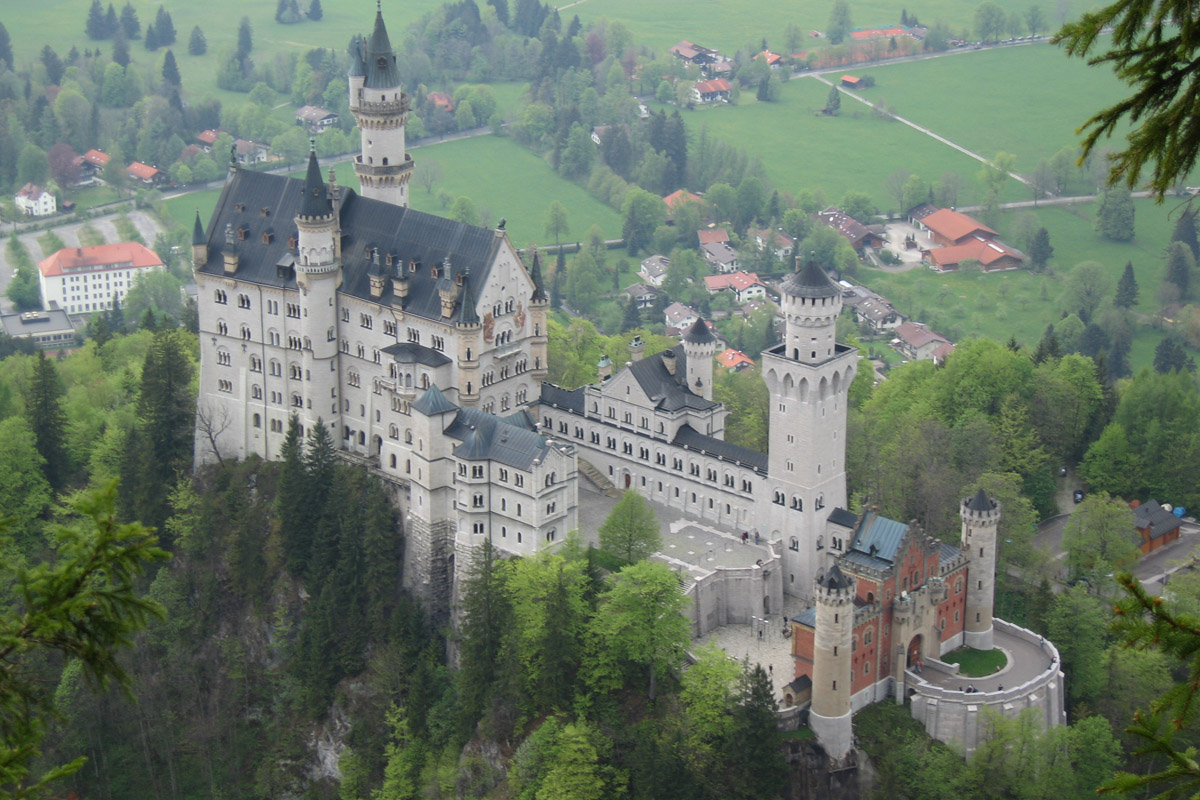
King Ludwig II of Bavaria, often called the “Mad King,” remains one of Europe’s most enigmatic rulers. His legacy is not in conquests or laws but in architecture, above all in the soaring towers and mist-wreathed turrets of Neuschwanstein Castle — the embodiment of his inner world, a monument to imagination over politics.
The Swan King
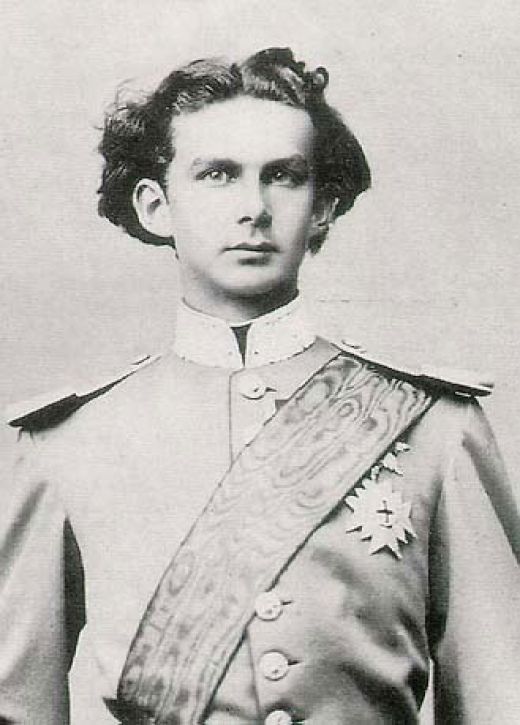
Born in 1845 into the royal house of Wittelsbach, Ludwig ascended the Bavarian throne at the age of eighteen. Handsome, solitary, and deeply romantic, he was shaped less by courtly intrigues than by the operas of Richard Wagner and the myths of medieval chivalry. From the beginning, he seemed unsuited to the pragmatic demands of monarchy.
Bavaria in the mid-nineteenth century was struggling to retain sovereignty within the rising German Empire. Yet Ludwig’s attention turned not to diplomacy but to art, music, and the staging of an idealized medieval past. His reign was marked by extravagance: patronage of Wagner, commissions of opulent palaces, and a growing retreat into fantasy.
A Castle of Dreams
The most famous of Ludwig’s projects, Neuschwanstein Castle, began construction in 1869 on a rugged hill above Hohenschwangau, his childhood home. Designed in a romanticized Romanesque style by Christian Jank (a theater set designer rather than an architect by training), Neuschwanstein was conceived less as a fortress than as a stage — a theater of myth.
Every element reflected Ludwig’s obsessions. Murals depicted scenes from Wagner’s operas: Parsifal, Tannhäuser, Lohengrin. The throne room, with its Byzantine-inspired mosaics, was intended to house a golden throne — though it was never completed. Balconies opened to sweeping Alpine vistas, transforming nature itself into a backdrop.
Though often described as a “fairy-tale castle,” Neuschwanstein was also deeply personal: a retreat where Ludwig could escape into the medieval world of swan knights and Grail legends that filled his imagination.
Madness or Vision?
By the 1880s, Ludwig’s spending had spiraled. He poured vast sums into Neuschwanstein, as well as other projects like Linderhof and Herrenchiemsee — each blending historical reference, theatricality, and fantasy. Ministers grew alarmed. In 1886, he was declared mentally unfit to rule, in a deposition orchestrated without medical examination. Days later, under mysterious circumstances, Ludwig was found drowned in Lake Starnberg alongside his physician. He was forty years old.
Was Ludwig truly mad? Contemporary psychiatrists question the diagnosis, suggesting instead that he suffered from depression, reclusiveness, or simply from being out of step with the brutal pragmatism of his age. What is certain is that his creative vision — derided as delusion in his lifetime — became Bavaria’s most enduring legacy.
Neuschwanstein’s Afterlife
Ironically, Ludwig never saw Neuschwanstein completed. Construction continued for years after his death, and many planned features were abandoned. Yet the castle quickly captured the imagination of the world. Opened to the public within weeks of his passing, it drew millions of visitors, becoming Bavaria’s premier tourist attraction.
In the twentieth century, Neuschwanstein entered global popular culture. Walt Disney, inspired by its turrets and silhouette, modeled his Sleeping Beauty Castle on it, cementing its place as the archetypal fairy-tale palace. To this day, its image adorns postcards, films, and even the logo of the Disney empire.
The Legacy of the Dreamer King
Ludwig II’s reign was brief and troubled, but his castles endure as monuments to art’s triumph over politics. They represent a vision of monarchy not as governance but as patronage, imagination, and spectacle. If he was a failed king, he was a successful dreamer, leaving behind structures that still shape the world’s idea of romance.
Neuschwanstein is more than stone and spire. It is a monument to yearning: for beauty, for escape, for a world that never truly existed. In its halls, murals, and mountain views, one senses the paradox of Ludwig’s life — a man destroyed by his fantasies, yet immortalized by them.
Visiting Neuschwanstein Today
For travelers, Neuschwanstein remains one of Europe’s most visited sites. Situated near Füssen in southern Bavaria, it overlooks the Alpsee and Hohenschwangau Castle. Visitors can tour interiors like the Throne Room, Singer’s Hall, and Ludwig’s private chambers, though many unfinished sections remain closed. The surrounding trails — notably the Marienbrücke (Mary’s Bridge) — offer breathtaking views of the castle against its Alpine backdrop.
Official visitor information:
http://www.neuschwanstein.de
Nearby, Ludwig’s other palaces — Linderhof Palace http://www.linderhof.de and Herrenchiemsee Palace http://www.herren-chiemsee.de — complete the triad of his imaginative kingdom.
The Eternal Swan
History remembers Ludwig II as eccentric, tragic, perhaps mad. But it also remembers him as the patron of Wagner, the creator of castles without equal, and the embodiment of a romanticism that refused to bow to modernity. His vision lives on in stone, in music, and in myth.
Neuschwanstein, perched between earth and sky, remains his eternal swan song: a dream made visible, a reminder that even in failure, imagination can outlast empire.
Discover more from My World of Interiors
Subscribe to get the latest posts sent to your email.
 My World of Interiors