
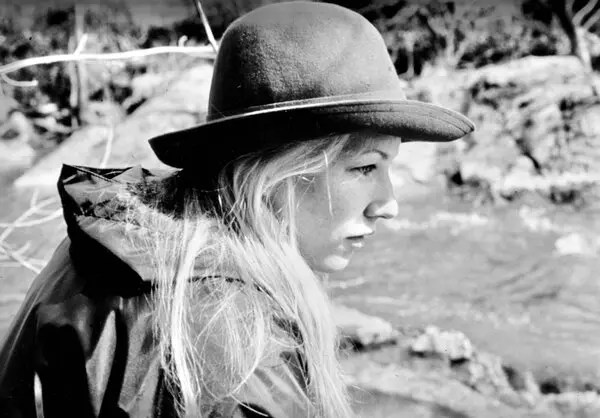
The Pulitzer Prize-winning author of Pilgrim at Tinker Creek, whose ecstatic, exacting prose transformed the observation of nature into an inquiry into consciousness, faith and existence, has died aged 81.
Annie Dillard, one of the most singular voices in postwar American literature, died on 15 September 2026 at her home in South Wellfleet, Massachusetts. She was 81. Her death, from natural causes, was confirmed by her representatives. Dillard had spent much of her later life away from the literary circuit that had made her famous while still in her twenties, preferring reading, painting and solitude to public appearances.
To call Dillard a nature writer is both accurate and strangely inadequate. Nature supplied much of her material: creeks, mountains, insects, birds, trees, weather, the violence of predation and the accidental magnificence of light. But her real subject was consciousness itself, and the almost unbearable fact that we have been placed inside a physical world whose beauty and cruelty refuse to explain one another. Dillard looked at nature not for reassurance but for evidence. What kind of universe was this? What, if anything, was behind it? Why should beauty exist beside suffering? What did it mean that human beings could perceive either?
Those questions found their most famous expression in Pilgrim at Tinker Creek, published in 1974 when Dillard was twenty-eight. Written around the landscape surrounding Tinker Creek near Roanoke, Virginia, the book follows the movement of a year through fields, woods and water, but its true landscape is metaphysical. Dillard watches muskrats and insects, studies light on water, reads biology and theology, and confronts the violence built into natural processes. The book won the 1975 Pulitzer Prize for General Nonfiction and immediately established her as an important American writer. Comparisons with Henry David Thoreau were inevitable, though they sometimes concealed how peculiar and modern Dillard’s sensibility actually was.
Thoreau went to Walden partly to discover how deliberately a person might live. Dillard’s pilgrimage was less orderly. She was looking for moments when the familiar world suddenly ceased to appear familiar at all. Her great gift was to make perception unstable: a frog collapsing under the attack of a giant water bug, a tree apparently transformed by light, the microscopic machinery of reproduction, the extravagance with which living things are created only to disappear. In Dillard’s prose, wonder was never sentimental. Creation was beautiful, but it was also wasteful, violent and indifferent.
This distinction matters because Dillard was often described as a celebrant of nature when she was something considerably more difficult. She understood awe in its older sense, as something containing terror. The natural world was not a therapeutic landscape arranged for human contemplation. It teemed, killed, reproduced and decayed without reference to us. Her writing repeatedly asked whether religious feeling remained possible after one had looked properly at the evidence.
That tension — between rapture and horror, belief and doubt — continued through Holy the Firm in 1977 and Teaching a Stone to Talk in 1982. The latter contains some of Dillard’s finest essays, including meditations on silence, wilderness, an eclipse and the human desire to make the universe answer us. She was fascinated by theology without becoming a conventional religious writer; indeed, her spiritual imagination was compelling precisely because certainty interested her less than the struggle to perceive something beyond certainty. Her official curriculum vitae listed her religion simply as “None.”
Dillard had been born Meta Ann Doak in Pittsburgh on 30 April 1945, the eldest of three daughters in an affluent, intellectually curious family. Her childhood later became the subject of An American Childhood (1987), a memoir remarkable for its reconstruction of the moment when a child gradually becomes conscious of possessing a mind. Rather than treating childhood principally as a storehouse of psychological wounds, Dillard wrote about awakening: the discovery of geography, books, jokes, adults, danger, language and the startling realization that the world existed independently of oneself.
She attended Hollins College in Virginia, graduating in English in 1967 and completing a master’s degree the following year. Her academic interest in Thoreau preceded the comparisons that later followed her own work. She married her teacher, the poet R. H. W. Dillard, while still a student, and continued reading voraciously while living near Roanoke. Her first book, the poetry collection Tickets for a Prayer Wheel, appeared in 1974 shortly before Pilgrim at Tinker Creek.
The sudden success of Pilgrim might easily have imprisoned her inside its reputation. Instead, Dillard kept changing form. She wrote literary criticism in Living by Fiction; reported on cultural exchange in Encounters with Chinese Writers; produced the memoir An American Childhood; and wrote about artistic practice in The Writing Life, published in 1989. Her first novel, The Living, appeared in 1992, an ambitious historical narrative set among settlers in the Pacific Northwest. For the Time Being followed in 1999, assembling theology, history, suffering, science and coincidence into one of her most formally unusual works. Her second novel, The Maytrees, published in 2007, turned to love, marriage and forgiveness within the Cape Cod artistic community. A selected volume of essays, The Abundance, appeared in 2016.
Among writers, however, The Writing Life acquired an influence almost separate from the rest of her career. Dillard refused the comforting mythology of inspiration. Writing, in her account, was strenuous, solitary and frequently absurd. Her advice was characteristically uncompromising: use what is best now rather than saving it for some imagined future masterpiece. “Give it, give it all, give it now,” she wrote. The sentence captures something larger about her aesthetic. Dillard disliked artistic thrift. A writer should risk abundance.
She also taught generations of younger writers. After academic appointments in Washington state, Dillard joined Wesleyan University, where she taught for more than two decades before retiring as professor emerita in 2002. Her influence therefore travelled not only through her books but through classrooms, where her conception of prose — compressed, structural, rhythmically exact and intellectually ambitious — helped shape writers who understood literary nonfiction as something capable of the density normally demanded of poetry.
Dillard’s private life intersected curiously with the American transcendentalist tradition that had shadowed her literary reputation. After two marriages ended in divorce, she married Robert D. Richardson in 1988. Richardson was the distinguished biographer of Thoreau, Emerson and William James. He died in 2020. Dillard is survived by her child, the poet Cody-Rose Clevidence, as well as stepchildren and her two sisters.
Her withdrawal from literary publicity in later years was consistent with a temperament suspicious of the machinery surrounding authorship. She had never been particularly interested in performing the role of celebrated writer. On her own website she eventually announced that she could no longer travel, meet strangers or answer correspondence because she needed “to read and concentrate.” It is difficult to imagine a more characteristic retirement. The attention that contemporary culture increasingly directs towards the personality of the writer was, for Dillard, better directed towards the work.
In 2015 President Barack Obama presented Dillard with the 2014 National Humanities Medal, whose citation praised her profound reflections on human life and nature and her ability to confront readers with the “stark beauty of creation.” It was an appropriate public recognition for a writer who had spent much of her career examining precisely that adjective: stark. Dillard never prettified existence. The glory of the world mattered because its brutality was equally real.
Her importance also lies in what she made possible for literary nonfiction. Dillard demonstrated that an essay could contain natural history, philosophy, autobiography, theology and scientific observation without becoming reducible to any one of them. She treated nonfiction not as a lesser sibling of the novel but as an arena for formal experiment and intellectual ambition. Her sentences could move between microscopic specificity and cosmic scale within a few lines. She could begin with an insect and end with the problem of God.
There was something almost unfashionable about the seriousness of that ambition. Dillard was not afraid of the largest subjects: creation, death, suffering, time, eternity. She did not disguise them with irony. Yet neither did she treat solemnity as proof of wisdom. Her prose could be funny, abrupt and wonderfully strange. She collected odd facts with the appetite of a child, then used them as trapdoors into metaphysics. What distinguished her was not merely observation but the velocity with which observation became thought.
That may be why Pilgrim at Tinker Creek has endured when many books associated with the environmental consciousness of the 1970s have become documents of their moment. Its deepest question is not environmental but existential. What happens when we actually look at the world? Not glance at it, photograph it or admire it, but submit ourselves to sustained attention? Dillard understood that genuine observation has consequences. The world becomes more beautiful, certainly, but it also becomes less consoling.
At a cultural moment increasingly organised around distraction, Annie Dillard’s work now feels almost radical in its insistence that attention is an ethical and intellectual act. She spent a lifetime looking harder: at water, insects, childhood, pain, books, landscapes, language and the possibility that something might lie beyond what could be seen. She did not promise that attention would make the world comprehensible. She suggested something more demanding — that the mystery itself deserved our full concentration.
The death of Annie Dillard therefore removes not simply a major American essayist but one of literature’s great practitioners of attention. Her books asked readers to notice how extraordinary it was that anything existed at all, and then refused to let that astonishment harden into easy consolation. The creek remained a creek; the frog still died; the light nevertheless fell across the tree.
For Dillard, those facts belonged to the same world. Her achievement was to teach us how difficult, frightening and magnificent it could be to look at all of them at once.
Sources / Read More
Associated Press, “Annie Dillard, Pulitzer-winning author of ‘Pilgrim at Tinker Creek,’ dies at 81.”
The Washington Post, “Annie Dillard, Pulitzer-winning author of ‘Pilgrim at Tinker Creek,’ dies at 81.”
National Endowment for the Humanities, Annie Dillard — National Humanities Medal.
Annie Dillard Official Website, bibliography and curriculum vitae.
Discover more from My World of Interiors
Subscribe to get the latest posts sent to your email.

