By Bergotte
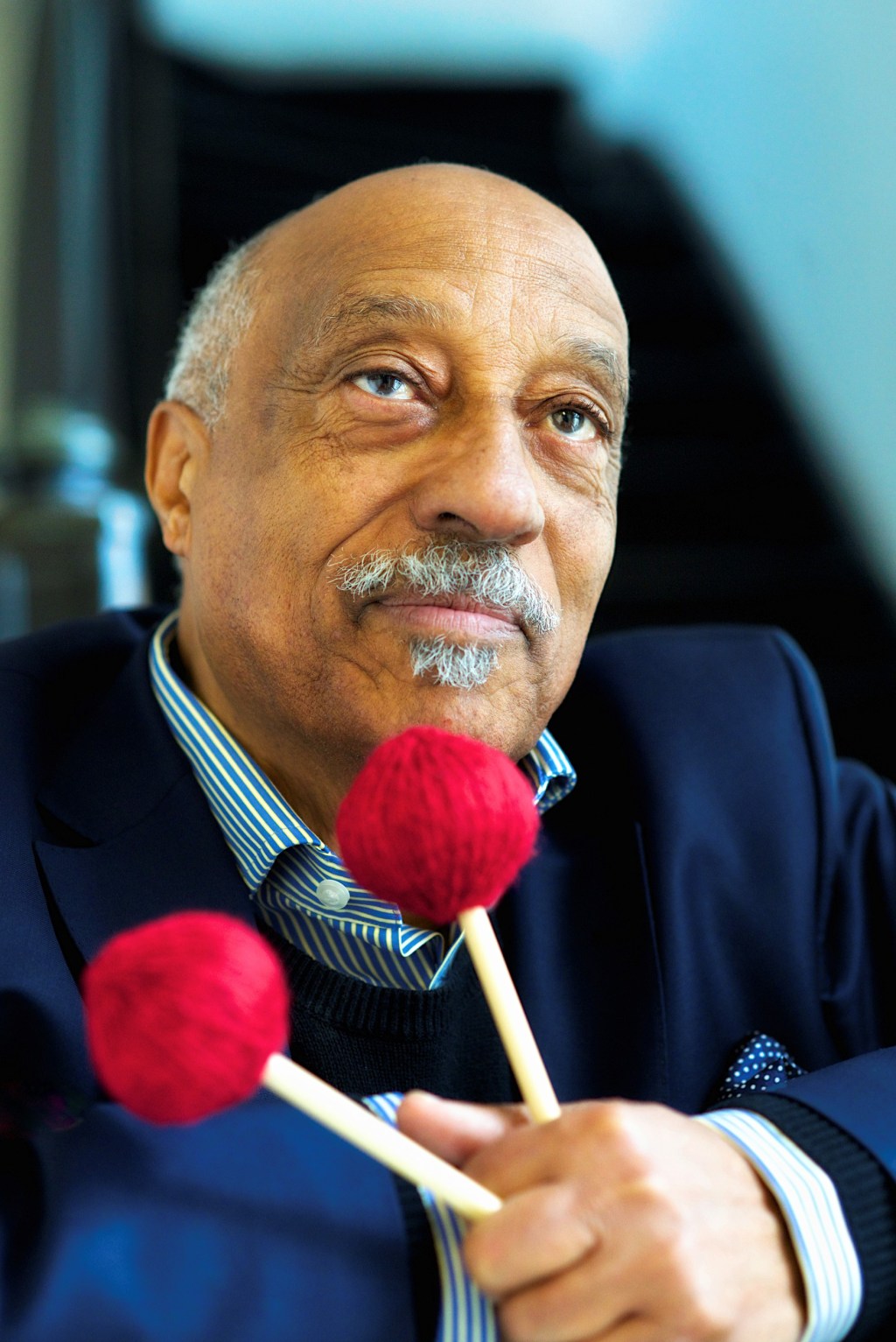
Mulatu Astatke went to music school in London, studied jazz in Boston, played vibraphone in New York, and then went home to Ethiopia and made something that had never existed before. He took the pentatonic scales and ancient modal structures of Ethiopian music — a tradition reaching back centuries, untouched by the Western harmonic system that had colonised the ears of most of the world — and folded into them the harmonic language of 1950s American jazz, the rhythmic vocabulary of Latin music, and his own spacious, unhurried intelligence. The result was Ethiojazz: a music that sounds like neither of its parents and better than both, a music that seems to arrive from some parallel timeline in which modernity never required a culture to choose between what it was and what it was becoming. To hear it for the first time is to understand, with sudden force, how much has been lost every time a musical tradition was asked to make that choice.
The country that was never colonised
To understand Mulatu Astatke it is necessary to understand Ethiopia, and to understand Ethiopia it is necessary to begin with one fact that sets it apart from almost every other African nation: it was never colonised. There was an Italian occupation between 1936 and 1941, brutal and short, ended by combined Ethiopian and British forces, and there were earlier and later episodes of European interference and pressure. But Ethiopia entered the twentieth century with its sovereignty intact, its ancient institutions — the Orthodox Church, the imperial court, the centuries-old urban culture of Addis Ababa — unbroken by the administrative violence that restructured every other corner of the continent.
This matters for the music. Colonisation does not only take land and labour. It takes ears. It imposes a hierarchy of sound in which the coloniser’s musical tradition is the standard against which all others are measured and found primitive, or charming, or suitable for export but not for serious development. Ethiopia escaped this imposition. Its musical tradition — built on a pentatonic scale system called kiñit, on modes that do not correspond to the Western major and minor system, on rhythmic structures that move differently from the Western grid — developed on its own terms, in its own time, without being required to justify itself by European standards.
The result, by the mid-twentieth century, was a musical culture of great sophistication and great strangeness to Western ears: the golden age of Ethiopian popular music in the 1950s, 60s and 70s, centred on Addis Ababa, produced a body of recordings — the famous Éthiopiques series, compiled from the archives of state radio decades later, is the most accessible entry point — that sounds unlike anything else on earth. The melodies move in ways that Western-trained ears find simultaneously familiar and wrong, resolving onto notes that feel displaced, circling harmonies that hover without quite landing. The rhythms lock in a groove and then shift inside it with a looseness that is not sloppiness but a different relationship to where the beat lives. It is music that has absorbed the twentieth century — the saxophones and electric guitars are all there — without being remade by it.
Into this world, in 1943, Mulatu Astatke was born.
The education of an ear
He was the son of a merchant family in Jimma, in the south-west of Ethiopia, and he showed musical aptitude early enough that his family arranged for him to be sent abroad for formal training. He went first to London, to the Trinity College of Music, in the late 1950s — a young Ethiopian student in post-war Britain, learning to read and write Western music theory, absorbing the classical tradition with the same thoroughness with which he had absorbed his own. Then to Boston, to the Berklee College of Music, where he encountered jazz at the moment of one of its most fertile periods — the late 1950s and early 1960s, when Miles Davis was making Kind of Blue and John Coltrane was taking the modal experiments Davis had pioneered and pushing them toward the spiritual intensity of A Love Supreme. Modal jazz — jazz built not on the rapid chord changes of bebop but on sustained modes, scales held and explored — was the sound of that moment.
The encounter was not accidental in the way that formative encounters sometimes are. It was structural. Modal jazz and Ethiopian music shared a fundamental orientation: both were built on modes rather than on the Western harmonic progression of tension and resolution, dominant and tonic, that drives most European classical music and most American popular music. When Mulatu heard Miles Davis playing in a modal framework, he was not hearing something alien. He was hearing a distant cousin — a music that moved through tonal space with a similar kind of lateral, exploratory freedom, that was interested in sustaining a feeling rather than driving toward a cadence.
He moved to New York, where he played vibraphone and percussion in Latin bands and jazz ensembles, absorbing the rhythmic language of Afro-Cuban music alongside the harmonic language he had already been learning. Latin music and Ethiopian music also shared structural characteristics — the polyrhythmic complexity, the sense of multiple rhythmic streams running simultaneously and creating something larger than any single line. He was assembling, piece by piece, the vocabulary he would need. He did not yet know what he was going to say with it.
Then he went home.
Addis Ababa, early 1960s
The Addis Ababa that Mulatu returned to in the early 1960s was, by any measure, an extraordinary musical city. Emperor Haile Selassie, whatever his political failures — and they were vast, culminating in the catastrophic famine he denied and the revolution that deposed him — was a genuine patron of the arts who had established schools and orchestras and venues that gave Ethiopian musicians the infrastructure to develop their tradition into something modern without surrendering its essential character. The city had jazz clubs, ballrooms, a thriving recording industry organised around the state radio station, and a generation of extraordinary instrumentalists and singers who were navigating the same questions Mulatu had been navigating abroad: how do you be modern? How do you absorb the twentieth century without losing what makes you yourself?
His answer, when it came, was characteristically oblique. Rather than writing songs in the Ethiopian popular idiom and adding jazz elements as decoration, he worked the other way around: he started from the jazz and Latin vocabulary he had absorbed and found within it the spaces where Ethiopian modal thinking could live. He wrote compositions in which the underlying scale and the melodic logic were purely Ethiopian, but the instrumentation, the rhythmic vocabulary, and the harmonic approach came from jazz and Latin music. The vibraphone became his signature instrument — an unusual choice, neither quite jazz nor quite anything else, with a sustain and a shimmer that suited the hovering, unresolved quality of the Ethiopian modal system. He built arrangements around it that gave the music room to breathe, space to sit in a feeling without rushing to move on.
The recordings he made in Addis Ababa in the mid-1960s and early 1970s, many of them for the state radio archive and not widely distributed until decades later, are the foundation of Ethiojazz. They are also, it must be said immediately, among the most beautiful recordings made anywhere in the world in that period.
What Ethiojazz actually sounds like
It is possible to describe Mulatu Astatke’s music analytically — the pentatonic modes, the clave-influenced rhythmic patterns, the vibraphone voicings — and entirely fail to convey what it actually does to a listener. Let me try a different approach.
There is a quality in this music that can only be called spaciousness. Not emptiness — the arrangements are detailed, the performances precise — but a sense that the music is happening inside a very large room, a room with enough air in it that every note can be heard separately and the silence between notes is as meaningful as the notes themselves. This is partly a function of the modal structure, which does not create the forward momentum of Western harmonic progression — there is no dominant chord pushing relentlessly toward the tonic, no built-in engine driving the music from tension to release. Instead there is a kind of lateral movement, a dwelling in a tonal region, an exploration of what a scale contains rather than a narrative about where it is going.
“Yekermo Sew” — perhaps his most celebrated composition, the piece through which most international listeners first encounter him — opens with a vibraphone melody of such deliberate, unhurried grace that it seems to be thinking rather than playing. The melody does not announce itself. It arrives, explores the space, pauses, considers. The bass and drums underneath it establish a groove that locks in without being insistent — it is present but not dominant, a foundation rather than a driver. The horn enters and takes the melody somewhere adjacent, not contradicting the vibraphone but offering a commentary on it. The whole thing lasts about four minutes and in those four minutes it covers less harmonic ground than most jazz standards cover in their first eight bars, and yet it feels more complete, more internally sufficient, more fully arrived at its destination than almost anything you can name.
This is what the modal system gives the music: the permission to stay. Western harmonic music is fundamentally directional — it is going somewhere, it has a journey to make, and the listener is aware throughout of the distance still to travel. Mulatu’s music simply is. It occupies its space with total confidence, without apology, without any anxiety about whether it is being dynamic enough or moving fast enough or giving the listener enough variety to hold their attention. It trusts the listener to be present with it.
Learning to be present with it is not difficult. It requires only the willingness to stop expecting the next thing and start hearing the thing that is there.
The Derg and the long silence
In 1974, the imperial government of Haile Selassie was overthrown by a military junta known as the Derg, led eventually by Colonel Mengistu Haile Mariam, whose regime was one of the most brutally repressive in twentieth-century African history. The cultural flowering of the imperial period was among its casualties. Musicians were persecuted, restricted, driven into exile. The extraordinary generation of Addis Ababa musicians who had produced the recordings now collected in the Éthiopiques series was scattered or silenced. The music stopped.
Mulatu spent much of this period outside Ethiopia. He had always moved between Addis Ababa and the wider world — teaching, recording, collaborating — but the Derg years enforced a longer absence. He continued to work, continued to develop his musical thinking, but the recordings were fewer and the audience, always small, became smaller still. For much of the 1970s and 1980s he was known, if he was known at all in the West, only to specialists in African music and to an underground of jazz musicians who had encountered the Addis Ababa recordings through the networks of serious collectors.
This is the period that any honest account of his career must reckon with, because it is the period that almost erased him — not through violence directed at him specifically, but through the general catastrophe that descended on Ethiopian culture, and through the simple fact that a musician working in a tradition with no commercial infrastructure and no international distribution in a country under military dictatorship was, by definition, working for an audience that could not yet exist.
He kept working anyway. This requires a quality of faith in the work itself — in its value independent of its reception — that is not common and not easy, and it is perhaps the most important thing to understand about Mulatu Astatke as an artist. He was not making music for a market or for a movement. He was making music because the music needed to be made, because the synthesis he had discovered was real and true and worth pursuing regardless of who was listening. The Drake parallel is not precise, but there is something similar in the structure of the commitment: making the work on its own terms, for its own reasons, and leaving the question of reception to sort itself out.
The Éthiopiques and the second life
In 1997, the French musicologist and producer Francis Falceto began releasing the Éthiopiques series on the Buda Musique label — a systematic archival project that drew on the recordings held by Radio Ethiopia and other sources to make the golden age of Ethiopian popular music available to the world for the first time. The series eventually ran to more than thirty volumes. It was an act of cultural preservation of incalculable importance, and it reintroduced Mulatu Astatke to an international audience that had no idea he existed.
The timing was not coincidental. By the late 1990s, a generation of listeners had been prepared for Ethiojazz by two decades of exposure to world music, to hip-hop’s appetite for unusual samples, to the post-rock and jazz scenes that were looking for alternatives to the Western harmonic mainstream. The Éthiopiques series landed in this context like a series of answered questions that nobody had known they were asking.
Then, in 2005, the Coen Brothers used several Mulatu compositions on the soundtrack of their film Broken Flowers — a quiet, melancholy film about a man revisiting his past, starring Bill Murray, and the pairing of Mulatu’s hovering, unresolved music with Murray’s hovering, unresolved performance was so precise it seemed inevitable in retrospect. The film brought Mulatu to audiences who had never heard of him and never heard of Éthiopiques, and the response was the same one his music always produces in first-time listeners: what is this, where has it been, how did I not know about this.
He was in his early sixties. He began touring internationally, playing concerts in Europe, America and Japan to audiences who were encountering Ethiojazz live for the first time. He collaborated with the London jazz ensemble The Heliocentrics on a 2009 album that updated his sound without diluting it. He was invited to perform at major festivals, given honorary degrees, the subject of documentaries. He received the acknowledgment that had been withheld for forty years with the same equanimity with which he had apparently sustained the withholding.
What he proved
The word “fusion” is among the most debased in music criticism — it calls to mind a particular kind of 1970s jazz-rock compromise in which two traditions meet and both come out diminished, the jazz losing its harmonic daring and the rock losing its rhythmic directness and what remains is technically proficient and emotionally inert. Mulatu Astatke is the most powerful possible argument against the assumption that this is what fusion means or must mean.
What he did was not a compromise. It was a synthesis — a word that means something different, that implies two things joined in a way that produces a third thing neither of them was alone. Ethiojazz is not Ethiopian music plus jazz. It is a new music that could only have come from someone who had fully inhabited both traditions, who understood each deeply enough to hear where their deep structures were compatible, who had the patience and the confidence to let the synthesis happen slowly and honestly rather than forcing it.
The lesson is general. It applies to every situation in which a culture is asked to modernise, to globalise, to engage with the wider world without losing itself. The assumption built into most versions of that story is that the engagement requires a sacrifice — that to become modern is to become Western, that to participate in the global is to abandon the local, that the indigenous tradition can survive as folklore or as tourist attraction but not as a living, developing, contemporary art form. Mulatu’s career is a refutation of that assumption so complete and so beautiful that it works on the nervous system rather than on the intellect. You don’t argue your way out of it. You hear your way out of it.
He also proved something about time. The work he made in Addis Ababa in the 1960s and early 1970s, the work that nobody outside Ethiopia heard for decades, is not diminished by the delay in its reception. It did not need the audience to be real. It was real in itself, in the recording, waiting with the same patience the music itself contains. The spaciousness of Ethiojazz is not only a formal quality. It is a philosophy. The music can afford to wait. The truth it contains does not expire.
There is a recording of “Tezeta” — the word means memory, or nostalgia, and it is also the name of one of the principal Ethiopian musical modes, the scale itself named for the feeling — in which Mulatu plays the vibraphone melody over the barest possible accompaniment, and the melody circles the mode with a grief so precise and so undemonstrative that it sounds less like a composition than like something remembered: not played but recalled, note by note, from somewhere deep. That is the Mulatu Astatke experience at its most concentrated. A feeling that has found its exact form. A tradition that has found its exact future. A music that had to travel to London and Boston and New York in order to come home and become itself.
Sources and further reading
Primary works
Astatke, Mulatu. Afro-Latin Soul Vols. 1 & 2. Amha Records, 1966. The earliest recordings, made in New York; raw and exploratory, audible as the work of someone assembling a language.
Astatke, Mulatu. Mulatu of Ethiopia. Worthy Records, 1972. The first full statement of the Ethiojazz synthesis; the recording through which most serious listeners begin.
Éthiopiques Vol. 4: Ethio Jazz and Musique Instrumentale 1969–1974. Buda Musique, 1998. The essential single-volume introduction to Mulatu’s classic period, compiled by Francis Falceto from the Radio Ethiopia archives. The liner notes are indispensable.
Astatke, Mulatu, and The Heliocentrics. Inspiration Information. Strut Records, 2009. The most successful of his later collaborations, demonstrating the continuing vitality of the Ethiojazz vocabulary in a contemporary context.
The Éthiopiques series
The full Éthiopiques series, produced by Francis Falceto for Buda Musique between 1997 and the 2010s, runs to more than thirty volumes and covers the full breadth of Ethiopian popular music from the imperial period. Beyond Volume 4, Volume 3 (Golden Years of Modern Ethiopian Music 1969–1975) and Volume 7 (Ethiopiques Niruy Ingida Now) are particularly strong entry points for the general listener. Falceto’s liner notes throughout the series constitute a substantial critical and historical account of Ethiopian music and are among the finest archival writing in the world music field.
Critical and biographical writing
There is, at the time of writing, no full-length biography of Mulatu Astatke in English, a gap in the literature that is itself an argument for the series this essay belongs to. The most substantial critical writing on his work appears in the liner notes to the Éthiopiques volumes and in the documentation accompanying the 2014 documentary Mulatu Astatke: The Story of Ethio Jazz, directed by Jeremy Marre for the Beats of the Antelope series. The documentary is the best single introduction to his life and work for a general audience.
Giorgis, Meskerem Assegued, and Hervé Grosbon. “Ethiopian Music: An Overview.” Introductory essay in Éthiopiques Vol. 1. Buda Musique, 1997. The clearest short account of the Ethiopian musical tradition and the modal system within which Mulatu works, written for listeners with no prior knowledge.
On the broader context
Falceto, Francis. Abyssinie Swing: A Pictorial History of Modern Ethiopian Music. Shama Books, 2001. A visual and historical account of the golden age of Addis Ababa music, drawing on the same archive that produced the Éthiopiques series. Essential background for anyone who wants to understand what Mulatu was working within and against.

Leave a Reply