
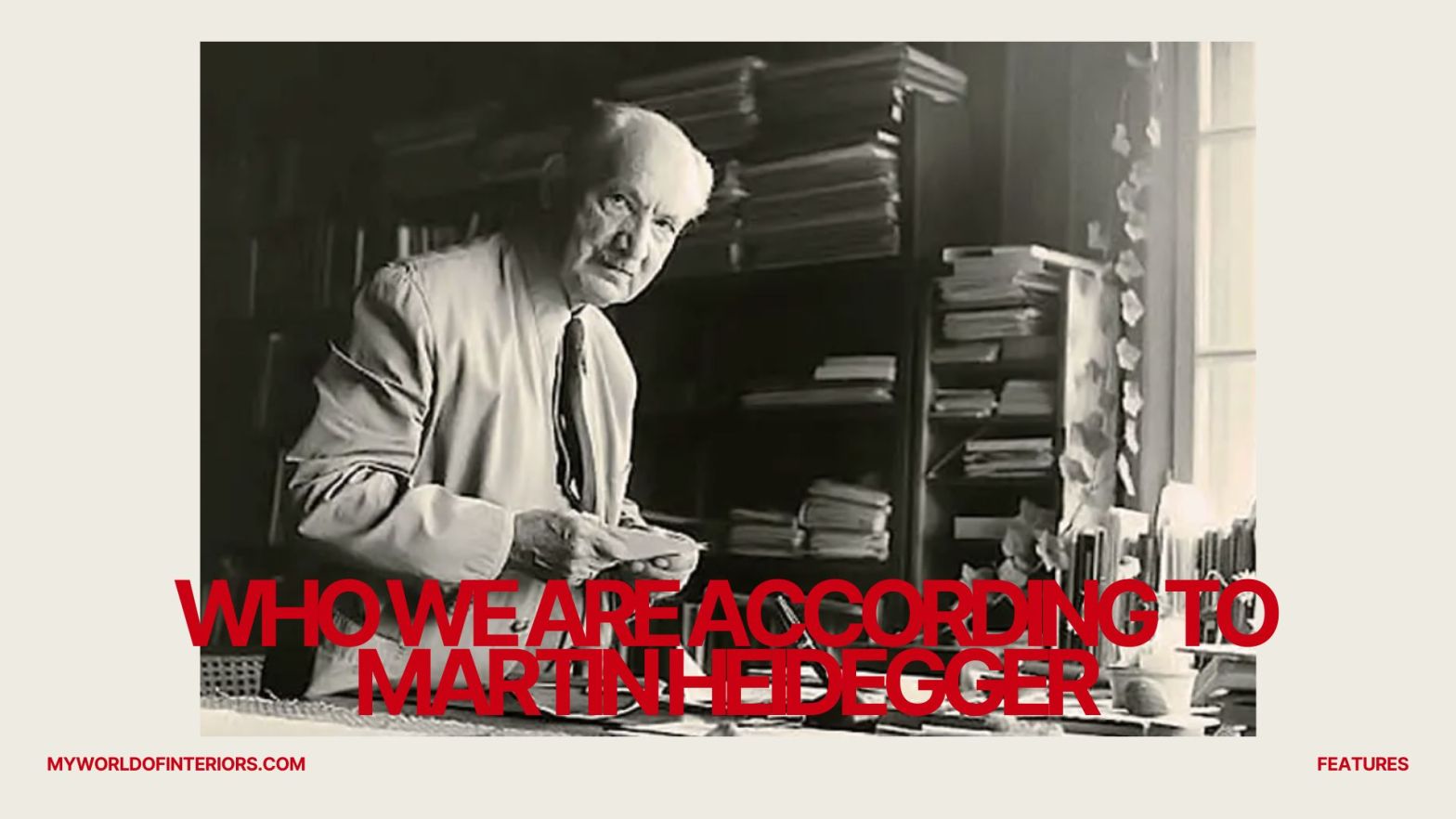
He asked the most fundamental question in the history of philosophy — what does it mean to be? — with a depth and a rigour that nobody before him had quite managed. He was also a member of the Nazi party who never adequately recanted. Both of these things are true, and the essay that follows holds them simultaneously, because anything less would be a failure of the seriousness that Heidegger himself demanded.
By Bergotte
There is a problem with Heidegger that must be addressed before the philosophy can be addressed, because to pass over it in silence — to proceed directly to the luminous account of authenticity and being-toward-death as though the man who produced them had not also, in 1933, joined the National Socialist German Workers’ Party, delivered a rectoral address celebrating the Nazi revolution as the spiritual renewal of the German people, and subsequently spent the remaining forty-three years of his life neither adequately explaining the involvement nor genuinely recanting it — would be a form of the inauthenticity that his philosophy condemns.
Martin Heidegger joined the Nazi party. He remained a member until the end of the war. The Black Notebooks, his private philosophical diaries published between 2014 and 2021, contain passages of anti-Semitism that are not peripheral to the philosophical project but woven through it, attributing to “World Jewry” a particular relationship to the rootless, calculative, technological mode of being that his philosophy identifies as the defining pathology of modernity. The philosopher who wrote most penetratingly about authenticity — about the demand that the individual take ownership of her own existence, face the conditions of her being without the anaesthetic of the crowd, refuse the comfortable evasions of the “they” — spent the pivotal years of the twentieth century doing none of these things. He followed the crowd, the most catastrophic crowd in modern history, and then spent decades not quite admitting it.
This is not a reason to stop reading him. It is a reason to read him with the specific critical pressure that his own philosophy generates — to apply the demand for authenticity to the thinker who made the demand, and to find it, in the most important test it faced, wanting. The philosophy survives this finding. It survives it partly because the ideas are genuinely powerful and genuinely illuminating, and partly because the gap between the thinking and the living is itself philosophically instructive: it demonstrates, with painful specificity, the difference between understanding authenticity as a concept and achieving it as a condition of one’s own existence. Heidegger understood authenticity as perhaps nobody before or since. He did not live it when it most mattered.
With that said: the philosophy.
The Question of Being
Heidegger’s starting point is a question so fundamental that philosophy had, by his account, forgotten to ask it. Not forgotten to answer it — forgotten to ask it, forgotten that it was a question at all, absorbed it so thoroughly into the background assumptions of Western thought that it had ceased to be visible as the question that everything else depended on.
The question is: what does it mean to be?
Not: what exists? Not: what are the properties of existing things? Not: how do we know what exists? These are questions that philosophy had been asking for two and a half thousand years. Heidegger’s question is prior to all of them — the question that must be answered, or at least genuinely asked, before any of the others can be approached with the depth they require. What is it for anything to be at all? What is the being of beings — the being-ness that tables and persons and numbers and atoms and God (if God exists) all share, in whatever way they share it, when we say of any of them that they are?
The question sounds abstract to the point of emptiness, and the Western philosophical tradition — both in its Platonic and its post-Cartesian forms — had treated it as either answered or unanswerable and moved on to the questions it considered more tractable. Heidegger’s claim, in Being and Time (1927), the work that established his reputation and remains the most important work of German philosophy in the twentieth century, is that this moving-on was a mistake — that the forgetting of the question of being is not merely a philosophical oversight but the source of the specific pathologies of modern Western life: its abstraction from the concrete world of lived experience, its treatment of nature as a resource to be calculated and exploited rather than a world to be inhabited, its reduction of the human being to a subject standing over against an object world that it seeks to master.
He comes to the question of being through the one being for whom being is a question — the human being, the being whose existence is characterised by the fact that its being is an issue for it, that it is the kind of being that asks what it means to be. Heidegger’s term for this being is Dasein — a German word meaning, roughly, being-there, existence, the there-being that is always already in a world and always already caring about its own being. The analysis of Dasein — of the structure of human existence, the specific way in which the human being is in the world — is the method by which Heidegger approaches the question of being in general, because Dasein is the being through which being becomes a question at all.
Being-in-the-World: The Hyphen Is Everything
The most important single contribution of Being and Time to the understanding of human existence is so thoroughly absorbed into contemporary common sense that it is difficult to recover its original force: the insistence that the human being is not a subject encapsulated in a body, confronting an external world of objects across an unbridgeable gap, but is always already in the world — embedded in it, engaged with it, practically oriented toward it in a way that precedes and makes possible any theoretical stance toward it.
The hyphen in being-in-the-world carries the entire argument. Heidegger is not describing a spatial relationship — a subject that happens to be located inside a world, the way a marble is inside a jar. He is describing a constitutive relationship — a mode of existence in which the world is not something the self encounters from outside but something the self is always already involved with, always already caring about, always already understanding in the practical terms of use and purpose and significance that structure everyday engagement before any theoretical reflection begins.
The carpenter does not first perceive the hammer as a physical object with certain properties and then decide to use it. She reaches for the hammer in the midst of the work, and the hammer is not present to her as an object at all — it is ready-to-hand, withdrawn into the activity of hammering, transparent to the purpose it serves. The world of the workshop is not a collection of objects that she surveys from outside; it is the meaningful context in which she is already engaged, always already understanding what things are for, what they are connected to, what the work is in aid of. The world, in this sense, is not a container for the self but the field of significance within which the self is always already operating.
This has consequences that ramify through the entire structure of Heidegger’s philosophy and through the entire question of who we are. If the self is always already in the world — always already embedded in a practical context of significance, always already oriented toward things and people and projects and possibilities — then the self is not the isolated, self-transparent, world-confronting subject of the Cartesian tradition. It is something more complex, more situated, more constitutively relational than that tradition allowed. The self does not first exist and then enter into relationships with the world and with others. It is constituted by those relationships from the beginning — it is being-in-the-world all the way down, and the abstraction of a pure subject from this concrete embeddedness is an achievement of reflection rather than a description of the original condition.
Thrownness: The Situation You Did Not Choose
The self is always already in the world, and the world into which it is always already thrown is not a world of its own choosing. This is what Heidegger means by thrownness — Geworfenheit — the fundamental condition of the human being as a being that finds itself already here, already this particular Dasein rather than any other, already in this particular historical situation, this particular language, this particular body, this particular set of possibilities and limitations, without having chosen any of it.
You did not choose to be born. You did not choose the language in which you think, which is not merely a communication tool but the medium in which the world has its meaning for you — the structure of significance within which things show up as the things they are. You did not choose the historical moment into which you were thrown, the cultural inheritance you were given, the economic conditions of your existence, the possibilities that your situation makes available and the possibilities it forecloses. You find yourself already here, already engaged, already understanding the world in terms that were given to you before you were in a position to evaluate them.
The connection to Beauvoir is immediate and was not lost on Heidegger’s readers. Beauvoir’s account of the woman thrown into a world that has already decided what being a woman means — already structured the possibilities and foreclosed others, already distributed the social recognition that makes certain lives liveable and withheld it from others — is a specific and politically concrete application of the structure that Heidegger describes in ontological terms. The thrown self is always already a self thrown into a particular situation of power, and the thrownness is prior to any choice the self can make about that situation. This is not, for Heidegger, a reason for despair or for the abandonment of the aspiration toward authenticity. It is the condition within which the aspiration must operate — the given from which genuine self-making must proceed, not the blank slate from which it might ideally begin.
Thrownness has an affective register — a mood that reveals the condition to the being who is in it. That mood is what Heidegger calls Stimmung — attunement, the specific emotional colouration of one’s engagement with the world at any given time. Moods, in Heidegger’s account, are not merely subjective states overlaid on a neutral perception of reality. They are the way in which reality discloses itself — the mode in which the world shows up as mattering in the specific way it matters to this particular Dasein in this particular moment. Anxiety — the fundamental mood that Heidegger calls Angst — is the mood that reveals the condition of thrownness most fully: the mood in which the comfortable engagement with the familiar world falls away and the bare fact of one’s own existence — one’s being-there, groundless, contingent, finite — becomes the object of an awareness that cannot be deflected by the ordinary business of the world.
Das Man: The They That Is Nobody
Heidegger’s account of everyday human existence — the existence of the being that has not yet confronted its own thrownness and its own finitude, that has not yet achieved what he calls authenticity — is organised around a concept that, like Kierkegaard’s crowd and Nietzsche’s herd, identifies the primary mechanism by which genuine selfhood is evaded. He calls it das Man — the “they,” the “one” of the phrase “one does this” or “they say that” — the anonymous social authority in whose name most human beings conduct most of their lives most of the time.
Das Man is not a person, or a group of persons, or an institution. It is the generalised other — the diffuse social authority that tells us how things are done, what matters, what is obvious, what is shameful, what is worth wanting, what is worth fearing, what the appropriate response to any given situation is. It is the authority that is nowhere and everywhere simultaneously — that cannot be identified or confronted because it has no face, that cannot be questioned because it answers every question by reference to what one does, what they say, how things are. Das Man is the crowd that Kierkegaard diagnosed, the spirit of seriousness that Beauvoir described, the herd morality that Nietzsche anatomised — but described with a phenomenological precision that catches something the others miss: its complete impersonality, its quality of being a nobody that is nonetheless everywhere, a nothing that organises everything.
Most human beings, most of the time, are not living their own lives. They are living the life of das Man — doing what one does, wanting what one wants, avoiding what one avoids, feeling what one feels, dying as one dies. This is not a moral failing in the ordinary sense. It is the condition of the being that has not yet been called — or has been called and has not answered — to the recognition of its own existence as something it must own.
The loss of self to das Man is not dramatic. It is the most ordinary thing in the world — the default condition of human existence, the path of least resistance, the mode of being that the social world is organised to sustain and to reward. The person who lives entirely in the mode of das Man is not unhappy, necessarily. She is comfortable, recognised, at home in the world, untroubled by the specific anxiety that attends the recognition of one’s own existence as a problem. She is also, in Heidegger’s account, not fully herself — not yet having achieved the mode of existence in which she takes ownership of her own being, makes her own possibilities genuinely hers, faces the conditions of her existence without the anaesthetic of the they.
Being-Toward-Death: The Possibility That Cannot Be Transferred
The possibility that shatters the anaesthetic of das Man — the possibility that is always there, always mine and nobody else’s, always approaching and never quite arrived, always capable of arriving at any moment — is death.
Death, for Heidegger, is not an event that happens at the end of life, something to be dealt with when it arrives. It is a structural feature of existence — the possibility that is always already mine, that no one can take from me or live for me or transfer to another, that individualises me in the most absolute sense available: the sense in which I am the being for whom this particular existence will end, and the ending is something I face alone, in a way that cannot be shared.
Most of the time, das Man manages death. It makes death general — something that happens to one, to they, to the anonymous everyone rather than to the specific me. It provides the rituals and the consolations and the social forms that allow death to be acknowledged without being genuinely faced, that allow the individual to know, intellectually, that she will die while continuing to live in the mode of the indefinite future, always deferring the confrontation, always treating death as something that will eventually happen without treating it as something that is happening now — as the constant possibility that structures every moment of the existence it will one day terminate.
Being-toward-death — the authentic mode of existing in the full awareness of one’s own mortality — is not morbidity. It is not the obsessive preoccupation with dying or the fearful anticipation of the end. It is the mode of existence in which the finitude of one’s own being is genuinely held in awareness — in which the fact that this specific existence has a limit is allowed to do the work it is capable of doing: the work of making the existence real, of lending urgency and specificity to the choices that constitute a life, of stripping away the distractions and the deferrals and the comfortable evasions of das Man and revealing the bare fact of existence as something that must be owned.
The connection to Nietzsche’s eternal recurrence is precise and productive. Both are thought experiments — or more than thought experiments, existential challenges — that force the individual to face her life as a whole rather than as an indefinite succession of moments. The eternal recurrence asks: would you choose this life again, forever? Being-toward-death asks: knowing that this life will end, and that the ending is always possible now, are you living in a way that owns that fact — that takes the finitude as the condition of genuine existence rather than a defect to be managed?
Both questions, honestly faced, produce the same result: the recognition that most of the life that most people live most of the time is not genuinely theirs — is not the life that would be chosen if the choosing were done with full awareness of the conditions under which it takes place.
Authenticity and the Call of Conscience
The call that summons Dasein from the comfortable lostness of das Man to the owned existence of authenticity is what Heidegger calls the call of conscience — a call that comes, he insists, from Dasein itself, not from an external authority or a divine command. It is the self calling to itself — the ownmost self, the self in its thrownness and its being-toward-death, calling to the self absorbed in das Man, summoning it back to the recognition of its own existence as something that is its own.
The call of conscience says nothing — it makes no specific demand, issues no specific instruction, provides no specific content. It calls silently, in the mode of anxiety, from the uncanny — the unheimlich, the not-at-home, the moment in which the familiar world loses its familiar character and the bare fact of one’s own existence is exposed without the covering of the everyday. What the call says, in its silence, is: own it. Take ownership of your existence — of the thrownness you did not choose, of the being-toward-death you cannot escape, of the possibilities that are yours and that you are responsible for enacting or failing to enact.
Authenticity, in Heidegger’s account, is not a permanent achievement. It is a mode of existence that must be retrieved again and again from the pull of das Man — a way of being that is always in tension with the easier, more comfortable, socially rewarded mode of inauthenticity. The authentic self is not a self that has transcended the social world and its demands. It is a self that moves through the social world in full awareness of its own existence as something it must own — that participates in the world of das Man without being absorbed into it, that maintains the awareness of its own finitude and its own possibilities even while conducting the ordinary business of life.
This is, again, demanding. Kierkegaard demanded genuine decision. Beauvoir demanded genuine resistance to structural power. Nietzsche demanded genuine value-creation in the face of the death of God. Heidegger demands genuine ownership of one’s own existence in the face of thrownness and death. The demands accumulate across the series, each one building on the last, each one refusing the comfortable evasions that the available culture provides at every turn.
Technology and the Modern Forgetting
Heidegger’s later work — the essays and lectures of the 1940s, 1950s, and 1960s, collected in volumes like Poetry, Language, Thought and The Question Concerning Technology — moves from the phenomenological analysis of human existence to a broader diagnosis of the modern world, and it is here that his thinking becomes most culturally comprehensive and most productively connected to the contemporary situation, and also most difficult and most contested.
The modern world, in Heidegger’s account, is organised by a mode of revealing — a way of disclosing reality — that he calls Gestell, usually translated as “enframing.” Enframing is the mode of revealing in which everything that is shows up as a resource — as standing-reserve, Bestand, material available for human use and exploitation. In the mode of enframing, the river is a potential power source. The mountain is a potential quarry. The forest is potential timber. The human being is human capital. Nothing is encountered in its own being, on its own terms, as the thing it is. Everything is encountered as a resource for the project of human mastery, as material to be ordered and optimised and deployed.
This is, for Heidegger, the deepest form of the forgetting of being — the forgetting that he thinks characterises the entire history of Western metaphysics and that reaches its culmination in the age of technology. When everything shows up as standing-reserve, nothing shows up as being — as the thing it is in itself, in the specific, irreplaceable, non-fungible way of its own existence. The tree that shows up as timber has not been seen. The river that shows up as power has not been encountered. The human being that shows up as human capital has not been recognised.
The contemporary resonance is painful in its precision. The attention economy enframes human attention as a resource — as standing-reserve to be harvested and sold to advertisers, optimised and maximised and monetised with the same instrumental calculation that the mining industry applies to ore. The self that the attention economy addresses is not a Dasein — not a being whose existence is an issue for it, not a being with its own possibilities and its own finitude and its own need to face its own being. It is a user — a node in a network, a source of data and attention and purchasing behaviour, a resource to be managed. The enframing is total, and it is, in Heidegger’s sense, a profound forgetting: a mode of revealing that conceals everything that matters most about what it is revealing.
His proposed response to the dominance of enframing is characteristically oblique: he turns to poetry and art as the modes of revealing that resist Gestell — that allow things to show up in their own being rather than as resources, that restore the capacity for the specific kind of attention that the technological mode systematically erodes. The poet, for Heidegger, is the one who names the holy — who calls things by their own names, who allows the world to be disclosed in its own terms rather than in the terms of the calculating, optimising, resource-extracting intelligence that modernity has made normative.
This is not a political programme. Heidegger did not have a political programme — or rather, his one serious attempt at a political programme was the catastrophe of 1933, from which he retreated into a thinking that had become, perhaps in response, deeply suspicious of the political as such. The proposal is philosophical and, in a certain light, aesthetic: a turning of attention, a recovery of the capacity to let things be what they are, a resistance to the enframing that begins not with institutional change but with the quality of individual attention.
The Problem of the Life and the Work
Return, now, to the problem that the essay opened with, because it has not gone away and the philosophy has not resolved it.
Heidegger joined the National Socialist party in May 1933, one month after becoming rector of the University of Freiburg. In his rectoral address, he spoke of the spiritual mission of the German university in terms that aligned, with a closeness that cannot be attributed to coincidence, with the vocabulary of the National Socialist revolution: rootedness in soil and blood, the calling of the German people, the leadership principle, the subordination of the individual to the historical destiny of the community. He used his position as rector to implement aspects of Nazi educational policy. He denounced colleagues. He informed on at least one student to the Gestapo.
He resigned the rectorship in 1934, apparently disillusioned with the actual administration of the Nazi state. He did not resign from the party. He never publicly recanted. After the war, required by the French occupation authority to account for his conduct, he produced a document of evasion and self-justification that made no adequate reckoning with what he had done or what the regime he had supported had been. In the years that followed, when friends and correspondents urged him to make a public statement, he declined. The closest he came was an interview given to Der Spiegel in 1966, published posthumously according to his instructions in 1976, in which he said some things of philosophical interest and nothing of moral adequacy.
The Black Notebooks have made the situation worse by revealing that the failure was not merely practical — the opportunism of a man who made a bad calculation about which way history was turning — but philosophical: that the anti-Semitism was woven into the philosophical project in ways that cannot be entirely separated from it, that the identification of “World Jewry” with the rootless, calculating, technologically oriented mode of being that Heidegger diagnosed as modernity’s pathology was not a peripheral prejudice but something that penetrated the core of the analysis.
What does this do to the philosophy?
It does not destroy it. The account of being-in-the-world, of thrownness, of das Man, of being-toward-death, of authenticity, of enframing — these remain among the most illuminating analyses of human existence in the philosophical tradition, regardless of the moral failure of the person who produced them. Ideas are not invalidated by the character of the thinker who thought them. If they were, philosophy would have very little left to work with.
But the failure does something to the philosophy. It demonstrates, with the irreversible clarity of an actual historical life, that the distance between the intellectual understanding of authenticity and its practical achievement is not a small distance. Heidegger understood, in terms of extraordinary precision and depth, what it meant to face one’s own existence without the anaesthetic of the crowd, to resist the pull of das Man, to take ownership of one’s own being rather than losing it in the comfortable evasions of the they. And then, at the historical moment that tested this understanding most severely, he followed the crowd — the most catastrophic crowd in modern history — and spent the rest of his life unable to face what he had done with the same unflinching honesty that he demanded of the authentic Dasein.
This is not a small irony. It is the central fact about Heidegger that any honest engagement with his work must hold alongside the luminosity of the ideas. He was, in the fullest sense of his own vocabulary, inauthentic when it mattered most. The philosophy of authenticity was produced by a man who failed its most important test. We are left to use the philosophy — to take from it what is genuinely illuminating, to apply its demands to our own lives with the seriousness it deserves — in the full awareness of the failure that produced it.
This is, perhaps, a specifically Heideggerian lesson: that the thinking and the living are not the same activity, that the understanding of a truth and the living of it are separated by the full distance of human weakness and moral failure, and that the distance is not a reason to abandon the thinking but a reminder that thinking, however rigorous, is not yet living, and that the demand for authenticity — for genuine ownership of one’s own existence — is a demand that must be met not in the seminar room but in the actual conditions of an actual life, with all the terror and the temptation that those conditions involve.
Who We Are According to Heidegger
We are Dasein: the being that is always already thrown into a world it did not choose, always already engaged with things and people and possibilities in the practical mode that precedes any theoretical reflection, always already understanding itself in terms given to it by the historical and cultural situation into which it was thrown, always already moving toward the death that is always its own and always possible.
We are the being for whom being is an issue — the being that is not merely alive but aware of its own being, that carries the question of what it means to be as a condition of its existence rather than merely as an intellectual puzzle to be solved. This awareness is not a burden added to an otherwise neutral existence. It is the structure of human existence itself — the specific way in which the human being is, which is to say: with awareness, with care, with the permanent possibility of either owning or evading its own being.
We are capable of authenticity and prone to inauthenticity — prone, because the inauthenticity of das Man is the easier mode, the socially rewarded mode, the mode that relieves the anxiety of genuine existence by absorbing the individual into the anonymous authority of the they. The authentic existence — the existence that owns its thrownness, faces its being-toward-death, retrieves its ownmost possibilities from the pull of das Man — is always a possibility and never a permanent achievement, always in tension with the pull toward the easier mode, always requiring the kind of vigilance that is not comfortable and not rewarded by the social world that produces the need for it.
We are beings for whom the quality of attention matters enormously — for whom the mode in which things are revealed, the way in which the world shows up as significant or as merely available, is not a secondary concern but the primary one, because the mode of revealing determines what is possible and what is thinkable and what kind of self is available to be.
And we are beings who, as Heidegger demonstrates by his own example, can understand all of this with extraordinary depth and precision and still fail — still lose themselves in the crowd, still allow the anaesthetic of the they to cover over the awareness of their own existence, still choose the comfortable over the genuine when the choice becomes sufficiently costly.
The philosophy does not excuse the failure. The failure does not invalidate the philosophy. Both remain, held in tension, as the full account of what it means to think seriously about human existence and what it costs to live the thinking — which is, as the series is making clear with increasing urgency, always more than thinking alone can manage, and always less impossible than despair would suggest.
Being and Time (1927) is available in the John Macquarrie and Edward Robinson translation (Harper & Row) and the more recent Joan Stambaugh translation (SUNY Press); the Stambaugh is more literal, the Macquarrie more readable. The Question Concerning Technology and Other Essays is translated by William Lovitt (Harper & Row). For the Nazi involvement, Emmanuel Faye’s Heidegger: The Introduction of Nazism into Philosophy (Yale University Press) is the most thorough critical account; for a more measured view, Rüdiger Safranski’s Martin Heidegger: Between Good and Evil (Harvard University Press) is the best biography. The Black Notebooks are published in German by Vittorio Klostermann; partial translations and analyses are available in English academic literature. For accessible introduction, Michael Wheeler’s entry in the Stanford Encyclopedia of Philosophy is excellent and freely available online.
Discover more from My World of Interiors
Subscribe to get the latest posts sent to your email.

