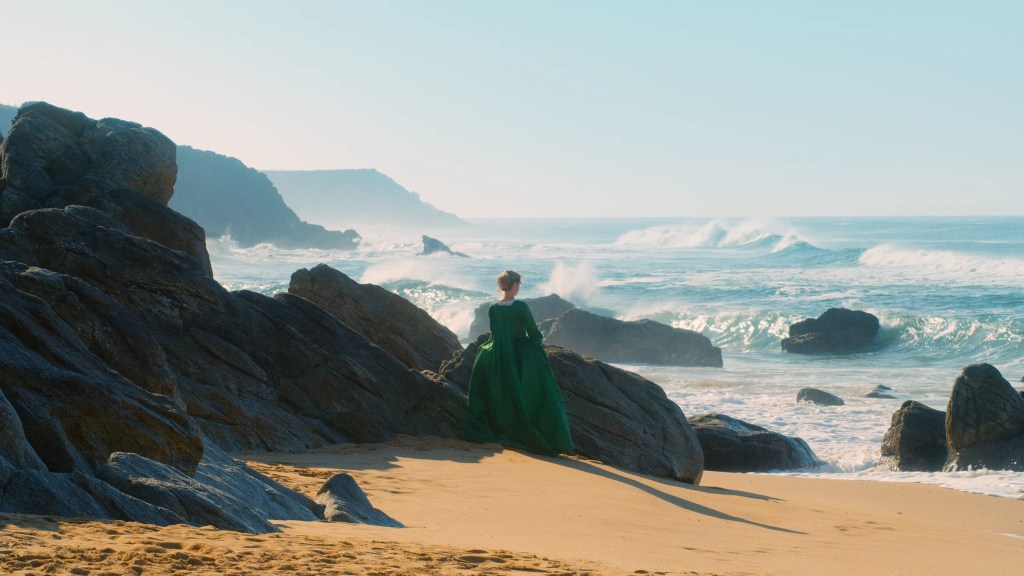
Growing up female is a different experience from growing up male, and the cinema that tells the truth about it is a different cinema — not because women are a special category requiring separate treatment, but because the world treats them differently, because the forces that shape a girl’s becoming are not the forces that shape a boy’s, and because the specific losses of female adolescence — the loss of the body’s freedom, the loss of the self that existed before it was taught to be seen, the loss of the girl who did not yet know what the world required of her — are losses that the coming of age tradition has consistently failed to address with the seriousness they deserve. The films that do address them constitute one of the richest and most undervalued traditions in cinema, and what they share is a quality of attention to female inner life so complete and so undefended that watching them can feel like being told a secret that everyone knew and nobody said.
The standard coming of age film, as this series has already argued, is built around loss and irreversibility — around the doors that close behind you as you become yourself. But the female version of this experience has a dimension that the male version largely does not: the discovery that the world has decided, before you have had a chance to decide anything yourself, what you are for. The girl who grows up in most of the societies that cinema has ever depicted discovers, at some point in adolescence, that her body has become a site of other people’s meanings — that she is looked at, evaluated, claimed, restricted, protected, punished, desired, and feared in ways that have little to do with who she actually is and everything to do with what her body represents to the people around her. The coming of age film about girls, at its best, is the film that follows the specific quality of consciousness that develops in response to this discovery: the doubling of the self into the one who is seen and the one who sees, the one who performs and the one who watches the performance, the one who has been told what she is and the one who knows, privately, that the telling is incomplete.
Portrait of a Lady on Fire and the gaze returned
Céline Sciamma’s Portrait of a Lady on Fire, made in 2019, is not a conventional coming of age film — its protagonists are a young painter and the woman she has been commissioned to paint, both in their twenties, and the film it most resembles is a chamber drama of suppressed desire — but it is the most precise account of female self-discovery that recent cinema has produced, and it belongs in this essay because what it depicts is the moment of becoming: the moment when a woman who has been looked at begins to look, and understands that the looking is itself a form of freedom.
Marianne, the painter, arrives on a remote Breton island to paint Héloïse, who is to be married to a man she has never met and whose portrait will be sent to him as a form of introduction. Héloïse refuses to sit for the portrait — refuses to participate in the transaction of which her image is the currency — and Marianne is instructed to paint her in secret, observing her during walks along the clifftops and at meals, reconstructing her face from memory each evening. What begins as a transaction becomes something else: a relationship of mutual looking, of being fully seen rather than merely observed, and the film’s central argument — made through composition and light and the specific quality of the two women’s attention to each other — is that to be truly seen by someone who looks at you with love and without agenda is one of the rarest and most transforming experiences available to a human being, and that for women it is rarer still.
Héloïse’s coming of age is the discovery that she is not only an object of the gaze but a subject — that she can look back, that her looking matters, that the world seen through her eyes is a different world from the one that has been described to her. Sciamma films this discovery with a formal precision that is itself a statement: every frame is composed with the awareness that what the camera does to women matters, that the history of cinema is largely a history of women being looked at rather than looking, and that to reverse this — to place the camera in the position of a woman’s attention rather than a man’s — is not a political gesture but an act of simple honesty. The fire in the film’s title — the bonfire around which the women dance in the film’s most ecstatic sequence, Héloïse’s dress catching a spark and burning at the hem — is what female becoming looks like when it is allowed its full expression: dangerous and beautiful and entirely itself.
Ratcatcher and the river’s edge
Lynne Ramsay’s Ratcatcher, made in 1999 and set during the Glasgow bin strikes of 1973, is not strictly a film about a girl — its central figure is James, a twelve-year-old boy — but the female characters who surround him are rendered with such completeness and such sorrow that the film belongs in this essay as one of the most precise accounts of what it means to grow up female in poverty, where the conditions of female adolescence are the harshest and the most honest. Margaret Anne, the older girl who lives by the canal and submits to the sexual attention of the local boys with a passivity that the film refuses to explain or excuse or sentimentalise, is one of the most quietly devastating figures in British cinema — a girl who has learned, earlier than she should have had to learn it, that her body is something that happens to her rather than something she inhabits, and who carries this knowledge in her face and her walk and the specific quality of her stillness.
Ramsay would go on to make Morvern Callar, which is the more explicitly female-centred coming of age film — the story of a young Scottish woman who takes over her dead boyfriend’s novel and travels to Spain with his money and reinvents herself with a completeness that is simultaneously liberating and terrifying — but Ratcatcher establishes the terms on which Ramsay would work throughout her career: a cinema of female consciousness rendered through the body, through the physical world, through the specific quality of what it feels like to be this person in this place at this time, without the explanatory scaffolding that more conventional filmmaking would provide. Her women and girls are not explained. They simply are, in the full and irreducible specificity that the best cinema always provides and the world so rarely manages.
Girlhood and the self that exists outside the story
Céline Sciamma’s Girlhood — Bande de filles in French — made in 2014, is the film that most directly addresses the coming of age of a black girl in contemporary France, and it does so with a joy and a sorrow that exist simultaneously in every frame, because Sciamma understands that the experience she is depicting is an experience of both: the joy of finding, in the company of other girls, a self that is larger and more free than the one the world has made available, and the sorrow of knowing that this freedom is temporary, that the world will demand its claims back, that the girl who dances in a hotel room with her friends to Rihanna’s Diamonds is not the girl the neighbourhood will allow her to be for long.
Marieme, sixteen years old, shut out of the academic track by a school system that has decided her future for her and living in a housing estate where the available futures for girls are as limited as they are for the boys she grew up alongside, finds in a group of girls a version of herself she has never had access to: bold, physical, taking up space, ungoverned. The sequence in which the four girls lip-synch and dance to Diamonds in a hotel room, the blue light of the television washing over their faces, is one of the most purely joyful in recent cinema — and one of the most heartbreaking, because everything about the film has prepared you to understand that this room is a parenthesis, a temporary freedom, not a destination.
Sciamma’s camera, like her painting in Portrait of a Lady on Fire, looks at her subjects with a love that is also a form of argument: that these girls deserve this quality of attention, that their inner lives are as rich and as contradictory and as worthy of serious cinema as any other subject. Marieme’s becoming — her gradual negotiation of the impossible position the world has placed her in, her refusal to accept the options she has been offered and her discovery that refusing is not the same as escaping — is rendered with such precision and such tenderness that the film stands as one of the most complete portraits of female adolescence that cinema has produced.
An Angel at My Table and the body as prison
Jane Campion’s An Angel at My Table, made in 1990 from Janet Frame’s three-volume autobiography, is the film about female coming of age that most completely demolishes the consoling narrative — not because it is bleak, though parts of it are devastating, but because it insists on the full complexity of a specific woman’s experience across a specific life, and in doing so makes the case that female selfhood, pursued honestly, is an act of radical resistance against a world that would prefer to categorise and contain it.
Janet Frame, the New Zealand writer who spent years in psychiatric institutions — misdiagnosed with schizophrenia, subjected to two hundred electroconvulsive therapy treatments — is the most extreme example in this essay of what happens when a girl who does not fit the world’s requirements for female behaviour encounters the world’s machinery for managing such girls. But Campion does not make the film a simple indictment of the mental health system or of the society that produced it. She makes something more complex and more honest: a portrait of a consciousness so particular, so vividly itself, so resistant to reduction, that the world’s failure to accommodate it illuminates the poverty of the world rather than the pathology of the consciousness.
Frame’s girlhood — the shy, red-haired child in rural New Zealand, reading everything, writing everything, finding in literature the companionship and the validation that the social world withheld — is rendered by Campion with a warmth that is never sentimental, and Kerry Fox’s performance of the adult Frame achieves something rare: the complete inhabitation of a specific interiority, a way of being in the world that is entirely legible from the outside while remaining entirely its own. The coming of age in this film is not a single event or a single discovery but a continuous process of self-creation against the forces that would unmake the self — and the film’s extraordinary conclusion, Frame finally publishing and being celebrated, does not read as triumph so much as survival, which is the more honest and the more moving thing.
Mustang and the five sisters
Deniz Gamze Ergüven’s Mustang, made in Turkey in 2015, is the coming of age film that most directly addresses the specific female experience of having your body treated as a social problem — of growing up in a world that reads female physicality as danger and manages that danger through confinement, surveillance, and the engineering of early marriage. Five sisters in a remote Turkish village return from school one afternoon and play in the sea with some boys from their class, and the sight of them — uninhibited, physical, joyful, entirely innocent — is read by their uncle and grandmother as sexual transgression that requires immediate management. The house is retrofitted with bars and locks. The girls are taken out of school. They are groomed, one by one, for marriage.
The film is narrated by the youngest sister, Lale, and the narration gives it the quality of a fairy tale — the dark kind, the kind that tells the truth about the world rather than consoling us about it. But Ergüven is too precise an observer to let the film settle into allegory: these are specific girls, with specific personalities and specific relationships with each other and specific ways of resisting and accommodating and surviving what is being done to them. The eldest sister who finds a form of escape in an early marriage. The sister who cannot survive the confinement at all. And Lale herself, whose coming of age is the discovery that freedom requires an act of will so complete and so costly that most people never manage it — that the world will not give you your life, that you must take it, and that the taking is terrifying and necessary and the only honest option.
The film’s great subject, underneath the specific Turkish setting and the specific sisters, is the relationship between female freedom and female community — the way that girls survive what is done to them by surviving it together, by keeping between themselves a version of the world that the adults around them cannot see or control, by maintaining in the face of everything the private knowledge that they are more than what they have been told they are. This knowledge — the secret self that survives the world’s attempts to reduce it — is the coming of age film’s deepest subject, and Mustang holds it with a clarity and a tenderness that makes it one of the essential films of recent decades.
Persepolis and the self that travels
Marjane Satrapi’s Persepolis, made in 2007 as an animated adaptation of her graphic memoir, is the coming of age film that most explicitly addresses the intersection of the personal and the political in female adolescence — the way that growing up female in a specific historical moment in a specific country shapes the self in ways that cannot be separated from that history. Marji grows up in Tehran during and after the Islamic Revolution, watching the world transform around her, losing family members to prison and war, eventually being sent to Europe for her safety and discovering that exile has its own forms of confinement.
The animation is not a stylistic choice separate from the film’s concerns but integral to them: the black-and-white graphic world of Persepolis is the world as seen through a child’s consciousness, which simplifies without falsifying, which finds in bold lines and high contrast the emotional truth of experiences too complex for photographic realism to contain. The Marji of the Tehran sections — fierce, curious, funny, uncontainable — is rendered with a joy that makes the film’s political content feel personal rather than didactic, because it is always anchored in the specific quality of this specific child’s experience of the world that is changing around her.
The coming of age at the heart of Persepolis is the discovery that the self you are is not the self the world will allow — that the girl who dances to Iron Maiden in her bedroom and argues with God and loves her grandmother with a completeness that is the film’s emotional centre exists in a world that has decided she must be other than herself, and that the choice of how to respond to this decision is the defining act of her life. Satrapi’s answer — which is the film itself, the act of making the story public, of insisting that this life matters and deserves to be seen — is itself a form of coming of age, the adult’s reclamation of the girl who survived.
The Piano and what women carry
Jane Campion’s The Piano, made in 1993, extends the coming of age argument into adulthood and asks what happens to the self that was suppressed in girlhood — where it goes, how it survives, what form it takes when it finally demands expression. Ada McGrath, mute since childhood by choice rather than incapacity, arrives in nineteenth-century New Zealand with her daughter and her piano and the absolute interiority that the muteness both expresses and protects, and the film that follows is the most complete account in cinema of what female desire looks like when it has never been permitted a legitimate form.
The piano is Ada’s voice and her body and her self, and the film’s central violence — her husband selling it to another man and Ada being forced to perform piano lessons as a way of buying it back piece by piece — is the violence that the coming of age film is always circling: the appropriation of female selfhood by a world that does not recognise it as selfhood at all. Holly Hunter’s performance is one of the great performances in cinema, entirely rendered in the body, in the hands on the keys and the face that moves through desire and rage and terror and something that has no name, and what it says — what Ada finally says with the piano and with her body and with the choice she makes at the film’s extraordinary conclusion — is the thing that the best female coming of age films always say: that the self that was suppressed did not disappear. It was waiting. And it will not be silenced forever.
What these films know that the others do not
The female coming of age film is not a supplement to the coming of age tradition. It is a correction of it — a demonstration that the experience of growing up is not universal but specific, and that the specific experience of growing up female involves a set of discoveries, losses, and forms of resistance that the male tradition has consistently failed to represent. The discovery that your body is not entirely your own. The discovery that the world has a story about you that precedes your own story and may overwrite it. The discovery that the freedom available to the boys you grew up with is not available to you, and that this is not natural but constructed, and that the construction is maintained by the constant, exhausting work of surveillance and shame.
The films in this essay — and the many others that belong to the same conversation, from Mädchen in Uniform to Bend It Like Beckham to Rocks to Never Rarely Sometimes Always to The Worst Person in the World — know these things with a precision and an honesty that the male tradition rarely achieves, because they were made by people who had lived them. They know that the girl who dances in the hotel room to Diamonds will have to leave the hotel room. They know that the painter who looks back at her subject will be separated from her by a marriage she did not choose. They know that the self that survived in secret may never find a world large enough to hold it in public. And they insist, with the full force of their attention and their love, that the survival matters — that the secret self is real, that the dancing happened, that the looking back was an act of freedom even if freedom did not follow, that the lives of girls and women deserve the camera’s most complete and most honest attention.
Watch Portrait of a Lady on Fire for the bonfire and what it means that the image of Héloïse on fire is the image Marianne cannot stop painting. Watch Girlhood for the hotel room and the blue light and the four girls in the temporary freedom of a space the world does not know they are in. Watch Mustang for the five sisters and the specific texture of what they protect in each other. Watch An Angel at My Table for the red-haired girl who read everything and survived the world’s attempts to make her into something manageable and came out the other side still entirely herself. These films are not about a special category of human experience. They are about half of human experience, told honestly for once, and the telling changes what you understand about the other half too.
Sources and further reading
Céline Sciamma, interviews collected in Portrait of a Lady on Fire: The Screenplay (2020) — Sciamma’s own account of the film’s making, essential for understanding the formal and ethical choices that give it its distinctive quality.
B. Ruby Rich, New Queer Cinema: The Director’s Cut (2013) — the essential critical framework for understanding the feminist and queer traditions from which many of these films emerge.
Kathleen Rowe Karlyn, Unruly Girls, Unrepentant Mothers: Redefining Feminism on Screen (2011) — a rigorous and readable account of female coming of age narratives in American and European cinema.
Linda Williams, ed., Viewing Positions: Ways of Seeing Film (1995) — essential theoretical background on the gaze, spectatorship, and the politics of who looks at whom in cinema.
A suggested viewing order: Portrait of a Lady on Fire (2019) first, for the argument about the gaze and what it means to look back. Then Girlhood (2014) for the joy and the sorrow held simultaneously. Then Mustang (2015) for the specific weight of female community under pressure. Then An Angel at My Table (1990) for the long view — a whole female life rendered with complete honesty. The Piano (1993) and Persepolis (2007) for the two very different forms that female self-expression takes when the direct route is blocked.

