
Profile · Paris · September 2026
The Man Who Paints the Moment Before Dark
Vincent Beaurin trained as a silversmith, worked as a designer, blew paint at canvases, and eventually found his way to the disc — the simplest form available, saturated with the colour of the last light before the sun disappears. A retrospective profile ahead of his show at Galerie Poggi.
By Bergotte · September 2026
Vincent Beaurin · Galerie Poggi, 135 rue Saint-Martin, Paris 4
Curated by Hervé Mikaeloff · With Marine Bonnefoy, architect, for the Project Space
Vernissage public: Friday 4 September 2026, 11h–20h
Exhibition runs to 19 September 2026 · https://galeriepoggi.com/en/
There is a moment just before the sun disappears below the horizon — perhaps two minutes, perhaps ten, depending on the season and the latitude and the quality of the atmosphere — when the light does something that no other light does at any other time of day. It becomes itself. The colour intensifies, deepens, shifts from yellow through orange into a red that has nothing to do with red as a colour of danger or heat but everything to do with red as a colour of conclusion: the day ending, the world settling, the atmosphere doing in its last moments what it has been building toward all day. Vincent Beaurin has spent thirty years trying to paint this moment. Not to represent it — not to make pictures of sunsets, which would be a very different and much less interesting project — but to find the form and the material and the surface that carries the same quality of light, the same atmospheric saturation, the same feeling of being suspended between one state and another.
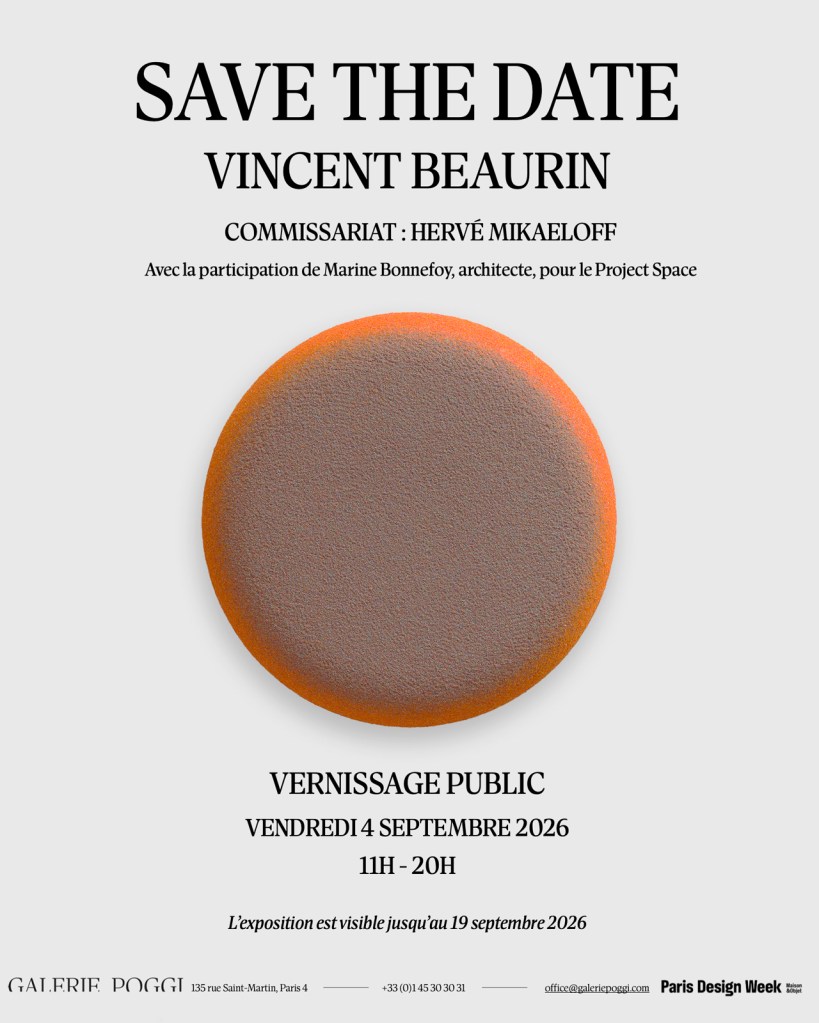
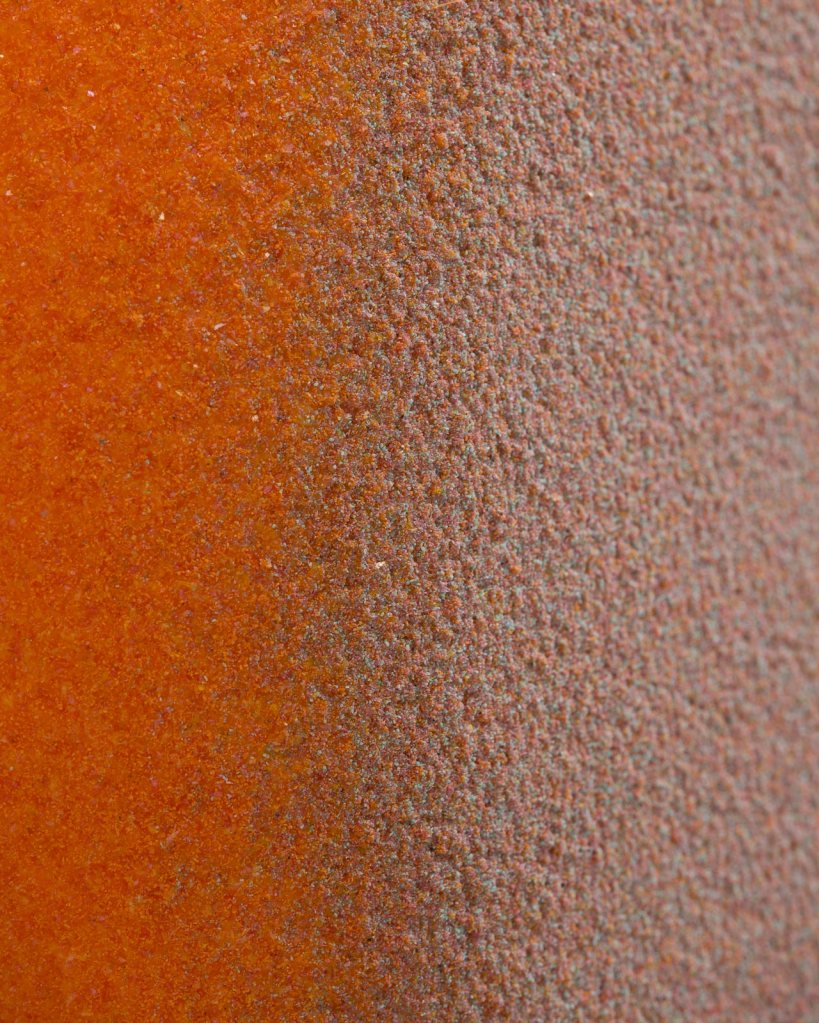
The disc on the invitation to his September show at Galerie Poggi tells you immediately where he is. The form is as simple as a form can be: a circle, slightly convex, the surface covered in a fine granular material that catches the light from its edges in the warm orange of the last minutes before dark, deepening to a brown-grey at the centre where the light does not reach. It is, at one level, just a disc. At another level it is everything Beaurin has been working toward: the form that holds the light without claiming it, the surface that receives the colour without insisting on it, the object that sits at the threshold between painting and sculpture without belonging entirely to either.
The form that holds the light without claiming it, the surface that receives the colour without insisting on it — the object at the threshold between painting and sculpture without belonging to either.
From the École Boulle to the Canvas
Vincent Beaurin came to art through craft, through the training of a silversmith, through the École Boulle in Paris where he learned the discipline of working with precious materials by hand, the patience of someone who understands that the quality of a finished surface is the product of everything that has been done to it before the last touch. He also studied painting at the ENSET in Paris during the 1970s, and in the following decade his painting practice led him to blow paint on canvas. The blowing — literally directing pigment at a surface with air — was an early indication of the direction the work would take: not the painter imposing his will on the canvas but the painter creating conditions in which something could happen, in which the material could distribute itself according to its own logic, in which the result was controlled but not determined.
As an artist, the concept of accessibility to the artwork led him to shape, make and produce domestic objects in the 1990s. He directed a design agency, worked with the Galerie Néotù, collaborated with Andrée Putman, developed his collection Noli me tangere (1994) — the title, borrowed from the gospel of John, instructing the viewer not to touch, which is a provocative instruction for a designer to give. The domestic objects of this period are beautiful and knowing, the work of someone who understands the grammar of design so completely that he can make objects that comment on their own condition as objects — that exist simultaneously as things you might use and as propositions about the nature of use itself.
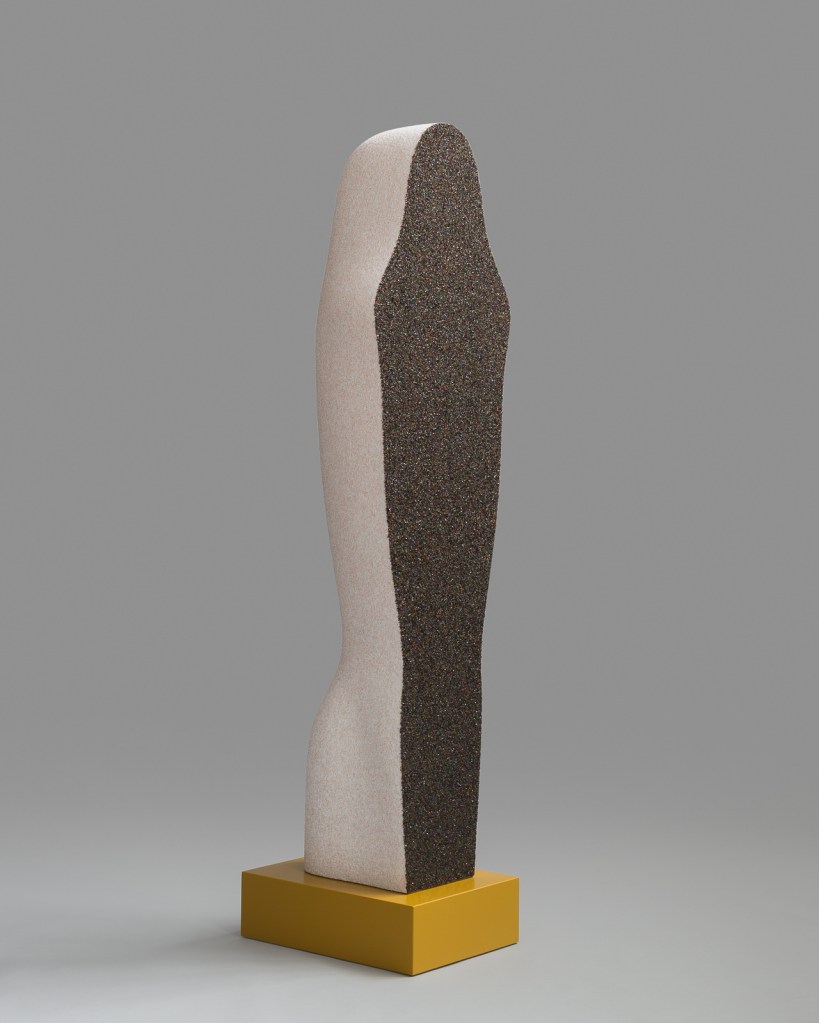
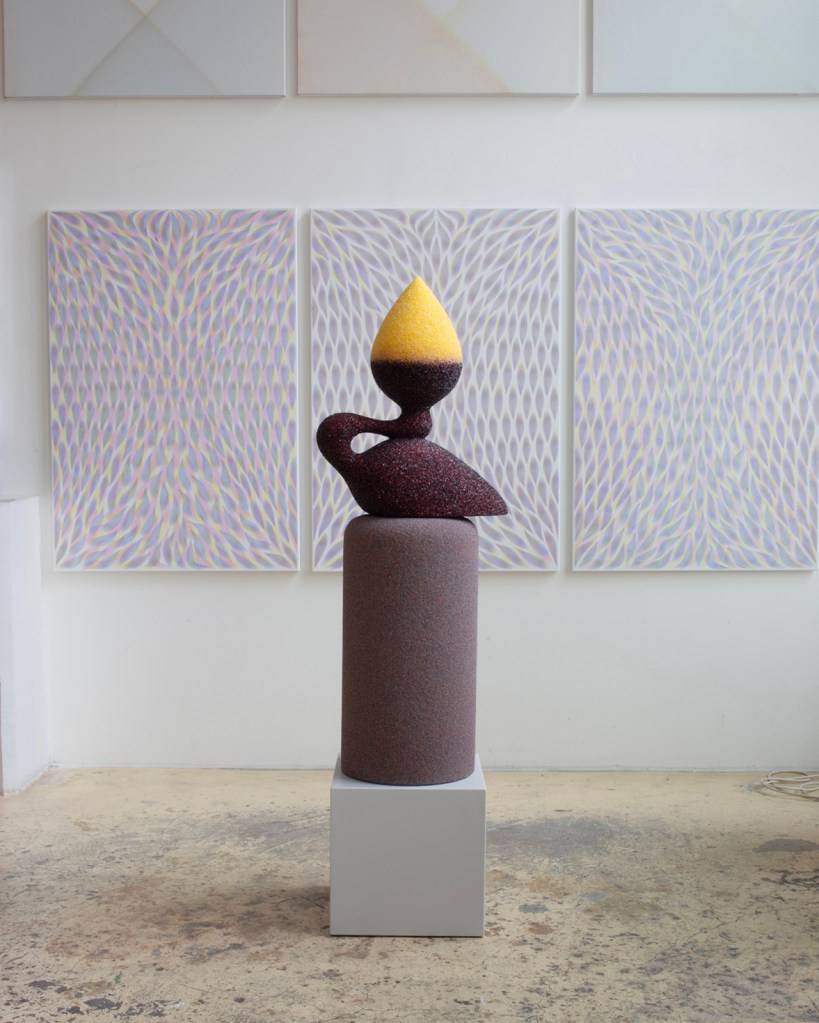
Then, in 2002, a conversation with Alessandro Mendini changed everything. With the exhibition Fragilisme at the Fondation Cartier pour l’art contemporain, Beaurin explored the boundaries between art and design in an institutional setting. Fragilisme represented an aesthetic project founded on the fragile and transitory nature of all things. The polystyrene sculptures Beaurin made for the show — light, seemingly precarious, their surfaces powdery and soft — introduced the material conditions that would define everything after: the granular surface, the sense of a form that might dissolve back into its constituent particles if handled too roughly, the beauty that exists precisely at the threshold of fragility.
The Sun as Programme
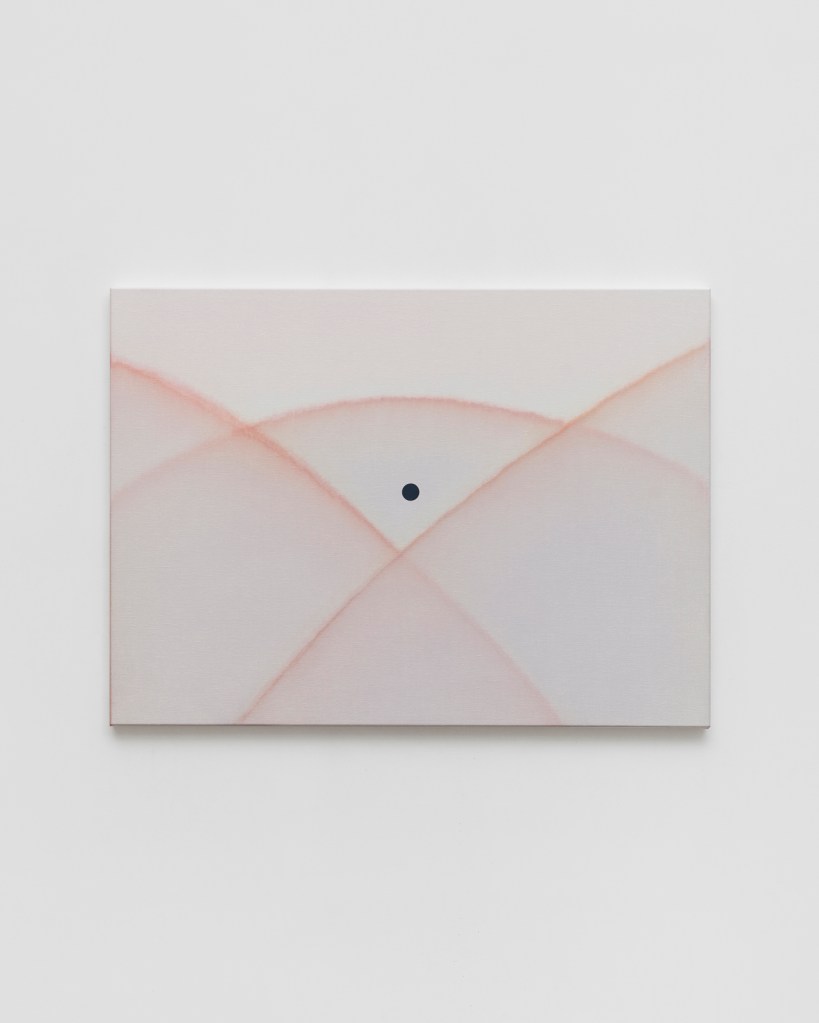
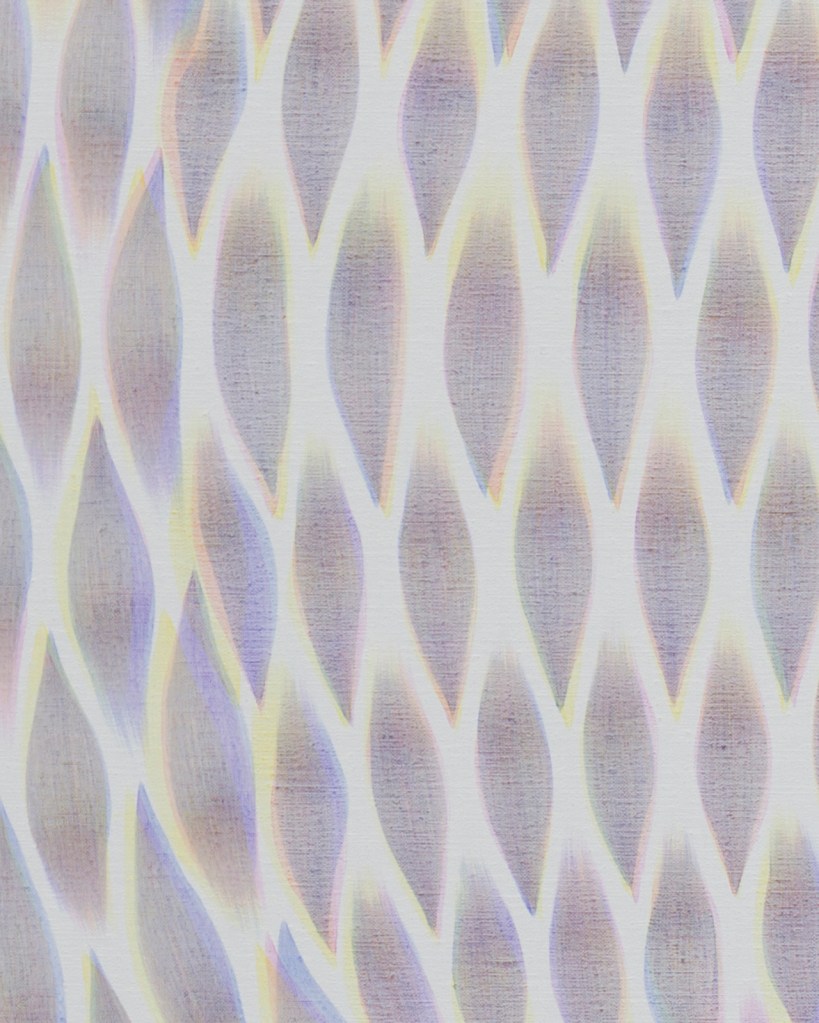
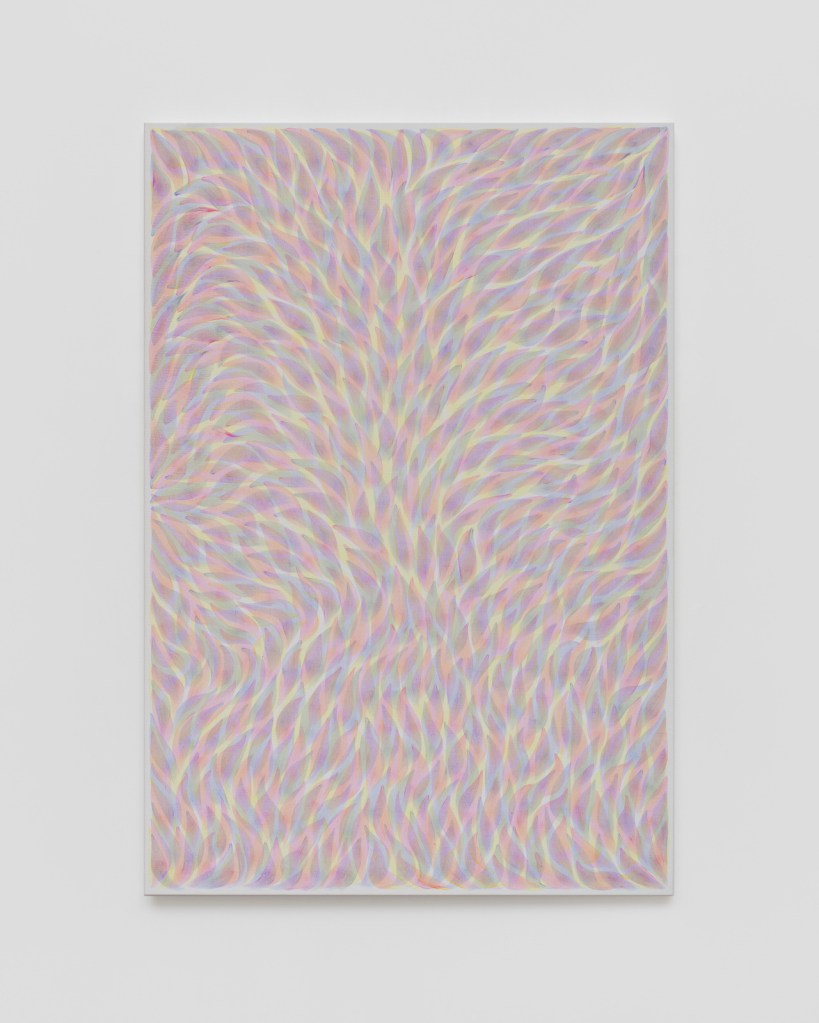
His abstractions range from the horizon in painting — sunsets that resemble Rothkos — to the horizon of painting itself, that “green flash” of the pictorial sun, to which he has dedicated himself since the mid-1990s. The series titles — -60′, -10′, -15′, -2′ — are countdown timers: the minutes before extinction, the colour of the sky at each interval in that final descent. This is painting as phenomenology: not a picture of a sunset but an investigation of what happens to colour in the specific atmospheric conditions of the hour before dark, translated into a surface that can hold those conditions in a gallery at any time of day.
The comparison to Rothko is not made lightly and is worth holding onto. Both artists are working in fields of colour that carry emotional and atmospheric content without representing anything. Both are interested in the threshold — in the moment just before the darkness, in the experience of being suspended between states. But where Rothko worked in tragedy and doom, Beaurin works in something softer and more ambiguous: the specific quality of the light that is about to end, which is not tragic but is certainly tinged with the knowledge of ending. Beaurin’s research allows him to exploit in depth the qualities of a support — aluminium honeycomb panels — that dictates the intensity of colours, the blur of contours, and the tactile quality of the works. The aluminium honeycomb panels give the surface a structural depth that flat canvas cannot provide — the light enters the material, bounces within it, emerges slightly transformed, the colour richer and more complex than it would be on a simple flat ground.
Painting as phenomenology: not a picture of a sunset but an investigation of what happens to colour in the specific atmospheric conditions of the hour before dark, translated into a surface that can hold those conditions in a gallery at any time of day.
The Spots, the Ocelles, the Discs
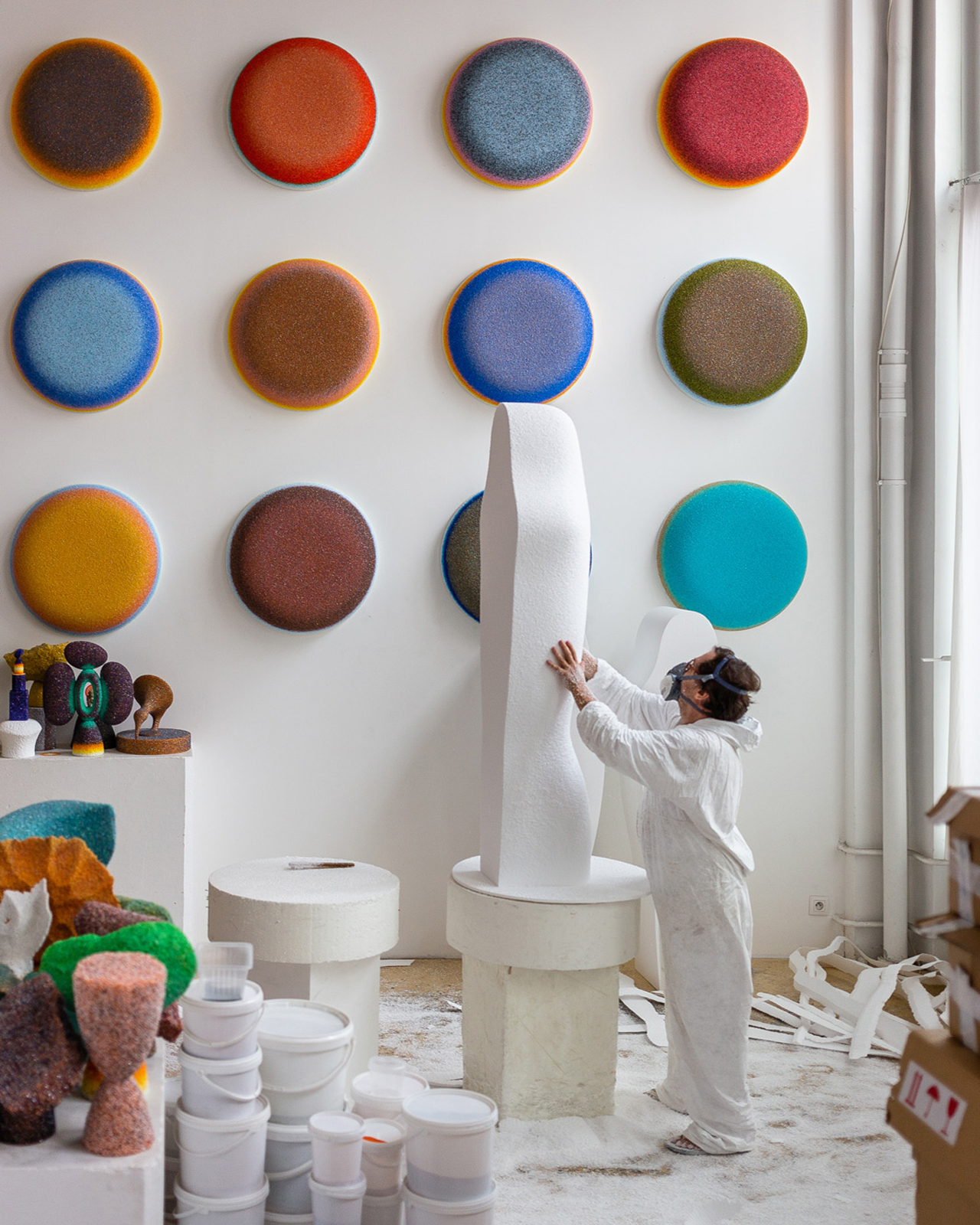
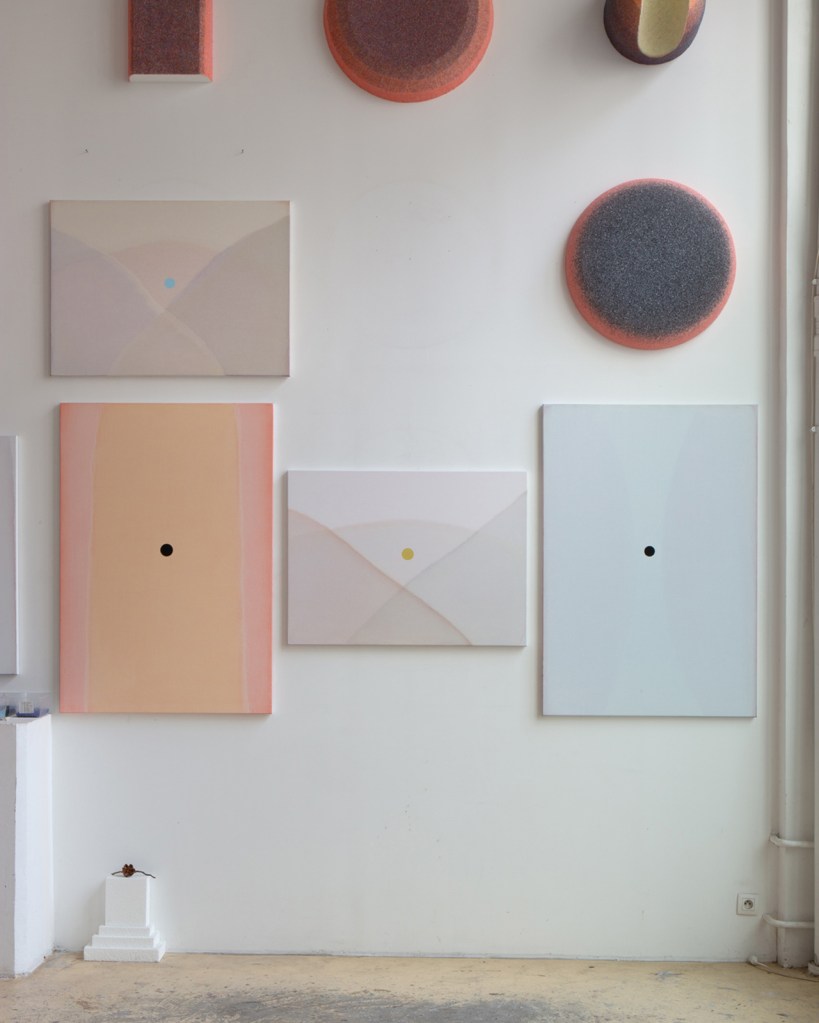
The forms Beaurin has returned to most consistently are the circular ones: the Spots of 2009–2012, the Ocelles that followed, and now the large discs that will fill the Galerie Poggi in September. The Spots and Ocelles are chromatic spectra in infinite variation, each one a disc of pigment on a powdery, granular surface, the colour shifting from edge to centre in a gradient that mimics the atmospheric gradient of the sky. They are made from polystyrene, epoxy resin, and sand — materials that carry, in their combination, the specific quality of outdoor light: the grain of sand, the warmth of the resin, the structural lightness of the polystyrene that makes the disc feel as if it might float.
The disc is the most elemental form available — the sun, the moon, the pupil of an eye, the drop of water seen from above. Beaurin uses it not as a symbol of any of these things but as the form that is most purely receptive to light: the circle with no edges to complicate the reading, no corners to create shadow, no verticals or horizontals to introduce the logic of architecture. Just the form, and the surface, and the light that moves across it from morning to evening in a gallery in Paris, doing in miniature what it does at planetary scale in the sky outside.
From the Maldives to Paris 4
Beaurin has produced a large number of public and private commissions — a tapestry, La Nuit des Gobelins (2012–2016), for the French Mobilier national; Sparks (2020) for the Cheval Blanc Randheli hotel in the Maldives, where he conceived over 40 unique pieces in collaboration with architect Jean-Michel Gathy — a project that epitomises his sensibility for site-specific and contemplative environments. The Fondation Cartier invited him to present seven images on the facade of Jean Nouvel’s building for the exhibition 1 monde réel (1999), and to participate in Yanomami, l’esprit de la forêt (2003) and Mémoires Vives (2014). His works are held in the collections of the MNAM — Centre Georges Pompidou; the Fondation Cartier pour l’art contemporain; the FNAC; and the MUDAM, Luxembourg.
For a practice that operates so quietly, that refuses spectacle so consistently, that works with such deliberately simple forms and materials, the institutional recognition is both surprising and entirely appropriate: the work earns its place in permanent collections by being exactly what it is, without adjustment for the gallery.
For a practice that operates so quietly, that refuses spectacle so consistently, that works with such deliberately simple forms — the institutional recognition is both surprising and entirely appropriate.
Galerie Poggi, September 2026
The show at Galerie Poggi — curated by Hervé Mikaeloff, with Marine Bonnefoy contributing to the Project Space — is Beaurin’s most significant Paris exhibition in several years. Galerie Poggi, founded by Jérôme Poggi in 2009, has established itself as one of the most serious galleries in Paris for contemporary work that operates at the boundary between art and design, between the conceptual and the sensory. It is, in this sense, the right address.
The invitation image tells you what to expect: the large disc, the granular surface, the warm orange of the last light fading to the cooler grey-brown of the centre. A form so simple it risks looking easy and so carefully made it could not have been done any other way. The vernissage is on the Friday of Paris Design Week — a precise placement. Beaurin’s work exists at the intersection of art and design, always has, and the Design Week context acknowledges this without reducing the work to either category.
He has been working toward this show for years, in the quiet of a Paris studio, with the patience of someone trained to work with precious materials by hand, with the attention of someone who has spent thirty years watching the light change in the minutes before dark. The disc on the wall of Galerie Poggi will catch the light of the rue Saint-Martin through the gallery windows, and the light will move across its granular surface from morning to evening, doing what light always does in Beaurin’s work: arriving, staying briefly, leaving something behind. The moment before dark, held in polystyrene and sand and epoxy resin, suspended in a gallery in Paris 4, available to anyone willing to stop and look.
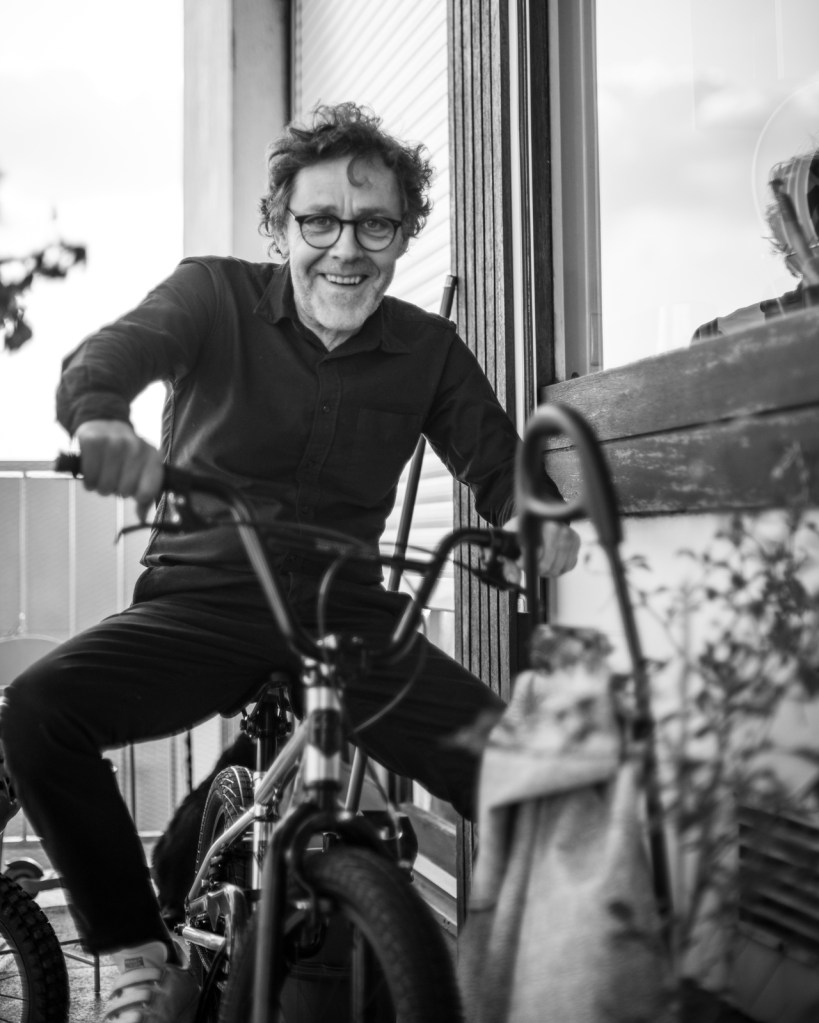
Vincent Beaurin, born 1960, Charleville-Mézières. Studied at the École Boulle (silversmithing) and ENSET (painting), Paris. Collections: MNAM — Centre Georges Pompidou; Fondation Cartier pour l’art contemporain; FNAC; MUDAM Luxembourg; Musée des Arts Décoratifs, Paris. The exhibition at Galerie Poggi, 135 rue Saint-Martin, Paris 4, opens 4 September 2026 and runs to 19 September 2026. galeriepoggi.com
Discover more from My World of Interiors
Subscribe to get the latest posts sent to your email.

