
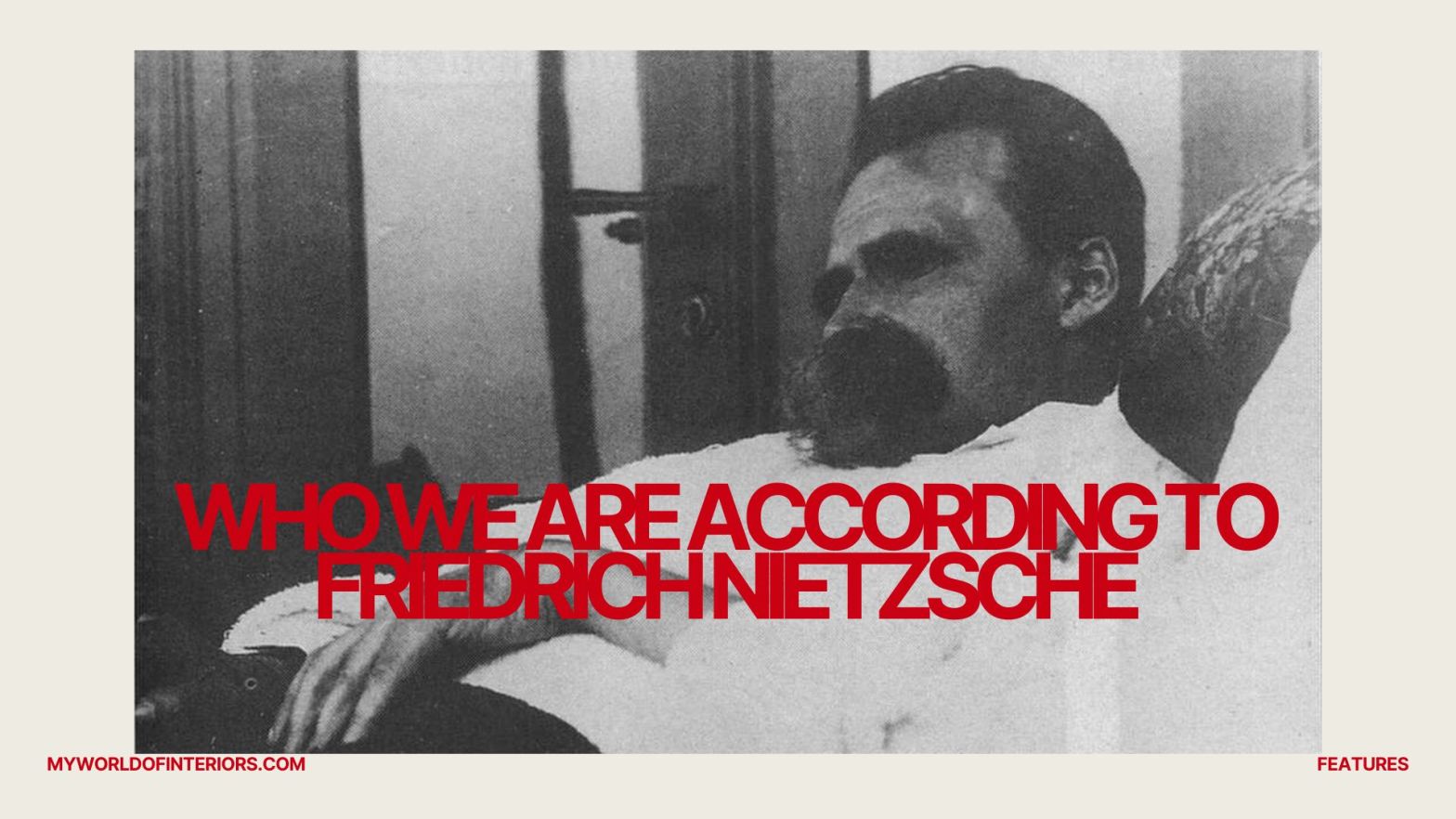
He has been claimed by fascists, by bodybuilders, by management consultants, and by every nineteen-year-old who has ever felt misunderstood. He would have been appalled by all of them. What Nietzsche actually said — about God, about values, about the self, and about whether you would choose your life again if you had to choose it forever — is considerably more demanding, and considerably more useful, than any of the appropriations suggest.
By Bergotte
Begin with the misreadings, because the misreadings are the first obstacle and must be cleared before the real thinking can begin.
Friedrich Nietzsche did not invent the concept of a master race. He despised German nationalism with a contempt so thorough and so explicit that the misappropriation of his work by the National Socialists required his sister Elisabeth to falsify his archive, suppress the passages that made the contempt plain, and edit the unpublished notes into a volume — The Will to Power — that arranged his fragments to serve an ideology he had spent his career attacking. “I do not wish to be mixed up with these preachers of hatred,” he wrote, in terms that are not ambiguous. German nationalism was, in his account, a form of the herd mentality he despised — the small-minded tribalism of people who had found in collective identity a refuge from the demands of genuine selfhood. The Nazis took his vocabulary and filled it with content he would have recognised as the precise opposite of what he had intended. This is documented. It is not a matter of interpretation. Elisabeth Nietzsche was a committed nationalist who spent decades manipulating her brother’s legacy in service of a politics he had explicitly rejected, and the manipulation succeeded well enough to shape a century of misreading.
He also did not invent a philosophy of might makes right, or celebrate cruelty, or advocate the oppression of the weak by the strong. The Übermensch — the figure translated with catastrophic imprecision as “Superman” or, worse, as the proto-Aryan type of Nazi propaganda — is not a type of person who is better than other people in any biological or racial sense. He is, or would be, the person who has faced the most demanding thing Nietzsche could imagine — the death of God, the collapse of all inherited values, the abyssal freedom of a world without foundations — and has responded not with nihilism or despair but with the creative act of making new values, of affirming life despite and through its suffering. This is not the celebration of power over others. It is the aspiration toward power over oneself — toward the self-overcoming that Nietzsche thought was the highest human achievement.
These corrections matter but they are not the essay. The essay is about what Nietzsche actually said, which is challenging enough without the additional burden of what he was made to say. Consider the misreadings addressed. Consider them gone. What remains is harder.
The Death of God and the Crisis Nobody Wanted
“God is dead. God remains dead. And we have killed him.”
The passage from The Gay Science (1882) in which the madman runs into the marketplace carrying a lantern in the bright morning, crying that he seeks God, and is met with laughter — for God is dead, everyone knows God is dead, this is not news — and then delivers his terrible announcement: this is one of the most important passages in the history of Western philosophy, and it has been misread almost as consistently as the Übermensch.
Nietzsche was not celebrating atheism. He was not making the cheerful announcement that religion had been debunked and now we were all free. He was doing something considerably more serious and considerably more frightening: he was diagnosing a cultural catastrophe, describing the consequences of something that had already happened and whose consequences had not yet been fully absorbed.
The death of God is not primarily a claim about theology. It is a claim about the collapse of the framework within which Western values had their authority — the framework that had, for centuries, provided the foundation for morality, for meaning, for the organisation of human life around something beyond the merely immediate and the merely personal. Christianity — and the Platonic tradition from which it drew its philosophical machinery — had told Western civilisation that there was a truth behind appearances, a meaning behind events, a moral order inscribed in the nature of things. This framework had been, since the Enlightenment, under sustained attack from science and philosophy; by the time Nietzsche was writing, the attack had succeeded. The framework was gone.
The catastrophe — and Nietzsche insists that it is a catastrophe, even for those who consider themselves atheists, even for those who have never been believers — is that the values which depended on the framework did not disappear with it. The moral intuitions, the sense of human dignity, the belief in progress, the commitment to truth, the feeling that life ought to mean something — all of these were products of the theological framework, and they continued to circulate in the culture after the framework that gave them their authority had collapsed. They continued to circulate as though they were self-evident, as though their authority could survive the death of the foundation that had sustained them.
Nietzsche’s word for this condition is nihilism — not the nihilism of the person who consciously rejects all values, but the nihilism of a culture that has lost the ground of its values while continuing to hold the values, unable to acknowledge the loss because the acknowledgment would require a confrontation with the void that the culture lacks the courage to face. This is the nihilism that he thought was the defining condition of the modern period — not the dramatic existential crisis of the individual but the slow, ambient, largely unconscious hollowing out of meaning that results from the continued performance of values whose foundations have been removed.
“What was holiest and mightiest of all that the world has yet owned has bled to death under our knives,” the madman says. “Who will wipe this blood off us? What water is there for us to clean ourselves? What festivals of atonement, what sacred games shall we have to invent?” These are not rhetorical questions. They are the genuine task that Nietzsche thought faced the honest thinker in the modern period: the task of confronting what had been lost and asking, without the comfort of the old answers, what could be put in its place.
The Genealogy of Morals, or: Where Your Values Came From
On the Genealogy of Morality (1887) is the work in which Nietzsche performs the most sustained and most devastating analysis of the specific values that Western culture had inherited and continued to operate within despite the collapse of their theological foundation. The method is genealogical — not the philosophical analysis of what values are, in the abstract, but the historical and psychological investigation of how they came to be, who made them, and what interests their making served.
The argument is, in outline, this: the moral framework that Western civilisation calls ethics — the valorisation of humility, selflessness, pity, equality, the renunciation of worldly pleasure and power — did not emerge from a disinterested encounter with moral truth. It emerged from a specific historical situation: the situation of the weak in relation to the strong, of the dominated in relation to the dominating, of a people who had been defeated and who needed a framework that would make their defeat not merely bearable but meaningful, that would transform their weakness from a deficiency into a virtue.
He calls this transformation the “slave revolt in morality” — the moment at which the values of the dominated became, through a process of cultural and psychological reversal, the dominant values. The strong are powerful, confident, life-affirming, concerned with their own excellence — these are, in the original pre-moral vocabulary, good qualities, the qualities of the noble type. The slave revolt does not directly challenge this power. Instead, it revalues the terms: the powerful are evil — their strength is pride, their confidence is arrogance, their life-affirmation is selfishness. The weak are good — their weakness is humility, their dependency is meekness, their inability to act is the exercise of patience and restraint. The meek shall inherit the earth.
This argument is designed to be uncomfortable, and it is, and the discomfort requires careful handling. Nietzsche is not straightforwardly celebrating the strong and condemning the weak. He is doing something more complex: performing an analysis of the psychological mechanisms by which values are created and imposed, demonstrating that what presents itself as moral truth is in fact the product of specific historical situations and specific psychological needs, and asking what happens when you see this — when the genealogy is laid bare and the values can no longer present themselves as simply true.
What happens, he argues, is either nihilism or revaluation. The person who sees through the genealogy and concludes that all values are therefore worthless — that the revelation of the origin undermines the content — has achieved nihilism. The person who sees through the genealogy and concludes that the task is now to create values that can withstand the seeing-through, that the revelation of the contingency of inherited values is not the end of value but the beginning of the genuine activity of valuation — this person is on the way to what Nietzsche means by the Übermensch.
The contemporary resonance is not difficult to find. We live in a moment of precisely the crisis that Nietzsche diagnosed: the inherited frameworks — religious, political, ideological — have lost their authority for increasing numbers of people, and the values those frameworks sustained are continuing to circulate without their foundation, generating the specific contemporary pathologies of ambient meaninglessness, of the pursuit of stimulation in the absence of satisfaction, of the performance of conviction in the absence of genuine belief. The person who has lost faith in the framework but has not found the courage or the resources to create new values is the nihilist of the present moment — not the dramatic nihilist of the nineteenth-century novel but the scrolling nihilist, the person who cycles through stimulations that never quite satisfy, who feels the absence of meaning as a background condition of daily life without being able to name it or address it, who has accepted the death of God without accepting the task that the death of God imposes.
The Will to Power, Properly Understood
The will to power is the most misunderstood of Nietzsche’s central concepts, and the misunderstanding is consequential because it produces the reading of Nietzsche as a philosopher of domination — of the strong exercising power over the weak — when the concept actually describes something considerably more interesting and more personally demanding.
The will to power is not primarily a description of the drive to dominate others. It is a description of the fundamental drive of living things toward the expression and expansion of their own capacities — toward growth, toward self-overcoming, toward the fullest possible expression of what they are. It is not the will to power over others but the will to power as such — the drive toward becoming more of what one is, toward the development of one’s own nature to its fullest extent, toward the achievement of excellence in the specifically Nietzschean sense of the word.
This is connected to his concept of self-overcoming — the idea that the highest human activity is not the accumulation of power over others but the repeated act of surpassing oneself, of identifying what one has been and choosing to become more than it. The self, for Nietzsche, is not a fixed entity to be expressed or discovered but an ongoing achievement — a process of becoming rather than a state of being, always moving beyond what it has been, always finding in its own limitations the material for the next transformation.
In this he is, unexpectedly, in conversation with Kierkegaard, whose self is also a task, also a process of becoming, also something achieved through genuine choice rather than simply discovered. The difference is in the metaphysical context: Kierkegaard’s self-becoming is oriented toward God, conducted in relation to the absolute. Nietzsche’s self-overcoming occurs in a world from which God has been removed, in which the individual must find, from within her own creative resources, the values that orient the becoming. The task is similar. The conditions are radically different, and the difference matters.
The will to power also describes, in Nietzsche’s account, the mechanism by which values are created. Values do not exist in the world independently of the beings who create them. They are the expression of specific forms of life, specific configurations of strength and weakness, specific relationships to the conditions of existence. The creative act — the act of imposing form on the world, of making something out of the raw material of experience — is the highest expression of the will to power, which is why Nietzsche consistently turns to the artist as the model for the kind of self-creation he is advocating. The artist does not discover a pre-existing truth and represent it. The artist imposes form — creates meaning where there was none, produces value through the act of creative transformation. This is what the self must do, in the absence of the inherited framework, to avoid the descent into nihilism.
The Eternal Recurrence: The Question That Changes Everything
We arrive at the centre. The eternal recurrence is the strangest, the most personally confronting, and the most philosophically ambitious of Nietzsche’s ideas — the one that, more than any other, brings the entire edifice of his thinking to bear on the single, irreducible question of the individual life.
He introduces it in The Gay Science, in a passage of extraordinary intensity:
“What if some day or night a demon were to steal after you in your loneliest loneliness and say to you: ‘This life as you now live it and have lived it, you will have to live once more and innumerable times more; and there will be nothing new in it, but every pain and every joy and every thought and sigh and everything unutterably small or great in your life will have to return to you, all in the same succession and sequence — even this spider and this moonlight between the trees, and even this moment and I myself. The eternal hourglass of existence is turned upside down again and again, and you with it, speck of dust.’ Would you not throw yourself down and gnash your teeth and curse the demon who spoke thus? Or have you once experienced a tremendous moment when you would have answered him: ‘You are a god and never have I heard anything more divine.'”
The question is not cosmological — Nietzsche is not primarily asserting that the universe literally recurs in endless identical cycles, though he sometimes writes as though he is. The question is existential, and it is the most demanding existential question it is possible to ask: if you had to live this exact life — this specific life, with all its specific contents, its specific joys and its specific sufferings, its specific choices and its specific failures — not once but innumerable times, with nothing changed and nothing omitted, would you be able to affirm it? Would you say yes?
The question is a test — a psychological and existential test of one’s relationship to one’s own life. Most people, Nietzsche believed, would fail it. Most people, if they were honest, would not want to live their lives again — would find, when the question is asked with sufficient seriousness, that they have been living lives they have not genuinely chosen, that they have been pursuing values they have not genuinely created, that they have been accommodating and compromising and deferring in ways that have produced a life they would not, in the moment of genuine confrontation, affirm.
The eternal recurrence is therefore not a metaphysical doctrine — it is a criterion. It is the criterion for whether one has achieved the genuine self-affirmation that Nietzsche thinks the post-God world requires. The person who can say yes to the eternal recurrence — who can look at her specific life, with all its suffering and all its limitation and all its irrecoverable losses, and say: yes, again, forever — has achieved what Nietzsche calls amor fati, the love of fate. She has not merely endured her life or resigned herself to it. She has affirmed it — taken it into herself as something she would choose, not despite its suffering but through it and with it, finding in the specific texture of the specific life something worth willing again and again without end.
This is, again, not comfortable. It is not the affirmation of the motivational poster — the instruction to think positive, to focus on the good, to reframe the difficulties as opportunities. It is something far more demanding: the instruction to look at the actual life you have lived, with clear eyes and without the consolations of the alternate lives you might have lived, and to find in it something genuinely affirmable. Not everything in it. Not the pretence that the suffering was not suffering. But the life as a whole — the specific, irreplaceable, unrepeatable configuration of experience that is yours — as something worth willing.
Most people, most of the time, are not living lives they could affirm in this sense. They are living lives organised around avoidance — the avoidance of suffering, the avoidance of failure, the avoidance of the genuine risk that genuine commitment requires. They are managing rather than living, accommodating rather than choosing, deferring the genuine confrontation with the question of what they actually want and who they actually are until the deferral has become the answer. The eternal recurrence is the thought experiment that makes this avoidance visible — that forces the confrontation by asking whether the life being avoided is the life you would choose, again, forever.
Amor Fati and the Affirmation of Suffering
The concept of amor fati — the love of fate — is the response Nietzsche thinks adequate to the eternal recurrence, and it is perhaps the idea in his work most likely to be misappropriated for the purposes of passive acceptance or toxic positivity. It must be handled carefully.
Amor fati does not mean resignation. It does not mean the acceptance of injustice, the endurance of oppression, the performance of contentment in conditions that deserve resistance. Nietzsche was not counselling passivity. He was describing the psychological relationship to one’s own life that he thought constituted the highest form of self-affirmation — the form that was possible only for the person who had genuinely faced the conditions of existence, including its suffering, and had found in the facing a source of strength rather than a reason for despair.
The distinction is between bearing one’s life and affirming it — between enduring what cannot be changed and finding in the enduring a form of will, a form of creative engagement with the conditions of one’s existence. The person who bears her suffering passively, who resigns herself to what she cannot alter, has not achieved amor fati. The person who transforms her suffering — who takes the specific materials of her specific life, including its losses and its failures and its irrecoverable moments, and makes of them the raw material of a self that is genuinely hers — has come closer.
Nietzsche had cause to think hard about this. His adult life was conducted in conditions of physical suffering that would have been, for most people, simply overwhelming: chronic migraines of extraordinary severity, failing eyesight that eventually left him nearly blind, digestive illness, the isolation of the independent scholar in a series of European boarding houses and sanatoriums, the loneliness of someone whose work was finding almost no audience and no recognition. He wrote in his notebooks, during periods when the headaches permitted a few hours of clarity, about the relationship between suffering and productivity — about the way the conditions of his existence, which had stripped away everything contingent, had left him with nothing but the thinking and the writing, and had made both more essential than they might otherwise have been.
This is not to say that suffering is good, or that deprivation is creatively useful, or that the difficult life is to be preferred to the comfortable one. It is to say that Nietzsche’s philosophy of life-affirmation was produced under conditions that tested it with extraordinary thoroughness, and that it was produced anyway — that the yes to life was said by someone for whom the no would have been entirely understandable. The philosophy is not the detached theorising of a comfortable man. It is the hard-won position of someone who had very few reasons to affirm and who chose to affirm.
The collapse into madness in January 1889 — when Nietzsche, in Turin, threw his arms around the neck of a horse that was being flogged and wept and never fully recovered — is one of those biographical facts that the mythology of the thinker cannot quite absorb. It has been read as the logical terminus of the philosophy, the inevitable result of the lonely heroism of the genuinely original thinker; as the consequence of syphilis contracted in a brothel in his youth; as a complete coincidence. What it actually was — neurologically, psychologically — remains uncertain. What is certain is that the decade of silence that followed, during which Elisabeth shaped the archive and the reception, during which Nietzsche sat in a chair and was exhibited to visitors as a monument to genius and suffering, is among the most grotesque episodes in the history of European intellectual life. The man who had written about self-overcoming was unable, in his last decade, to overcome the chair.
The Crisis of Meaning Now
Nietzsche predicted, with the precision of the genuinely far-sighted, the specific character of the nihilism that would follow the death of God — and he predicted it for the twentieth century, but what he described is recognisably the condition of the twenty-first.
The low-grade nihilism of the present moment is not the dramatic nihilism of the nineteenth-century novel — the nihilist with the bomb, the revolutionary who has concluded that if God is dead all is permitted. It is considerably quieter and considerably more pervasive: the ambient sense that the frameworks that were supposed to make life meaningful have quietly stopped working, that the institutions — religious, political, civic — that were supposed to provide the structures of significance have lost their authority without being replaced by anything adequate, and that the space left by their absence has been filled not by genuine value-creation but by stimulation, by the endless provision of sensation and distraction that the consumer economy is extraordinarily efficient at supplying and that is, by design, never quite satisfying enough to stop the needing.
This is the contemporary form of what Nietzsche called the last man — the human type he considered the most contemptible product of nihilism: not the criminal, not the tyrant, but the person who has solved the problem of meaninglessness by reducing her expectations to the point where the absence of meaning is no longer felt as a problem. “We have invented happiness,” the last man says, blinking. He is comfortable, he is safe, he is never bored for long, he has access to stimulations of every kind, and he has no ambition, no genuine commitment, no relationship to anything that transcends the immediate satisfaction of the immediate desire. He is, in the precise sense that Nietzsche intends, small — not in any external way, but in the way that matters: he has shrunk his life to the size of what can be easily managed and called the shrinkage contentment.
The algorithm has made the last man possible at a scale and with an efficiency that Nietzsche could not have imagined. The attention economy is the most sophisticated last-man-production machine ever built: it is designed to keep the user in a state of perpetual low-level stimulation, to provide just enough satisfaction to prevent genuine dissatisfaction from building to the point of productive crisis, to deliver the sensation of connection without its substance, the feeling of meaning without its demands. The person who spends three hours scrolling through content that she did not choose and will not remember is not being irrational. She is responding to an environment that has been engineered, with enormous sophistication and enormous investment, to produce exactly that response. She is the last man, scrolling.
What Nietzsche’s eternal recurrence does to this condition is what it does to every condition of comfortable avoidance: it forces the question. Would you live this again? Would you choose, again and forever, the three hours of scrolling, the mild dissatisfaction, the vague sense that something more was available and that you did not pursue it? The question is not accusatory. It is diagnostic. It is the thought experiment that reveals, to anyone willing to apply it honestly, the gap between the life being lived and the life that the living of it implies one actually wants — the life that, if you had to live it again, you would actually choose.
The gap is not always a reproach. Sometimes it is simply information — the information that the specific configuration of choices that has produced the present life is not the configuration that the self, examined honestly, would endorse. This information is valuable. It is, in fact, the beginning of the genuine activity that Nietzsche thinks the post-God world requires: the activity of value-creation, of deciding, from one’s own resources and one’s own experience rather than from the inherited framework, what one’s life is for and how it should be lived.
The Self That Creates Its Own Values
We arrive, through the eternal recurrence and through amor fati and through the genealogy of morals and through the death of God, at the question that the entire series has been circling: who are we?
For Kierkegaard, we are the self that must be chosen — the task of becoming genuinely oneself, made in genuine freedom and genuine decision, in relation to the absolute. For Beauvoir, we are the self that is made before it chooses, shaped by conditions of power and history that constrain the choosing before it begins, and whose task is to recognise the constraints and refuse them. For Nietzsche, we are the self that must create — that is constitutively a creator of values, that has no foundation outside itself on which to rest the values it creates, and that must find in the creating itself the affirmation that the old framework used to provide.
This is the most demanding of the three positions, and the most easily misread as a licence for solipsism or narcissism — the individual as the sole authority, the will as the measure of all things, the self-proclaimed values of the self-proclaimed exceptional individual as the only values that matter. This is not what Nietzsche means. The value-creator is not someone who has decided that her preferences are values. She is someone who has genuinely faced the conditions of existence — the death of the inherited framework, the abyssal freedom of the world without foundations — and has found, through that facing, the creative resources to make something in response.
The making is genuine making — genuine engagement with the materials of existence, genuine risk, genuine commitment of the kind that can fail and has consequences. It is not the expression of pre-existing preference. It is the act that produces the self that has those preferences — the act of self-overcoming in which the self that one has been is the raw material for the self that one is becoming. This is why Nietzsche thinks the artist is the model: not because artists are better than other people, but because the artistic act is the clearest example available of what genuine value-creation looks like, of what it means to impose form on formless material and produce something that has a claim on others because it has a claim on reality.
The eternal recurrence is the criterion for whether the self-creation is genuine. The person who can say yes to the eternal recurrence — who can affirm her life in the full knowledge of its suffering and its limitation and its irrecoverable moments — has achieved what is available, in the post-God world, instead of salvation: not the transcendence of the finite life but the full affirmation of it, the transformation of the question “what is my life for?” from an anxious seeking of external validation into an act of creative will that generates its own answer.
This is who we are, according to Nietzsche: beings who have lost the framework that told them who they were, and who must now make themselves — must create the values that organise the making, and must create them in conditions of genuine uncertainty, without the guarantee of external validation, in the full knowledge that the creating might fail and that failure is not the worst outcome. The worst outcome is the failure to create — the last man, blinking, comfortable, small, who has solved the problem of meaninglessness by abolishing the aspiration that made meaninglessness painful.
The demon comes in the night with the question. The question is not rhetorical. It requires an answer. And the answer — whether it is yes or gnashing of teeth — is the most honest account available of the life you have actually been living and the self you have actually been making.
Would you live it again?
The essential Nietzsche texts are Thus Spoke Zarathustra (1883-85), Beyond Good and Evil (1886), On the Genealogy of Morality (1887), and The Gay Science (1882), all available in Walter Kaufmann’s translations for Vintage Books, which remain the standard English editions and which include Kaufmann’s indispensable introductions. For the eternal recurrence specifically, Bernard Reginald’s Nietzsche on Eternity is published by University of California Press. For biography, Julian Young’s Friedrich Nietzsche: A Philosophical Biography is published by Cambridge University Press and is the most complete recent account. Sue Prideaux’s I Am Dynamite: A Life of Nietzsche is published by Faber & Faber and is the most readable.
Discover more from My World of Interiors
Subscribe to get the latest posts sent to your email.

