Essay · Poetry & Lives
The Woman Who Made Death Speak in Stanzas
Anne Sexton wrote about madness, abortion, adultery, menstruation, incest, and suicide with a directness that the literary establishment of the late 1950s had agreed, without quite stating it aloud, was not available to women. She made it available. The cost was everything she had, and the work she produced with it stands among the most powerful poetry written in English in the twentieth century.
She came to poetry late and under instruction. In 1956, following a severe mental breakdown and a period of hospitalisation, Anne Sexton’s therapist suggested she try writing as a form of therapy — a not-uncommon prescription, though the results are not usually what followed. She was twenty-eight years old, a housewife in the Boston suburb of Newton, Massachusetts, with a husband, two daughters, a history of mental illness that stretched back to adolescence, and no formal training in the writing of verse whatsoever. Within two years she was in a workshop with Robert Lowell. Within five she had won the Pulitzer Prize. The trajectory is so improbable that it reads, in retrospect, less like a career than like an eruption: something that had been building pressure for twenty-eight years finding, in the sonnet and the stanza, the only release valve that fit.
The poetry she wrote in those first years — collected in To Bedlam and Part Way Back (1960) and All My Pretty Ones (1962) — was unlike anything that had been published in American poetry before, and the unlikeness was not primarily formal. The formal debts were real and acknowledged: to Lowell, whose own confessional turn in Life Studies (1959) had opened a door, and to W.D. Snodgrass, whose Heart’s Needle had demonstrated that the most intimate material of a life — divorce, the loss of a child to custody — was available to poetry without apology or disguise. But what Sexton brought through that door was something neither Lowell nor Snodgrass had carried, and the reason was simple: she was a woman, writing about a woman’s experience of a woman’s body and a woman’s madness, in a literary culture that had tacitly agreed that such experience was either not the proper subject of serious poetry or required the mediation of myth and distance to be admissible. Sexton refused the mediation. She was not interested in myth. She was interested in the psychiatric ward, the kitchen, the marriage bed, the particular quality of a breakdown at three in the morning when the children are asleep and the silence is absolute.
Newton, Massachusetts, and the Suburbs of the Interior
Anne Gray Harvey was born in Newton, Massachusetts, in 1928, into a family of the prosperous New England middle class — the kind of family whose surfaces were well maintained and whose interiors were, as surfaces of that kind tend to be, a more complicated matter. Her father was a textile manufacturer who drank; her mother was a woman of social ambition and emotional distance who communicated her disappointment in her younger daughter with the precision and consistency of someone who had given the matter real thought. Sexton grew up understanding that she was not what her family had intended, without being able to articulate, yet, what she actually was.
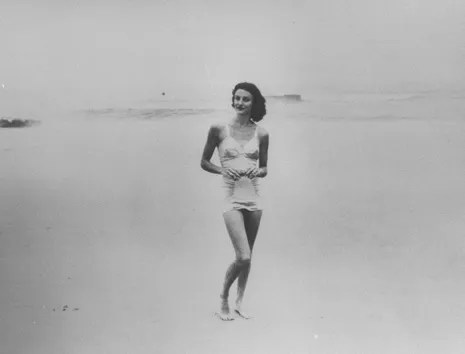
She was beautiful, and she knew it, and she used it, in the manner of someone who has been given one reliable currency in a world that has otherwise been rather stingy. She modelled. She eloped at nineteen with Alfred “Kayo” Sexton II, a wool salesman, and settled into the life that Newton and the 1950s had prepared for her: the house, the children, the dinner parties, the afternoons. The life was not wrong for her in the simple sense — she loved her daughters, in her complicated way, and the marriage endured, battered, for twenty-three years. But it was insufficient, in a way she could feel in her body before she had the language for it, and the insufficiency expressed itself in the only channels available: breakdowns, hospitalisations, the long stretches of incapacity that the psychiatric language of the era called by various names and that we might now describe more simply as a person trying to exist in conditions that made full existence impossible.
“I am your type of woman, a woman who knows how to be happy even when she is sad. That is what kills us.”
Anne Sexton, letter to a friend, undated
The first breakdown came in 1954, after the birth of her first daughter. A second, more severe, followed in 1956, and it was during her recovery that Dr. Martin Orne, her therapist, made the suggestion about writing. Sexton discovered, in the exercise he set her, not therapy but vocation — the distinction being that therapy is something you do in order to feel better, and vocation is something you do because you cannot do otherwise, regardless of how it makes you feel. The poetry did not make her feel better. It made her feel true, which is a different and more demanding thing.
The Workshop, Lowell, and the Permission of the Confessional
Sexton arrived in Robert Lowell’s Boston University poetry seminar in 1958 without a college degree, without formal training, and with a manuscript of poems that were, by the seminar’s standards, extraordinary. Lowell recognised it immediately — he was not always generous to his students, but he was honest, and honesty required acknowledging what was in front of him. Sylvia Plath was also in the seminar that year, and the two women — who would go on to be permanently and sometimes reductively linked, two confessional poets, two suicides, two housewives who became artists — knew each other and circled each other with the wariness of people who recognise in the other both a mirror and a rival.
The relationship between Sexton and Plath has been written about extensively and not always usefully. The comparison tends to diminish both — to turn them into representatives of a type rather than individuals of specific and non-interchangeable gifts. What they shared was the subject matter, the willingness to go where the poetry required regardless of decorum, and the fate. What distinguished them was everything else: the voice, the formal approach, the relationship to irony, the texture of the intelligence. Plath’s poetry is tighter, more controlled, more interested in the beautiful surface of the terrible thing. Sexton’s is rawer, more willing to be ungainly, more interested in the terrible thing itself than in its formal management.
They used to talk after Lowell’s class, the two of them, at the Ritz Bar, drinking martinis and talking about suicide with what observers described as a strange, almost clinical cheerfulness — the cheerfulness of people for whom the subject has become so familiar that it has lost the power to shock, and who discuss it the way other people discuss the weather, as the condition within which everything else happens.
The Poems: What They Say and How They Say It
“Wanting to Die,” written in 1964, is the poem in which Sexton comes closest to explaining what the pull toward death actually feels like from the inside — not as despair, exactly, or as pain, but as a kind of seduction, a lover’s call, a tenderness directed at the self that the living world has not provided. “Since you ask, most days I cannot remember,” it begins, with the conversational directness that is her most characteristic opening move, as though the poem is the continuation of a conversation already underway, as though you have just asked her something in the street and she is answering with complete honesty. The poem is terrifying and it is beautiful and it makes no attempt to be comforting, because comfort is not what it is for.
“Sylvia’s Death,” written in the days after Plath’s suicide in February 1963, is among the most remarkable elegies in the language: not because it mourns with conventional restraint, but because it mourns with rage and with envy and with the complicated guilt of someone who has been left behind by a person who has done the thing they both thought about, and who cannot decide whether the feeling is grief or something closer to betrayal. “Thief — how did you crawl into, crawl down alone into the death I wanted so badly and for so long,” she writes, and the line is almost unbearable in its honesty — in its refusal to be the kind of elegy that keeps a decent distance from its own feelings.
“I am not resigned. In me there is a rage to live, and also a wish to die, and the wish to die is sometimes just the wish to rest.”
Anne Sexton, in interview with Barbara Kevles, Paris Review, 1968
The Pulitzer came in 1967 for Live or Die — a collection whose title is not metaphorical but literal, the record of a sustained argument with herself about which of the two she was going to do. The poems are arranged in sequence, dated, presented as a journal of a mind in genuine extremity, and the effect is of a document rather than an artefact: something preserved rather than made, though the making is everywhere evident in the precision of the language, the formal control that persists even when — especially when — the content is most uncontrolled. The book ends with “Live” — a poem of tentative, hard-won affirmation, the speaker choosing, for now, to stay. It is one of the most moving endings in American poetry, and it is moving precisely because it is so provisional, so clearly a temporary decision rather than a permanent resolution.
The Body, the Taboo, and the Woman Who Named Things
What Sexton did for the body in poetry is difficult to overstate, because the starting point — the degree to which the female body was, in 1960, a subject that serious poetry was not supposed to address directly — is now hard to fully reconstruct. The menstruating body, the aborting body, the body in the psychiatric ward, the body of a woman who has been told she is mad and has decided to investigate the proposition with full poetic rigour: these were not available as subjects. They were available, at best, as metaphors for other things, as the vehicle for a tenor that was properly abstract and elevated. Sexton declined the metaphor. She wanted the thing itself.
The poem “In Celebration of My Uterus” — published in 1969 in Love Poems — is the most obvious example, and the title alone was, in 1969, a provocation of considerable force. But the provocation is not the point of the poem. The point is the affirmation — the sustained, serious, formally accomplished celebration of a body that the culture surrounding the poet had taught her to regard as a source of shame, malfunction, and pathology. To claim it as a source of joy, and to do so in verse that is at once wildly exuberant and technically assured, was not a political act in the narrow sense. It was a deeper act: the insistence that the full range of a woman’s experience of her own body was available to poetry, that nothing was excluded, that the permission Lowell and Snodgrass had extended for male confession extended equally — had to extend equally — to female confession, including the parts of female experience that had no male equivalent and therefore no existing poetic tradition to authorise them.
The Last Years and the Garage
The years after the Pulitzer were difficult in ways that the prize did nothing to address, because prizes address recognition and what Sexton needed was treatment — sustained, adequate, honest treatment of a mental illness that the therapeutic relationships of the era, several of which have since been the subject of serious ethical scrutiny, did not provide and in some cases actively worsened. She drank heavily. She performed her poetry with a theatrical intensity that was both genuinely compelling and alarming to those who knew how close to the surface the material was. She had affairs. She taught, at Boston University, with an openness to her students’ emotional lives that was at once generous and, at its boundaries, inappropriate. She was, in these years, a person consuming herself at a rate that the extraordinary creative output — Transformations in 1971, The Book of Folly in 1972, The Death Notebooks in 1974 — was simultaneously producing and accelerating.
On October 4, 1974, the day after receiving the page proofs of The Awful Rowing Toward God, she had lunch with Maxine Kumin — her closest friend, her fellow poet, the person who had read every poem she had ever written and who loved her with the fullness of someone who saw her clearly and loved her anyway. She went home. She put on her mother’s old fur coat. She went into her garage and ran the engine of her car and died of carbon monoxide poisoning. She was forty-five years old.
The fur coat detail has stayed with readers and critics in the way that certain details do — not because it explains anything but because it resists explanation in a way that feels true to the person, to the theatricality and the tenderness and the complicated relationship with her mother that runs through the poetry from the first collection to the last. She dressed for the occasion, in the way that she had always dressed for the occasion, which was the occasion of her own life.
What She Left
There is a recurring discomfort in the critical literature about Sexton — a hesitation about how fully to celebrate work that was so inseparable from a pathology, that drew so directly on material that damaged its maker, that might have encouraged, in vulnerable readers, identifications that were not safe. This discomfort is not trivial, and it is not answered simply. The poetry did not cause her death. The illness did. The poetry was, for as long as she made it, the thing that made the illness bearable, that gave the suffering a form and therefore a meaning it would not otherwise have had. This is not romanticisation. It is description.
What she left is a body of work that expanded, permanently and irreversibly, the territory available to poetry. The women who came after her — Sharon Olds, most obviously, but also a generation of poets for whom the confessional mode is simply one of the available registers rather than a provocation — write in a space that Sexton helped to open. The opening cost her everything, as openings of that kind tend to, and the cost was real and should not be sentimentalised. But the space is real too, and it is occupied now by hundreds of poets writing hundreds of poems about the full range of their experience — the body, the madness, the desire, the grief, the things that happen in the kitchen at three in the morning when the children are asleep — that would not, without Sexton, have known they had permission.
She gave them the permission. In stanzas. At considerable personal cost. The least we can do is read the poems with the full attention they were written in, and acknowledge that the woman in the fur coat, going into the garage, had already given us more than we had any right to ask.
This essay draws on Diane Wood Middlebrook’s biography Anne Sexton: A Biography (1991), Sexton’s collected poems edited by Linda Gray Sexton (The Complete Poems, 1981), and her interview with Barbara Kevles published in The Paris Review (1968). The relationship between Sexton and her therapist Dr. Martin Orne, including the use of therapy session recordings, is discussed extensively in Middlebrook’s biography and has been the subject of significant ethical debate. Maxine Kumin’s memoir Always Beginning: Essays on a Life in Poetry (2000) provides an essential account of their friendship. If you are affected by the themes in this essay, please reach out to a mental health professional or a crisis line in your country.

