
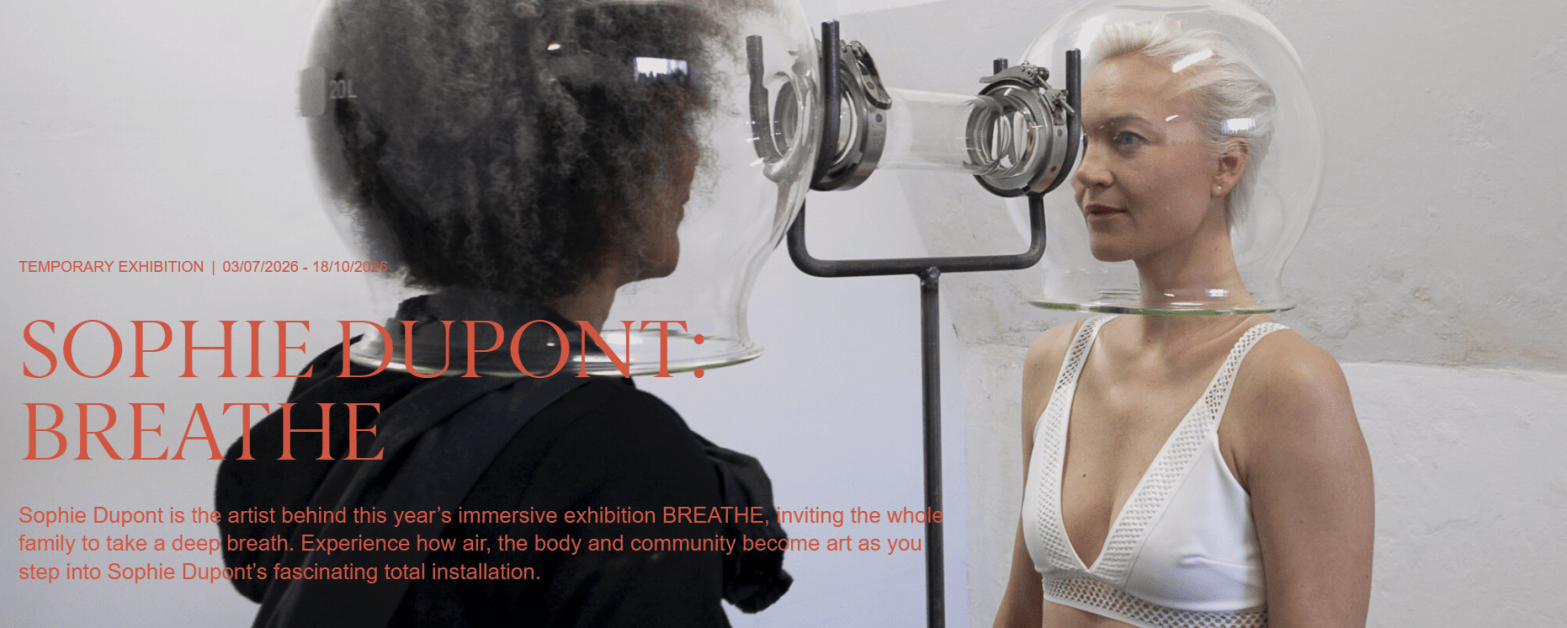
At Sorø Kunstmuseum, an empty room painted by Anna Ancher, a Russian icon of mother and child, and an installation shaped by visitors’ breathing offer three very different encounters with human presence. Their proximity is part of the museum’s interest: a visit can move between domestic observation, religious devotion and the experiments of contemporary art without leaving a building of unusually considered architecture. Its current exhibition, Sophie Dupont’s BREATHE, on view until 18 October 2026, gives that movement a particularly compelling focus.
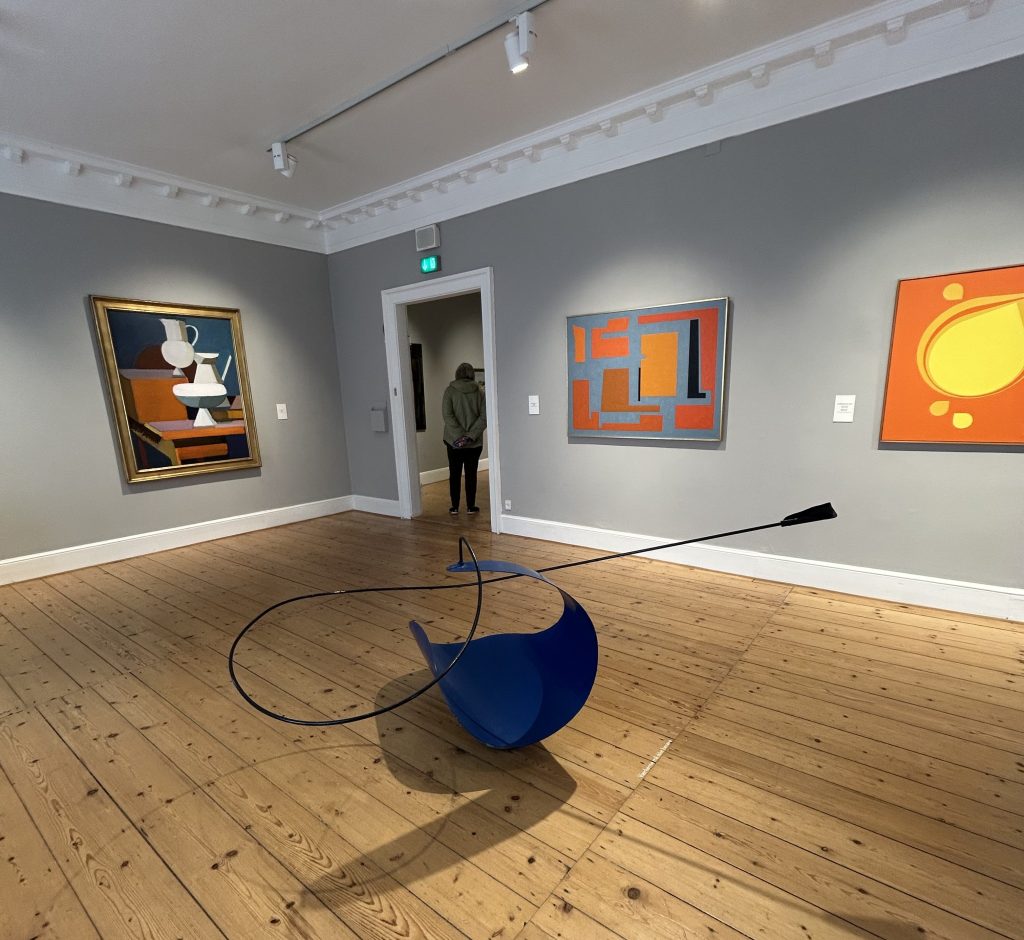
Established in 1943, the museum has occupied a former estate manager’s residence associated with Sorø Academy since 1963. The house, built in 1832, was extended in 2011 by Lundgaard & Tranberg, whose additions draw on the proportions and materials of the surrounding town. Specially developed terracotta shingles give the new exterior a shifting range of reds, ochres and greys, while courtyard skylights bring daylight into the lower galleries. The relationship between the intimate rooms of the older building and the contemporary exhibition spaces makes architecture an active part of the visit, adjusting the scale and atmosphere in which the art is encountered.
The permanent collections deserve ample time. The museum’s approximately 2,500 works provide a substantial account of Danish art, with holdings that include Nicolai Abildgaard, Jens Juel and C.W. Eckersberg, followed by Anna Ancher and L.A. Ring, and later artists such as Paul Gadegaard, Per Kirkeby and Susanne Ussing. Changing displays are necessary for a collection of this size. What emerges across its different periods is a history of artistic decisions about what deserves to be seen: landscape and portraiture, the domestic interior, social conditions, and the possibilities of colour and material themselves.
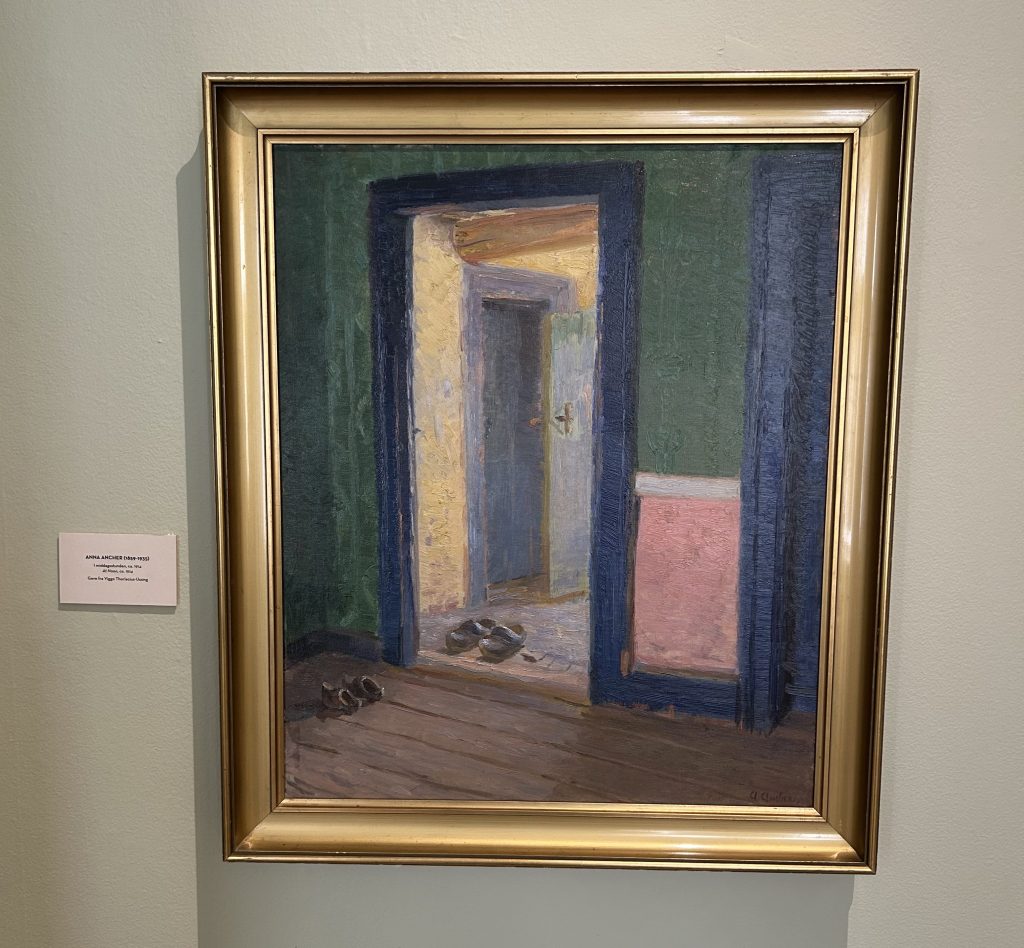
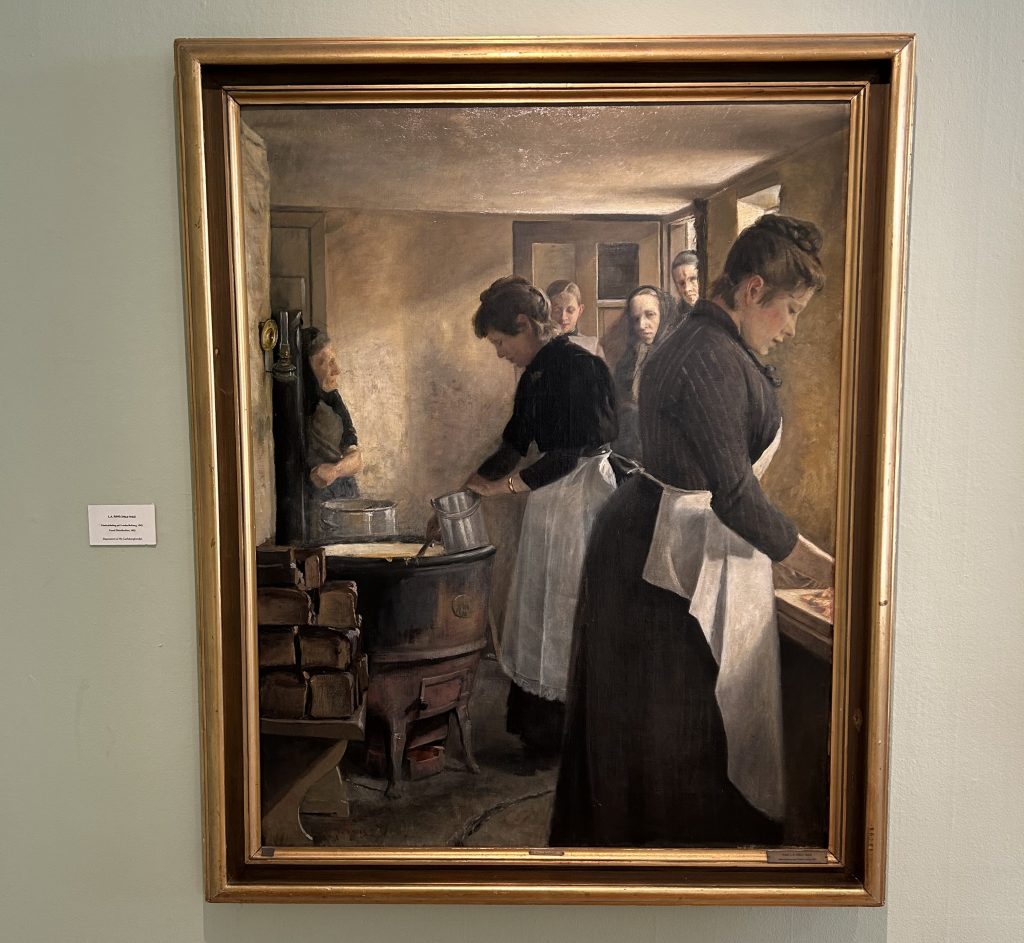
Anna Ancher’s I middagsstunden (At Midday, around 1914) is an especially apt work to consider alongside Dupont. Two pairs of clogs stand at a threshold; beyond them, unoccupied rooms unfold through green, pink and yellow, articulated by contrasting doorframes. The people have disappeared, leaving traces of their lives in an interior animated by sunlight. Looking becomes a way of reconstructing an ordinary moment from very little information. In Ring’s Maduddeling på Frederiksberg (Food Distribution in Frederiksberg, 1887), human need is more explicit. Women prepare and distribute food to the poor, and the arrangement of bodies, clothing and space makes inequality visible. These paintings give everyday existence both aesthetic and social consequence.
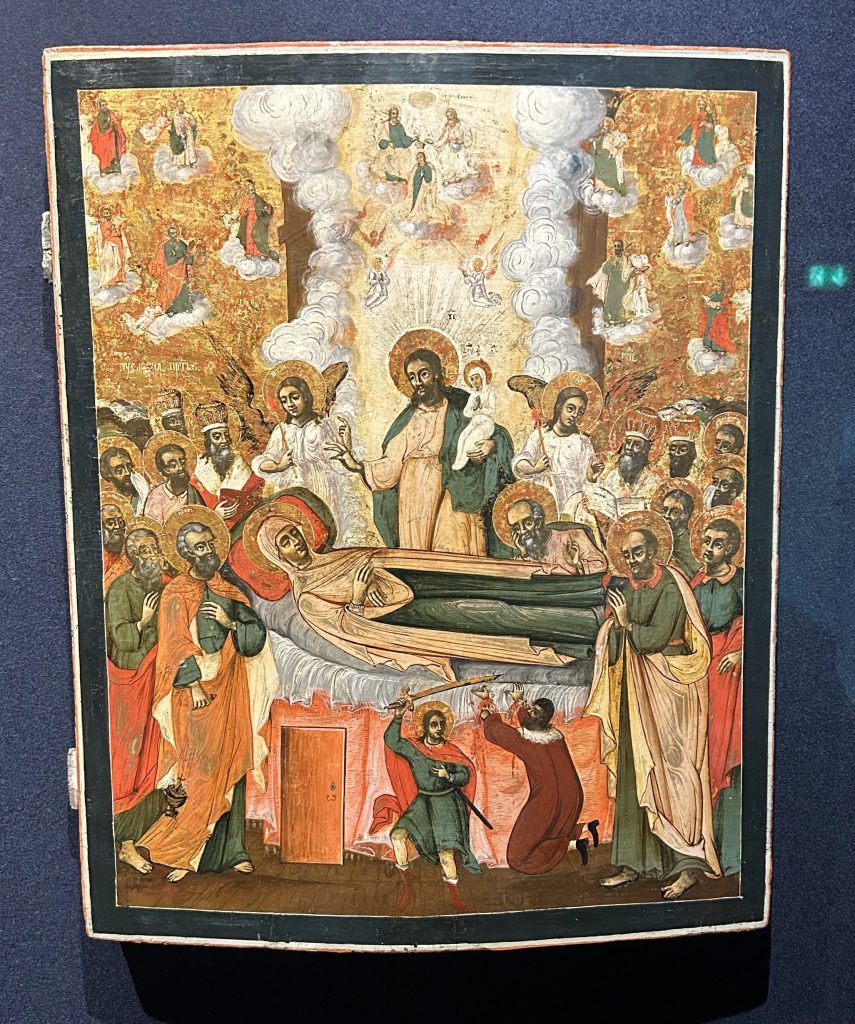
The Russian icons introduce another understanding of the image. Dating from the sixteenth to the nineteenth centuries, the collection comprises around 200 icons, assembled through donations from Hermod Lannung, Per Schrøder and Lorentz Jørgensen. A selection is permanently displayed in the renovated attic galleries. Their subjects include Christ, the Mother of God, saints and episodes from sacred history, expressed through conventions developed within Orthodox Christianity. These conventions carry theological meaning: posture, gesture and the relationships between figures belong to a visual language intended for devotional use. Understanding that purpose changes how one approaches their surfaces and apparent repetitions.
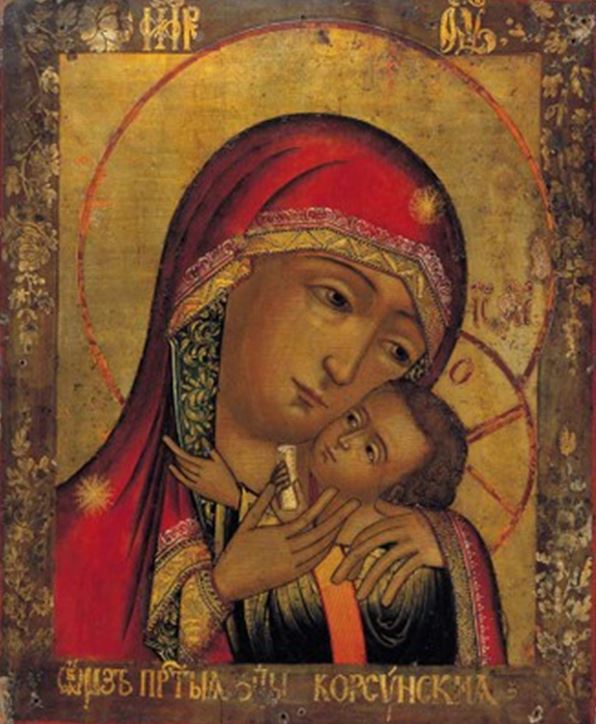
Among the museum’s highlights is an eighteenth-century Mother of God of Korsun, in which Mary and the Christ child press their cheeks together. The closely held figures give tenderness a formal structure, joining maternal affection to the knowledge of suffering that underlies the Christian narrative. An icon’s original function placed the image within prayer, ritual and a relationship with the sacred person represented. Seen in a museum, that history asks for particular care. Its devotional meaning remains essential to understanding it, even when the viewer approaches from outside the faith. The intimacy of this image also offers a striking point of contact with the museum’s broader attention to human vulnerability.
Dupont approaches the body through a very different artistic tradition. Born in Aarhus in 1975, she trained at London Contemporary Dance School and subsequently at the Royal Danish Academy of Fine Arts, completing her studies there in 2007. Her practice encompasses performance, painting, sculpture and installation, with the dancer’s awareness of rhythm, balance and duration running through it. In a 2026 interview, she described becoming paralysed in her legs at fourteen as an experience that profoundly changed her relationship with her body and breathing. That history gives her sustained interest in elementary bodily actions a personal foundation.
Her long-running Marking Breath performances make this interest tangible. Working from sunrise to sunset, Dupont records each exhalation with a mark, using materials related to the place in which the work takes place. She has traced the origins of the practice to her interest in Rudolf Laban’s movement notation and early experiments in recording breath on paper. The resulting surfaces contain the accumulated evidence of a day spent attending to a bodily rhythm. Each mark belongs to a particular moment, while the larger pattern allows those moments to become a drawing. Duration is carried into the object through a patient, repeated action.
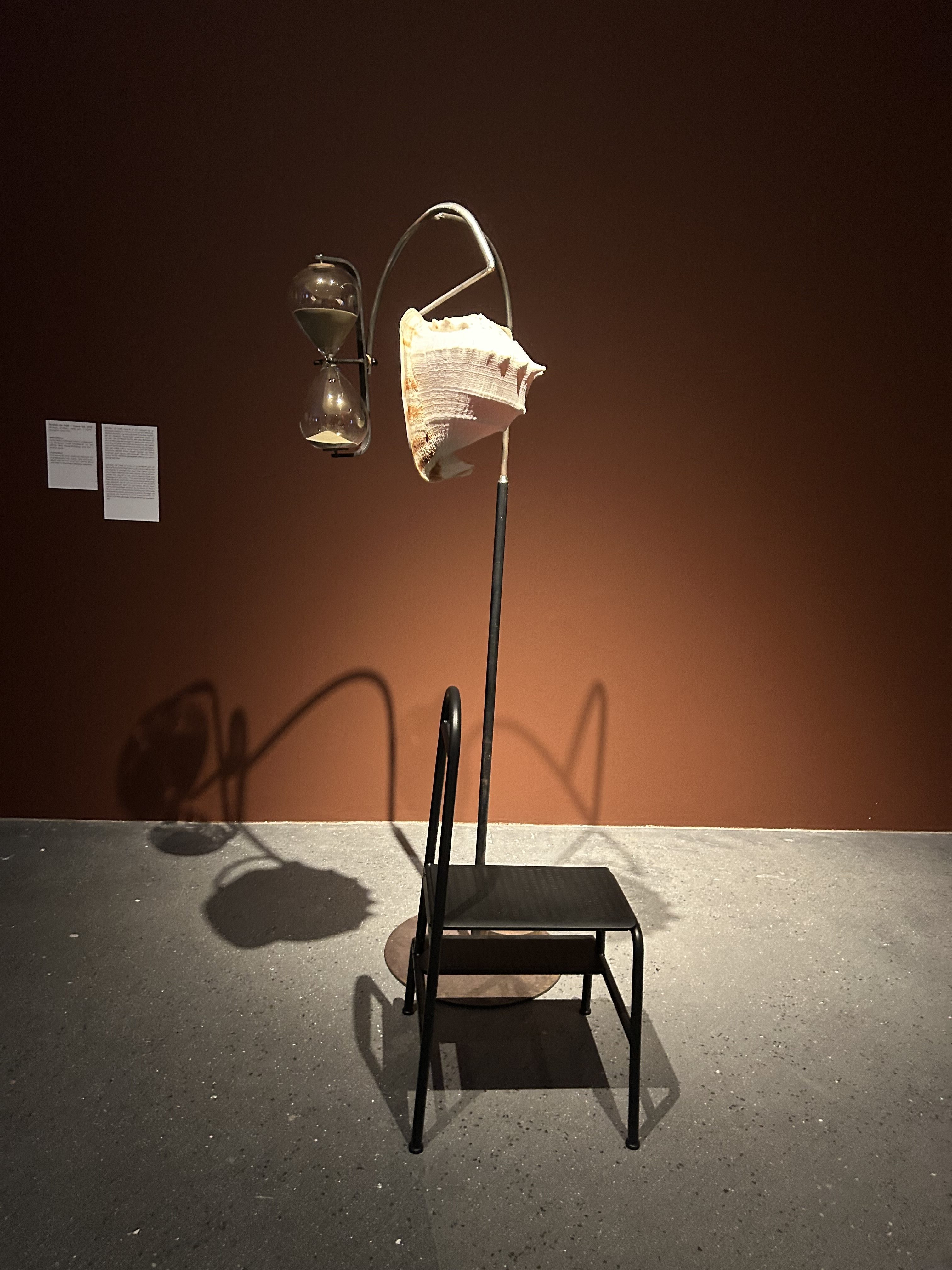
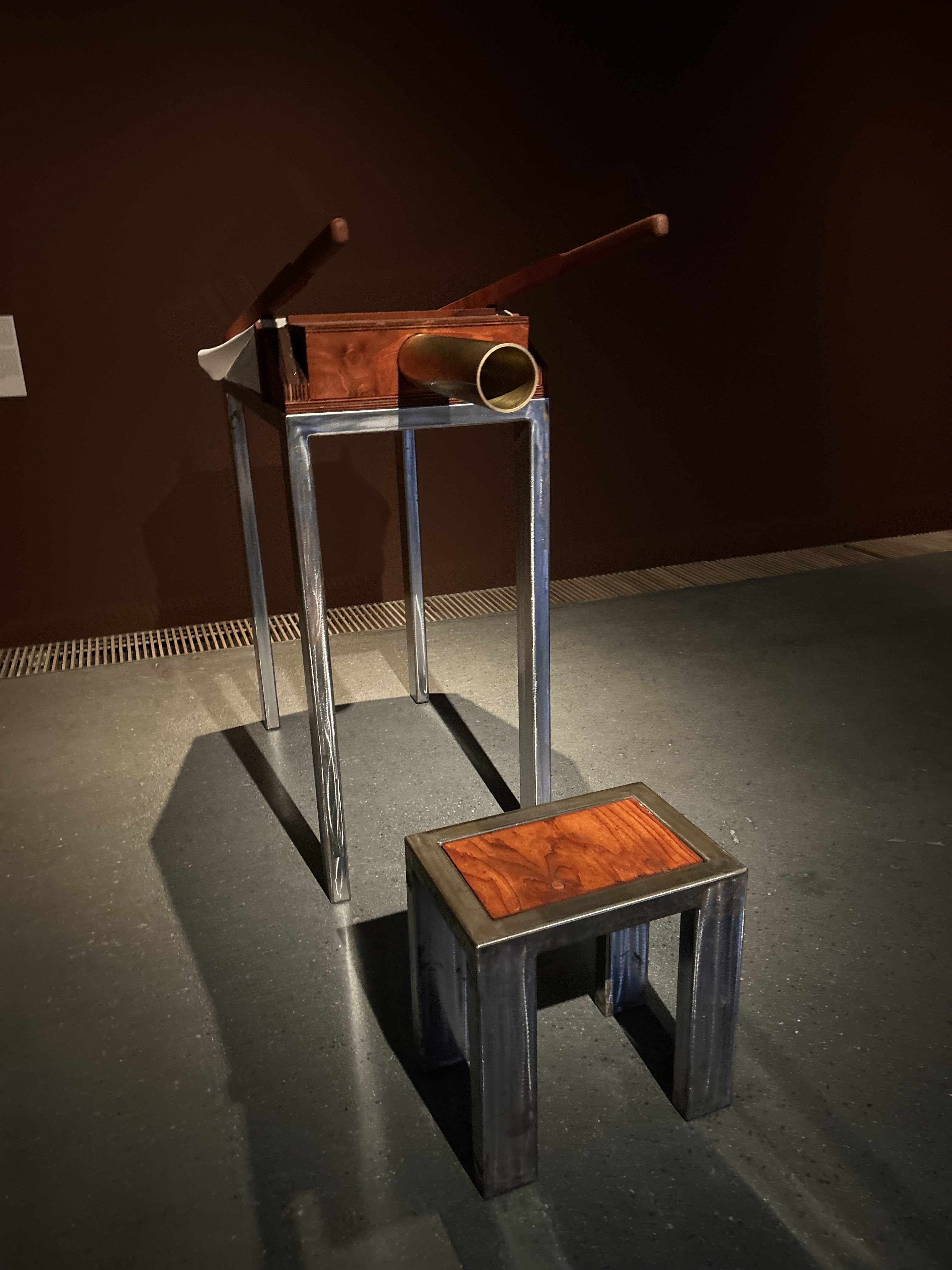
Developed with Holstebro Kunstmuseum, where it was shown earlier this year, BREATHE extends this practice into an environment that visitors help activate. Sculptures, video, sound, scent and movement direct attention towards the air passing through and around the body. A wind-producing installation responds to the pulling of handles; a glass sculpture invites an encounter with another person through breathing. Such actions introduce an element of uncertainty into the familiar museum relationship between an object and someone observing it. A visitor’s movement becomes part of what happens, and the work acquires a social dimension through that participation.
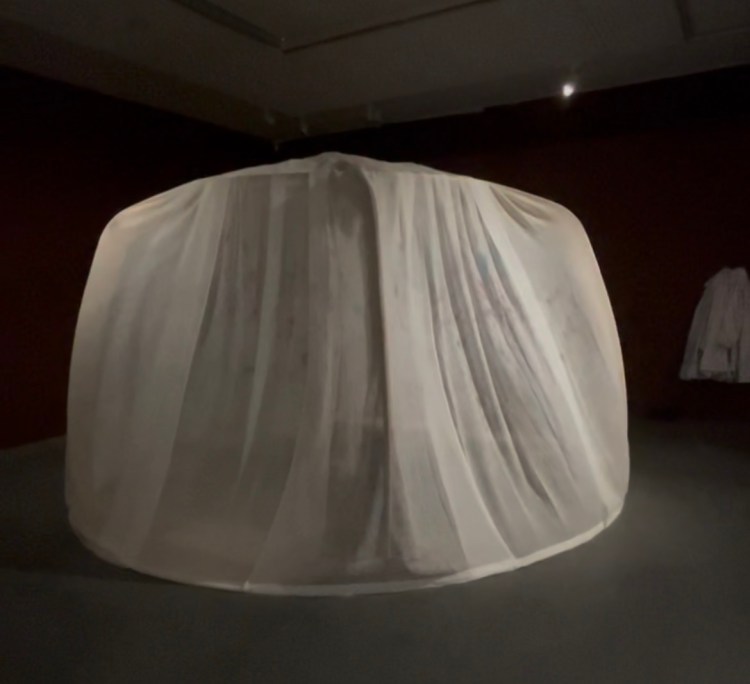
The coloured soap-bubble tent, created specifically for Sorø, gives the exhibition’s invitation a particularly clear form. Visitors contribute to a growing painting on the inside of the tent by blowing coloured bubbles. Breath produces an unstable, temporary shape; its contact with a surface leaves a lasting trace. Over the exhibition’s duration, these contributions accumulate into a work whose appearance depends on many people. The pleasure of the activity is inseparable from the question of authorship it raises. Dupont establishes the conditions, while visitors supply individual actions that enter a composition they can influence without controlling its eventual form.
Her term “collective sculpture” is useful here. Local residents have also been invited to contribute to video works, bringing the museum’s surrounding community into the exhibition. Sculpture becomes a way of thinking about relationships between bodies, space and time, as well as about a finished physical form. The invitation to children and adults follows from that approach: participation begins with capacities that precede specialist knowledge of art. It also asks an interesting question of the institution itself—how much of an exhibition can be made through the presence of the people who enter it?
There is an ecological and social implication to using air as a material. A shared dependence on breathing places each body in relation to its surroundings, and the safety of those surroundings is unequally distributed. Pollution and illness complicate any easy account of breath as a universal source of calm. Read in that context, Dupont’s attention to breathing opens onto questions of dependence and collective responsibility. Her work also gives time to an activity that ordinarily continues beneath conscious notice. Spending that time in a museum makes the activity available for reflection, including reflection on the conditions that allow it to continue.
The connections with Sorø’s permanent collections are interpretive, arising from the experience of considering these works together. Ancher’s clogs preserve the suggestion of absent bodies; Ring makes bodily need a public concern; the icon places an image within a sustained devotional relationship. Dupont brings living bodies into the making of the work itself. These different purposes give the museum visit its richness, allowing a contemporary exhibition to sharpen attention towards the older collections, and those collections to lend historical depth to the encounter with contemporary art. It is a good reason to leave time for the whole museum.
Sophie Dupont: BREATHE runs from 3 July to 18 October 2026 at Sorø Kunstmuseum, Storgade 9, Sorø. The museum opens Tuesday–Sunday, 11am–5pm. Adult admission is DKK 110; admission is free for visitors under 26.
Sources / Read More
- Sorø Kunstmuseum, BREATHE and museum history and visitor information.
- Sorø Kunstmuseum, the permanent collection and selected works by Anna Ancher and L.A. Ring.
- Sorø Kunstmuseum, Russian icons, 1500–1900 and Mother of God of Korsun.
- Lundgaard & Tranberg, Sorø Kunstmuseum architectural project.
- Sorø Kunstmuseum’s exhibition press release, 22 April 2026, reproduced by Soransk Samfund.
- Holstebro Kunstmuseum, BREATHE: exhibition overview and artist biography.
- Billedkunstnernes Forbund, Ten Questions for the Artist: Sophie Dupont, 24 June 2026.
- Julija Palmeirao, Where Movement Becomes Memory, and Breath Becomes Art: Sophie Dupont.
- Statens Værksteder for Kunst, Sophie Dupont: artist profile.
Discover more from My World of Interiors
Subscribe to get the latest posts sent to your email.

