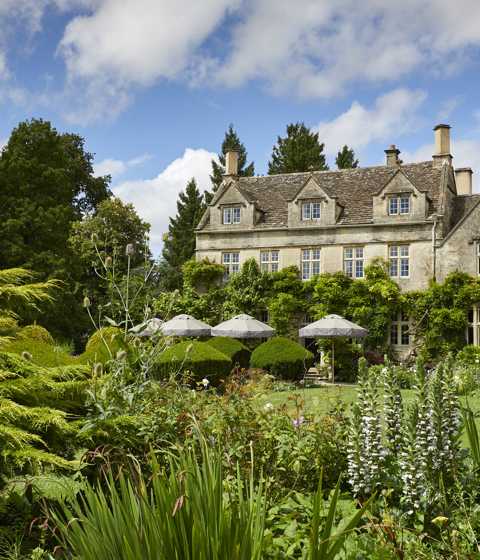
Behind the honey-coloured stone walls of a seventeenth-century manor house in Gloucestershire lies one of England’s most influential private gardens. Once the home of celebrated garden designer Rosemary Verey, Barnsley House has been given a new life as The Pig in the Cotswolds, bringing together beautiful interiors, kitchen-garden cooking and a particularly distinguished horticultural history.
A Garden Worth Travelling For
There are few country-house hotels where the gardens have a more interesting history than the building itself. Yet that is precisely the case at The Pig in the Cotswolds, which opened in September 2024 in the picturesque village of Barnsley, four miles from Cirencester.
The house dates from 1697 and served for many years as a rectory before becoming the home of horticulturalist Rosemary Verey (1918–2001), whose work transformed the direction of twentieth-century English garden design.
Largely self-taught, Verey began developing the gardens during the 1950s with her husband, architectural historian David Verey. Combining the formal structures of seventeenth-century gardening with the exuberant planting associated with the Arts and Crafts tradition, she created a sequence of spaces that became internationally admired.
Her celebrated Laburnum Walk, inspired by the gardens at Bodnant in Wales, produces a spectacular tunnel of yellow blossom in late spring. Elsewhere, intricate knot gardens, clipped topiary, a lily pond and an ornamental kitchen garden reveal her fascination with the relationship between structure and natural abundance.
The garden’s historical influences were unusually scholarly. Verey’s knot garden drew upon seventeenth-century horticultural patterns, while her celebrated potager—an ornamental vegetable garden—was influenced by the French tradition exemplified at Château de Villandry.
Her success helped revive interest in decorative kitchen gardens, demonstrating that vegetables, herbs and flowers could be combined within compositions as sophisticated as any formal flower border.
Verey subsequently designed gardens for clients including Elton John and the then Prince Charles at Highgrove. Her books and lectures introduced an international audience to the pleasures of traditional English garden design, and Barnsley House became an important destination for garden enthusiasts.
Today the grounds are protected on Historic England’s Register of Parks and Gardens of Special Historic Interest, with a Grade II* designation.
Their survival makes the hotel particularly appealing. Guests are inhabiting a landscape that represents several decades of careful observation, experimentation and horticultural expertise.
A Very English Kind of Hospitality
The property was already operating as a hotel when it was acquired by The Pig group in 2024. Its transformation became the tenth opening for the collection founded by Robin and Judy Hutson, whose approach to country-house hospitality places considerable emphasis on informal comfort and locally produced food.
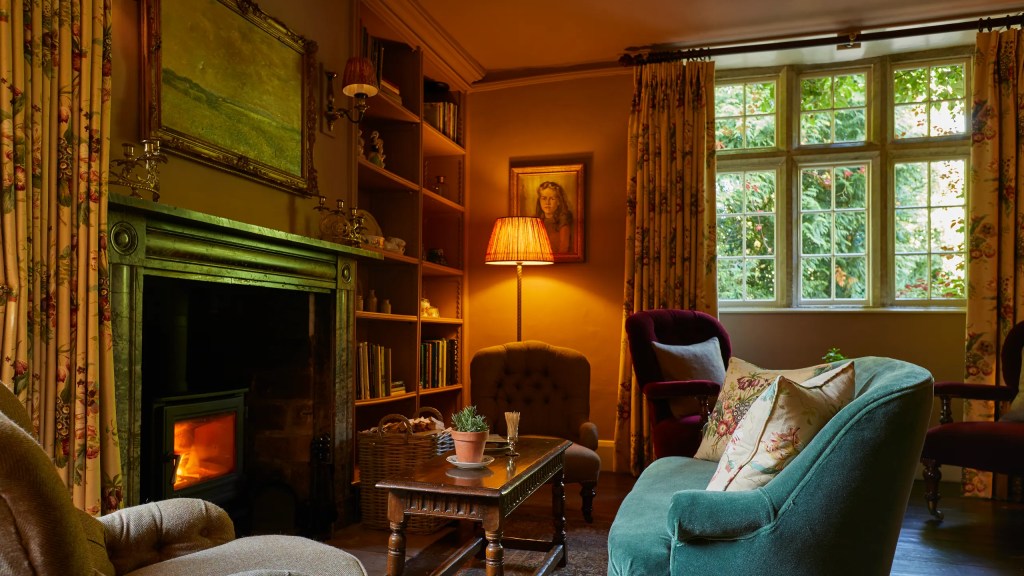
Judy Hutson’s interiors retain the recognisable Pig vocabulary of antique furniture, aged rugs, richly upholstered seating and rooms designed to feel comfortably lived in. Here, however, Verey’s garden provided a distinctive influence.
Floral wallpapers, botanical prints, muted greens and soft pinks introduce the planting outside into the domestic spaces, while reclaimed furniture and carefully chosen decorative objects preserve the house’s historical character.
The result is noticeably different from the immaculate formality often associated with expensive English country-house hotels. Rooms are individually furnished rather than uniformly decorated, with freestanding baths, generous beds and garden views among the available features.
The hotel has 24 bedrooms across the house and grounds, ranging from smaller, intimate rooms to spacious suites. Among them is Rosemary’s Hideaway, a generously proportioned room with its own outdoor entrance close to the original ornamental gardens.
The restaurant is central to the experience. Like the other Pig properties, it follows a 25-mile menu philosophy, prioritising ingredients grown in its own kitchen garden or supplied by nearby producers.
Menus change with the seasons and the harvest, with vegetables, edible flowers and herbs brought directly from the grounds. The connection with Verey’s horticultural philosophy is particularly appropriate: the ornamental vegetable garden she helped popularise has become an integral part of the hotel’s culinary identity.
Guests looking for something less formal can cross the road to The Village Pub, also operated by The Pig. The traditional Cotswold pub serves British classics, local ales and wines, and has a small collection of bedrooms of its own.
There is also the Fieldhouse Spa, tucked into the grounds with six treatment rooms, a sauna, steam room and heated outdoor hydrotherapy pool overlooking the countryside.
The Pleasure of Staying Somewhere with a Story
The Cotswolds has no shortage of handsome hotels, and the familiar combination of ancient stone buildings, antique furniture and country-house dining is hardly unusual.
What distinguishes The Pig in the Cotswolds is the extent to which its present identity depends upon the history of the house and its remarkable former occupant.
Verey created a garden that became influential far beyond Gloucestershire. Her combination of architectural structure, decorative planting and productive horticulture helped shape the contemporary idea of the English country garden.
The Pig has recognised the value of that inheritance, preserving its most important features while introducing a form of hospitality that encourages visitors to spend time in the grounds.
The garden is also reason enough to consider the timing of a visit. Spring brings the famous laburnum into flower, while summer reveals the herbaceous borders and ornamental vegetable beds at their most abundant. Autumn offers a different atmosphere, with the changing colours and textures of the planting taking precedence.
For those interested in interiors, garden history or simply a particularly pleasant country-house escape, Barnsley is an unusually rewarding destination.
And it is rather wonderful to imagine that the woman responsible for its greatest attraction would probably have been pleased to find people still wandering through her garden before sitting down to dinner.
Plan Your Visit
Barnsley Village, Cirencester, Gloucestershire GL7 5EE, England.
Stay: 24 individually designed bedrooms in the main house and grounds. Explore rooms and availability.
Eat: The Kitchen Garden restaurant offers a seasonal 25-mile menu. Non-residents can also book for dining. Restaurant and menus.
Drink: The Village Pub, directly across the road, provides a more informal alternative.
Relax: Fieldhouse Spa, with treatments and hydrotherapy facilities.
Best time to visit: Late spring for the laburnum walk, or summer for the gardens in full growth.
Further reading: Rosemary Verey’s Garden at Barnsley House — Gardens Illustrated, an excellent illustrated account of the garden’s design and historical significance.

