From experimental music and overlooked Greek avant-gardes to the changing geography of contemporary art, Athens’ National Museum of Contemporary Art presents an unusually compelling autumn programme.
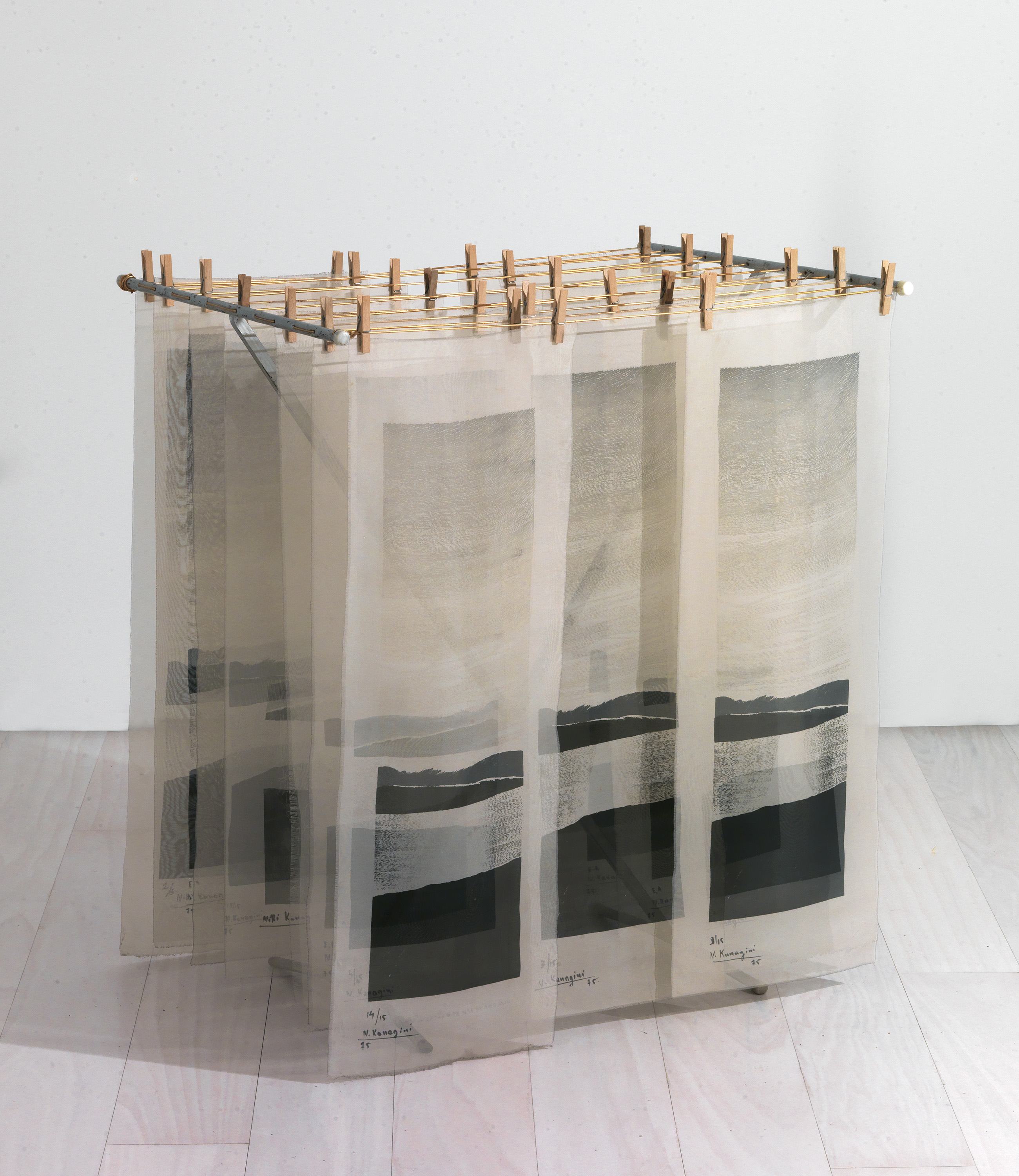
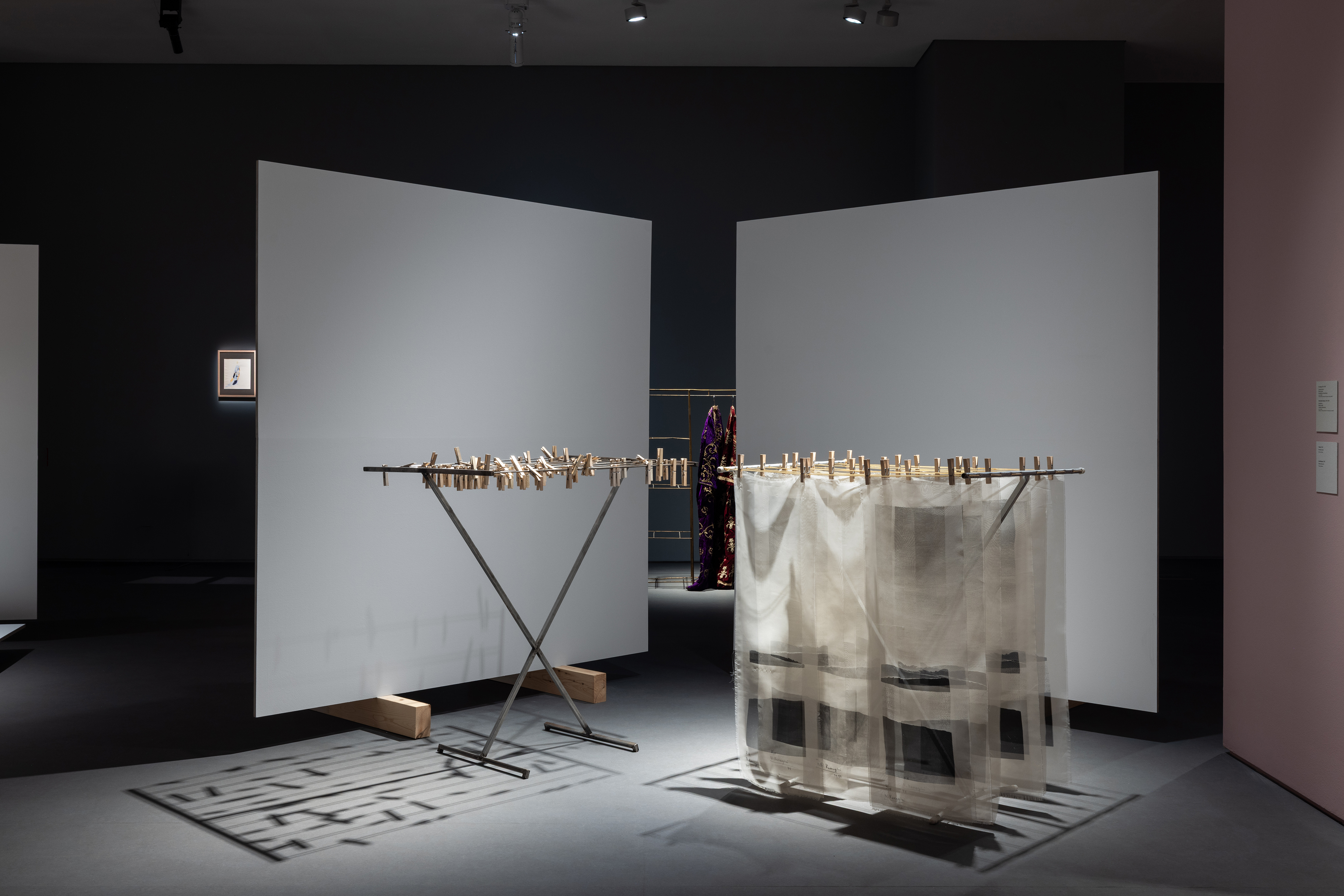
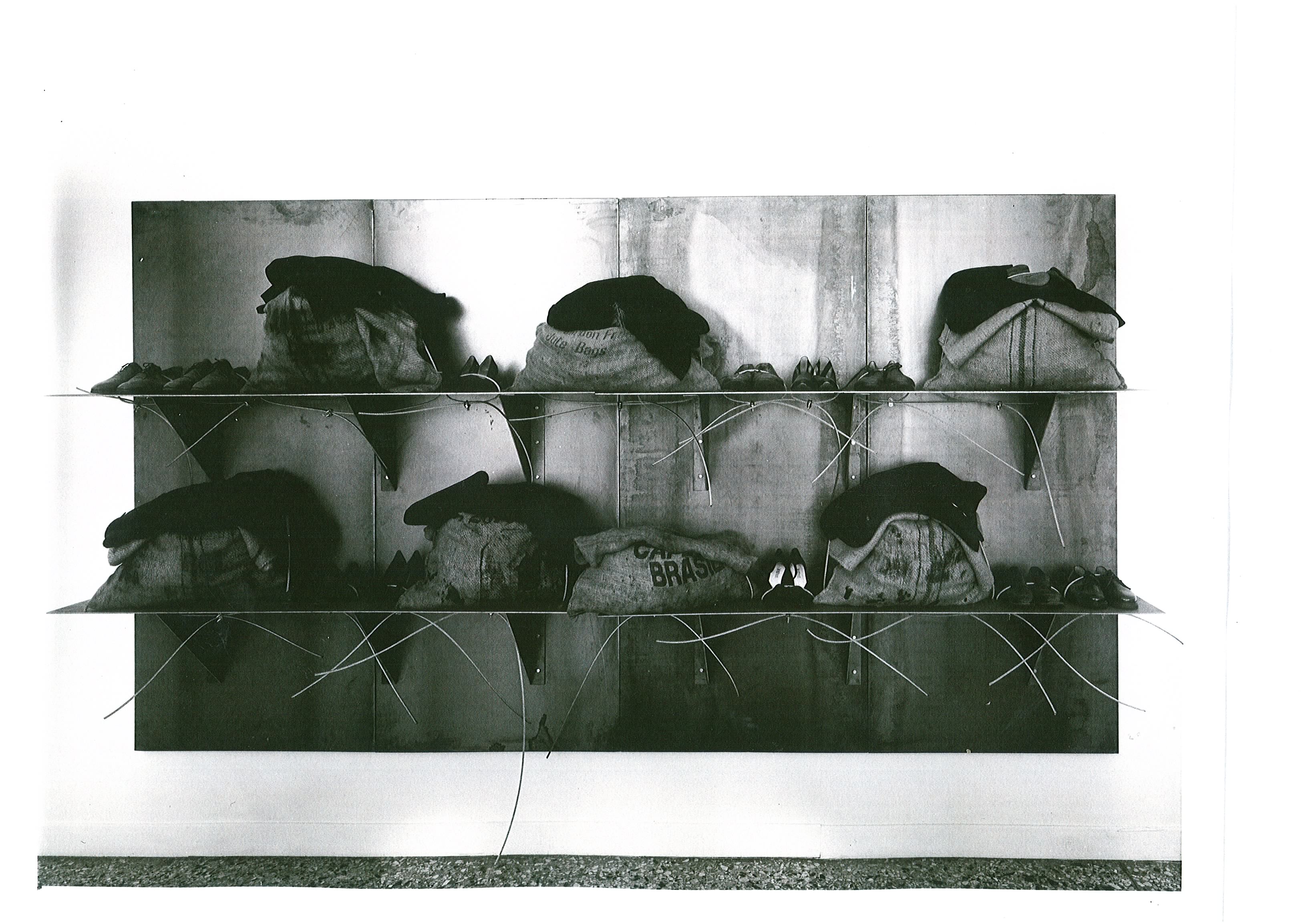
An ordinary metal drying rack, its clothing replaced by silkscreen prints of abstract landscapes, is among the works in Niki Kanagini’s retrospective at Athens’ National Museum of Contemporary Art. The installation belongs to her Domestic Scene series, through which the Greek artist transformed commonplace household arrangements into investigations of domestic labour, artistic convention and women’s everyday experiences.
The prints first appeared on a washing line at the Iolas-Zoumboulakis Gallery in 1976. Kanagini introduced the metal drying rack in a later version, exhibited in 1993. The alteration made the connection to household labour more explicit, while the abstract prints complicated the distinction between a functional domestic object and an artwork.
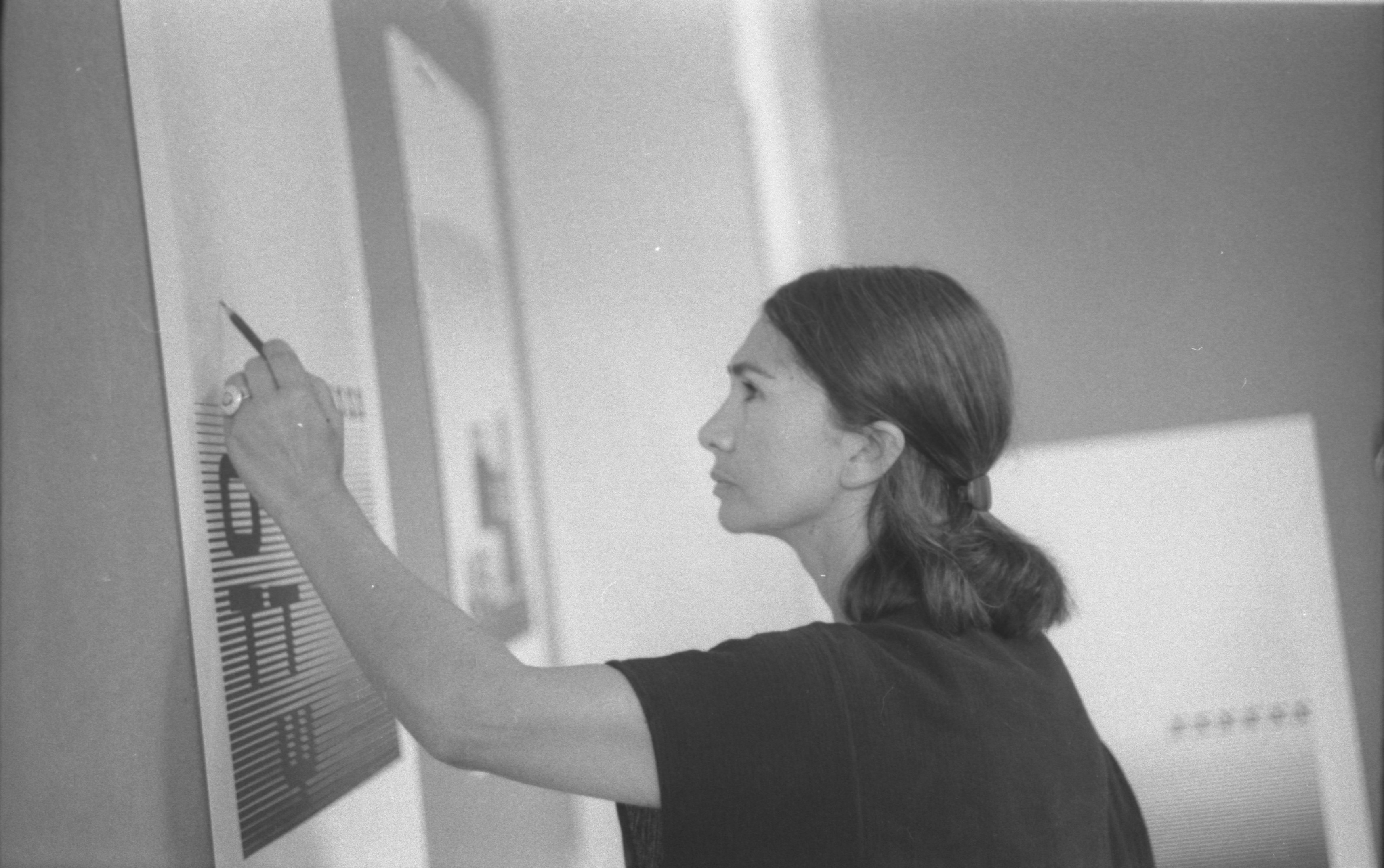
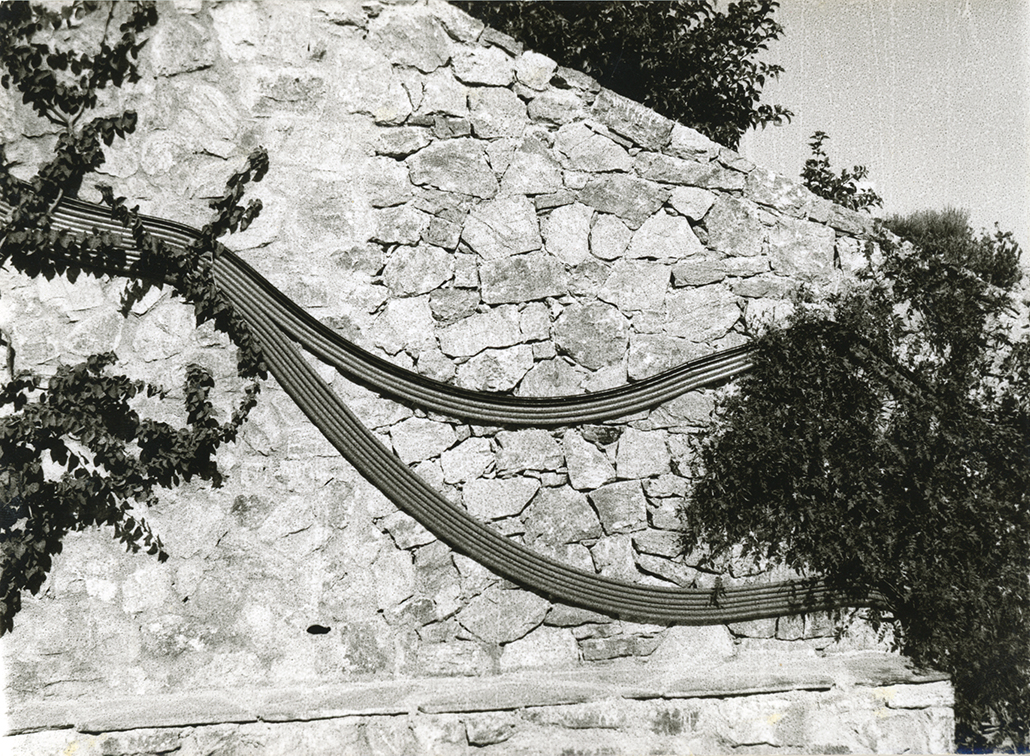
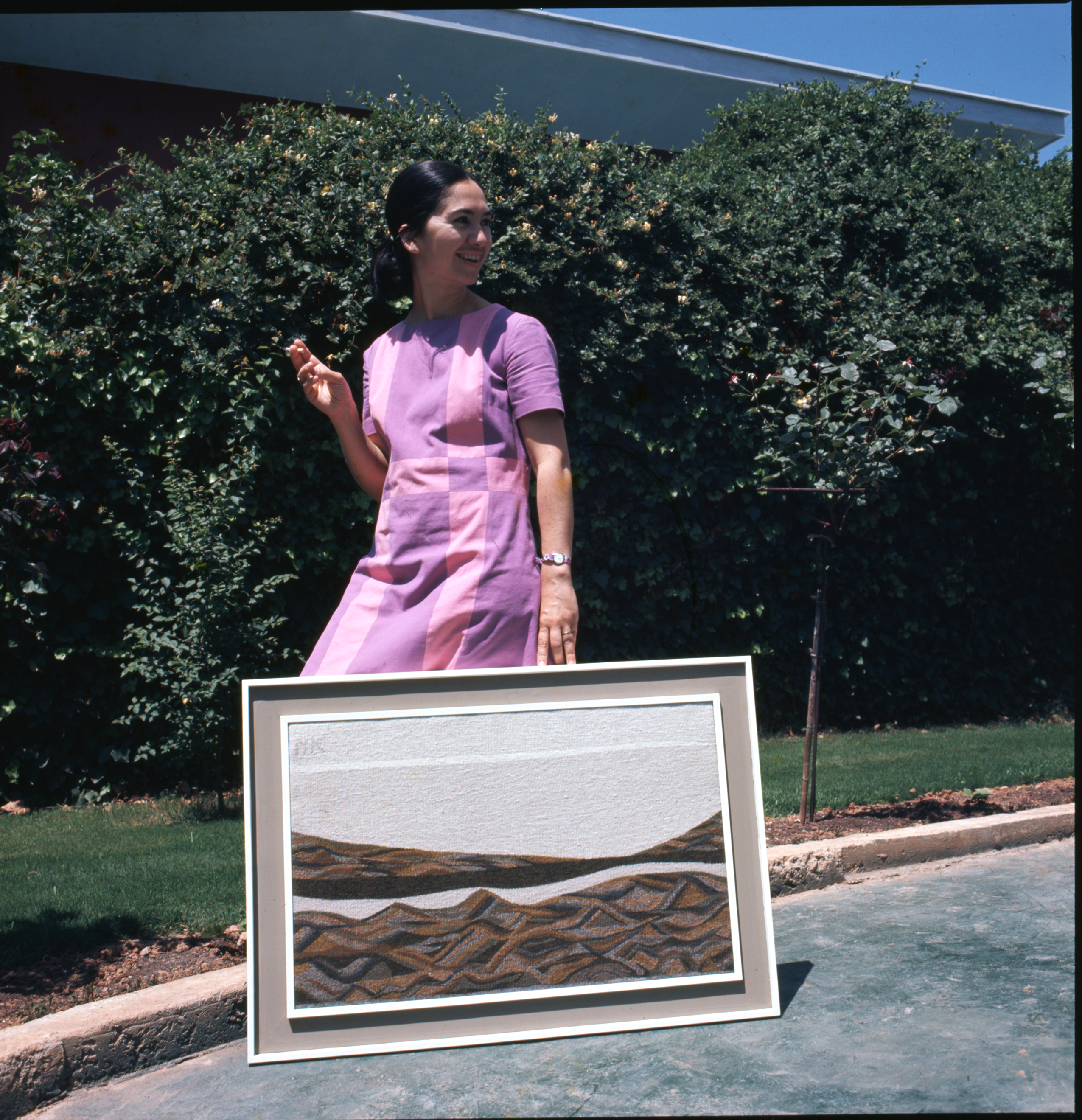
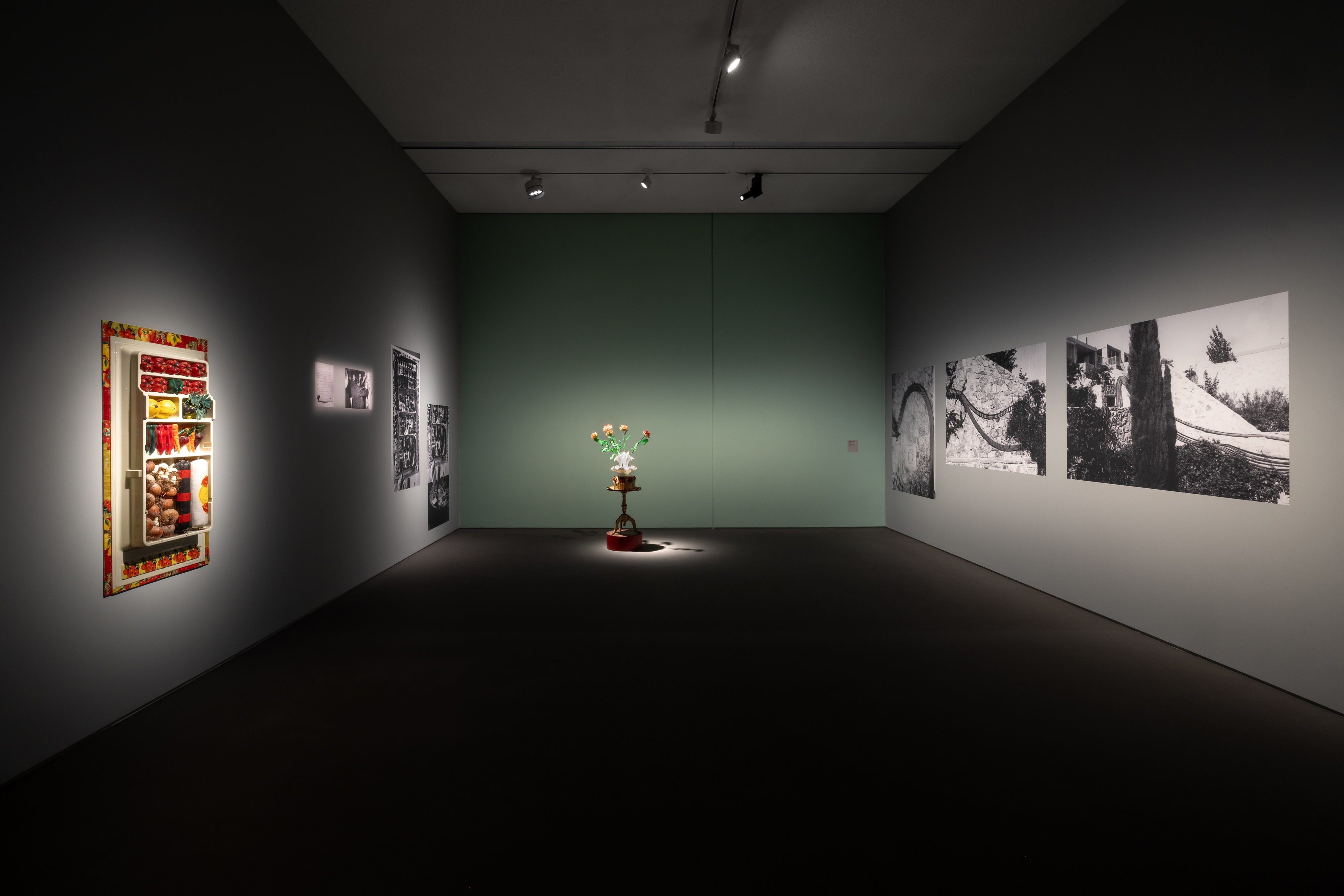
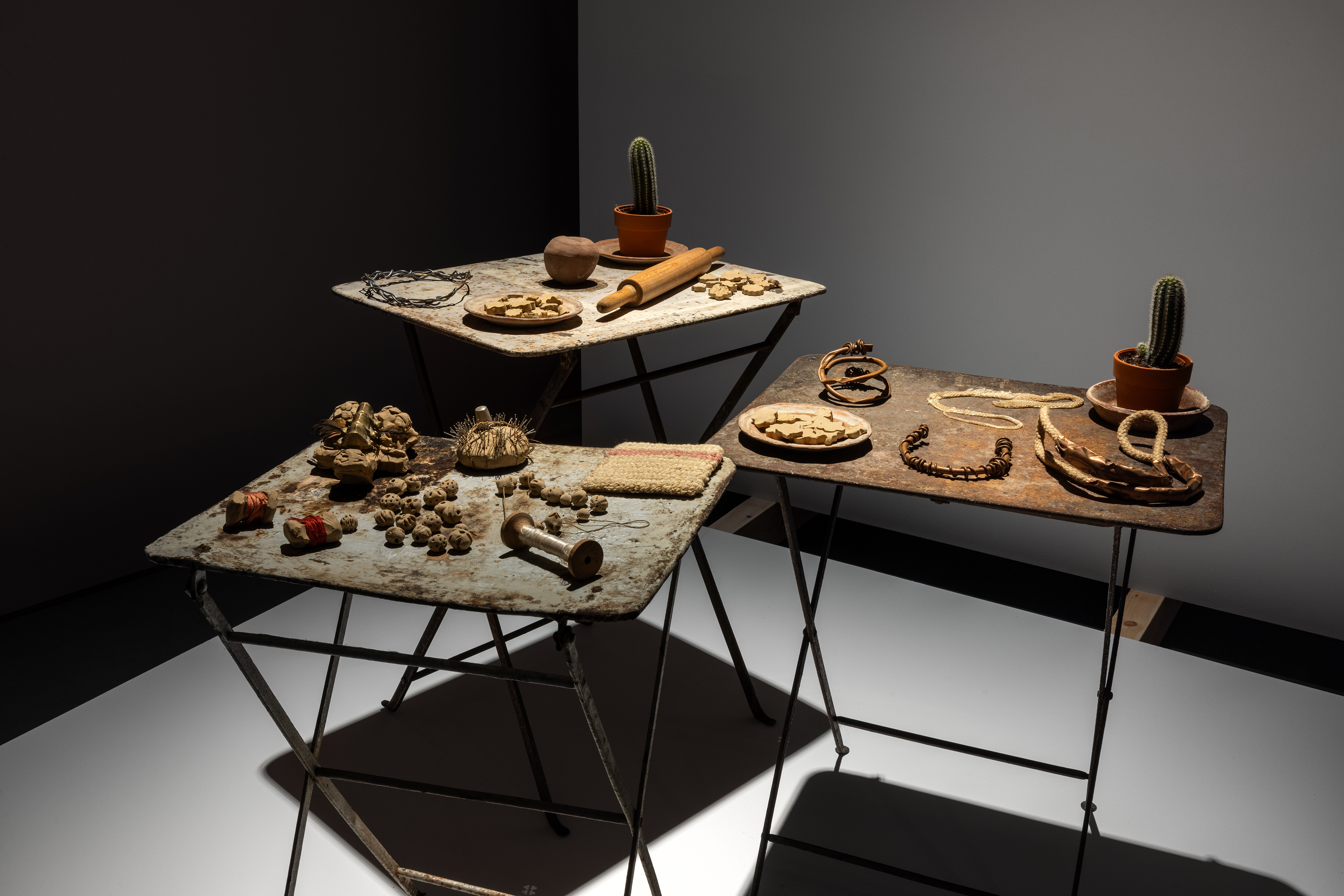
Curated by Tina Pandi, An Ode to Things examines four decades of Kanagini’s work, from the large-scale tapestries she exhibited at the Lausanne International Tapestry Biennial in 1971 to her experimental installations and manuscripts. Her early engagement with Bauhaus principles developed into an increasingly personal investigation of women’s experiences, domestic objects and the visual possibilities of written language.
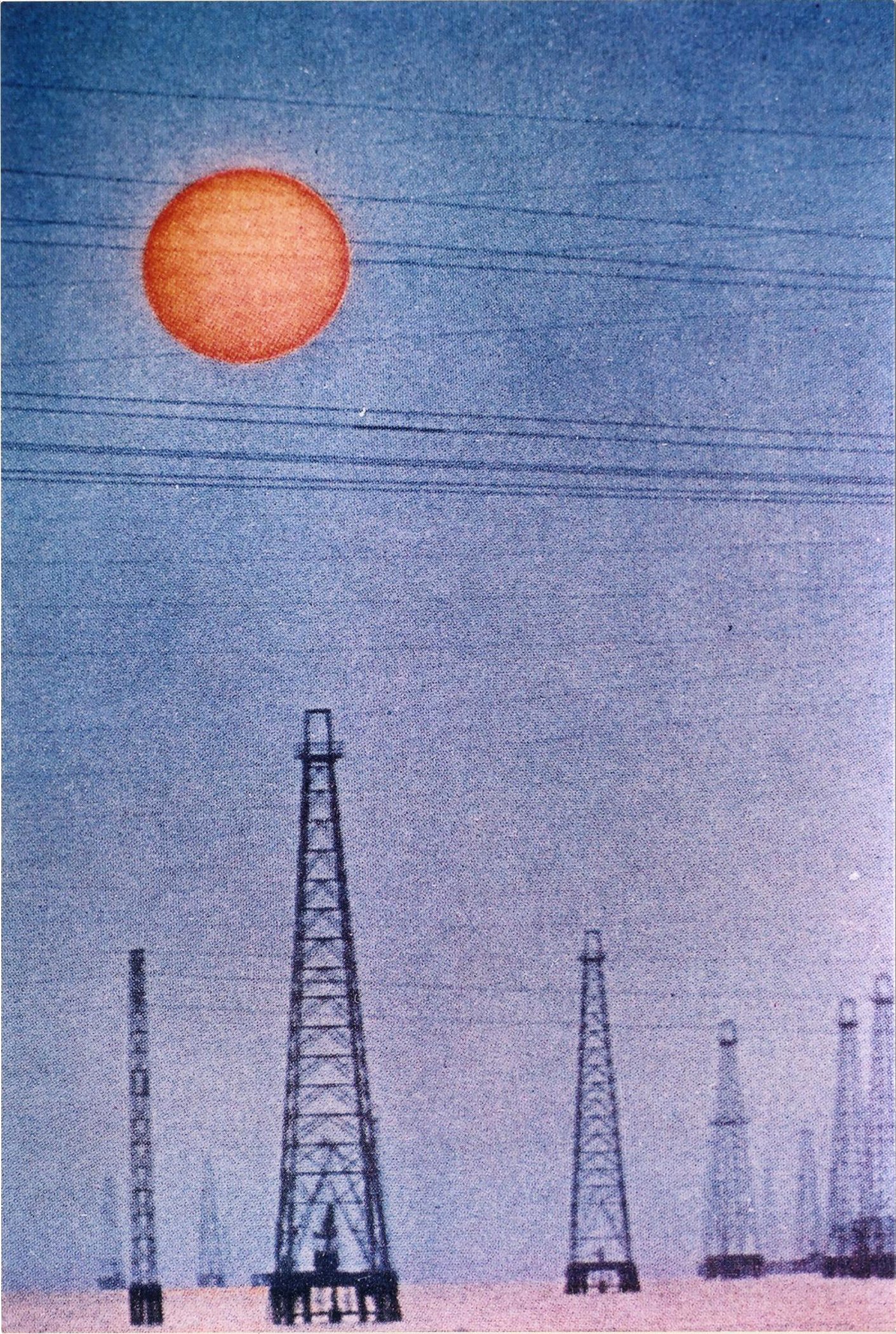
Her Manuscripts series offers another revealing example. In 1976, working with architects Suzana and Dimitris Antonakakis, Kanagini presented an installation of illuminated silkscreen prints derived from drawings. Using typographic ink, Letraset lettering and symbols associated with commerce and industry, she created compositions resembling fragments of printed information. Among the recurring motifs were dollar signs and oil-well imagery, introducing concerns about industrialisation and environmental damage.
Kanagini (1933–2008) has received comparatively limited international attention, despite a practice that developed in conversation with important movements in post-war art. The EMST retrospective, which continues until 14 February 2027, provides an opportunity to reconsider her work beyond the established divisions between painting, textiles, design and installation.
The Greek avant-garde reconsidered
A similar process of reassessment is underway in Stathis Logothetis: Earth to Earth, the artist’s first retrospective since 1994.
Born in Bulgaria in 1925 and raised in Thessaloniki, Logothetis initially trained as a musician before turning to painting in 1954. His subsequent travels and periods of residence across Europe brought him into contact with the experimental practices of the post-war avant-garde.
His paintings gradually incorporated materials and processes that challenged the presumed stability of the finished artwork. Canvas, pigment and frame became materials to be manipulated, damaged or combined with organic matter. In certain works, the artist introduced physical action and audience participation; in others, he exposed materials to natural processes, allowing weathering and deterioration to influence the result.
The distinction matters. Rather than representing nature through landscape painting, Logothetis introduced its physical processes into the production of art. His work belongs to a wider twentieth-century investigation into chance, material transformation and the artist’s diminishing control over the completed object.
The retrospective, curated by Stamatis Schizakis, brings together approximately 70 works and previously unpublished archival material. It also examines Logothetis’s lifelong creative relationship with his brother, the Greek-Austrian experimental composer Anestis Logothetis. Their shared interest in performance, improvisation and unconventional artistic structures suggests how fluid the relationship between music and the visual arts had become during this period.
The exhibition closes on 8 November.
Jani Christou and the limits of musical notation
One of the most intellectually intriguing exhibitions is Jani Christou: Enantiodromia, devoted to the Greek experimental composer Jani Christou (1926–1970).
Born in Cairo and raised in Alexandria, Christou studied philosophy at Cambridge before developing a compositional practice profoundly influenced by psychology, mythology and ritual. His investigations eventually carried him beyond conventional musical notation towards an expanded conception of performance.
In his later compositions, musicians might be instructed to cry out, improvise actions or engage in behaviour outside their usual instrumental roles. Christou called this metapraxis: an action through which the performer transcends the ordinary conditions of musical execution. A violinist playing the violin would be engaged in conventional musical practice; a violinist suddenly required to scream would enter the territory of metapraxis.
Such instructions were incorporated into a system of notation that used graphic symbols and psychological cues to communicate actions and changes in intensity. Christou was interested in what happened when a performer was required to act beyond the conventions of an instrument or artistic discipline.
The exhibition’s title derives from his composition Enantiodromia (1968–69). Associated with the ancient philosopher Heraclitus and subsequently developed within Jungian psychology, the term concerns the movement and relationship of opposites. Christou employed this principle through sonic and psychological patterns undergoing continuous transformation.
Curated by musicologist Costis Zouliatis in collaboration with the Athens Conservatoire, the exhibition makes extensive use of Christou’s archive, including handwritten scores, correspondence, photographs and philosophical notes. These are accompanied by an acoustic environment incorporating recordings and audiovisual material.
The archival approach is important. Christou’s early death has contributed to a reputation surrounded by mystical interpretations. His manuscripts allow a closer examination of his actual working methods, showing how elaborate intellectual investigations became practical instructions for performers.
Enantiodromia closes on 8 November.
Also ending that day is George Lappas: Spotlight, curated by Daphne Vitali to mark the tenth anniversary of the sculptor’s death. Born in Egypt in 1950, Lappas studied psychology in the United States, architecture in London and sculpture in Athens and Paris. His work frequently treated sculpture as a form of three-dimensional drawing, using figures and objects to investigate the relationship between physical space and visual perception. The exhibition brings together works from EMST’s collection and selected loans.
A different geography of contemporary art
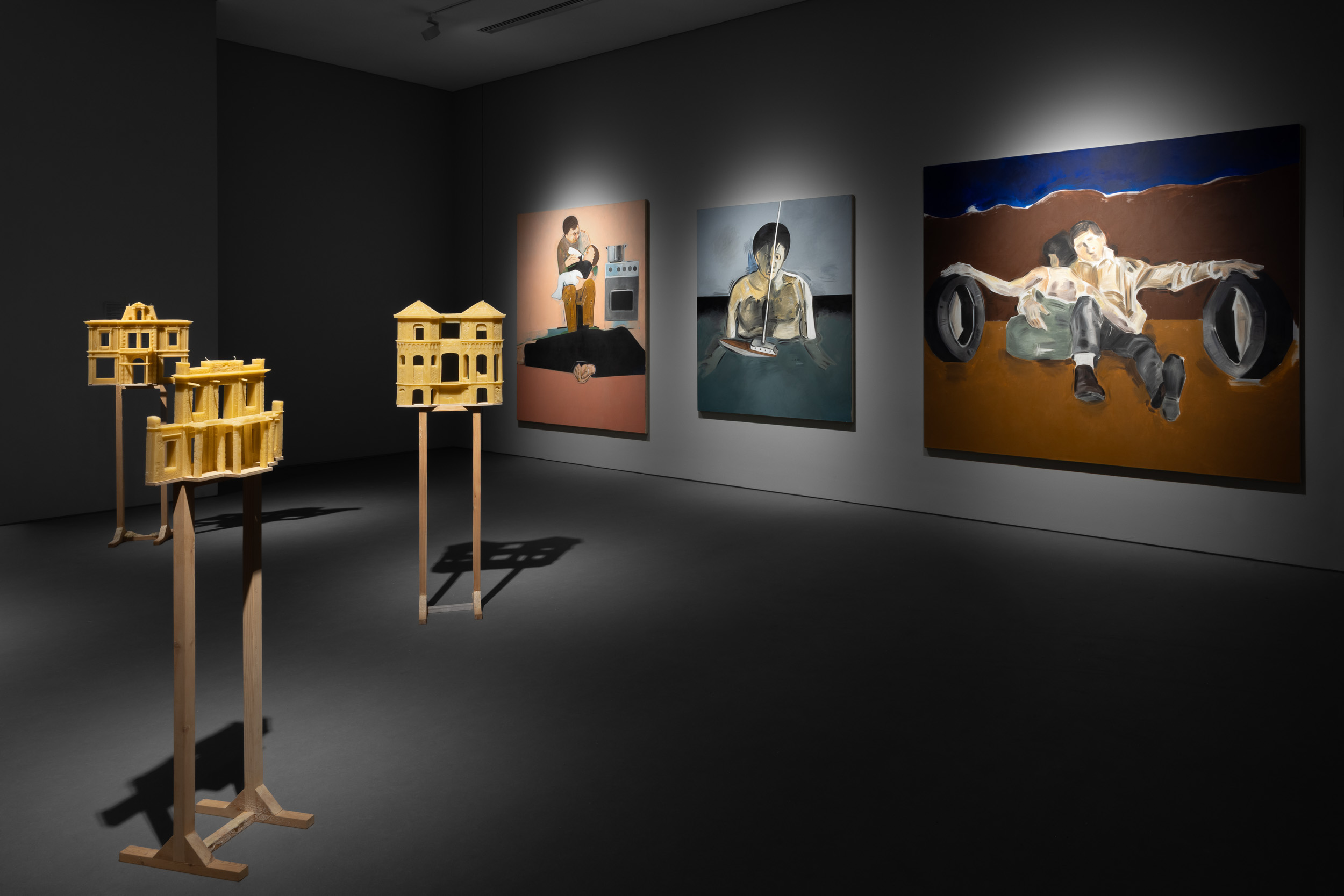
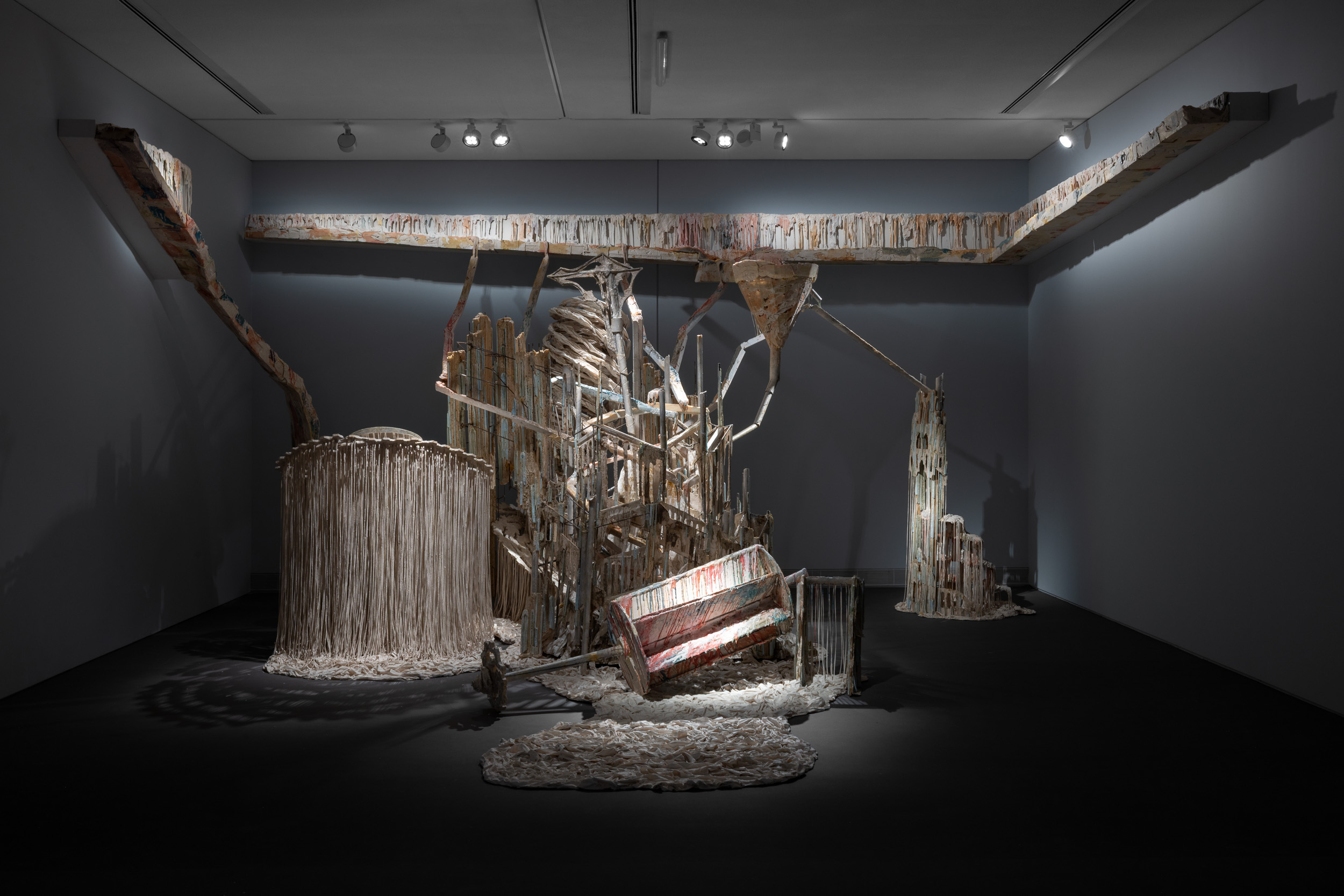
The most substantial statement about the museum’s current direction is South by Southeast: Re-Orienting the Collection, which opened in June 2026.
Featuring 50 artists from more than 20 countries, the exhibition reflects a collecting policy introduced under artistic director Katerina Gregos in 2021. Its focus extends across Southeastern Europe, the Balkans, Turkey, North Africa and the Middle East, examining cultural relationships historically obscured by conventional divisions between Europe and its neighbouring regions.
The title is a deliberate variation on Alfred Hitchcock’s North by Northwest. Its geographical reversal has particular significance for Greece, whose modern cultural identity was strongly shaped by nineteenth-century European philhellenism, despite the country’s long and complicated connections with the Ottoman world, the Balkans and the Eastern Mediterranean.
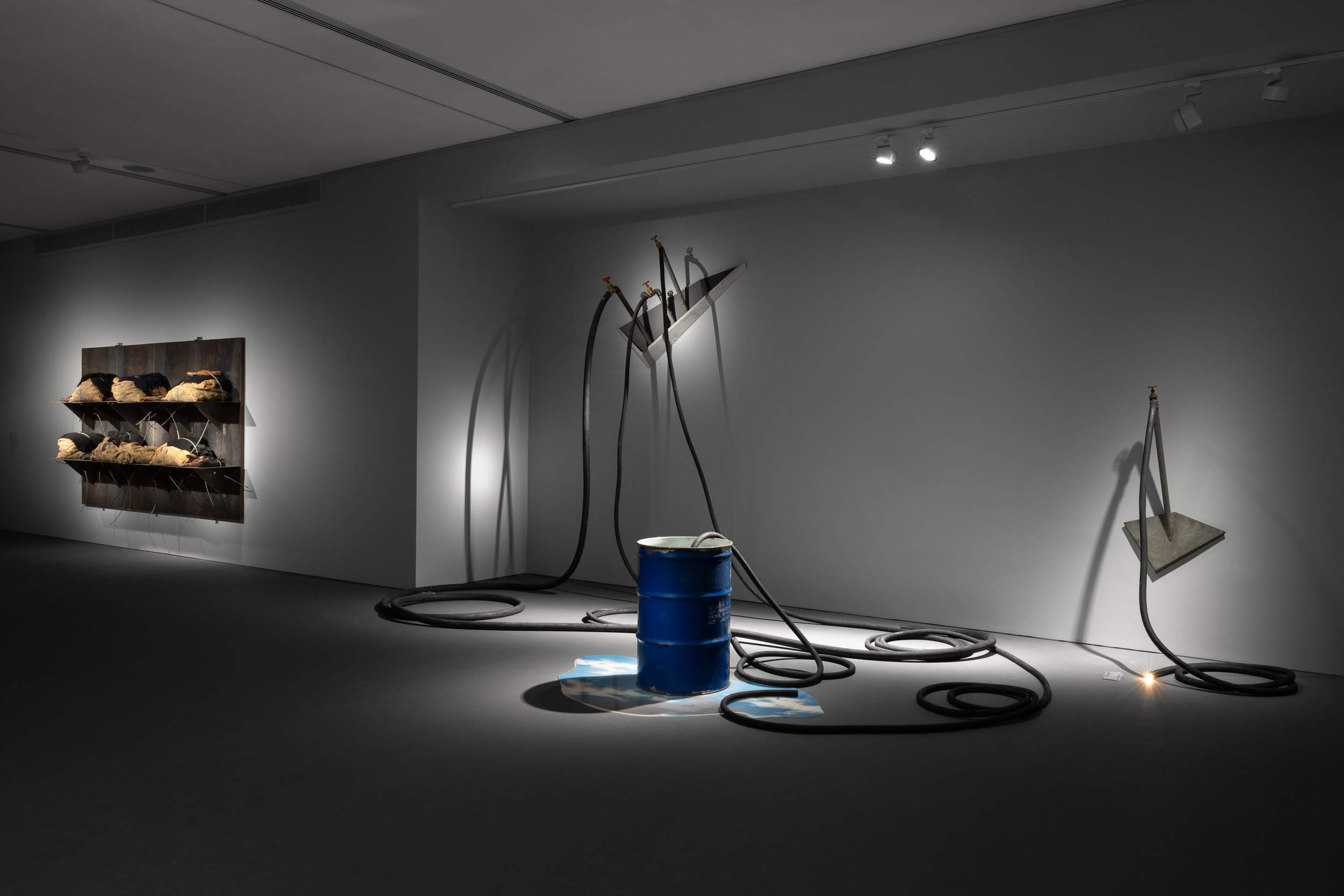
Among the works is Monira Al Qadiri’s SS Murex (2023), which examines the relationship between the history of oil extraction and maritime trade. Illuminated images of tankers are presented through ship-like portholes. Their names refer to seashells, recalling the commercial origins of the family enterprise that eventually became Shell. What began as a trade in decorative marine specimens developed into an industrial operation whose environmental consequences threaten the seas from which those specimens were originally collected.
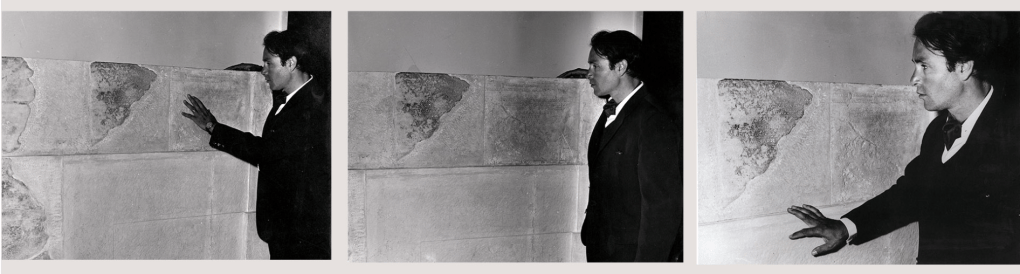
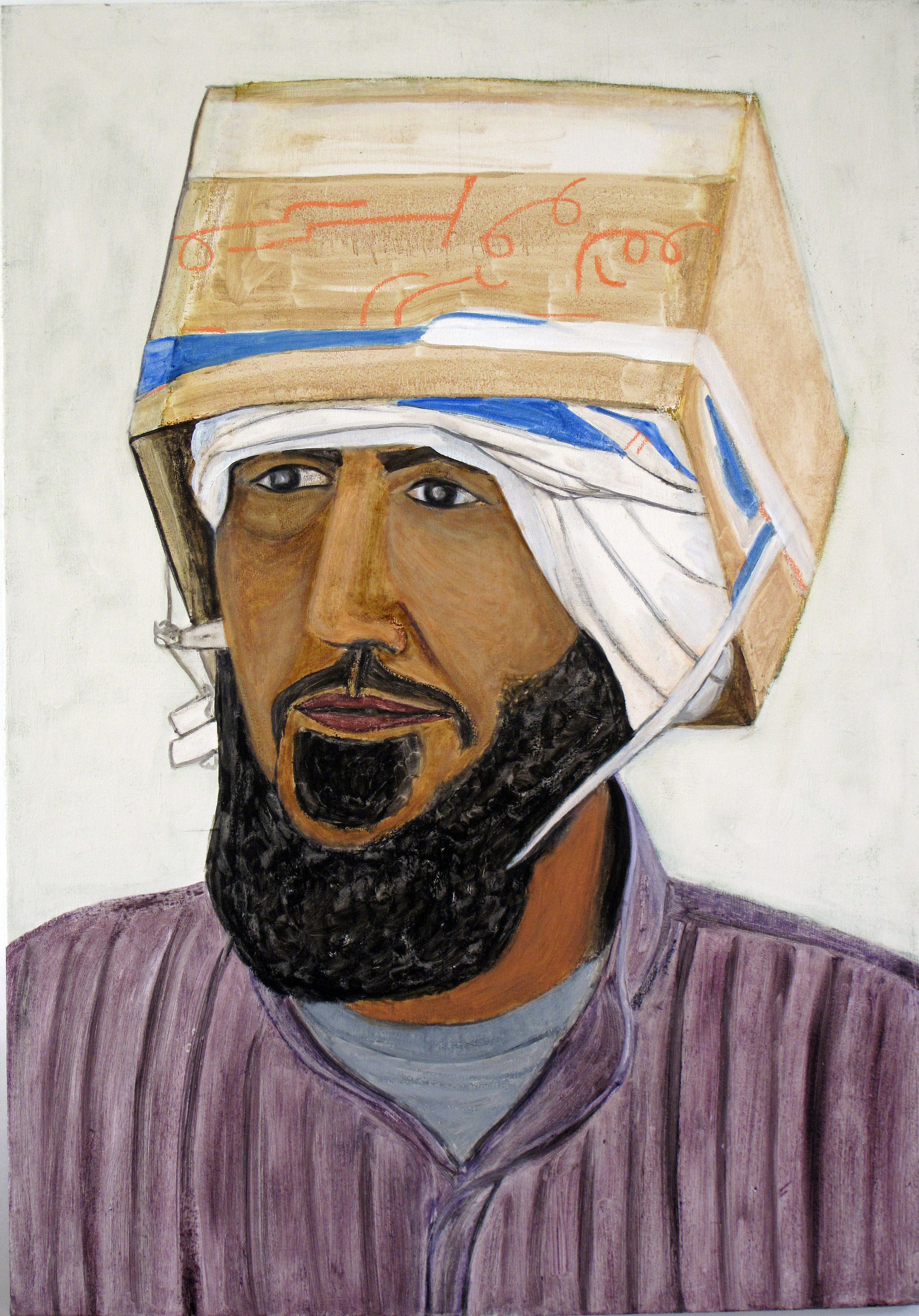
Elsewhere, Michael Rakowitz’s The Invisible Enemy Should Not Exist reconstructs lost and displaced Assyrian architectural reliefs using cardboard, Arabic newspapers and food packaging. The work forms part of a project begun in 2007 in response to the looting of the Baghdad Museum following the American invasion of Iraq in 2003.
The version acquired by EMST in 2026 depicts a relief from the Northwest Palace at Nimrud, much of which was destroyed by ISIS in 2015. Rakowitz’s reconstructions address both the recent destruction of Iraqi heritage and the earlier removal of Assyrian antiquities to Western museums. Their improvised materials deliberately refuse the appearance of authentic archaeological objects.
These works demonstrate the exhibition’s most persuasive quality: historical questions emerge through particular objects and materials. The broader argument about cultural geography becomes convincing when it is supported by such specific investigations.
There is also a difficulty inherent in the museum’s proposition. The Mediterranean and its surrounding regions encompass profoundly different political histories and cultural traditions. Their inclusion within a single curatorial framework is valuable when those differences remain visible, rather than being absorbed into an overly unified regional identity.
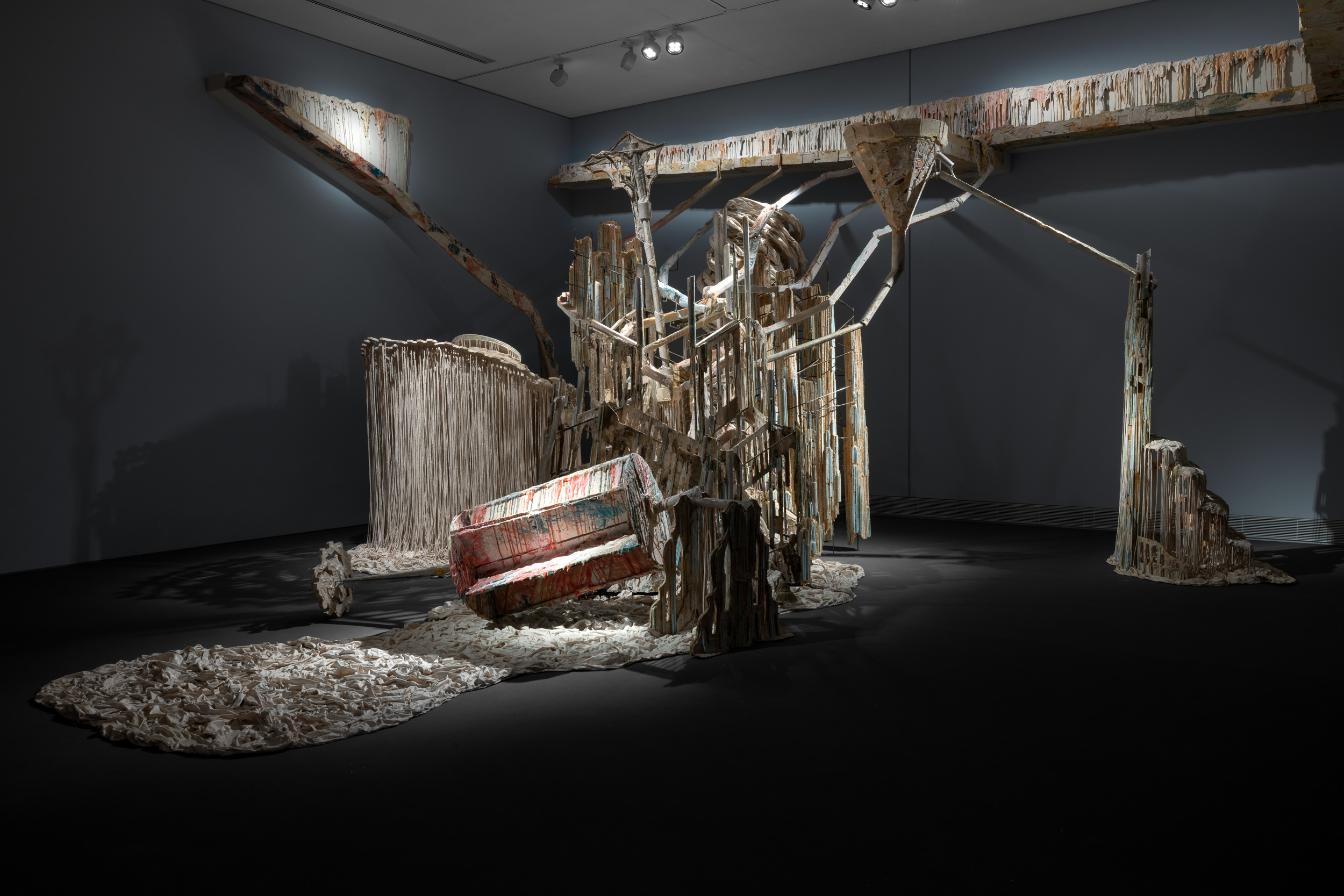
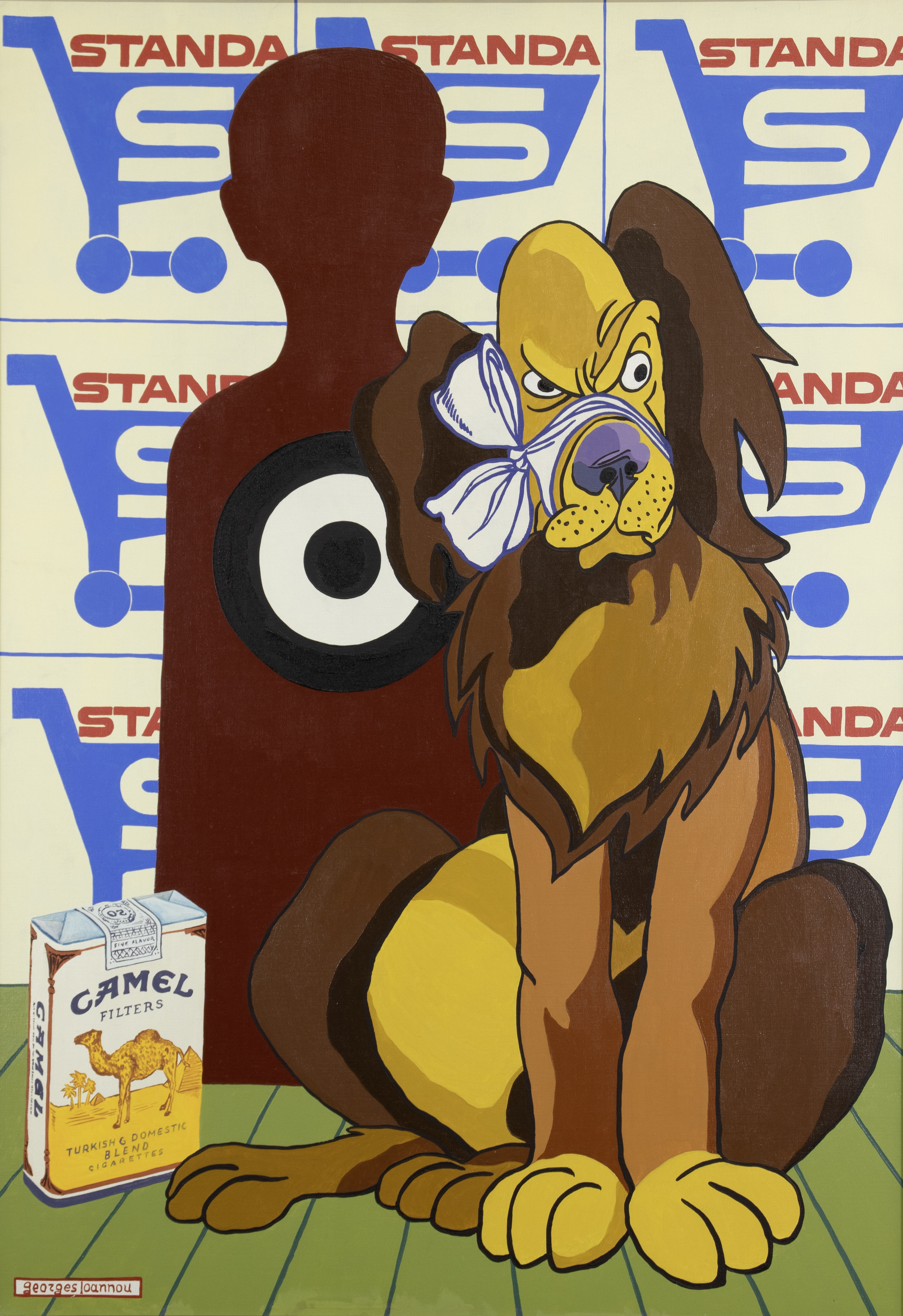
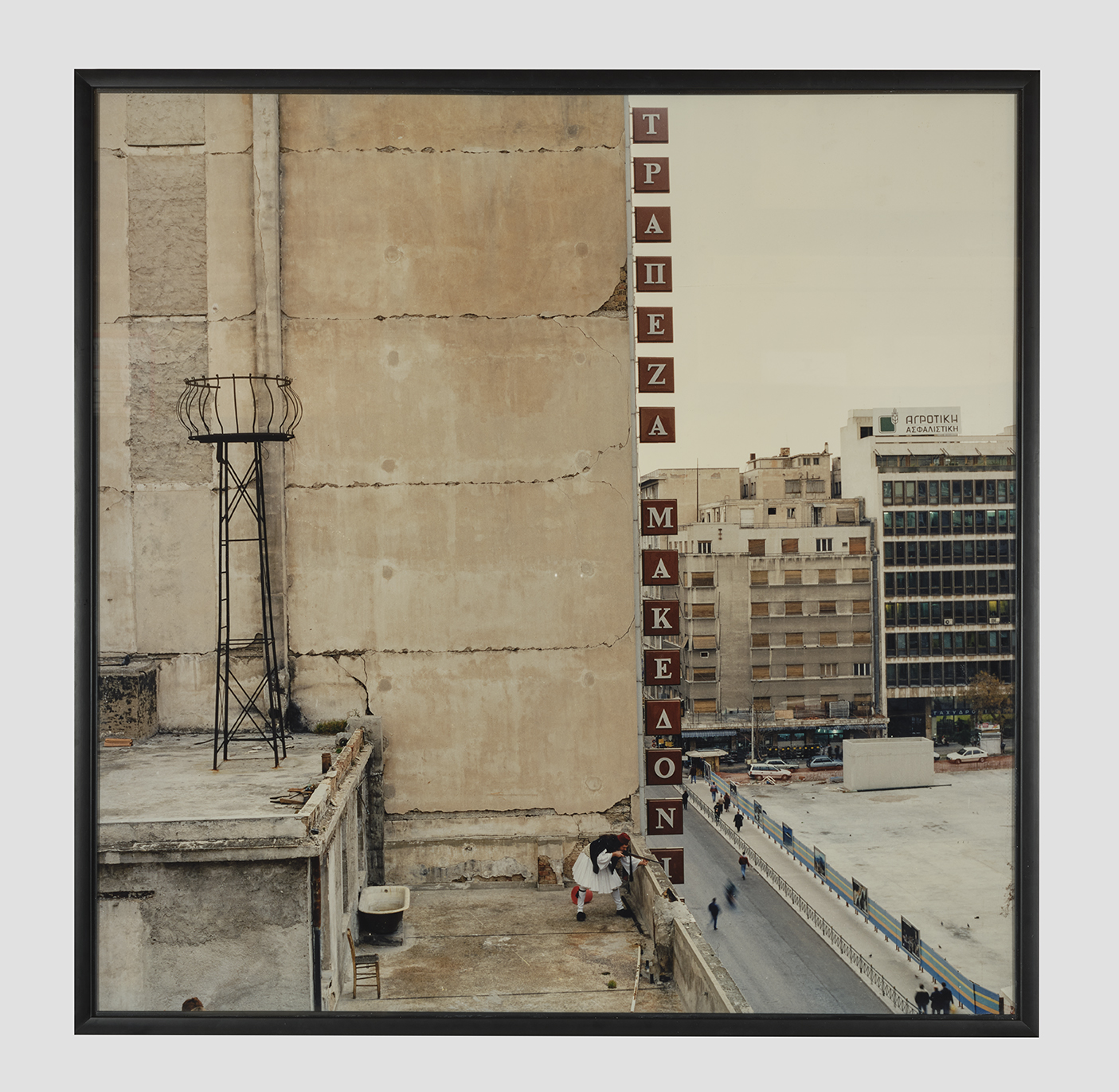
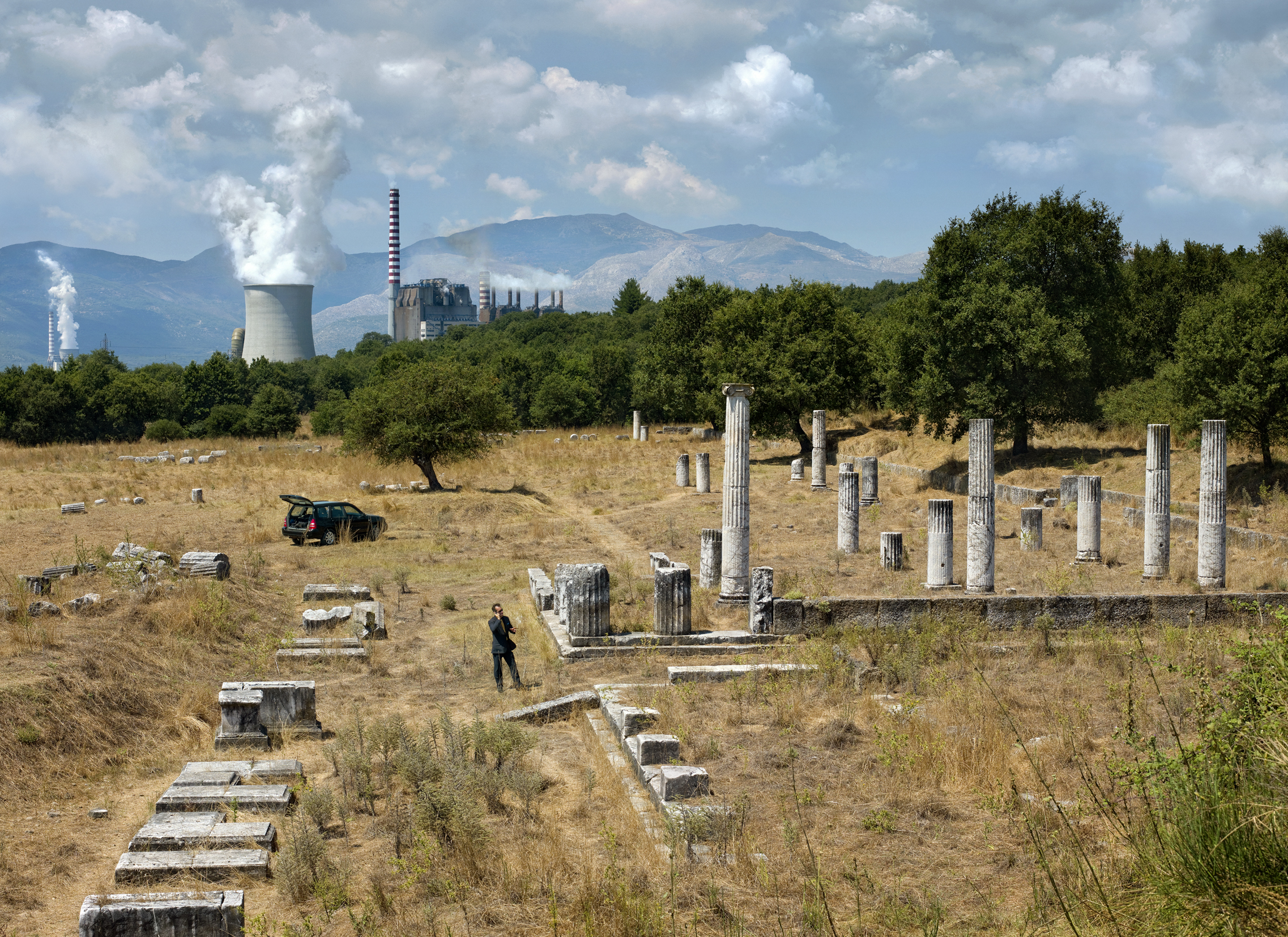
New voices and continuing installations
A younger generation of artistic experimentation appears in Margarita Athanasiou’s VOICES (2025), presented until 14 February 2027.
The 45-minute, three-channel video essay explores spiritual channelling, the history of New Age practices and their relationship with developing technologies. Drawing upon archival footage, original material and interviews with the artist’s grandmother, the work investigates how individuals have understood the experience of speaking through, or on behalf of, another presence.

Its most interesting question concerns authorship. Channelling depends upon the idea that a voice can originate outside the person who produces it. Athanasiou examines this phenomenon through family history and technological culture, with particular attention to the longstanding association between femininity and spiritual mediumship.
Two continuing commissions occupy the museum’s public spaces. Kasper Bosmans’ The Fuzzy Gaze, a thirty-metre mural in the foyer, assembles horses, teddy bears, dissected frogs and feline eyes into a procession examining the ways humans classify, domesticate and exhibit animals. References to heraldry, circuses and zoological displays reveal how familiar images of animals are shaped by human interests.
Meanwhile, Hadassah Emmerich’s Epicurean Eden occupies parts of the foyer and education space with paintings derived from vegetation, bodily imagery and commercial advertising. Emmerich transfers ink from cut pieces of vinyl flooring onto architectural surfaces, producing ornamental forms whose seductive appearance is complicated by their associations with exoticism and consumption.
Across the programme, the most rewarding encounters occur where the individual works complicate the categories used to describe them. Kanagini’s household objects retain the evidence of the labour they once served; Logothetis allows the physical deterioration of materials to participate in painting; Christou’s scores demand actions that conventional musical notation cannot adequately describe. These are distinct artistic investigations, and their differences deserve as much attention as their shared experimental ambitions.
EMST, Athens: A Different Map of Contemporary Art – My World of Interiors
Visiting EMST
The National Museum of Contemporary Art is located at Kallirrois Avenue and Amvr. Frantzi Street, Athens, near Syngrou-Fix metro station.
The museum is open Tuesday–Sunday, 11 am–7 pm, with extended Thursday hours until 10 pm. Closed Mondays.
Closing 8 November 2026: Stathis Logothetis, Jani Christou and George Lappas.
Continuing until 14 February 2027: Niki Kanagini and Margarita Athanasiou.
South by Southeast is an ongoing collection presentation. For exhibition information, screening schedules and admission details, consult the official EMST website.

