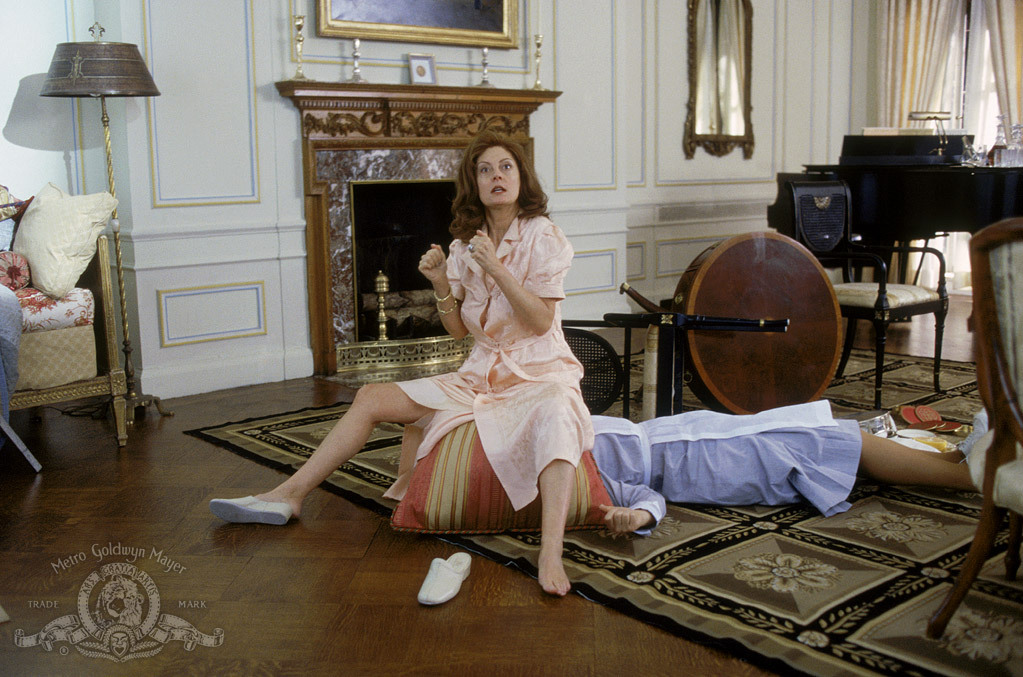
Igby Goes Down is the film that understands something about a particular kind of American adolescence that almost no other film has bothered to understand: that growing up inside privilege is its own form of damage, that the gilded cage is still a cage, and that the boy who has everything except the thing that matters — a family that is not in the process of destroying itself — may be the most alone person in the room. It was released in 2002, was seen by almost nobody, and has been quietly accumulating the kind of reputation that films earn not through marketing or awards but through the specific experience of being discovered by the right person at the right moment in their life and never quite letting go. It is a film about a boy who is too smart for his own good in a world that is too corrupt for anyone’s good, and it is funnier and sadder and more precisely observed than its cult status suggests it has any right to be.
Burr Steers wrote and directed the film from what is clearly a deeply personal place — the world of wealthy, dysfunctional East Coast American families, of boarding schools and weekend houses in the Hamptons and Manhattan apartments where the adults are either absent or catastrophic, is rendered with the specific authority of someone who grew up inside it rather than looking in from outside. Igby Slocumb, seventeen years old and in the process of running away from his latest expulsion from his latest boarding school, is played by Kieran Culkin with a wit and a weariness that are inseparable from each other — a performance of such complete intelligence that it is impossible to watch without feeling that you are in the presence of someone who has understood, earlier than he should have had to understand it, that the world his family inhabits is a world built on pretension and cruelty and the systematic avoidance of any feeling that might be inconvenient.
The family he is escaping is a gallery of American dysfunction rendered with a precision that walks the line between comedy and horror without ever quite falling to either side. His mother, Mimi, played by Susan Sarandon, is the kind of beautiful, brittle, alcoholic socialite who has turned her own suffering into a weapon she deploys against her sons with the skilled indirection of someone who has never had to be direct about anything in her life. His father, Jason, played by Bill Pullman, is schizophrenic and institutionalised, a presence in the film who is both pitiable and terrifying, and whose illness is rendered with enough specificity that it functions as more than metaphor — though it is also that, the literal madness of the patriarch as a figure for the foundational unreality on which the whole family’s life is built. His brother Ollie, played by Ryan Phillippe, has responded to the same family by becoming exactly what the family requires: contained, ambitious, cruel in the acceptable ways. Igby has responded by refusing.
What refusal looks like
The film’s central argument is about the cost of lucidity — about what it does to a person to see clearly in a world that requires, for social functioning, a degree of wilful blindness. Igby sees everything. He sees his mother’s performance of suffering and the real suffering underneath it. He sees his brother’s accommodation and what it has cost him. He sees the adult world that surrounds him — represented most completely by D.H. Banes, his godfather, played by Jeff Goldblum in a performance of reptilian charm that is one of the great supporting turns in American independent cinema — as a world organised around the maintenance of surfaces, the protection of wealth, and the careful management of any feeling that might threaten either.
His response to this seeing is wit, which the film understands as both a gift and a defence mechanism — a way of processing what he perceives without being destroyed by it, and a way of maintaining a private distance from a world he cannot respect. The wit in Igby Goes Down is genuinely funny, which is rarer than it sounds: the film is not sentimental about its own intelligence, does not ask you to admire Igby’s cleverness so much as to recognise it as the specific and costly thing it is. He is not witty because he is superior. He is witty because he has no other available instrument.
The parallel with Holden Caulfield is one the film is aware of and handles with intelligence: Igby is in some ways a Holden for a later decade, another alienated rich boy with a horror of phoniness and an inability to find a place in the world that does not require him to pretend. But where Salinger’s novel keeps its protagonist in a condition of sustained adolescent purity — Holden’s sensitivity is both the wound and the protection — Steers allows Igby to be more compromised, more specifically damaged, less purely sympathetic. He is not a saint of sensitivity. He is a specific damaged boy who does specific damaged things, and the film’s refusal to protect him from his own flaws is one of its most honest qualities.
The women and what they represent
Igby’s relationships with two young women — Rachel, played by Amanda Peet, D.H.’s kept mistress and Igby’s introduction to the specific corruption of the adult world he is entering, and Sookie, played by Claire Danes, the girl he actually loves — give the film its emotional architecture, and both are rendered with more complexity than the film’s surface lightness suggests.
Rachel is not a victim of D.H.’s wealth and power, or not only a victim: she is a woman who has made a specific accommodation with the world, who has understood the transaction she is involved in and has decided to participate anyway, and who has a quality of clear-eyed resignation that Igby finds both attractive and devastating. She is, in some sense, what lucidity looks like when it has given up — when the seeing has produced not refusal but accommodation, when the wit has curdled into self-protection. Peet plays this with a lightness that keeps the character from becoming a cautionary tale, and the relationship between her and Igby — which is simultaneously a seduction and an education and a warning — is one of the film’s most precisely observed things.
Sookie is different: a girl from the same world as Igby, equally aware of its unreality, but younger and still in the process of deciding what to do with her awareness. Claire Danes plays her with the specific quality of intelligence that is still in negotiation with itself — not yet settled into cynicism, not yet willing to commit to hope, trying out positions and discarding them with the restlessness of someone who knows the wrong answer when she sees it but has not yet found the right one. Her relationship with Igby is the film’s emotional centre, and its tragedy — which arrives sideways, in the way that the film’s most important things always arrive — is the tragedy of two people who might have been exactly right for each other arriving at exactly the wrong time.
The comedy and the darkness
One of the things that makes Igby Goes Down more interesting than its premise might suggest is its formal sophistication about the relationship between comedy and pain — its understanding that the wit that protects Igby from the world’s cruelty and the cruelty he sometimes directs at others are the same instrument, and that the film’s comedy and its sadness are not in competition but continuous with each other.
The film opens with Igby and Ollie killing their mother — or rather, with the two brothers in the process of a botched attempt at euthanasia that is simultaneously the film’s darkest scene and one of its funniest, because Steers understands that the darkest scenes are sometimes the funniest and that laughing at something terrible is not a failure of seriousness but a recognition of the specific texture of certain kinds of suffering. The scene establishes immediately the film’s tonal register: we are in a world where the things that should be sacred are debased, where the relationship between a mother and her sons has arrived at this, and where the only available response is the grim black comedy of people trying to do a terrible thing badly.
This tone is sustained throughout: the film never loses its awareness that the world it is depicting is both genuinely funny and genuinely terrible, that the dysfunction of the Slocumb family is simultaneously a specific American pathology and a grotesque heightening of things that are ordinary and recognisable. The boarding school scenes, the therapy sessions, the social occasions where everyone performs their role with the skill of people who have been doing it so long they have forgotten it is a performance — all of these are funny in the specific way that things are funny when they are also true, when the recognition arrives alongside the laughter and makes the laughter a little uncomfortable.
What the film knows about money
Igby Goes Down is, among other things, one of the most precise films ever made about what inherited wealth does to people — not in the obvious ways, not through scenes of conspicuous consumption or explicit statements about class, but through the specific texture of how the characters move through the world. They move with the ease of people who have never had to consider what things cost, and this ease has a specific effect on their characters: it has made them incapable of a certain kind of urgency, a certain kind of necessity, that is the condition in which most human growth happens.
Igby’s rebellion is, in this sense, a rebellion against his own ease — an attempt to introduce into his life the kind of friction and consequence that his family’s money has always buffered him from. His flight from boarding school, his refusal of the future that is being prepared for him, his insistence on putting himself in situations where things actually matter — these are not simply adolescent acting out. They are, at some level, an attempt to be real, to inhabit a world where what he does has actual consequences rather than being endlessly managed and corrected by the cushion of privilege.
The film understands that this rebellion is itself a form of privilege — that Igby can refuse the life being offered to him partly because the life being offered to him is one that others would be grateful for, and that his refusal is only possible because the safety net that he is refusing to use is still there. This is not an irony the film makes explicit — it doesn’t need to — but it runs underneath everything, giving the comedy its specific edge and the sadness its specific weight.
Kieran Culkin and the performance that holds it together
The film’s success rests entirely on Culkin’s performance, and it is a performance that deserves more recognition than it has received. He has to be simultaneously funny and sad, simultaneously too smart for his own good and not yet smart enough for the world he is in, simultaneously the victim of his family and the perpetrator of his own damage. He has to make the wit feel like protection and the sadness feel like truth and the specific quality of Igby’s attention to the world — the way he sees things — feel earned rather than affected.
He does all of this with an ease that is itself a comment on the character: Igby moves through the world with the physical fluency of someone who has always been comfortable in expensive rooms, and Culkin’s performance has the same quality — it never strains, never announces itself, never asks you to admire it. It simply is, in the way that the best film performances simply are, and the being is more convincing and more moving than any amount of demonstrative acting could be.
The scene in which Igby visits his father in the institution and reads to him from the book his father loved, not knowing whether his father can understand, not knowing whether the visit matters, simply doing the thing because it is the thing that love requires even when love has been made very difficult — is the film’s emotional centre, and Culkin plays it with a restraint that is almost unbearable. He does not cry. He does not make the scene about himself. He simply reads, and the reading is the love, and the love is the thing that the rest of the film has been explaining and that this scene finally makes visible.
Why it was not seen and why it should be
Igby Goes Down is the kind of film that falls between categories in ways that make it difficult to market and easy to undervalue. It is too dark to be a conventional coming of age comedy, too funny to be a straightforward coming of age drama, too specific and too literary to be a mainstream American film about adolescence, and too American and too accessible to be positioned as serious art cinema. It arrived at a moment — 2002, a year after September 11, when American culture was in a complicated relationship with the kind of privileged self-examination the film represents — and was quietly released and quietly ignored and has been quietly discovered ever since by exactly the audience it deserves: people who grew up in families that were not what they appeared to be, people who learned early that wit was a form of survival, people who have some experience of the specific damage that money and dysfunction together can do.
It is not a perfect film. Some of the secondary characters are rendered with a broadness that the film’s best scenes don’t need. The ending is a little too neat, a little too willing to offer the consolation that the rest of the film has been careful to withhold. But these are the flaws of a first film by a writer-director working from personal material with evident passion and a genuine ear for dialogue and a genuine eye for the specific textures of the world he is depicting. They do not diminish what the film achieves, which is real and specific and not available anywhere else.
Watch it as a companion to the other coming of age films this series has discussed — alongside The 400 Blows and Boyhood and Moonlight — and notice what it adds to the conversation: the specific perspective of the boy who is damaged not by poverty or exclusion or the world’s indifference but by exactly the opposite, by too much money and too little love and a family that has confused the management of surfaces with the substance that surfaces are supposed to conceal. This is not a less serious form of damage. It is a different one, and Igby Goes Down is one of the few films that has taken it seriously enough to render it honestly.
Sources and further reading
J.D. Salinger, The Catcher in the Rye (1951) — not a source for the film but its essential companion text, the novel that Igby Goes Down is in implicit conversation with throughout.
Whit Stillman, Metropolitan (1990) — the film that most directly occupies similar territory, the upper-class Manhattan coming of age story told with equal precision and slightly more generosity toward its milieu.
Noah Baumbach, The Squid and the Whale (2005) — made three years later, a more celebrated film covering adjacent territory — the intelligent adolescent in a dysfunctional educated family — with a different formal approach and an equally precise ear.
For those who want to follow the thread: Igby Goes Down (2002) alongside The Royal Tenenbaums (2001), which offers an almost exactly contemporary and stylistically contrasting treatment of the dysfunctional wealthy American family, and Ordinary People (1980), which takes the same world at an earlier decade and with a different — more earnest, less armoured — sensibility.

