
By Bergotte
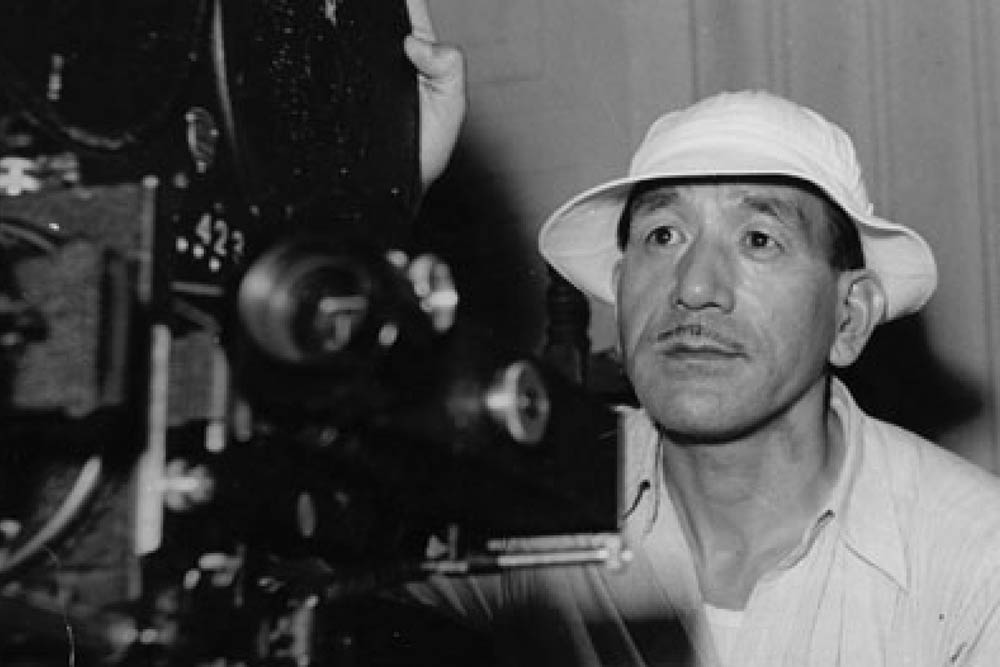
Yasujirō Ozu made films about the same thing for forty years — the Japanese family, its dissolution, the grief of parents watching children leave, the quiet devastation of time — and he made them with a formal consistency so extreme that critics spent decades arguing about whether it was a limitation or an achievement, before arriving at the only answer that makes sense: it is both, inseparably, and the inseparability is the point. Ozu is the filmmaker who proved that cinema does not need to move to be alive, that a camera placed close to the ground and held absolutely still can capture more of the truth of human experience than any amount of dramatic movement, and that the deepest grief is always the grief that cannot be spoken, that passes between people in the pauses between sentences, in the moment when someone looks away and both people know why. He is one of the greatest filmmakers who ever lived, and the path to understanding him runs directly through your own willingness to stop hurrying.
Yasujirō Ozu was born in Tokyo in 1903 and made his first films in the late 1920s, silent comedies and melodramas that drew on American models — Chaplin, Lubitsch, Lloyd — with an energy and an irreverence that bears almost no resemblance to the cinema he would eventually become famous for. The transition from the early films to the late masterworks is one of the most remarkable progressions in cinema history: a gradual, deliberate stripping away of everything that was not essential, until what remained was so pure and so precise that it could be — and was — mistaken for simplicity. It is not simple. It is the opposite of simple. It is the result of a lifetime’s work in a single direction, the product of a filmmaker who understood that reduction is not the same as impoverishment, that less is not less but more accurately itself.
He worked almost exclusively with the same collaborators across his career — the screenwriter Kōgo Noda, the cinematographer Yūharu Atsuta, and a core group of actors including Chishū Ryū and Setsuko Hara, who appear in film after film in roles that are similar enough to create a cumulative effect, a sense that we are watching the same people across different versions of the same life. This cumulative effect is part of what Ozu’s cinema does that no single film of his can do alone: it creates a world, fully inhabited and fully consistent, in which the individual films are not separate works but variations on a theme, each one illuminating the others, each one adding a layer to the portrait of Japanese middle-class life in the postwar decades that is, taken together, one of the most complete and most moving achievements in the history of the art form.
The camera on the floor
The first thing most people notice about Ozu’s films, and the thing that requires the most immediate explanation, is the camera position. He shoots from a height of roughly two feet off the ground — the height of a person sitting on a tatami mat, the traditional Japanese floor-level seating — and he holds this position with extraordinary consistency. The camera does not track. It does not pan, except on rare and significant occasions. It does not crane or tilt or adopt the dynamic angles of conventional cinema. It sits, at floor level, and watches.
This choice is not a stylistic affectation or a cultural reference, though it is both of those things too. It is a philosophical position about what cinema should do and how it should relate to the people it films. The low angle places the viewer inside the space rather than above it — not observing the characters from outside but sitting with them, at their level, in the rooms where their lives happen. It is an act of equality, and also of intimacy: Ozu’s camera does not look down on his characters, literally or figuratively. It sits with them and watches, with the patience and the respect of someone who understands that ordinary life, attended to closely enough, contains everything.
The consistency of this position creates another effect that is harder to name but equally important. Because the camera never moves in the dramatic ways that cinema has trained us to expect, we stop anticipating movement and start simply looking at what is there. The frame becomes stable, reliable, a container for whatever Ozu places inside it, and what he places inside it — the faces, the interiors, the objects, the specific quality of Japanese domestic space in the 1950s — accumulates a weight and a meaning that mobile camera work cannot achieve. You have to slow down to watch Ozu, and the slowing down is the preparation for what the films do to you.
Tokyo Story and the geography of loss
Tokyo Story, made in 1953 and the film that sits at the centre of this essay, is by reasonable consensus the greatest film ever made about ageing and the loneliness of parents, and it achieves this through means so restrained that the achievement is almost invisible until it has completely dismantled you. An elderly couple from the provincial town of Onomichi travel to Tokyo to visit their adult children — a doctor son, a beautician daughter — and find that their children are too busy, too absorbed in their own lives, too caught up in the practical demands of adult existence to spend real time with them. The only person who makes genuine space for them is their widowed daughter-in-law Noriko, whose late husband was their son, and who has no obligation to them at all.
The film does not dramatise this situation. It does not build to confrontations or revelations or moments of crisis. It simply observes, with a patience that is itself a form of argument: this is how families work, this is what happens to love over time, this is the gap between the parents’ need and the children’s capacity, and the gap is nobody’s fault and does not make the pain less. The children are not villains. They are simply adults, with adult lives and adult preoccupations and a diminished ability to see their parents as full human beings rather than as roles — as Father and Mother rather than as Shukichi and Tomi, specific people with specific inner lives that continue to be rich and complicated and worthy of attention long after their children have stopped noticing.
The performance of Setsuko Hara as Noriko is one of the great performances in cinema — great not for its drama but for its quality of presence, its combination of warmth and concealed sadness, its demonstration that what a person does not say can be more expressive than anything they do say. Noriko smiles constantly, and the smile is genuine, and underneath the genuine smile is a grief — for her dead husband, for the loneliness she will not admit, for the couple who treat her with more love than their own children do — that Hara never states and never needs to state, because it is there in every frame, in the quality of her attention to the old people, in the care she takes to make their visit meaningful when their children cannot be bothered to try.
The film’s climax — if climax is the right word for something so quiet — is the scene in which Noriko and the mother sit together in the family home in Onomichi, after the father has left for the night, and the mother asks Noriko whether she is lonely, and Noriko says yes, she is, sometimes, at night, and the mother says she is glad Noriko has been honest with her, and the two women sit in the dark and the film allows them to simply be together, without resolution or consolation, in the specific quality of their shared loneliness. It is one of the most tender scenes in all of cinema, and it is achieved entirely through Ozu’s characteristic means: the still camera, the patient observation, the trust that what is there does not need to be dramatised to be felt.
Pillow shots and the world between
One of the most discussed and most mysterious formal elements of Ozu’s cinema is what critics have called the pillow shot — a shot of an object or a landscape or an architectural detail that appears between scenes, sometimes at moments of transition, sometimes seemingly at random, with no direct narrative relationship to what precedes or follows it. A shot of a lighthouse. A shot of laundry on a line. A shot of a sake bottle on a table in an empty room. A shot of chimneys against the sky.
These shots are the most extreme expression of Ozu’s conviction that the world in which his characters live is as present and as worthy of attention as the characters themselves — that the things and the spaces and the light of a particular time and place are not mere background but participants, that they carry the emotional weight of the scenes they surround in ways that cannot be fully explained but can be felt. The pillow shot says: before we return to the drama, look at this. This is also here. This is also part of what we are trying to show you.
The effect, accumulated across a film and across the whole of Ozu’s body of work, is of a world seen whole — not just the human drama but the physical world that contains it, the specific material texture of Japanese domestic and urban life in the midcentury, the particular quality of light on paper screens and tatami mats and the surfaces of ordinary rooms. Ozu is, among other things, one of the great documentarians of a specific time and place, and the pillow shots are the clearest expression of this: pauses in the human story to attend to the world the human story inhabits, with the same patience and the same love.
The children who leave
Ozu made the same film many times, and this is not a criticism. He made it many times because it was the film that needed making, the film that corresponded most exactly to the experience of Japanese middle-class life in the decades he was working, and each version found something in the material that the previous versions had not exhausted. The subject is always some version of the same thing: a parent or parents watching a child leave, or a child watching a parent age, or the gap between generations that widens as families disperse and the old domestic world dissolves.
Late Spring, made in 1949, is the first great statement of this theme: a widowed father and his unmarried daughter, living together in a quiet happiness that everyone around them insists must be ended — the daughter must marry, must have her own life, must not sacrifice herself to her father’s comfort. The father agrees, pretends to be planning his own remarriage to give his daughter the freedom to leave without guilt, watches her go. The film’s final shot — the father alone in the house after the wedding, peeling an apple and pausing and letting his head drop, and the camera cutting to a shot of the sea — is among the most devastating in cinema. It does not show grief. It shows its aftermath: the specific quality of a person alone in a room after the last thing they were waiting for has happened.
What Ozu understood about the family, and what gives these films their universality despite their extreme cultural specificity, is that the sadness they depict is not a Japanese sadness or a postwar sadness or a sadness specific to any historical moment. It is the sadness of time — the specific quality of loss that comes not from catastrophe but from the simple passing of things that were good, from the discovery that the life you built for yourself will end, and that the people you built it for have built lives of their own, and that this is as it should be, and that it is devastating anyway. This is not a theme. It is a condition, and Ozu found a form for it so exact and so completely his own that the form and the content are inseparable — you cannot imagine his films shot any other way, from any other angle, at any other pace.
What Japanese cinema owed him
Ozu’s influence on Japanese cinema is so pervasive that it is nearly invisible — absorbed into the tradition so completely that filmmakers working in his wake often do not know they are working in his wake. The specific quality of domestic attention in Japanese cinema, the interest in the texture of ordinary space and ordinary time, the willingness to let scenes breathe and to trust the viewer’s patience — all of these qualities that mark Japanese cinema as distinct from Western cinema owe something to the standard he established.
Outside Japan, the influence is more self-conscious and more varied. Wim Wenders, who travelled to Japan to make a documentary about Ozu after his death, has spoken about the liberation the films represented — the discovery that cinema could be slow and still and completely attentive to the domestic and still be profoundly cinematic. Hou Hsiao-hsien in Taiwan and Edward Yang built entire careers on the foundation that Ozu prepared. Jim Jarmusch, whose films share Ozu’s interest in the spaces between dramatic events, has acknowledged the debt. The contemporary slow cinema movement — the films of Béla Tarr, of Lisandro Alonso, of Apichatpong Weerasethakul — is in a direct lineage from Ozu’s demonstration that patience is not absence but a form of presence.
But the deepest influence is the most difficult to trace — the influence on what filmmakers understand slowness to mean and what stillness can do. Before Ozu, the still camera was largely understood as a default, a neutral position waiting to be animated. After Ozu, it could be understood as a choice with a meaning: a declaration of intent, a way of saying that what is here deserves this kind of attention, that the drama does not need to be hurried, that the world has a pace of its own and cinema can choose to honour it.
Seeing with his eyes
Ozu died in 1963, on his sixtieth birthday, of cancer, and left behind thirty-six surviving films — the early comedies, the middle-period films that were experimenting toward the mature style, and the late masterworks in colour that are among the most beautiful things cinema has produced. He never married, lived with his mother until her death, and is buried in a Zen temple in Kamakura beneath a headstone that bears a single character: mu. Nothingness. Emptiness. The concept from Zen Buddhism that is the closest single word to what his cinema is doing — not the emptiness of absence but the emptiness of pure presence, of a mind so still that it can receive whatever comes to it without distortion.
This is what Ozu asks of his audience, and it is more than most cinema asks: not engagement with a plot or identification with characters or the surrender to spectacle, but a quality of attention that is itself slightly meditative, slightly outside the ordinary rush of stimulus and response. The films do not reward impatience. They reward the willingness to be present in the room with the characters, to let their lives accumulate around you at their own pace, to find in the gaps and the pauses and the pillow shots and the still camera the particular quality of feeling that faster cinema has no room for.
Watch Tokyo Story. Let it take its time. Watch Noriko’s smile and try to understand everything it contains. Watch the old couple on the roof of the building in Tokyo, looking out over the city that has no room for them, talking about nothing in particular, and find in the conversation the whole weight of their lives and their love and their coming separation. Then ask yourself whether you have ever seen ordinary human life — not dramatised, not heightened, not resolved — held with this quality of attention. The answer will tell you why Ozu matters and why, in a cinema increasingly devoted to speed and spectacle, he matters more than ever.
Sources and further reading
Donald Richie, Ozu: His Life and Films (1974) — the essential English-language study, by the critic who did more than anyone to bring Japanese cinema to Western audiences, written with deep knowledge and genuine love.
David Bordwell, Ozu and the Poetics of Cinema (1988) — the most rigorous formal analysis of Ozu’s visual style, invaluable for understanding how his films work at the level of shot and cut and composition.
Wim Wenders, Tokyo-Ga (1985) — a documentary essay film about Ozu’s Tokyo made after his death, itself a beautiful work and an invaluable companion to the films.
Yoshida Kijū, Ozu’s Anti-Cinema (2003) — a challenging and illuminating study by the Japanese filmmaker Yoshida, who argues that Ozu’s work is a systematic refusal of conventional cinematic logic.
For first-time viewers, the suggested order: Tokyo Story (1953) first, without question. Then Late Spring (1949), which is the purest statement of his central theme. Then The Flavour of Green Tea Over Rice (1952) and Late Autumn (1960) to understand the range. An Autumn Afternoon (1962), his final film, last — a quiet masterpiece that feels like a farewell, because it was.
Discover more from My World of Interiors
Subscribe to get the latest posts sent to your email.

