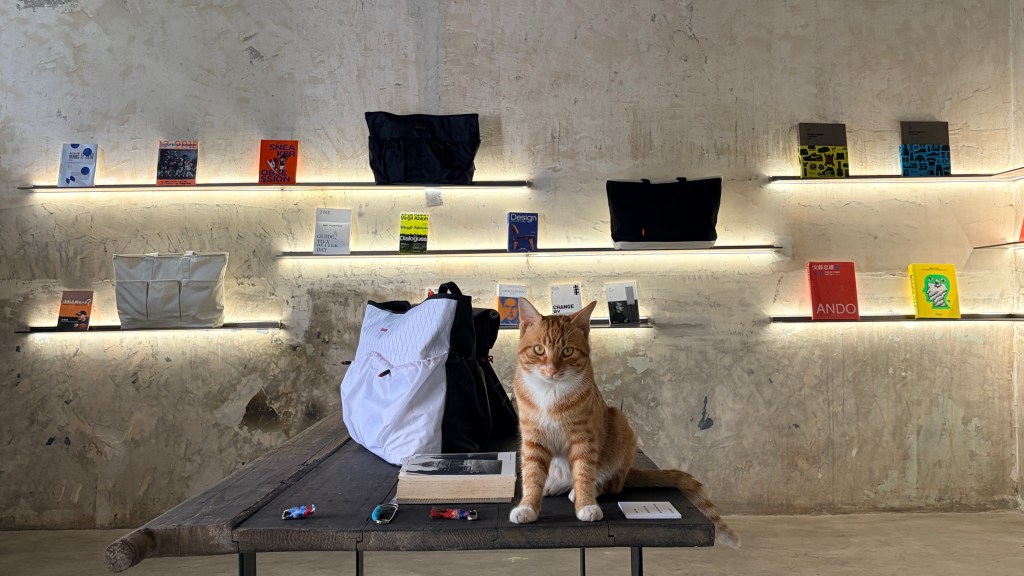
In a former café within Shanghai’s Deqiu Art District, designer Nick Hsu has brought the workshop and shop floor together. The experiment is revealing some unexpected things about how people understand, use and buy design.
A reversible tote bag has presented the designers at OUKKA with an interesting problem. Two black-and-white samples were made to demonstrate how the bag could be turned inside out, allowing either side to face out. The colour combination was intended as an explanation of the construction. Yet three visitors to the brand’s new Shanghai studio have asked whether they could buy the display version itself.
The designers had been demonstrating a function; their visitors responded to an aesthetic choice. The construction has not changed, but the team is reconsidering the colours. It is a small example of what happens when a design is encountered before its makers have finished deciding how it should be presented.
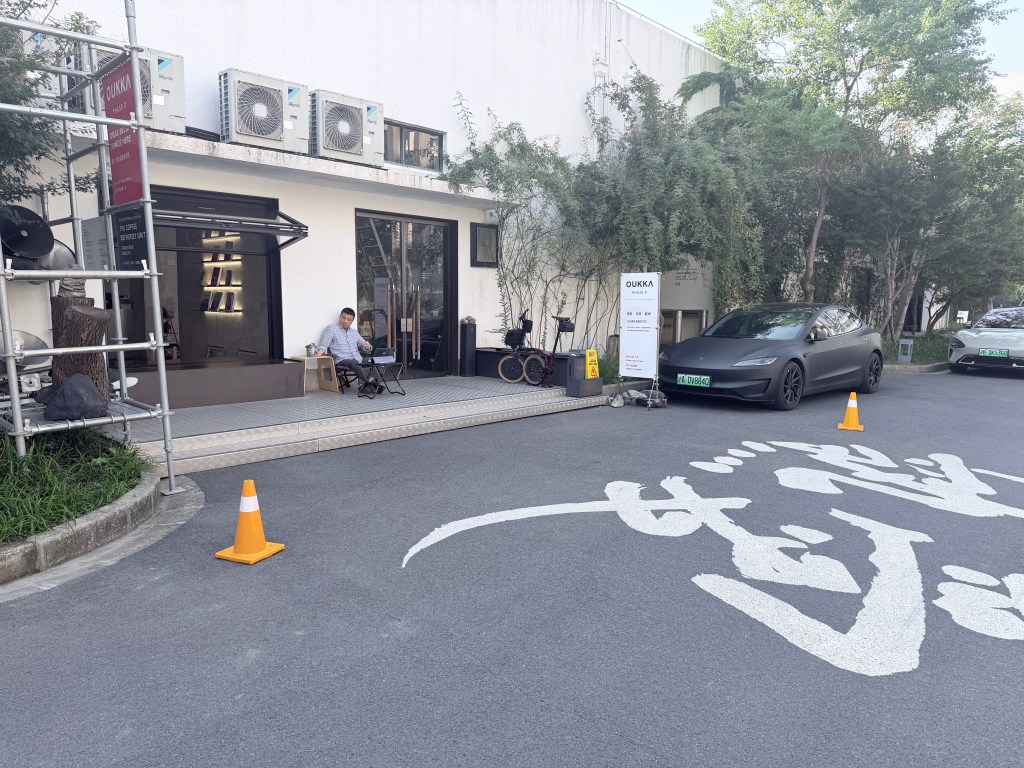
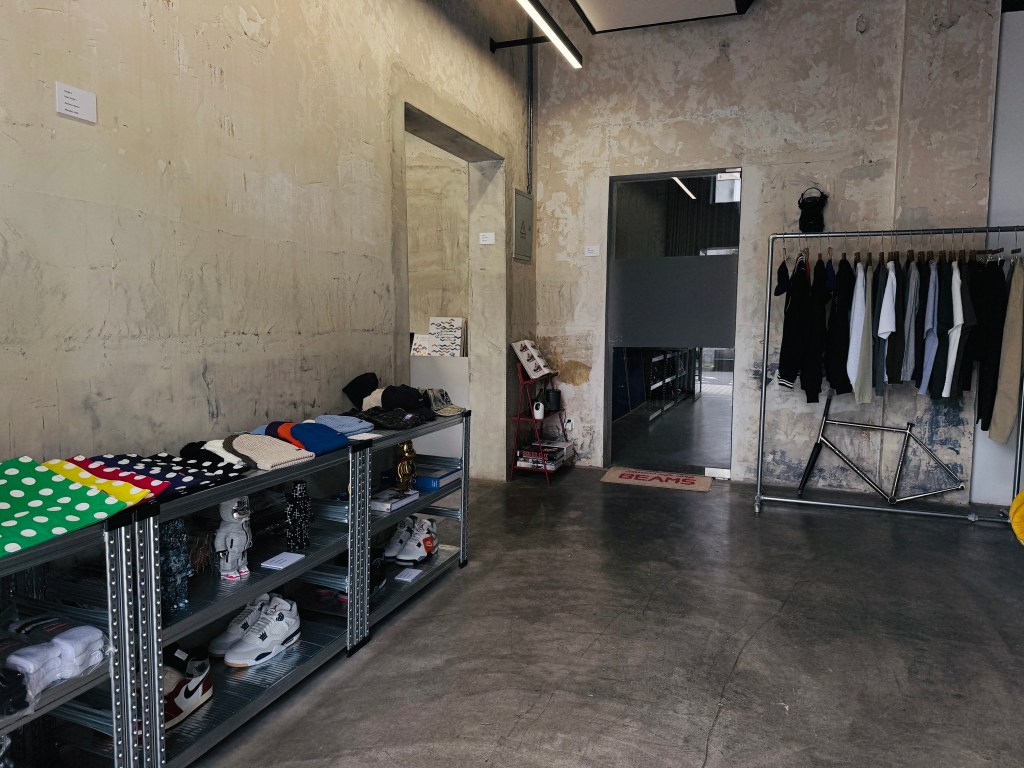
Opened on 22 September 2026, OUKKA’s PHASE 0 occupies a former café in Shanghai’s Minhang district. The approximately 180-square-metre premises serve as a working studio, showroom and shop, with room for books and informal gatherings. Its founder, Nick Hsu, also established From Scratch, a design consultancy working across sporting goods, outdoor products, brand strategy and material development.
The project began with a practical requirement for additional office and storage space. Most of the design team still works from the company’s original premises, while Hsu spends much of his working week at PHASE 0 with two or three colleagues. Samples and client meetings have consequently found their way into the new rooms, where visitors can occasionally encounter work in progress.
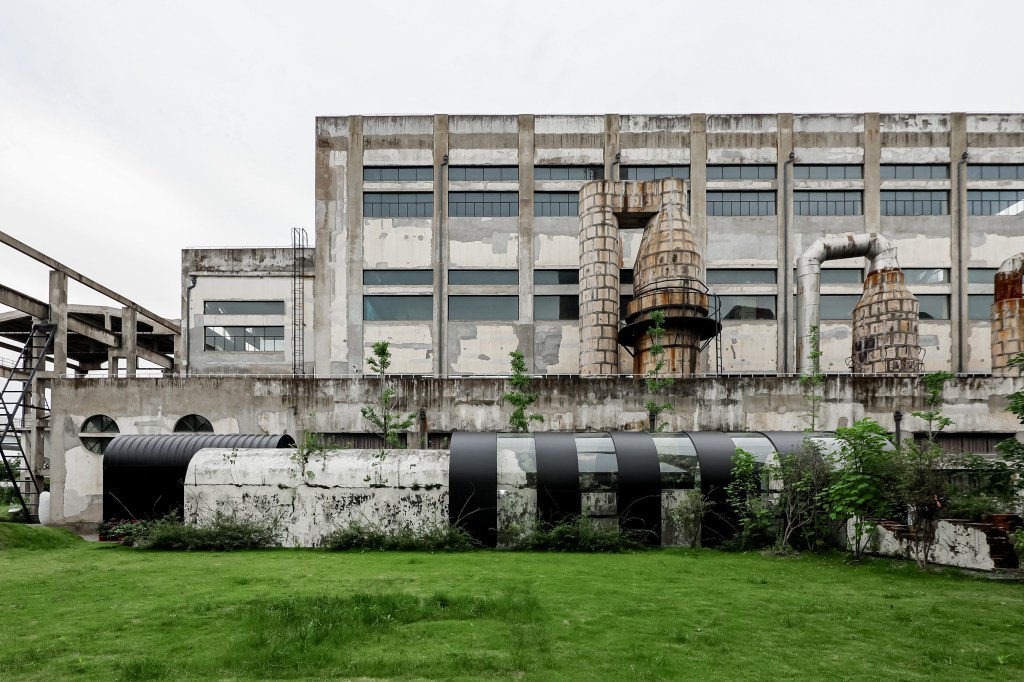
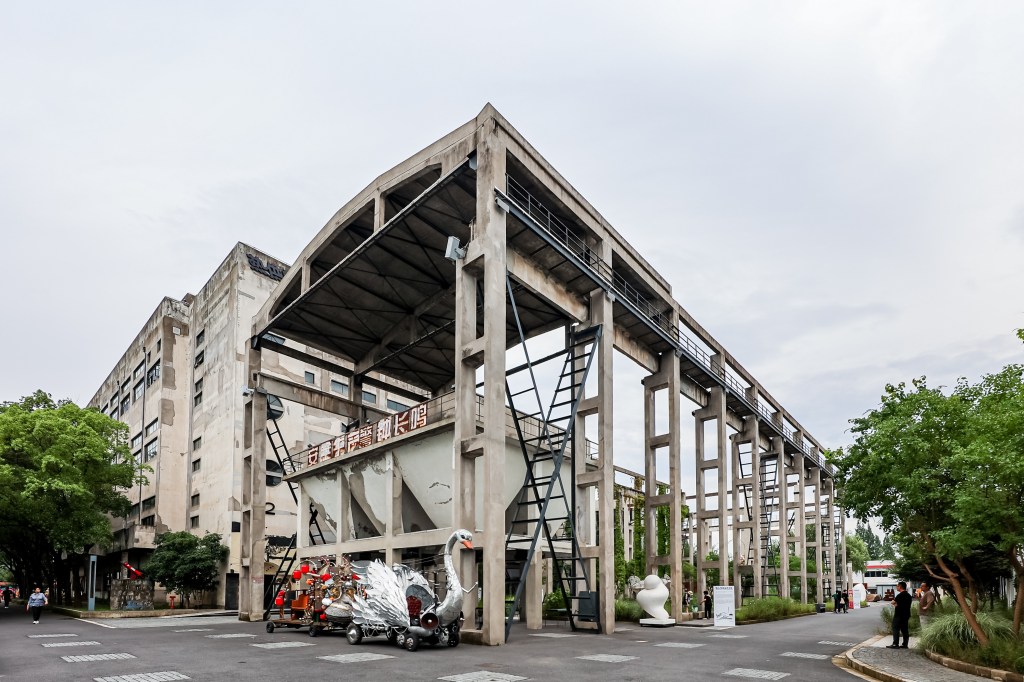
The location adds another dimension to the project. Deqiu Art District occupies the site of a former coal-fired heating station, built in the 1990s to supply steam to factories in the surrounding industrial area. The facility ceased operating in 2014, and its conversion into a cultural complex began in 2020. Former coal-handling structures, boiler areas and industrial passages have since been adapted for exhibitions, public spaces, cafés and creative businesses. The surviving structures give the district a scale quite different from the small rooms occupied by OUKKA.
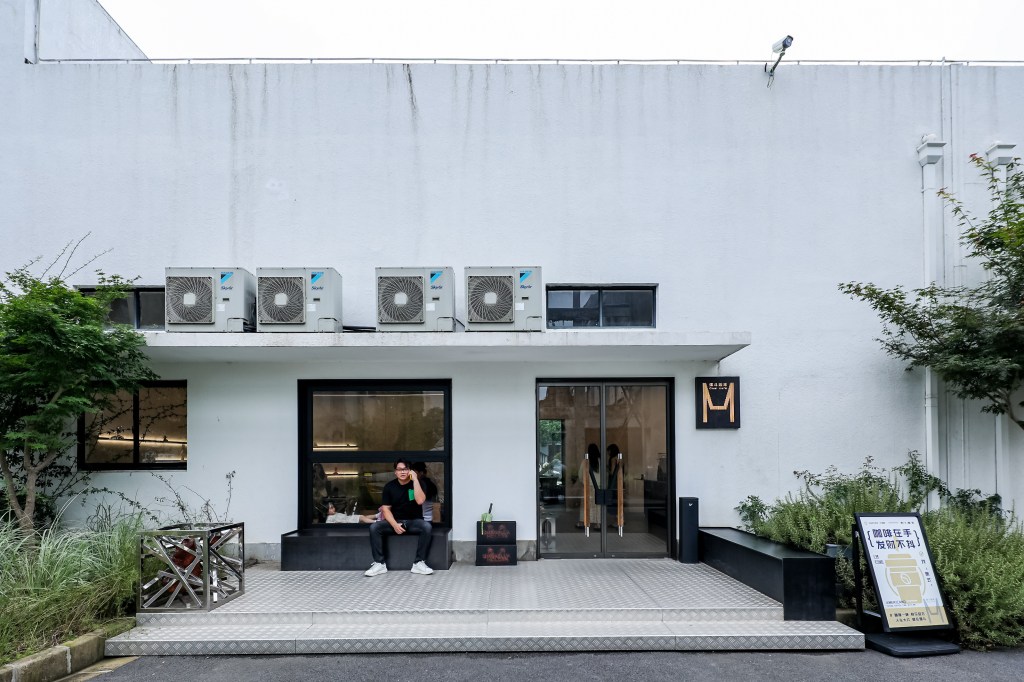
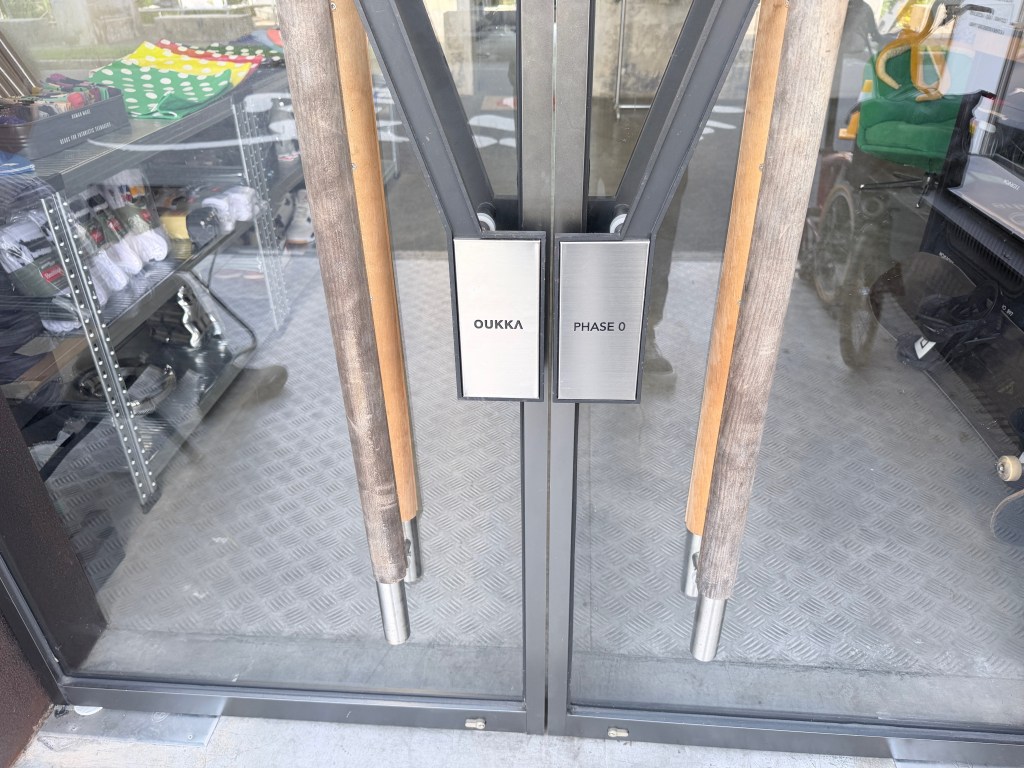
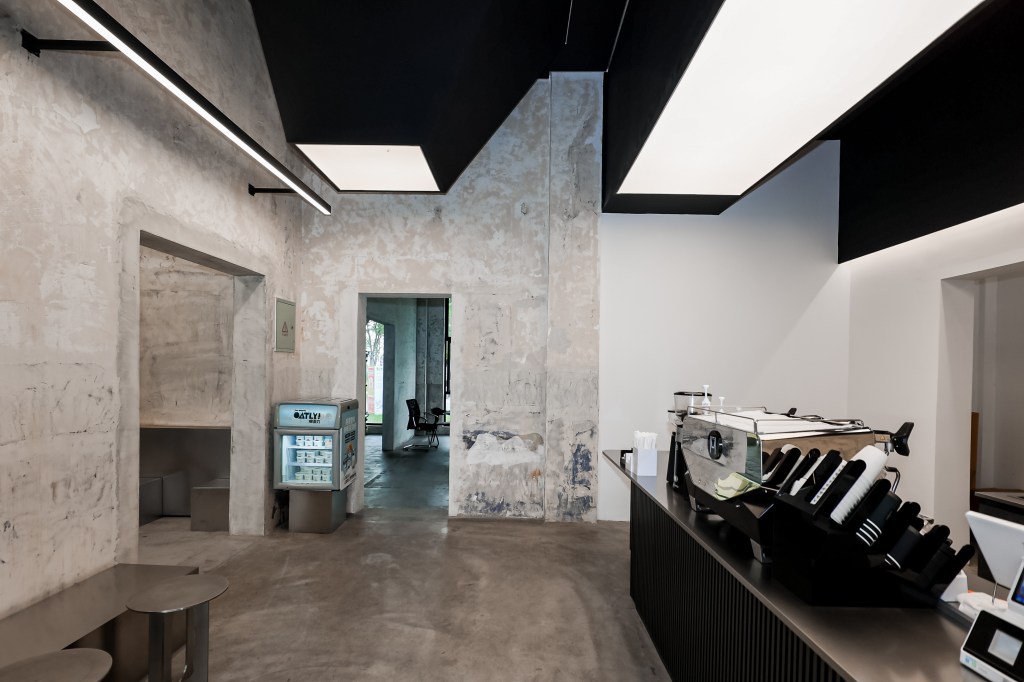
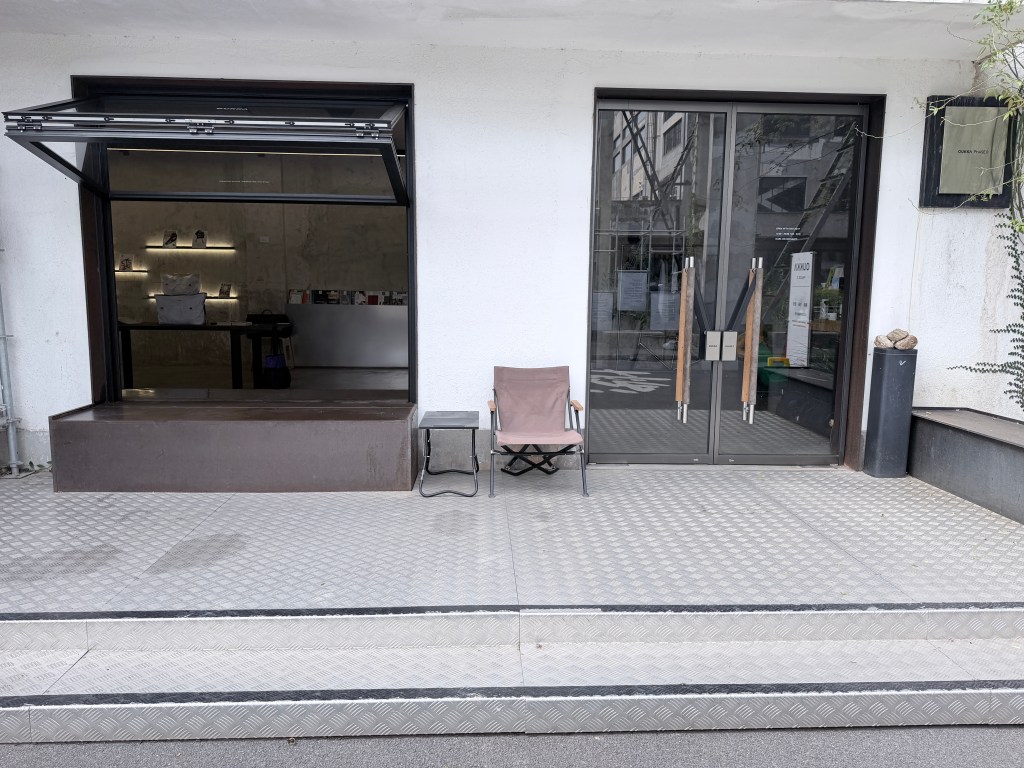
Hsu inherited another layer of the site’s history when he took over the café. Its existing concrete floor, walls, ceilings and lighting were retained. The alterations, designed by Hsu and carried out with the From Scratch and OUKKA team, were concentrated on the entrance, signage and a few smaller details. A stainless-steel panel bearing the new identity was mounted over the former café sign, while four small metal plates conceal the old business name on the glass-door handles.
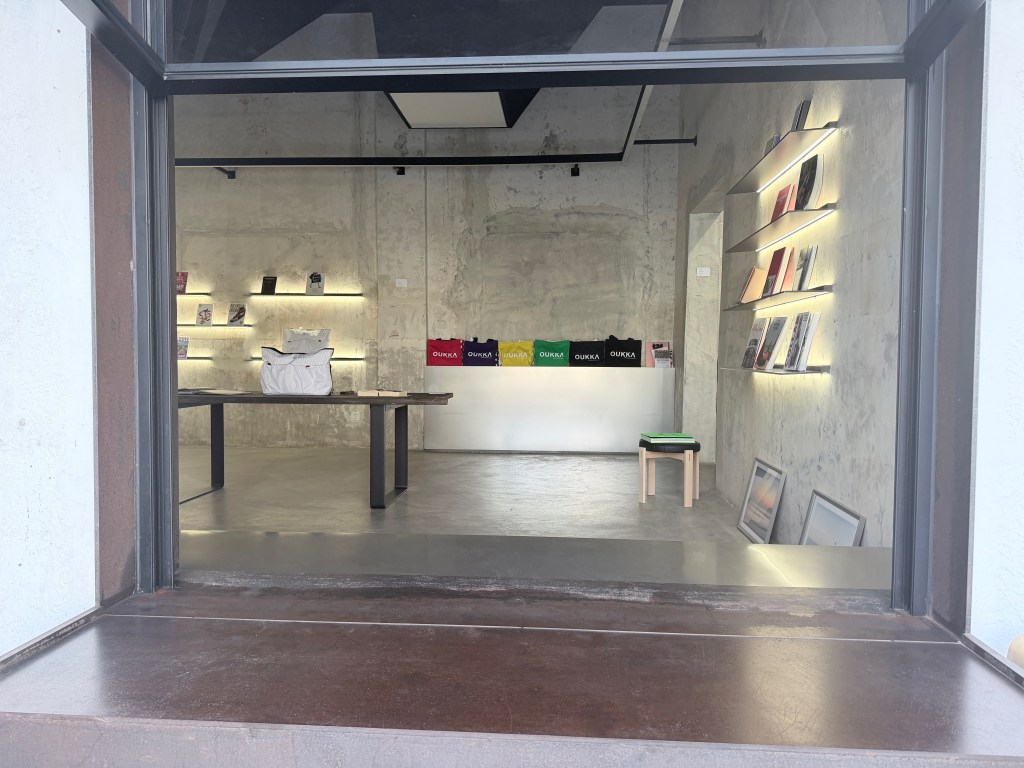
The existing sliding window has also been retained, allowing passers-by to look into the front room without entering. Second-hand furniture and movable displays make it possible to rearrange the interior as working requirements change. These interventions are modest, but their restraint was deliberate. Hsu’s colleagues did not initially understand why he wanted to retain so much of the previous interior. They became more convinced of the approach as the rooms began to function in their new capacity.
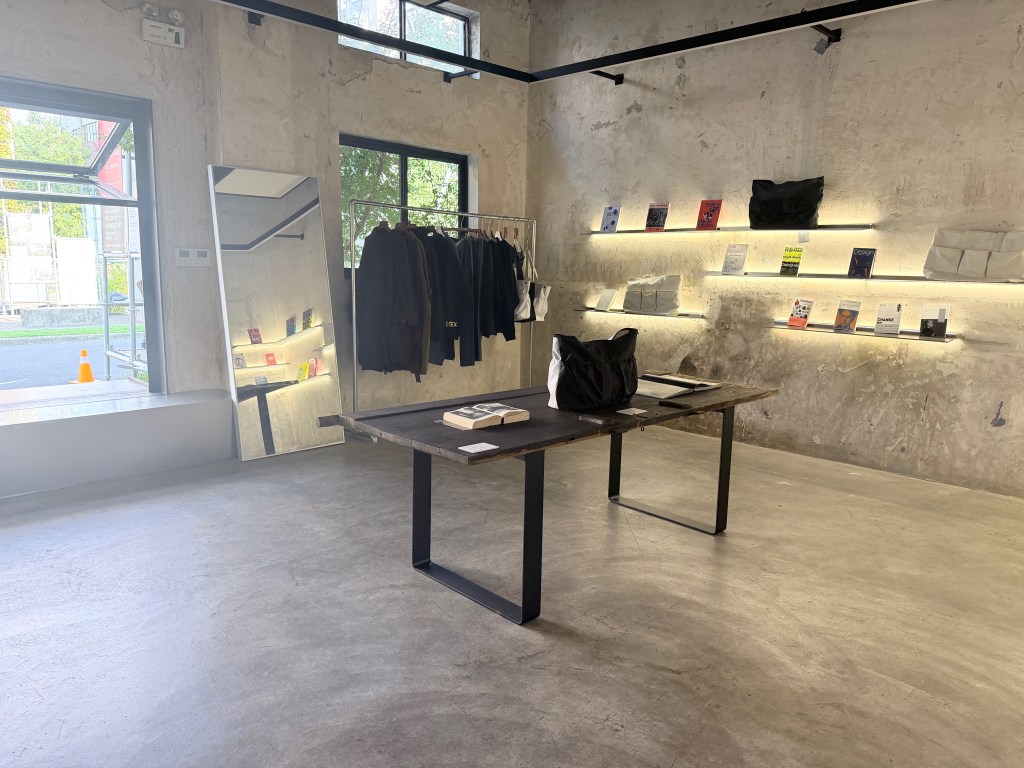
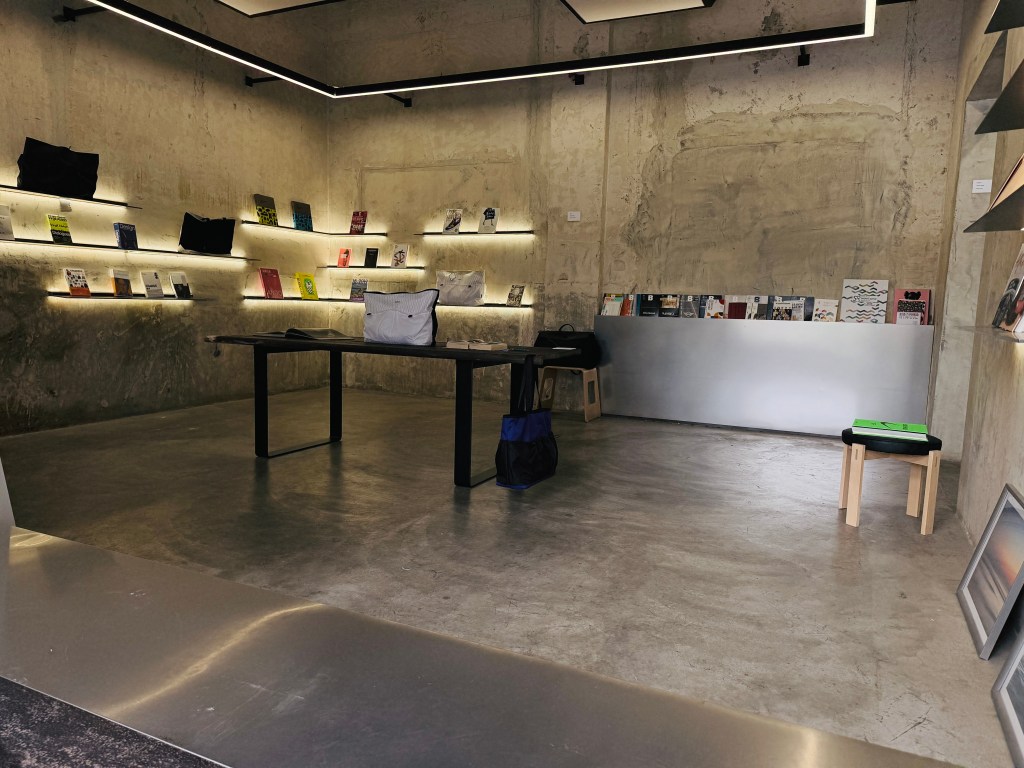
Perhaps the most interesting piece of furniture began life as a wooden door. Hsu bought the reclaimed panel for RMB 200 and commissioned metal legs for a further RMB 500. Its old paint and hardware remain, including a latch shaped rather like a traditional Chinese yuanbao, or silver ingot. The seller estimated the door to be around a century old, although neither its precise age nor the original finish has been independently authenticated.
The resulting table is used for displaying bags and books, examining samples and holding conversations. Its construction illustrates a practical aspect of reuse that is sometimes overlooked: retaining an object can require new work and expenditure. Here, the metal support cost considerably more than the old timber. The table preserves the door’s worn surfaces while giving it a function for which it was never intended.
The approach reflects OUKKA’s stated principle, Design What Deserves To Stay. The brand produces clothing, bags and everyday accessories, including its PHASE 04 reversible tote, which uses contrasting materials on its two sides. Questions of durability and continued use are central to the brand’s design philosophy, although the environmental merits of individual products cannot be established from those intentions alone. At PHASE 0, the decision to retain serviceable furnishings and existing architectural finishes provides a more immediately visible expression of the idea.
The relationship between the design studio and its visitors has produced some revealing encounters. In correspondence with My World of Interiors, Kevin, who represents OUKKA, describes a visitor who purchased an oversized Polartec midlayer originally developed as a sample for a snowboard brand. There was only one. Its singularity was precisely what attracted the buyer.
The reversible tote offers a different lesson. As Kevin explains, the team had produced the contrasting samples to clarify the bag’s reversible construction. Visitors instead saw a desirable colour combination. Their interest has prompted the designers to reconsider their original choice, although no change to the construction has followed. It is a useful distinction between listening to customers and allowing every customer preference to dictate a design.
There are practical limits to this openness. Some samples belong to clients and have yet to be launched. Visitors, apparently intrigued by the activity beyond the showroom, frequently want to look into the office. The team has discussed installing a lock. For a consultancy whose work includes confidential product development, access cannot be entirely unrestricted. The open studio has created a need to decide which stages of the design process can reasonably be shared.
Other encounters have taken a less predictable course. One woman entered looking for coffee, a reasonable assumption given the building’s previous use. PHASE 0 does not sell it, although the team has retained its own coffee equipment and occasionally shares a cup with visitors. After talking with the woman and exchanging WeChat details, they subsequently discovered that she worked in international logistics. When OUKKA needed to send its first sample to a buyer in Britain, she helped arrange the shipment to Bristol.
The bookshelves have produced another unexpected connection. The collection consists largely of the team’s own references on design, branding, architecture and related subjects. Selected volumes can be borrowed without a deposit, provided the borrower leaves a WeChat contact. A book lent in late September was eventually returned by a reader specialising in door design, who subsequently invited the team to participate in a design week the following year.
These encounters are attractive stories, although they should not obscure the commercial reality of PHASE 0. Products are sold, stock must be managed and maintaining the premises has its costs. In an earlier interview with DFUN, the team acknowledged the difficulties of operating a shop when weekday footfall is limited. The move from designing products to running a public-facing space has required considerable adjustment, including the development of a stock-management system.
Hsu’s interests suggest that these practical considerations have always been part of his thinking. Alongside product design, he writes about the sporting-goods industry, including a recent analysis of Reebok’s position in China for Sporting Goods Intelligence. His attention to product ranges, pricing and the commercial decisions behind them helps explain why PHASE 0 is as concerned with observing consumer behaviour as it is with presenting finished objects.
The arrangement allows the team to see how people actually respond to products. A sample may attract interest for reasons different from those its designer anticipated, while an informal conversation can reveal something that a conventional retail transaction might never uncover. These observations are valuable, but they are not a substitute for a workable business. PHASE 0 remains a small experiment, with its financial and operational model still developing.
The space itself is continuing to evolve. Plans under discussion include a photography exhibition, a literary gathering, a silent writing session conceived as performance art and a small presentation with a Japanese brand in January 2027. These remain proposals rather than an established programme.
For the moment, the working studio continues alongside the shop. Hsu and his colleagues develop products, meet clients and occasionally find themselves explaining a sample to someone who has wandered in from the art district. The black-and-white tote is still a demonstration piece, and the team is still considering whether the office needs a lock. Both questions have emerged from the ordinary business of using the space, which is perhaps the most useful way for PHASE 0 to discover what it needs to become.
Photography © OUKKA / © DEQIU. Images courtesy of OUKKA PHASE 0.
OUKKA PHASE 0
Deqiu Heat Supply Station Art District
800 Chunxi Road, Minhang District, Shanghai, China
Opened 22 September 2026
Official website · Instagram: @oukkalab
Based on original conversations with OUKKA, November 2026, the PHASE 0 project documentation and independent published sources.
