
Art, design, fashion, literature, film, music, food and hospitality as the city moves from autumn into winter.
Copenhagen changes character when the evenings draw in. The harbour ceases to be the centre of everybody’s social life, dinner moves indoors, and the city’s museums, cinemas and theatres begin to feel less like occasional destinations than places in which to spend the season. There is pleasure in this contraction. A smaller geographical radius can produce a larger cultural life, particularly in a city where an exhibition, a bookshop, a good lunch and an evening performance can comfortably occupy the same day.
The remainder of 2026 offers more than the familiar progression towards Christmas. Major exhibitions consider the female imagination, the vulnerable body and the difficulties of living together; architecture is examined through everyday experience; books and Nordic cinema receive substantial public platforms; and the restaurant scene is acquiring new addresses that range from Danish lunch traditions to French craft and contemporary Asian cooking.
October brings the first rush of activity, November supplies much of the intellectual substance, and December adds its own mixture of performance, craftsmanship and conviviality. The following is a guide to the events and places that make those months worth spending in Copenhagen.
October: The City Opens Its Doors
The immediate date is 9 October, when Kulturnatten, Copenhagen’s annual Culture Night, runs from 18.00 to midnight. More than 200 participating institutions across Copenhagen and Frederiksberg invite the public into museums, libraries, churches, theatres and places that are ordinarily less accessible. Its appeal lies partly in the alteration of familiar spaces: buildings associated with administration, study or ceremony become places to wander, listen and ask questions.
At the Danish Architecture Center, the programme includes rooftop silent disco, creative workshops and an interactive light installation outside BLOX. The building becomes both a subject of discussion and a setting for public life. Rather than attempting an exhausting circuit of the whole city, choose a small area and allow enough time for two or three substantial visits. Culture Night is most rewarding when curiosity has room to take over from the itinerary.
Art: The Female Imagination and the Shared World
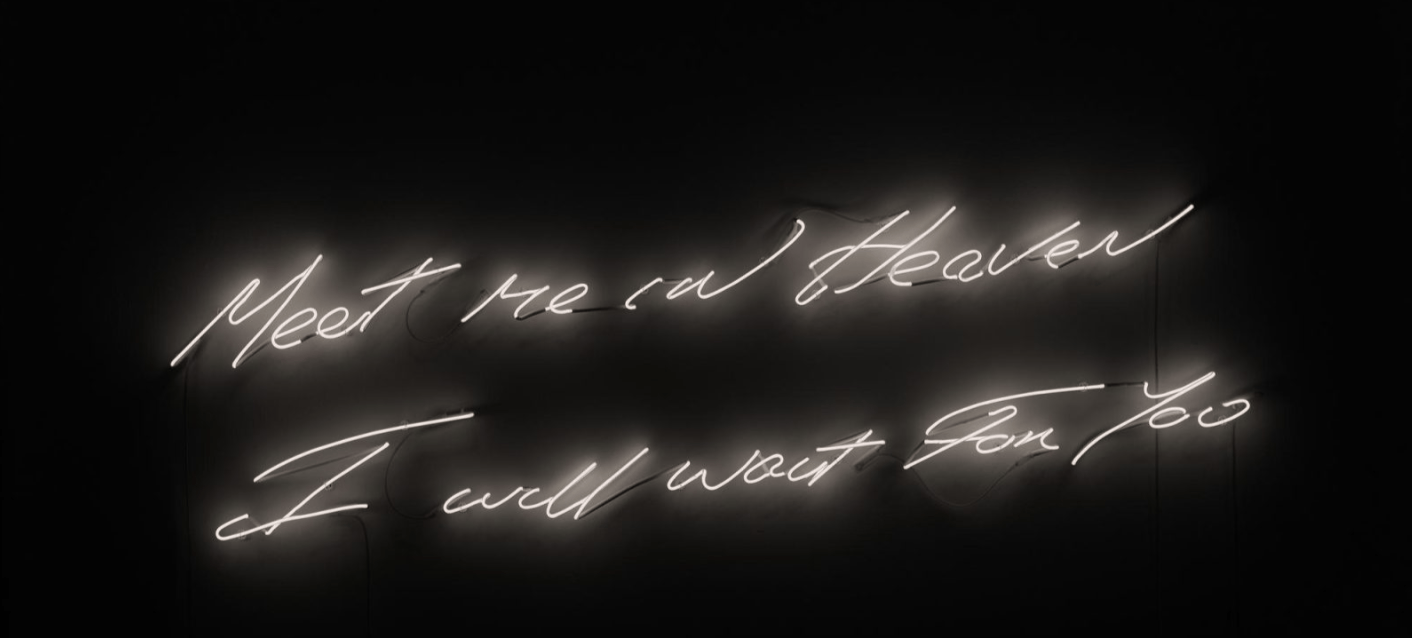
The major new exhibition is Tracey Emin: A Second Life at Louisiana, which opens on 8 October and continues until 18 April 2027. Organised by Tate Modern in cooperation with Louisiana, it brings together painting, drawing, sculpture, textiles, film and installation across almost forty years of work. The exhibition’s attention to Emin’s continuing commitment to painting is particularly welcome: the notoriety surrounding her early career has sometimes obscured the sustained artistic practice beneath it.
Emin’s subject is the lived body, with its desire, humiliation, pain and capacity to survive. Her work has made experiences long dismissed as excessively personal available for public consideration. Seen across several decades, that insistence becomes a serious challenge to the division between private experience and cultural significance. The exhibition offers an opportunity to look beyond the familiar arguments about confession and ask how an artist gives form to what is difficult to articulate.
Louisiana’s Remedios Varo exhibition, continuing until 10 January 2027, makes the journey north to Humlebæk still more compelling. The Spanish-Mexican painter’s intricate interiors contain strange apparatus, enigmatic travellers and figures engaged in acts of investigation or transformation. Scientific curiosity, surrealism and magical thinking occupy the same meticulously constructed world. These paintings reward close looking: their precision gives even the most improbable event an internal logic.
Varo and Emin offer very different accounts of female experience. One builds elaborate pictorial worlds; the other repeatedly returns to the exposed self. Seeing them together invites consideration of the many forms through which women have claimed the authority to describe their own realities. Louisiana is outside Copenhagen, but this pairing deserves a full day within any serious account of the region’s autumn programme.
Back in the city, Couples Therapy at SMK continues until 24 January 2027. Four artist duos — Bank & Rau, Hesselholdt & Mejlvang, J&K, and Randi & Katrine — examine collaboration and collective life through installations, sculpture and performance. The exhibition extends the question of togetherness beyond the artists’ own partnerships towards the institutions and arrangements through which society organises care and everyday existence. After Emin’s fiercely individual perspective, it provides a useful change of scale: how do we make something together, and what do we owe one another in the process?
Design and Fashion: How We Live With Objects
At the Danish Architecture Center, Cities for People, continuing until 29 March 2027, examines the relationship between urban space, health and belonging. Developed with the practice Gehl and Jan Gehl, it considers how the same environment can be experienced differently according to age, gender and circumstance. The emphasis falls on streets, places to gather and the conditions that make everyday movement and social contact possible.
For Copenhagen, this is a particularly relevant subject. International admiration for the city often settles on cycling infrastructure and attractive public spaces, while leaving the human experience of those places insufficiently examined. The exhibition asks visitors to consider who feels welcome, who feels unsafe and how design might accommodate both sociability and the need for calm. It is a useful corrective to an architectural conversation conducted mainly through photographs.
Designmuseum Danmark offers a different account of the relationship between people and their surroundings through its celebration of Verner Panton’s centenary. Furniture and lighting appear across the museum, including Pantonova, the Living Tower and the Flowerpot Sculpture. Panton remains a persuasive reminder that Danish design contains exuberance as well as restraint. His experiments with colour, shape and material were attempts to change how a room could be inhabited, and several of the museum’s displays allow visitors to experience that ambition physically.
The museum’s next substantial addition is LABORATORIUM Kim Buck, opening on 13 November and continuing until 9 May 2027. The Danish goldsmith’s practice brings technical experimentation into conversation with language, convention and the meanings attached to jewellery. Existing works appear alongside pieces developed for the exhibition, with attention to how an idea changes through the act of making.
Buck is also an interesting route into the season’s fashion conversation. Jewellery sits unusually close to both public identity and private attachment: it may announce taste or status while carrying a meaning visible only to its wearer. An exhibition that treats it as an exploratory artistic practice offers more to consider than another sequence of desirable accessories. Panton, Gehl and Buck work at radically different scales, but all three invite us to examine how designed things shape our lives.
Literature: A Weekend for Books and Conversation
Bogforum takes place at Bella Center from 30 October to 1 November. Its scale is considerable, bringing authors, publishers and readers together for interviews, debates, talks and encounters around books. The useful approach is to plan around a handful of conversations, leaving time between them to explore publishers’ stands and discover work beyond the names that initially drew you there.
Among the announced international writers is Hiromi Kawakami, whose fiction makes ordinary life porous to strangeness. Her presence is a substantial attraction for readers interested in contemporary Japanese literature. Dörte Hansen brings a different perspective through her attention to place, social change and communities under pressure, while science journalist Steve Ayan appears in conversation with Frederik Stjernfelt on 31 October to discuss the history of psychotherapy.
The range matters. A book festival can make room for fiction, intellectual history and public discussion within the same programme, allowing readers to follow an interest into unfamiliar territory. Bogforum also gives visible form to the work surrounding literature: publishing, translation, bookselling and the conversations through which a book finds its audience. For a city of Copenhagen’s size, three days devoted to that exchange are a considerable cultural asset.
Film: Nordic Cinema in the November Dark
At Cinemateket, the new festival Nordisk lys — Nordic Light runs from 19 to 22 November, bringing Nordic films into conversation with live music, discussions and activities for different generations. The opening evening includes a short concert by Trine Dyrholm and a preview of Marlene Emilie Lyngstad’s Cute, followed by a conversation with the director and lead performer Gina Jaqueline.
The programme also includes Dag Johan Haugerud’s Sex, Dreams and Love trilogy, Ruben Östlund’s Play and Franciska Eliassen’s The Last Spring. These are films concerned, in different ways, with how people understand one another and the social structures within which they live. Bringing them together creates an opportunity to consider Nordic cinema beyond the recurring shorthand of crime, bleak landscapes and domestic dysfunction.
There is practical value in the festival’s ambition to improve the circulation of Nordic films between neighbouring countries. Geographical closeness does not guarantee cultural familiarity, and much of the region’s cinema remains surprisingly difficult to encounter across national borders. Four days at Cinemateket offer a concentrated way into that wider film culture, with the discussion continuing beyond the screening itself.
Music: Brahms, Arlo Parks and December Swing
On 5 and 6 November, Fabio Luisi conducts the Danish National Symphony Orchestra in an all-Brahms programme at DR Koncerthuset. Brahms’s Fourth Symphony is paired with Schoenberg’s orchestration of the First Piano Quartet, allowing the evening to explore both the composer’s symphonic writing and the possibilities discovered in his chamber music by a later musician. The pairing supplies a substantial reason to return to familiar repertoire with fresh attention.
At Store VEGA on 29 November, Arlo Parks brings another form of close observation to the stage. Her songs attend to the details of friendship, desire and emotional vulnerability, giving everyday experience the concentration usually associated with poetry. In a season rich in large institutional programmes, this promises a more intimate kind of musical encounter.
December’s festive music need not be confined to carols. DR Big Band’s A Jazzy Christmas, with Mads Mathias and Emma Smith, has performances from 12 to 14 December in Studio 2. The programme draws on American and Nordic seasonal favourites through swing and jazz. It is an appealing choice for an evening with friends, particularly for those who enjoy Christmas more readily when it arrives with a rhythm section.
Food: The New Tables to Know
The most useful restaurant news for the remainder of the year concerns several distinct ways of eating. A Danish lunch can become the centre of the day; a French restaurant can build its identity around accumulated technique and attentive service; and a new East Asian restaurant brings an ambitious tasting menu to the top of Axel Towers. These forthcoming openings and recent changes suggest a city with room for more than one model of a serious meal.
Henry, scheduled to open on 21 October at Tordenskjoldsgade 19, is the new restaurant from Jonas Mikkelsen and Rasmus Mørch, the duo behind Magny. Its format is straightforward: smørrebrød at lunch and bistro cooking in the evening. The published lunch menu includes fried herring, hand-peeled prawns and butter-fried plaice, alongside a potato open sandwich and mushroom toast. The emphasis on a limited number of ingredients makes the quality of the cooking and sourcing particularly consequential.
Henry is well placed for a long lunch before an afternoon in the centre, or dinner as part of a theatre evening. Its attraction lies in taking recognisable dishes seriously and giving the Danish lunch tradition sufficient space to be a complete occasion. For visitors who have encountered Copenhagen principally through tasting menus, it offers a different way into the city’s food culture.
On Christianshavn, Le Métier is being developed at Strandgade 98, the former Lalala address. The team’s stated ambition centres on French culinary craft: pâté en croûte, terrines, properly developed sauces and desserts made in-house. Hospitality is presented as part of that craft, extending from the kitchen to the way a table is laid and a guest is received.
The restaurant remains an opening to watch, with its precise launch date still to be announced. Its proposition is nevertheless compelling for the colder months. Classical French cooking depends upon techniques that take time, and an establishment willing to make those techniques central to its identity has a useful place in a city that can sometimes appear preoccupied with the next culinary invention.
Axel Towers is acquiring a more substantial gastronomic presence. Abigail moved there on 6 October, occupying the eighth floor with Patrick Godborg, formerly of Restaurant Radio, taking charge of the kitchen. Its changing fixed menu draws freely on international influences, making it the choice for diners willing to leave the shape of the evening to the chefs.
Above it, on the ninth and tenth floors, Tamashii is due to open during November, with Henrik Jyrk leading an East Asian kitchen. The restaurant’s current website advertises a menu of 17 servings. Reservations are already available from 2 December, while the precise November opening date is still to be confirmed. For anyone planning a winter visit, December is therefore the firmer option; earlier dates depend on the final launch announcement.
There is also pleasure in moving from restaurant consumption to practical participation. Flere Fugle lists an autumn programme of baking workshops, including croissants and pastries on 14 October, sourdough pizza on 23 October and sourdough bread on 27 October. For a city whose bakeries have become destinations in their own right, learning something about the work behind the counter is a satisfying development. It also makes an excellent shared activity for people who would usually meet over dinner.
Taken together, these addresses give the season a varied culinary shape: a Danish lunch, an anticipated French opening, two different experiences above the city and an afternoon spent making something with one’s hands. The strongest reason to follow Copenhagen’s restaurants this autumn is the opportunity to choose a meal suited to the day, the company and the appetite, with considerable craft available in several forms.
Hotels: Places to Spend a Winter Evening
Hotel Sanders has a particularly useful seasonal programme for residents as well as overnight guests. Its Christmas lunch runs from 6 November to 23 December, while red and white gløgg, served with cookies from Juno Bakery, is available from 6 November to 28 December. The Living Room, courtyard and TATA cocktail bar make it possible to turn a visit into anything from a brief drink to a longer evening.
This kind of hospitality is especially appealing in winter, when a comfortable room in which to sit becomes an urban amenity. Sanders is also conveniently placed for the Royal Danish Theatre and the surrounding streets, allowing dinner, drinks and a performance to form one evening without elaborate travel between them.
At 1 Hotel Copenhagen on Krystalgade, the autumn programme includes daily design tours and Saturday DJs at PÆRE. Reclaimed materials and natural textures form a substantial part of the hotel’s interior identity, making the tours relevant to anyone interested in how a hospitality space is put together. PÆRE provides a more social reason to visit. Both hotels offer ways to encounter their interiors and atmosphere without making an overnight stay the purpose of the outing.
December: Craftsmanship, Ballet and the Festive City
For gifts with a connection to contemporary making, Flid’s Christmas market at Nørrebrohallen is worth prioritising. The organisers have announced 10–13 December, adding a Thursday opening to the usual Friday-to-Sunday programme. Its focus on artists, designers and craftspeople makes it a useful place to encounter objects alongside the people responsible for them, with attention to production methods and working conditions forming part of the selection process.
Christmas in Tivoli runs from 13 November to 3 January 2027. By December, its lights, planted displays and seasonal stalls offer the city’s most familiar transformation of public space. The pleasure is theatrical: a garden becomes a deliberately constructed festive world. It works particularly well as an evening excursion, when the lighting supplies much of the experience.
A different kind of theatre takes place at Gamle Scene, where the Royal Danish Ballet performs George Balanchine’s The Nutcracker from 20 November to 22 December. Tchaikovsky’s score and Balanchine’s choreography give the season a substantial artistic tradition as well as an occasion for dressing up. The familiarity of the work is part of its appeal, but the encounter with live dancers and an orchestra makes each visit more than a repetition of a childhood memory.
The year’s final musical appointment is the Danish National Symphony Orchestra’s New Year Gala on 30 and 31 December at DR Koncerthuset. Conducted by Christian Kluxen, with Sofie Lund and Laura Helene Hansen, the programme combines Lumbye and Strauss with French repertoire by Offenbach, Bizet, Ravel and Gounod. It offers a convivial way to mark the end of the year and gives the last days of December a cultural occasion of their own.
Copenhagen’s appeal during these months lies in the relationship between ambitious institutions and the smaller pleasures around them. A museum visit can be followed by an unhurried lunch; a film can lead into a conversation; an evening performance can begin or end in a room designed to receive people well. The season asks for a little planning, particularly around its busiest dates, but it also leaves room for the ordinary habits that make a city worth inhabiting. Between October and December, those habits acquire the company of some unusually good art, music, books and food.
Sources / Read More
- Culture Night and its DAC programme: www.kulturnatten.dk · www.dac.dk. Kulturnatten
- Louisiana, Tracey Emin and Remedios Varo: www.louisiana.dk. Louisiana Museum of Modern Art
- SMK, Couples Therapy: www.smk.dk. smk.dk
- DAC, Cities for People: www.dac.dk. DAC
- Designmuseum Danmark, Verner Panton: www.designmuseum.dk. Design Museum Denmark
- Designmuseum Danmark, Kim Buck: www.designmuseum.dk. Design Museum Denmark
- Bogforum, dates and authors: www.bogforum.dk. bogforum.dk
- Cinemateket, Nordisk lys: www.dfi.dk. Det Danske Filminstitut
- DR Koncerthuset, Brahms, Christmas jazz and New Year Gala: www.drkoncerthuset.dk. Køb billet
- VEGA, Arlo Parks: www.vega.dk. vega.dk
- Henry, menus and opening announcement: www.restauranthenry.dk · www.restaurant.dk. restauranthenry.dk
- Le Métier: www.la-la-la.dk. restaurant
- Abigail and Tamashii: www.norrlyst.dk. Norrlyst Group ApS
- Flere Fugle, workshops: www.flerefugle.dk. flerefugle.dk
- Hotel Sanders, seasonal programme: www.hotelsanders.com. Hotel Sanders
- 1 Hotel Copenhagen, interiors and events: www.1hotels.com. 1hotels.com
- Flid, Christmas market: www.flidmarked.com. flid
- Tivoli, Christmas season: www.tivoli.dk. tivoli.dk
- Royal Danish Theatre, The Nutcracker: www.kglteater.dk. Det Kongelige Teater
Discover more from My World of Interiors
Subscribe to get the latest posts sent to your email.

