
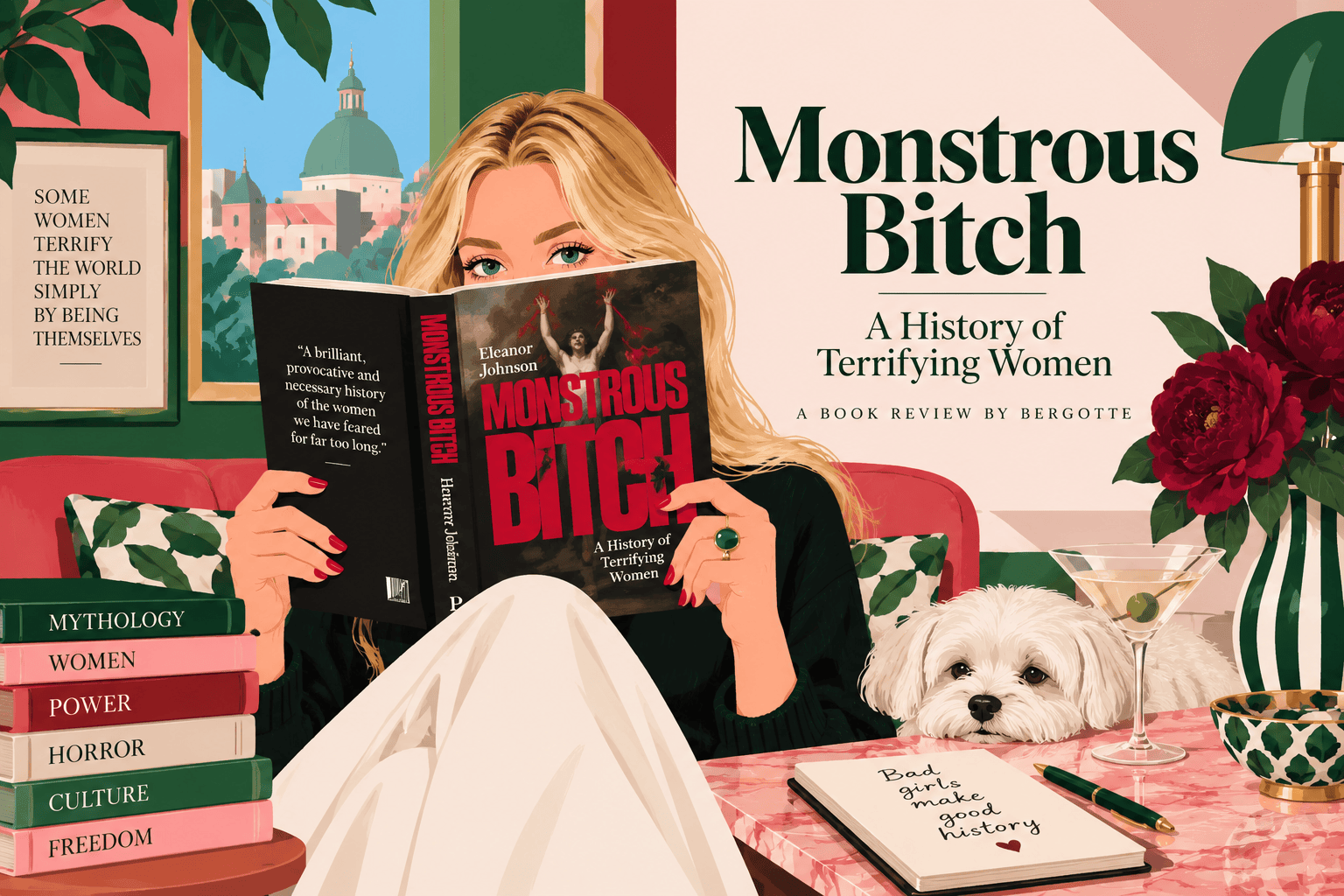
Who Gets to Be a Monster?
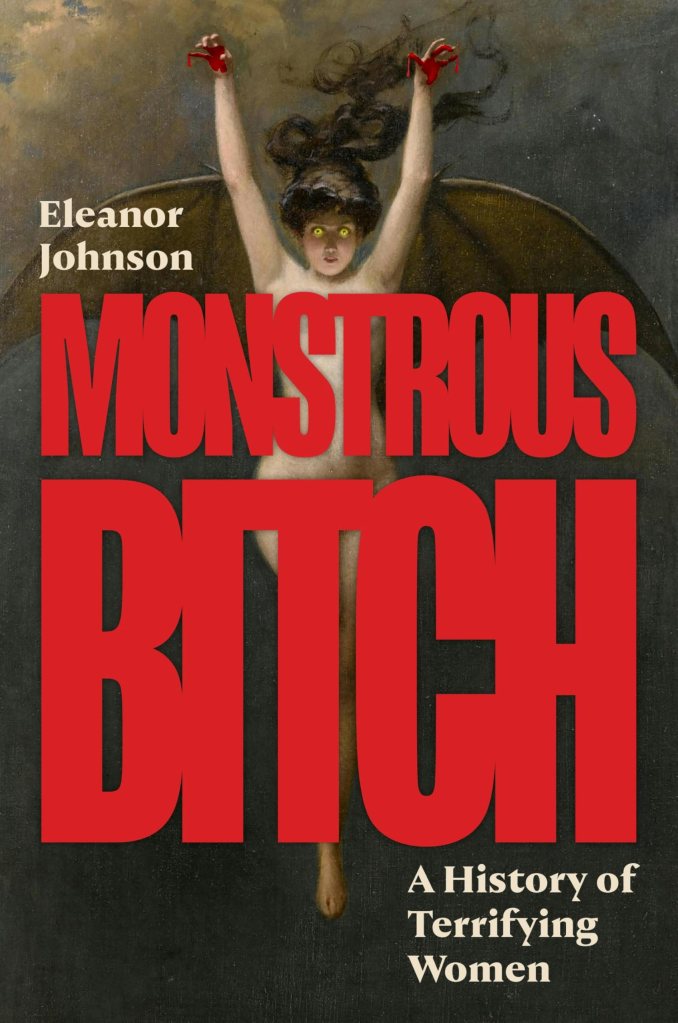
Book: Monstrous Bitch: A History of Terrifying Women
Author: Eleanor Johnson
Publisher: Princeton University Press
Publication: 6 October 2026
Pages: 344
ISBN: 9780691291666
Genre: Cultural history / Feminist criticism / Mythology
There are monsters, and then there are women who have been made monstrous.
The distinction lies at the heart of Eleanor Johnson’s wonderfully provocative Monstrous Bitch: A History of Terrifying Women, a cultural history spanning some four thousand years of the human imagination. Its subject is not simply misogyny, nor even the representation of women in mythology, literature and film. Johnson is interested in something more specific and more unsettling: why certain kinds of female behaviour have repeatedly been represented not merely as undesirable, but as monstrous.
The woman who wants too much.
The woman who speaks too loudly.
The woman who refuses motherhood, controls her sexuality, abandons obedience or exercises power without asking permission.
Again and again, she acquires claws.
Johnson begins in ancient Mesopotamia with Lamashtu, a terrifying female demon associated with the deaths of infants and pregnant women. Lamashtu possesses many of the characteristics that will recur throughout Johnson’s history: she is sexually transgressive, reproductively threatening, loud, violent and associated with the animal world.
From this ancient figure Johnson constructs what she deliberately and mischievously calls the “monstrous bitch”: an archetype that changes its clothes across the centuries while retaining a remarkably persistent set of characteristics.
In classical Greece she reappears in figures such as Medea, Lamia and the Furies. In medieval and early-modern Europe she becomes the witch. Later centuries transform her into the vampiress and the madwoman. Modern horror eventually begins the complicated process of reclaiming her.
The costumes change.
The accusation remains surprisingly familiar.
The Crime of Female Appetite
What connects many of these figures is appetite.
Female appetite has always presented a particular problem for patriarchal culture because appetite implies a self.
To desire is to possess an interior life that cannot entirely be governed from outside. Sexual desire is the most obvious example, but Johnson’s argument reaches far beyond sexuality. Her monstrous women want knowledge, autonomy, revenge, children or no children, political power, bodily freedom and—perhaps most threateningly—the right to speak.
The monster is therefore often created at precisely the point where a woman ceases to function primarily in relation to somebody else.
A good woman has traditionally been intelligible through relationship: daughter, wife, mother, virgin, widow.
The monstrous woman requires no such grammatical support.
She acts.
That is what makes Medea such an enduringly unbearable figure. Her murder of her children is horrific, but it is also a grotesque inversion of the cultural expectation that maternity represents the final and natural destination of female identity. Medea does not simply commit violence; she violates the symbolic order in which the mother exists for her children.
Her monstrosity therefore becomes larger than her crime.
She represents the terrifying possibility that a woman might possess an identity stronger than the role assigned to her.
From Demon to Witch
One of Johnson’s most compelling achievements is demonstrating how mythology migrates into social reality.
A demon is one thing. A woman accused of behaving like one is another.
By the medieval and early-modern periods, characteristics once attached to supernatural female monsters increasingly became attached to actual women. The witch inherited much of the ancient monster’s symbolic vocabulary: illicit sexuality, dangerous reproductive power, excessive speech, association with animals and the ability to disrupt the supposedly natural hierarchy between men and women.
The consequences were no longer literary.
Women died.
This is where Monstrous Bitch becomes more than a fascinating history of images. Cultural archetypes matter because metaphor has a habit of escaping into the world.
If a society repeatedly describes a category of human beings as irrational, contaminated, predatory or less than fully human, the metaphor eventually begins to justify treatment that would otherwise be morally intolerable.
The monster is never merely decorative.
It performs political work.
The Loud Woman
Johnson is particularly perceptive about female speech.
The monstrous woman is frequently noisy.
She shrieks, curses, argues, complains, seduces, accuses. Her voice itself becomes evidence against her.
This is one of the book’s most revealing continuities because its modern descendants are so easy to recognise.
Men may be forceful; women are abrasive.
Men are uncompromising; women are difficult.
A man who refuses to soften his argument possesses conviction. A woman doing the same thing has an attitude.
The vocabulary has become more polite. The underlying disciplinary mechanism is remarkably durable.
“Bitch” remains such a powerful insult precisely because it performs several functions simultaneously. It animalises a woman while accusing her of violating expectations of feminine behaviour. A bitch is not merely unpleasant. She is a woman behaving outside the boundaries of approved womanhood.
Johnson’s decision to reclaim the word in her title is therefore more than provocation.
It exposes the architecture of the insult.
Monstrosity and the Body
Female monstrosity has also been persistently corporeal.
The monstrous woman bleeds, menstruates, gives birth, miscarries, lactates, ages, desires and consumes. Her body refuses the fantasy that femininity should be decorative, contained and clean.
This is why horror proves such fertile territory for Johnson.
Horror is fascinated by boundaries: between human and animal, life and death, inside and outside, purity and contamination. The female body has repeatedly been made to carry these anxieties.
Pregnancy is particularly revealing.
It is simultaneously celebrated as the supposedly natural fulfilment of womanhood and treated culturally as something mysterious, unstable and potentially terrifying. The pregnant body quite literally contains another body. It violates the comforting fiction of the autonomous, sealed individual.
It is hardly surprising that horror returns to it obsessively.
Nor is it accidental that societies seeking to control women so frequently attempt to control reproduction.
The monster and the mother have always lived uncomfortably close to one another.
The Politics of Naming
There is another question running beneath Johnson’s history: who possesses the authority to name the monster?
The word itself suggests an objective category. A monster is something beyond the limits of acceptable humanity. Yet those limits are culturally produced.
This is what makes the history of female monstrosity politically revealing.
To call someone monstrous is not simply to describe them. It is to place them outside the community of people whose behaviour must be understood rather than merely condemned.
Once the monster has been created, curiosity becomes unnecessary.
We need not ask why the witch is angry, why the madwoman screams, why the murderous mother rejects maternity or why the sexually voracious woman refuses restraint.
The label supplies the explanation.
She is monstrous.
End of enquiry.
This mechanism extends well beyond gender. Societies have repeatedly transformed inconvenient human beings into categories before deciding what may legitimately be done to them. Otherness becomes pathology; pathology becomes threat; threat becomes permission.
Johnson’s history of terrifying women therefore touches upon something larger than the history of women.
It is also a history of dehumanisation.
But Is Every Monster Political?
Here the argument deserves some resistance.
A cultural history this ambitious inevitably risks discovering its archetype everywhere.
Not every terrifying woman is terrifying because she is a woman. Not every female villain represents patriarchal anxiety. Medea is also frightening because she murders her children. Vampires are frightening because they drink blood. Monsters retain psychological, religious and aesthetic meanings that cannot always be reduced to gender politics.
There is also a danger in treating patriarchy as though it were a single historical consciousness stretching uninterrupted from ancient Mesopotamia to Hollywood.
Four thousand years contain enormous transformations in religion, economics, family structure, medicine, law and sexuality. Similar images can acquire radically different meanings in different societies.
Continuity is illuminating.
Too much continuity can flatten history.
This is where Johnson’s enormous chronological sweep is simultaneously the book’s great intellectual pleasure and the point at which the reader should retain a degree of scepticism.
But her thesis does not require every manifestation of female monstrosity to mean precisely the same thing.
What matters is the extraordinary persistence of a particular cultural anxiety: female power becomes especially disturbing when it cannot be made useful to somebody else.
That insight survives the historical complications.
The Monster Reclaimed
The most fascinating development comes when women begin claiming the monster for themselves.
Contemporary culture increasingly permits the monstrous woman to become protagonist rather than warning.
Horror cinema has been particularly fertile ground for this reversal. Female monstrosity can become a language of resistance rather than punishment. Witches, vampires, possessed girls and murderous women are no longer necessarily objects viewed from outside. Increasingly, the audience is invited to inhabit their perspective.
Something remarkable happens when the point of view changes.
The witch who once terrified the village can become the woman escaping it.
The vampire’s appetite can become autonomy.
Female rage, once evidence of madness, becomes evidence that something has happened worth becoming angry about.
The monster has not disappeared.
She has changed sides.
And perhaps that explains the contemporary fascination with witches, Medusa, female vampires and women behaving spectacularly badly. Their attraction lies not necessarily in a desire for cruelty but in the fantasy of existing beyond the requirement to remain pleasing.
There is freedom in the monster because the monster has already failed the test of respectability.
She no longer has anything to prove.
For centuries women were warned:
Behave, or you will become the monster.
Increasingly the answer is:
Perhaps the monster was never the worst thing to be.
Key Takeaways
The monstrous woman is an extraordinarily persistent cultural archetype. Johnson traces representations of dangerous femininity across approximately four thousand years, from ancient Mesopotamian demons through classical mythology, witchcraft and vampirism to modern popular culture.
Female monstrosity repeatedly gathers around autonomy. Sexual appetite, reproductive power, excessive speech, anger and resistance to male authority recur among the characteristics attached to frightening women.
The history of the word “bitch” matters. Animalising language does more than insult. It places women who violate social expectations outside the boundaries of respectable femininity.
Myth can have material consequences. Cultural representations of dangerous women do not necessarily remain safely inside stories. Fantasies about female corruption and supernatural power have, at various historical moments, become entangled with the persecution of real women.
The female body has repeatedly been made to carry cultural anxiety. Reproduction, sexuality, menstruation, ageing and bodily appetite become sites upon which fears concerning female independence are projected.
Female speech has historically been policed as carefully as female sexuality. The outspoken woman occupies a remarkably persistent position in this genealogy. Ancient anxieties about noisy and unruly women have recognisable descendants in modern descriptions of women as shrill, abrasive, difficult or aggressive.
Naming somebody a monster is an exercise of power. Monstrosity does not simply describe difference; it can place a person beyond sympathy and therefore beyond the ordinary requirement that their behaviour be understood.
The book’s great strength is also the source of its principal vulnerability. Four thousand years is an enormous historical canvas. Similar images do not necessarily possess identical meanings, and continuities in misogyny should not be allowed to erase profound differences between cultures and periods.
Modern culture has begun reclaiming female monstrosity. The terrifying woman increasingly appears not merely as an object of punishment but as a figure of agency, anger, resistance and occasionally liberation.
The deepest question is not why cultures invent female monsters, but what behaviour requires a woman to be called monstrous in the first place.
Final Thoughts
Monstrous Bitch could easily have been written as a catalogue of misogyny.
It is considerably more interesting than that.
Johnson is examining one of civilisation’s oldest acts of imaginative transformation: the conversion of social anxiety into monsters.
What societies fear rarely appears in cultural form exactly as itself. Fear acquires symbols. It becomes demons, witches, vampires, madwomen and beasts. And those symbols tell us something about the societies that created them.
Again and again, the terrifying woman is terrifying not simply because she possesses power, but because her power has escaped its prescribed purpose.
She wants.
She speaks.
She refuses.
She controls her body.
She does not remain where she has been placed.
Yet the history Johnson uncovers also contains an irony. Once a culture has spent millennia imagining the disobedient woman as a monster, the monster herself can eventually become attractive.
She is frightening because she cannot be controlled.
But that is also precisely what makes her free.
There is something simultaneously horrifying and exhilarating about following this figure across four thousand years and discovering how difficult she has been to kill.
Perhaps that is why Johnson’s deliberately confrontational title ultimately feels less like an insult than a challenge.
The monstrous bitch survived.
And she is still talking.
Discover more from My World of Interiors
Subscribe to get the latest posts sent to your email.

