
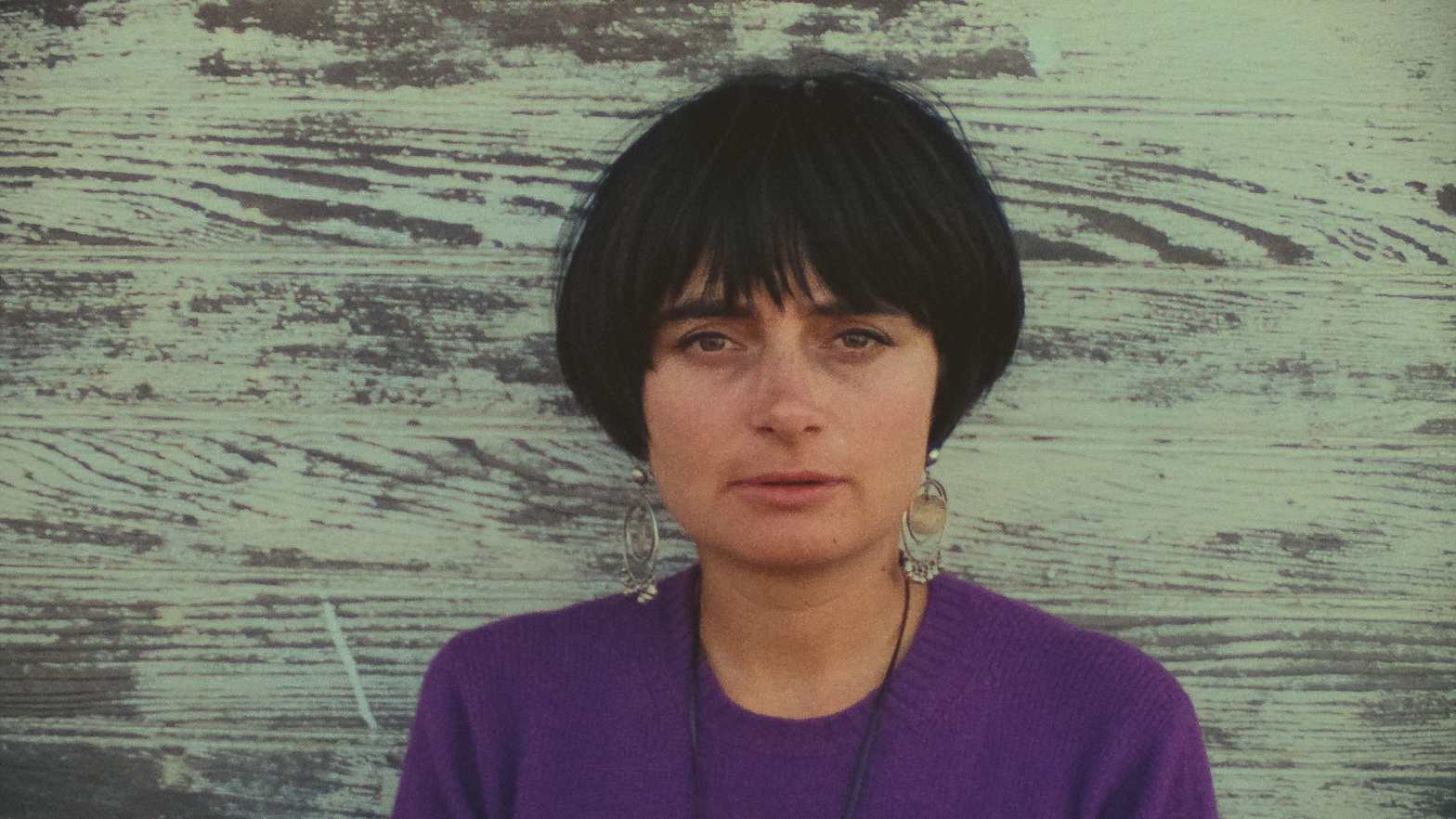
By Bergotte
Agnès Varda spent sixty years making films about the people and things that the world had decided did not matter, and she did it with a curiosity so genuine and a formal intelligence so complete that the combination amounts to something close to a philosophy of cinema — a sustained argument, made in image after image across a career of extraordinary range and consistency, that attention is itself a moral act, and that the camera, aimed at what has been discarded and overlooked and refused, can restore to the overlooked a dignity that the world has denied them. She was a feminist before feminist film theory had the language to describe what she was doing. She was an essayist before the essay film had a name. She was a political filmmaker who never made a political film in any conventional sense, because she understood that politics lives not in the drama of power but in the texture of daily life — in the gleaners bent over harvested fields, in the woman walking alone on a winter road, in the face of a dying friend held by a camera that loves him and cannot save him.
Agnès Varda was born in Belgium in 1928 and grew up in France, and she came to cinema without any formal film training at all — a photographer first, a woman who had never been to film school and barely seen any films when she made her first feature, La Pointe Courte, in 1954. The absence of conventional training was not a limitation. It was a liberation. She had no received ideas about what cinema was supposed to do, no set of rules to internalise and then break, no hierarchy of influences to situate herself within. She had a camera, and she had eyes, and she had a quality of attention to the world around her that was already, in that first film, entirely her own.
She is customarily placed within the French New Wave, a generation of filmmakers — Godard, Truffaut, Rivette, Rohmer, Chabrol — who transformed French cinema in the late 1950s and 1960s by taking it out of the studios and onto the streets. The placement is accurate as a matter of history and misleading as a matter of sensibility. Varda shared with the New Wave directors a commitment to location shooting, to low budgets, to the camera as an instrument of discovery rather than illustration. But where they were primarily interested in cinema — in its history, its possibilities, its relationship to other arts — she was primarily interested in the world. The New Wave was, in important respects, a cinema about cinema. Varda’s work is a cinema about life, and the distinction runs all the way down.
The woman walking alone
Vagabond — Sans toit ni loi in French, Without Roof or Law, a title that is more accurate and more austere than the English — was made in 1985 and is the film that closes this essay, the work in which Varda’s argument about the overlooked reaches its most devastating expression. It begins with an ending: a young woman’s frozen body found in a ditch in the south of France in winter. Her name is Mona. She is perhaps twenty years old. Nobody knows where she came from or who she was. The film that follows is an attempt to reconstruct her last weeks through the testimonies of the people who encountered her — a series of witnesses who each give their account directly to camera, documentary-fashion, while the fictional scenes of Mona’s wandering play between their testimonies.
The structure is a formal statement of Varda’s central concern. Mona is being assembled from fragments, from other people’s partial perceptions, from the traces she left on lives she passed through without, apparently, caring whether she left traces. What emerges is not a coherent portrait but something more honest: a set of contradictions, a person who means different things to different people and resists the meaning they impose, a young woman whose freedom — genuine, absolute, chosen — looks from the outside like self-destruction and from the inside, the film insists, like the only available form of integrity.
Sandrine Bonnaire, who had given her first great performance the previous year in Pialat’s À nos amours, plays Mona with a blankness that is the film’s central mystery and its central argument. She is not sympathetic in any conventional sense. She is dirty, she is rude, she is indifferent to the people who try to help her, she refuses the social compact that would make her legible and therefore manageable. She is free, and her freedom is terrible, and Varda films it without judgment and without sentiment, with the same quality of attention she brings to the gleaner in the field or the potato left behind after the harvest — this is what is here, this is what has been overlooked, look at it.
The film is not an argument for Mona’s choices. It is an argument for her right to be seen on her own terms, which is something that no one in the film — and the film implicates us in this — is quite able to do. Everyone who encounters Mona tries to understand her through the framework of their own life, their own values, their own idea of what a young woman should be doing with herself. None of them can simply look at her. Varda’s camera, by contrast, can and does, and the looking is the film’s moral act, and it is the most completely Vardian thing in a film that is entirely Vardian from first frame to last.
The essay and the gleaners
If Vagabond is the most formally controlled of Varda’s films, The Gleaners and I — made in 2000, when she was seventy-one, with a small digital camera she carried herself — is the most completely free. It is an essay film in the fullest sense: a film that thinks on screen, that follows its own curiosity wherever it leads, that makes no distinction between the personal and the political, the aesthetic and the ethical, the filmmaker and the filmed. It begins as an investigation of gleaning — the ancient practice, legally protected in France, of gathering what is left behind after the harvest — and expands, with the logic of genuine thought rather than argument, into a meditation on waste and sufficiency and age and the act of making art from what others have discarded.
Varda films gleaners in the fields of rural France — people gathering potatoes, grapes, apples, the surplus and the rejected and the overlooked. She films urban gleaners in Paris, people who live from what the markets throw away at the end of the day. She films an artist who makes sculptures from found objects. She films herself, her hands ageing on camera, her white hair, her face in a mirror — a filmmaker gleaning images, making something from what the world has left behind. The self-portrait is not narcissism. It is consistency: if the argument is that the overlooked deserves the camera’s attention, then the filmmaker herself, ageing and inconvenient and excessive, must be subject to the same attention.
The digital camera is inseparable from what the film is doing. Varda holds it herself, points it at things with the spontaneity of a photographer rather than the deliberateness of a director, and the resulting images have a quality that is halfway between documentary and personal notebook — caught, quick, intimate, the record of a sensibility in direct contact with the world. She films the clock in her kitchen, a fly on a lens cap, her own hand reaching toward passing trucks. These images are not illustrations of an argument. They are the argument, made in the only language that can make it: the language of the specific, the concrete, the here-and-now.
Cléo and the education of a woman
It would be a distortion to discuss Varda only through her later work, because the films she made in the 1960s established, at the beginning of her career, the terms on which everything that followed would be built. Cléo from 5 to 7, made in 1962, is the film that announced her fully formed — a real-time study of a young pop singer waiting for the results of a medical test that may tell her she has cancer, moving through Paris for ninety minutes while the city moves around her.
The film is, on one level, a portrait of the education of a young woman in how to see. Cléo at the beginning of the film is beautiful and passive and accustomed to being looked at — she is a professional object of the male gaze, a woman whose value is decorative and whose identity is constructed almost entirely from how others perceive her. The fear of death — the possibility that the body she has made her currency may be failing her — begins to strip this construction away, and as it strips away, Cléo starts to see. She sees Paris, really sees it, for perhaps the first time. She sees the people around her, their faces and their lives, with the clarity that comes from suddenly understanding that time is limited and that the things you have been too frightened or too distracted to notice may not be available forever.
Varda shoots Paris with the love of someone who knows it intimately and has never taken it for granted, and the city in this film — its markets and its streets and its cafés and the Parc Montsouris where the film’s final scene takes place — is as fully characterised as any of the human figures. This is characteristic: for Varda, the world that surrounds people is not backdrop but context, and context is meaning. The street that Cléo walks down is not a neutral setting for her emotional journey. It is part of the journey, part of what she is learning to see, part of the argument the film is making about the relationship between an individual consciousness and the world it moves through.
The political camera
Varda’s politics are inseparable from her aesthetics, and both are inseparable from her feminism, which was not a political position she arrived at but a way of seeing she was born with and developed across sixty years of filmmaking. She made films about women’s bodies and women’s choices and women’s overlooked lives long before such films had a constituency, and she made them not as manifestos but as acts of attention — films that said, simply and completely, this person is here, this life is real, look.
Daguerréotypes, made in 1975, is a quiet, loving portrait of the shopkeepers on her own street in Paris, the Rue Daguerre, people she had lived among for years and whose faces and routines she knew as well as her own. The political commitment and the intimate documentary impulse are made by the same sensibility, informed by the same conviction that the overlooked — women, shopkeepers, wanderers, gleaners — are the proper subject of a cinema that takes the human seriously.
Her late work extended this conviction into territory that was new even for her. Faces Places, made in 2017 when she was eighty-eight in collaboration with the street artist JR, is one of the most joyful films she ever made — a road movie through rural France, pasting giant portraits of ordinary people onto the surfaces of their world, a celebration of the face as the primary site of human dignity. The film is, among other things, about friendship and age and the persistence of curiosity, and it is impossible to watch without feeling that something essential about what it means to pay attention to the world is being demonstrated in real time, by a woman in her late eighties who had been making that argument for sixty years and had not grown tired of making it.
What she invented
The essay film as a serious cinematic form — the film that thinks on screen, that moves by association rather than argument, that makes no distinction between the personal and the political — exists in its modern form largely because of Varda. She did not invent the form from nothing; Chris Marker, her contemporary and friend, was working in adjacent territory. But she gave it a warmth and a physical immediacy that Marker’s cooler intelligence did not always seek, and she demonstrated that the essay film was not only a vehicle for ideas but for feeling, for the specific texture of a life being lived and a mind being used.
The documentary tradition she influenced is broader still. The personal documentary — the film in which the filmmaker turns the camera on herself and her own life, examining the personal as a route to the political — owes an enormous debt to Varda’s willingness to be in her own films, not as a presence but as a subject, as vulnerable and interesting as anyone she filmed. The Beaches of Agnès, made in 2008 as a kind of autobiography in images, is the fullest expression of this: a film that moves through her own memory and history with the same quality of attention she brought to everything else, treating her own life as material as worthy of the camera as a gleaned potato or a frozen vagrant on a winter road.
She was also, and this is not a small thing, a model of what a filmmaker could be — specifically what a woman filmmaker could be — at a time when the model barely existed. She made her first film in 1954, a woman without training in an industry without women, and she kept making films for sixty-four years, and she never made a film that was not entirely herself. She did not adapt to the market or the moment. She did not make the films that were expected of her. She made the films she needed to make, in the form those films required, with the resources available to her, and she did this with a consistency and a discipline that is in its own way as radical as anything in her aesthetics.
The look that restores
Varda died in 2019, at ninety years old, and the response from the film world was of a kind that is usually reserved for the deaths of people who have been acknowledged as great during their lifetimes. This was relatively new: for much of her career she was undervalued, placed in the shadow of the male New Wave directors, treated as an interesting marginal figure rather than a central one. The revaluation that gathered pace in her final decade — the honorary Palme d’Or at Cannes in 2015, the honorary Oscar in 2017, the global success of Faces Places — was a correction of a long injustice, and she received it with the same quality of attention she brought to everything else: with curiosity, with humour, with the evident sense that the world was still interesting and that there were still things to look at and make and say.
What she leaves behind is not a style or a movement but a way of seeing — a demonstration, conducted across sixty years and dozens of films, that the camera aimed with enough love and enough intelligence at what the world has discarded can make the discarded visible, can restore to the overlooked the dignity that carelessness and cruelty and indifference have taken from them. This is a political act and an aesthetic act and a moral act simultaneously, and in Varda’s work it is also, always, a personal one — the act of a specific woman with a specific camera in a specific place, looking at what is there with everything she has.
Start with Cléo from 5 to 7. Walk through Paris with her for ninety minutes and let the city teach you to see. Then find Vagabond and sit with Mona’s terrible freedom until you understand what Varda is asking you to feel about it. Then find The Gleaners and I and watch a seventy-one-year-old woman with a digital camera follow her own curiosity through the fields and markets of France and arrive, by the end, at something that deserves the word wisdom. By then you will understand what kind of filmmaker she was and why cinema, as a record of human life, is poorer than it should be for having taken so long to fully recognise her.
Sources and further reading
Agnès Varda, Varda par Agnès (2019) — her final film and book, a summation of her philosophy of cinema in her own words, essential and irreplaceable.
T. Jefferson Kline, Agnès Varda: Interviews (2014) — a comprehensive collection of interviews spanning her career, invaluable for understanding the thinking behind the films.
Kelley Conway, Agnès Varda (2015) — the most thorough critical study in English, attentive to the full range of her work across fiction, documentary, and installation.
Sandy Flitterman-Lewis, To Desire Differently: Feminism and the French Cinema (1990) — places Varda within the feminist film tradition with rigour and illuminating close reading.
For first-time viewers, the suggested order: Cléo from 5 to 7 (1962) first, for the formal beauty and the argument about seeing. Then Vagabond (1985), the most devastating. Then The Gleaners and I (2000), the most free. The Beaches of Agnès (2008) and Faces Places (2017) last — the late work that shows what sixty years of looking at the world with love actually produces.
Discover more from My World of Interiors
Subscribe to get the latest posts sent to your email.

