Essay · Literature & Lives
The Copenhagen Trilogy and the Cost of Seeing Clearly
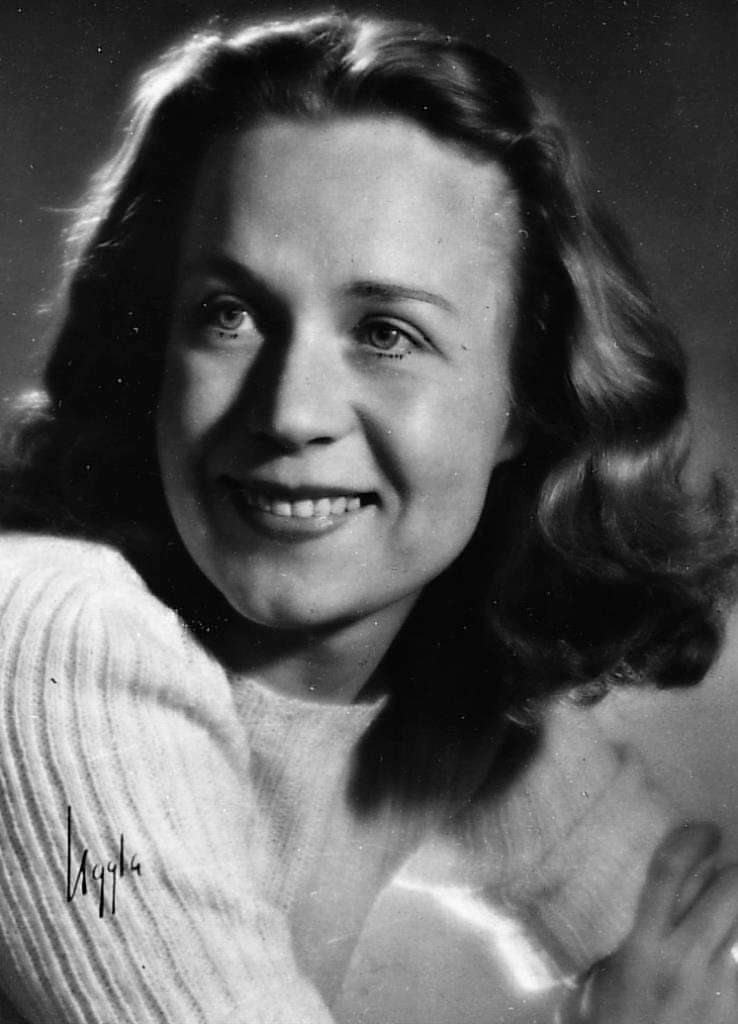
Tove Ditlevsen wrote about the interior lives of women — their desires, their loneliness, their addiction, their marriages, their children, their slow suffocation inside the arrangements that society had made for them — with a directness and a formal precision that Danish literary culture spent decades not quite knowing what to do with. The world outside Denmark is only now catching up, and the catching up feels, to those arriving late, like a discovery, and to those who knew her already, like a long-overdue correction.
By Bergotte · Copenhagen · Literature & Lives
She was born in 1917 in the Vesterbro district of Copenhagen — a working-class neighbourhood of cramped apartments and hard winters and the particular social textures of a world in which money is not quite enough and dignity is a daily negotiation. The father was a kind man who read poetry and worked in a factory and could not, for all his gentleness, protect his daughter from the understanding that arrived early and never left: that the world she had been born into had made very specific arrangements for girls of her class and background, and that those arrangements did not include the life she intended to have. The mother was more complicated — critical, emotionally withholding, possessed of the sharp tongue of a woman who has renounced her own ambitions so thoroughly that the ambitions of others have become an affront. Ditlevsen wrote about both parents with a clarity that was neither cruel nor forgiving but simply precise, which is the hardest thing to be about the people who formed you, and the most useful.
She began writing poetry as a child, in the way that children who are poets begin — not as a choice but as a necessity, the words arriving before the understanding of what they were for. Her first collection was published in 1939, when she was twenty-two, and the reception it received — warm, slightly surprised, attentive to the gift while uncertain about its social implications — established a pattern that would persist throughout her career: the recognition that something remarkable was there, and the discomfort about what, precisely, it was saying and to whom.
Vesterbro and the Geography of Formation
The Copenhagen of Ditlevsen’s childhood is the subject and the setting of the first volume of what has become known in English as the Copenhagen Trilogy — Childhood, published in Danish in 1967 — and it is rendered with the specificity of a writer who understands that the particular is the only route to the universal, that to describe the smell of a specific stairwell in a specific building in Vesterbro in the 1920s is to say something true not only about that stairwell but about the experience of being a child anywhere who is too sensitive for the world they have been placed in and too intelligent not to know it.
The child Tove of Childhood is not a charming narrator in the conventional sense — she is not performing her own vulnerability or inviting the reader’s sympathy. She is observing, with an attention so focused and so undeceived that it becomes, by the end of the book, a kind of moral quality in itself: the refusal to look away, to soften, to arrange the material into something more acceptable than what it actually was. The mother’s coldness is there. The father’s warmth and its limitations are there. The neighbourhood is there in its fullness — the poverty and the community and the closed doors and the conversations overheard on the stairs. And the poetry is there, the girl’s understanding that she is going to write, that this is the thing she is for, that the gap between the life available to her and the life she needs is going to be bridged, if it is bridged at all, by language.
“The secret door to the world of poetry opened, and the happiness that flowed from it was so great, so deep and wordless, that I could not tell anyone about it.” — Tove Ditlevsen, Childhood, 1967
Youth, Marriage, and the Trap That Was Also a Choice
The second volume of the trilogy, Youth, published in the same year as Childhood, follows the teenage Tove as she navigates the world between school and work and the first serious encounters with men — encounters that are rendered with the same unflinching clarity as the childhood material, and that make equally uncomfortable reading, not because they are sensational but because they are so recognisable. The young woman who allows herself to be used by men who do not interest her because the alternative is loneliness, who understands that her own desires are more complicated than the available social scripts can accommodate, who wants fame and love and poetry and is not sure these things are compatible and suspects, correctly, that the incompatibility is going to cost her — this is not a figure from a distant historical world. She is entirely contemporary, which is one of the markers of a writer who has got at something true.
The marriages come — four of them, in life if not quite in the trilogy’s compression — and they are rendered as a series of arrangements that are simultaneously freely chosen and structurally determined, in the way that most things are for women who have the intelligence to see their situation clearly and the desire for something else and the insufficient power to simply walk away from the available options. The first marriage is to a man significantly older; the second, the one that shadows Youth and the third volume Dependency, is to the doctor Carl Theodor Ryberg, who introduces Ditlevsen to the pills that will become the central catastrophe of her adult life.
Dependency and the Pharmacology of Despair
Dependency — the third volume, published in 1971 — is the most formally audacious of the three books and, for many readers, the most devastating. It covers the years of Ditlevsen’s addiction to opiates and amphetamines, facilitated by a husband who was himself addicted to the power that her dependence on him provided — a dynamic rendered with a psychological precision that makes the reader feel, uncomfortably, that they are watching something in real time that they cannot intervene in. The prose in this volume has a quality that the earlier books approach but do not quite reach: a velocity and a compression that mimics the experience of a mind in genuine extremity, that moves between lucidity and confusion in ways that feel true to the pharmacological reality it is describing.
The addiction is not romanticised, which is the easiest thing to do with it and the thing that most writers do, consciously or not. It is described from the inside, with the full ambivalence of someone who knows exactly what is happening to her and cannot stop it, who understands the trap and is in it anyway, who has the words for her own destruction and finds that having the words does not constitute a way out. This is not a comfortable reading experience. It is one of the most honest accounts of addiction in modern literature, and it sits alongside the work of William Burroughs and Denis Johnson and Alexander Trocchi as a document of what dependence actually feels like from the inside — though it is more formally controlled than any of these, and more interested in the social conditions that produced the addiction than in the pharmacology itself.
“Sorrow is a reversible coat that I wear all the time. I just don’t always know which side is facing out.” — Tove Ditlevsen, Dependency, 1971
The Poetry and Why It Matters
To read Ditlevsen primarily as a memoirist — as the author of the trilogy, the chronicler of Vesterbro and bad marriages and addiction — is to miss half of what she was. She was, first and last, a poet, and the poetry is the foundation on which everything else rests. She published her first collection at twenty-two and continued writing poems throughout her life, and the best of them — available now in English translation in a selection that has reached readers who would not have encountered her work ten years ago — are extraordinary: spare, direct, formally precise, written in a plain language that carries an enormous emotional weight because the plainness is not simplicity but clarity, and the clarity is the hardest thing.
The poems are often about the same territory as the prose — childhood, loneliness, the body, the marriages, the children, the creative life and its costs — but the compression of the verse form does something that the prose’s expansiveness cannot quite achieve. A Ditlevsen poem arrives like a door opening in a wall you did not know had a door: suddenly there is a space that was not there before, and the space is exactly the shape of something you have felt but not had words for, and you are grateful and slightly undone simultaneously. This is what the best lyric poetry does, and Ditlevsen does it with a consistency that places her in the first rank of twentieth-century European poetry — a ranking that her nationality and her gender and the relative difficulty of translating her particular plainness into other languages have conspired to delay but cannot ultimately prevent.
The Women in the Novels
Alongside the trilogy and the poetry, Ditlevsen wrote a series of novels — The Faces (1968) is the most discussed in English, but Early Spring and The Trouble With Happiness and others represent a body of fictional work of real significance — in which the psychological acuity of the memoir is turned toward invented characters with results that are sometimes more unsettling than the autobiography, because the fiction removes the question of whether this really happened and asks instead: does this feel true? The answer, consistently, is yes. The women in the novels are women who are trapped — by class, by marriage, by the expectations of a society that has decided what they are for and is not interested in revision — and they are rendered without the comfort of narrative redemption. They do not, generally, escape. They endure, or they do not endure, and the novel’s function is not to provide solutions but to make the condition fully visible, which is its own form of solidarity.
This refusal of redemption is one of the things that made Ditlevsen difficult for her contemporaries and that makes her so valuable now. The literary culture of her era — and not only the Danish literary culture — had a strong preference for women’s stories that ended in some form of resolution, that located the difficulty in the individual woman’s psychology rather than in the structures surrounding her, that allowed the reader to leave the book having learned a lesson rather than been confronted with a condition. Ditlevsen did not provide lessons. She provided mirrors, and the mirrors were accurate, and the accuracy was not always welcome.
The Death and the Rediscovery
Ditlevsen died on March 7, 1976, in Copenhagen. She was fifty-eight years old. The cause was an overdose — whether intentional or not has never been definitively established, and the ambiguity is its own form of testimony about the life. She had been in and out of psychiatric institutions in the years before her death, had continued writing, had continued publishing, had continued being read in Denmark by an audience that understood her importance even when the critical establishment was slow to articulate it.
The rediscovery outside Denmark — driven in large part by the English translations published by Farrar, Straus and Giroux, which brought the Copenhagen Trilogy to readers who recognised in it something they had not known they were waiting for — has been one of the more significant literary events of recent years. The readers who have found her have found her with the particular intensity of a discovery that feels personal, that feels like the book was written for them, which is the feeling that only the most fully realised literature produces. It is the feeling of being seen — not flattered, not comforted, but seen, accurately and completely, in the way that Ditlevsen saw everything she turned her attention to.
She saw Vesterbro and the stairwells and the cold mother and the kind father. She saw the men and the marriages and the trap. She saw the pills and what they did and what they could not undo. She saw the poetry arriving before she had words for what it was, and she gave it words, and the words are still here, doing what she made them to do: opening doors in walls that you did not know had doors, into spaces that are exactly the shape of something you have always felt and never, until now, been able to name.
This essay draws on the Copenhagen Trilogy — Childhood, Youth, and Dependency — in the English translations by Tiina Nunnally (Farrar, Straus and Giroux, 2019–2021), the poetry collection The Faces and Other Stories, and the critical and biographical work of Danish scholars including Jonna Pedersen. Tove Ditlevsen was born on September 14, 1917, in Copenhagen, and died on March 7, 1976. The Copenhagen Trilogy was originally published in Danish between 1967 and 1971.

Leave a Reply