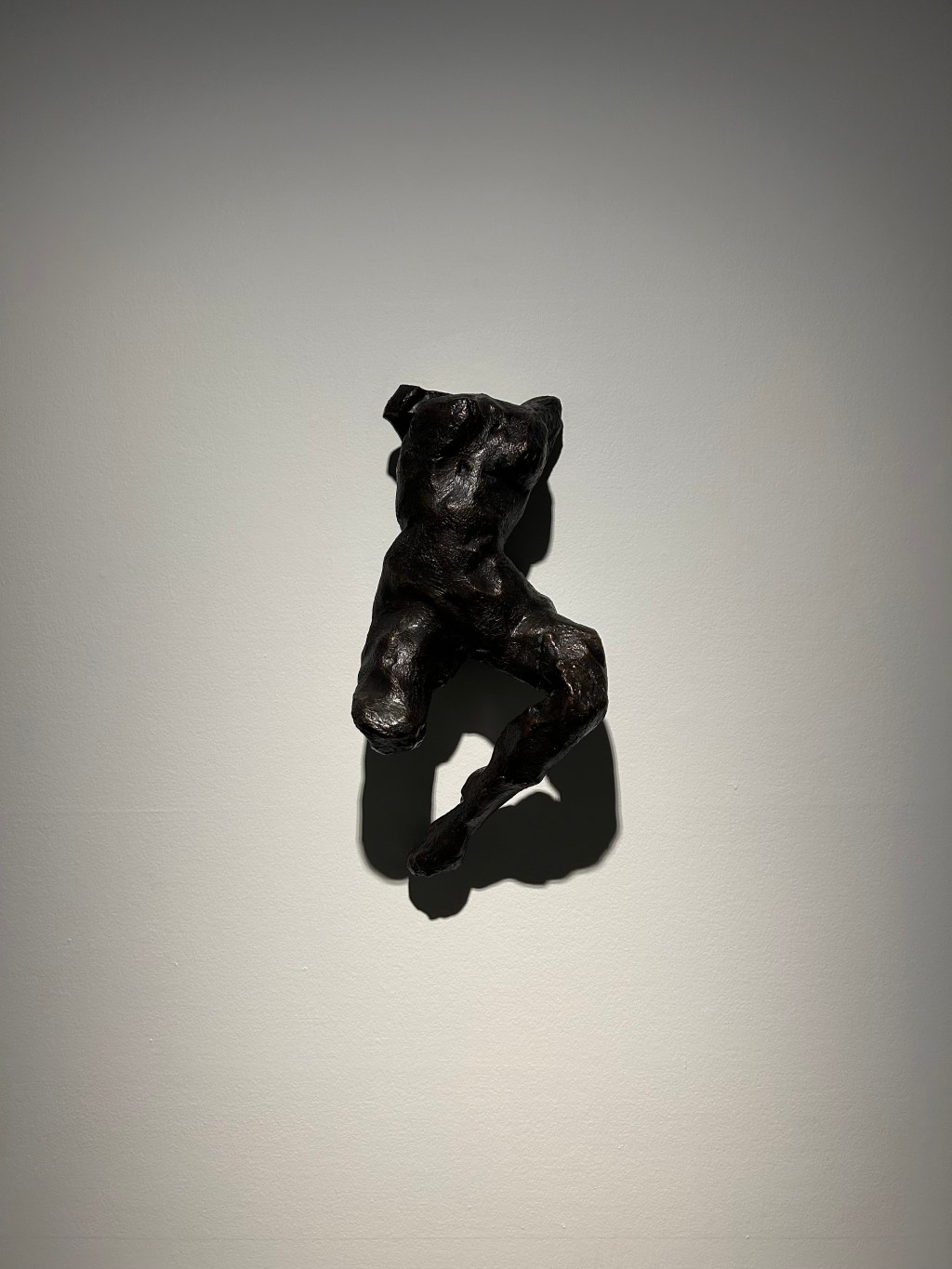
From miniature bronze birds and intimate clay figures to monumental sculptures of the female body, Tracey Emin has developed an extraordinary sculptural practice. Her work challenges the traditional authority of the monument, preserving the intimacy of the artist’s touch even when the object itself becomes enormous.
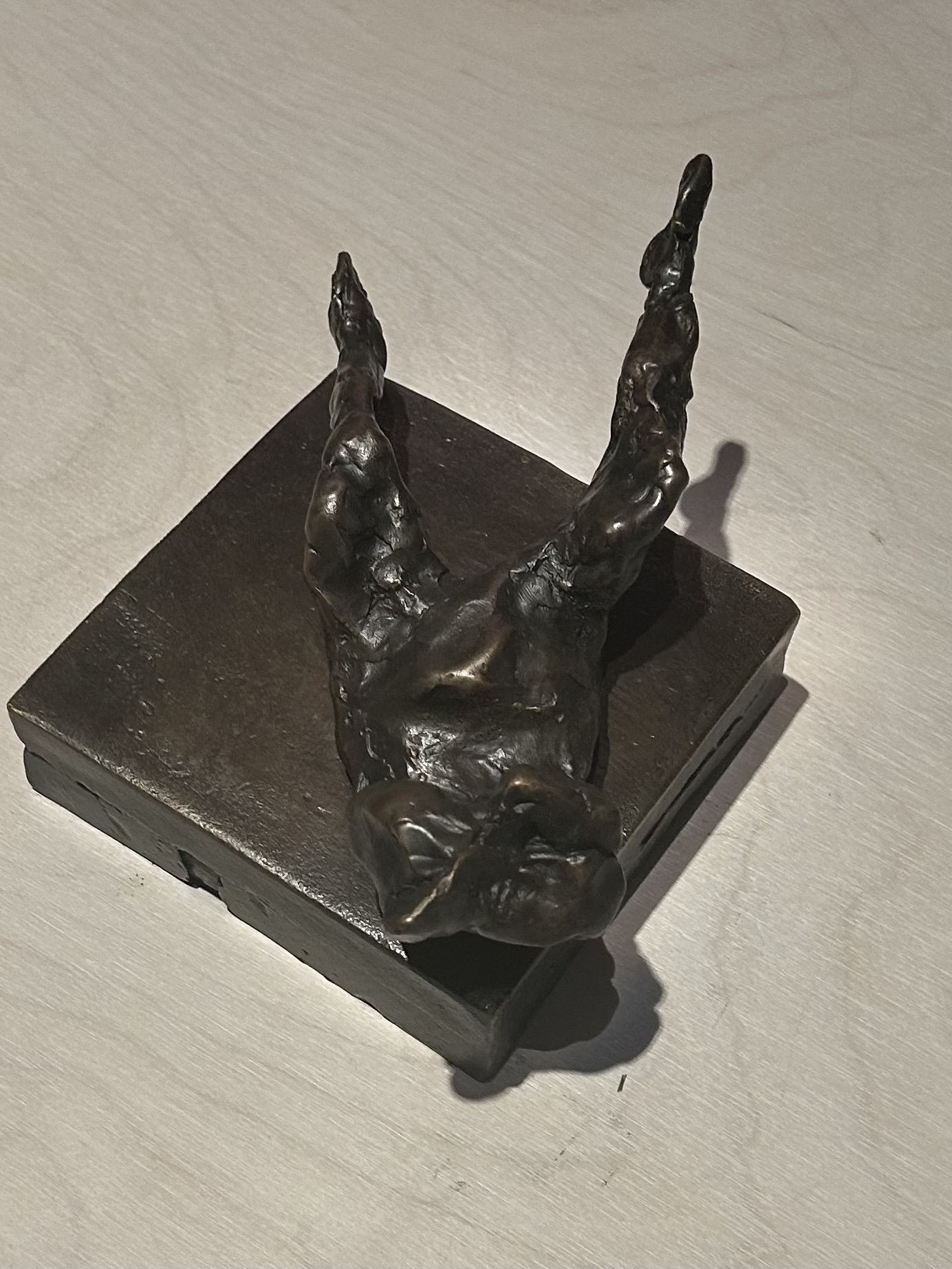
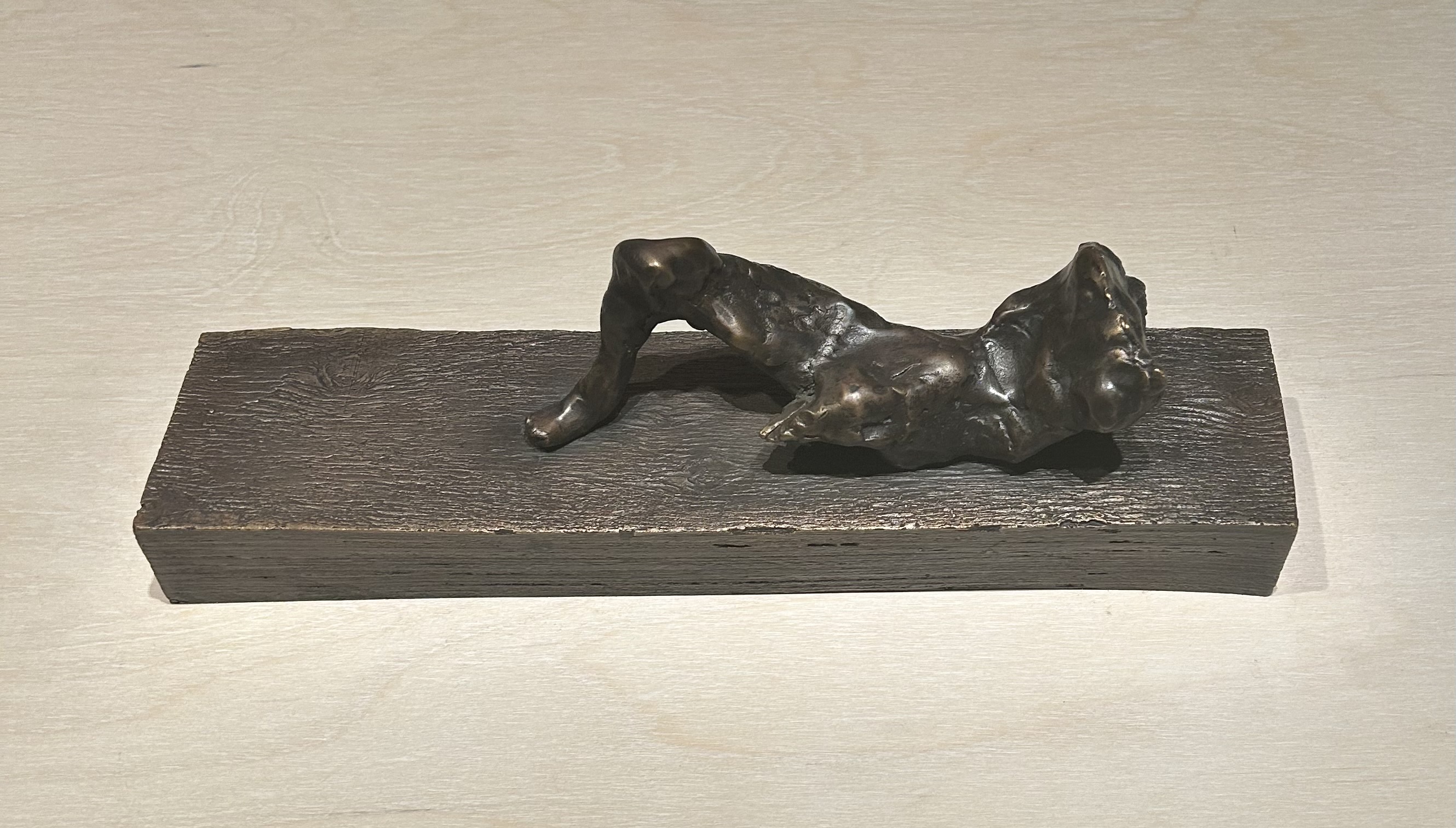
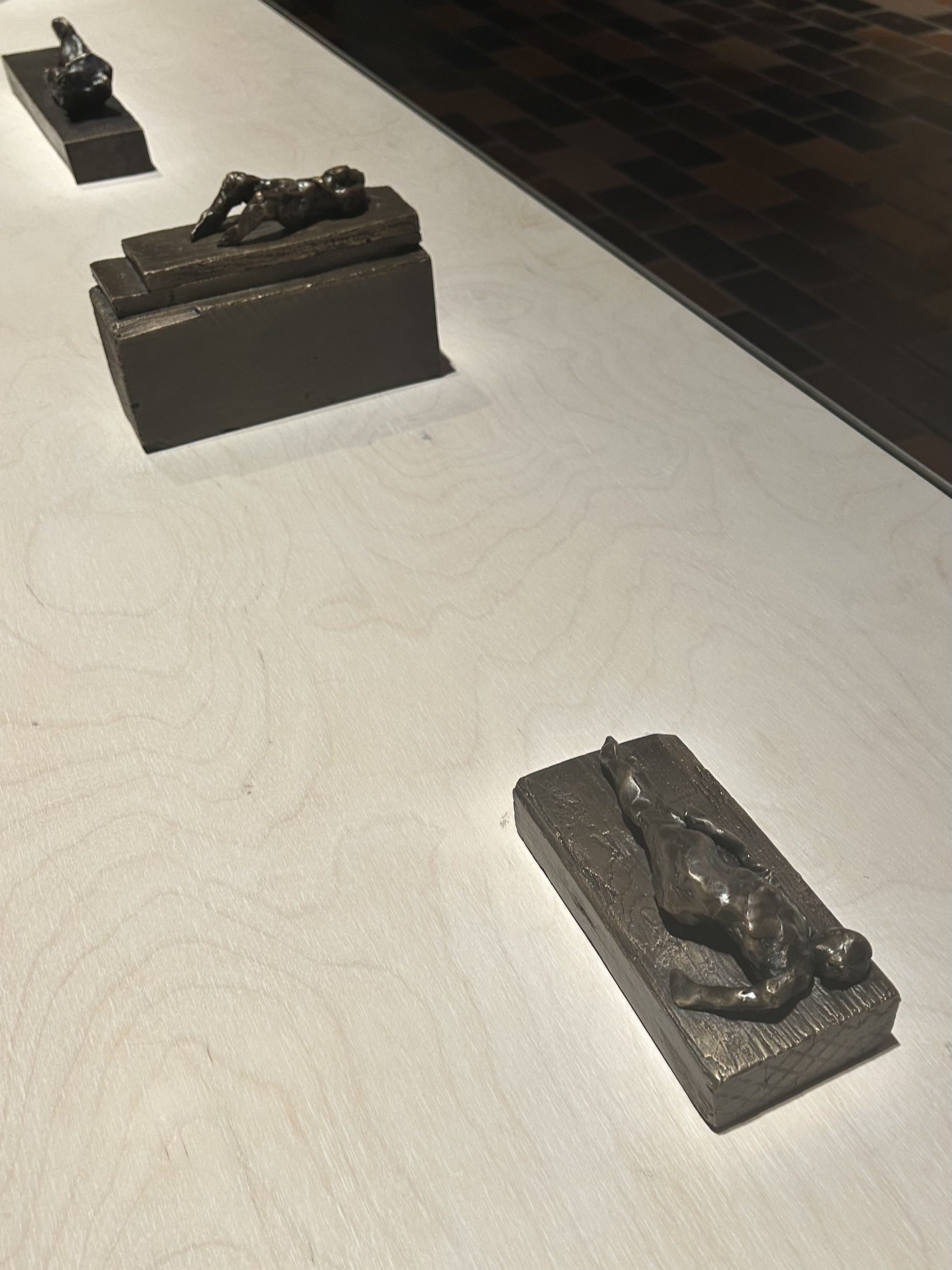
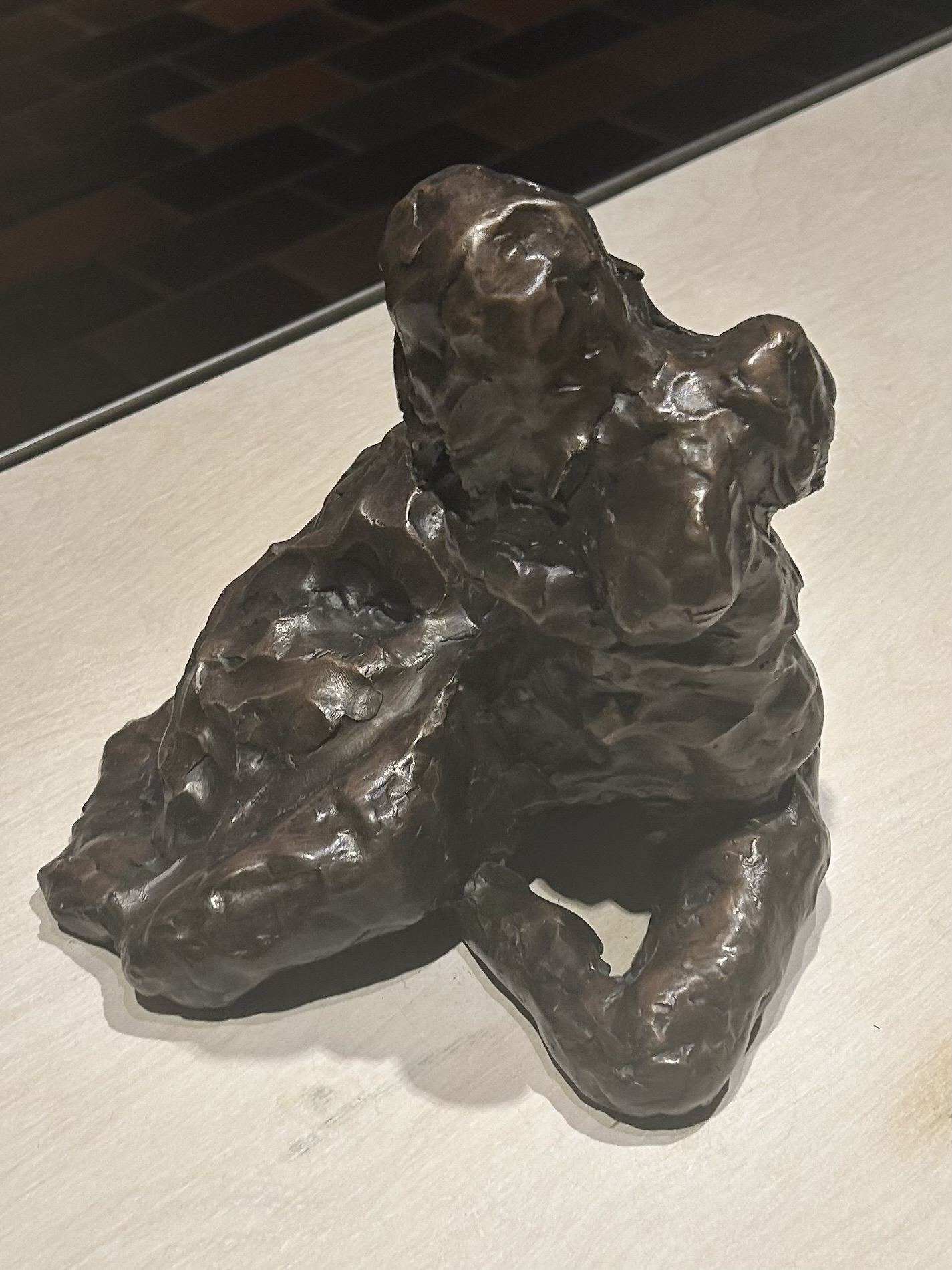
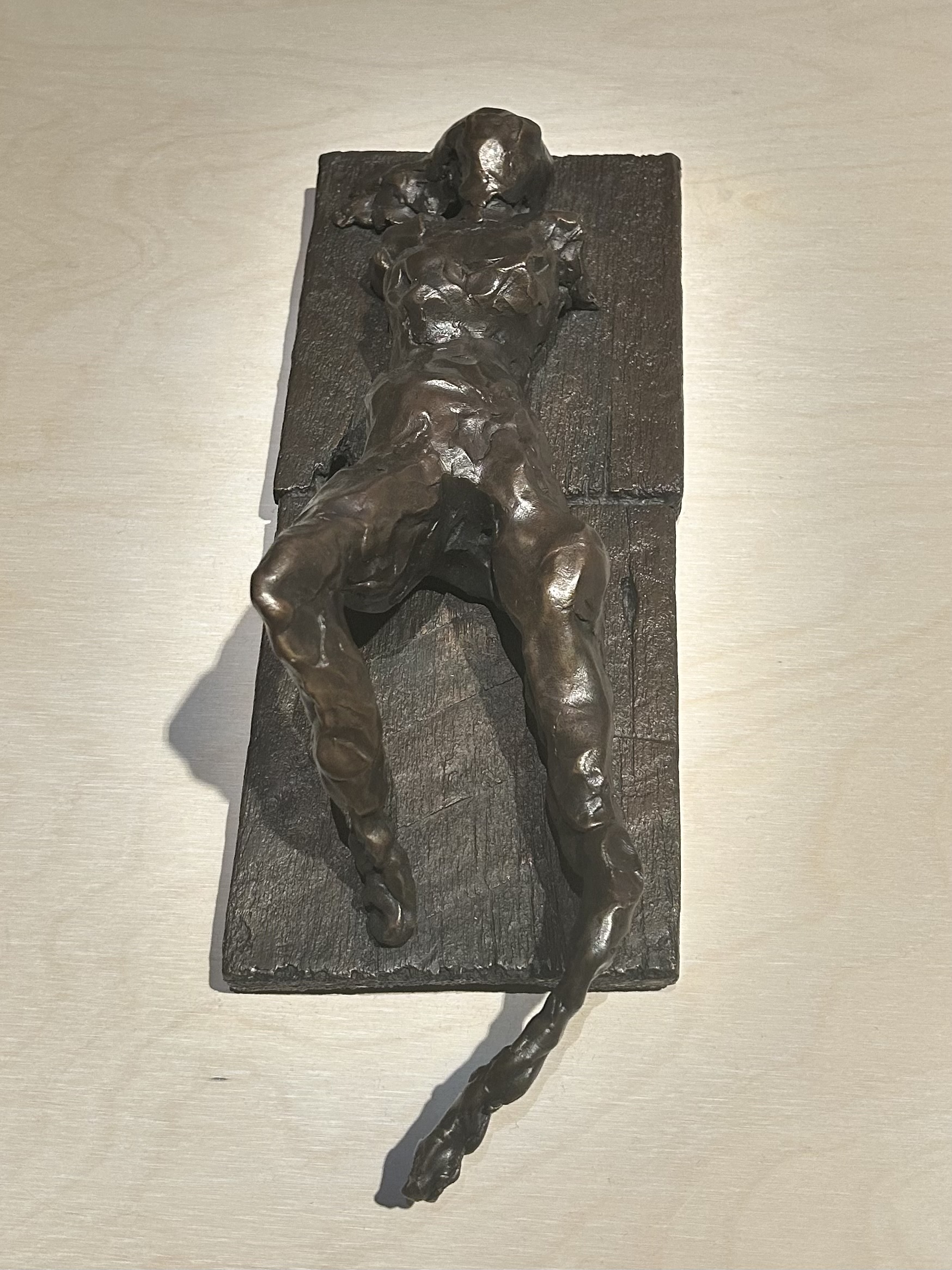
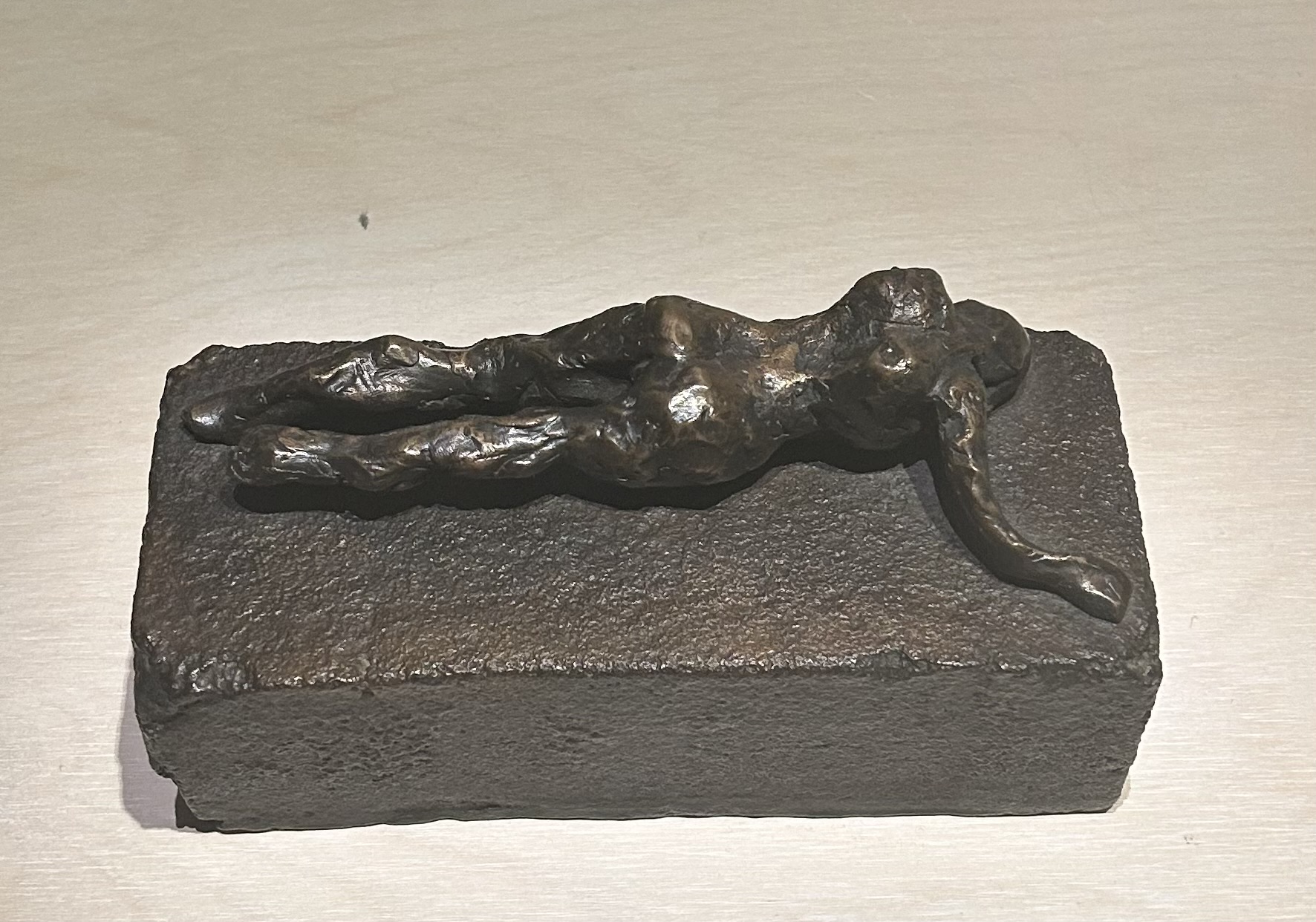
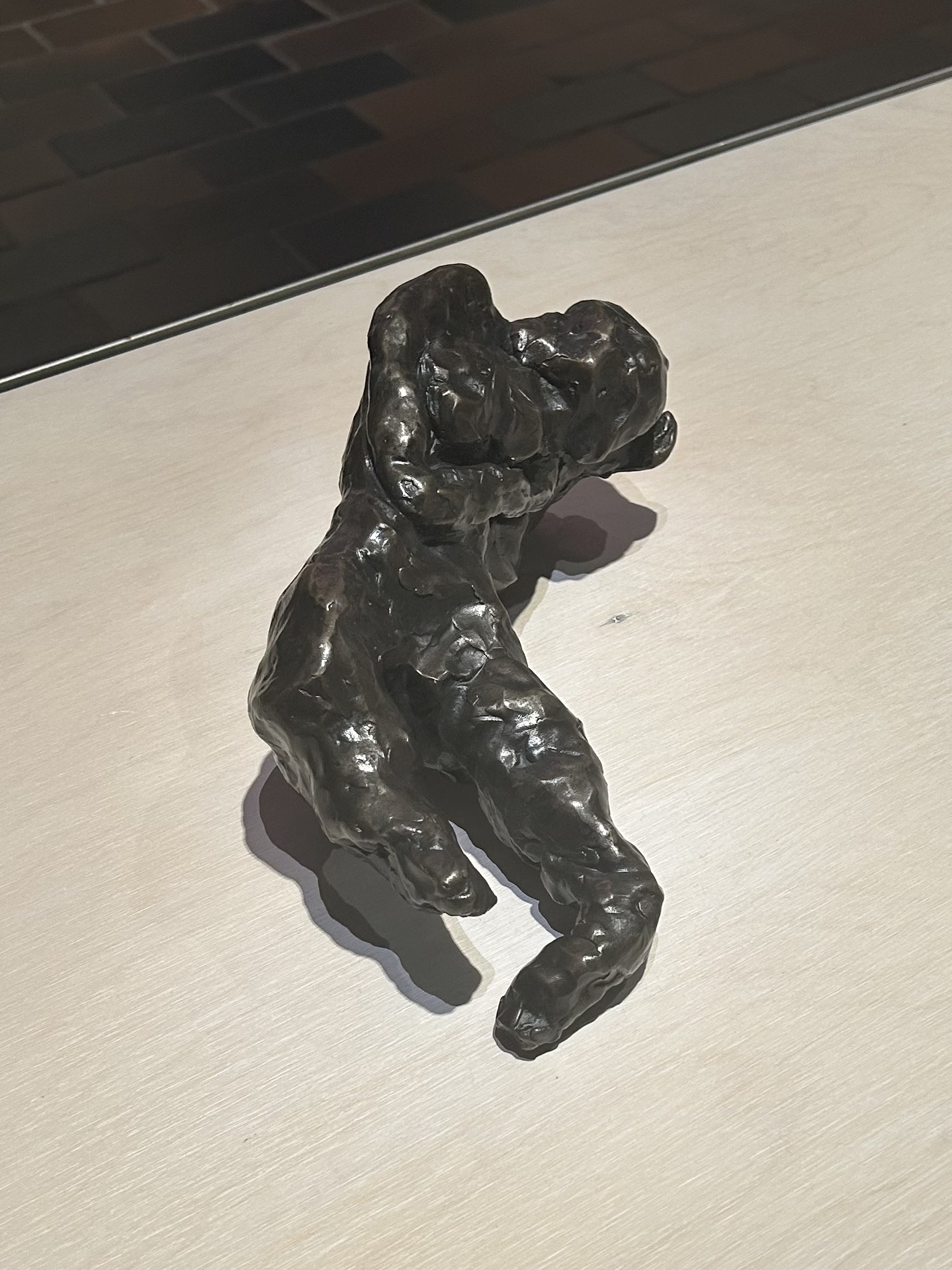
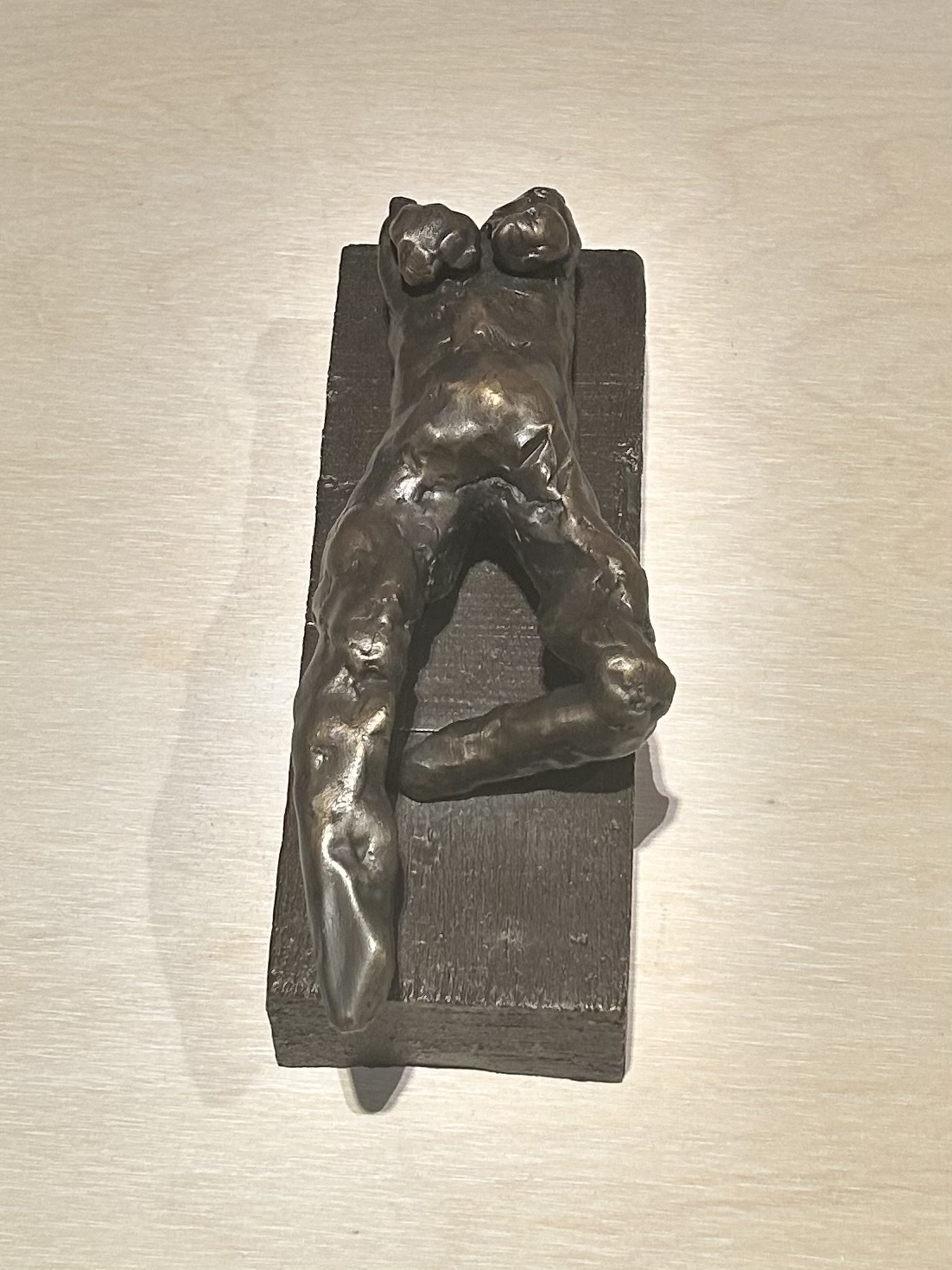
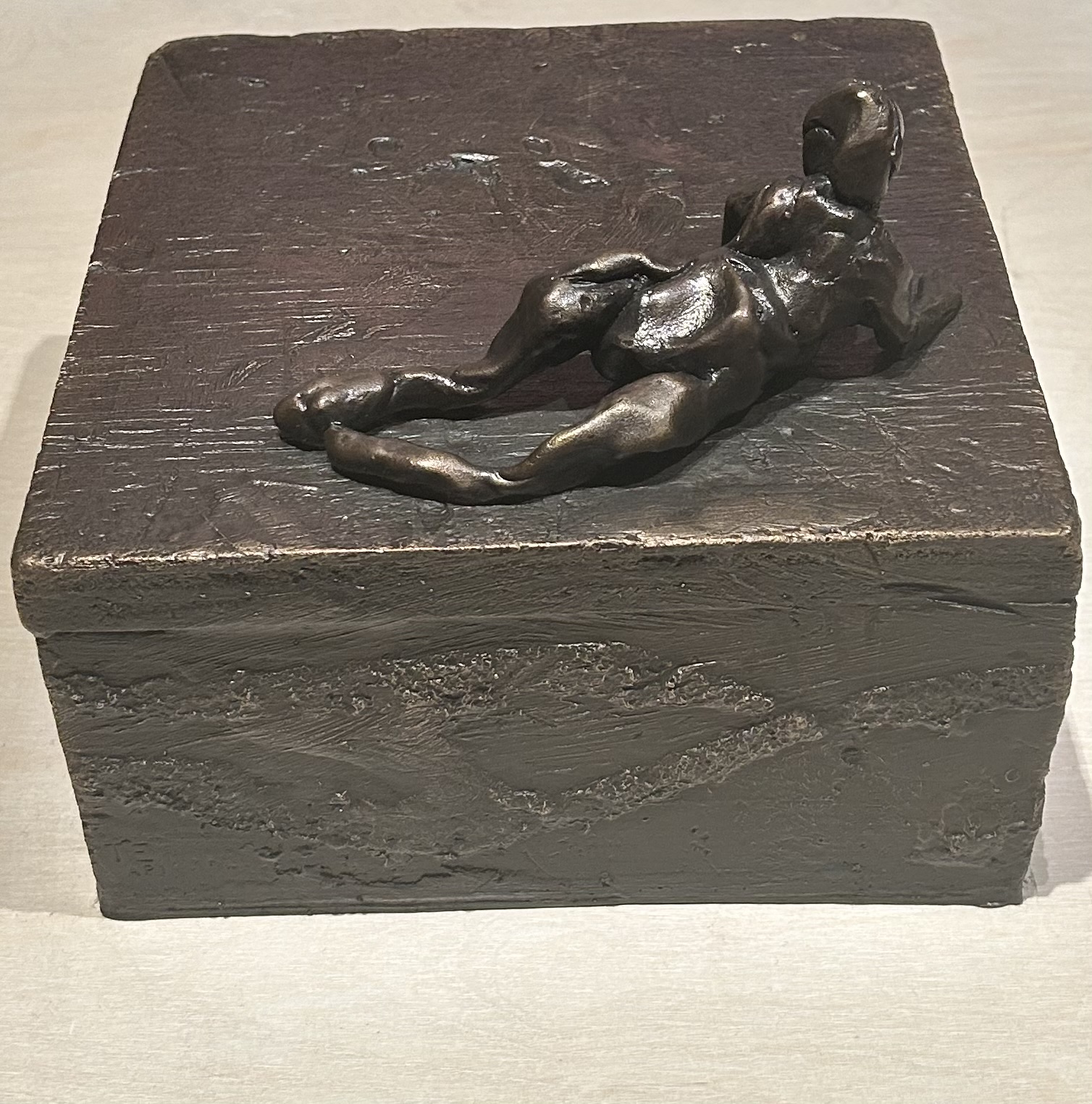
Tracey Emin’s bronze figures frequently retain the evidence of their beginnings in clay. The impressions of fingers, irregularities of modelling and sudden changes in surface texture remain visible even after the original material has been transformed through casting. In her smaller works, a figure can be scarcely larger than a hand, its proportions compressed and its anatomy only partially resolved. In the monumental bronzes, those same gestures are enlarged until a thumbprint becomes a substantial hollow in the surface and a hastily modelled limb acquires architectural dimensions.
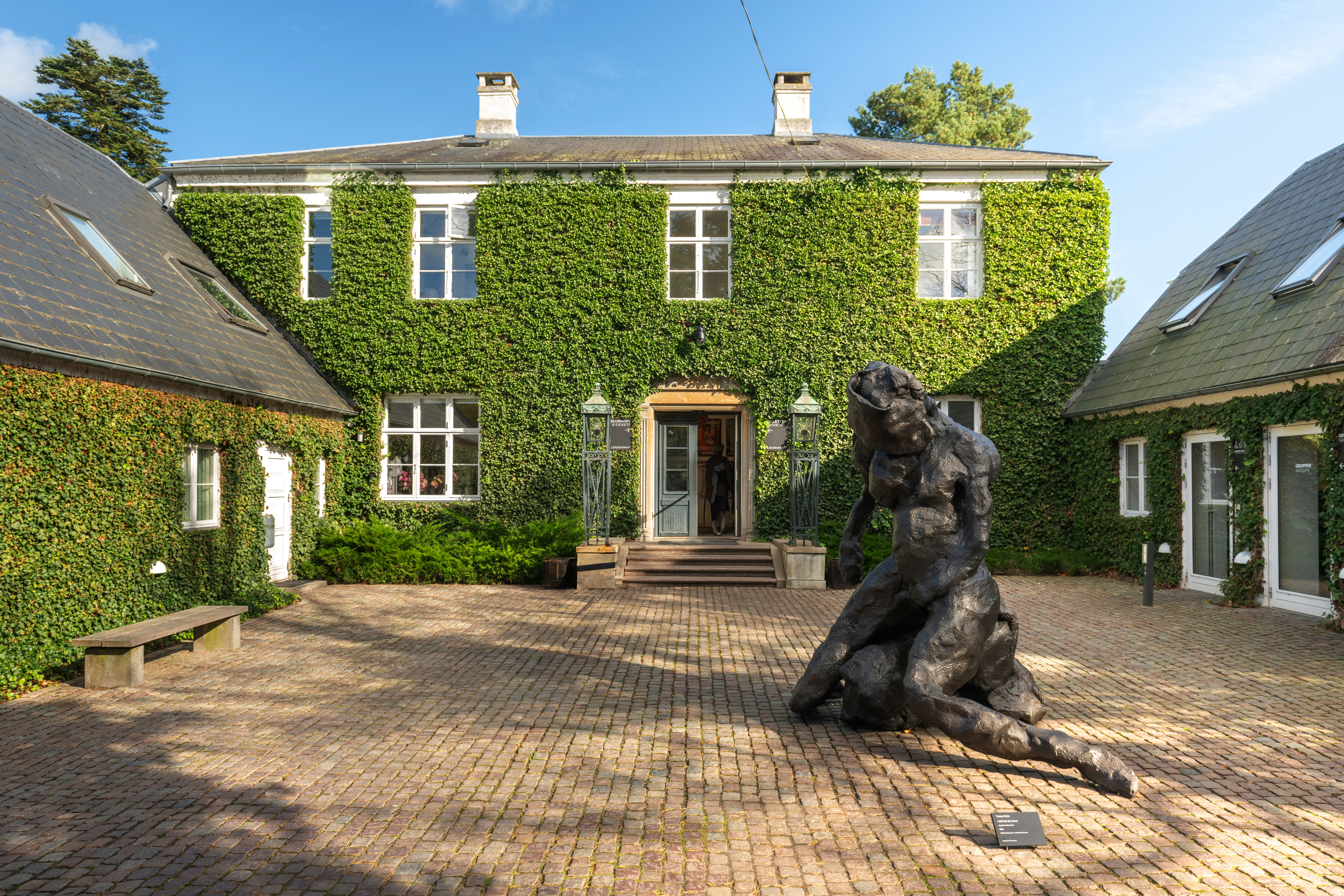
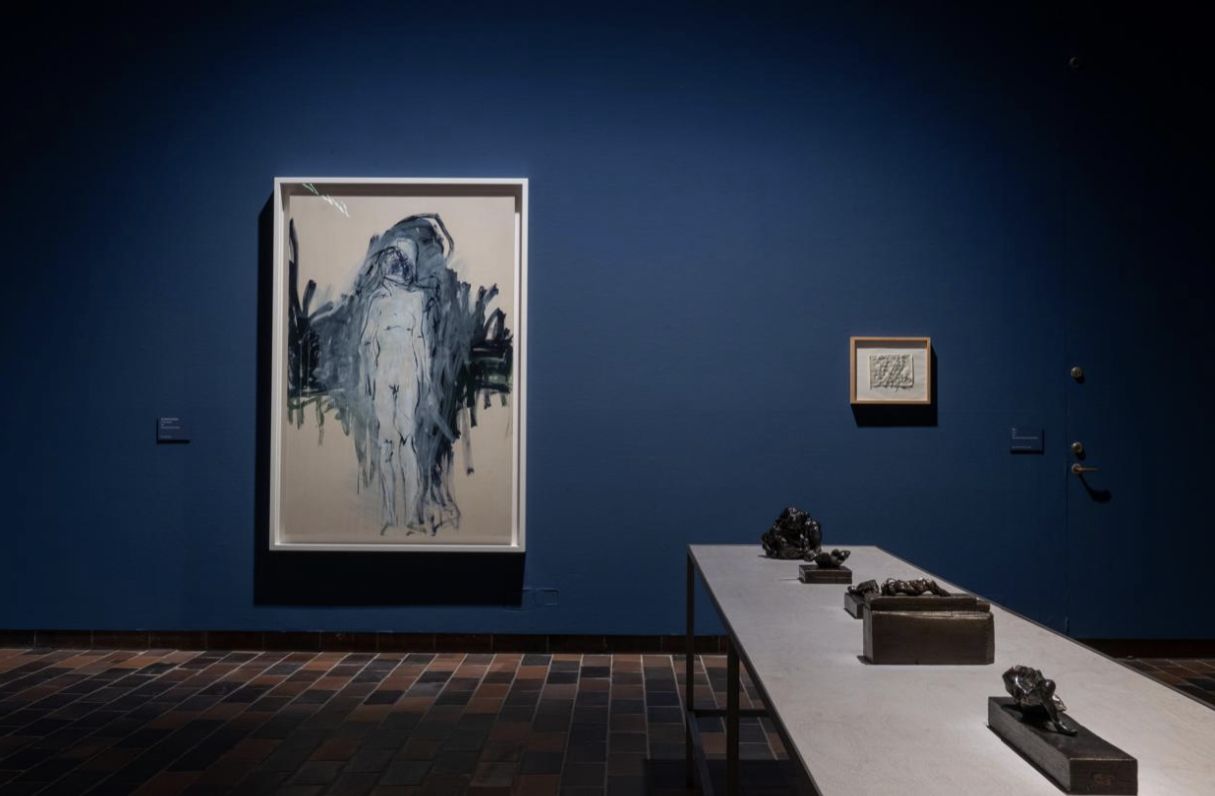
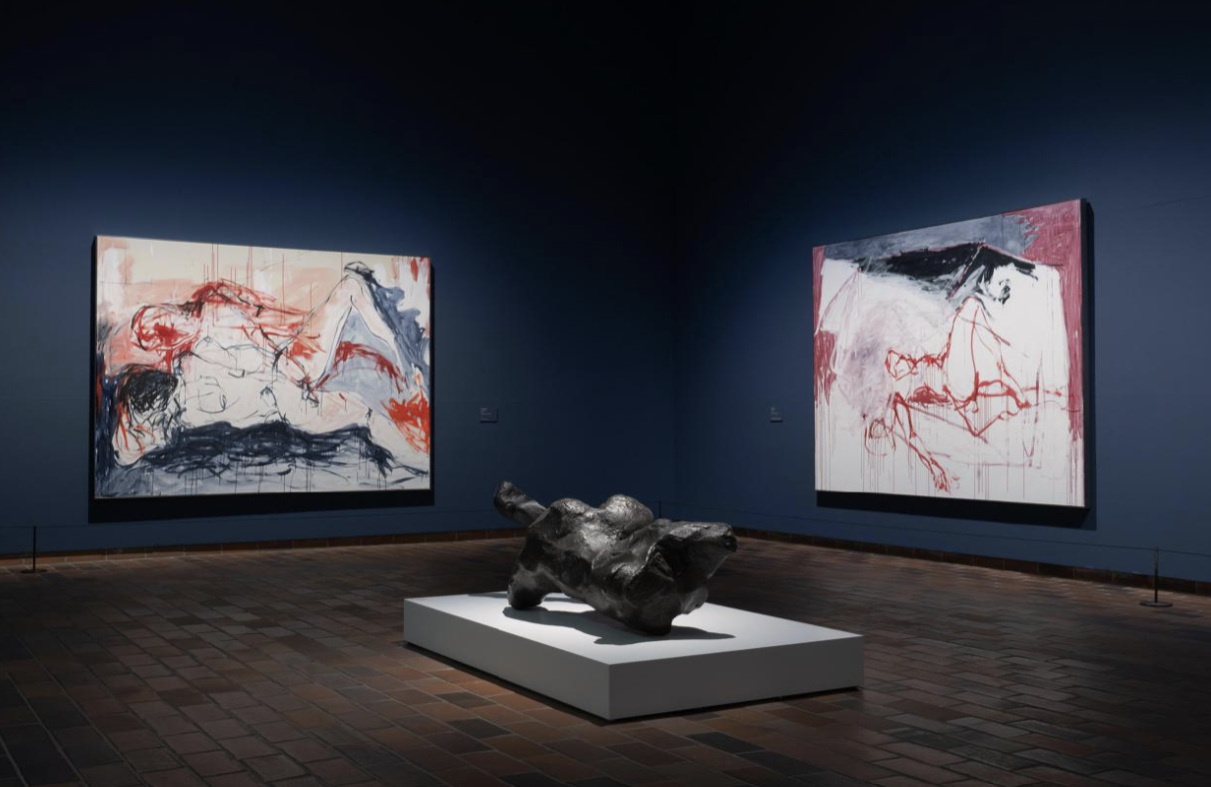
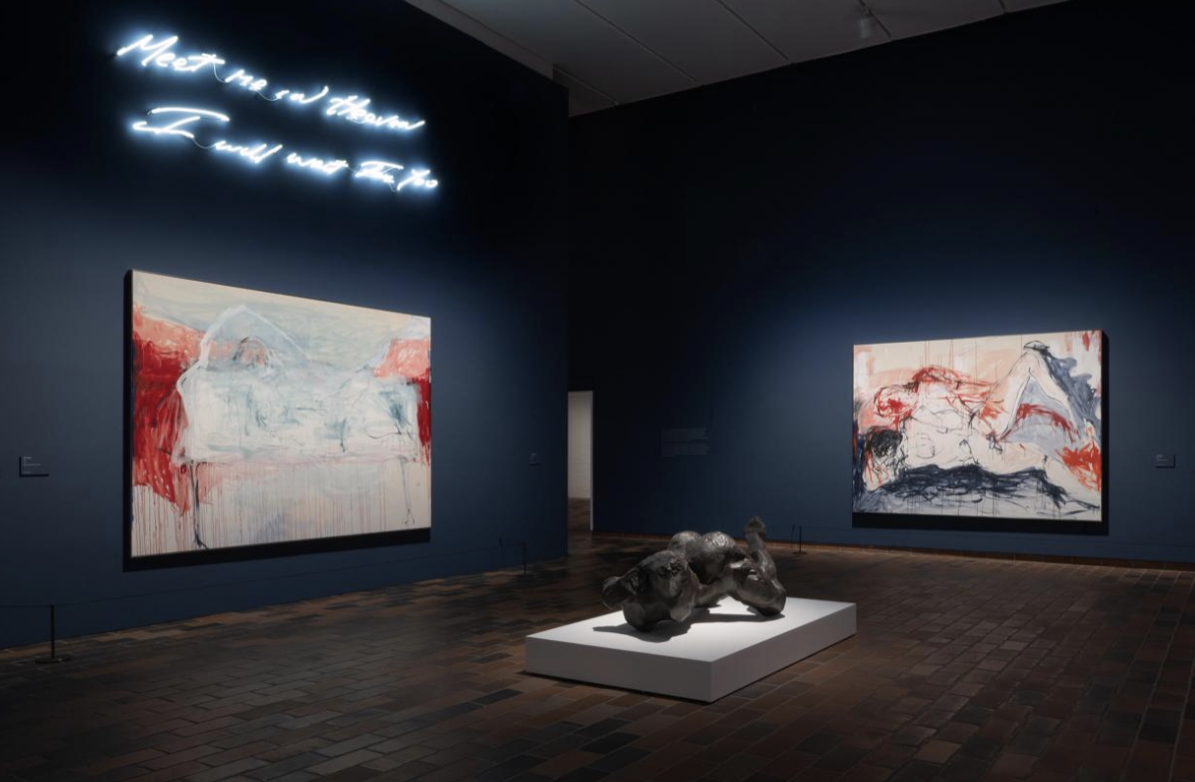
The relationship between these two scales is particularly compelling in Tracey Emin: A Second Life at Louisiana Museum of Modern Art, where sculptures appear alongside the drawings, paintings, textiles and installations of her forty-year career.
Emin’s sculptural work has received comparatively less attention than My Bed, her embroidered blankets or her increasingly accomplished paintings. Yet sculpture has occupied her for decades, and her development of a distinct material language offers one of the most revealing perspectives on her artistic thinking.
Her approach to bronze is especially interesting. A material traditionally associated with permanence, authority and public commemoration becomes the means through which she investigates the body in its most vulnerable, intimate and unstable conditions.
The resulting figures are sometimes difficult to identify anatomically. Their limbs merge, surfaces collapse and bodies appear partially formed or in the process of disappearing. Yet their physical presence is unmistakable.
The Beginnings of a Sculptural Language
Emin’s interest in three-dimensional form predates the large bronze figures that have attracted considerable attention in recent years.
Her early installations frequently incorporated ordinary objects and architectural structures, transforming things associated with private life into works of art.
The tent of Everyone I Have Ever Slept With 1963–1995 and My Bed (1998) demonstrated an unusually sophisticated understanding of how objects could function as records of personal experience.
Neither work required conventional sculptural modelling. Their physical significance emerged through arrangement, material association and the relationship between the object and the viewer.
Yet they established concerns that would remain central to Emin’s later bronzes: the body as an absent or present subject, the intimacy of domestic materials and the emotional possibilities of occupying physical space.
Her early bronze work emerged through experimentation with casting and relief.
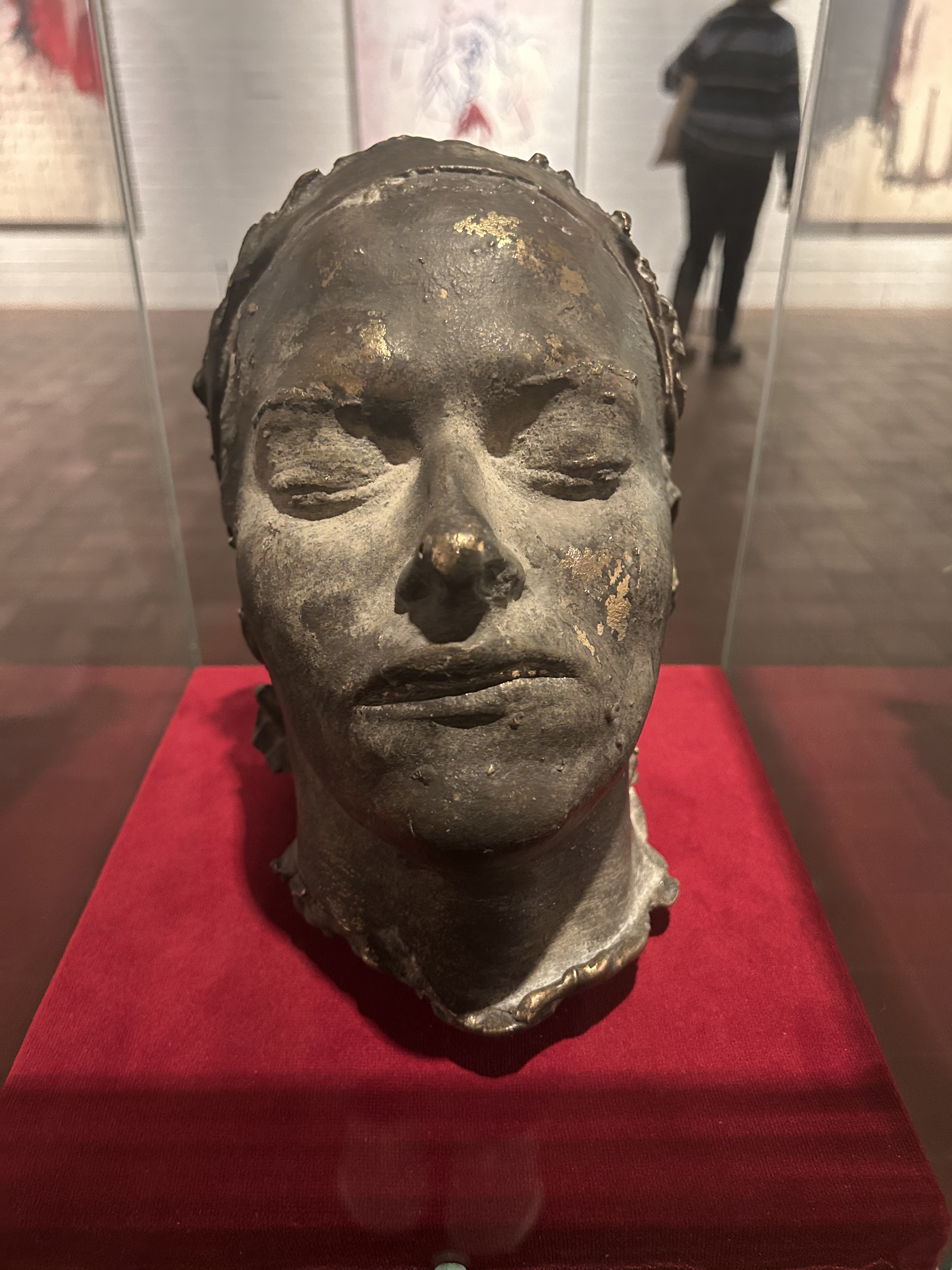
Among the important examples is Death Mask (2002), a cast of her own head and neck in distressed bronze, partially covered with gold leaf and presented upon dark red velvet.
The title deliberately recalls the historical practice of making casts of the faces of the recently deceased. Emin, however, produced hers while very much alive.
The work places her own mortality within an artistic tradition extending from ancient funerary practices to the commemorative portraiture of European sculpture.
Its combination of rough bronze, gilding and luxurious fabric also resists the expected appearance of a conventional portrait bust. The surface has been deliberately disturbed, interrupting the smooth idealisation associated with so much commemorative sculpture.
The decision to preserve imperfection would become fundamental to her practice.
The Monumentality of Small Things
Some of Emin’s most affecting sculptures are also among her smallest.
In 2005, she produced Roman Standard, a tiny bronze bird perched upon a pole approximately four metres high, installed outside the Oratory beside Liverpool Cathedral.
The bird itself measures only a little over ten centimetres in height.
Its title refers to the military standards of ancient Rome, whose eagles symbolised imperial power and authority. Emin replaces that imposing imagery with a modest creature resembling an ordinary small bird.
The scale is crucial. Raised high above the viewer, the bird can easily be overlooked. Its discovery becomes a small, private experience within the surrounding city.
Emin had already developed an extraordinary sensitivity towards birds through her drawings. Their bodies offered her a language of vulnerability, movement and freedom, often expressed through minimal marks.
In bronze, the bird acquires a new material permanence without losing its delicacy.
The work also established an important principle within her approach to public sculpture. Emin was interested in creating objects that could inhabit the urban environment without asserting dominance over it.
This became particularly clear in Baby Things (2008), commissioned for the first Folkestone Triennial.
For the project, Emin cast tiny items of infant clothing in bronze and placed them in unexpected locations around the town.
A baby’s mitten might appear beneath a bench; a small garment might lie beside a pavement or near a railing.
The objects resemble possessions accidentally dropped or forgotten.
Their scale and placement require the viewer to notice something that might ordinarily be ignored. The bronze confers permanence upon objects associated with the fleeting circumstances of infancy.
The project also carried a specific social significance. Folkestone, like Emin’s hometown of Margate, had experienced high levels of teenage pregnancy, and she intended the sculptures as an acknowledgement of the young women whose circumstances were frequently discussed through statistics rather than personal experience.
The work is particularly moving because of its restraint.
Emin allows an apparently insignificant object to evoke an entire set of human relationships and social circumstances. The sculptures are small enough to be overlooked, yet their meaning becomes considerable once they have been discovered.
They demonstrate that the emotional scale of a sculpture need have little relationship to its physical dimensions.
The Body in the Hand
During the following decade, Emin increasingly explored small figurative bronzes.
These works developed from hand-modelled clay forms, frequently possessing the compressed, uncertain anatomy of figures discovered through touch rather than carefully constructed from an established anatomical model.
A revealing example is Mother (2014), a bronze now represented in the National Gallery of Victoria’s collection.
Measuring just 7.1 centimetres high and 17.5 centimetres across, the sculpture is an intensely concentrated exploration of the maternal figure.
Its irregular form gives the impression of a body whose physical boundaries are difficult to distinguish. The figure appears vulnerable, almost provisional, yet the density of the material establishes an unexpected sense of weight.
Emin’s small works often occupy this territory between figuration and abstraction.
The body is recognisable through a posture or the suggestion of a limb, but the artist is willing to abandon descriptive detail when it interferes with the expressive qualities of the form.
In Tormented Reason (2016) and I Want You Because I Can’t Have You (2014), the human figure becomes an investigation of compression, movement and physical tension.
These objects reward close attention. Their surfaces retain the evidence of handling, and their irregular proportions create a sense of immediacy that conventional modelling might diminish.
The relationship to Emin’s drawing is particularly close.
Her drawings frequently describe the human figure through rapid, interrupted lines. Anatomical accuracy gives way to the expressive significance of a particular gesture.
In her small bronzes, that movement becomes physical. A line develops into a protruding limb, a curve becomes the suggestion of a shoulder, and a fragment of material acquires the presence of a body.
The sculptures possess the immediacy of three-dimensional drawings.
Their importance within her practice became increasingly apparent as she began considering how these intimate objects might operate on a monumental scale.
Louise Bourgeois and the Freedom of Scale
Emin’s friendship and artistic relationship with Louise Bourgeois was particularly important to this development.
Bourgeois had demonstrated throughout her long career that sculpture could accommodate intensely personal psychological concerns while operating across an extraordinary range of materials and dimensions.
Her monumental Maman sculptures transformed the spider, an animal associated with both maternal protection and fear, into a towering architectural presence.
Emin admired Bourgeois’s independence, technical curiosity and willingness to pursue an artistic idea regardless of conventional expectations.
Their collaboration on Do Not Abandon Me (2009–2010) had already established a close artistic dialogue.
Bourgeois’s attitude towards scale proved especially influential.
In a 2026 interview with The Art Newspaper, Emin recalled taking a sabbatical in 2016 to learn how to produce her first large figurative bronzes.
With assistance from those associated with the Louise Bourgeois foundation and experienced foundry specialists in New York, she began developing the technical knowledge required to enlarge her clay figures.
The process was far more complicated than simply increasing their dimensions.
Small clay models were translated into larger structures using digital enlargement and specialist fabrication techniques. Emin subsequently worked upon the enlarged forms, preserving and developing the textures that had emerged during their original modelling.
Working with foundries, she used surfaces that could be altered by hand before casting, allowing the finished bronzes to retain impressions of physical contact.
The resulting sculptures make the enlargement of a gesture almost startlingly visible.
What had once been a small pressure of a fingertip becomes an irregular depression substantial enough to receive the viewer’s attention from several metres away.
This relationship between touch and scale distinguishes Emin’s monumental bronzes from much conventional public sculpture.
The artist’s physical presence remains evident, even when the object itself has exceeded the dimensions of the human body.
The Mother
Emin’s most ambitious public sculpture is undoubtedly The Mother, unveiled beside the MUNCH museum in Oslo in June 2022.
Standing approximately nine metres high, the bronze depicts a kneeling female figure overlooking the Oslofjord.
Her body is substantial and irregular. Her head inclines towards her hands, which appear to cradle an invisible presence. Her exposed breasts and heavy limbs emphasise the physical reality of the maternal body.
The sculpture occupies a prominent position on Inger Munch’s Pier, overlooking the water, with the museum rising behind it.
Its placement establishes an unusually intimate relationship between public art and the life of the artist whose work is housed nearby.
Edvard Munch lost his mother to tuberculosis when he was five years old, an experience that profoundly influenced his understanding of mortality, grief and human attachment.
Emin, whose artistic relationship with Munch has been longstanding, conceived The Mother partly as a protective presence for the museum and the memory of its namesake.
The sculpture also belongs to her own experience of maternal loss, following the death of her mother in 2016.
Yet its significance extends beyond either biographical circumstance.
Motherhood has occupied a central position within the history of Western sculpture, from prehistoric fertility figures to the Madonna and Child of Christian art.
These representations have frequently idealised the maternal body, presenting motherhood through images of youthful beauty, serenity and spiritual fulfilment.
Emin’s figure resists such conventions.
Her body is substantial, ageing and physically exposed. Its surfaces retain irregularities and marks of construction. The hands cradle an absence rather than a visible child.
The figure suggests the labour of care and the physical demands of existence without attempting to convert them into an idealised image.
Its monumental scale is equally important.
Public sculpture has historically celebrated rulers, military leaders and statesmen, frequently elevating male authority through commanding poses and architectural pedestals.
Emin’s kneeling woman occupies the landscape through a different form of presence.
She is enormous, yet her posture suggests attentiveness and protection. Her relationship to the surrounding environment is established through the possibility of shelter rather than domination.
The sculpture also invites comparison with Henry Moore’s monumental female figures, particularly his reclining bodies and investigations of the relationship between human form and landscape.
But Emin’s treatment is more overtly tactile and psychologically particular. Her surfaces retain the physical evidence of modelling, while the emotional significance of the figure emerges through a specific gesture.
The enormous body has been brought into existence through movements of the hand.
Sculpture After Illness
The transformation of Emin’s sculptural language acquired additional significance following her diagnosis of aggressive bladder cancer in 2020.
Extensive surgery permanently altered her body, introducing new physical limitations and changing her understanding of its appearance and capabilities.
These experiences entered her work through painting, photography and sculpture.
In Ascension (2024), an important work in A Second Life, the female torso appears both physically exposed and strangely elevated.
The sculpture’s surface is fractured and irregular, retaining the immediacy of modelling while suggesting a body whose form has been subjected to profound alteration.
Its title introduces a religious association, recalling the tradition of spiritual elevation through physical suffering.
Yet the work remains firmly grounded in the material body. Its significance develops through the tension between physical vulnerability and the enduring presence of the sculptural object.
Bronze has traditionally been employed to preserve bodies in idealised form, giving heroic or celebrated individuals an appearance of permanence.
Emin’s recent sculptures approach that material tradition through bodies that are fragmented, unstable or visibly changed.
Their anatomical forms are frequently difficult to resolve. Legs and torsos merge into dense masses, while hollows and projections produce unexpected relationships between solid material and surrounding space.
In I Followed You to the End (2024), a monumental bronze figure extends across the ground, its physical structure emerging gradually as the viewer moves around it.
From certain positions, the sculpture resembles an abstract landscape of ridges, hollows and irregular surfaces. From others, the suggestion of a female body becomes unmistakable.
The work demands movement. Its forms cannot be understood entirely from a single viewpoint, and its scale prevents the kind of immediate visual comprehension offered by a small object.
This physical encounter is central to its effectiveness.
The viewer must negotiate the sculpture’s dimensions, examining the relationship between its body and the surrounding architecture.
Despite its enormous weight, the figure communicates a precariousness that seems almost incompatible with the durability of bronze.
Emin has developed an extraordinary ability to preserve the appearance of vulnerability within material forms of considerable strength.
Rethinking the Monument
Her investigation of public sculpture has also extended into architectural commissions.
In 2023, Emin created The Doors for the newly restored National Portrait Gallery in London.
The commission consists of forty-five bronze panels incorporating portraits of women, their faces originally drawn by Emin and subsequently translated into the metal surface.
The work establishes a dialogue with the building’s historical architecture.
Above the entrance, the gallery’s nineteenth-century facade includes sculpted portraits of prominent male artists and cultural figures. Emin’s doors introduce an alternative collection of faces, representing women from different circumstances and periods of history.
The treatment is characteristically informal.
Rather than reproduce the conventional authority of commemorative portraiture, Emin retains the immediacy of drawing, allowing the faces to emerge through expressive lines and irregular contours.
The work becomes part of the building’s everyday function.
Visitors pass through the bronze doors as they enter the gallery, encountering the images through movement and physical proximity rather than through a formal act of observation.
This integration of sculpture into ordinary activity recalls the modest public interventions of Roman Standard and Baby Things.
Emin’s understanding of public art has remained unusually consistent. Its significance need not depend upon imposing a single authoritative image upon the surrounding environment.
It can emerge through discovery, touch, movement and the unexpected recognition of human experience within public space.
Her recent monumental figures extend those concerns into a different physical register.
At Art Basel Paris in October 2026, three large bronze sculptures — I lay here for you (2018), I Followed You to the End (2024) and I Will Not Be Alone (2025) — were presented together on the Parvis des Droits-de-l’Homme.
Their arrangement encouraged viewers to consider the changing positions of the female body, from collapse and physical exposure towards an increasingly upright presence.
The sculptures offered a powerful reconsideration of the traditional public monument, using the enormous scale associated with civic authority to examine intimate human experiences.
The Evidence of the Hand
Emin’s sculptural practice becomes especially interesting when considered through the relationship between the original clay model and the finished bronze.
The casting process allows a temporary, malleable substance to be transformed into a material capable of surviving for centuries.
Throughout art history, this transformation has been associated with the preservation of artistic achievement and the desire to establish permanence.
Emin uses the same technical process while retaining an unusually direct relationship to the instability of the original material.
The surfaces of her bronzes preserve the irregular movements through which they were made. Their proportions frequently resist anatomical convention, while their forms remain open to uncertainty and interpretation.
The relationship to her drawings is unmistakable. A few rapid marks can establish the suggestion of a human figure, just as a handful of modelling gestures can produce a sculptural form capable of communicating considerable emotional intensity.
Her sculptures have acquired greater physical ambition over time, but the principles through which they are made have remained remarkably consistent.
The small bird perched high above a Liverpool street and the enormous maternal figure overlooking the Oslofjord belong to the same investigation of scale, vulnerability and the relationship between an artwork and its surroundings.
At Louisiana, the opportunity to examine Emin’s small bronzes alongside her larger sculptural achievements makes the importance of this continuity particularly apparent.
Their surfaces preserve the evidence of the artist’s decisions, from the first pressure of a finger into clay to the final treatment of the cast.
In an artistic tradition frequently concerned with the illusion of perfect bodies and permanent forms, Emin has developed a sculptural language that allows the processes of making, ageing and physical change to remain visible.
The intimacy of the original gesture survives even when the sculpture becomes enormous. It is perhaps the most distinctive achievement of her work in three dimensions.
Photography © Birgitte / My World of Interiors and Louisiana Myseum of Modern Art.

