
The Passenger is a weekly dispatch on travel — places, hotels, restaurants, the strange logistics of being elsewhere. It is written by Bergotte.
Comporta, Portugal, and the particular luxury of somewhere that has decided not to become anything other than itself
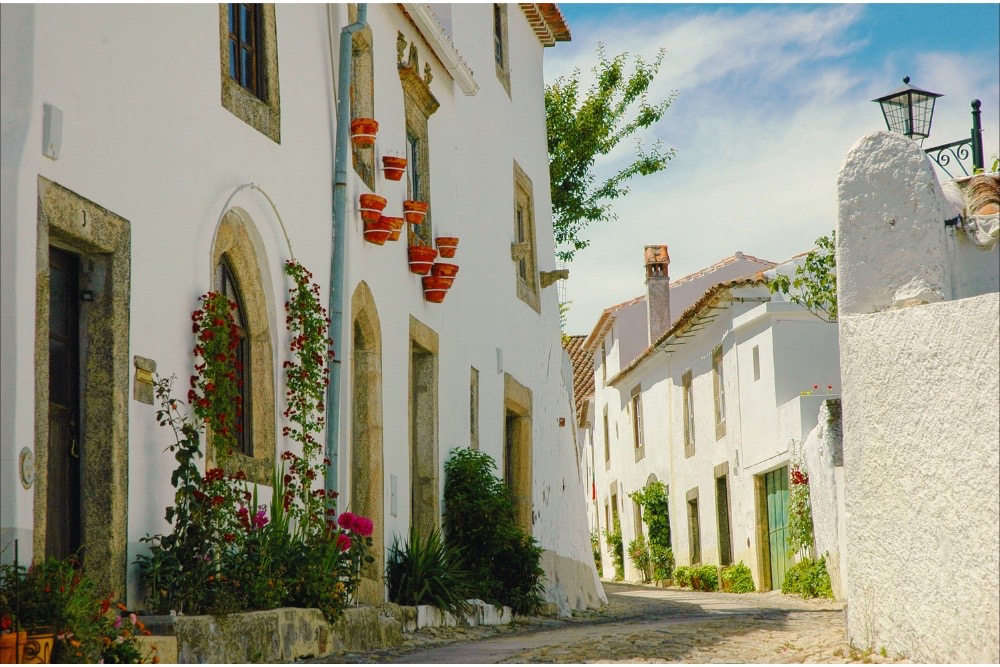
There is a type of place that becomes fashionable precisely because it has not tried to become fashionable, and Comporta is the purest current example of this paradox. An hour and a half south of Lisbon, past the bridge over the Tagus and down through the Setúbal Peninsula to where the Sado estuary meets the Atlantic, it consists of a village of low white houses, a patchwork of rice paddies and cork forests and sand dunes, some beaches of frankly unreasonable beauty, and almost no infrastructure whatsoever. There is no high street. There are no major monuments. The roads are, in places, more aspirational than functional. What there is, in increasing quantities over the past decade, is a certain kind of knowing visitor who has come specifically because there is nothing to do and nowhere to be and who has discovered that this constitutes, in the present moment, a very expensive thing to offer.
Comporta has been called Portugal’s answer to Saint-Tropez, which is incorrect — it lacks both the marina and the self-consciousness — and the Hamptons of Lisbon, which is closer but still misses the point. The more accurate description is that it is one of the last places within easy reach of a major European city that looks and feels like it did forty years ago, and that this apparent archaism has, through the alchemy by which neglect becomes desirable, turned into its primary selling proposition. The rice paddies are still being farmed. The storks still nest on the telegraph poles. The Atlantic still arrives at the shore with the indifference of something that was here long before any of this began and expects to remain after.
September is when Comporta is most fully itself. The August crowds — Lisboans in convoy, a scattering of well-informed Europeans, the occasional celebrity who has discovered that obscurity is the new exclusivity — have retreated. The light softens from its summer intensity into something amber and horizontal that falls across the rice fields in the early morning and evening with the quality of a painting rather than a photograph. The sea temperature holds, the Atlantic still warm enough for long afternoon swims. The restaurants are still open but bookable again. The pace, which in August occasionally approaches the frenetic, settles back into the deliberate slowness that is the whole point of being here.
What Comporta is, geographically and otherwise
The Comporta area is part of the Alentejo Litoral — the coastal edge of the vast, flat, hot interior province that produces Portugal’s best wine, its finest cork, its most serious olive oil, and a cooking tradition built on long afternoons and open fires and the assumption that time is not a scarce resource. The landscape is unlike anything else in Portugal: pine forests and eucalyptus, then the rice paddies of the Sado estuary, flat and reflective as mirrors, populated by egrets and herons and the occasional flamingo that has wandered up from the Algarve salt pans. Then the dunes, wide and soft, covered in the spiky marram grass that holds the sand in place against the Atlantic wind. And then the beach — long, wild, backed by nothing, facing the open ocean with the specific quality of a coast that has not yet been organised for anyone’s convenience.
The village itself is tiny: a few dozen houses, a church, a handful of restaurants, the Museu do Arroz which is both a rice museum and the area’s most atmospheric restaurant. Around it, at intervals through the pine forests and rice fields, a scatter of other small settlements — Carvalhal, Brejos da Carregueira, Grândola to the east — and the estates of the Herdade da Comporta, the vast agricultural landholding that has owned much of this territory for over a century and whose gradual, considered development of tourism infrastructure has, for better or worse, been the primary force shaping what Comporta is becoming.
A car is necessary. This is not a place that works on foot or by public transport. It is a place that works when you have accepted that the journey between things — between the hotel and the beach, between the beach and the restaurant, between one stand of pines and the next — is part of the experience rather than an obstacle to it.
Where to stay: Sublime Comporta
The pioneer and still the standard-setter. When Sublime Comporta opened in the pine forest south of Carvalhal, it established the aesthetic proposition that everything here has since been measured against: architecture inspired by the traditional fishermen’s cabanas, built low and horizontal in the landscape, using natural materials — wood, stone, thatch — in a way that is simultaneously humble and very considered. The rooms and suites are organised as freestanding structures spread across the estate, set among the pines, each with its own terrace or private pool. The effect is of having arrived somewhere that was built for you to disappear into rather than to be seen in, which is the correct aspiration for a place like this.
The estate grows over three hundred varieties of herbs, vegetables, and edible flowers in its organic garden, and supplies three restaurants with the results. The main restaurant, Sem Porta, serves Portuguese and Alentejo cuisine with the kind of commitment to local sourcing that is not a marketing claim but a structural fact about how the kitchen operates. The Food Circle — twelve seats around an open-air table in the heart of the organic garden, the chef cooking in front of guests using ancestral techniques and fire — is the more singular experience: a dinner that is also an argument about the relationship between food and place. Book it separately; it fills long before arrival. The beach club at Carvalhal, ten minutes by car or hotel shuttle, is where September mornings belong.
In May 2026, Sublime expanded significantly with the arrival of Sublime Sand, a collection of architecturally striking villas with private pools in a more open, dune-adjacent setting. For those who want maximum privacy and the cleanest possible line between accommodation and landscape, this is the direction.
Sublime Comporta — EN 261-1, Muda, 7570-337 Grândola.
The beaches
Comporta has approximately forty kilometres of Atlantic coastline and no beach that has been meaningfully developed in the way that development is usually understood. This is either a problem or the entire point, depending on what you came for.
Praia de Comporta, at the northern end, is the most accessible and consequently the most social: a beach bar, sunbeds available, the specific atmosphere of somewhere that has been discovered but not yet thoroughly organised. In September it is exactly right — warm, unhurried, with enough people to feel alive and few enough to feel private.
Praia do Carvalhal, further south and backed directly by the pine forest, is wilder and less populated, the dunes taller, the ocean more present. The Sublime beach club sits here, but the beach itself extends far beyond it in both directions. Walk twenty minutes north and you will find yourself entirely alone with the Atlantic, which in September is at its most generous: warm, blue, and lit by a sun that is beginning to angle rather than beat.
Praia da Galé, at the southern end, is the answer to the question of what this coast looks like when no one has interfered with it at all. Reached by a sandy track through the dunes, it is as close to a virgin Atlantic beach as western Europe currently offers. Bring water. Bring something to read. Bring the willingness to stay for several hours, because the difficulty of reaching it creates a natural commitment mechanism that is entirely to your benefit.
Where to eat
The food of the Comporta area is the food of the Alentejo coast: rice dishes, seafood from the Sado and the Atlantic, the black pork from the Alentejo interior, the clams and razor clams from the estuary. It is not complicated food. It is food that requires exceptional ingredients handled with respect, which is what the best restaurants here provide.
Museu do Arroz is the restaurant that captures the spirit of the place most completely. It occupies a converted rice warehouse at the edge of the village — the building is low and barn-like, with a terrace that looks out across the rice paddies toward the estuary — and it serves rice dishes with the seriousness that a restaurant called the Rice Museum has an obligation to. The clam rice, the cuttlefish-ink rice, the codfish rice: all of them built on the long-cooked stocks that are the foundation of Portuguese rice cooking, and all of them tasting specifically and unmistakably of here. In September, when the light on the paddies outside the window is amber and the egrets are still working the shallows, it is one of the more beautiful places to eat in Portugal.
http://www.herdadedacomporta.pt/museu-do-arroz
Cavalariça, in the village, is the restaurant for the evening when you want the energy of a room rather than a view. It occupies a converted stable — the original horse stalls used as dining booths — and serves creative small dishes built for sharing, with cocktails that take the same approach to local ingredients as the kitchen. The cooking is Alentejo produce processed through a Mediterranean sensibility, lighter and more inventive than the traditional rice-and-fish register, and the atmosphere is the closest Comporta gets to actually vibrant.
For the simplest, most direct version of what this coast tastes like: Dona Bia, on the EN 261 road into Comporta, is a traditional Portuguese restaurant of the kind that travel writers overlook because it makes no attempt to be interesting and ends up being the most interesting of all. A terrace, a menu of daily specials built around what the fisherman brought in and what the garden produced, prices that feel almost wrong relative to the quality, and the specific contentment of having eaten exactly what you were hungry for. Reserve ahead; the locals know.
What Comporta is becoming, and why September matters
There is a conversation happening about Comporta — about how much it can absorb before it becomes the thing it has been valued for not being. The Herdade’s gradual development, the arrival of design hotels and international restaurants, the steady increase in visitors from Lisbon and beyond: all of it is in tension with the quality that makes the place worth writing about in the first place. It is not an uncommon conversation for a place that has been discovered, and it does not yet have an answer.
What September offers is the best current version of the original proposition. The infrastructure that has arrived is, for now, still scaled to the landscape rather than competing with it. The beaches are still wild. The rice paddies still do what rice paddies do, indifferent to the fact that people have decided to come and look at them. The storks are still there on their poles, regarding the whole enterprise with the detachment of animals that have been on this peninsula considerably longer than anyone visiting it this week.
Go now, in other words. Not because it will be ruined — it may not be — but because September in Comporta in 2026 is a particular thing that will not exist again in quite this form, and that is true of everywhere worth going to, and is as good a reason as any to buy the ticket.
The essentials
Getting there
Fly to Lisbon. Drive south — approximately 90 minutes via the A2 and then smaller roads through the Setúbal Peninsula. A hire car is not optional; it is the vehicle through which Comporta becomes navigable.
Lisbon Airport: http://www.ana.pt
Stay
Sublime Comporta — EN 261-1, Muda, 7570-337 Grândola. Design; pine forest; organic estate.
http://www.sublimecomporta.pt
Eat
Museu do Arroz — N261 Km 0, Comporta. Rice dishes; estuary views; book ahead for the terrace.
http://www.herdadedacomporta.pt/museu-do-arroz
Cavalariça — Rua do Secador 9, Comporta. Sharing plates; converted stable; evening energy.
http://www.cavalariça.pt
Dona Bia — EN 261, on the road into Comporta. Traditional Portuguese; daily specials; book ahead.
No reservations website — call ahead: +351 265 497 128
Beaches
Praia de Comporta — most accessible; beach bar; good for September afternoons.
Praia do Carvalhal — backed by pines; wilder; the Sublime beach club is here.
Praia da Galé — furthest south; no facilities; entirely wild. Bring everything you need.
September note
Water temperature peaks in late August and holds through September. The crowds clear after the first week. Book restaurants and the Sublime Food Circle experience well in advance regardless — September remains busy enough that the best tables go fast.
Also worth knowing
The Sado Estuary dolphin-watching boats run from Setúbal, 45 minutes north. One of the few places in Europe where bottlenose dolphins are resident year-round. Book through Vertigem Azul: http://www.vertigemazul.com
The Passenger publishes every Friday.
— Bergotte
Discover more from My World of Interiors
Subscribe to get the latest posts sent to your email.

