In a former convent north of Milan, Italian designer Clio De Maria reworks vintage bamboo with translucent resin, drawing on a lifelong interest in collected objects and the traditions of Italian craftsmanship.
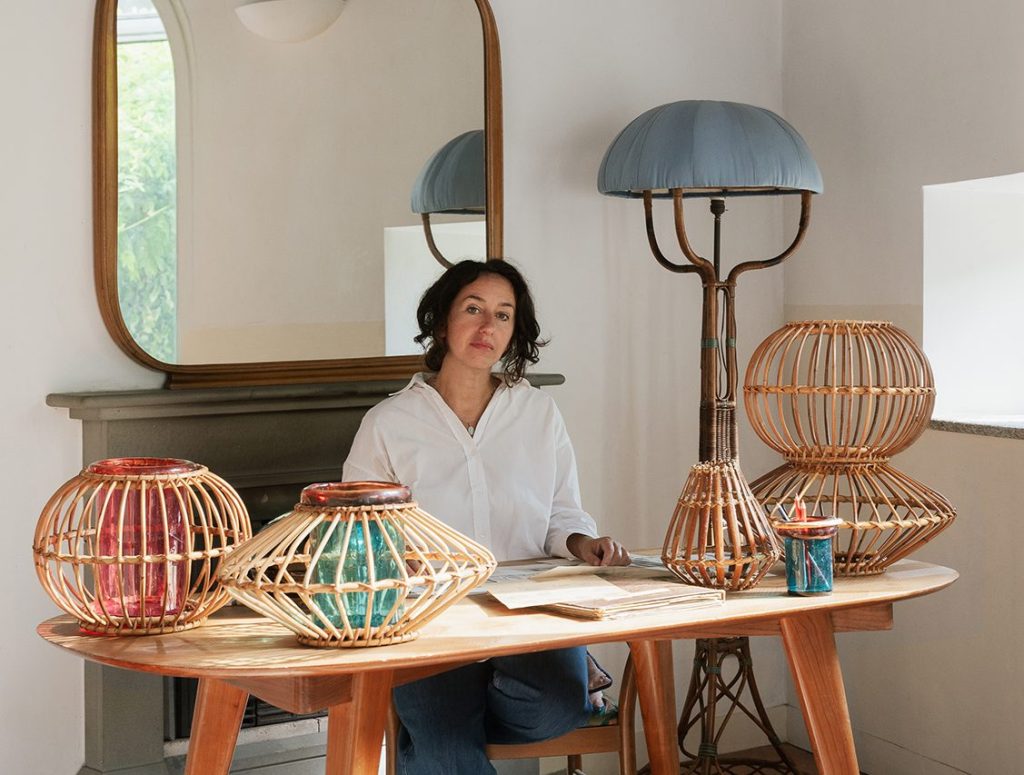
At a wooden table in her home in Inverigo, Clio De Maria sits surrounded by openwork bamboo structures. One contains a translucent pink vessel, another a turquoise one. A larger, hourglass-shaped framework stands beside them, its symmetrical curves almost architectural in their construction. Behind her are an old fireplace, a curved wooden mirror and a floor lamp with a pleated blue shade. Several of the objects belong to Brasilia, her collection of vessels made by combining vintage woven bamboo structures with contemporary resin. The photograph captures something essential about her working methods: the objects are developed and considered in the rooms where she lives.
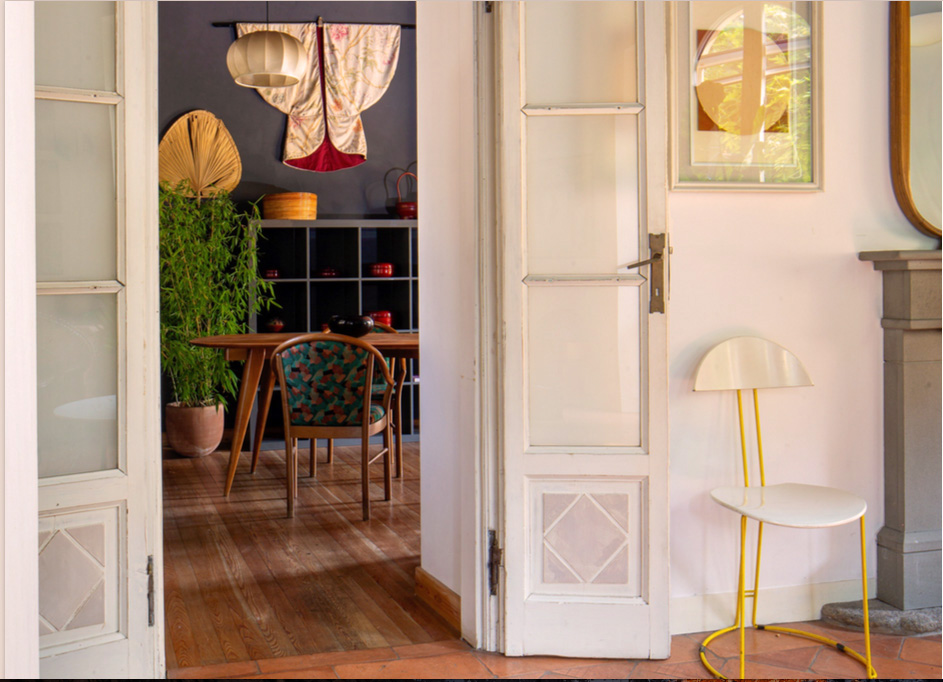
De Maria has lived in Brianza for six years, having moved from Milan in search of a life closer to nature. Her home occupies part of a fourteenth-century building that subsequently served as a convent before being converted into private residences. Original terracotta and wooden floors remain, while the unusual proportions of the rooms provide a setting for furniture and objects collected over many years.
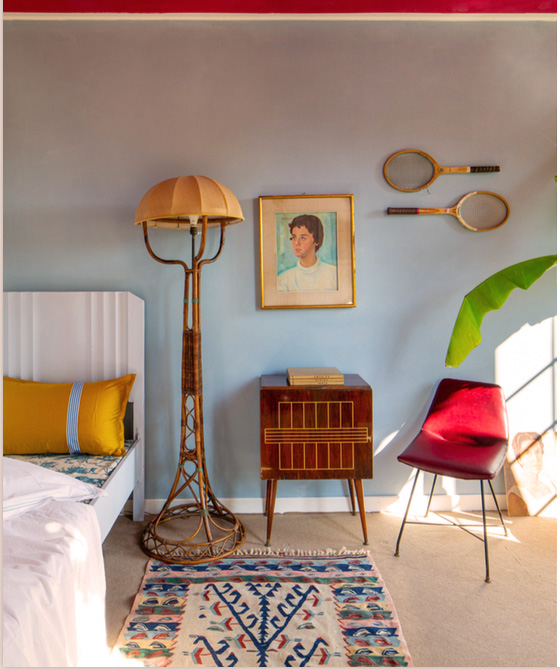
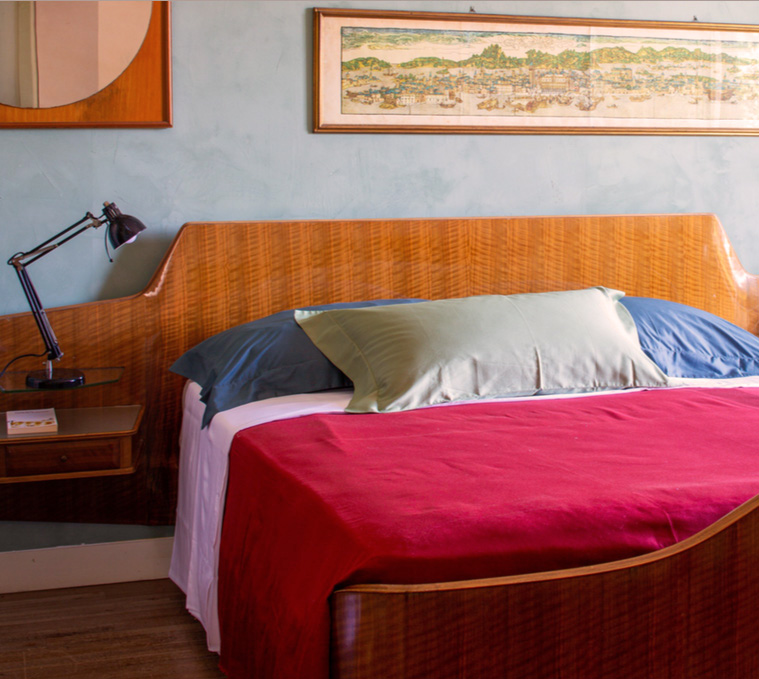
In the bedroom, a curved headboard accompanies pink and blue bed linen, vintage lighting and framed pictures. Elsewhere, portraits sit beside contemporary ceramics, while furniture is placed against painted walls. De Maria has little interest in maintaining a consistent period style. In an earlier interview, she described taking inspiration from Giotto’s Scrovegni Chapel in Padua for an ultramarine ceiling in the house. The reference is characteristic of her willingness to borrow from different periods without attempting to reproduce an entire historical interior.
Her attachment to bamboo began in childhood. Growing up in Piedmont, De Maria lived in an old farmhouse filled with wicker and bamboo furniture, often mixed with pieces from the 1970s. In conversation with My World of Interiors, she remembers it as “quite an unusual, almost instinctive mix”, one that nevertheless seemed completely contemporary to her. That early domestic environment established an enduring interest in combining objects whose materials or dates might ordinarily suggest they belonged in separate rooms.
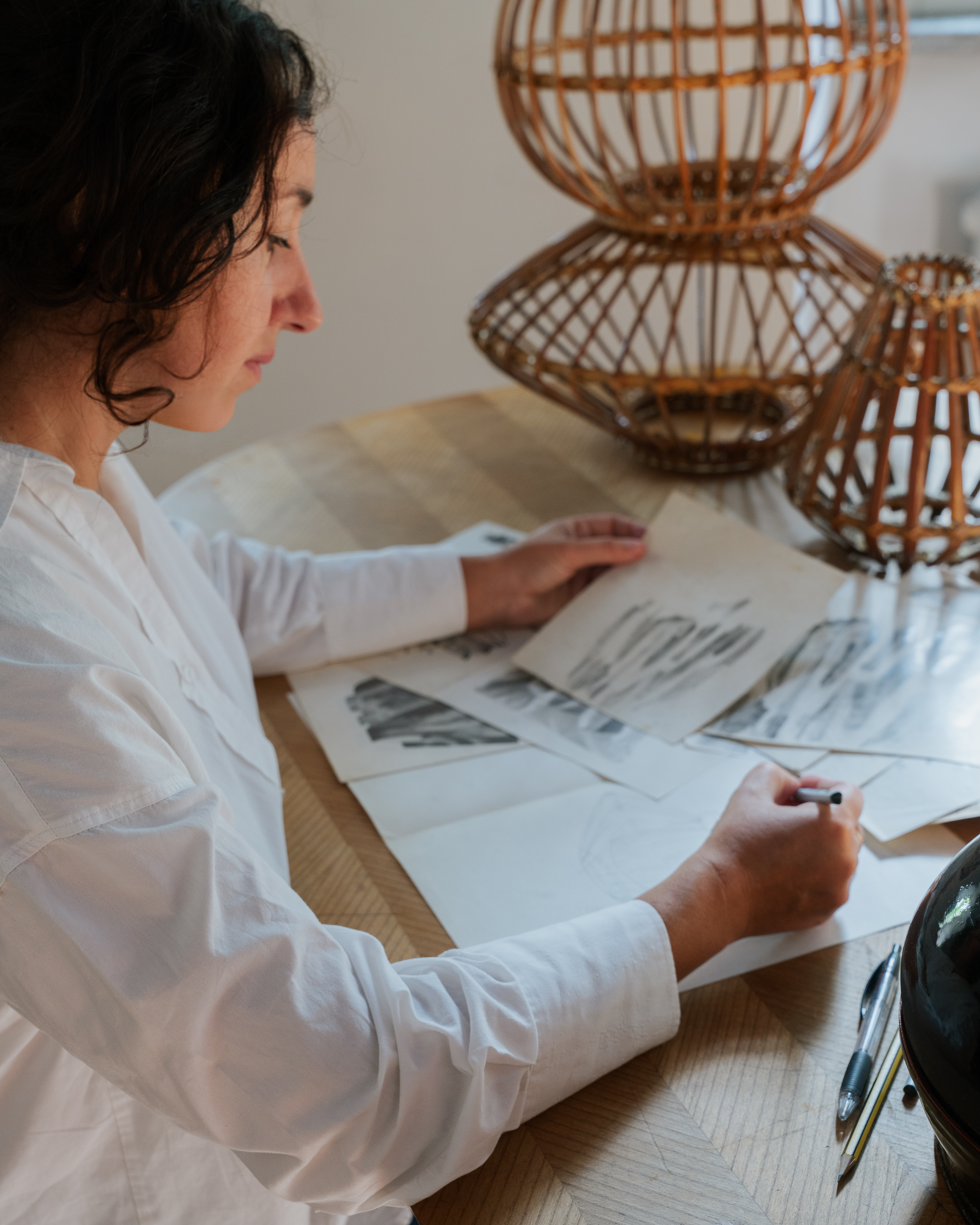
De Maria’s professional practice has developed along similar lines. Before settling in Brianza, she established Hotel Cabaret, an atelier near Lake Maggiore housed in the rooms of a former boutique hotel. Documented in 2019, it brought together antiques, modernist furniture and decorative objects in arrangements that sometimes resembled theatrical sets. Her present home is a more intimate environment, although the same interest in composition remains apparent. As an interior stylist, she is accustomed to considering how objects relate to the furniture, lighting and architectural features around them. Designing her own collections has given that process another dimension.
Brianza provides a particularly relevant setting. The region north of Milan has a longstanding furniture-making culture, sustained by generations of specialist workshops. In nearby Lurago d’Erba, Giovanni Bonacina established his business in 1889, combining local traditions of basket-making and furniture construction. Bonacina worked with local reed and cane alongside rattan imported from Southeast Asia, developing increasingly sophisticated techniques for bending and weaving furniture. Although bamboo and rattan are botanically distinct materials, their histories frequently overlap in furniture and interior decoration.
In 1951, Franco Albini, working with Gino Colombini, designed the Margherita armchair for Bonacina. Its structure, assembled from curved rattan canes and intricate weaving, produced a remarkably light chair without conventional legs. It received a gold medal at the IX Triennale di Milano and became an important example of postwar Italian design. Albini recognised that traditional weaving techniques could accommodate the formal ambitions of modern furniture.
Another significant reference for De Maria is Gabriella Crespi, particularly her Rising Sun collection of 1973–75. Crespi employed bamboo in furniture and lighting whose forms could be surprisingly monumental. Her mushroom-shaped Fungo lamps demonstrate how the arrangement of slender natural elements can create substantial sculptural volume. De Maria admires Crespi’s treatment of these materials as objects of considerable aesthetic value, challenging their persistent association with informal or inexpensive decoration.
Their methods, however, differ. Crespi conceived new objects using established craft techniques. De Maria’s Brasilia collection begins with structures that have already been made, sometimes decades earlier. Their original makers are generally unidentified, and her selection depends less on provenance than on form.
Many of these pieces come from an Italian antiques dealer specialising in vintage bamboo, while others are discovered through markets and individual dealers. De Maria looks for interesting proportions, unusual curves and structures that might lend themselves to further development. “I’m not necessarily looking for perfect objects,” she explains. What interests her is the possibility that an existing silhouette can become something quite different.
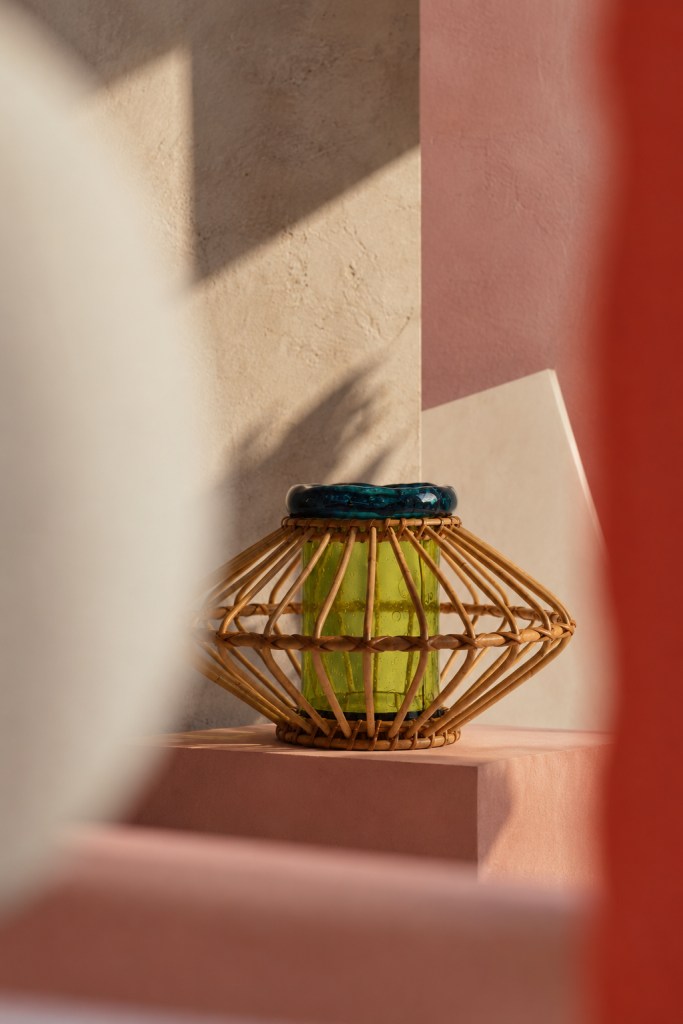
The original framework establishes the volume of each piece, but its open construction leaves considerable freedom to introduce another material. In Brasilia, coloured resin occupies the space within the weave while leaving much of the older structure exposed.
The results vary according to the original forms. Orbis has a broad, flattened profile, its curved bamboo framework enclosing a vivid green vessel with a dark, translucent rim. Bolis is more upright and rounded, with slender elements surrounding a deep blue interior. The spacing of the bamboo allows light to pass through the object and cast patterned shadows, while the resin provides a continuous surface within the open framework. The contrast is particularly effective where the glossy resin catches the light, making its colour appear almost glass-like.
For this part of the production, De Maria works with the Italian workshop Corsi Design, which has a notable history of experimentation with resin. Its founder, Andrea Corsi, began collaborating with Gaetano Pesce in 2003, taking over production of Pesce’s Fish Design collection in 2004. Pesce had begun developing these vividly coloured resin objects in New York during the 1990s, exploring techniques that allowed variations in shape, texture and finish.
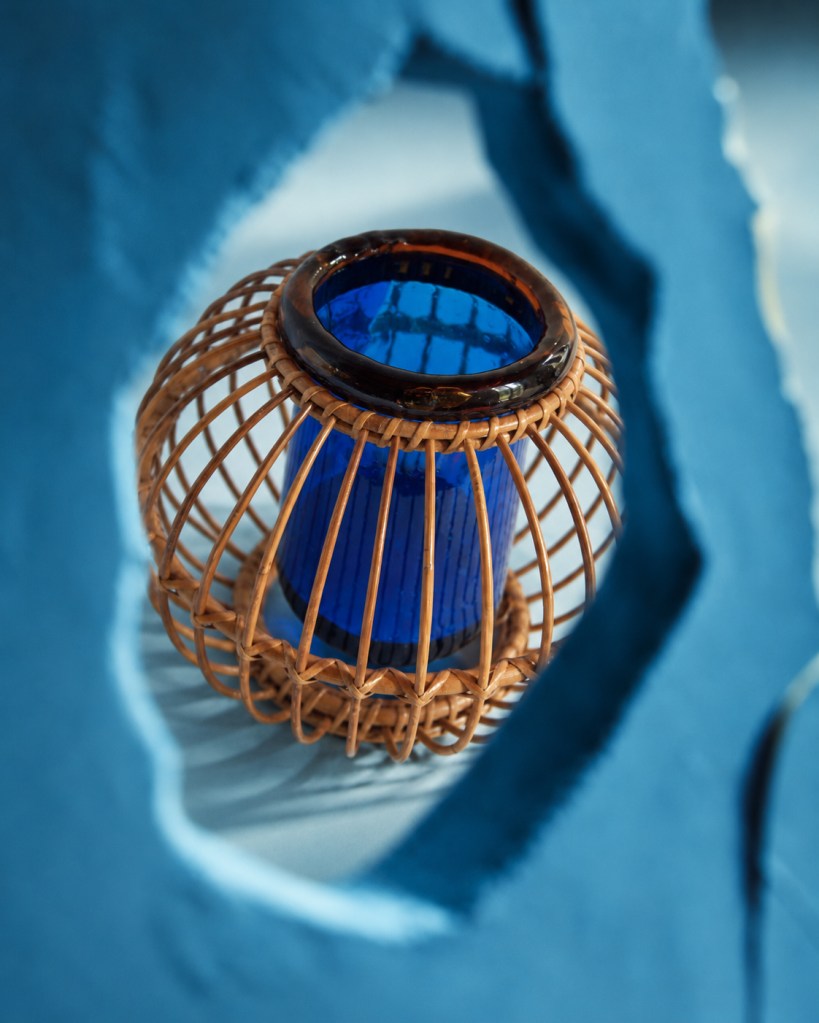
The connection gives De Maria access to artisans experienced in a material that requires considerable technical understanding. The resin is poured and worked by hand in layers, producing a glossy, translucent surface with slight variations between pieces. De Maria develops the concepts, selects the vintage structures and determines the relationship between colour and form in collaboration with the workshop. Brasilia depends on both her design decisions and the specialised craftsmanship involved in realising them.
The finished objects occupy an interesting position between vintage decorative design and contemporary production. Their original frameworks remain recognisable, but De Maria has little interest in restoration as a means of returning an object to its former condition. Her interventions are deliberately visible, altering the material character of each piece and establishing a new relationship between its exterior structure and interior volume.
There is an important distinction between preserving an old object and giving it another use. De Maria’s choices sometimes change the visual emphasis of a framework so substantially that the vintage component becomes part of a new composition. The earlier workmanship remains present, although the object now has another designer and a different purpose. Because each structure is selected individually and the resin is worked by hand, no two finished pieces are identical.
Much of this process begins at home. The vintage structures arrive in Inverigo, where De Maria examines their proportions, develops sketches and tests possible colour combinations. Objects move between rooms while she considers how they respond to different light and surroundings. The specialist resin work takes place through her collaboration with Corsi Design, but the decisions leading to it are closely connected to her domestic environment.
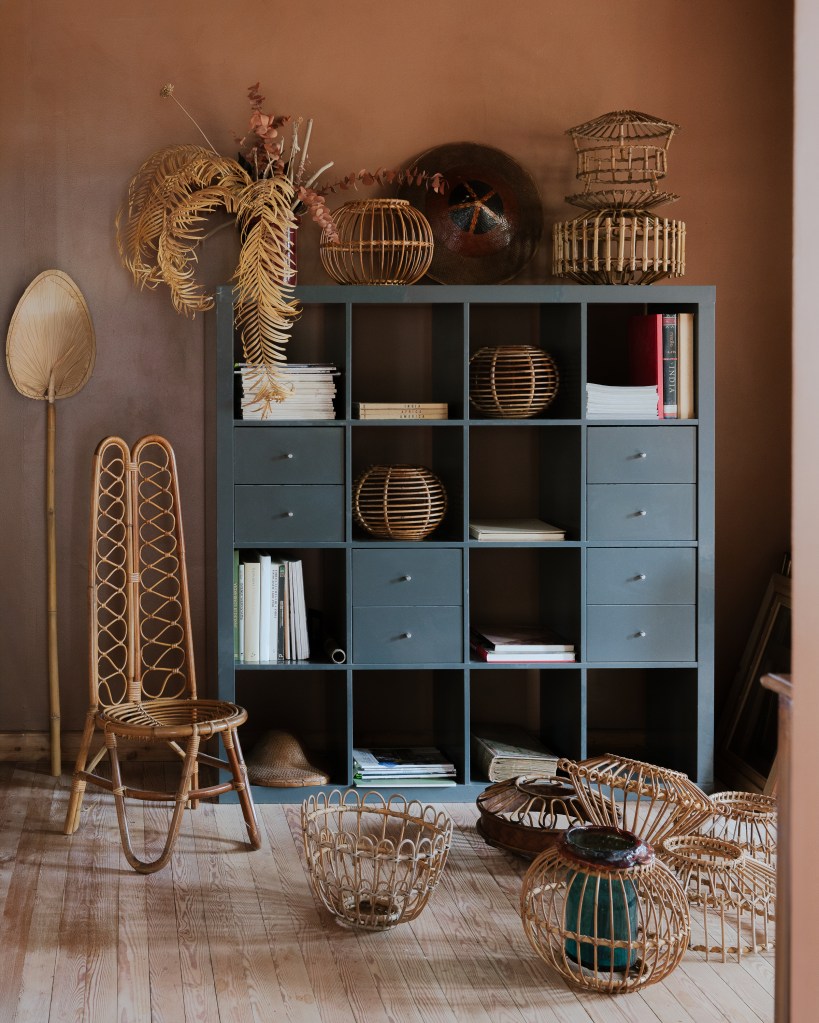
That approach also explains why the finished pieces sit comfortably among De Maria’s furniture and collections. They are designed with actual interiors in mind, their scale and colour tested against the objects already occupying the rooms. Some are given prominent positions, while others appear almost casually placed among books, pictures and vintage furniture.
De Maria describes her house as a domestic laboratory. Here, vintage bamboo structures are placed alongside lamps, paintings and furniture while she considers their proportions and the colours they might accommodate. The finished pieces eventually take their place in those same rooms. There is a consistency to the way she works: whether arranging an interior or developing a new object, she begins by examining what is already there. In Brasilia, the original craftsmanship remains visible, while her additions allow us to see the familiar woven forms differently.
To learn more and get in touch with Clio De Maria directly:
Clio De Maria | Freelance Producer and Stylist
Cover photography: © Alba De Angelis.

