
Obituary
The journalist, organiser and public intellectual helped make women’s private lives legible as political facts—and equality a measure of civilisation itself.
By Bergotte
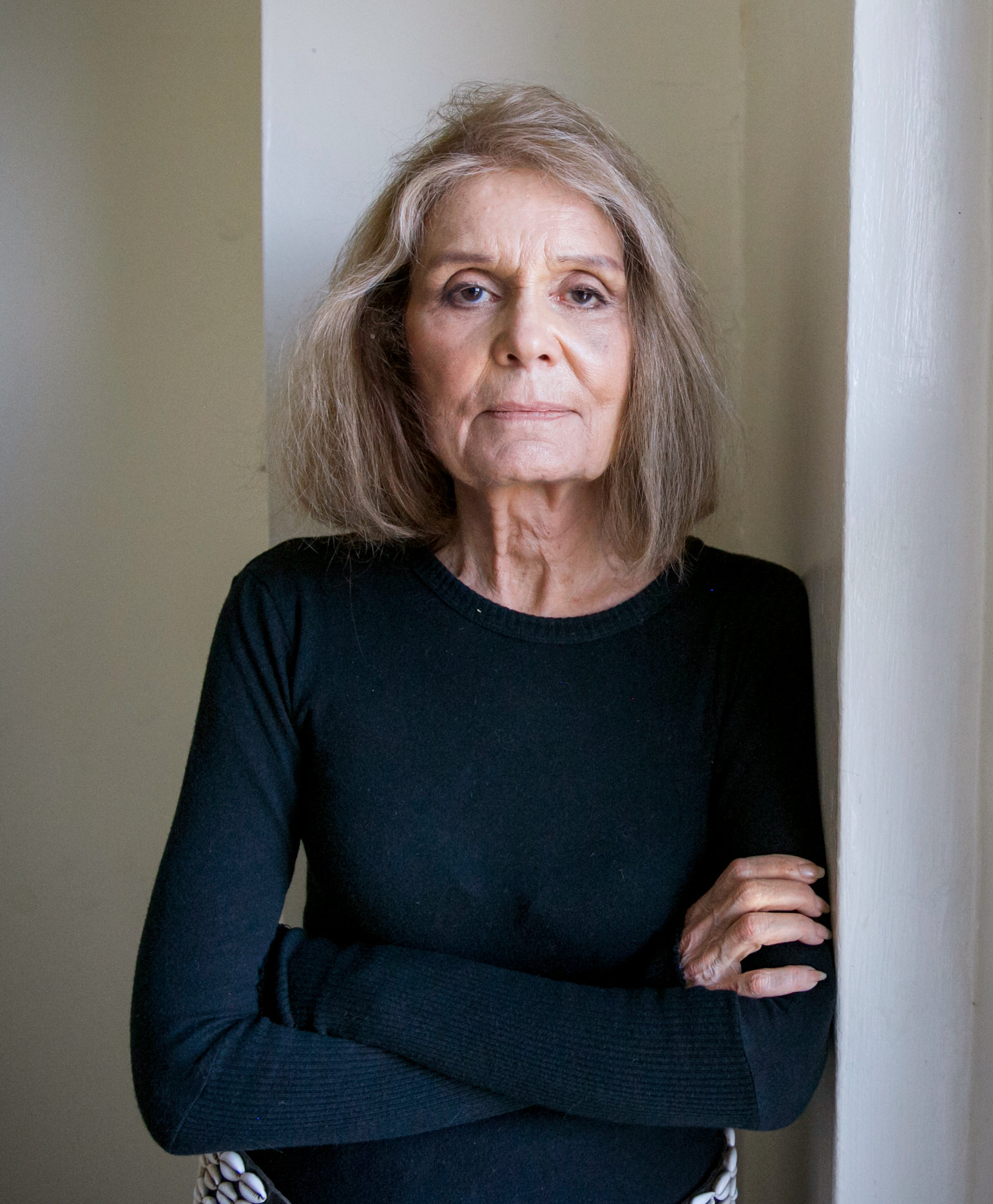
Gloria Steinem, the American journalist, political organiser and feminist whose work helped transform the language of equality, has died at the age of 92. Her death was announced on her official social-media account, which said that she died peacefully at her home in New York City on 2 September 2026, surrounded by some of the many who loved her. No cause was disclosed in the initial announcement.
Some lives enter history through office, wealth or command. Steinem entered it by changing what a society was able to say about itself. Across more than six decades, she helped give public form to experiences that had been kept private, sentimentalised or dismissed: the coercion hidden within marriage, the economic value of women’s unpaid labour, the danger of illegal abortion, the indignities of the workplace, the political consequences of childcare, and the daily attrition of being treated as a supporting character in one’s own life. She did not invent feminism, and she was careful not to claim that she had. What she became was one of its most recognisable interpreters—an unusually effective bridge between radical analysis and the American mainstream.
That visibility could simplify both the movement and the woman. The aviator glasses, centre-parted hair and raised fist hardened into an icon so familiar that it sometimes obscured the nature of her achievement. Steinem was not only a symbol, nor simply a gifted speaker who appeared at the right historical moment. She was a working journalist, an editor, a coalition-builder, a fundraiser, a founder of durable institutions and, above all, an organiser. She understood that an idea becomes historical only when people are given the means to recognise one another inside it.
A childhood education in dependence
Gloria Marie Steinem was born in Toledo, Ohio, on 25 March 1934, the daughter of Ruth Nuneviller Steinem and Leo Steinem, an itinerant antiques dealer. Her early childhood was spent travelling in a trailer as her father moved around the country in search of objects and opportunity. The instability had romance in it, but also precarity. After her parents separated, the ten-year-old Gloria remained in Toledo with her mother, who lived with severe mental illness and was frequently unable to work or care for herself. Steinem became a caregiver while still a child.
The experience left a deep political imprint. She saw how readily a woman without money, institutional authority or an attentive advocate could lose control over her own life. Her mother’s illness was real, but so was the indifference of the systems surrounding her; dependency was treated as a female condition rather than a social problem. The future feminist learned early that formal freedom means little without material independence, and that dignity can be eroded as thoroughly by neglect as by open prohibition.
There was another inheritance. Steinem’s paternal grandmother, Pauline Perlmutter Steinem, had been a suffragist, an advocate of vocational education and the first woman elected to Toledo’s Board of Education. Gloria would later belong to a different phase of the struggle, but the family connection is suggestive: one generation fought for women’s admission to citizenship; another asked what citizenship could mean if the institutions governing work, family, sex and culture remained organised around male authority.
At Smith College, Steinem studied government, graduated Phi Beta Kappa in 1956 and received a Chester Bowles Fellowship that allowed her to spend two years in India. There she wrote for local publications and encountered Gandhian traditions of non-violent organising. India mattered not as an exotic interlude but as a political education. It helped teach her that durable change rarely descends from a single charismatic leader. It grows through patient contact, shared testimony and local networks—the slow work of people discovering that what they had taken to be an individual misfortune is part of a common structure.
The reporter before the icon
When Steinem returned to the United States, journalism was still rigorously divided by gender. Male editors assigned politics, ideas and public affairs largely to men; women were directed towards fashion, domestic life and service journalism. Steinem freelanced, wrote for women’s magazines and repeatedly encountered editors who could imagine her as a subject more easily than as an authority.
In 1962, she wrote for Esquire about the pressures forcing educated young women to choose between marriage and a career. A year later she undertook the assignment that first made her nationally known. For Show magazine, she worked undercover as a “Bunny” at New York’s Playboy Club. “A Bunny’s Tale” stripped the enterprise of its lacquered glamour, documenting low pay, sexual demands, surveillance and invasive medical requirements. The piece was a feat of reporting, but it also revealed the trap awaiting women who wrote about sexual exploitation: for a time, editors remembered that she had worn the costume and forgot why she had put it on.
She persisted. In 1968, Steinem helped found New York magazine and became one of its political columnists. She covered elections, social movements and public policy in a voice that was lucid, witty and free of the ponderousness with which political seriousness was so often confused. Her particular gift was translation without dilution. She could carry an argument from a church basement or organising meeting into a mass-circulation magazine without making its moral stakes disappear.
A decisive moment came in 1969, when she reported on an abortion speak-out in Greenwich Village. Women stood before strangers and described experiences that law and convention had required them to hide. Steinem, who had undergone an abortion in London at 22, later described the recognition she felt there as a “click”. The word was modest, almost domestic, but the insight was profound: silence isolates, while testimony reveals structure. From then on, reproductive freedom—not merely abortion in the narrow legal sense, but the right to have children or not have them, and to raise them in safety—remained central to her politics.
In May 1970, she testified before the United States Senate in support of the Equal Rights Amendment. Her argument situated sex discrimination within the unfinished democratic project of civil rights. Equality was not a concession to be granted to a special constituency; it was a constitutional principle whose selective application exposed the limits of American democracy.
A movement made visible
Steinem’s rise coincided with the great insurgency now called second-wave feminism, but she was never its sole author and should not be remembered as such. The movement was made by thousands of women—Black, white, Latina, Indigenous, Asian American; lesbian and straight; socialist and liberal; working-class and professional—whose priorities did not always coincide. Steinem’s historical role was partly to make that ferment visible to an audience that might otherwise have refused to see it.
Among her most consequential partnerships was the one she formed with the Black community organiser Dorothy Pitman Hughes. The two travelled the United States speaking about sex, race and class, and Hughes helped Steinem find confidence as a public speaker. Dan Wynn’s 1971 portrait of them standing side by side, fists raised, became one of the defining images of modern feminism. Its meaning resides in its doubleness: not a solitary heroine, but two women in alliance. Pitman Hughes brought deep experience of work on childcare, poverty and community power; Steinem brought access to media that too often ignored such work. Their partnership embodied both the promise and the difficulty of building solidarity across unequal forms of visibility.
Steinem also worked alongside figures including Florynce Kennedy, Shirley Chisholm, Bella Abzug, Fannie Lou Hamer, Dolores Huerta and Wilma Mankiller. These women were not supporting players in her story. They were political thinkers and organisers from whom she learned, and whose work enlarged her understanding of power. One of the more valuable ways to remember Steinem is therefore to follow the lines of connection around her—to recover the movement that celebrity culture compressed into a single face.
In July 1971, she joined Chisholm, Abzug, Hamer, Betty Friedan and hundreds of others in founding the National Women’s Political Caucus. Its purpose was practical and ambitious: to recruit, train and support women seeking elected and appointed office. At the time, women occupied only a minute fraction of seats in Congress. The caucus insisted that democracy could not be representative while half the population remained largely absent from the rooms in which public priorities were decided.
Ms. and the creation of a public language
If Steinem’s name is attached to one institution above all others, it is Ms. magazine. Created with a founding editorial group that included Patricia Carbine, Dorothy Pitman Hughes, Letty Cottin Pogrebin, Joanne Edgar, Nina Finkelstein, Mary Peacock and Mary Thom, Ms. first appeared as a preview issue inserted into New York in late 1971 and became an independent publication in 1972. The response revealed an audience that conventional publishing had failed to imagine. Its 300,000 test copies sold out in eight days, producing 26,000 subscription orders and more than 20,000 letters within weeks.
The title itself was an intervention. “Ms.” allowed a woman to be addressed without announcing whether she belonged, legally or socially, to a man. More importantly, the magazine addressed women not as a consumer category but as citizens and thinking adults. It covered abortion, rape, domestic violence, discriminatory law, childcare, work, sexuality, race and political representation—subjects that mainstream women’s magazines had ignored, depoliticised or confined to the advice page. It gave ordinary experience an editorial architecture and told readers that their anger might contain knowledge.
Ms. was never merely Steinem’s creation, and its history contains disputes over race, class, sexuality, commercial culture and whom feminism was imagined to represent. Those tensions matter. Yet the magazine changed the field in which they could be argued. It demonstrated that feminist journalism could command a national readership and that questions dismissed as “women’s issues” were, in reality, questions about labour, law, violence, health, culture and democracy. It made a counter-public visible, then helped that public recognise its own scale.
From prominence to institutions
Steinem understood that fame is politically useful only if it can be converted into structures that outlast attention. Her record as an institution-builder was extraordinary. She helped found the Women’s Action Alliance in 1971, which developed resources for non-sexist, multiracial education. In 1973, with Patricia Carbine, Letty Cottin Pogrebin and Marlo Thomas, she created the Ms. Foundation for Women, a national foundation devoted to supporting grassroots work led by women and girls.
She co-founded Voters for Choice in 1977 and served as its president for 25 years; helped establish Choice USA, now known as URGE, in 1992 to cultivate younger leaders in reproductive freedom; and helped create Take Our Daughters to Work Day in 1993, which asked a deceptively simple question of millions of girls: can you see yourself here? She was involved in the Free to Be Foundation and helped found international organisations including Equality Now, Donor Direct Action and Direct Impact Africa.
In 2005, with Jane Fonda and Robin Morgan, she co-founded the Women’s Media Center to challenge the persistent under-representation and misrepresentation of women in news and culture. She supported civil-rights, LGBTQ+ and anti-apartheid struggles, opposed war, and worked with organisers across national borders. In 2015 she joined women peace activists in crossing the Korean Demilitarised Zone, arguing that women should be participants in the making of peace rather than merely counted among war’s casualties.
This breadth was not an accumulation of fashionable causes. It followed from Steinem’s understanding of hierarchy. She was interested in the shared logic of caste systems—in the ways race, sex and class are naturalised, taught through gender roles and enforced by violence. The forms of domination were not identical, but neither were they sealed off from one another. A feminism incapable of seeing those connections, she believed, would reproduce the very ranking systems it claimed to oppose.
Feminism as humanism
At the centre of Steinem’s thought was a radically humanist proposition: women are not a secondary kind of human being. Their bodies are not public property, their labour is not a natural resource, and their destinies are not properly assigned by sex. But her feminism was not a project of replacing male supremacy with female supremacy. It sought to loosen gender’s authority over everyone—to free women from compulsory service and men from identities organised around dominance, emotional deprivation and violence.
That is why her work ranged from reproductive rights and equal pay to childhood, masculinity, racism, militarism and self-esteem. She understood politics not only as the distribution of offices and income, but as the distribution of personhood: who is permitted complexity, who is believed, who may speak without apology, who is allowed to imagine a life beyond obedience. Her subject was power, but her moral horizon was human flourishing.
Steinem was sometimes caricatured as humourless by people who had plainly never listened to her. Wit was one of her political instruments. She used reversal, satire and the absurd to expose arrangements that survived partly because they had been made to look natural. Her celebrated essay “If Men Could Menstruate” did not simply make a joke about male vanity; it demonstrated how power converts biology into prestige for one group and shame for another. Laughter, for Steinem, could be the sound of an imposed reality losing its authority.
Her method was equally important. She travelled, listened, sat in circles and resisted the fantasy that the expert arrives already knowing what other people need. In My Life on the Road, travel becomes more than autobiography: it is a theory of democratic knowledge. We learn by leaving the protected room, encountering lives unlike our own and allowing other people’s testimony to revise us. In an age of declarations delivered to carefully selected audiences, Steinem continued to believe in the transforming difficulty of being physically present with strangers.
A public life without sanctification
No life this consequential should be rendered as unblemished. Steinem’s prominence drew legitimate criticism from feminists who believed that a white, conventionally attractive, media-fluent woman had been made to stand for a movement far more diverse than the press wished to acknowledge. The institutions of mainstream feminism did not always live up to their own claims about race, class or sexuality. Her 1998 op-ed downplaying allegations of sexual harassment against Bill Clinton was widely and rightly challenged; years later, she said that she would not write the same argument again.
These failures belong in the record, not because they cancel her work, but because feminism itself supplied the standard by which they could be judged. Steinem’s importance does not depend upon infallibility. It lies partly in her capacity to remain in conversation, to learn from younger movements and to understand solidarity as a practice rather than a certificate of virtue. She became famous in an era that spoke confidently of “women” as a single political category and lived long enough to see feminism become more attentive to the decisive differences among women. She did not always arrive first, but she kept travelling.
The writer and the life
Alongside the organisations and campaigns, Steinem produced a substantial body of writing. Outrageous Acts and Everyday Rebellions (1983) gathered the journalism and essays that established her range. Marilyn: Norma Jeane (1986) reconsidered Marilyn Monroe not as a male fantasy but as an intelligent, vulnerable woman trapped within one. Revolution from Within (1992) examined self-esteem as a political matter; Moving Beyond Words (1994) explored age, power, sex and the boundaries of gender; and My Life on the Road (2015) offered the clearest account of organising as the connective tissue of her life. In 2019, The Truth Will Set You Free, But First It Will Piss You Off! distilled a lifetime of arguments, observations and encouragement.
Her prose was accessible without being simple-minded, aphoristic without abandoning thought. She was less interested in constructing a closed theoretical system than in giving readers usable language. The essay, the speech, the interview and the magazine column were democratic forms: portable, shareable and capable of entering ordinary life. She wrote not for disciples but for potential participants.
Her personal life resisted the timetable prescribed to women of her generation. At 66, she married the environmental and animal-rights activist David Bale in a Cherokee ceremony at the Oklahoma home of her close friend Wilma Mankiller, the first woman elected Principal Chief of the Cherokee Nation. Bale died of brain lymphoma in 2003, after three years of marriage. Steinem had also survived breast cancer, diagnosed in the 1980s, and spoke with characteristic candour about ageing—not as disappearance, but as a gradual release from some of gender’s most exhausting demands.
For decades, her brownstone apartment on East 73rd Street in Manhattan functioned as an unofficial headquarters of feminist life. Organisers, writers, politicians and travellers gathered around its table; ideas were tested, alliances made and weary people given a place to rest. Gloria’s Foundation was established to preserve the home as a permanent centre for organising and feminist history. It is a fitting extension of her politics. She understood that movements need legislation and public argument, but they also need rooms: places where people can eat, recover, disagree and begin again.
In her final years, she returned to the practices that had always animated her politics: writing and being in community. Hundreds of people came to her living room for Talking Circles, a tradition she insisted should continue after her death. The announcement from those close to her remembered listening as her greatest gift—her capacity to make other people feel seen and heard. That is not merely a tender detail about her character; it describes a political method. For Steinem, people often discovered their power when they realised that their experience was intelligible to someone else, and that what had seemed like a private burden might be a shared condition capable of being changed.
Steinem received many of the honours a nation bestows after an agitator’s arguments have become part of its moral vocabulary. She was inducted into the National Women’s Hall of Fame in 1993. The American Humanist Association named her Humanist of the Year in 2012. President Barack Obama awarded her the Presidential Medal of Freedom in 2013. She later received the National Civil Rights Museum’s Freedom Award, the Richard C. Holbrooke Distinguished Achievement Award and, in 2021, Spain’s Princess of Asturias Award for Communication and Humanities. Rutgers University endowed a chair in her name in media, culture and feminist studies.
A final memoir, An Unexpected Life, is scheduled for publication on 22 September. Its title now carries an unintended valedictory force. Yet there was nothing accidental about the discipline with which Steinem used that life. The unexpected became a vocation; experience became argument; visibility became infrastructure.
The unfinished inheritance
Steinem’s death arrives at a moment when many of the freedoms for which she worked are again under organised assault. The constitutional guarantee promised by the Equal Rights Amendment remains unresolved. The federal constitutional protection of abortion established by Roe v. Wade has been overturned. Authoritarian politics has found renewed energy in the control of women’s bodies, the restoration of rigid gender hierarchies and the punishment of those who refuse them. The old claims return in updated language, but their purpose is familiar.
That unfinished history does not diminish Steinem’s achievement. It clarifies it. Rights are not evolutionary gifts that, once obtained, remain safely in place. They are social agreements sustained by institutions, memory and organised people. Steinem’s optimism was therefore not complacency. It was a working method—the refusal to mistake a setback for the end of history, or power for permanence.
Her deepest legacy may be a form of permission. She helped millions of women understand that they were entitled not only to enter the world as it existed, but to question its design. Why should care be economically invisible? Why should biology determine authority? Why should marriage alter a woman’s civic identity? Why should violence be treated as private when its patterns are social? Why should anyone’s freedom depend upon another person’s subordination?
Those questions travelled far beyond the movement in which they were first asked. They changed journalism, law, education, employment, family life and the imagination of what a woman might become. They also enlarged the meaning of democracy. A society cannot call itself free while requiring half its people to negotiate for full humanity.
Gloria Steinem leaves behind no completed revolution. No serious democrat does. She leaves institutions, books, archives, arguments, friendships and generations of people more able to recognise injustice—and more practised in opposing it. She showed that a magazine could become a civic space, that a home could become a headquarters, that listening could be a form of leadership and that hope, when joined to organisation, could become a public force.
The announcement of her death recalled her love of signal fires lit on hills to guide people to the other side of a mountain, and invited mourners to light a candle of their own. It is a fitting image for her life: not a solitary beacon asking to be admired, but one flame answering another across a distance.
There will be photographs of the glasses and the raised fist, and they deserve their place. But the truest memorial is less static: a circle of chairs, a difficult conversation, a woman discovering that the life prescribed for her is not the only life available. Steinem’s work began again whenever another person made that discovery. It will continue wherever equality is understood not as a favour, nor even as a women’s issue, but as the indivisible grammar of human freedom.
In lieu of flowers, Gloria Steinem asked that those wishing to honour her make a donation to Gloria’s Foundation.
Selected achievements
- Helped found New York magazine in 1968 and served as a political columnist and feature writer.
- Published the landmark undercover investigation “A Bunny’s Tale” in 1963, exposing working conditions at the Playboy Club.
- Testified before the US Senate in support of the Equal Rights Amendment in 1970.
- Became the first woman to address the National Press Club in 1972.
- Helped found the Women’s Action Alliance and the National Women’s Political Caucus in 1971.
- Co-founded Ms. magazine, which launched nationally in 1971–72 and transformed feminist journalism.
- Co-founded the Ms. Foundation for Women in 1973 and served as its founding president.
- Co-founded and led Voters for Choice for 25 years; also helped found Choice USA, now URGE.
- Helped establish Take Our Daughters to Work Day, a landmark national initiative for girls’ confidence and ambition.
- Co-founded the Women’s Media Center with Jane Fonda and Robin Morgan.
- Helped found or support international initiatives including Equality Now, Donor Direct Action and Direct Impact Africa.
- Authored major works including Outrageous Acts and Everyday Rebellions, Revolution from Within, Moving Beyond Words and My Life on the Road.
- Co-produced the Emmy Award-winning HBO documentary Multiple Personalities: The Search for Deadly Memories and executive-produced the Emmy-nominated series Woman.
- Received the Presidential Medal of Freedom, the National Civil Rights Museum Freedom Award, the Princess of Asturias Award for Communication and Humanities, and numerous honours for journalism and human rights.
Discover more from My World of Interiors
Subscribe to get the latest posts sent to your email.

