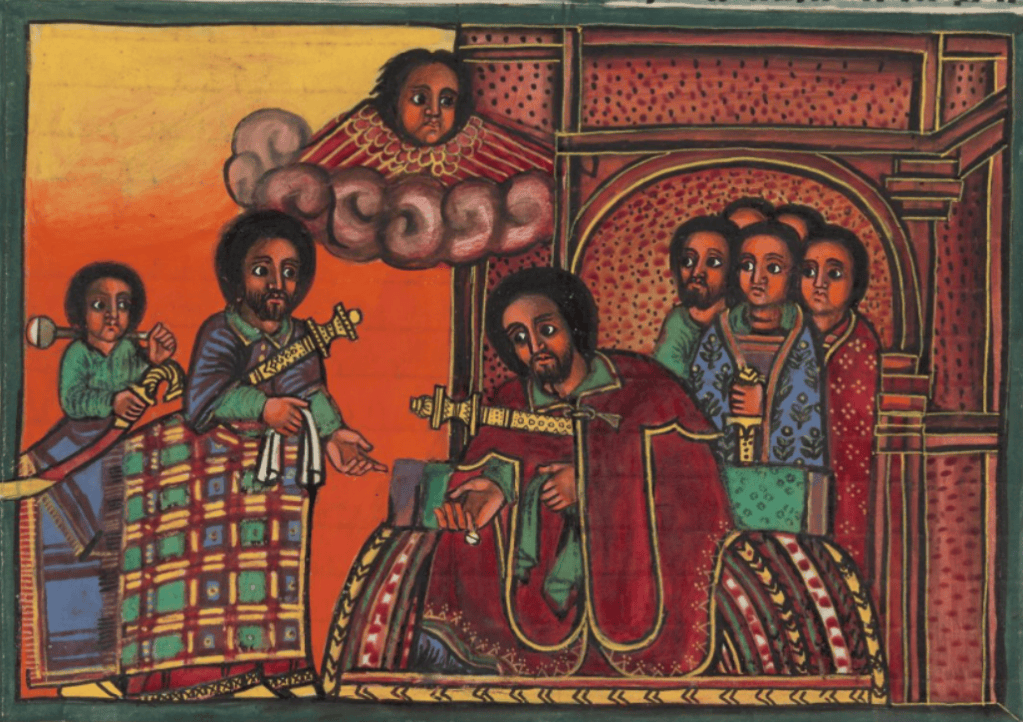
In 1630, a young Ethiopian scholar was accused of heresy by both the Catholic missionaries who had recently arrived in his country and the Orthodox Christian establishment that had governed it for a thousand years. He fled into the hills of Tigray, found a cave, and spent two years alone with his thoughts. What he produced in that cave — a philosophical treatise written in Ge’ez, the classical language of Ethiopia — is one of the most remarkable documents in the history of philosophy, and one of the least known. His name was Zara Yaqob. He was Africa’s first modern philosopher, and the world has barely heard of him.
The history of philosophy, as it is conventionally taught in the universities of Europe and North America, begins in Greece and ends, for most practical purposes, in the early twentieth century somewhere between Vienna and Cambridge. The story it tells is linear, cumulative, and almost entirely white: the pre-Socratics giving way to Plato, Plato to Aristotle, Aristotle absorbed and transformed by the medieval Christian synthesis, the synthesis dissolving in the Reformation and the Scientific Revolution, the modern period beginning with Descartes and proceeding through Hume and Kant and Hegel to the branching traditions of the nineteenth and twentieth centuries. It is a story of genuine intellectual achievement. It is also a story that has been constructed — consciously and unconsciously, through the choices of inclusion and exclusion that every institutional tradition makes — in a way that renders invisible the philosophical work being done simultaneously in other traditions, in other languages, by people who did not look like the people the story centres.
Zara Yaqob is the most dramatic example of this invisibility in the early modern period. He was born in Ethiopia in 1599, in the reign of Emperor Za Dengel, in a country that had been Christian since the fourth century and that possessed one of the oldest and most sophisticated intellectual traditions in Africa. He studied at the church school at Aksum, one of the ancient capitals of Ethiopian civilisation, and then at various other institutions of traditional Ethiopian learning, acquiring the formation in theology, philosophy, and classical literature that the Ethiopian church provided to its most promising students.
In 1626, the Emperor Susenyos converted to Catholicism under the influence of Jesuit missionaries, declared Catholicism the state religion of Ethiopia, and began a period of religious persecution that targeted the Ethiopian Orthodox tradition with a violence that the tradition had not previously experienced from within. Zara Yaqob, who had already attracted suspicion from both the Catholic missionaries — who found his independent theological reasoning incompatible with their authority — and elements of the Orthodox establishment — who found him insufficiently deferential to their tradition — was accused of heresy. He fled, in 1630, into the hills of the Tigray region, found a cave near the town of Enfraz, and lived there alone for two years.
In the cave he thought. He prayed. He farmed a small plot of land for sustenance. And he wrote — in Ge’ez, the classical Ethiopic language in which the Ethiopian intellectual tradition had been conducted for centuries — the philosophical treatise that we know as the Hatata Zara Yaqob: the Inquiry of Zara Yaqob.
The Method: Reason Alone
The first and most important thing to understand about the Hatata is the method it employs, because the method is itself the philosophical claim. Zara Yaqob does not begin from the authority of scripture, though he knows the scriptures thoroughly. He does not begin from the authority of the church, though he has been formed by the church’s intellectual tradition. He does not begin from the authority of the philosophical tradition he has inherited. He begins from reason — from the capacity of the human mind, working honestly and without the distortion of dogmatic pre-commitment, to arrive at truth.
“I, Zara Yaqob,” he writes at the opening of the Inquiry, “born in the land of the Yekuno Amlak in the district of Aksum in the reign of King Za Dengel, was brought up in the schools of Aksum and learned the Psalms of David when I was a child.” He then describes his intellectual formation and his flight from persecution, and then he arrives at the moment of the cave — the moment of radical intellectual isolation — with the question that the cave imposes: what can I know, from my own reason alone, about God, about morality, about the right conduct of a human life?
The question is structurally identical to the question Descartes asked in his Meditations, written in 1641 — eleven years after Zara Yaqob began writing the Hatata in his cave. Both men are attempting the same philosophical project: the foundation of genuine knowledge on the bedrock of reason rather than on the authority of tradition, the identification of what the mind can know with certainty when it strips away the accretions of received opinion and begins from itself. Both arrive at the existence of God as the first secure conclusion. Both proceed to develop an ethics grounded in reason rather than in the mere authority of scripture or church.
The parallel has attracted considerable scholarly attention and considerable controversy. Claude Sumner, the Canadian philosopher who translated and introduced the Hatata to the Western academic world in the 1970s and 1980s, described Zara Yaqob as Africa’s Descartes. The description captures something real about the structural similarity of the projects while risking the implication that Zara Yaqob was doing what Descartes did but in Africa — that the African tradition is a provincial variant of the European one. This would be exactly wrong. Zara Yaqob was doing what Descartes did, independently, from within a different intellectual tradition, in response to different historical circumstances, and arriving at conclusions that in certain respects go beyond what Descartes managed — particularly in the domains of ethics and political philosophy, where Zara Yaqob’s willingness to follow reason wherever it led him produced conclusions that Descartes, for various reasons of social and institutional caution, declined to reach.
The Existence of God: What Reason Finds
Zara Yaqob’s argument for the existence of God begins not with the Cartesian strategy of the cogito — the certainty of the thinking self as the bedrock of knowledge — but with the experience of the natural world and the specific quality of wonder that the natural world’s order produces in the attentive mind.
“When I considered the sky and the earth and the sea and all these things that are visible,” he writes, “I said to myself: who created all these things? It is not possible that they created themselves.” The argument is, in its broad structure, a version of the cosmological argument — the argument that the existence of a contingent, ordered universe points toward a necessary being as its cause. But the form Zara Yaqob gives it is less the logical demonstration of the scholastic tradition and more the philosophical meditation of someone who has been sitting alone in a cave with nothing but the sky and the earth and the sea and his own mind, genuinely asking the question rather than constructing a proof.
The God he arrives at through this reasoning is not the God of any specific religious tradition — not the Catholic God of the missionaries who persecuted him, not the Orthodox God of the tradition that also found him suspicious, not a God whose specific requirements are legible only through the authoritative interpretation of a specific institutional church. He is the God that reason finds: the creator of the ordered universe, the ground of the moral law that the human mind can discern through honest reflection, the being whose existence explains why there is order rather than chaos.
From this God, Zara Yaqob derives a moral philosophy that is genuinely his own: the moral law is not the arbitrary command of a divine will but the expression of the rational order that the creator has built into the universe, and it is accessible to the human mind through honest use of the reason that the creator has given it. This is, again, structurally close to the natural law tradition of the Western philosophical tradition — the tradition running from Aquinas through Grotius and Pufendorf that grounds moral obligation in the rational order of nature rather than in the arbitrary command of a sovereign, divine or human. But Zara Yaqob arrives at it independently, from a different starting point, and he develops it in directions that the Western natural law tradition, constrained by its institutional and social context, was reluctant to go.
The Equality of All Human Beings
The most philosophically radical conclusion of the Hatata — the conclusion that most clearly distinguishes Zara Yaqob from the contemporaneous European philosophical tradition — is his argument for the fundamental equality of all human beings.
The argument proceeds from the method: if we reason honestly, without the distortion of custom and convention and the self-interest of those who benefit from existing arrangements, about the nature of the human being and the requirements of the moral law that reason discerns, what do we find? We find that the human being is, in her essential nature — as a rational, feeling, morally accountable creature — the same regardless of the accidents of birth, social position, ethnicity, or religion. The creator who made the human being made her with the same reason, the same capacity for feeling, the same moral accountability. The differences that human societies have used to justify hierarchies of worth — the differences of sex, of social class, of religious community, of ethnicity — are not differences in the essential nature of the human being. They are the constructions of human societies, serving the interests of those who benefit from them, and they have no foundation in the rational order of the universe that honest inquiry reveals.
This is a conclusion of extraordinary force, and it is worth pausing on how extraordinary it is in the context of its time. In 1630 — the year Zara Yaqob entered his cave — the transatlantic slave trade was well established, the vast majority of European philosophers had not questioned the institution of slavery, the subordination of women was taken as a natural given by virtually every intellectual tradition in the world, and the idea that the human beings of different religious communities possessed equal worth was genuinely dangerous in most of the contexts in which it might be advanced.
Zara Yaqob advances it anyway, because his method requires him to. If reason is the criterion, and if honest reasoning leads to the conclusion of fundamental human equality, then the conclusion must be stated, whatever the consequences for the traditions and institutions that depend on its denial.
He applies the conclusion with specific reference to the situation of women — one of the places where the Hatata is most striking and most prescient. The subordination of women, he argues, is not grounded in the rational order of things but in the customs of human societies that have arranged themselves to serve the interests of men. The creator made women with the same reason and the same moral capacity as men. The moral law, properly understood, requires the equal treatment of women and men. The customs that deny this are violations of the moral law, and the fact that they are widespread and ancient does not make them right.
This is a conclusion that most European philosophers would not reach for another two centuries, and some have not fully reached yet. It emerges from Zara Yaqob’s method — from the rigorous application of reason to the question of what the human being is and what the moral law requires — and from his specific situation: the man who has been persecuted by two different religious establishments for thinking for himself has a clear-eyed view of the gap between institutional authority and genuine moral truth.
The Critique of Religious Dogmatism
The most sustained and most philosophically courageous section of the Hatata is its critique of religious authority — the argument that the claims of any specific religious tradition to exclusive possession of divine truth are not supportable by reason, and that the violence done in the name of religious authority is among the greatest violations of the moral law available to human beings.
The argument begins from the observation that religious traditions disagree — not merely in peripheral matters but in their central claims about God, the moral life, and the path to human fulfilment. The Catholic missionaries say one thing. The Ethiopian Orthodox say another. The Muslim traders who move through Ethiopia say a third. The practitioners of the traditional African religions that preceded Christianity in the region say a fourth. They cannot all be right, and the mere fact of belonging to one tradition rather than another — which is, for most people, an accident of birth rather than the conclusion of honest inquiry — is not a reason to think that one’s own tradition possesses the truth that the others lack.
This is not scepticism about God — Zara Yaqob is quite clear that his reasoning has led him to a confident belief in the existence of God and the reality of the moral law. It is scepticism about the institutional mediation of God — about the claim of any specific church, any specific tradition, any specific set of authorised interpreters to have privileged access to divine truth. The God that reason finds is the God of all human beings equally. The moral law that reason discerns is the moral law of all human beings equally. The claim of any institution to own this God or to administer this moral law exclusively is a claim that honest reason cannot support.
He is particularly sharp about the violence that religious authority uses to enforce its claims. The persecution he experienced — from both the Catholic and the Orthodox establishments — is not, in his analysis, an aberration from what those establishments teach. It is the logical consequence of the claim to exclusive divine authority: if one possesses the truth and others deny it, the coercion of the deniers can be dressed in the language of divine command. Zara Yaqob says: this dressing is a fraud. The creator who made all human beings with reason did not give the authority to coerce their reason to any institution. The use of violence in the service of religious authority violates the moral law precisely because it treats the human being — the rational, morally accountable creature that the creator made — as an object to be compelled rather than a subject to be persuaded.
The argument is more than four hundred years old, and it has not lost a gram of its force.
The Student and the Question of Authenticity
The Hatata Zara Yaqob has one feature that complicates its reception and that requires honest address: the question of whether Zara Yaqob wrote it himself, or whether it was written by his student Walda Heywat, or whether it is some combination of the two.
The text we have comes down to us in a manuscript tradition that includes a companion text — the Hatata Walda Heywat, the Inquiry of Walda Heywat — attributed to Zara Yaqob’s student and containing an account of how the student received the philosophy from the teacher. Some scholars — most notably Claude Sumner himself, in a controversial reversal of his earlier position — have argued that both texts were written by Walda Heywat and that Zara Yaqob is a fictional author, a device through which the student presented his philosophy. Others have argued for the authenticity of the texts as they present themselves: as the work of Zara Yaqob, with the student’s text as a genuine companion piece.
The debate is not resolved. The manuscript tradition is complex, the historical evidence is thin, and the question of authenticity in a pre-print tradition in which the line between author and compiler is differently drawn than in the European printed tradition is genuinely difficult to adjudicate.
What can be said is this: the philosophy in the Hatata Zara Yaqob is philosophically serious, historically embedded, and intellectually original in ways that cannot be explained by the hypothesis that it is a forgery designed to deceive. The arguments about the equality of human beings, the critique of religious dogmatism, the foundation of ethics in reason — these are not the kind of arguments that a forger constructs to give a fictional philosopher credibility. They are the kind of arguments that a genuine thinker, in a specific historical situation, arrives at by taking his method seriously. Whether the name attached to them is the name of the man who first thought them or the name his student gave to a tradition of thought they developed together is, in one sense, less important than the arguments themselves.
The cave is real. The persecution is real. The method — reason alone, honestly applied — is real. The conclusions that the method produces are real. The name we give to the person who first sat in the cave with those conclusions is, by comparison, a secondary matter.
Who We Are According to Zara Yaqob
Zara Yaqob’s answer to the question of who we are is built on the method that produced it: we are rational beings, and our rationality is the most important thing about us — the thing that connects us to the creator, that makes us morally accountable, that gives us the capacity to discern the moral law and the obligation to live in accordance with it.
But the rationality he describes is not the cold, detached rationality of the Cartesian tradition — the disembodied reason of the philosopher who has stripped away everything particular in the pursuit of universal certainty. It is a reason that is always embodied, always situated, always in relationship with the specific community and the specific world in which the rational being finds herself. Zara Yaqob’s rational being is not the isolated individual of the existentialist tradition but the communal being of the African tradition — a person whose rationality is exercised in relationship, whose moral obligations are obligations to the community and the creator simultaneously, whose flourishing is inseparable from the flourishing of those around her.
We are, in his account, equal — not equal in the political sense of deserving the same formal rights under a legal system, though that follows, but equal in the ontological sense of being the same kind of thing, made by the same creator, endowed with the same rational capacity, subject to the same moral law. The inequalities that human societies have constructed — of sex, of class, of religion, of ethnicity — are violations of the moral law, and the honest mind, applying reason without the distortion of self-interest, cannot fail to see them as such.
We are accountable — to the creator who made us, to the moral law that reason discerns, to the community of rational beings to whom we owe the respect that their essential nature demands. The accountability is not the accountability of the fearful to the arbitrary power that might punish them. It is the accountability of the rational being who has understood that the moral law is not external to her but is the expression of the same rational order that constitutes her own nature.
And we are, Zara Yaqob insists with the specific urgency of the man who has been persecuted for thinking, free — free to use the reason that the creator has given us, free to follow the argument wherever it leads, free from the authority of any institution that claims to own the truth and to punish those who question its ownership. The freedom is not a political right, though it implies political rights. It is a metaphysical condition: the condition of the rational being who cannot, without betraying her own nature, surrender the capacity for honest inquiry to any external authority.
He came out of the cave after two years. He married. He had a student. He lived to old age. He wrote down what he had found in the cave, in the language of his people, in the tradition of his culture, from the resources of his own reason.
The cave was small. What it contained was not.
The primary text is available in Claude Sumner’s Ethiopian Philosophy, Volume II: The Treatise of Zara Yaqob and Walda Heywat (Commercial Printing Press, Addis Ababa), which contains the Ge’ez original, a French translation, and extensive philosophical commentary. A more recent English translation with introduction is available in Teodros Kiros’s Zara Yaqob: A 17th Century Ethiopian Philosopher (Red Sea Press). For the question of authenticity, see the debate between Sumner and subsequent scholars in the journal Annales d’Éthiopie. For the broader context of Ethiopian philosophy, Messay Kebede’s Africa’s Quest for a Philosophy of Decolonization (Rodopi) is essential. For the comparison with Descartes, Teodros Kiros’s essay “Zara Yaqob and the Question of African Philosophy” in A Companion to African Philosophy, edited by Kwasi Wiredu (Blackwell), provides the most rigorous treatment.
Cover image: By Unknown painter 17th century – Public Domain

