
Essay · Music & History
Four Days on Max Yasgur’s Farm
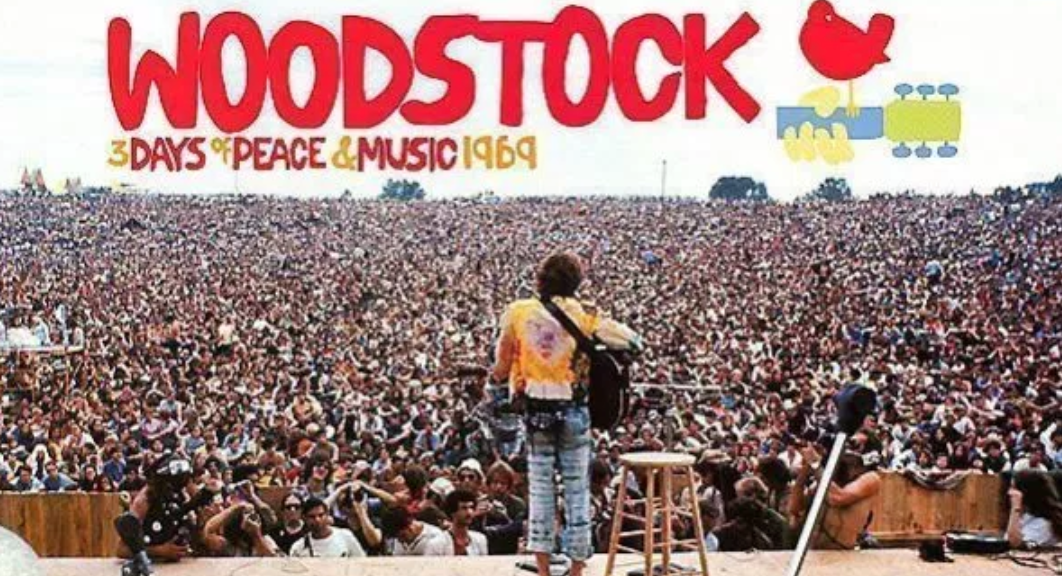
Woodstock was not what it was advertised to be. It was not three days of peace and music — it was four days, the weather was frequently terrible, the organisation collapsed almost immediately, the food ran out, the sound system failed repeatedly, and at least three people died. It was also, by any available measure, one of the most significant cultural events of the twentieth century, and the gap between the advertisement and the reality is precisely where its meaning lives: in the difference between what was planned and what actually happened, between the event and the myth the event immediately began to generate, between the half-million people in the mud and the millions who were not there but who understood, somehow, that something had occurred that concerned them.
By Bergotte · Bethel, New York · Music & History
They wanted to build a recording studio. This is the fact that the mythology of Woodstock has almost entirely swallowed, the mundane commercial ambition that preceded the transcendence: four young men — John Roberts, Joel Rosenman, Artie Kornfield, and Michael Lang — formed a company called Woodstock Ventures with the intention of funding a recording studio in the town of Woodstock, New York, by staging a music festival. The town of Woodstock had become, in the late 1960s, associated with Bob Dylan and The Band and the particular kind of bucolic authenticity that urban musicians were seeking as an alternative to the studio system, and the name had a resonance that the promoters understood would be commercially useful. The festival was conceived as a means to an end, the end being a modest commercial enterprise in upstate New York, and what it became was something that no one involved had the imagination to foresee and that the world has been arguing about ever since.
The site changed at the last minute, as everything about Woodstock changed at the last minute. Wallkill, New York, had agreed to host and then passed a local law to prevent it, and with one month to go the promoters were scrambling when Max Yasgur — a forty-nine-year-old dairy farmer in Bethel, New York, a practical, conservative, Republican man with no particular sympathy for the counterculture — offered to rent them his land. The reasons for his decision, which produced a situation he had not anticipated and which cost him neighbours who boycotted his milk and never spoke to him again, remain slightly mysterious, though he told the crowd from the stage on the first day that he believed what was happening on his farm was a demonstration that the young people of America stood for peace and happiness and that this was what the country needed. He was right, and the speech was greeted with the kind of sustained, full-throated approval that half a million people can produce and that Yasgur, standing in the sun on a Friday afternoon in August 1969, probably did not expect.
The Numbers and What They Mean
The numbers associated with Woodstock have always been slightly unreliable, which is appropriate for an event that exceeded every expectation so completely that the available instruments of measurement were inadequate to the task. One hundred and eighty-six thousand tickets were sold. Estimates of the actual attendance have ranged from four hundred thousand to over half a million, with most serious attempts settling around four hundred and sixty thousand, which is in any case a number that defeats ordinary comprehension. The roads in and out of Bethel were impassable from Wednesday August 13th — two days before the festival was scheduled to begin — as cars extended back for miles in every direction and people abandoned their vehicles and walked the remaining distance, sometimes through fields and forests, carrying what they had brought and arriving, in many cases, having shed most of it along the way.
The performers had to be helicoptered in, which produced scenes of surreal comedy: musicians who were accustomed to arriving at venues by limousine found themselves descending from the sky into a sea of humanity that extended beyond the range of sight, handed to the stage crew, and pointed toward a microphone. Richie Havens, the Black folk singer scheduled to open the festival, was not even supposed to be first — the original opener, Sweetwater, was stuck in traffic — and he played until he had exhausted every song he knew, was called back for encore after encore, and finally, having run out of material, improvised a song from the old spiritual “Motherless Child” that became “Freedom” — one of the most celebrated spontaneous compositions in the history of live music, produced by a man playing alone on a stage in front of half a million people simply because there was nothing else left to play.
The Context: 1969 and What It Was
To understand Woodstock is to understand 1969, and 1969 is a year that requires careful description because it has been both romanticised and demonised in ways that obscure what was actually happening to American society in those months. The Vietnam War was in its fourth year of full American engagement, producing casualties that the evening news reported with a specificity — the weekly body counts, the helicopter footage — that had no precedent in the public representation of American military action. The draft was taking young men from every town and every family, and the resistance to the draft — the burning of draft cards, the flight to Canada, the applications for conscientious objector status — was itself a significant social phenomenon. Martin Luther King Jr. had been assassinated in April 1968. Robert Kennedy had been assassinated in June 1968. The Democratic National Convention in Chicago in August 1968 had produced scenes of police violence against protesters that were watched on national television and that shattered whatever remained of the assumption that the system could manage the crisis it was producing.
Into this context arrived the counterculture — the hippies, the Yippies, the communes, the flower children — which was both a genuine social movement and a media construction, both an expression of real values and a commercial opportunity that the recording industry and the clothing industry and the pharmaceutical industry had identified and moved to exploit with the efficiency that American capitalism always brings to the identification of a market. The festival at Woodstock was, among other things, a commercial venture embedded in a countercultural moment, which meant that its relationship to the values it appeared to celebrate was complicated from the beginning and has remained complicated since.
What was genuine was the opposition to the war, which was not a pose but a position — a conclusion that a significant portion of American youth had reached, with varying degrees of sophistication and varying degrees of personal risk, about a specific military engagement in a specific country that the United States government had decided, for reasons that were becoming harder to defend, to prosecute at the cost of tens of thousands of American lives and hundreds of thousands of Vietnamese ones. The music that Woodstock assembled was not, in most cases, explicitly antiwar — the performers were not primarily political artists in the narrow sense — but it came from a cultural milieu that had produced the opposition to the war, that shared its values and its assumptions, and that understood itself to be in some form of engagement with the official culture that the war represented.
“Woodstock was a spark of beauty where half a million kids saw that they were part of a greater organism.” — Joni Mitchell
The Performances and Their Meanings
Thirty-two acts performed at Woodstock, in conditions that ranged from the difficult to the genuinely treacherous — the rain, the mud, the failing equipment, the exhaustion of performers who had been waiting for hours in circumstances that bore no resemblance to the conditions of any previous professional engagement — and the performances they gave under those conditions constitute one of the more remarkable archives in the history of popular music.
Santana played on Saturday afternoon to an audience that had, for many of its members, never heard of them, and gave a performance of such concentrated energy and such musical intelligence — the Latin rhythms, Carlos Santana’s guitar playing, the collective force of the band — that it made them famous essentially overnight. The Woodstock film and its soundtrack album gave the performance the permanence it deserved, and “Soul Sacrifice” as performed at Woodstock has become one of the canonical recordings of the era, a document of what can happen when a young band of extraordinary ability finds an audience large enough and receptive enough to draw out their best.
Joe Cocker sang “With a Little Help from My Friends” on Sunday afternoon and transformed a Beatles song — one that was already famous, already beloved — into something of his own through the sheer physical force of his performance, a performance so complete in its abandonment of everything but the feeling that it redefined what a cover version could do. The audience’s response was the response of people who had not expected to be moved by something they already knew and were undone by it anyway.
Crosby, Stills, Nash and Young performed on Saturday night at only their second concert together as a group — Stephen Stills later admitted to being terrified — and played with an assurance and a beauty that suggested an ensemble of much longer standing. The acoustic set, in particular, demonstrated what the combination of those four voices and those four guitars could produce in a context of complete attentiveness, and the attentiveness was what the crowd at Woodstock was offering, which is not a quality that can be manufactured or relied upon and which is, when it is present, what makes a live performance something more than the sum of its technical parts.
The Who played through the night on Saturday — Pete Townshend at one point threatened Abbie Hoffman with his guitar when the activist took the stage to make a political speech — and gave a performance of sustained ferocity that the band, who were among the most rigorous live performers of their generation, later regarded as one of their best. Townshend has since acknowledged that the experience of playing to that crowd, in those conditions, produced in him an understanding of what the instrument he had devoted his life to could mean to people in quantities that exceeded anything a theatre or an arena could contain.
Sly and the Family Stone played at three in the morning on Sunday — an hour at which most performers would have been working with diminished reserves and a diminished audience, and at which Sly Stone instead produced a performance of such relentless energy and such joyful insistence that it has been described, by those who were there, as the single most electrifying set of the festival. The band was integrated at a time when integration was still a political statement as well as a musical one — Black and white musicians, men and women, playing together with a force and a freedom that made the political point without making a speech — and the crowd’s response was the response of people receiving a demonstration of something they believed in and had not previously seen so fully embodied.
Richie Havens, Joan Baez, and the Folk Tradition
The folk tradition at Woodstock deserves attention separate from the rock performances, because the values it represented were in some ways more directly connected to the political context of the festival than anything the rock acts provided. Richie Havens, opening the festival with a set that lasted nearly three hours and culminated in the improvised “Freedom,” was a performer in a tradition that understood music as inseparable from the social conditions that produced it — a tradition that ran from the field hollers and the spirituals through Woody Guthrie and Pete Seeger and on to the civil rights movement’s use of song as both political expression and community-building technology. When Havens improvised “Freedom” from a spiritual about a motherless child, he was drawing on the deepest reserves of that tradition, translating the accumulated experience of Black American suffering and aspiration into a sound that the crowd received as something intended for them specifically, which it was.
Joan Baez, six months pregnant, performed late on Friday night and sang “Joe Hill” and “We Shall Overcome” and songs that connected the political moment of 1969 to the longer history of American dissent and American longing, and the connection was felt as a physical thing by the people in the crowd who understood the tradition she was invoking. Baez understood, as Havens understood, that the festival was not primarily about music in the narrow sense but about a community attempting to constitute itself as such — to demonstrate, through the shared experience of music in an open field, that the values it claimed were real and available and capable of sustaining hundreds of thousands of people in circumstances that were, by most ordinary standards, genuinely difficult.
The Rain, the Mud, and the Miracle of What Didn’t Happen
The conditions at Woodstock were, by any reasonable measure, terrible. The rain came on Friday night and returned throughout the weekend, turning the field into mud of considerable depth and consistency. The food ran short, the water was insufficient, the sanitation was inadequate for the numbers present, and the medical services were overwhelmed — a field hospital was established, and the National Guard delivered food by helicopter, and a local man with a large cauldron of food spent three days feeding anyone who came to his door. Three people died during the festival — one of a drug overdose, one of a burst appendix, one run over by a tractor — and two births occurred in the vicinity, which is the arithmetic of a temporary city of half a million people.
What did not happen is the more remarkable fact. There was no serious violence. There were no riots. The crowd, which had been assembled without adequate planning or adequate resources and which might, in different circumstances and with different values, have turned ugly in response to the deprivations it was experiencing, instead demonstrated a collective patience and a collective generosity that surprised everyone who was there to observe it and that has remained, across fifty years of revisionism and counter-revisionism, the most genuinely astonishing fact about the event. People shared food and shelter and drugs and music with strangers, helped strangers, looked after strangers, and maintained, through four days of significant discomfort, the quality of social cohesion that the festival’s ideals had promised and that most people, before it happened, would have considered impractical at that scale.
The Hog Farm — a commune from New Mexico whose leader Wavy Gravy had been brought in to help manage the crowd — operated a free kitchen, a medical tent for people having difficult drug experiences, and a general ethos of practical kindness that turned out to be, in the circumstances, exactly what was needed. Wavy Gravy’s announcement, on the morning after the first night’s rain, that “what we have in mind is breakfast in bed for four hundred thousand people” — delivered with the comic timing of someone who understood that humour was a form of leadership in a crisis — became one of the festival’s defining moments, precisely because it took the impossibility of the situation and converted it, through a quality of good-natured insistence, into something manageable.
Hendrix and the Anthem That Ended Everything
Jimi Hendrix closed Woodstock on Monday morning, August 18th, long after the festival was officially over, playing to a crowd that had diminished to perhaps thirty or forty thousand as the others made their way home. He had been scheduled for Sunday night and was delayed, as everything at Woodstock was delayed, and he took the stage at nine in the morning wearing white with fringe, leading a band he had assembled for the occasion — Gypsy Sun and Rainbows — and played for two hours, and the performance, by the accounts of those who remained to hear it, was extraordinary: loose and exploratory and fully confident, a musician playing with the freedom that exhaustion and the particular atmosphere of Woodstock’s final morning produced.
The moment that entered history was his version of “The Star-Spangled Banner” — the national anthem rendered on an electric guitar with distortion and feedback and the sounds of bombs and sirens woven into the melody, the song of American pride transformed into a document of American anguish. The performance is not subtle. It is not meant to be. It takes the official music of the official culture and subjects it to the same dissonance that the official culture had produced in the lives of the people watching it, and the result is simultaneously an act of irreverence and an act of patriotism, an argument that the true love of a country requires the honesty to represent what the country has done rather than what it has claimed to be.
The image of Hendrix playing the anthem — small against the sky, the guitar producing sounds it was not designed to produce, the remaining crowd in the mud below — is one of the defining images of the 1960s. It was not planned. It was the last act of the festival that no one had planned and that turned out to be the festival that defined its moment more fully than any planned event could have.
The Myth and Its Consequences
Joni Mitchell did not attend Woodstock. She was scheduled to perform and her manager advised her to cancel, concerned that the chaos would prevent her from making a television appearance the following day. She watched the coverage from a New York hotel room, and from the watching she wrote the song “Woodstock” — which became, in the versions recorded by Crosby, Stills, Nash and Young and by Matthews Southern Comfort, the festival’s unofficial anthem, the song that told the story of Woodstock to the people who were not there and that shaped, for the culture, what the event was understood to mean.
The song is a vision, a dream of what the festival represented rather than a documentary account of what it was. “We are stardust, we are golden, and we’ve got to get ourselves back to the garden” — the lyric is myth-making in the most precise sense, the transformation of a specific historical event into a statement of universal aspiration, the half-million people in the mud of Bethel becoming, in Mitchell’s rendering, the embodiment of a possibility that the human race had not yet achieved but that the festival had demonstrated was real. The transformation was not dishonest. It was what the festival required, and Mitchell provided it, from a hotel room in New York, without having been there.
The documentary film that Michael Wadleigh made from the footage shot at the festival — released in 1970, winning the Academy Award for Best Documentary — completed the mythology. The film is a great documentary, made with formal intelligence and emotional honesty, and it made Woodstock permanent in the culture, gave it the images and the sounds that the mythology requires. It also made money — enough money to rescue the promoters from the bankruptcy that the festival’s economics had produced — and the making of money from the mythology of a countercultural event has itself become a significant fact about the legacy, one that the culture has negotiated with varying degrees of comfort ever since.
What It Was and What It Wasn’t
Woodstock was not the end of the Vietnam War. It was not the beginning of a new social order. It did not produce the revolution that the more excitable commentators of the time suggested it heralded, and the world that emerged from the 1960s was, in most respects, recognisably continuous with the world that preceded them. The farms that the hippies established tended to fail. The communes dissolved. The values that the festival celebrated — peace, community, the primacy of music as a form of social bonding, the possibility of half a million strangers treating each other with kindness — turned out to be real as values and difficult to institutionalise, which is the condition of most values worth holding.
What Woodstock was, with a clarity that fifty years have not diminished, was a demonstration. A demonstration that the counterculture was not a media invention but a social reality, that the values it claimed were not merely rhetorical, that the young people who filled Max Yasgur’s farm were capable, under genuinely difficult conditions, of the community they claimed to believe in. The demonstration was temporary, as demonstrations are. Its temporariness does not diminish what it demonstrated.
Altamont, four months later, demonstrated something else: that the values were not robust, that the same ingredients — music, a large crowd, the counterculture’s self-image — could produce, in different conditions and with different organisational choices and a different ethos, something violent and lethal. The distance between Woodstock and Altamont is the distance between the best and the worst that the moment contained, and the moment contained both, as moments of genuine historical significance tend to do.
The field in Bethel is a National Historic Site now, with a museum and a performing arts centre and a commemorative plaque where the stage stood. Max Yasgur died of a heart attack in 1973, at fifty-three, having spent the intervening years dealing with the consequences — legal, financial, social — of having said yes to four young men with an implausible plan. His wife Miriam kept the farm. The cows grazed, as they had always grazed, and the field that had held half a million people returned to its ordinary dimensions, and the grass grew back, and on clear nights the stars were as visible from that hill as they had ever been, which is very visible indeed, it being the Catskills, and there being, in August 1969, no one left to turn the lights on.
This essay draws on Michael Wadleigh’s documentary film Woodstock (1970), Joel Makower’s oral history Woodstock: The Oral History (1989), the accounts of performers and attendees published in various sources, and the scholarship collected in the Museum at Bethel Woods. Joni Mitchell’s song “Woodstock” was written in 1969 and first recorded on her album Ladies of the Canyon (1970). The Woodstock festival site was listed on the National Register of Historic Places in February 2017. Max Yasgur was born December 15, 1919, and died February 9, 1973.
Discover more from My World of Interiors
Subscribe to get the latest posts sent to your email.

