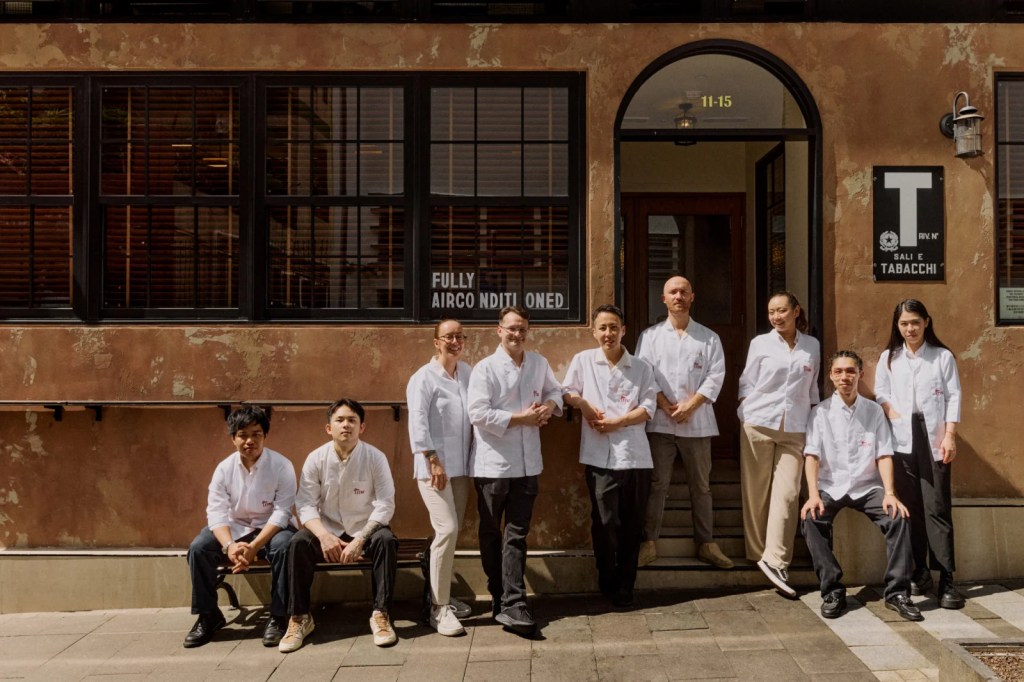
In the crowded streets of Hong Kong’s Sheung Wan district, an Italian neighbourhood bar has achieved something extraordinary. Bar Leone, founded by Roman bartender Lorenzo Antinori and his business partner Justin Shun Wah, has been named the world’s best bar for the second consecutive year. Its success reveals something fascinating about contemporary hospitality, and about Hong Kong itself: a city where centuries of cultural exchange have produced one of the most sophisticated urban environments in the world.
There is something wonderfully improbable about the world’s best bar being a little piece of Rome in Hong Kong.
Not the Rome of the Colosseum, the Spanish Steps or expensive hotel terraces, but the Rome of ordinary neighbourhood bars: modest places where the proprietor knows his customers, the coffee is taken standing up, football is discussed with theatrical intensity and an aperitivo can extend considerably longer than originally intended.
This is the Rome that Lorenzo Antinori remembers.
And it is the Rome he has recreated, with remarkable success, at Bar Leone, an intimate establishment on Bridges Street in Hong Kong’s Sheung Wan district.
There are no spectacular skyline views, no elaborate theatrical presentations and no requirement for the customer to understand the technical intricacies of contemporary mixology.
Instead, there are warm timber interiors, tan leather banquettes, old Italian film posters, football memorabilia, excellent cocktails and the sort of food that encourages another drink.
On 7 October 2026, at a ceremony in Milan, Bar Leone was awarded first place in The World’s 50 Best Bars for the second consecutive year.
It was an extraordinary achievement for a bar that opened in June 2023.
But perhaps the most interesting aspect of the award is not that Antinori and his team have created an exceptionally successful cocktail bar.
It is that they have done so by rejecting much of what international luxury hospitality has come to represent.
Where other establishments pursue ever more elaborate techniques, technological innovations and extraordinary presentations, Bar Leone celebrates simplicity.
Its guiding philosophy is cocktail popolari: cocktails for the people.
And in Hong Kong, a city whose great cultural achievement has always involved making connections between different worlds, the idea feels entirely at home.
The Roman Who Came to Hong Kong
Lorenzo Antinori’s career has followed a geographical trajectory almost perfectly suited to the development of an international bartender.
Born and raised in Rome, he initially studied law before discovering that his interests lay elsewhere.
The social atmosphere of bars, the relationship between drinks and conversation, and the possibilities of hospitality gradually became more compelling than a conventional legal career.
In 2010, he moved to London and joined the celebrated American Bar at The Savoy, one of the great institutions in the history of cocktail making.
The experience was important.
The American Bar belongs to a tradition of luxury hospitality in which bartending is understood as a serious profession, with its own technical knowledge, history and standards of service.
Antinori subsequently worked at the Four Seasons Hotel in Seoul, where he led Charles H, an establishment inspired by the American journalist and legendary bon vivant Charles H. Baker.
The bar became internationally recognised, strengthening Antinori’s reputation within the rapidly developing Asian cocktail scene.
In 2019, he moved to Hong Kong, where he worked with the Four Seasons Hotel on its Caprice Bar and later helped develop Argo, a contemporary cocktail destination distinguished by its progressive approach to ingredients, spirits and presentation.
These experiences established his standing among the leading figures in international bartending.
But they also encouraged a rather different ambition.
After years spent developing sophisticated drinks within luxury hotels, Antinori began to question whether the most technically elaborate experience was necessarily the most enjoyable.
He remembered the bars of his childhood in Rome.
Places that were not especially grand.
Places where a good drink mattered, certainly, but where the quality of the encounter mattered more.
He wanted to create something similar in Hong Kong.
With his business partner Justin Shun Wah, whose experience in the drinks industry complemented Antinori’s creative background, he began planning a neighbourhood bar.
The result was Bar Leone.
Cocktail Popolari: The Radical Simplicity of a Good Drink
The philosophy behind Bar Leone is deceptively straightforward.
A cocktail should be beautifully made, served without pretension and enjoyed in good company.
This may seem an obvious proposition, but the modern international bar industry has increasingly developed its own language of experimentation and spectacle.
Cocktails may involve laboratory equipment, elaborate clarification processes, unusual fermentations, highly conceptual menus and presentations that resemble installations in a contemporary art gallery.
Some of these innovations are genuinely remarkable.
But technical complexity can also become a form of performance in which the ingenuity of the bartender threatens to overshadow the pleasure of the customer.
Antinori’s response has been to return to the fundamentals.
The drinks at Bar Leone are largely rooted in recognisable traditions: martinis, negronis, old fashioneds and carefully considered variations upon established classics.
The ingredients are selected with precision, but the finished drinks are not burdened by unnecessary ornament.
Among the most celebrated is the Fig Leaf Negroni, an aromatic interpretation of the Italian classic.
The Olive Oil Sour offers another distinctive expression of the house philosophy, introducing the richness and texture of olive oil into a familiar cocktail structure.
The Filthy Martini, meanwhile, uses smoked olive brine to give the traditional martini an additional savoury dimension.
These are drinks conceived to be enjoyed rather than deciphered.
Why the Food Matters
Food is essential to Bar Leone’s identity.
The mortadella focaccia sandwich, generously filled and unapologetically substantial, has become almost as celebrated as the drinks.
So have the smoked olives.
It is difficult to imagine anything less conventionally glamorous than a sandwich and a bowl of olives.
And that is precisely the point.
In Italy, the relationship between food and drinking is deeply embedded in everyday social life.
The aperitivo is not simply an alcoholic beverage consumed before dinner.
It is a social occasion, a way of occupying time and space with other people.
Bar Leone has successfully translated this sensibility into a very different urban environment.
The food encourages customers to remain, to talk and to treat the bar as a destination in itself rather than merely a stop before moving elsewhere.
It is a small but significant restoration of hospitality’s original social purpose.
An Interior That Understands Nostalgia
For anyone interested in interior design, Bar Leone offers an excellent example of atmosphere created through cultural references rather than decorative extravagance.
Its interiors evoke the unassuming Roman bars of the late twentieth century.
Dark timber panelling, warm leather seating, polished stone, modest pendant lighting and carefully arranged memorabilia establish an environment that feels familiar even to those who have never visited Rome.
Vintage Italian advertisements, photographs, football shirts and film posters contribute to the effect.
The images are important.
They establish a cultural world associated with popular Italian life rather than the highly stylised Italy of international luxury branding.
There are references to cinema, sport, travel and the uncomplicated pleasures of ordinary social existence.
The soundtrack may move between Italian popular music, disco and opera.
Yet the resulting atmosphere is not a theatrical reconstruction of a particular decade.
It is an interpretation of memory.
The distinction is important.
Nostalgic interiors often fail because they reproduce historical details without understanding the emotional relationships those details once supported.
Bar Leone succeeds because its decorative identity serves an entirely contemporary purpose.
The interior makes people comfortable.
It encourages informality.
And it creates a convincing sense that this is a place one might return to regularly.
The design is, in a sense, an argument about what a bar ought to be.
How Hong Kong Became a Cocktail Capital
Bar Leone’s achievement would be remarkable in any city.
But its success in Hong Kong is particularly revealing.
The territory has long occupied an important position within the international history of hospitality.
As a major trading port, financial centre and meeting place for merchants, travellers and expatriate communities, Hong Kong developed a cosmopolitan restaurant and bar culture over more than a century.
Grand hotels played an important role.
The Peninsula Hong Kong, opened in 1928, became one of Asia’s most celebrated hotels, associated with an elaborate tradition of dining, afternoon tea and international society.
Later establishments introduced new interpretations of international luxury.
Yet Hong Kong’s real culinary strength developed through the coexistence of different forms of hospitality.
The formal dining rooms of luxury hotels existed alongside neighbourhood tea houses, Cantonese roast-meat shops, family restaurants and densely packed markets.
A sophisticated eating culture did not necessarily require a sophisticated setting.
It required knowledge, skill and an appreciation of ingredients.
This distinction has helped shape the city’s contemporary cocktail industry.
Hong Kong audiences are accustomed to exacting standards, but they are also deeply familiar with the pleasures of informal eating and drinking.
A tiny establishment with exceptional food may command as much affection as an expensive restaurant with an international reputation.
Bar Leone has recognised this cultural disposition.
Its Roman inspiration may be unmistakable, but the social understanding underpinning the concept is entirely compatible with Hong Kong.
Four of the World’s Best Bars in One City
The 2026 international rankings underline Hong Kong’s importance within contemporary cocktail culture.
Alongside Bar Leone, three other Hong Kong establishments appear in the world’s top fifty.
Argo at the Four Seasons occupies twenty-fifth place, offering a markedly different experience through its elegant hotel setting and more experimental approach to drinks.
Montana, ranked thirty-sixth, represents another project involving Lorenzo Antinori.
Created with fellow bartender Simone Caporale and Justin Shun Wah, Montana celebrates the cocktail traditions of Cuba and the energetic visual culture of 1970s Miami.
Its atmosphere is deliberately exuberant, with tropical drinks, music and an almost cinematic sense of occasion.
Gokan, ranked forty-first, is the Hong Kong venture of Japanese bartender Shingo Gokan, whose work explores the sensory possibilities of cocktail making.
The contrast between these establishments demonstrates the range of contemporary Hong Kong hospitality.
There is room for the elaborate, the experimental, the intimate and the playful.
Another address worth exploring is COA, founded by Jay Khan in 2017.
Specialising in tequila, mezcal and other Mexican spirits, COA brought a serious understanding of agave production and regional drinking traditions to Hong Kong.
It topped Asia’s 50 Best Bars three consecutive times, from 2021 to 2023.
Together, these establishments demonstrate that Hong Kong’s cocktail culture is not simply fashionable.
It has developed into a sophisticated international field with its own influential figures, institutions and approaches to hospitality.
Sheung Wan: The Neighbourhood Behind Bar Leone
To understand Bar Leone properly, one should spend time exploring Sheung Wan.
Situated immediately west of Hong Kong’s financial district, the neighbourhood belongs to one of the city’s most historically layered urban environments.
It was among the earliest areas developed following the establishment of British colonial rule in the nineteenth century.
Its streets became centres of trade, commerce, migration and everyday urban life.
Traditional Chinese medicine shops, dried-seafood merchants, furniture dealers, temples and market stalls developed alongside commercial buildings and residential streets.
Much of this character remains, although rising property values and redevelopment have transformed substantial parts of the district.
Today, Sheung Wan contains an increasingly complex mixture of traditional businesses, independent restaurants, coffee shops, galleries and fashionable drinking establishments.
But its greatest pleasure is still found in walking.
Turn away from the principal roads and the streets become unexpectedly intimate.
Old shopfronts survive beside contemporary cafés. Stone staircases connect different levels of the hillside. Narrow lanes offer glimpses of older domestic buildings, while the smell of incense occasionally emerges from a temple doorway.
There is no single architectural style.
Hong Kong has never developed through a particularly orderly succession of aesthetic periods.
Instead, it has accumulated buildings according to the changing demands of commerce, population growth, government policy and the availability of land.
The resulting urban fabric can appear chaotic.
But it is also extraordinarily revealing.
Man Mo Temple: The City Before the Cocktail Bar
A short walk from Bar Leone leads to Man Mo Temple, one of Hong Kong’s most important historic religious buildings.
Constructed during the nineteenth century, it is dedicated to Man, the god of literature, and Mo, the god of martial arts.
Its elaborate wooden interiors, carved architectural details and suspended coils of incense create an atmosphere strikingly different from the commercial streets outside.
The building also preserves an important aspect of Hong Kong’s social history.
Temples frequently served functions extending beyond religious observance, including the organisation of community activities and the resolution of disputes.
The adjacent Kung Sor once operated as an assembly hall associated with such purposes.
The complex therefore provides valuable insight into the institutions through which Chinese communities organised aspects of social life during the colonial period.
Visit in the morning, when the atmosphere is generally quieter.
Then continue along Hollywood Road, where antique dealers, galleries and historic buildings demonstrate the neighbourhood’s changing commercial identity.
PMQ: From Police Quarters to Contemporary Design
Nearby, PMQ provides a particularly interesting example of architectural adaptation.
The site originally accommodated the Central School, an important educational institution during the colonial period.
In the 1950s, the property was redeveloped as residential accommodation for married police officers.
The surviving buildings, with their restrained modernist architecture and repetitive domestic units, have since been transformed into a centre for contemporary design and creative enterprise.
Individual former apartments now accommodate studios, shops, workshops and independent design businesses.
The project illustrates a central dilemma of modern urban conservation.
How can buildings whose original functions have disappeared remain useful without losing their historical identity?
At PMQ, the answer has been to retain much of the original architectural character while introducing a new cultural and commercial programme.
For the design-minded traveller, it is an essential stop.
Tai Kwun: Architecture, Memory and the Reinvention of Civic Space
Few cultural projects illustrate Hong Kong’s recent architectural ambitions as clearly as Tai Kwun.
Situated in Central, the complex occupies the former Central Police Station, Central Magistracy and Victoria Prison.
These historic buildings formed part of the machinery of colonial administration and law enforcement.
Following an extensive conservation project, the site reopened to the public in 2018 as a centre for heritage, contemporary art and cultural activity.
The architectural intervention is especially interesting.
The Swiss firm Herzog & de Meuron designed two new buildings, including the JC Contemporary gallery.
Their restrained contemporary forms are integrated into the historic complex without attempting to imitate its older architectural vocabulary.
The juxtaposition encourages visitors to recognise the different periods represented by the site.
The former prison cells, courtyards and administrative spaces preserve evidence of the building’s original purpose.
Meanwhile, the contemporary art galleries introduce a programme concerned with the cultural questions of the present.
The project is not without its ambiguities.
Transforming a former prison into a fashionable cultural destination inevitably raises questions about historical memory, institutional authority and the changing meaning of public space.
But these questions make Tai Kwun more interesting rather than less.
Its value lies partly in the way it allows the visitor to experience Hong Kong’s history through architecture.
For anyone interested in conservation, contemporary art and the adaptive reuse of historic buildings, it is indispensable.
Across the Harbour: The Architecture of a Cultural Capital
Hong Kong has recently made substantial investments in its cultural infrastructure.
The most conspicuous developments are concentrated along the Kowloon waterfront, where the West Kowloon Cultural District has introduced major museums and performance spaces.
These projects represent an effort to strengthen the city’s international cultural position and create new institutions through which art, architecture and history can be studied.
M+: A Museum for the Contemporary World
The extraordinary M+ museum, designed by Herzog & de Meuron in collaboration with TFP Farrells and Arup, is among the most ambitious museum buildings completed in Asia in recent years.
Opened in 2021, it occupies a prominent position overlooking Victoria Harbour.
Its architectural form combines a large horizontal podium with a slender vertical structure, creating an unmistakable silhouette against the city’s skyline.
The exterior incorporates a vast LED façade, used to display moving-image works visible across the harbour.
Inside, the museum’s collections encompass contemporary visual art, design, architecture, photography, cinema and other forms of visual culture.
This broad definition is particularly significant.
Rather than organise its collections according to traditional distinctions between fine art and applied design, M+ recognises that the visual history of the modern world extends across many disciplines.
Furniture, posters, films, architectural models and artworks can all contribute to an understanding of cultural development.
Its collections include the important M+ Sigg Collection of contemporary Chinese art, alongside works examining Hong Kong’s own visual history and wider international developments.
For visitors interested in the relationship between art, design and modern society, M+ deserves several hours.
Its architecture alone is worth the journey.
The Hong Kong Palace Museum
Nearby, the Hong Kong Palace Museum offers a markedly different intellectual and architectural proposition.
Designed by Rocco Design Architects, the museum draws upon elements of traditional Chinese architecture while employing a contemporary formal language.
Its galleries present Chinese art and cultural heritage, including objects associated with the Palace Museum in Beijing.
The contrast with M+ is instructive.
Where M+ concentrates upon modern and contemporary visual culture, the Palace Museum examines the long history of Chinese artistic production.
Taken together, the two institutions provide a particularly rewarding introduction to the relationship between historical tradition and contemporary cultural identity.
One is reminded that Hong Kong’s significance has never depended solely upon its financial or commercial achievements.
It has also developed through the movement of people, images, objects and ideas.
The Hong Kong of Cinema
For anyone interested in film, Hong Kong possesses an almost inexhaustible fascination.
Its architecture and streets have provided settings for some of the most visually distinctive cinema of the late twentieth century.
The films of Wong Kar-wai, in particular, have shaped the international imagination of the city.
In Chungking Express (1994), Hong Kong becomes a world of crowded interiors, neon-lit streets, escalators and encounters between people who exist in a condition of almost permanent movement.
In In the Mood for Love (2000), architectural space becomes a medium through which memory, desire and social convention are communicated.
Corridors, staircases, narrow rooms and patterned surfaces assume an emotional significance that extends far beyond their practical function.
The visual world of these films offers an exceptionally interesting perspective on Hong Kong’s urban character.
The city is not simply a collection of buildings.
It is a network of relationships, movements and fleeting encounters.
The Central–Mid-Levels Escalator, featured memorably in Chungking Express, remains one of the city’s most distinctive pieces of urban infrastructure.
Its covered sequence of escalators and moving walkways connects the commercial streets of Central with the residential neighbourhoods above.
The system is remarkable not simply for its engineering.
It demonstrates how architecture can respond to the pressures of topography, density and pedestrian movement.
For the traveller, it also provides a wonderful introduction to the city’s vertical geography.
Another important figure is the photographer Fan Ho, whose images of Hong Kong during the 1950s and 1960s transformed ordinary street scenes into extraordinary studies of light, shadow and human movement.
His work offers a different but equally revealing portrait of the city.
Together, these artistic interpretations demonstrate how Hong Kong’s urban environment has generated its own distinctive visual language.
Sham Shui Po: The Material Life of a City
To understand Hong Kong beyond its international hotels and celebrated restaurants, cross into Kowloon and explore Sham Shui Po.
This densely populated district is associated with traditional markets, small workshops, textile merchants and the practical economies of everyday urban life.
Its streets reveal a Hong Kong that is less concerned with presentation and more directly connected to production, trade and local commerce.
Fabric shops sell materials in extraordinary varieties. Electronics markets coexist with traditional food stalls. Independent cafés and small creative businesses have begun to occupy spaces within the older commercial environment.
For travellers interested in design, Sham Shui Po offers a particularly rewarding opportunity to encounter the physical materials of making.
Buttons, ribbons, zips, textiles, electronic components and household goods are arranged in quantities and combinations that would be difficult to reproduce in a conventional design museum.
There is something almost encyclopaedic about the experience.
But this remains a working neighbourhood, not an aesthetic playground.
The pressures of urban redevelopment, rising rents and economic change are visible here.
Its importance lies in the ordinary businesses and communities that continue to sustain it.
The discerning visitor should approach the district with curiosity and respect, allowing time simply to observe the remarkable density of its commercial life.
At the Hong Kong Table: One of the World’s Great Eating Cities
Hong Kong’s culinary reputation rests upon considerably more than expensive restaurants.
Its food culture is rooted in Cantonese traditions, shaped by trade, migration and an extraordinary enthusiasm for eating outside the home.
Dim sum, roast meats, noodle soups, congee, clay-pot rice and carefully prepared seafood all occupy important positions within the city’s gastronomic identity.
The traditional yum cha, literally drinking tea, is among its most significant social customs.
The meal consists of tea accompanied by small dishes, frequently including steamed dumplings, buns, pastries and other delicacies.
Its importance extends beyond the food.
Yum cha has long provided an opportunity for families, friends and colleagues to gather, converse and maintain social relationships.
The comparison with the Italian aperitivo is not entirely fanciful.
Both traditions recognise that eating and drinking are social activities rather than merely forms of consumption.
This is perhaps another reason why Bar Leone has found such a receptive audience in Hong Kong.
Where to Eat
For a serious exploration of contemporary Cantonese cuisine, The Chairman is essential.
In March 2026, it was named the best restaurant in Asia by Asia’s 50 Best Restaurants, an achievement that makes Hong Kong’s gastronomic year especially remarkable.
The restaurant’s approach is characterised by an emphasis on ingredients, seasonality and the reinterpretation of traditional Cantonese dishes.
Its celebrated steamed flower crab with aged Shaoxing wine and fragrant chicken oil demonstrates how exceptional flavour can emerge from apparently restrained culinary methods.
Tables are extremely difficult to secure, so advance planning is advisable.
For an atmosphere connected to an older Hong Kong, Luk Yu Tea House on Stanley Street is an excellent choice.
Its timber interiors, traditional furnishings and longstanding association with Cantonese tea-house culture make it especially appealing to visitors interested in social and architectural history.
The experience is less polished than a contemporary luxury restaurant.
But the building and its rhythms of service communicate something distinctive about Hong Kong’s culinary past.
A small and deservedly celebrated roast-goose restaurant in Central, Yat Lok demonstrates the city’s ability to achieve extraordinary culinary distinction within modest surroundings.
Roast goose, served with rice or noodles, is the essential order.
The dining room is compact, the service brisk and the experience unapologetically practical.
Its Michelin star is a reminder that culinary excellence does not depend upon elaborate interiors.
For a more contemporary interpretation of Hong Kong’s dining culture, Ho Lee Fook offers energetic interiors and bold Cantonese cooking.
Under chef ArChan Chan, the restaurant explores traditional flavours through an approach informed by international culinary experience.
It is lively, confident and particularly suitable for a celebratory evening.
In Sheung Wan, Yardbird specialises in Japanese yakitori prepared over binchotan charcoal.
Founded by chef Matt Abergel and Lindsay Jang, the restaurant combines serious cooking with the atmosphere of a relaxed neighbourhood gathering place.
It provides another example of the way international culinary traditions have become part of Hong Kong’s contemporary identity.
After dinner, Bar Leone is conveniently close.
Where to Stay: Architecture, Design and the Hong Kong Experience
Hong Kong offers some of the world’s most sophisticated luxury hotels.
But for travellers interested in architecture and design, the most interesting properties are not necessarily the largest or most expensive.
They are those whose interiors express something about the city’s history, landscape or cultural character.
The Fleming, Wan Chai
One of the city’s most appealing boutique hotels, The Fleming was redesigned by the Hong Kong studio A Work of Substance.
Its interiors take inspiration from the celebrated Star Ferry, incorporating a palette of dark timber, maritime green, brass and carefully considered geometric detailing.
The resulting aesthetic recalls the design vocabulary of Hong Kong’s transport heritage without becoming unnecessarily nostalgic.
With just sixty-six rooms, it offers a more intimate alternative to the city’s enormous international hotels.
For a design-minded visitor, this would be a particularly attractive choice.
Upper House, Admiralty
Designed by Hong Kong architect André Fu, Upper House is among the most refined examples of contemporary hotel design in Asia.
Its interiors emphasise natural materials, carefully controlled lighting, spatial generosity and a remarkably restrained decorative vocabulary.
The architecture is conceived around the idea of an upward journey, leading guests from the city’s intensity towards increasingly tranquil spaces overlooking the skyline.
It is particularly appealing to travellers who value quiet sophistication rather than conspicuous luxury.
The Murray, Central
The Murray occupies a former government building from the 1960s, transformed into a contemporary luxury hotel by Foster + Partners.
Its distinctive recessed windows and sculptural exterior have been retained, creating a fascinating dialogue between the architecture of Hong Kong’s modernist period and contemporary hospitality.
The building demonstrates how an apparently utilitarian office structure can acquire an entirely different identity through thoughtful adaptation.
For those interested in architectural conservation, it is an especially compelling place to stay.
The Pottinger, Central
Situated beside one of Central’s historic stone-paved streets, The Pottinger offers a more intimate urban experience.
Its interiors incorporate photographs by Fan Ho, whose remarkable images of twentieth-century Hong Kong give the property an unusually strong relationship with the city’s visual history.
Its position is particularly convenient for exploring Sheung Wan, Tai Kwun and the surrounding neighbourhoods.
For a traveller whose principal interests are architecture, restaurants and galleries, it is exceptionally well placed.
Beyond the Towers: Hong Kong’s Extraordinary Natural Landscape
One of the most persistent misconceptions about Hong Kong is that it consists almost entirely of skyscrapers.
In reality, the territory encompasses extensive country parks, islands, mountains, forests and remarkably beautiful coastlines.
The contrast between urban density and natural landscape is among its most distinctive characteristics.
A journey of relatively short duration can carry visitors from the centre of one of the world’s most intensely developed cities into an environment of wooded hills, quiet beaches and traditional fishing communities.
For the culturally curious traveller, this relationship between city and landscape is essential to understanding Hong Kong.
The Star Ferry: The City’s Finest Introduction
Before heading for the mountains, take the Star Ferry across Victoria Harbour.
Few journeys offer such a concentrated understanding of Hong Kong’s geography.
The ferry connects Hong Kong Island with the Kowloon waterfront, passing between some of the city’s most recognisable architectural landmarks.
From the water, the extraordinary vertical development of the city becomes visible as a complete composition.
The towers rise against steep green hills, while commercial vessels, ferries and smaller boats move through the harbour below.
The experience is inexpensive, brief and extraordinarily memorable.
It is also historically significant.
Harbour transport helped establish the connections between the separate urban centres that would eventually form the modern city.
Victoria Peak: Geography as Architecture
The view from Victoria Peak is among the most celebrated urban panoramas in the world.
From above, the relationship between the harbour, the dense urban development and the mountainous terrain becomes immediately apparent.
The city’s extraordinary verticality is not merely an architectural preference.
It is partly the consequence of a constrained geography in which buildable land has always been limited and highly valuable.
The historic Peak Tram provides a particularly atmospheric approach.
But rather than restrict a visit to the commercial observation platforms, spend time walking along the quieter paths surrounding the summit.
The changing perspectives offer a more complete appreciation of the city.
Dragon’s Back: A Different Hong Kong
For those willing to exchange formal shoes for walking boots, the Dragon’s Back trail provides one of the most rewarding introductions to Hong Kong’s natural landscape.
The route follows a ridge on the southeastern side of Hong Kong Island, with extensive views across the coast, islands and surrounding hills.
The full recommended route is approximately eight kilometres and takes around four hours.
Its beauty lies in the proximity of wilderness to the city.
The dense urban landscape is never very far away, yet the atmosphere can feel entirely removed from metropolitan life.
Tai O: The Fishing Village
On Lantau Island, Tai O preserves aspects of Hong Kong’s maritime and fishing heritage.
Its distinctive houses, many built on stilts over tidal waterways, reflect a way of life historically associated with fishing, coastal trade and the relationship between communities and the sea.
The village remains inhabited and should be approached as a living settlement rather than a picturesque architectural attraction.
Nearby, the Tai O Heritage Hotel occupies a restored former police station.
Its adaptation into a small hotel offers another interesting example of heritage conservation within the territory.
Tai O is a rewarding excursion for visitors wishing to understand a Hong Kong whose history developed well beyond the commercial centre.
When to Go and How Long to Stay
Hong Kong’s subtropical climate makes the timing of a visit important.
October to December is generally one of the most attractive periods.
Temperatures become more comfortable, humidity decreases and conditions are often excellent for walking, cultural exploration and excursions into the countryside.
January and February can also be pleasant, although cooler and occasionally overcast weather is common.
March and April bring rising humidity and increasingly variable conditions.
May to September is generally hot, humid and wet, with the possibility of substantial rain and tropical storms.
The regional typhoon season extends broadly from May into November, and travellers should remain attentive to official weather warnings.
For a first visit, four nights would provide an introduction, although five or six would allow a considerably more rewarding exploration.
Spend one day in Central and Sheung Wan, including Man Mo Temple, PMQ, Tai Kwun and an evening at Bar Leone.
Devote another to M+ and the Hong Kong Palace Museum, crossing the harbour by Star Ferry.
Explore Sham Shui Po and the traditional markets of Kowloon on a third day.
Allow time for the architectural landscape of Victoria Peak, followed by a serious Cantonese dinner.
An additional day could be spent walking Dragon’s Back or visiting Tai O.
The journey can be organised easily around Hong Kong’s efficient MTR railway network, complemented by trams, buses and ferries.
The city’s Octopus card is particularly convenient for public transport and small purchases.
For international visitors, Hong Kong International Airport provides extensive connections, with rapid rail services into the city.
Entry requirements depend upon nationality and should be checked through the Hong Kong Immigration Department.
Visiting Bar Leone: What to Know
Bar Leone is located at 11–15 Bridges Street, Central, Hong Kong.
The bar does not accept reservations.
Visitors are admitted on a walk-in basis, and queues should be expected, particularly following its latest international award.
According to its official website, the opening arrangements are:
- Monday to Thursday and Sunday: from 5 pm until late.
- Friday and Saturday: from 3 pm until late.
The precise closing time and any temporary schedule changes should be confirmed before visiting.
For those wishing to appreciate the interior and the drinks without the intensity of the late-evening crowd, arriving close to opening time is sensible.
Order a classic cocktail or one of the house signatures.
Do not overlook the mortadella focaccia or the smoked olives.
And resist the temptation to treat the experience as a quick stop on a checklist of internationally awarded establishments.
The appeal of Bar Leone lies in the atmosphere it creates.
It deserves to be enjoyed without unnecessary urgency.
A City That Has Always Belonged to More Than One World
Hong Kong has always been a place of extraordinary cultural intersections.
Its development as a British colonial port introduced European institutions and architectural forms into a Chinese urban environment whose commercial and social traditions were already deeply established.
The city’s subsequent history was shaped by migration, international trade, manufacturing, financial expansion and its changing relationship with mainland China.
Since the handover in 1997, Hong Kong has existed as a Special Administrative Region of the People’s Republic of China, with a distinct institutional and cultural inheritance.
Its political and social circumstances have continued to change, particularly in recent years.
These complexities should not be obscured by the familiar imagery of a cosmopolitan metropolis.
The city is not simply an uncomplicated meeting of East and West.
It is a place shaped by unequal power, migration, enterprise, cultural adaptation and the continuous negotiation of identity.
Its most interesting contemporary cultural projects often emerge from precisely these conditions.
A former colonial prison becomes a contemporary arts centre.
A police residential complex becomes a design incubator.
An industrial neighbourhood develops new creative uses without entirely losing its older commercial identity.
And a Roman bartender creates a neighbourhood bar that finds an unexpectedly receptive home in the middle of one of Asia’s most sophisticated cities.
Bar Leone may appear to be a small cultural curiosity within this much larger history.
But its success expresses something fundamental about Hong Kong.
The city’s greatest strength has frequently been its capacity to absorb ideas from elsewhere, reinterpret them and develop something distinctive in the process.
Antinori has not simply transported an Italian bar to Asia.
He has created a place that depends upon the openness, professional expertise and exacting culinary culture of Hong Kong itself.
The result belongs to both cities.
The Best Bar in the World, and the Pleasure of Belonging Somewhere
There is a pleasing irony in the fact that one of the most internationally celebrated drinking establishments should have achieved its success by recreating the atmosphere of an ordinary neighbourhood bar.
The modern luxury industry has invested enormous resources in convincing people that exceptional experiences must be exclusive, innovative and increasingly elaborate.
Bar Leone offers a different proposition.
A beautifully balanced drink, a comfortable chair, good food and the feeling that one is genuinely welcome may be sufficient.
There is no need for theatrical excess.
No requirement to demonstrate sophisticated taste.
No obligation to understand the elaborate vocabulary of international cocktail culture.
The achievement is not that a modest establishment has somehow become grand.
It is that a celebrated establishment has remained committed to the pleasures of modesty.
And perhaps this is what makes Bar Leone such an appropriate symbol of Hong Kong.
For all its spectacular architecture, extraordinary economic history and international reputation, the city’s most enduring appeal frequently lies in its everyday experiences.
A ferry crossing the harbour.
A bowl of noodles prepared with exceptional skill.
A temple filled with incense.
A narrow street lined with businesses that have survived decades of transformation.
A restaurant where the ingredients matter more than the surroundings.
And, now, a small Italian bar where one can order a negroni and momentarily imagine oneself in Rome.
Hong Kong contains many worlds.
The remarkable thing is how naturally they seem to coexist.
The world’s best bar is only one reason to visit.
But it is a particularly delightful place to begin.

