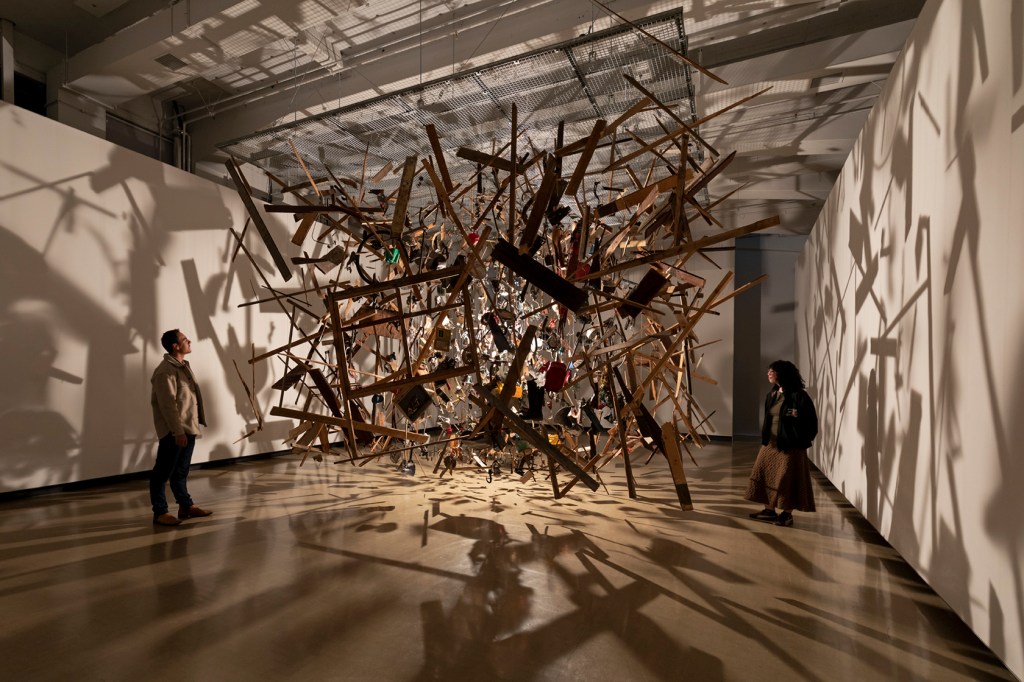
As City Gallery Wellington reopens with a major exhibition of Cornelia Parker’s work, we examine the British artist’s remarkable career, from steamrollered silverware and an exploded garden shed to historical relics, architectural reconstructions and paintings made from prehistoric fossils.
On 10 October 2026, City Gallery Wellington Te Whare Toi reopened after more than two years of closure for seismic strengthening. Its return to Te Ngākau Civic Square is marked by an exhibition devoted to Cornelia Parker, bringing together more than fifty works from a career spanning four decades.
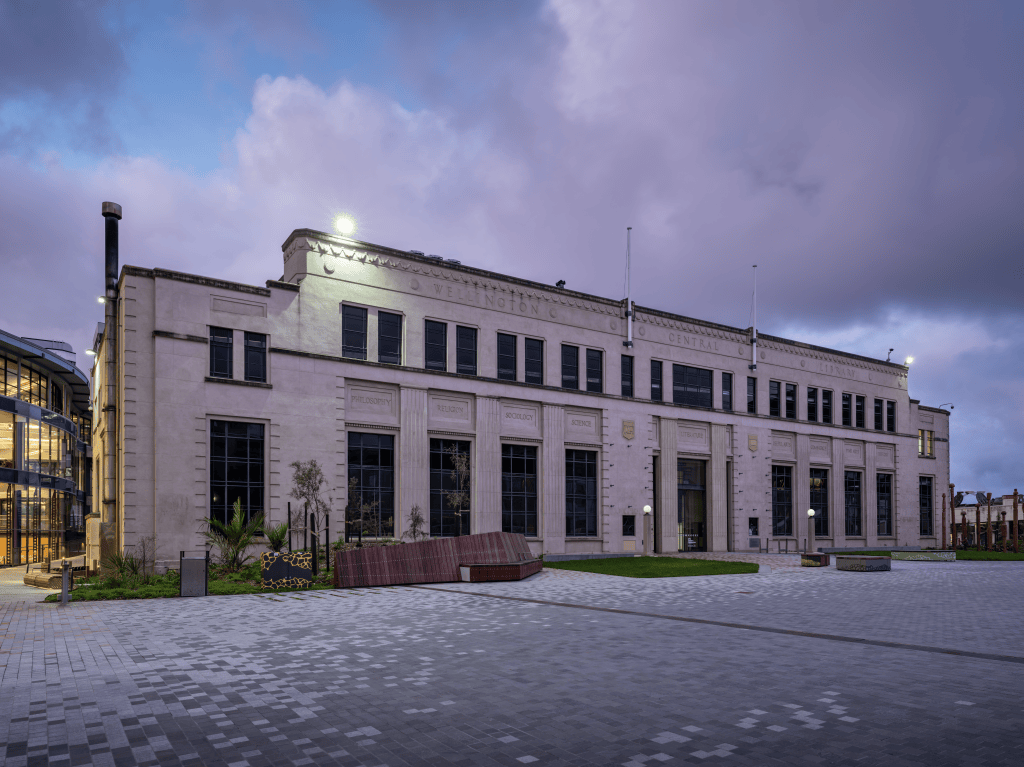
The exhibition is Parker’s first public solo presentation in Aotearoa New Zealand and her first major survey since the 2022 Tate Britain retrospective. Curated by Andrea Schlieker, who organised the London exhibition, and City Gallery Wellington’s Senior Curator Aaron Lister, it occupies the entire gallery, bringing four of her celebrated suspended installations together with films, photographs, works on paper and recent paintings on glass.
Parker herself has drawn a connection between the reopening and her longstanding interest in what survives a physical event. In the museum’s September press release, she recalled visiting New Zealand in 2010 and described the gallery’s return as something that had been paused and was now beginning again. The association is particularly appropriate for an artist whose work raises questions about the fate of objects after they have been damaged, discarded or deprived of their original purpose.
Exhibition Information
Cornelia Parker
City Gallery Wellington Te Whare Toi
67 Victoria Street, Wellington, Aotearoa New Zealand
10 October 2026 – 7 March 2027
Exhibition details, opening hours and tickets
Thirty Pieces of Silver
In 1988, Parker arranged for approximately a thousand silver and silver-plated household objects to be flattened beneath a steamroller. Teapots, candlesticks, trays, cutlery and trophies were pressed into thin, distorted shapes. She then suspended the flattened objects on wires, arranging them into thirty circular groups just above the gallery floor.
Thirty Pieces of Silver (1988–89) was commissioned by Ikon Gallery in Birmingham and became Parker’s breakthrough work. Its title refers to the biblical payment received by Judas for betraying Christ. Parker was raised Catholic, and religious imagery and associations recur throughout her work.
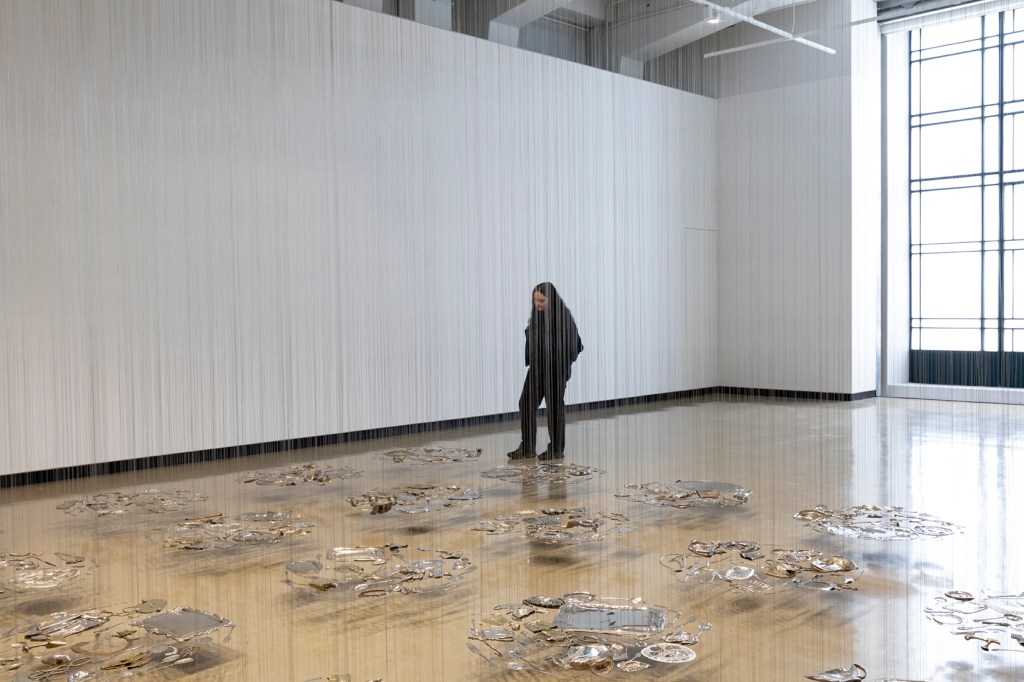
The objects belonged to a particular world of British domestic aspiration. Silver-plated cutlery and commemorative gifts suggested a value considerably greater than that of the underlying metal. Wedding presents were displayed in cabinets, trophies recorded modest achievements, and specialist utensils appeared at formal meals. By the time Parker collected them from markets, auctions and second-hand shops, many had become redundant.
The steamroller destroyed their usefulness, but the arrangement that followed was remarkably deliberate. Each group occupies a shallow circular area, with the individual pieces distributed across a common horizontal plane. The suspension wires remain visible, connecting the flattened objects to the ceiling. Their shadows introduce another pattern on the floor beneath them.
In A Strange Alchemy, a 2003 conversation with art historian Lisa Tickner, Parker discussed the practical consequences of displaying the work. At its original presentation, visitors could walk between the suspended groups. Later installations have generally been approached from the perimeter, changing the physical experience of the sculpture.
Parker also resisted the conventional expectation that silver should remain polished. She preferred its gradual tarnishing, accepting the chemical changes that would darken its surface.
Once Tate acquired the work, its numerous components required individual protection and specialist storage. Parker recalled the elaborate crate made to house the flattened objects, each piece fitted into its own space. There is considerable humour in the care lavished upon objects that the artist had deliberately crushed. The tension between conservation and deterioration also raises a practical question: how should a museum preserve an artwork whose materials were chosen partly for their capacity to change?
An Explosion, Then an Arrangement
Born in Cheshire in 1956, Parker grew up on a smallholding and became accustomed to working with tools and materials. She studied at Wolverhampton Polytechnic and subsequently Reading University, developing an approach to sculpture that challenged the traditional emphasis on solidity, permanence and the autonomous object.
Her artistic interests emerged during a period when British sculpture was being reconsidered through industrial materials, found objects and unconventional processes. Parker has acknowledged the importance of Marcel Duchamp and Bruce Nauman, particularly their investigations of ordinary objects and the space surrounding them.
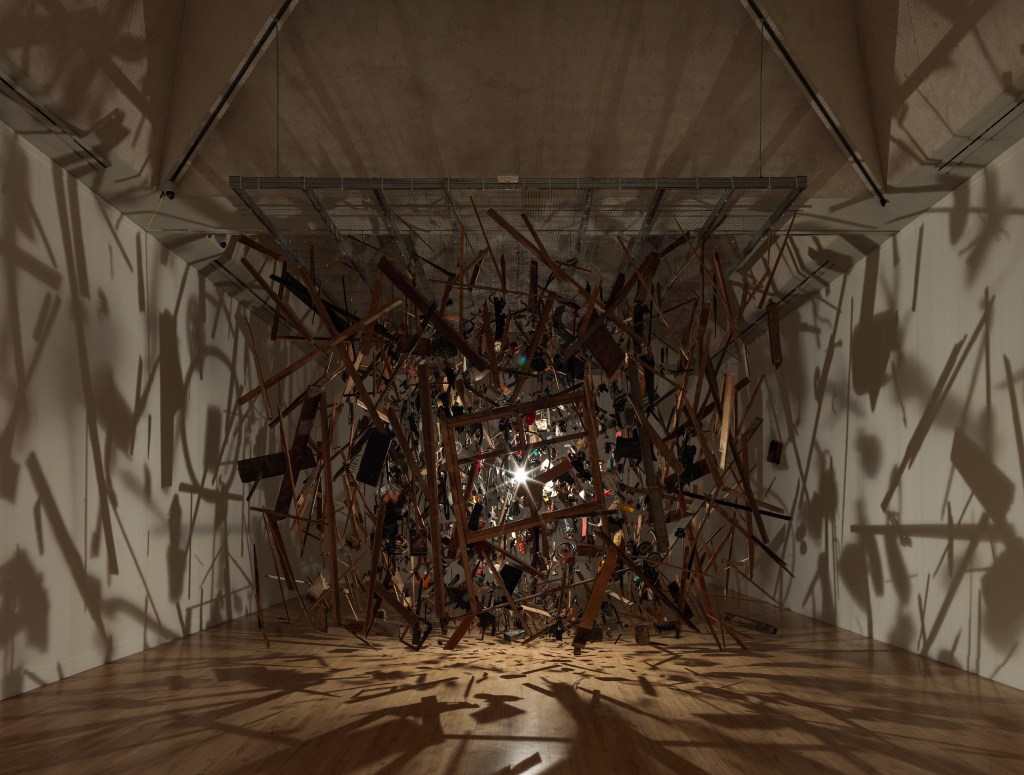
Photo Credit: Tate. Courtesy Tate Collection, Purchased 1995. © Cornelia Parker
Her best-known work, Cold Dark Matter: An Exploded View (1991), began with an ordinary garden shed.
Parker filled it with gardening tools, discarded household possessions, toys and miscellaneous objects before arranging for the British Army to destroy it with explosives. The fragments were collected and suspended around a single light bulb.
The installation resembles an explosion arrested at the moment of greatest dispersal. Splintered timber, metal tools and domestic remnants occupy different positions around the central light, while their shadows extend across the surrounding walls. The arrangement changes with the dimensions of the room in which it is installed.
The title combines an astronomical concept with the language of technical illustration. Cold dark matter describes a theoretical form of matter that does not emit or absorb light, while an exploded view separates the components of a mechanism to explain how they fit together.
Parker’s installation performs the separation without providing instructions for reconstruction. The shed is recognisable only through its fragments.
The original choice of building was hardly accidental. Garden sheds accumulate objects that have been removed from everyday household use but retained for possible future purposes. They are repositories of abandoned projects, broken equipment and possessions whose value is difficult to define.
Parker has connected the work’s conception to the experience of living in London during the IRA bombing campaigns. In her interview with Tickner, she also resisted attempts to reduce the sculpture to a psychoanalytic narrative of destruction followed by reparation. She acknowledged that such interpretations could be useful without accepting any single reading as definitive.
The work’s physical construction supports that openness. The explosion was unpredictable; the subsequent installation required sustained attention to the relationship between individual pieces and their surroundings.
The Public Life of Objects
Parker has been unusually attentive to the circumstances under which her work can be exhibited.
In a 2002 interview with Simon Morrissey for a-n Magazine, she explained that she had resisted selling her major installations to private collectors because she wanted them to remain publicly accessible.
She was concerned that commercial expectations might encourage her to repeat the spectacular suspended works for which she had become known. For several years, she supported herself through teaching, residencies and fellowships while developing smaller pieces that did not conform so readily to an established artistic identity.
Alongside the major installations, Parker continued to develop works that depend upon the smallest physical traces.
For The Negative of Words (1996), she asked a silversmith to collect the tiny fragments of silver removed during hand engraving. The accumulated shavings were presented as a small pile. The work consists of material that had to be removed for another object to acquire an inscription.
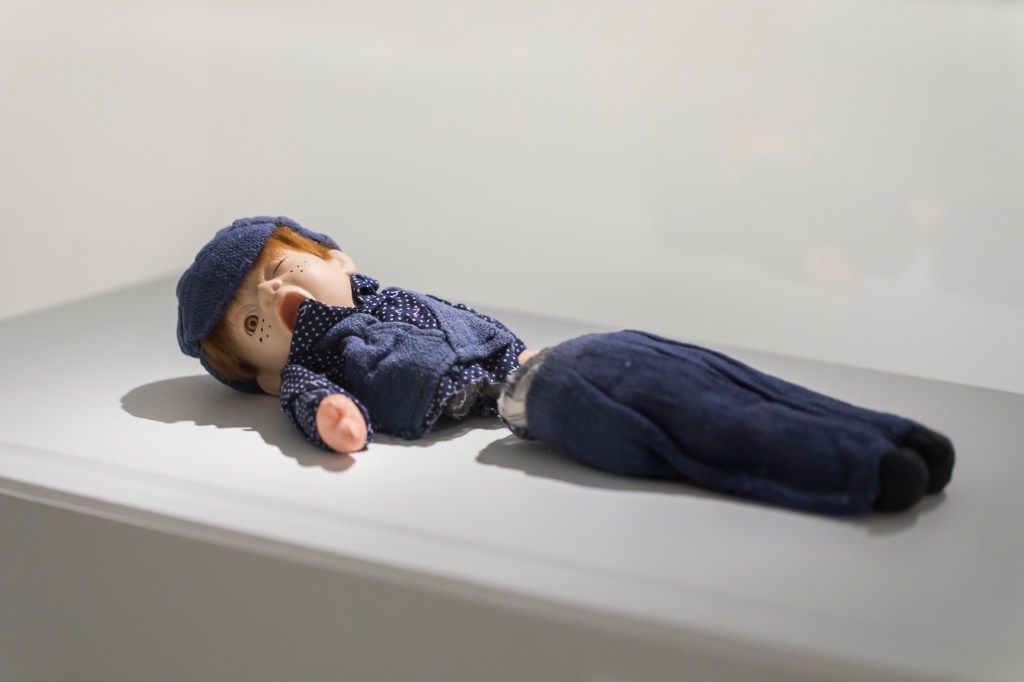
A more unsettling experiment in the relationship between historical significance and physical objects appears in Shared Fate (Oliver) (1998).
Parker discovered a 1960s Oliver Twist doll at a market in London’s Brick Lane. Its face was already contorted into an expression of distress, originally intended to suggest the character’s treatment by Fagin. She arranged for the doll to be cut in half using a guillotine at Madame Tussauds, reputed to have been used in the execution of Marie Antoinette.
The resulting object brings a fictional child into contact with the machinery of a real historical death. Its disturbing effect depends upon the guillotine’s reported provenance; without that knowledge, the severed doll would have a rather different meaning.
Parker’s interest in the authority of historical relics also informed The Maybe (1995), a collaboration with Tilda Swinton at London’s Serpentine Gallery.
Conceived and performed by Swinton, the work involved the actor spending seven days, eight hours a day, inside a glass display case. Parker created the surrounding installation, bringing together objects associated with celebrated historical individuals.
The presentation borrowed the conventions of museum display. Provenance, attribution and the identities of former owners conferred significance upon ordinary possessions. Swinton’s living presence introduced an unexpected comparison between the historical objects and the person displayed among them.
Both Shared Fate and The Maybe reveal Parker’s interest in the conventions through which institutions preserve and present history. Objects may be physically insignificant, yet their associations can make them extraordinarily valuable.
War Room
In 2015, Parker returned to large-scale installation with War Room, created for the reopening of Manchester’s Whitworth Art Gallery.
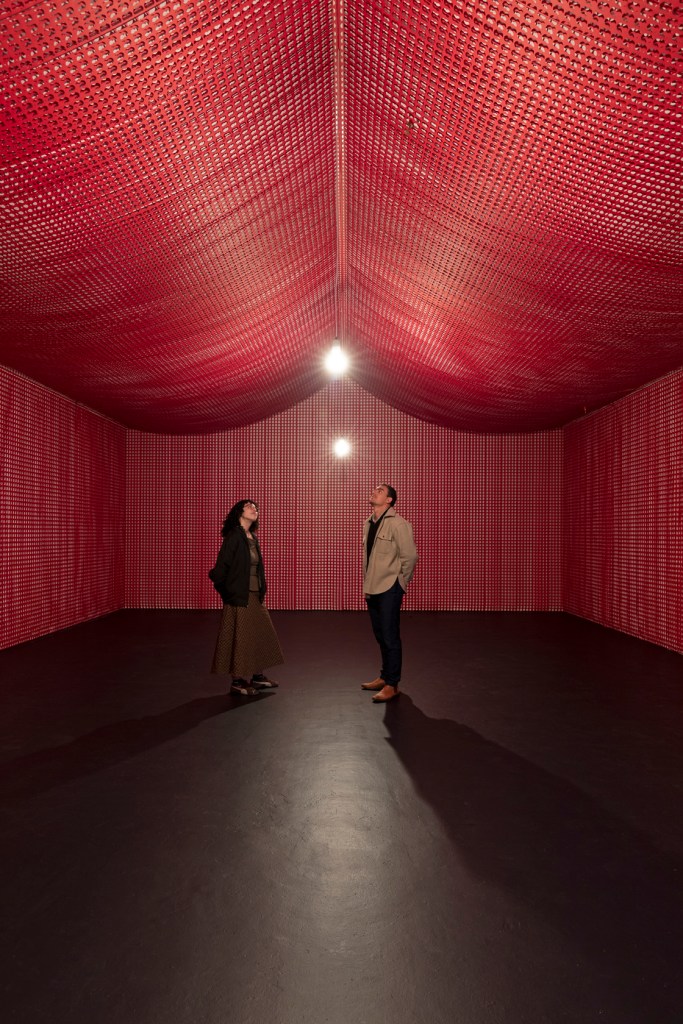
She had visited the Royal British Legion’s poppy factory in Richmond, London, where she encountered long strips of red paper left behind after remembrance poppies had been punched from them. The perforated remnants became the material for an architectural enclosure.
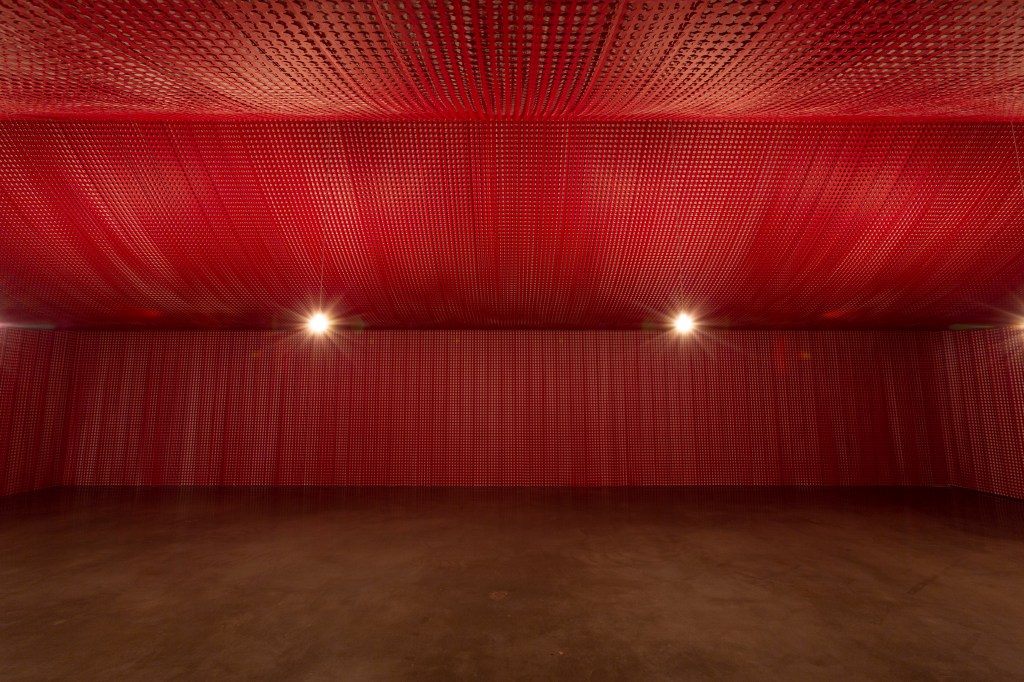
Perforated paper negatives left over from production of remembrance poppies, with thanks to The Poppy Factory, Richmond and The Royal British Legion 2248 x 873 x 575 cm / 885 x 343.7 x 226.4 in. Installation view: Cornelia Parker, MCA Australia, Sydney, 2019. Courtesy the artist and Frith Street Gallery, London. Photo: Anna Kucera © Cornelia Parker
Its form refers to the elaborate tent constructed for Henry VIII at the Field of the Cloth of Gold in 1520, when the English king met Francis I of France in an extravagant demonstration of diplomatic friendship. The countries returned to conflict within a few years.
The repeated poppy-shaped holes in Parker’s paper correspond to objects produced for the annual commemoration of those who died in military service. The material’s uniformity reflects the mechanics of industrial production, while the absent shapes carry another significance through their association with remembrance.
In a 2015 interview with The Double Negative, Parker explained that she conceived War Room as a response to Cold Dark Matter, made twenty-four years earlier.
The British Army had provided the explosives for the earlier work; the later installation uses discarded material from the production of remembrance poppies.
Their constructions differ, too. Cold Dark Matter disperses its components around an illuminated centre; War Room encloses the viewer within a structure defined by thousands of repeated absences.
Parker’s description emphasised the continuing manufacture of remembrance poppies and the persistence of conflict. The installation concerns the work of commemoration long after the immediate violence has ended.
From Meteorites to Painting
Parker’s interest in unusual materials has occasionally taken her beyond the gallery altogether.
In 1996, she purchased a meteorite, ground it into powder and incorporated the material into fireworks exploded above Copenhagen’s Tivoli Gardens. The work, A Meteorite Lands in Tivoli Gardens, formed part of the city’s European City of Culture programme.
The event briefly dispersed extraterrestrial material as light above a familiar public attraction. Its significance depended upon information that spectators could not establish through sight alone.
The history of materials remains important in Parker’s recent paintings.
In 2025, Frith Street Gallery presented History Painting, an exhibition of oil paintings inspired by historic newspaper covers and works on glass made with pigments prepared from unconventional substances.
For the paintings on canvas, Parker drew upon Color Problems (1902), a study by American artist Emily Noyes Vanderpoel, who developed systematic arrangements of colours found in historical artefacts, natural objects and decorative materials.
Parker applied a related method to familiar newspaper headlines and images. The resulting paintings use grids of coloured squares, with the original subjects identifiable principally through their titles.
Their apparently abstract appearance conceals a documentary starting point. Colour survives as the visible record of an image whose recognisable content has been removed.
Her glass paintings pursue a related enquiry through the physical composition of pigment.
In 90 MILLION YEARS AND COUNTING (2025), Parker used ground fossilised dinosaur remains to produce coloured marks on glass. The material came from prehistoric specimens collected in Morocco, the United States and the Isle of Wight.
The GUNPOWDER PLOTS series employs sulphur, saltpetre and charcoal, the constituent ingredients of gunpowder, separating materials normally combined for their explosive potential into distinct areas of colour.
The visual restraint of these works can be surprising beside the theatrical scale of her early installations. Parker’s interest in their material histories, however, remains consistent.
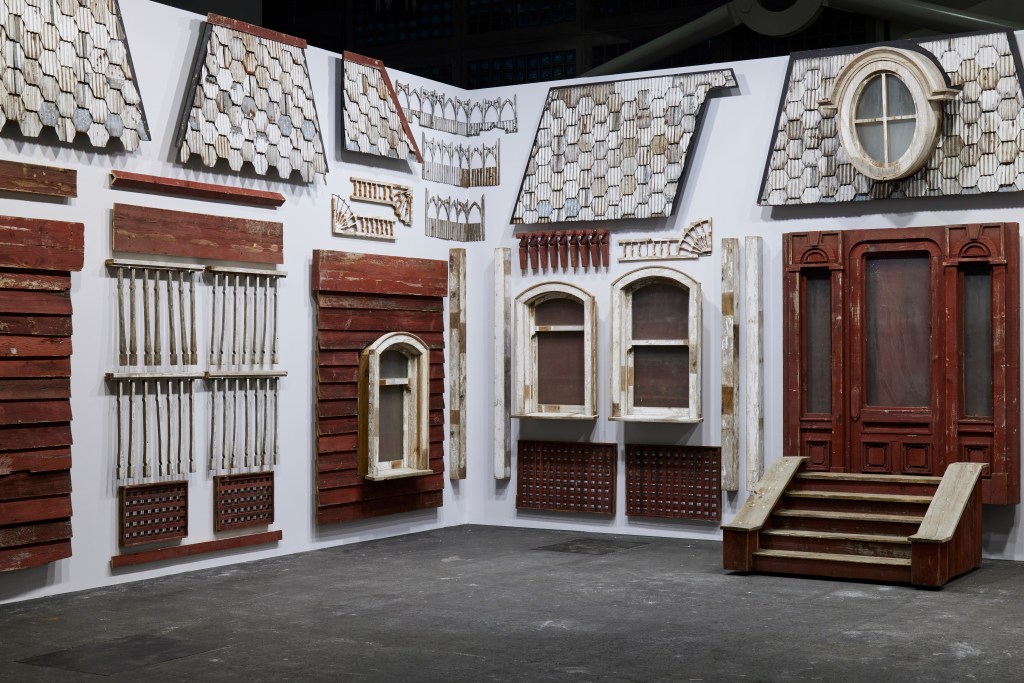
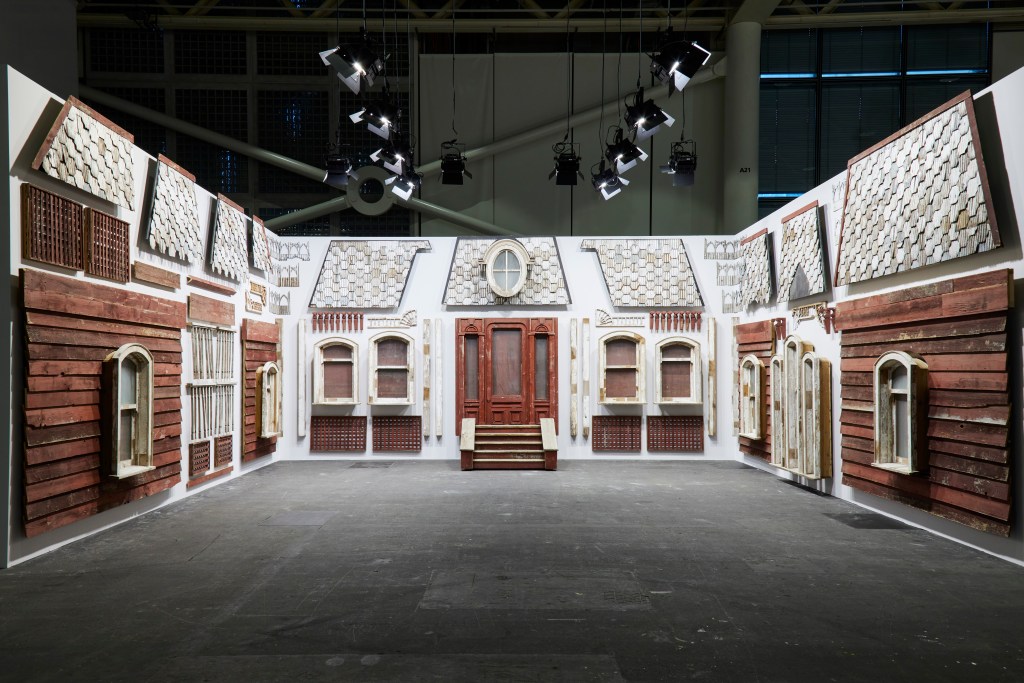
Cornelia Parker. PsychoBarn (Cut Up), 2023. Mixed media. Dimensions variable. Photo Credit: Art Basel. Courtesy the artist and Frith Street Gallery, London. © Cornelia Parker
Another development can be seen in PsychoBarn (Cut Up) (2023), included in the Wellington exhibition.
The work reuses architectural elements from Transitional Object (PsychoBarn), Parker’s 2016 commission for the Metropolitan Museum of Art in New York. That earlier sculpture recreated the sinister house associated with Alfred Hitchcock’s Psycho, using timber from a dismantled American barn.
For the 2023 version, the architectural components were rearranged into an installation of façades, windows, roof sections and other fragments. A structure originally designed to create a convincing illusion of a building became a composition that exposed its constituent parts.
The reconstruction of an existing artwork introduces another dimension to Parker’s interest in the subsequent lives of objects. Even her completed sculptures can become materials for new work.
Cornelia Parker in Wellington
The exhibition in Wellington brings these different phases of Parker’s practice together, including works that can be overshadowed by the fame of her early installations.
One film has a particular local connection. During a three-month journey through New Zealand in 2010, Parker made Doubtful Sound, a short film included in the exhibition. In a conversation published by WellingtonNZ, co-curator Andrea Schlieker describes it as an unsettling response to the landscape of Te Waipounamu, the South Island.
The selection also includes THE FUTURE (Sixes and Sevens) (2023), a two-screen film featuring primary school children discussing the world they expect to inherit. The work reflects Parker’s growing engagement with environmental and political questions through the experiences and perspectives of others.
For Wellington, the exhibition has required considerable practical preparation. Parker’s large installations depend upon precise arrangements of individual components, often supported by elaborate suspension systems. Their assembly demands specialist knowledge, time and substantial gallery space.
The extended period before the museum’s reopening made such an undertaking possible. Works from different stages of Parker’s career can now be considered together, from the carefully suspended silverware to more recent investigations of film, architecture and painting.
The Wellington exhibition also reflects a decision Parker made early in her career. By resisting offers to sell her major installations to private collectors, she sought to keep them accessible to museum audiences. They can now be reassembled in different places and considered alongside work that did not exist when they were first made.
The garden shed destroyed in 1991 survives as a carefully conserved installation. The silver objects flattened more than thirty years ago still require decisions about how they should hang and whether their surfaces should be allowed to tarnish. PsychoBarn, once a complete architectural illusion, has itself supplied the material for another work.
Parker’s sculptures have acquired histories of their own since the events that produced them. Each new installation entails practical decisions about preserving, arranging and presenting the objects to another audience. At City Gallery Wellington, those decisions are particularly relevant: the exhibition marks the reopening of an institution whose purpose is to keep such work available for public encounter.
The physical acts that gave Parker’s most famous works their form are long over. Their lives as works of art remain remarkably active.
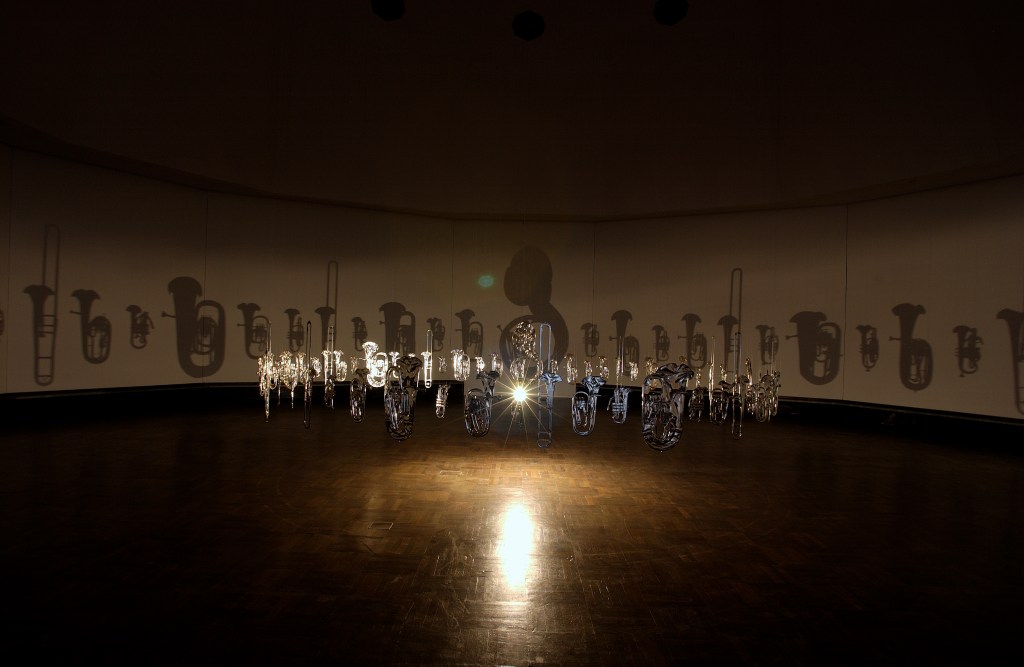
Cornelia Parker Perpetual Canon 2004 Flattened brass band instruments Dimensions variable Installation View, Württembergischer Kunstverein Stuttgart, Stuttgart, Germany, 2005 Photo credit: Frank Kleinbach Courtesy “la Caixa” Foundation Contemporary Art Collection, Barcelona © Cornelia Parker 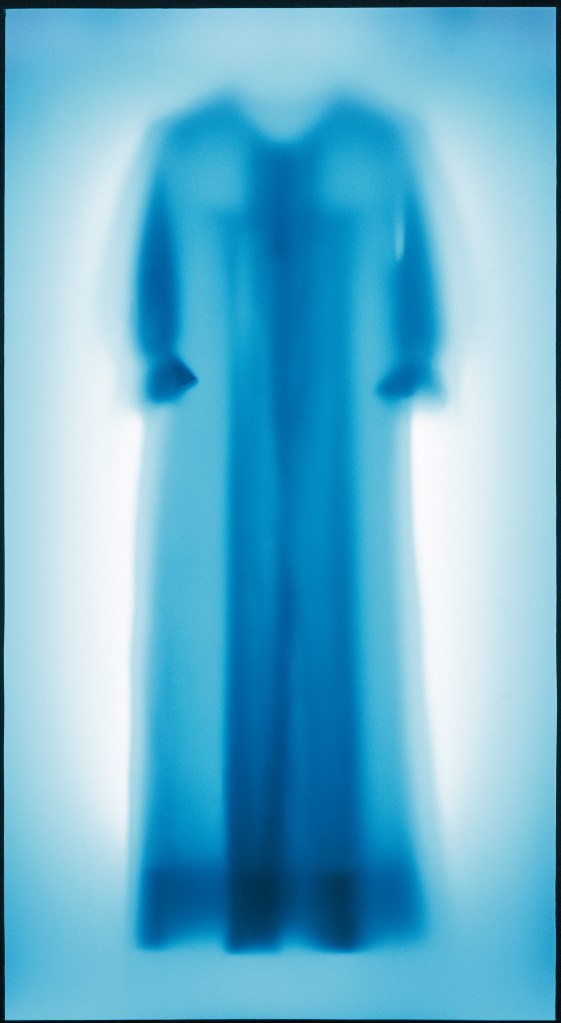
Cornelia Parker Blue Shift, 2001 Nightgown worn by Mia Farrow in the Roman Polanski film ‘Rosemary’s Baby’, lightbox 166.5 x 82 x 46 cm / 65.6 x 32.3 x 18.1 in Courtesy the artist and Frith Street Gallery, London © Cornelia Parker 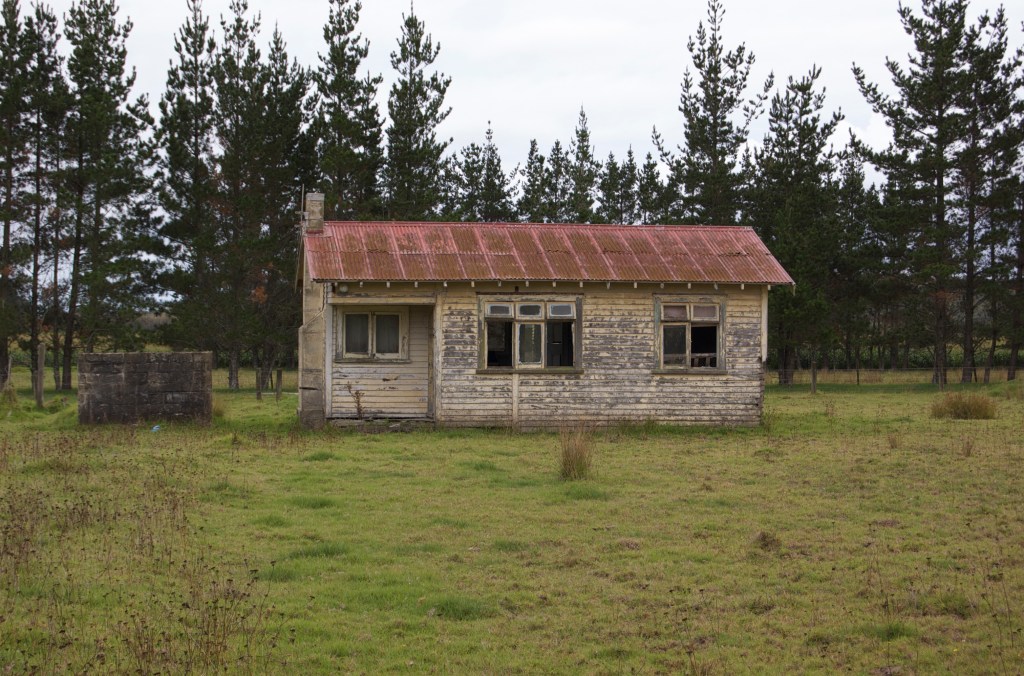
Cornelia Parker Doubtful Sound, 2010 (still) DVD animation, continual loop Dimensions variable Courtesy the artist and Frith Street Gallery, London © Cornelia Parker
Cover image: Installation view: Cornelia Parker, City Gallery Wellington Te Whare Toi, 2026. Photo: Russell Kleyn
