Essay · Film & Lives
The Girl Who Outlasted Everything
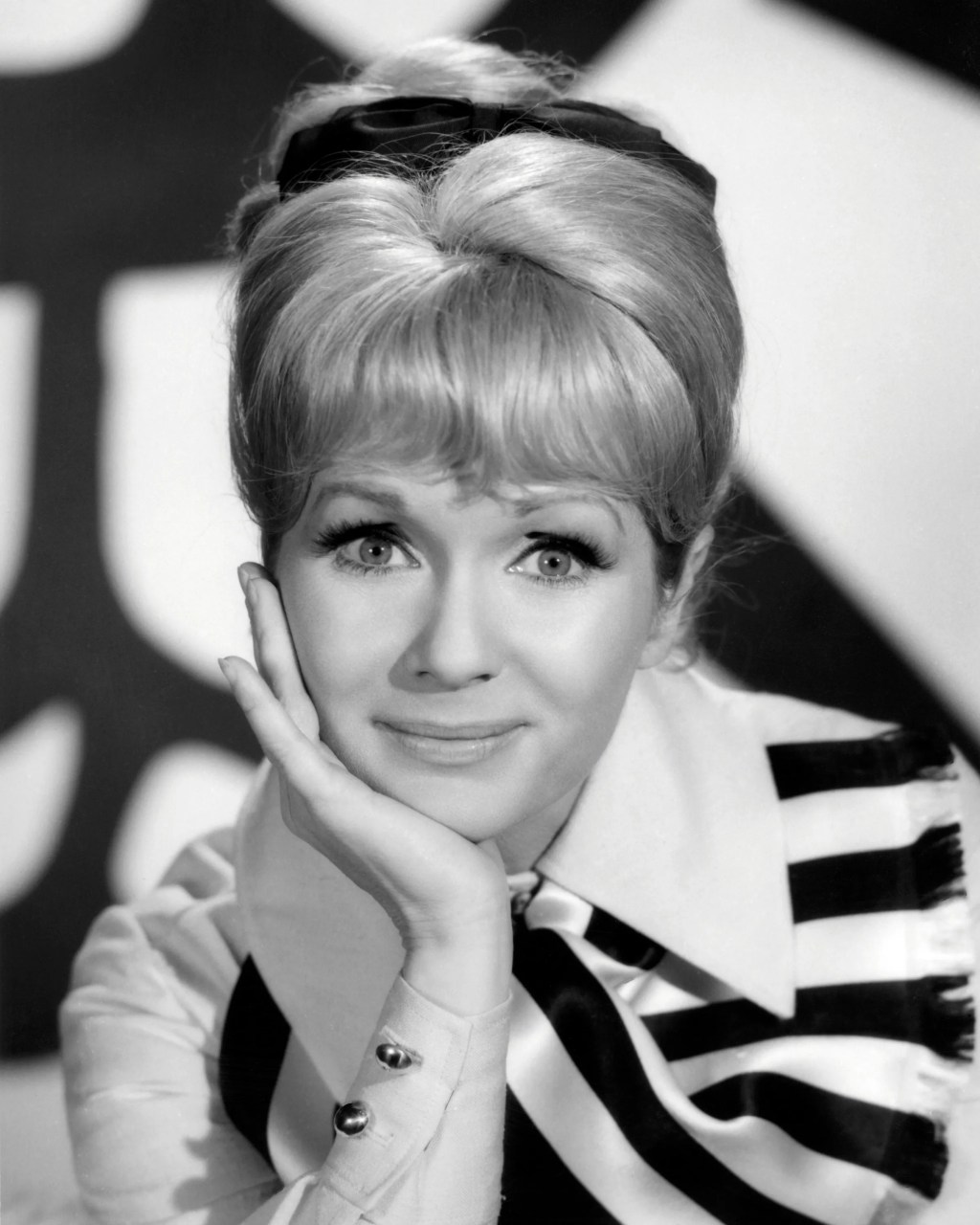
Debbie Reynolds was not the most critically celebrated actress of her generation, nor the most artistically adventurous, nor the one the serious film culture tended to reach for when it needed an example of Hollywood at its best. She was something rarer and in some ways more impressive: a performer of absolute professionalism and inexhaustible resilience who survived, with her dignity and her humour and her work ethic entirely intact, everything that Hollywood and her personal life and the culture’s changing tastes could throw at her, and who was still performing, still funny, still entirely herself, sixty years after the studio system that made her had ceased to exist.
By Bergotte · Hollywood & Las Vegas · Film & Lives
She could not dance when they cast her. This is the fact that the story of Debbie Reynolds begins with, the fact that gives everything that followed its particular character: the determination, the discipline, the refusal to be defeated by her own limitations, the willingness to work harder than anyone around her until the limitation became a skill and the skill became something that looked, on screen, like natural talent. In 1952, at nineteen, she was cast opposite Gene Kelly and Donald O’Connor in Singin’ in the Rain — the greatest musical ever made by the studio system and possibly by anyone — and she had no formal dance training whatsoever. Gene Kelly, who was not known for his patience with the untrained, drilled her for months, hours a day, with a rigour that she later described as the hardest physical experience of her life, harder than childbirth, she said, and she had done that twice. The feet bled. The work continued. And what appears on screen as Kathy Selden — the freshness, the lightness, the apparently effortless charm of a young woman who looks as though she was born to dance with Gene Kelly — is the product of that blood and that work, transformed by the camera and by her own extraordinary natural vivacity into something that looks nothing like effort at all.
This transformation — of effort into apparent ease, of discipline into charm, of the hard, unglamorous labour of the professional into the glowing surface of the star — was the central achievement of Debbie Reynolds’s career, and it was an achievement she repeated, with variations, for the next six decades. She was not, at any point in her career, effortless. She was relentlessly, visibly, fundamentally someone who worked. But the work produced results that looked, from the audience’s perspective, like gifts rather than accomplishments, and the gap between the two was the space in which her particular kind of stardom lived.
Burbank, the Beauty Contest, and the Studio System’s Last Ingénue
Mary Frances Reynolds was born on April 1, 1932, in El Paso, Texas, and grew up in Burbank, California, in the modest circumstances of a working-class family that had no particular connection to the film industry that surrounded them geographically and permeated the local air. Her father worked for the railroad. Her mother was, by all accounts, a woman of formidable practicality and considerable ambition for her daughter, an ambition that expressed itself in the Girl Scouts and in the local beauty pageants that were, in the early 1950s, still a plausible route from Burbank to Burbank’s most famous industry.
At sixteen she won the Miss Burbank contest, was spotted by a Warner Brothers talent scout, and signed to a studio contract that was amended almost immediately when MGM recognised what Warner Brothers had on its hands and negotiated the transfer. The MGM of 1950 was the greatest film studio in the world in the grip of its own slow decline — the golden age was ending, the contract system that had manufactured and managed stars for twenty years was beginning to creak, and the studio was looking for the kind of clean, bright, unambiguously cheerful young woman who could carry the musicals that were still, for a few more years, its most reliable commercial product. Reynolds was exactly that young woman, and she understood the requirement, and she met it with a completeness that concealed, behind the dimples and the ponytail and the Girl Scout wholesomeness, an intelligence and a work ethic and a toughness that the ingénue image was not designed to reveal.
“I was born at the right time and in the right place. But I was also willing to work my ass off, and that turns out to matter more than the timing.” — Debbie Reynolds, in interview, 2015
Singin’ in the Rain and the Problem of the Defining Moment
Singin’ in the Rain was released in 1952 and was received, upon its initial release, with warm critical appreciation and solid but not spectacular commercial returns. Its elevation to the status of the greatest Hollywood musical — the film that the American Film Institute has twice placed at the top of its list of the greatest musicals ever made, a permanent fixture in every serious survey of the medium — was the work of time rather than of immediate consensus. Reynolds, who received no Academy Award nomination for the film and whose contribution to it was substantially overshadowed, in the press coverage of the time, by Kelly and O’Connor, lived long enough to see the reassessment in full: to become, in her eighties, the person most closely associated with a film that had, for half a century, been primarily associated with Kelly’s rain-soaked lamp post.
The reassessment is just. Her performance as Kathy Selden is the film’s emotional centre, the point of view through which the audience experiences the story, and the combination of technical accomplishment — hard-won, bleeding-feet accomplishment — and natural warmth she brings to it is, on reflection, one of the more remarkable performances in the studio-era musical. She was nineteen. She could not dance six months before filming began. What she produced was not merely competent but genuinely delightful, which is the hardest standard to meet and the one most consistently overlooked by serious criticism because delight is difficult to analyse without diminishing it.
The film also gave her something that no amount of critical re-evaluation can quite account for, which is the fact of having appeared in it — of being, permanently and irrevocably, part of a work of that quality. Careers are made of many things, and the things that last are often not the things that seemed most significant at the time, but the association with Singin’ in the Rain gave Reynolds a foundation that the vicissitudes of the following decades — and they were considerable — could not erode.
Eddie, Elizabeth, and the Education in Public Humiliation
In 1955 Reynolds married the singer Eddie Fisher, one of the most popular entertainers in America, and the union was a public event of the first order — the sweetheart of MGM and the idol of the teenage radio audience, America’s sweethearts, a designation that carried then as now a quality of ideological weight that made the people so designated simultaneously celebrated and constrained. They had two children: Carrie, born in 1956, and Todd, born in 1958.
In 1958, the year of Todd’s birth, Fisher’s close friend Mike Todd was killed in a plane crash, and Fisher turned to Todd’s widow for consolation. The widow was Elizabeth Taylor. By 1959, Fisher had left Reynolds for Taylor, and the story — conducted entirely in public, narrated in the tabloid press with the breathless moralism of a culture that had decided who the villain was before the facts were established — became one of the defining scandals of the era. Reynolds was the wronged woman. Taylor was the temptress. Fisher was the weak man between them. These categories were applied with the crude efficiency of a culture that needed the story to be simple, and the simplicity was to Reynolds’s immediate benefit and to her long-term cost: the public sympathy she received was real and warm and was also, as such sympathy tends to be, contingent on her continued embodiment of the wronged party, which required her to remain defined by a humiliation she had not sought and could not control.
She did not remain so defined, or not for long, which is the measure of her character. She made jokes about it — carefully calibrated jokes, with the timing of a professional and the self-awareness of someone who understood that the joke was the only way out of the narrative — and she kept working, which was the other way out. She married again, twice more, with results that were in each case financially and personally damaging in ways that made the Fisher episode look, in retrospect, like a preliminary sketch for the disasters that followed. The second husband, Harry Karl, gambled away her savings and left her in serious debt. The third, Richard Hamlett, defrauded her. She emerged from each of these experiences with her sense of humour and her work ethic intact, which is either a testament to her resilience or a description of what resilience actually is.
The Entertainer and the Work That Never Stopped
Reynolds’s film career after Singin’ in the Rain produced a series of commercially successful pictures — Tammy and the Bachelor (1957), which generated the hit single “Tammy” that went to number one, The Unsinkable Molly Brown (1964), which earned her her only Academy Award nomination, The Singing Nun (1966) — and then, as the studio system dissolved and the New Hollywood arrived with its preference for antiheroes and ambiguity and everything that Reynolds was not, the film work dried up in the way it dried up for most performers of her type and her era. She was not what the 1970s wanted, and the 1970s were clear about this in the efficient, impersonal way that the market is clear about things.
What she did instead was Las Vegas, which she took to with the enthusiasm of someone who had understood, perhaps earlier than most of her contemporaries, that the entertainer’s art — the immediate, physical, unrepeatable art of a live performer making a room full of strangers feel something — was as legitimate and as demanding as any other kind. She developed a stage show of formidable polish and sustained it, with periodic updates, for thirty years: singing, dancing, comedy, impressions, costume changes, the full vocabulary of the variety entertainer deployed with the skill of someone who had been doing this, in one form or another, since she was a teenager in Burbank. The show became, in Las Vegas, a significant cultural event — something that people dressed up for, that tourists planned trips around, that represented, in the declining world of the old-school entertainer, a standard of professionalism that few others were still meeting.
She bought costumes. This deserves its own paragraph because it was not a hobby but an obsession, a collection, and ultimately a cause. Reynolds accumulated one of the most significant collections of Hollywood costume in existence — the dresses, the suits, the extravagant MGM confections of the golden age — buying them at auction, housing them in a hotel she purchased for the purpose, planning a museum that she hoped would preserve and display them for the public. The hotel failed. The museum never quite materialised. The collection was eventually auctioned, which was both a financial necessity and a grief, because the project had been genuine — the desire to preserve the physical evidence of a Hollywood she had known from the inside and that was rapidly ceasing to leave any trace.
Carrie, the Relationship, and What It Produced
The relationship between Debbie Reynolds and her daughter Carrie Fisher is one of the more complex mother-daughter stories in the history of American celebrity, and it produced, in Fisher’s memoirs and in the one-woman show and the film that Reynolds made from her own memoir, an unusually frank public accounting of what it cost to grow up the child of a movie star and what it cost to be the movie star whose child was growing up. Fisher wrote about her mother with the same combination of love and exasperation and hard-won understanding that she brought to every subject she addressed, and Reynolds read what Fisher wrote and understood it and forgave what needed forgiving and appreciated what deserved appreciation, and the two women arrived, in their later years, at something that resembled — and was, the evidence suggests — genuine mutual affection and genuine mutual respect.
They lived next door to each other in Beverly Hills, which is either the most Hollywood arrangement imaginable or a genuine expression of the closeness that had survived everything that the Fisher marriage and the Fisher aftermath and the years of distance and the years of understanding had produced. When Fisher died on December 28, 2016, Reynolds was with her. When Reynolds died the following day, December 29, 2016, her son Todd later said that she had told him she wanted to be with Carrie. The proximity of the two deaths — mother following daughter by one day — produced, in the media coverage, exactly the kind of sentimental narrative that both women would have regarded with a dry, fond scepticism. It was also, simply, what happened.
The Professionalism and What It Meant
There is a quality that the word professionalism does not quite capture but that Reynolds embodied throughout her career, and that the word’s inadequacy points toward: the quality of showing up, fully, every time, regardless of the circumstances — regardless of the bad reviews and the unfashionable image and the personal catastrophes and the financial disasters and the changing tastes of an industry that had moved on from what she represented. She showed up. She did the work. She gave the audience what they had come for, and she gave it with the generosity of someone who understood that the audience’s experience of the show was the only thing that mattered once the lights went up, and that the professional’s job was to ensure that experience was worth having.
This is not a small thing. It is, in fact, one of the things that separates the merely talented from the genuinely great entertainers, and Reynolds was a genuinely great entertainer in a tradition — the variety tradition, the Las Vegas tradition, the Broadway tradition of the performer who can do everything and make all of it look fun — that has very few great practitioners and is not always taken seriously as an art form by critics who prefer their artistry to look more like suffering. Reynolds’s artistry looked like fun because she had decided, very early, that this was the appropriate presentation, and the decision was not a lie about the difficulty of the work but a gift to the audience, who had come to be entertained rather than to contemplate the entertainer’s sacrifices.
She received the Screen Actors Guild Lifetime Achievement Award in 2015, which she accepted with a speech that was funny and warm and slightly subversive, in the manner of all her best public appearances, and she was still performing into her eighties, still doing the work, still giving the audience what they had come for. The dimples were still there. So was everything else.
This essay draws on Debbie Reynolds’s memoir Unsinkable (2013), Carrie Fisher’s memoir Wishful Drinking (2008) and its stage and film adaptations, and published interviews with Reynolds across five decades. Debbie Reynolds was born Mary Frances Reynolds on April 1, 1932, in El Paso, Texas, and died December 28, 2016, in Los Angeles, California, one day after the death of her daughter Carrie Fisher. She received the Screen Actors Guild Lifetime Achievement Award in 2015.

