The oldest philosophical question in the world was not asked in Athens. It was asked in Egypt, four thousand years ago, and it was asked in the form of an image: a heart placed on one side of a scale, a feather on the other. Everything that Western philosophy has subsequently said about justice, truth, the moral life, and the relationship between the human being and the order of the universe is downstream of that image, whether it knows it or not.
There is a scene that appears in Egyptian tomb paintings across more than a thousand years of continuous artistic and religious tradition — from the Middle Kingdom through the New Kingdom and into the Late Period — with a consistency that suggests not mere convention but genuine philosophical conviction. The dead person stands before a set of scales. On one pan of the scales rests a feather — the feather of Ma’at, the goddess and the principle and the cosmic order simultaneously. On the other pan rests the heart of the dead person — the organ that the Egyptians considered the seat of consciousness, memory, moral judgment, and the accumulated weight of a life. The god Anubis tends the scales. The god Thoth records the result. And if the heart and the feather balance — if the life that the heart contains is light enough, ordered enough, truthful enough, just enough — the dead person passes into the Field of Reeds, the Egyptian paradise. If the heart is heavier than the feather, it is devoured by Ammit, the composite beast who waits by the scales, and the person ceases to exist.
The scene is known as the Weighing of the Heart, and it is the central image of the Egyptian Book of the Dead — the collection of spells and instructions and declarations that the Egyptians buried with their dead to assist them through the journey of the afterlife. It appears so frequently and so consistently, across so many centuries and so many social classes, that it constitutes something more than religious iconography. It constitutes a philosophical statement: a claim about what a human life is, what it is measured against, and what the consequence of the measuring is.
The feather against which the heart is weighed is the feather of Ma’at. And Ma’at is the concept — the principle, the goddess, the cosmic order — that is the foundation of Egyptian philosophy, the ground on which every other Egyptian claim about truth, justice, the good life, and the nature of reality rests. To understand Ma’at is to understand what the oldest continuous philosophical tradition in the world was saying about who we are and what we are for. And to understand that is to understand something that Western philosophy, which has been conducting its conversation for two and a half thousand years without adequate reference to what preceded it, has been missing.
Ma’at: The Order That Holds Everything Together
The word Ma’at has no precise equivalent in any modern European language, and the absence of the equivalent is itself philosophically significant: it names a concept that the Western philosophical tradition has not had a single word for, though it has spent much of its history reaching toward the thing the word names.
Ma’at is, simultaneously: truth, justice, cosmic order, right action, the harmony of the universe, the proper relationship between all things, the principle that makes the world coherent rather than chaotic. It is what the sun follows when it rises and sets. It is what the Nile follows when it floods and recedes. It is what the seasons follow, what the stars follow, what the living and the dead follow when they conduct themselves rightly. It is not a law imposed from outside on a recalcitrant reality. It is the inner logic of reality itself — the way things are when they are as they should be, the order that the universe tends toward and that right human conduct participates in and sustains.
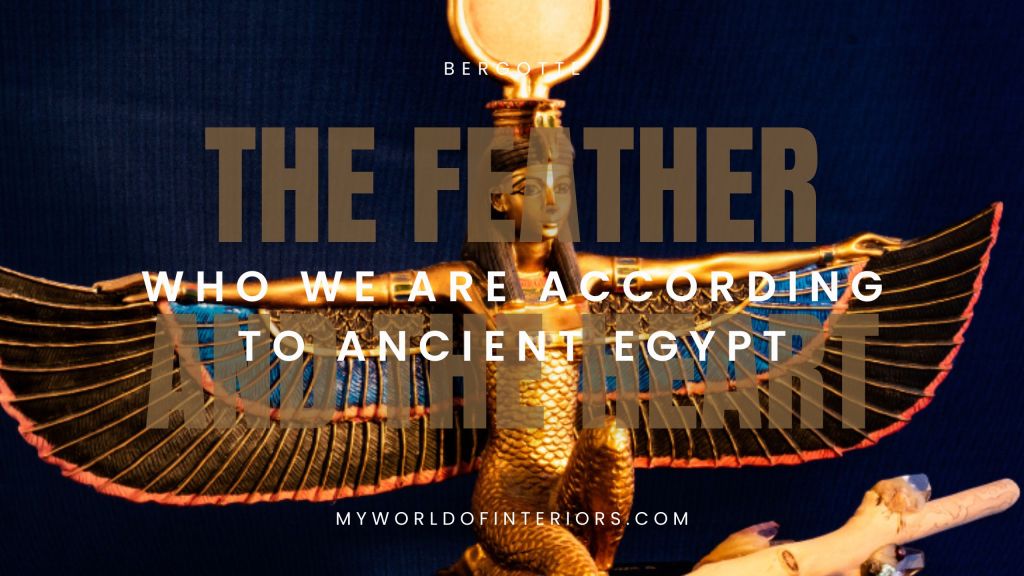
The goddess Ma’at — depicted as a woman with a feather in her hair, sometimes with wings — is the daughter of Ra, the sun god, and she is present at the creation: the world is created in accordance with Ma’at, ordered by Ma’at, sustained by the continuous practice of Ma’at in both the divine and the human realms. The Pharaoh’s primary political and religious obligation is the maintenance of Ma’at — the upholding of the right order in the realm, the ensuring that justice is done, that the weak are protected, that the proper rituals are performed, that the harmonious relationship between the human world and the cosmic order is continuously renewed. The Pharaoh who fails in this is not merely politically incompetent. He is cosmologically dangerous: a king who does not uphold Ma’at creates the conditions for the return of Isfet — chaos, disorder, the dissolution of the order that makes existence possible.
This is a philosophical claim of the first order, and its implications extend far beyond the political theology of the Pharaonic state. The claim is that the moral order and the cosmic order are the same order — that what is right in human conduct is not a separate domain from what is true about the universe but a participation in the same principle that makes the universe intelligible. This claim appears, two thousand years later, in the Stoics’ account of the logos — the rational principle that runs through all things and that right human conduct participates in. It appears in Plato’s account of the Form of the Good — the highest Form, the source of being and truth in the intelligible realm. It appears in Aristotle’s account of the natural order and the human being’s place within it. It appears in the natural law tradition of medieval Christian philosophy. It appears, transformed and sometimes unrecognised, throughout the Western philosophical tradition.
It appears first in Egypt.
The Instructions: Philosophy in Practice
The oldest wisdom literature in the world is Egyptian. The Instructions of Ptahhotep — attributed to a vizier of the Fifth Dynasty, composed around 2400 BCE — is a text of philosophical reflection on the good life, the right conduct of human affairs, and the nature of wisdom that predates Socrates by two thousand years and predates Plato’s dialogues by more than two millennia. It is not a primitive text. It is a sophisticated one, and its sophistication is of a kind that Western philosophy has sometimes struggled to recognise because it does not look like the kind of sophistication that Western philosophy has taught itself to value.
The text opens with a reflection on old age — on the specific diminishment of the body’s powers that the accumulation of years produces, the failure of the faculties that defined the active life. This is not a complaint but a philosophical observation: the old man who has lived well has something to transmit, and the transmission is the work of the sebayt, the instruction, the teaching that is the primary vehicle of philosophical reflection in the Egyptian tradition. “How hard and painful are the last days of an aged man,” Ptahhotep begins, and then, having named the difficulty, proceeds to offer the accumulated understanding of a life as the answer to it — not a solution to the problem of ageing but a contribution to the tradition of wisdom that outlasts any individual life.
The instructions that follow cover the full range of human social conduct: how to behave toward superiors, peers, and inferiors; how to conduct oneself in assembly; the importance of listening over speaking; the relationship between speech and truth; the dangers of greed and the virtues of generosity; the proper conduct of love and marriage; the relationship between the official and the common people he serves. What organises all of it is Ma’at — the principle that right conduct is not merely socially useful but cosmically ordered, that the person who acts in accordance with Ma’at participates in the order of the universe and the person who acts against it disrupts something more fundamental than social harmony.
“Great is Ma’at, its rules are lasting and unchanging,” Ptahhotep writes, and the claim is not theological in the narrow sense — not a claim about the requirements of a specific god — but philosophical: there is an order to things, and the recognition of that order and the conduct of life in accordance with it is both the highest human achievement and the most fundamental human obligation.
The Instructions of Amenemope — a later text, probably from the New Kingdom period around 1200 BCE — develops the tradition with a moral depth that anticipates some of the most important passages in the Hebrew Bible. The parallels between Amenemope and the Book of Proverbs are so close that scholars have debated for over a century the direction of influence, with the most recent scholarship generally concluding that the Hebrew wisdom tradition drew substantially on the Egyptian. The philosophical content of both is the recognition that the wisdom which orders human life is not merely human — that the person who lives wisely is the person who has aligned herself with the order of things, and that this alignment produces not merely social success but something closer to genuine peace.
The Negative Confession: The Ethics of Cosmic Accountability
The Weighing of the Heart is preceded, in the Egyptian funerary tradition, by what Egyptologists call the Negative Confession — the declaration made by the dead person before the forty-two assessors of the dead, in which she asserts that she has not committed the specific moral violations that would unbalance the scales.
“I have not done injustice. I have not robbed with violence. I have not done what is abominable. I have not caused pain. I have not caused tears. I have not killed. I have not made anyone suffer. I have not diminished the food offerings. I have not encroached upon another’s land. I have not stolen milk from the mouths of babes.”
The list continues for forty-two declarations, covering every significant moral category available to the ethical imagination of the New Kingdom period: violence, theft, fraud, sexual transgression, damage to the natural world, failure of the ritual obligations, harm to the vulnerable. The structure — the declaration of what one has not done rather than what one has done — is philosophically interesting: it defines the moral life negatively, as the avoidance of the violations of Ma’at, rather than positively, as the achievement of specific virtues. The heart that is light enough to balance the feather is the heart that has not accumulated the weight of wrong action.
This is not merely a list of rules. It is a claim about moral accountability that is, in certain respects, more comprehensive and more honest than many subsequent accounts of the moral life: the dead person cannot lie, because the scales will reveal the truth of the heart regardless of what the tongue says. The moral accountability that the Weighing of the Heart represents is not accountability to a human authority that can be deceived or evaded — it is accountability to the order of the universe itself, which knows what the heart contains because the heart is a part of that order and cannot be separated from what it has made itself into through the choices of a lifetime.
The philosophical claim is structurally identical to Aristotle’s account of virtue and character: what the heart contains at the moment of judgment is what the person has made it through the accumulated choices of a lifetime. The bad acts are not separate from the person who committed them — they are the person, condensed into the weight that tips the scales. The good life is the life in which the heart remains light — in which the choices have been choices that align with Ma’at rather than against it, that add to the order rather than to the weight of its violation.
The Egyptian Contribution to Greek Philosophy
The question of Egyptian influence on Greek philosophy is one of the most contested and most politically charged questions in the history of philosophy, and it requires careful handling precisely because it has been so thoroughly distorted by the ideological interests of both those who assert the influence and those who deny it.
The assertion — associated most prominently with Martin Bernal’s Black Athena (1987) — that Greek philosophy was primarily derived from Egyptian sources has been contested by classicists on grounds of both evidence and method, and some of Bernal’s specific claims are not well supported. The denial — the default position of most of the Western philosophical tradition, which has presented Greek philosophy as an autonomous origin, the spontaneous generation of reason in a specific time and place — is equally unsupported by the evidence and is considerably more damaging in its consequences, because it has organised the teaching of philosophy for two centuries around a fiction about where thinking began.
What the evidence actually supports is something more nuanced and more interesting than either the strong influence thesis or the denial. The ancient Greeks themselves were quite open about the debt — Herodotus, Plato, Pythagoras, and others all describe visits to Egypt and study with Egyptian priests as part of the philosopher’s formation. Plato’s account in the Timaeus of an Egyptian priest telling Solon that the Greeks are always children — always beginning again, never accumulating the long memory that genuine wisdom requires — is a passage of genuine philosophical humility about the relationship between the two traditions. Pythagoras is said to have studied in Egypt for twenty-two years before returning to Greece. Thales, the first figure in the standard account of Greek philosophy, is described by ancient sources as having learned geometry in Egypt.
These are not merely biographical details. They are evidence of a specific pattern of intellectual transmission — of the Egyptian philosophical tradition, with its two-thousand-year history of sophisticated reflection on Ma’at and the moral life and the nature of the cosmos, transmitting its accumulated understanding to the tradition that would eventually be called the origin of Western philosophy.
The philosophical concept of the logos — the rational principle that runs through all things, which the Stoics would develop into a complete cosmology and which appears first in Heraclitus around 500 BCE — has structural and conceptual similarities to Ma’at that are more than coincidental. The Platonic Form of the Good — the highest Form, the source of being and truth — has structural similarities to Ma’at as the principle that holds the cosmos together and against which the human soul is measured. The Stoic account of the right ordering of the soul in accordance with reason has structural similarities to the Egyptian account of the heart that is aligned with Ma’at.
These similarities do not establish direct derivation — the question of what was transmitted, how, and with what transformation is genuinely complex. They do establish that the Egyptian philosophical tradition was a serious and sophisticated intellectual achievement that was present in the intellectual environment in which Greek philosophy developed, that the Greeks knew about it and in some cases studied it, and that the idea of Greek philosophy as an autonomous origin is not supported by the evidence available.
The Horizon of the Self
What does the Egyptian philosophical tradition say about who we are? The question requires a moment’s adjustment, because the Egyptian tradition does not quite ask it in the form the Western series has been using.
The Egyptian account of the person is not primarily an account of the individual self — of the isolated, choosing, self-constituting being that Kierkegaard and Sartre and the existentialist tradition described. The Egyptian person is constituted by her relationships — to the community, to the natural world, to the cosmic order, to the dead who have gone before and the living who will come after. She is not, in the first instance, a self that then enters into relationships. She is a node in a network of obligations and correspondences that extend in every direction and that constitute her being as much as any internal quality.
The components of the Egyptian person — the ka, the ba, the akh, the ren, the shadow — are not a single unified self but a complex of aspects, some of which persist after death in different forms, some of which require the maintenance of the living community to continue their existence, some of which are the person’s connection to the divine order rather than to her individual biography. The ren — the name — is a genuine part of the person, and the erasure of a name from the historical record is the destruction of part of what the person was. The ka — the life force, the vital principle — is not uniquely individual but shared, the common energy of living beings rather than the specific property of one. The ba — closer to what we might call the soul — is the aspect that can travel and return, that maintains the person’s unique character across the transformation of death.
This is a philosophical account of the person that resists the Western series’ central assumption: that the self is, in some fundamental sense, prior to and independent of its relationships and its context. For the Egyptian tradition, the person is her relationships, her obligations, her participation in the order that holds everything together. The heart that is weighed against the feather is not the heart of an isolated individual but the heart of a person who has lived in a web of connections — to family, to community, to the natural world, to the cosmic order — and whose weight is the weight of what she has made of those connections, whether she has sustained the order or disrupted it, whether she has lived in Ma’at or against it.
The feather is light because it is the emblem of Ma’at — of the order that has no weight because it is the ground of all weight, the principle against which everything is measured and which is itself unmeasurable. The heart that balances the feather is the heart that has become, through the choices of a lifetime, as aligned with the order of things as the embodied, finite, mortal human heart can become. It is not the heart that has achieved perfection — the Egyptian tradition is not naively optimistic about the human capacity for consistent right action. It is the heart that has tried, that has maintained the orientation toward Ma’at even in the face of the temptations of Isfet, that has conducted itself in the knowledge that the scales will reveal, at the end, what the conduct has been.
What Was Lost and What Remains
The Egyptian philosophical tradition was not simply superseded by the Greek. It was absorbed — imperfectly, incompletely, with considerable distortion — into the Greek tradition, and through the Greek tradition into the Western philosophical inheritance, where it persists in the structural features of concepts that have forgotten their origins. The logos, the Good, the natural law, the cosmic order that right human conduct participates in — all of these carry within them the traces of Ma’at, though the traces have been separated from the tradition that produced them and incorporated into a tradition that does not always acknowledge the incorporation.
What was lost in the transmission is, in certain respects, as important as what was preserved. The Egyptian tradition’s account of the person as constituted by her relationships and her place in the cosmic order — rather than as an autonomous self that enters into relationships from a prior position of independence — is the aspect that the Western tradition has found hardest to accommodate and that it has most thoroughly lost. The Ubuntu philosophy that we will turn to in the essay that follows this one is not a development of Egyptian philosophy in any direct sense, but it is a continuation of something that Egyptian philosophy understood and that the Western tradition has systematically marginalised: the understanding that the self is not the primary unit, that who we are is always and irreducibly a matter of who we are with.
The feather is still there, on its side of the scale. The heart still carries its weight. The question of whether the life that the heart contains has been lived in Ma’at — in truth, in justice, in right relationship to the order of things — is still the question, whatever language we ask it in.
It was asked first in Egypt. It has not yet been answered.
The primary source for Egyptian philosophy is the Ancient Egyptian literature collected and translated by Miriam Lichtheim in her three-volume Ancient Egyptian Literature (University of California Press), which is the standard scholarly edition and includes the Instructions of Ptahhotep, the Instructions of Amenemope, and the major versions of the Book of the Dead. For philosophical analysis, Maulana Karenga’s Maat: The Moral Ideal in Ancient Egypt (University of Southern California Press) is the most sustained philosophical engagement with the concept. Jan Assmann’s Ma’at: Gerechtigkeit und Unsterblichkeit im Alten Ägypten is available in German; his The Mind of Egypt (Metropolitan Books) covers the broader intellectual culture. For the question of Egyptian influence on Greek philosophy, Martin Bernal’s Black Athena (Free Association Books) is essential reading despite its contested claims; the critical responses are collected in Mary Lefkowitz and Guy MacLean Rogers’s Black Athena Revisited (University of North Carolina Press). For the weighing of the heart specifically, Erik Hornung’s The Ancient Egyptian Books of the Afterlife (Cornell University Press) is authoritative.

