

On the map, Güstrow looks like a gentle pause — a modest Mecklenburg town tucked between lakes and flat winter fields, an hour south of the Baltic coast. But anyone who walks its crooked lanes or slips into the cool hush of its churches discovers a place vibrating with an unexpected intensity. Güstrow is not simply quaint. It is haunted, quietly and beautifully, by the presence of Ernst Barlach: sculptor, mystic, modernist, and one of Germany’s most uncompromising artistic souls.
I arrived with no particular expectations beyond the usual German small-town virtues: orderly streets, good coffee, solid regional cooking. Instead, the trip unfolded as a kind of aesthetic pilgrimage. Nearly everything of consequence in Güstrow leads, eventually, to Barlach — the rooms he lived in, the clay he shaped, the angel he carved, the silence he left behind.
But before Barlach comes the place itself.
And Güstrow, surprisingly, has a personality.
The Town: Brick, Water, Silence
Güstrow’s old centre is a study in restrained beauty: pastel façades, Renaissance gables, narrow streets that still remember the Middle Ages. The market square is wide and calm, framed by the Rathaus and ringed with cafés that seem built for unhurried conversation.
Walk ten minutes in any direction and you meet water — the Inselsee to the south, the Nebel River slipping past alders, and quiet ponds where reeds thicken and the road ends in a mirror of sky. The light has a softness that feels Scandinavian. Perhaps that is why Barlach, who moved here for peace, stayed for three decades and called it Heimat.
Yet for all its stillness, Güstrow carries history: a handsome Renaissance castle, a Gothic cathedral built on marshland, a past shaped by the Hanseatic world. The layers remain readable, but nothing overwhelms you. Güstrow is the kind of town that exhales.
Ernst Barlach: The Güstrow Pilgrimage
1. The Atelierhaus — Where the Work Still Feels Warm
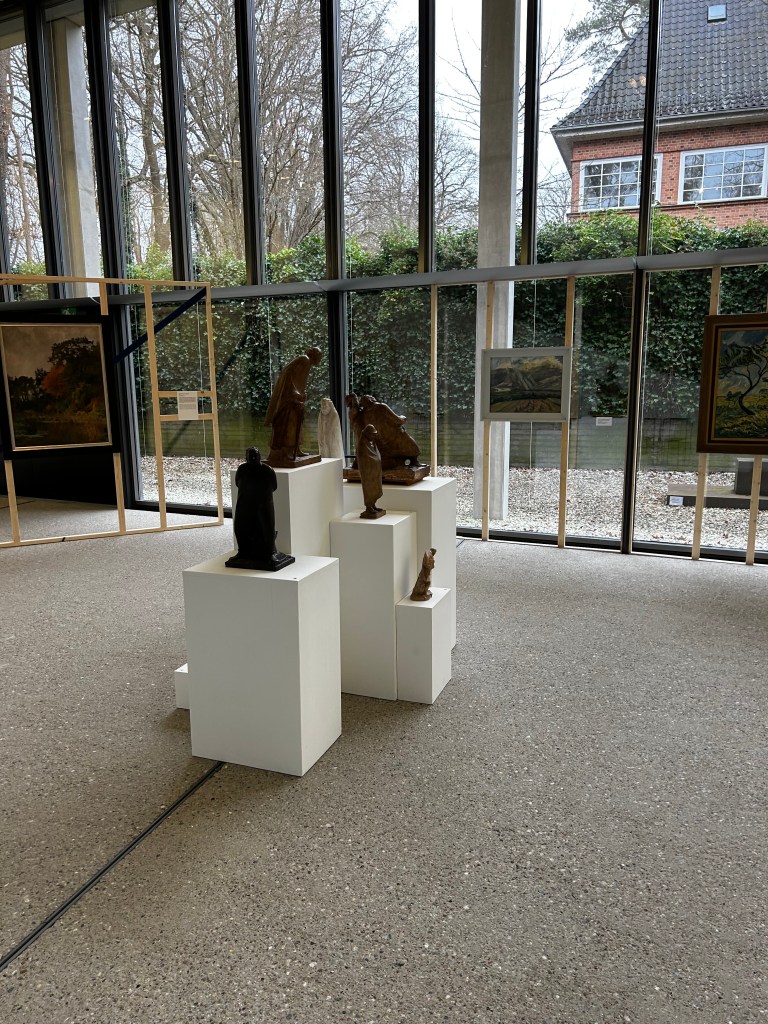
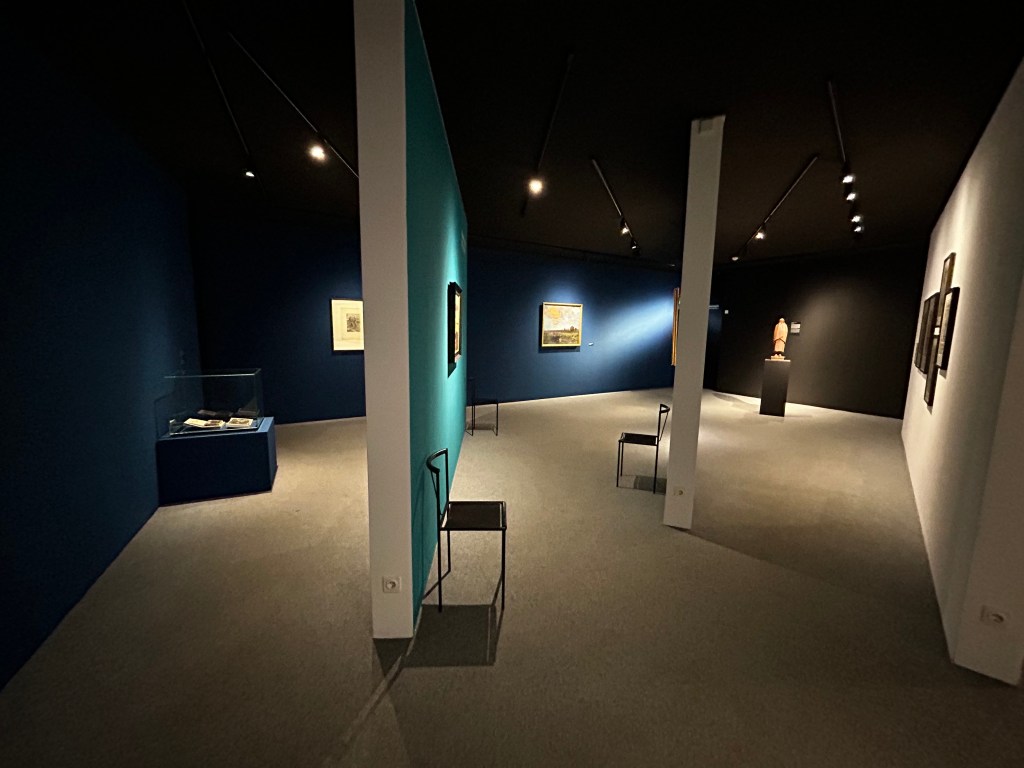
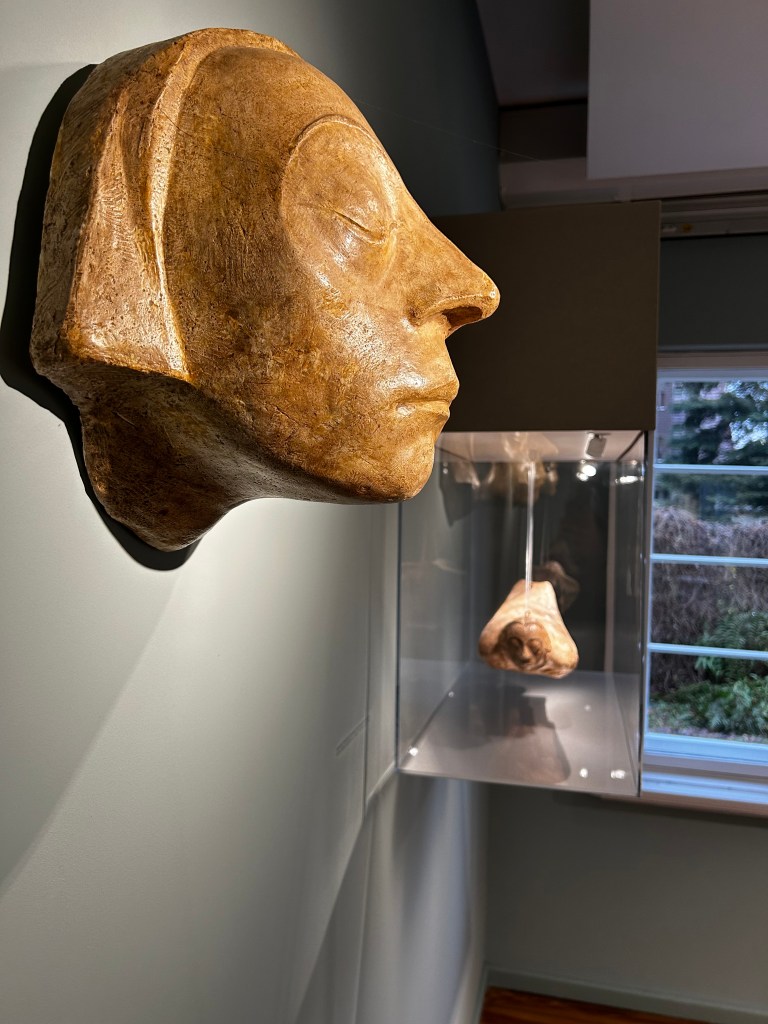
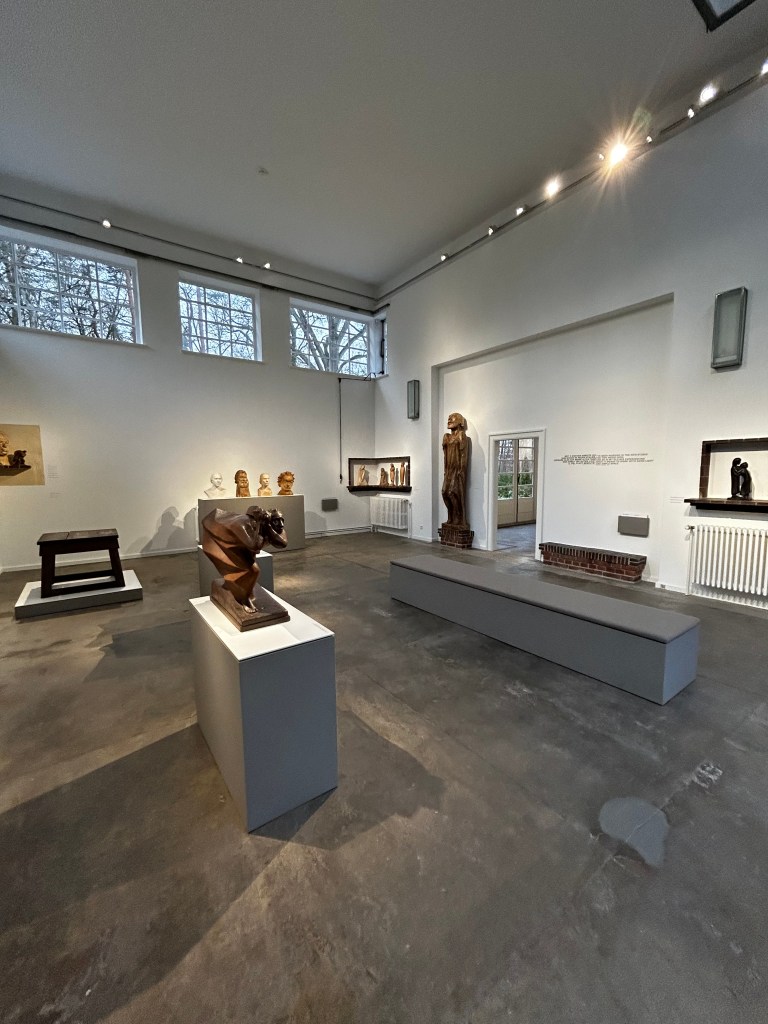
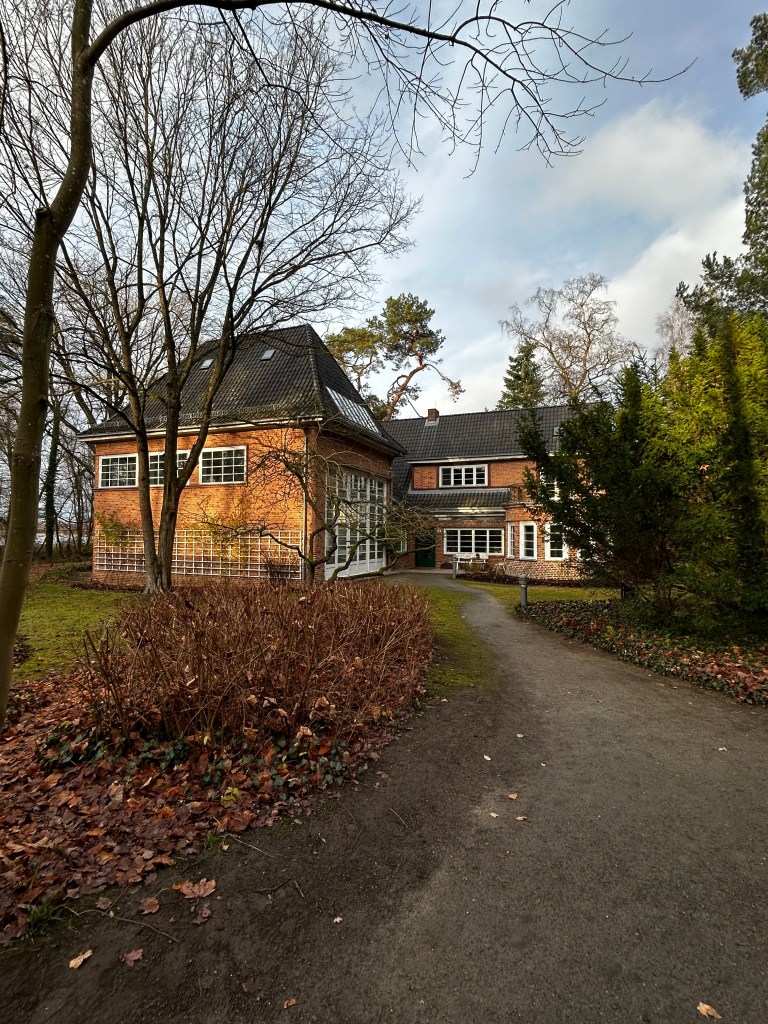
Our first stop was Barlach’s Atelierhaus, the studio home where he lived and worked from 1910 to 1938. The house stands in a residential street, modest from the outside, but inside it opens into the emotional core of his life. The studio still holds his tools, models, and original casts; his handwriting curls across old notebooks; the walls feel close with thought.
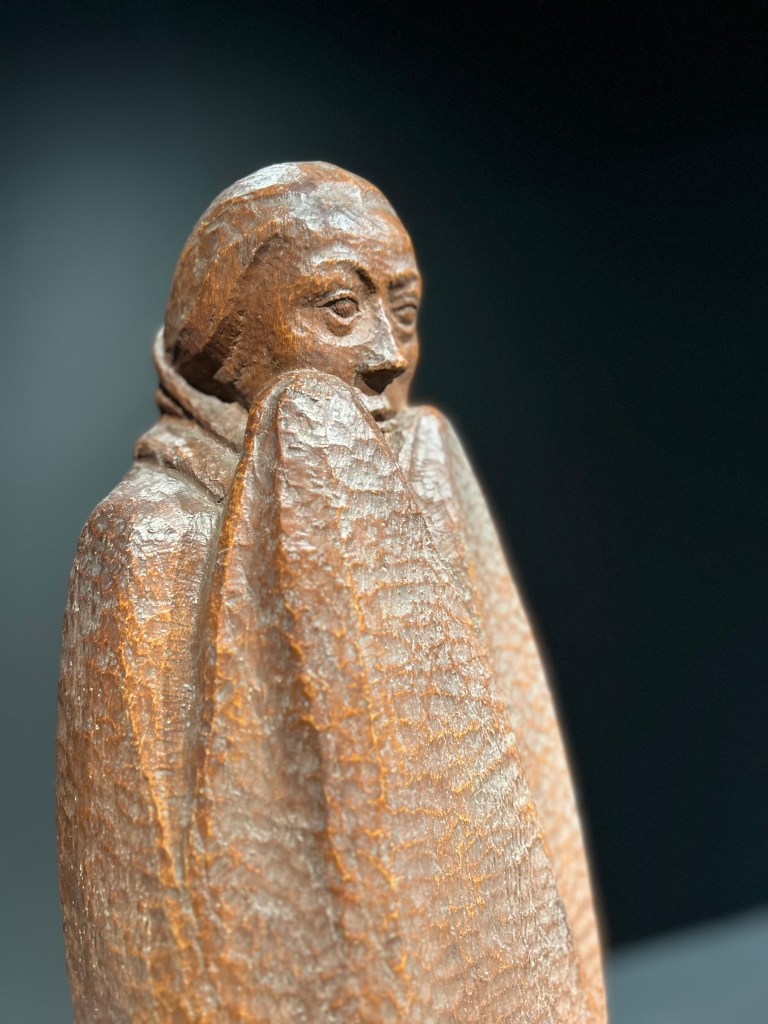
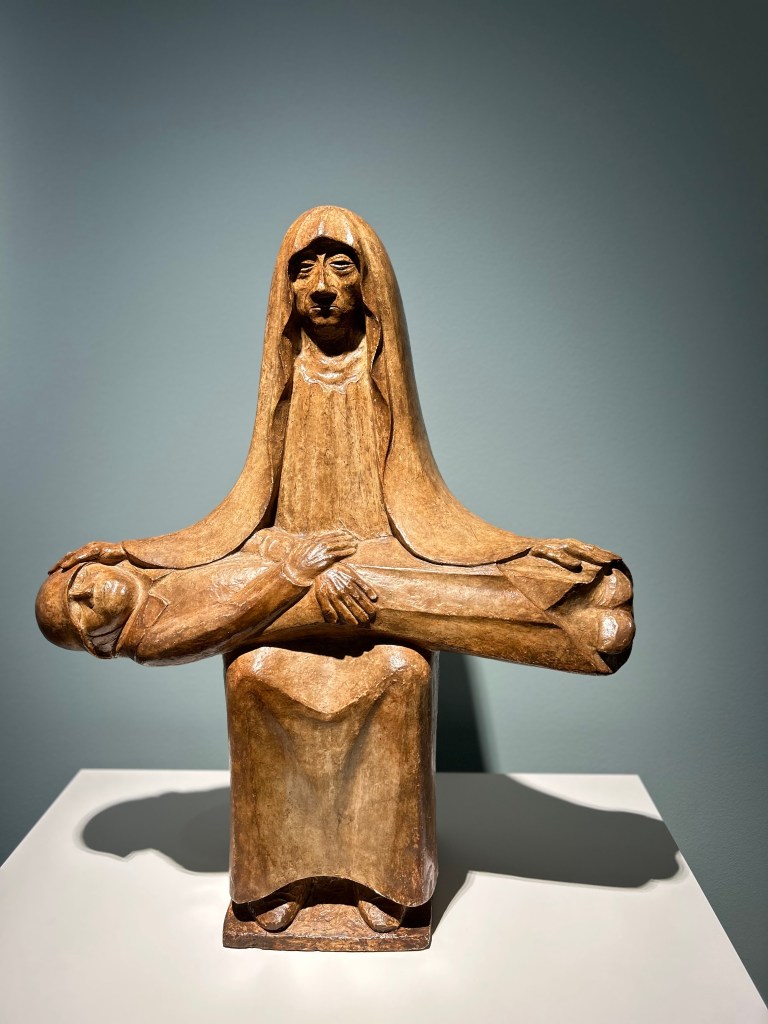
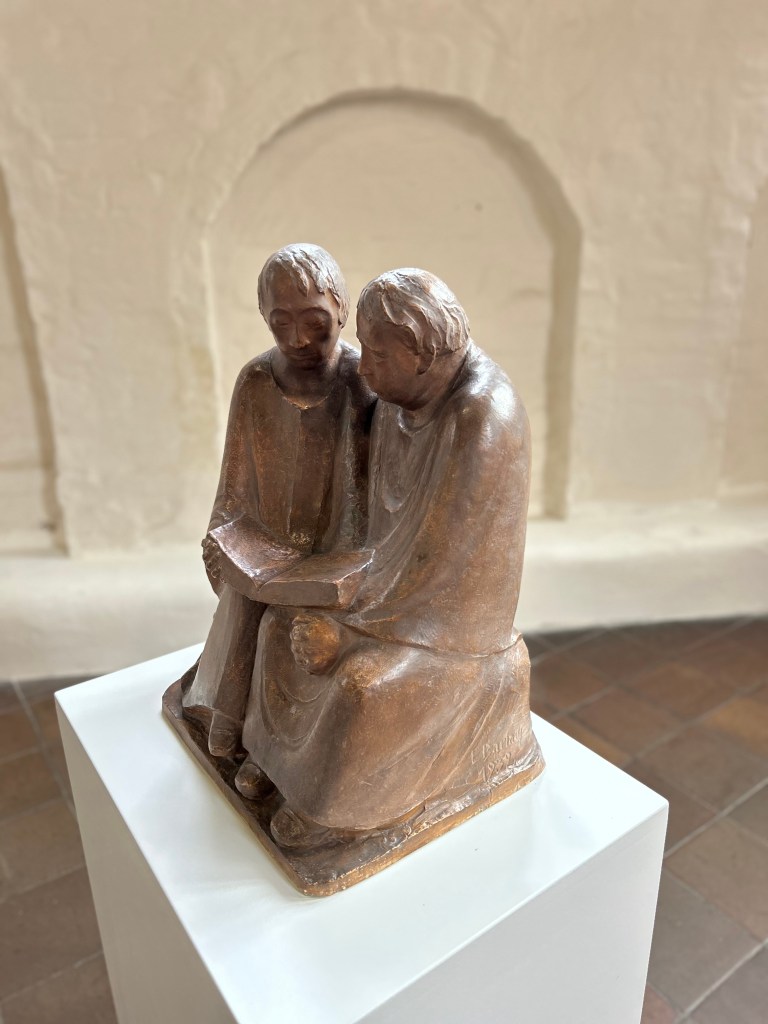
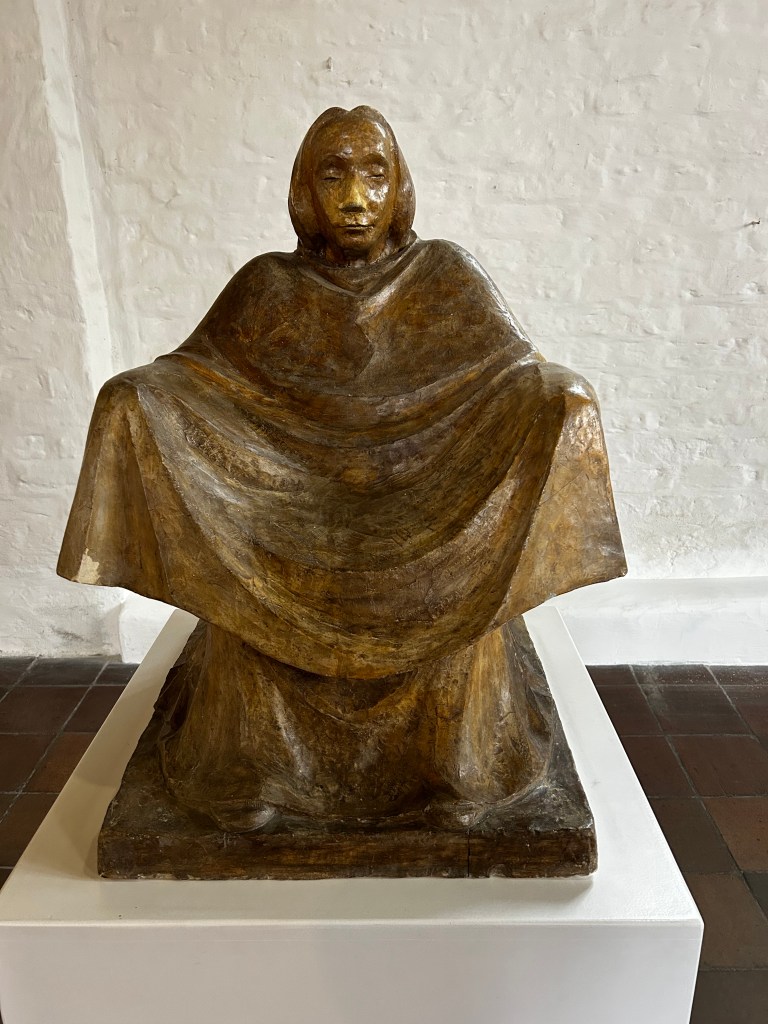
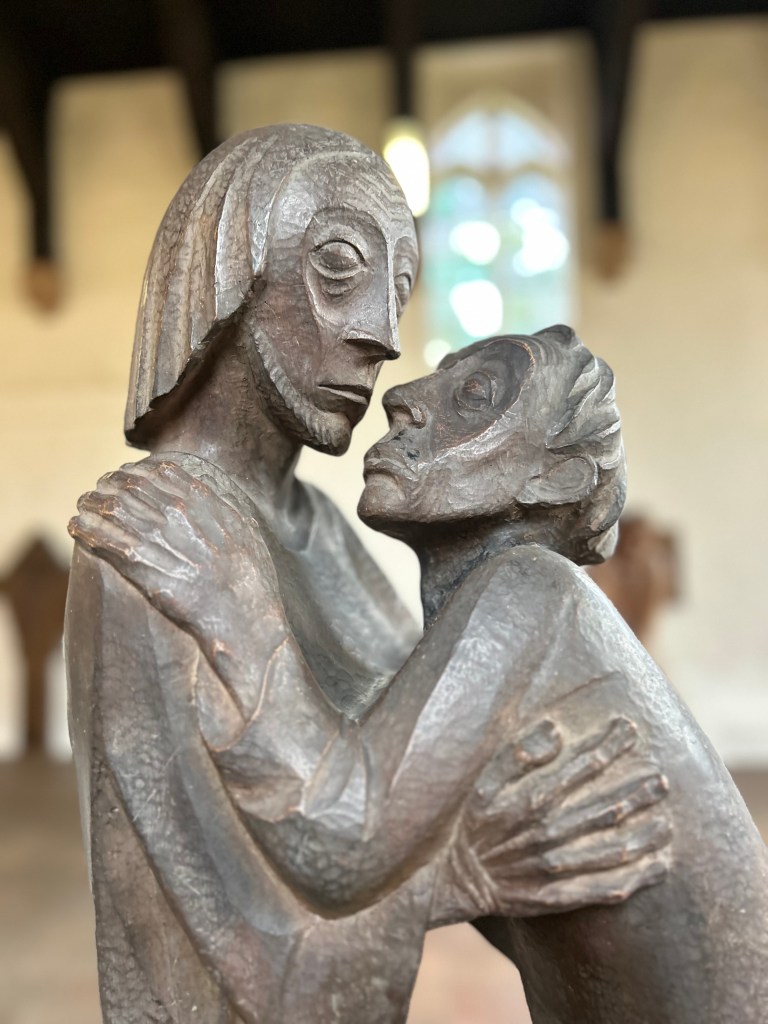
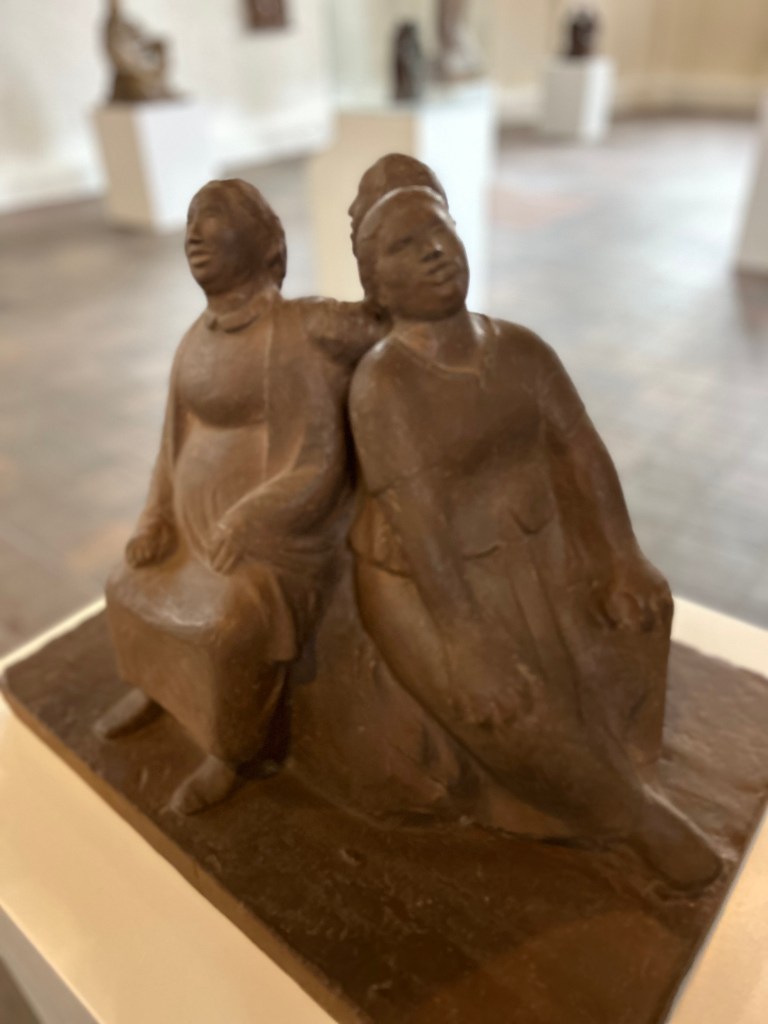
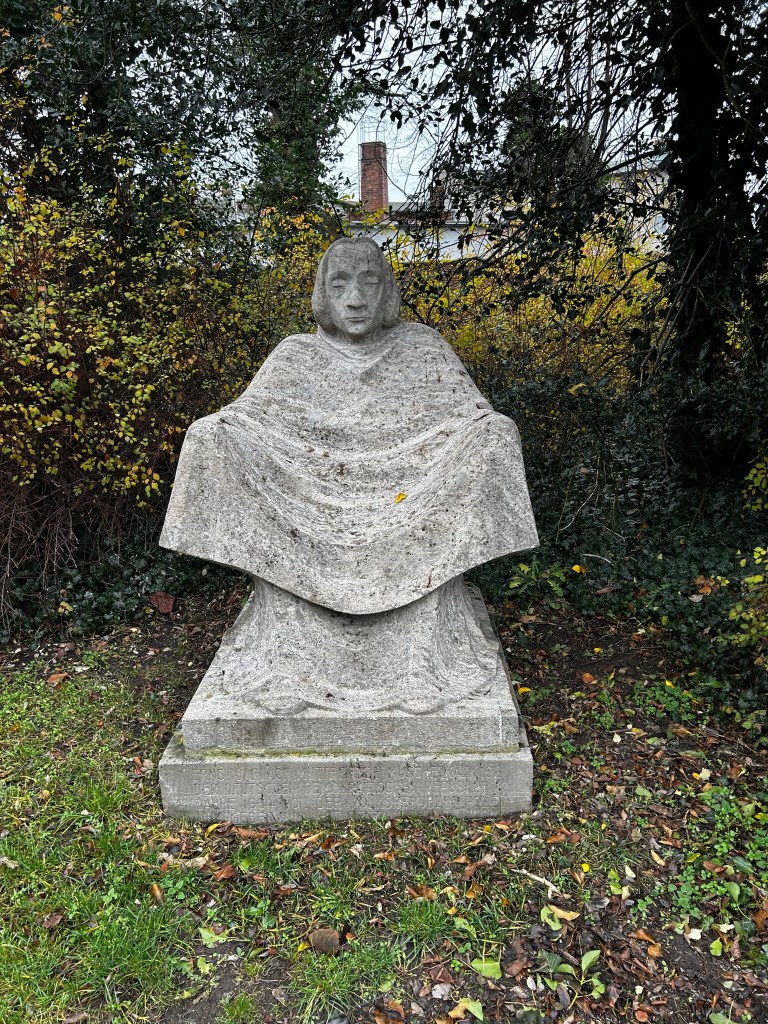
What strikes you is the physicality of his sculpture. Barlach carved not idealised bodies but souls — peasants, wanderers, prophets, grief-stricken mothers — with monumental simplicity. Even in small scale, the works feel carved out of something much heavier than the material itself, as though they were pulled from the earth rather than shaped by hands.
The house is intimate, even domestic, yet suffused with an intensity that makes it easy to imagine Barlach stepping out of the next room. Few museums feel this alive.
Read more about Ernst Barlach HERE
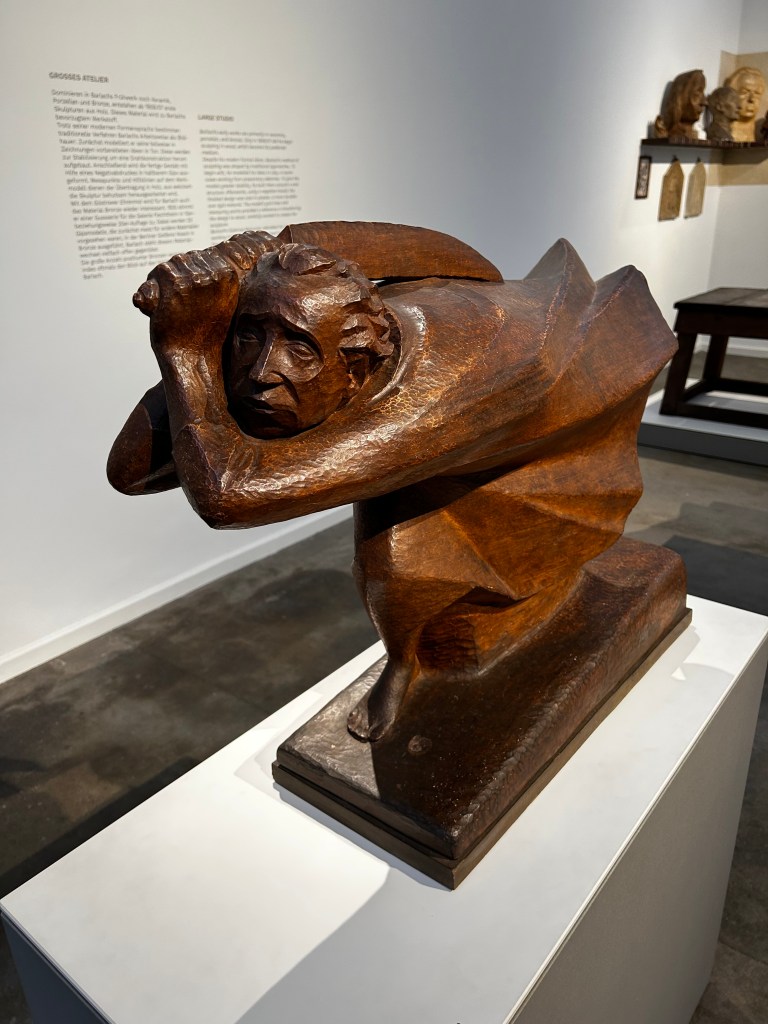
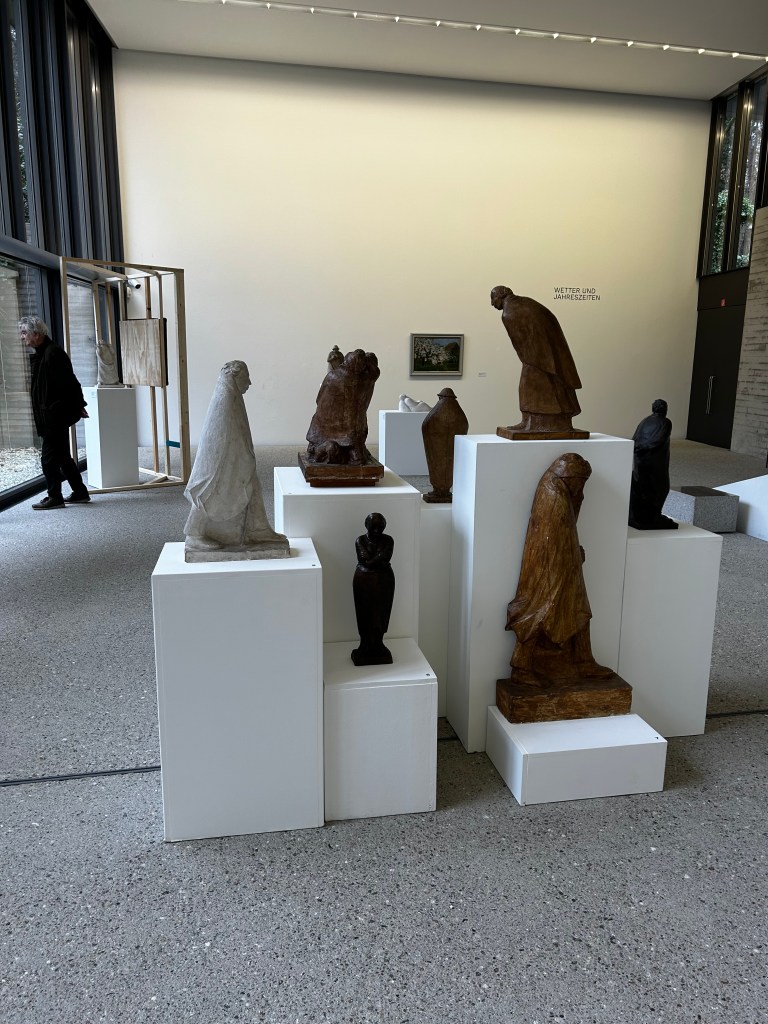
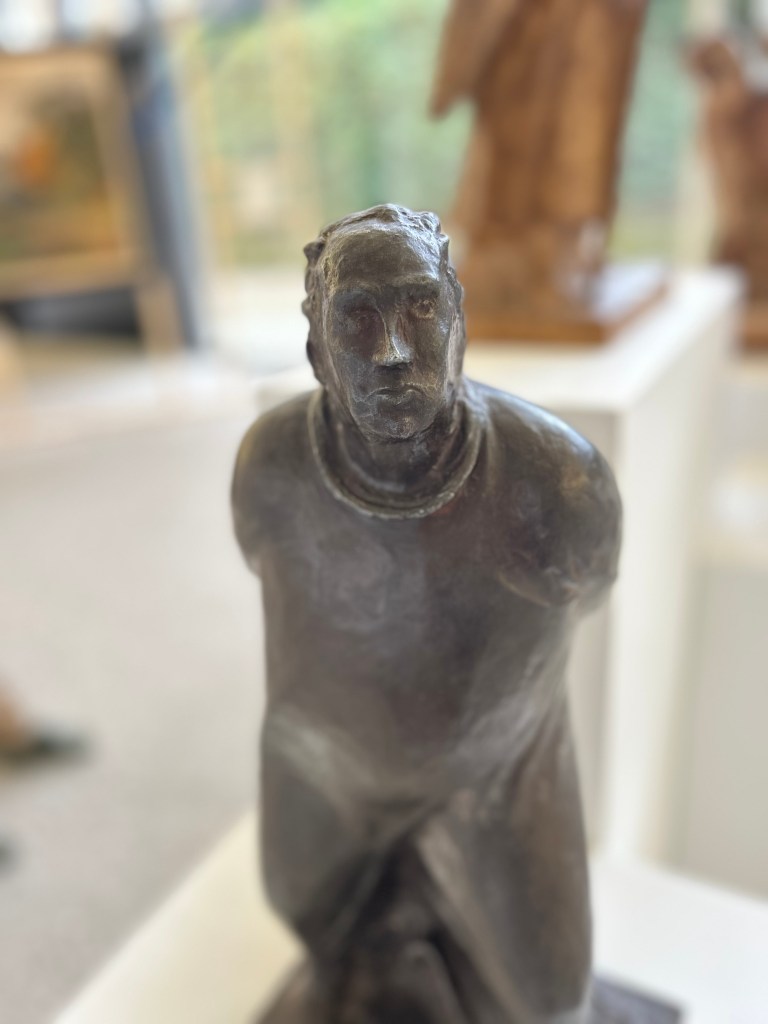
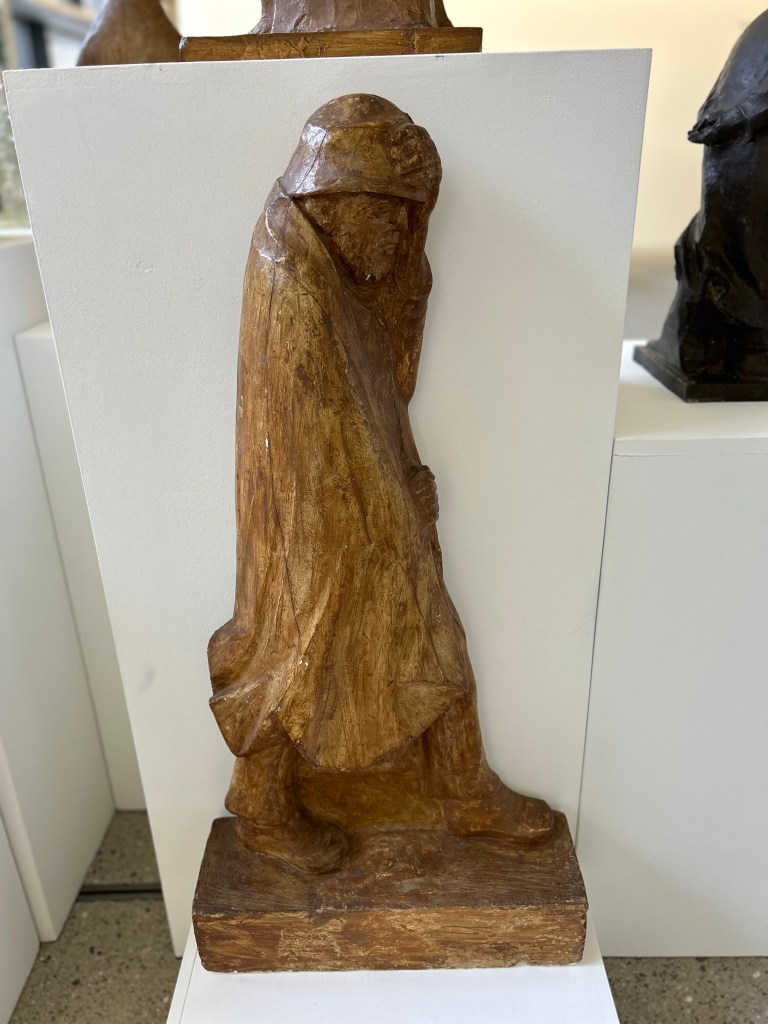
2. The Gertrudenkapelle — A Chapel of Human Weight
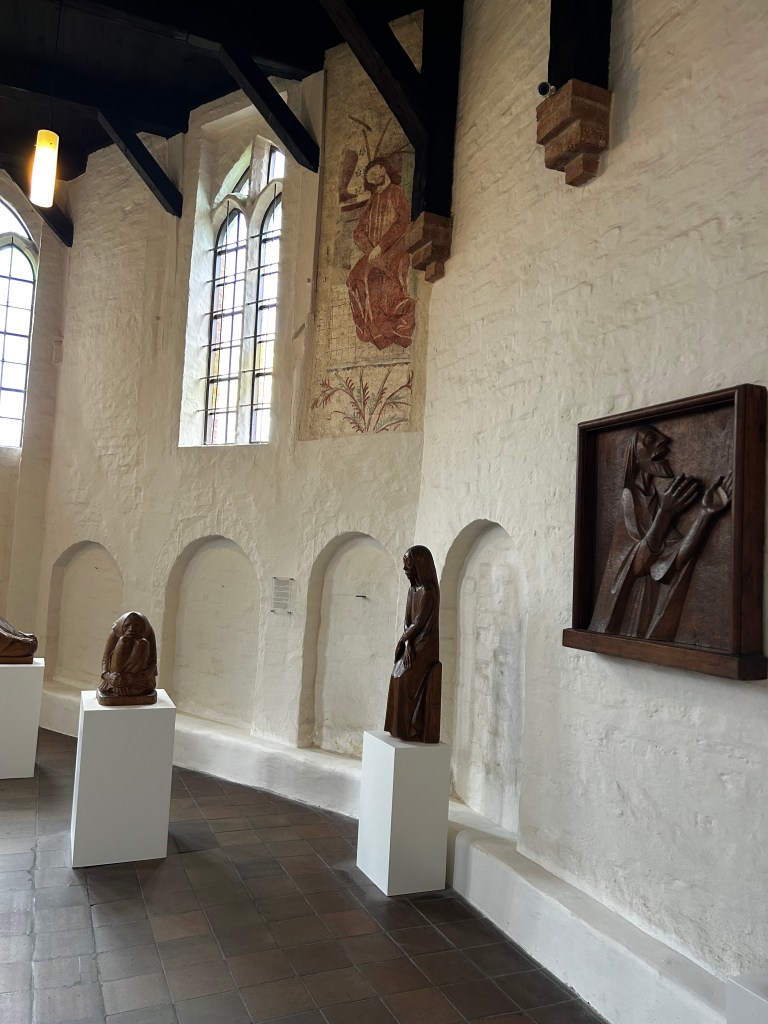
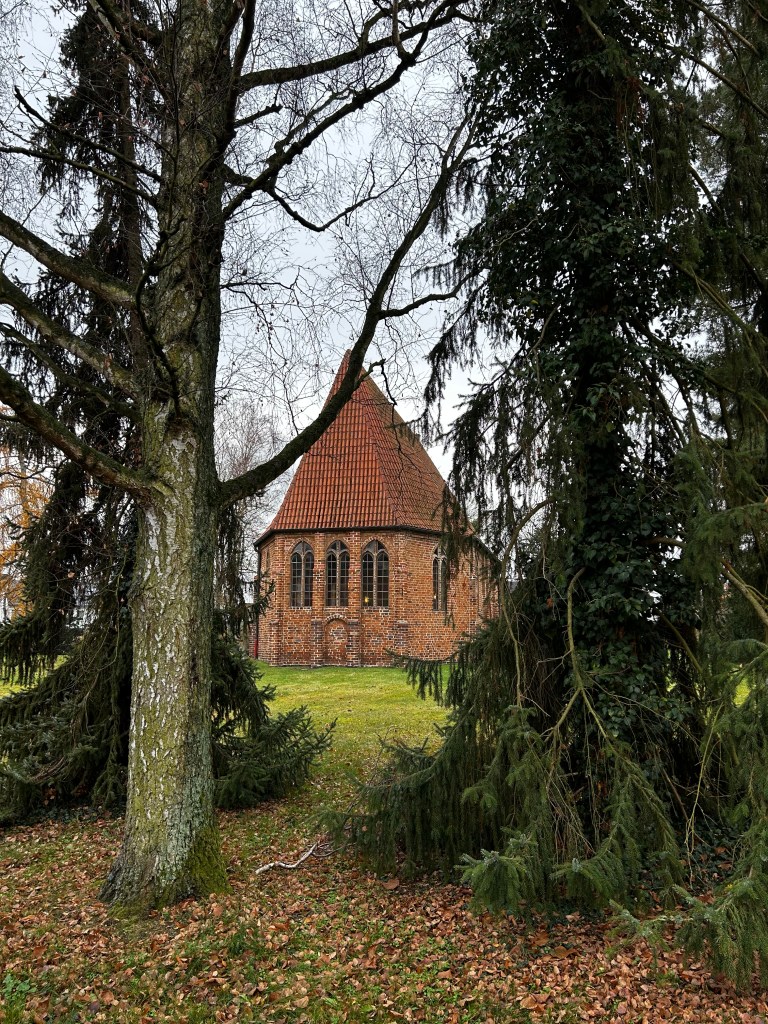
A short walk away sits the early-Gothic Gertrudenkapelle, a former pilgrims’ chapel that Barlach transformed with some of his most moving sculptures. Entering it feels like stepping into distilled emotion.
There is no theatrical lighting, no modern staging — just medieval brick, quiet, and the figures themselves: bowed, contemplative, heavy with inner life. The effect is cumulative, not dramatic. You stand among them and feel your own posture shift.
The chapel became a charged space during our visit, partly because the works are so humbly displayed, partly because history hangs over them: many were removed or destroyed by the Nazis as “degenerate art.” Their return is a restoration not just of objects, but of dignity.
3. The Güstrow Cathedral — The Floating Angel
Nothing prepares you for the Angel.
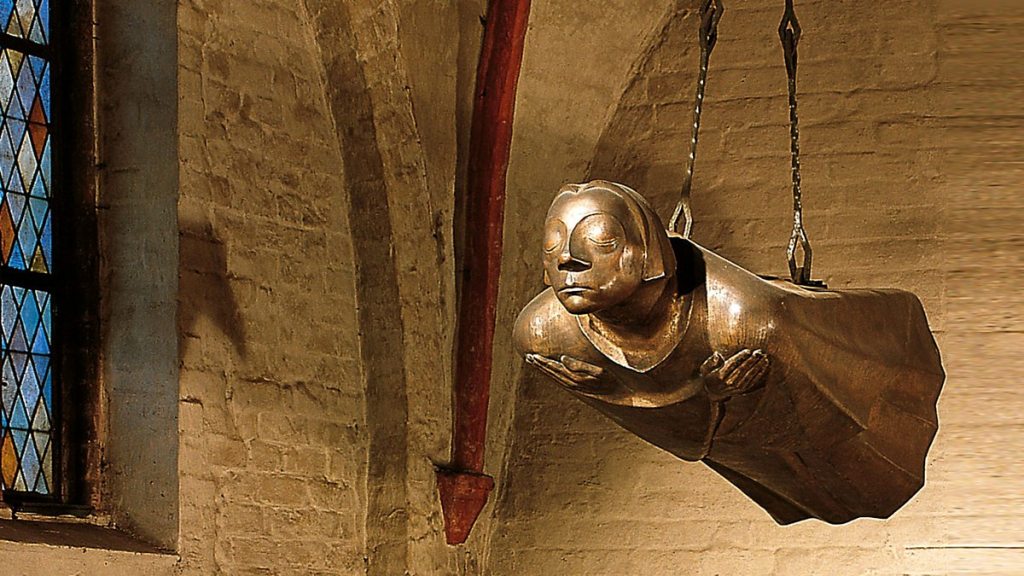
Barlach’s Der Schwebende (“The Hovering One”), suspended in the nave of the Güstrow Cathedral, is one of the great modern sculptures of Europe. Cast in bronze and shaped with astonishing tenderness, it floats just above eye level — solemn, weightless, mourning and consoling at once.
The original was melted down by the Nazis in 1941. The current cast, placed here after the war, feels almost more powerful because of that absence: a resurrection, not merely a sculpture.
Standing beneath it is a visceral experience. The cathedral is Romanesque and Gothic, heavy with stone and history, and in the middle of this solidity hangs a figure made of grace — a reminder that art, against the odds, endures.
A Town Shaped by an Artist
What makes Güstrow unusual is that Barlach is not a decorative afterthought. The town treats him not as an attraction but as a presence. His works are integrated into daily geography: a street name, a museum corner, a church alcove. His anguished, soulful faces appear unexpectedly in courtyards and gardens.
There is something almost poetic about it — a provincial German town becoming the permanent stage for one of the 20th century’s most important sculptors of the human condition.
Where to Stay, Eat, Wander
Stay
- Kurhaus am Inselsee — Lakeside, quiet, the closest thing to “high-end” locally; spa, pool, good service.
- Strandhaus am Inselsee — Stylish, serene, direct water access.
- In town: Ringhotel Altstadt or Hotel am Schlosspark for comfortable central bases.
Eat & Drink
Güstrow is not a culinary capital, but hearty northern German cooking abounds: game, potato dishes, freshwater fish, and plenty of local beer. Café Küpper and Café Röntgen are reliable pauses; traditional restaurants cluster around the Markt and the cathedral.
Walks
The Inselsee is worth a slow loop, especially at dusk when the sky turns metallic and the lake becomes one vast mirror.
The castle gardens are spacious and quiet, and the surrounding streets reveal unexpected Renaissance architecture.
Why Güstrow
Modern travel is obsessed with spectacle, yet Güstrow offers the opposite: a place where art is not spectacle at all, but confession — where one man’s uncompromising vision has quietly permeated an entire landscape.
You don’t go to Güstrow to be entertained.
You go to listen.
And if you follow the Barlach trail — from the studio to the chapel to the angel — the town slowly becomes a portrait of him: thoughtful, wounded, humane, stubbornly luminous.
For anyone interested in modern sculpture, German history, or the strange alchemy between place and artistic spirit, Güstrow is not just a destination.
It is a pilgrimage you don’t realise you needed until you’re already there.
Where to Stay, Eat, and Explore in Güstrow
🛏️ Hotels
- Kurhaus am Inselsee (4★)
Lakeside hotel with spa, pool, and excellent walking paths.
https://www.kurhaus-am-inselsee.de - Strandhaus am Inselsee
Stylish lakeside guesthouse with direct access to the water.
https://www.strandhaus-am-inselsee.de - Ringhotel Altstadt
Comfortable, central, traditional — a reliable base in the old town.
https://www.ringhotel-altstadt.de - Hotel am Schlosspark
Near Güstrow Castle, good value and walkable.
https://www.hotel-am-schlosspark.de
🎨 Museums & Barlach Sites
- Ernst Barlach Atelierhaus (Studio Museum)
The artist’s preserved home and workspace — intimate and essential.
https://www.barlachstadt.de/atelierhaus - Gertrudenkapelle
Chapel housing Barlach’s sculptural cycle — deeply atmospheric.
https://www.barlachstadt.de/gertrudenkapelle - Güstrow Cathedral (Dom Güstrow)
Home of Barlach’s floating masterpiece Der Schwebende.
https://www.dom-guestrow.de - Güstrow Castle (Schloss Güstrow)
Renaissance architecture, state collections, historic interiors.
https://www.mv-schloesser.de/schloss-guestrow
🍽️ Food & Cafés
- Café Küpper
Classic German cakes and coffee, central and cosy.
https://www.cafe-kuepper.de - Café Röntgen
Bright, fresh, modern café with light meals.
https://www.caferoentgen.de - Wirtshaus Zur Alten Ziegelei
Traditional Mecklenburg cooking; hearty, rustic, reliable.
https://www.alteziegelei-guestrow.de - Restaurant Wallenstein (inside Kurhaus am Inselsee)
Regional cuisine on the lakeshore.
https://www.kurhaus-am-inselsee.de/restaurant
Discover more from My World of Interiors
Subscribe to get the latest posts sent to your email.


One thought on “Güstrow: Ernst Barlach Territory”