
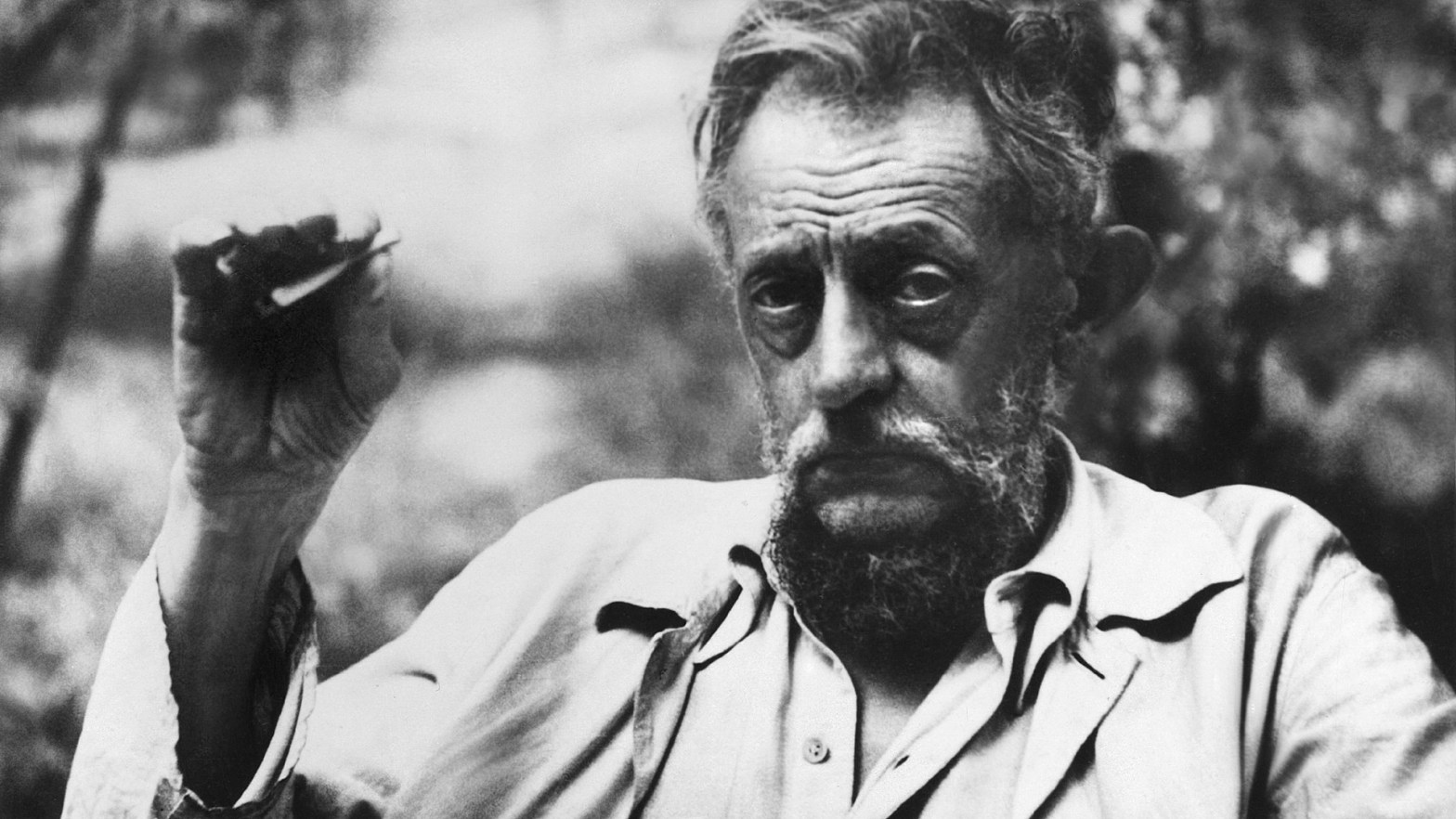
In an art world often obsessed with surface, Ernst Barlach stands apart as a sculptor of interiors — not of rooms, but of human beings. His figures are bent, weighty, contemplative; their silence is the first thing you notice. Then their gravity. Then, slowly, the emotional truth they carry.
To encounter Barlach is not to admire technique, although he mastered form with astonishing economy. It is to meet a kind of spiritual anthropology. Every sculpture, every carved cheekbone or folded hand, reflects his lifelong concern: how to express the human condition stripped of ornament, illusion, or performance.
For this reason, Barlach became one of the most radical artists of early 20th-century Germany — not in style, but in sincerity.
A Life in Search of Essence
Born in 1870 in Wedel, near Hamburg, Barlach grew up between the industrialising north and the wide, plain landscapes of Mecklenburg that would later shape both his temperament and his work. Unlike many of his contemporaries, he refused to chase novelty for novelty’s sake. Instead, he pursued simplicity — a simplicity so distilled it became radical.
His artistic breakthrough came after a formative period in Russia in 1906. There, he encountered peasant life in its rawest form: hardship, dignity, resilience, community. The faces he saw — angular, stoic, carved by cold and labour — appeared again and again in his later sculptures. They were archetypes, not portraits: the Wanderer, the Prophet, the Mourner, the Outcast.
Barlach was never a propagandist or a romanticiser. He simply believed that the truth of a person lies not in their social role but in their inner life.
Güstrow: The Quiet Crucible
If Paris shaped Rodin and Norway shaped Munch, then Güstrow shaped Barlach.
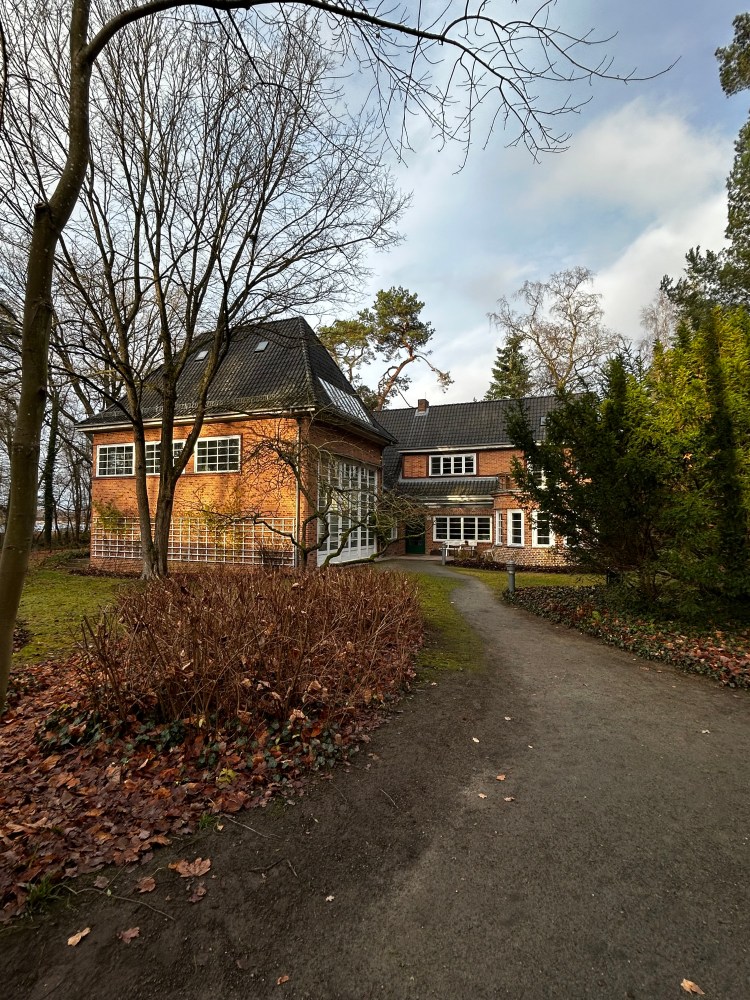
In 1910 he moved there, seeking solitude and a landscape that matched his sensibilities. He found both. The small Mecklenburg town — tranquil, a little remote, surrounded by lakes — became his spiritual home. Here he built his studio house, raised his son Nikolaus, and created the works that would define his career.
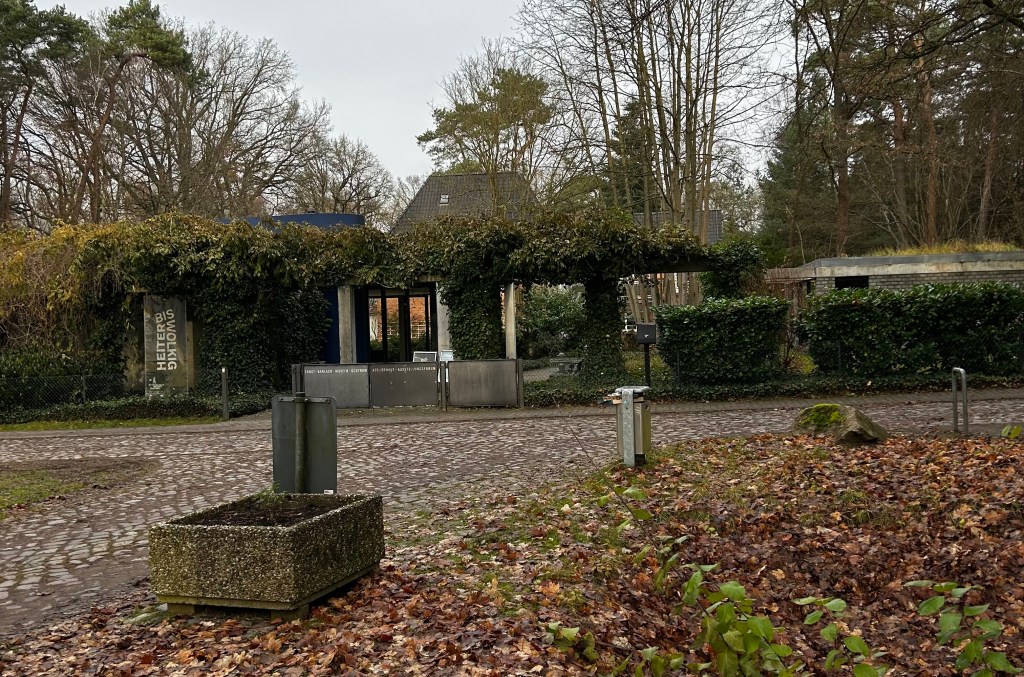
Visitors to the Atelierhaus today feel this immediately. The house, preserved in its original form, is not grand. But its stillness is charged. The studio, with its tall windows and clay-splattered floor, seems prepared for him to return at any moment. Models stand in corners as if deep in their own thoughts.
Güstrow did not merely host Barlach; it absorbed him. And he, in turn, gave the town a cultural pulse far larger than its size.
Read more about Barlach’s Güstrow HERE
The Sculptural Language of Weight and Spirit
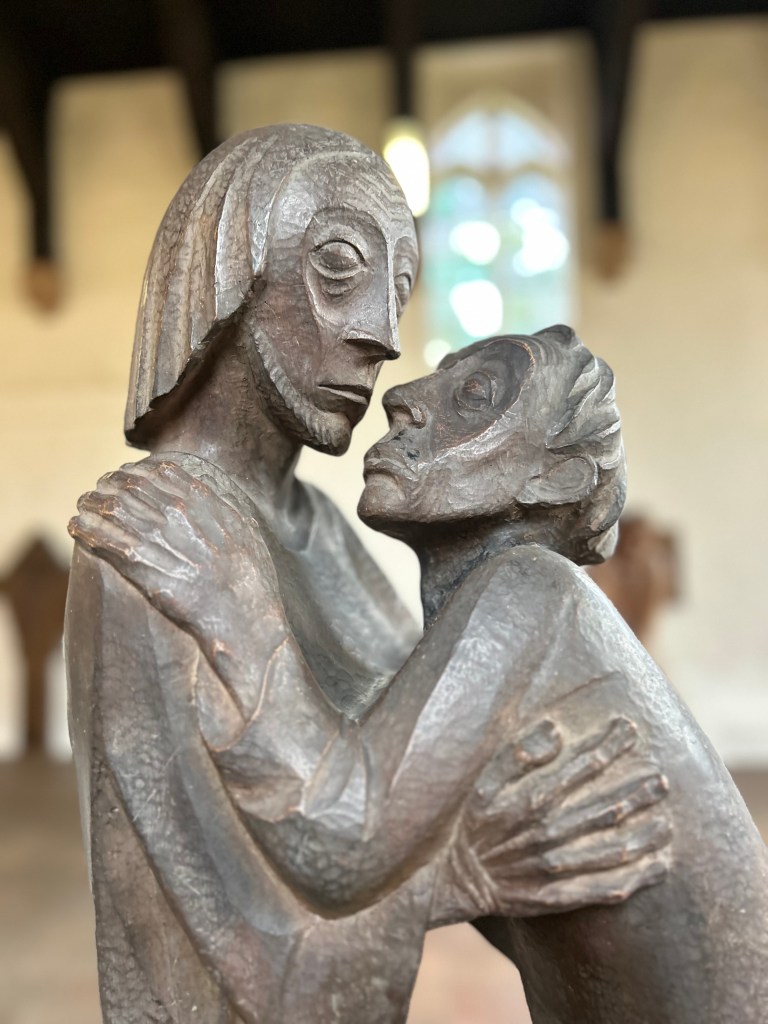
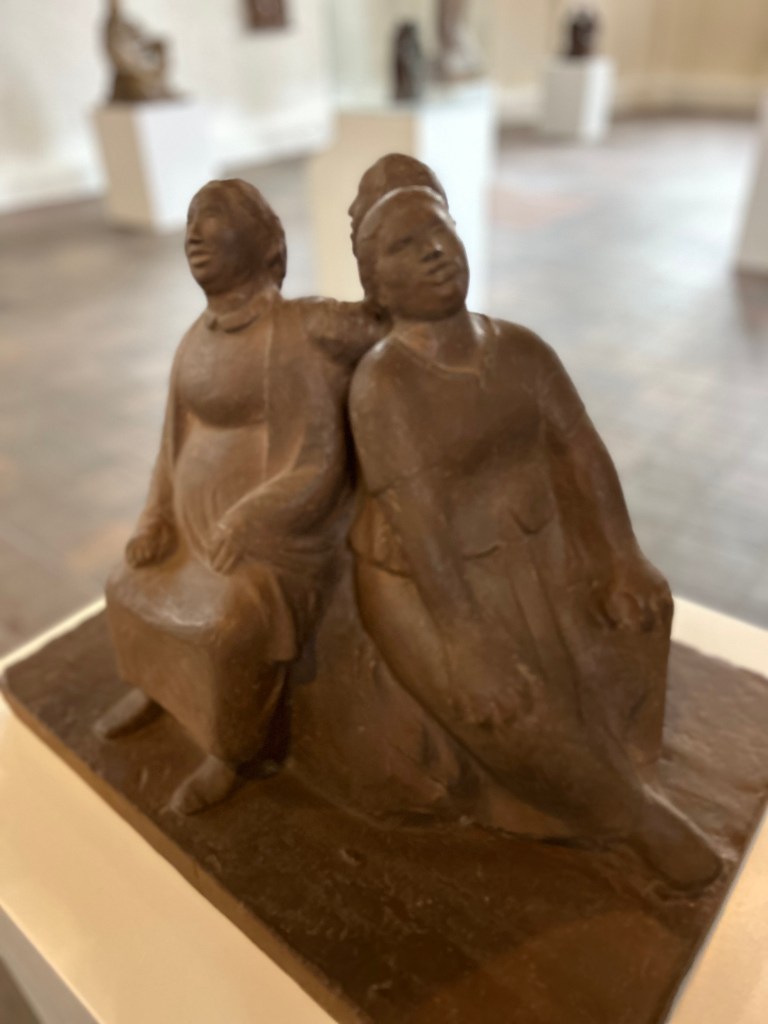
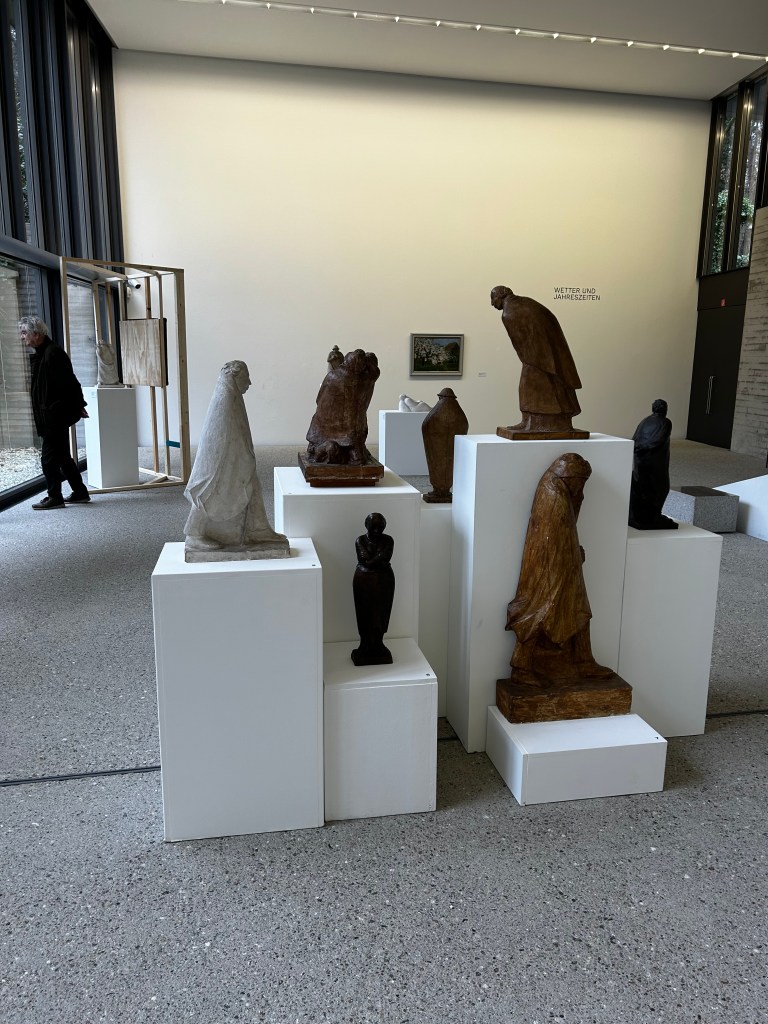
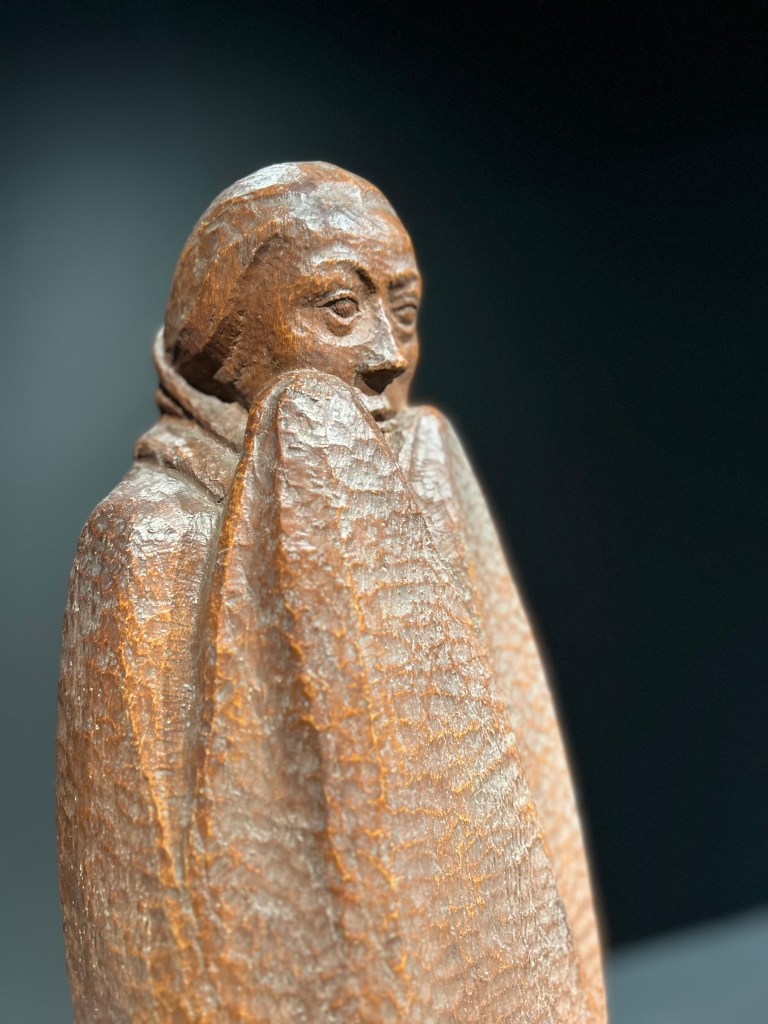
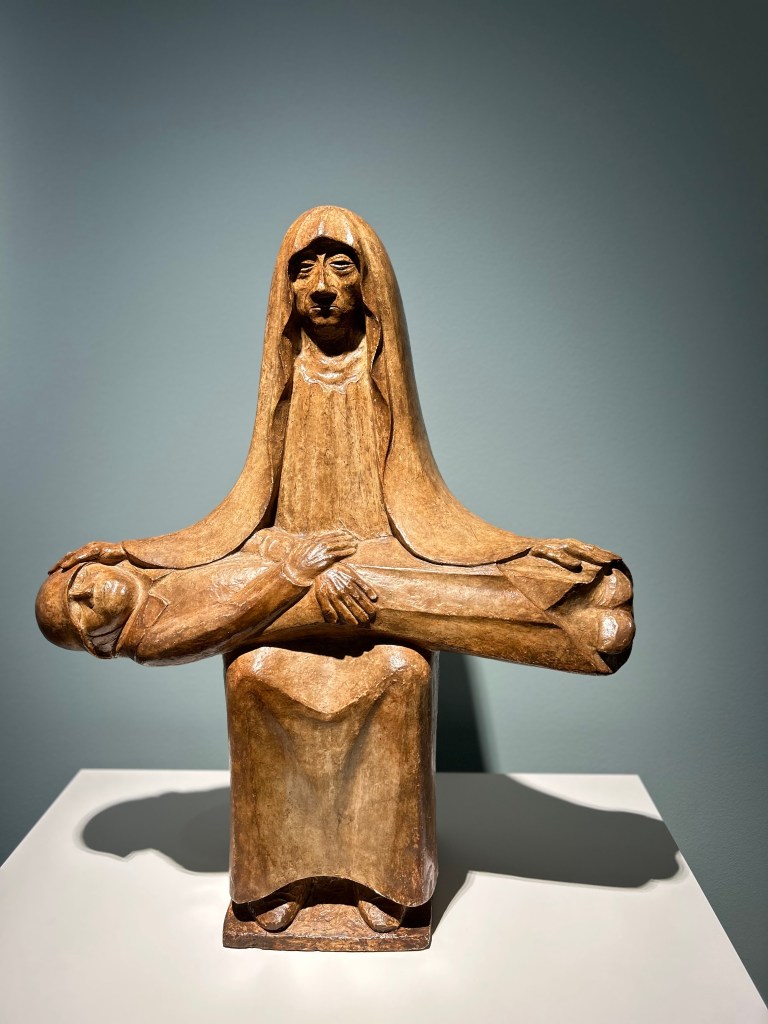
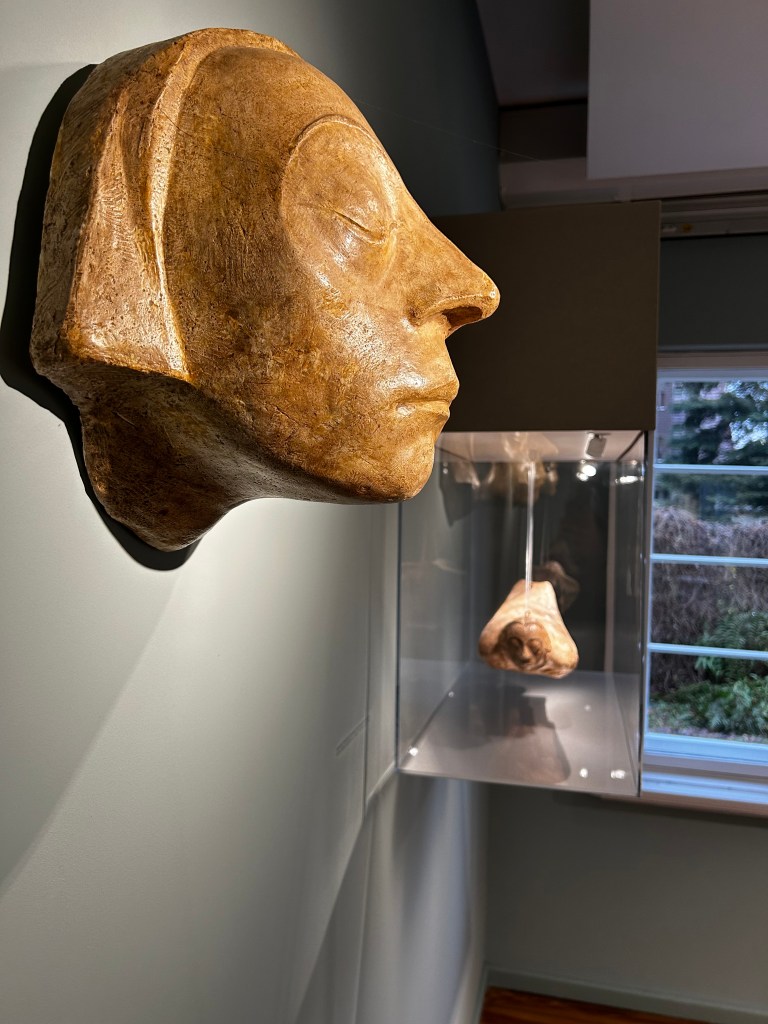
Barlach’s figures are unmistakable. Heavy-limbed, monumental yet intimate, they occupy an emotional register somewhere between medieval icon and modern expressionism.
He was drawn to three states of being:
1. Suffering
Not as spectacle, but as endurance — grief carried without theatrics. His mourners and refugees look inward rather than outward.
2. Contemplation
Hands folded, heads bowed, bodies curved into themselves. These works invite a slowness rare in modern art: you cannot rush past them and understand.
3. Transcendence
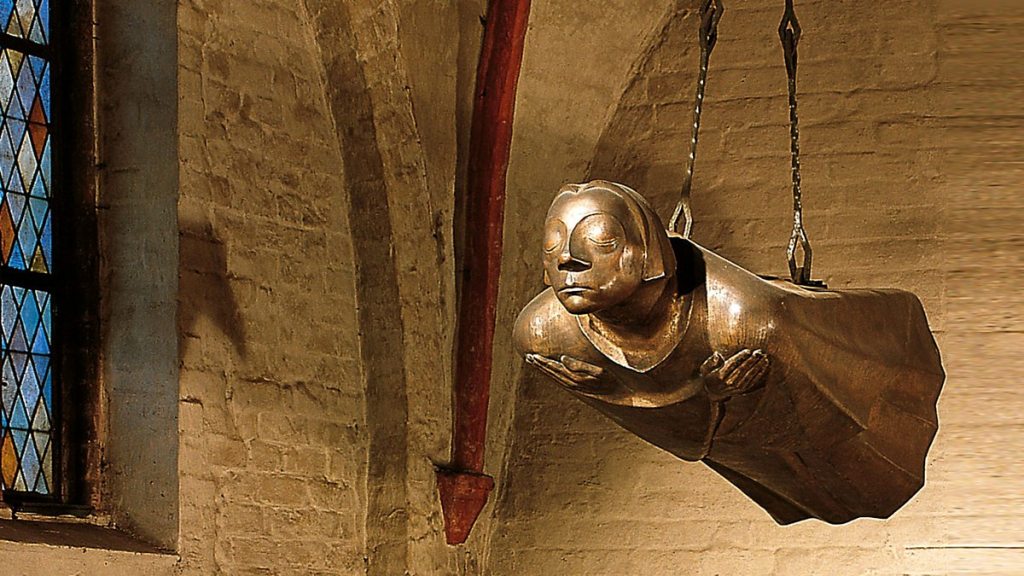
Most famously embodied in his floating angel, where weight becomes weightlessness — sorrow becoming peace.
Barlach believed sculpture could be spiritual without being religious, political without being polemical. This belief made him both beloved and, eventually, targeted.
The Angel Who Defied a Regime
Perhaps no work better articulates Barlach’s artistic philosophy than Der Schwebende (“The Hovering One”), installed in the Güstrow Cathedral in 1927. Suspended in air, the bronze figure — serene, grieving, consoling — was conceived as a memorial to the dead of World War I.
It is powerful precisely because it refuses propaganda.
There is no triumph, no victory. Only mourning.
For this, and for much else, the Nazi regime labelled Barlach “degenerate.” His works were confiscated, removed from public view, and in some cases destroyed — including the original floating angel, melted down for armaments in 1941. The cast that hangs in the cathedral today is a postwar resurrection, as moving as the original because it bears the memory of its loss.
Standing beneath it, you feel the astonishing paradox of Barlach’s art: heavy with grief, yet lighter than air.
A Legacy of Truth
Barlach died in 1938, broken by the political climate yet unwavering in artistic principle. He left behind sculptures, drawings, woodcuts, and plays — but above all, he left an uncompromising standard: emotional honesty over aesthetic fashion. Form as empathy. Art as witness.
Today, Barlach’s presence is felt strongly in three places:
- The Atelierhaus in Güstrow — his preserved home and studio.
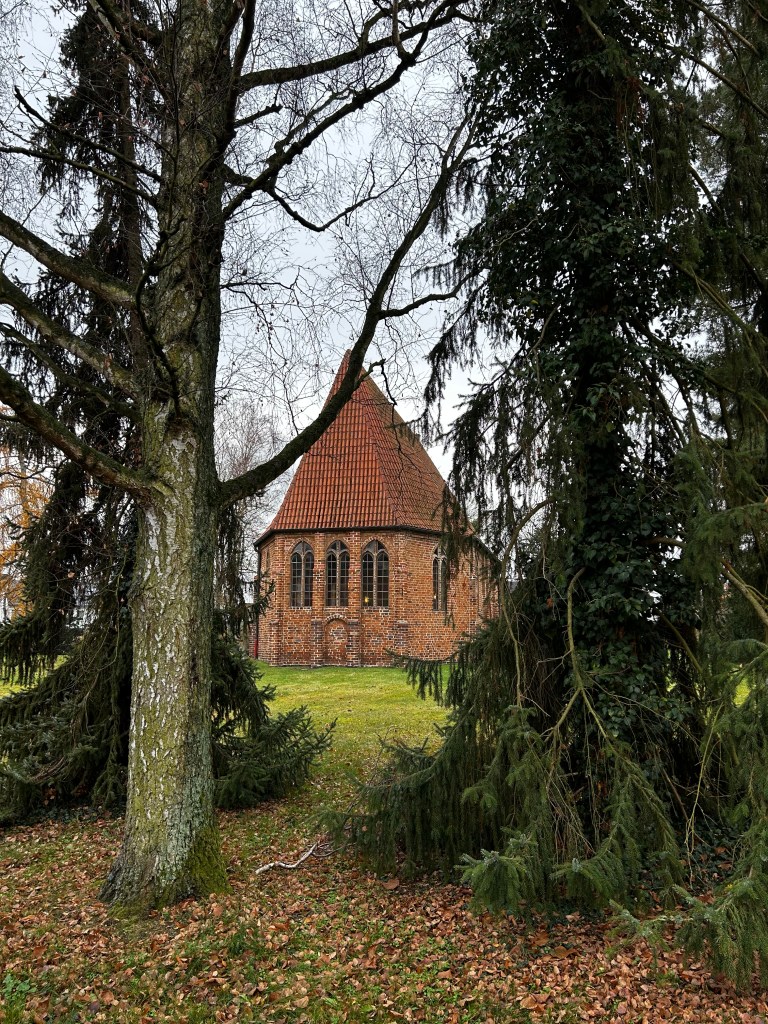
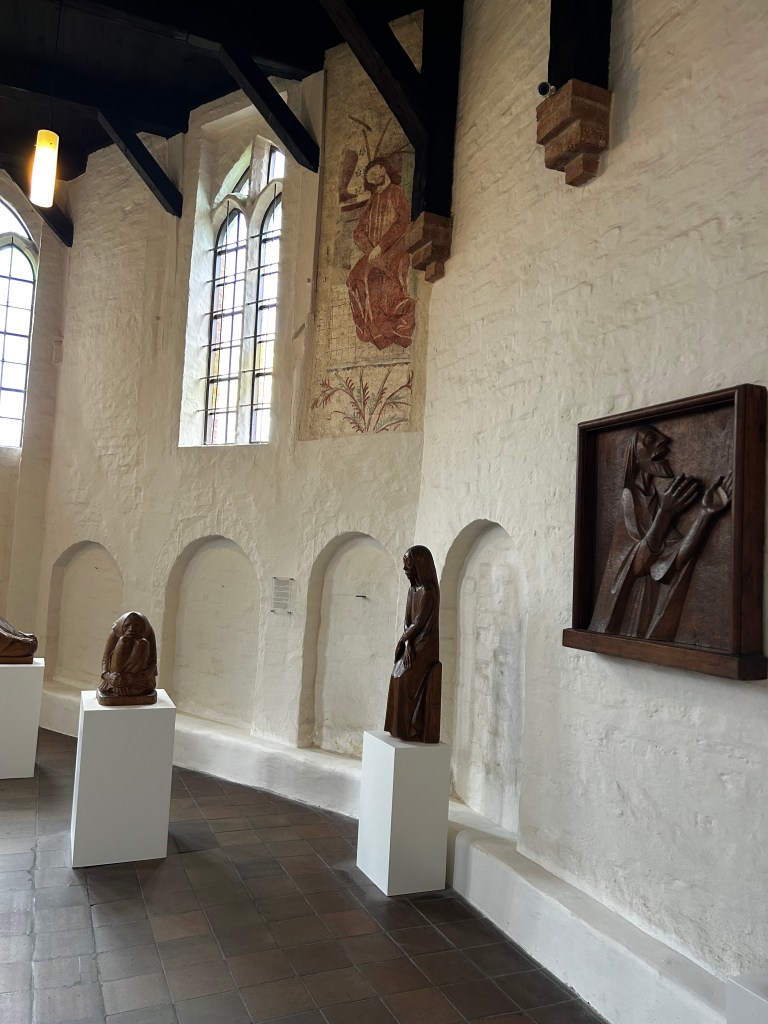
- The Gertrudenkapelle — housing some of his most profound sculptural groups.
- The Güstrow Cathedral — where the angel floats above the nave, watching, remembering.
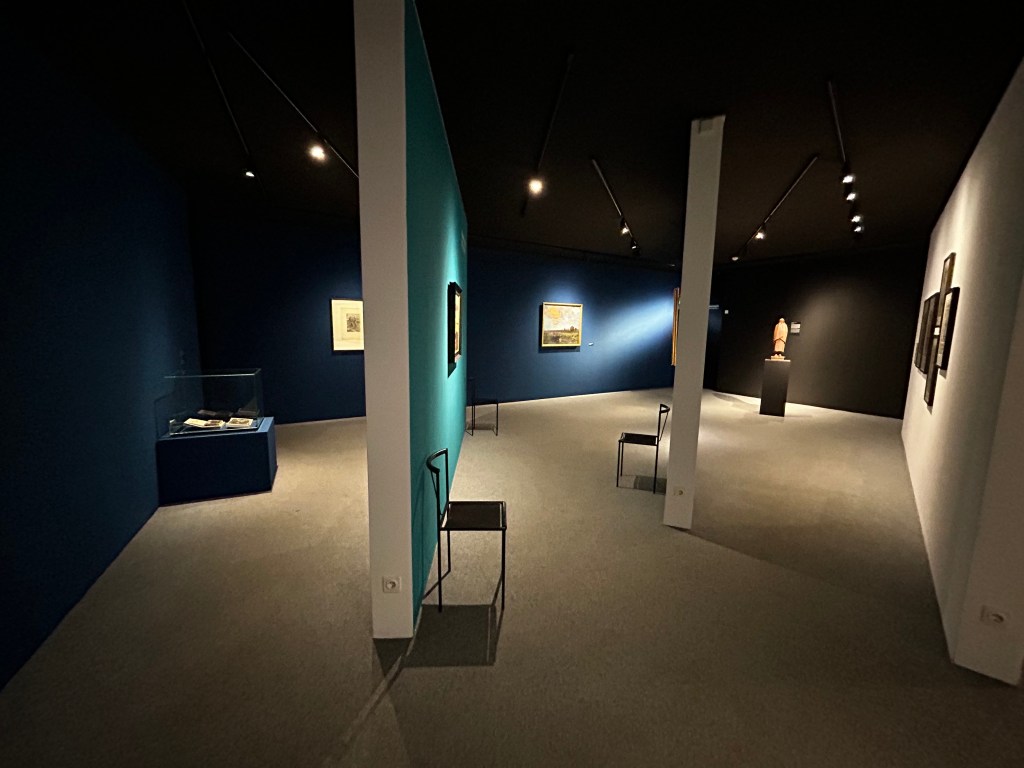
Together, these sites form one of northern Europe’s most quietly powerful artistic pilgrimages.
Why Barlach Matters Now
In a world of noise, Barlach reminds us of the value of depth.
In a culture of spectacle, he reminds us of sincerity.
In a time of anxiety, he reminds us that grief can be dignified, contemplation courageous, stillness revolutionary.
His figures do not dazzle, once you’ve stood before them, they stay with you.
Discover more from My World of Interiors
Subscribe to get the latest posts sent to your email.

