Through Catherine Opie’s photographs of Elizabeth Taylor’s final home, an extraordinary Hollywood life unfolds in objects, memories and fragments of a vanished world. Returning to the exhibition at Louisiana is an exercise in nostalgia, but also a reflection on beauty, resilience and the strange passage of time.
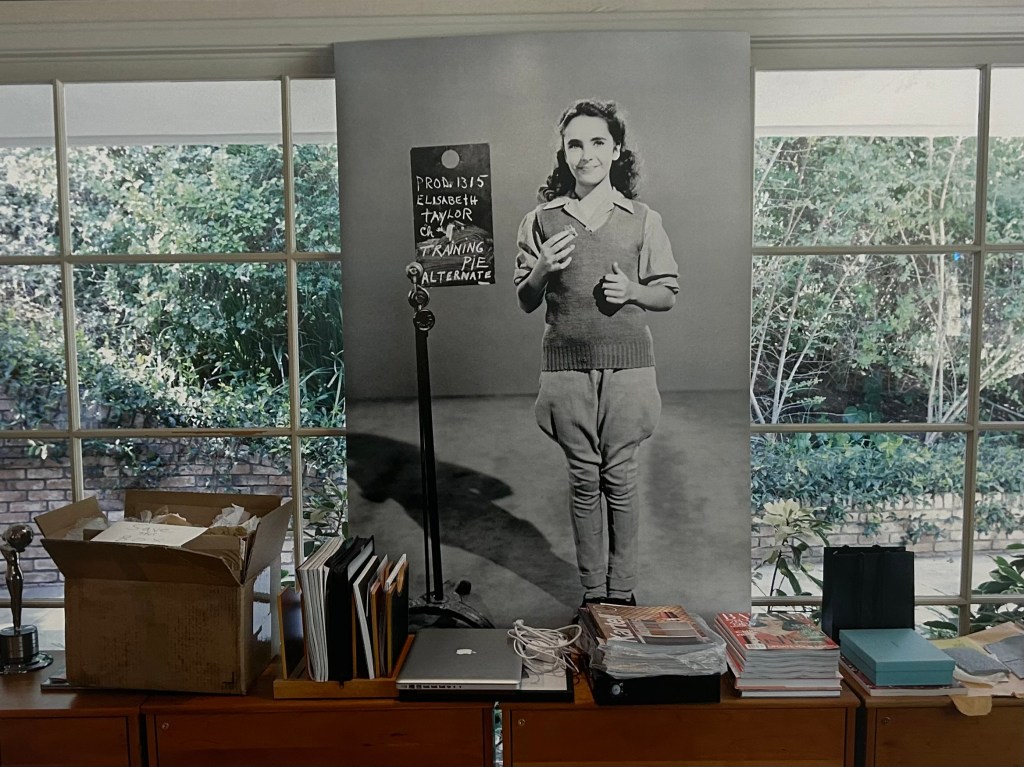
A young Elizabeth Taylor stands before the camera in a casual equestrian outfit, her dark hair falling around her shoulders. A studio production sign stands beside her, and if you are an old Hollywood buff like me, you will instinctively know the film is National Velvet. She looks almost impossibly young, poised on the threshold of a career that will make her one of the most recognisable women in the world.
Nearly seventy years later, a large black-and-white cut-out of that young actress stands inside her Bel Air home, surrounded by cardboard boxes, books, magazines and the ordinary clutter of domestic life. Through the tall windows behind her, a mature Californian garden stretches into the sunlight. A laptop rests on the table in front.
The image belongs to photographer Catherine Opie’s 700 Nimes Road, a remarkable series documenting the home in which Elizabeth Taylor spent the final three decades of her life.
Its poignancy becomes apparent when one considers what lies between the two moments captured in the photograph.
The girl has no idea what awaits her. She knows nothing of the extraordinary films, the marriages, the magnificent jewellery, the friendships, the heartbreak, the illnesses or the extraordinary courage that will eventually define her public life. She cannot know that the physical demands of the film she is making will become associated with decades of pain.
By the time Opie photographs this youthful image standing in Taylor’s home, nearly all of that life has been lived.
The photograph contains the beginning and the end of a remarkable story, separated by the accumulation of ordinary possessions.
The Girl Who Wanted to Grow
Elizabeth Taylor’s determination was evident long before she became a Hollywood legend.
In 1943, MGM was preparing to film National Velvet, Clarence Brown’s adaptation of Enid Bagnold’s novel about a young girl determined to compete in the Grand National on her beloved horse.
Taylor desperately wanted the leading role, but the studio considered her too small and physically immature.
According to accounts preserved by the American Film Institute and Turner Classic Movies, she embarked upon an extraordinary campaign to make herself suitable. She changed her diet, exercised, swam, rode horses and followed a regimen intended to encourage her growth. When production began, she had reportedly grown three inches.
The determination is wonderfully characteristic. Taylor had decided she wanted something, and she was prepared to work for it.
During filming, she was reportedly thrown from a horse, an incident subsequently associated with the serious back problems that troubled her throughout adulthood. The precise origins of her later chronic pain are difficult to establish, particularly given the additional injuries and medical complications she endured, but the story has become part of the history of the film.
By the time she died in 2011, Taylor had undergone numerous operations, experienced periods of severe physical suffering and survived illnesses that might have overwhelmed a less determined individual.
Yet none of that is visible in the young actress standing beside the production sign.
She is still entirely absorbed in becoming the person she wants to be.
It is this knowledge of everything that followed that makes the photograph so affecting. We are looking backwards at someone who is looking forwards, towards a future whose extraordinary demands she cannot possibly imagine.
A House Full of Hollywood
At Louisiana Museum of Modern Art, Opie’s fifty photographs from 700 Nimes Road are once again on display, having become a much-loved part of the museum’s permanent collection.
Returning to them is a particular pleasure.
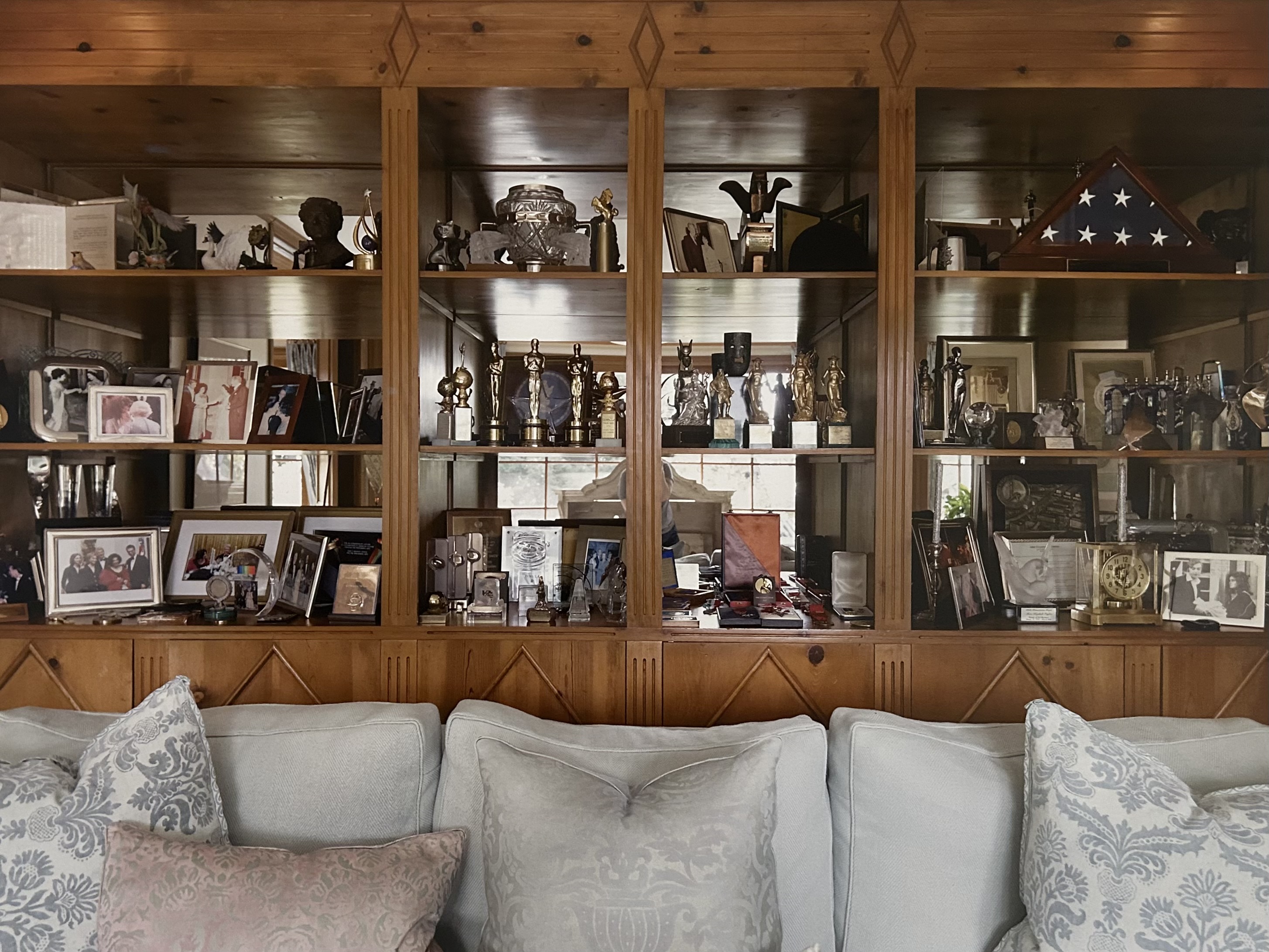
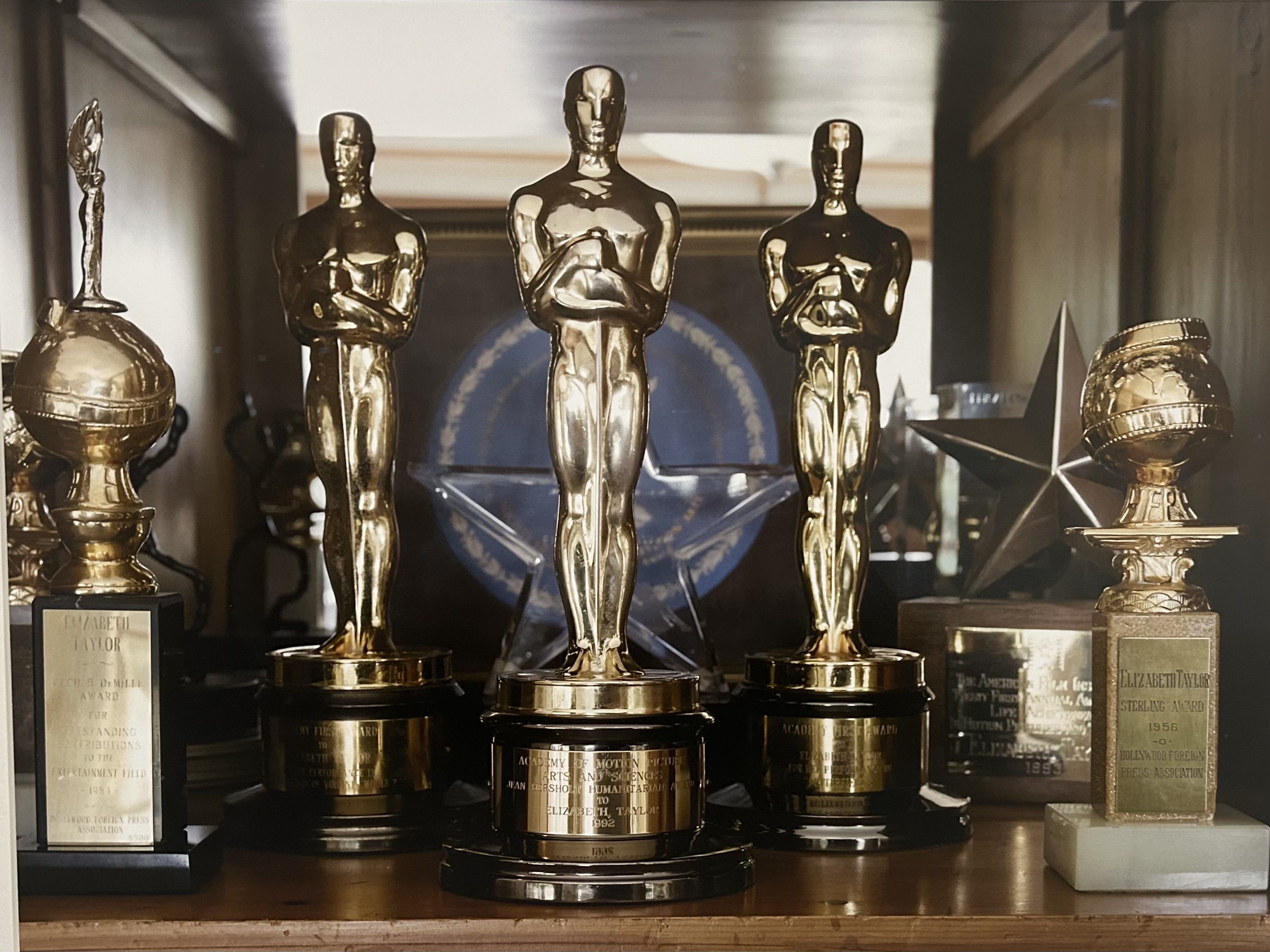
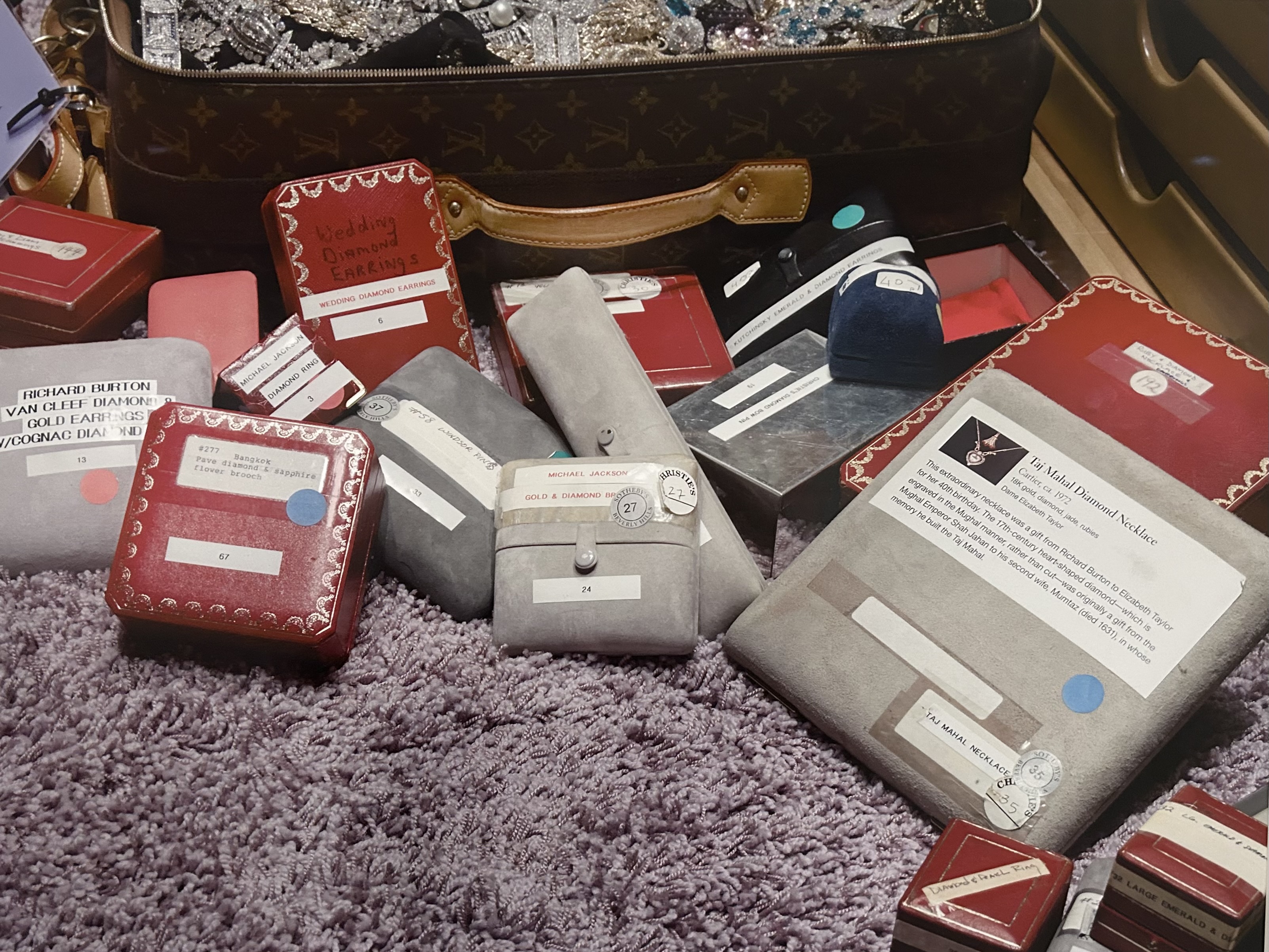
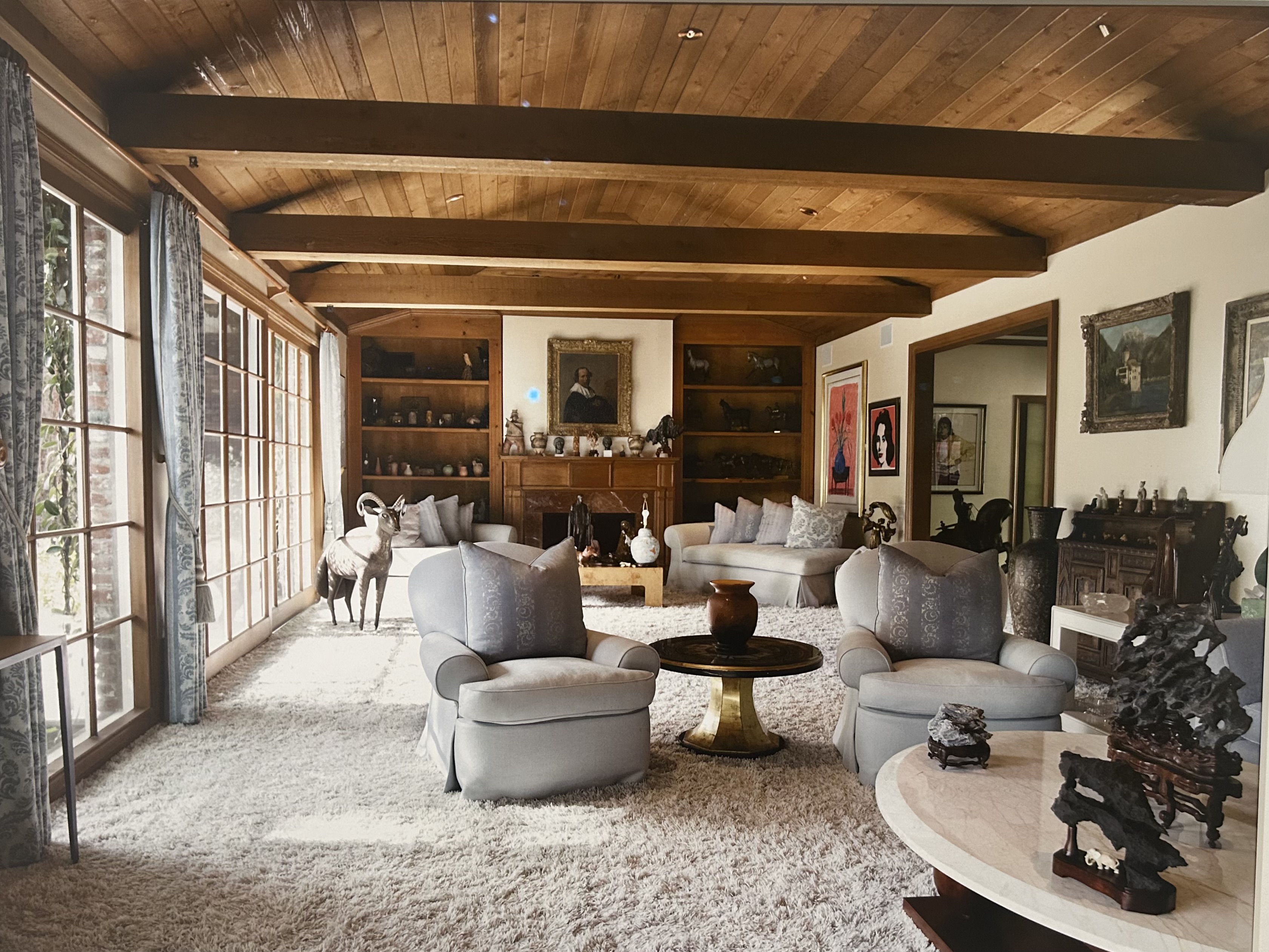
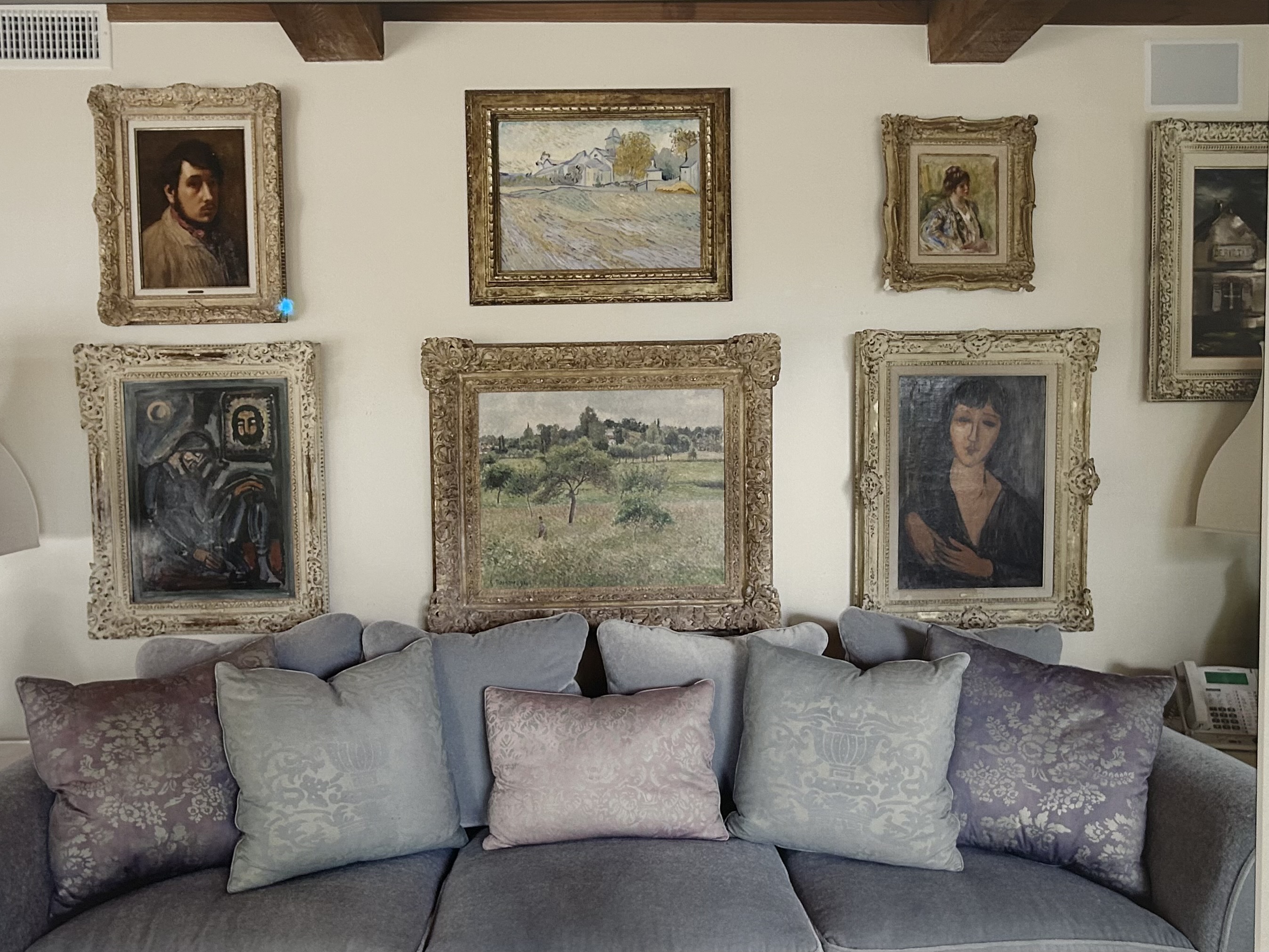
The series offers the kind of intimate encounter with old Hollywood that has become increasingly rare. Taylor’s Bel Air residence was a house filled with magnificent jewellery, couture clothing, photographs, paintings, books and personal possessions, accumulated over a lifetime of exceptional circumstances.
It was also unmistakably a home.
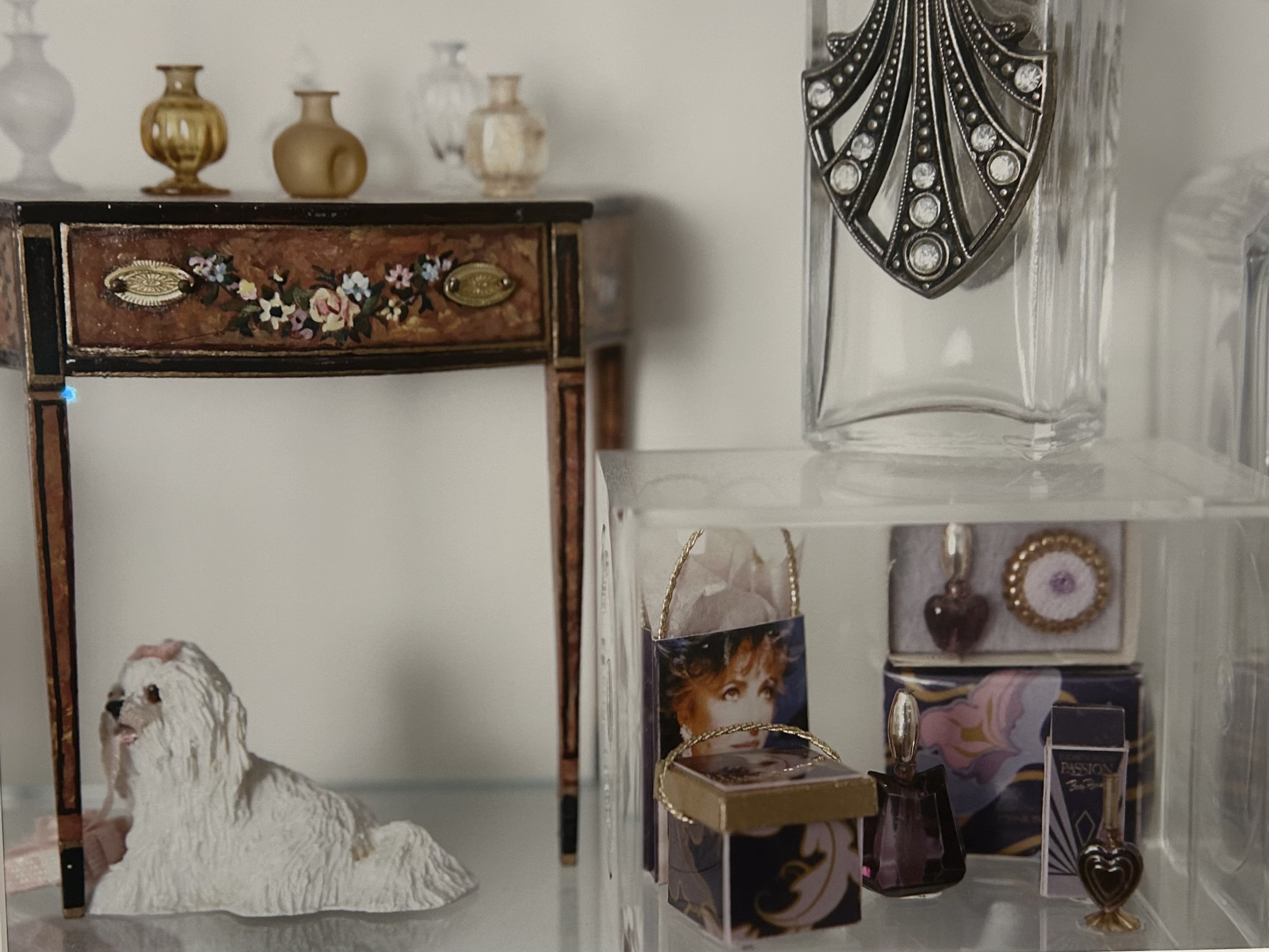
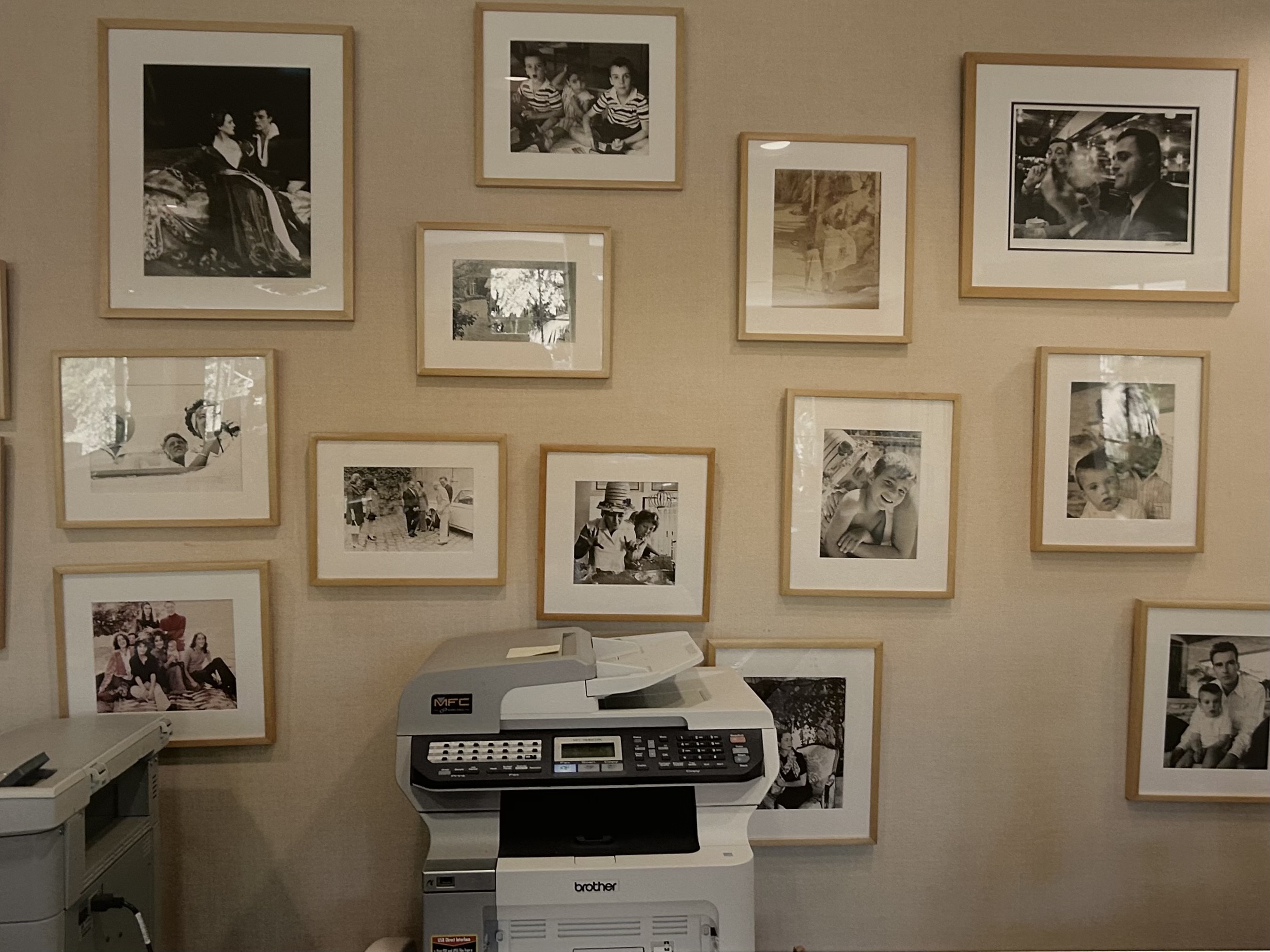
There are worn jewellery boxes, shelves of cowboy boots, carefully arranged perfume bottles and framed photographs of family members and friends. The rooms contain the comfortable abundance of a person who enjoyed beautiful things and saw no particular reason to apologise for doing so.
Taylor’s approach to decoration was wonderfully unconcerned with fashionable restraint.
She loved colour, luxurious fabrics, flowers, sentimental objects and extravagant gifts. Her possessions were acquired through friendships, marriages, professional achievements and the extraordinary social world she inhabited.
Among the treasures were paintings by Andy Warhol, a remarkable collection of jewels and the visible evidence of a career that stretched across seven decades.
The interiors are sometimes wonderfully excessive, and all the more appealing for it.
Contemporary ideas of luxury tend towards a controlled visual language: expensive materials, subdued palettes and rooms arranged to communicate a particular kind of taste. Taylor’s home belonged to a more personal tradition, in which possessions accumulated meaning through their associations rather than their conformity to an aesthetic programme.
The effect was exuberant, sentimental and thoroughly individual.
When Stardom Was a Kind of Theatre
Elizabeth Taylor belonged to the last generation of Hollywood stars whose fame developed within the extraordinary machinery of the studio system.
Her career began when cinema still possessed an almost unrivalled power to create figures of public fascination. The studios cultivated appearances, controlled publicity, negotiated personal relationships and helped establish an ideal of glamour that would influence fashion and popular culture for generations.
Taylor became one of the great embodiments of that tradition, although her personality was far too forceful to remain comfortably within its restrictions.
Her performances in A Place in the Sun (1951), Cat on a Hot Tin Roof (1958), Suddenly, Last Summer (1959) and Who’s Afraid of Virginia Woolf? (1966) demonstrated an actress of considerable emotional range and intelligence.
Her beauty was extraordinary, but her screen presence depended upon more than appearance. Taylor possessed a rare ability to communicate feeling with remarkable directness, particularly through the slightest changes in expression.
Her life beyond the cinema became almost equally celebrated.
The marriages, the love affairs, the extravagant jewellery and the extraordinary relationship with Richard Burton formed part of a mythology in which private emotion unfolded on a public stage.
There was something wonderfully theatrical about it all.
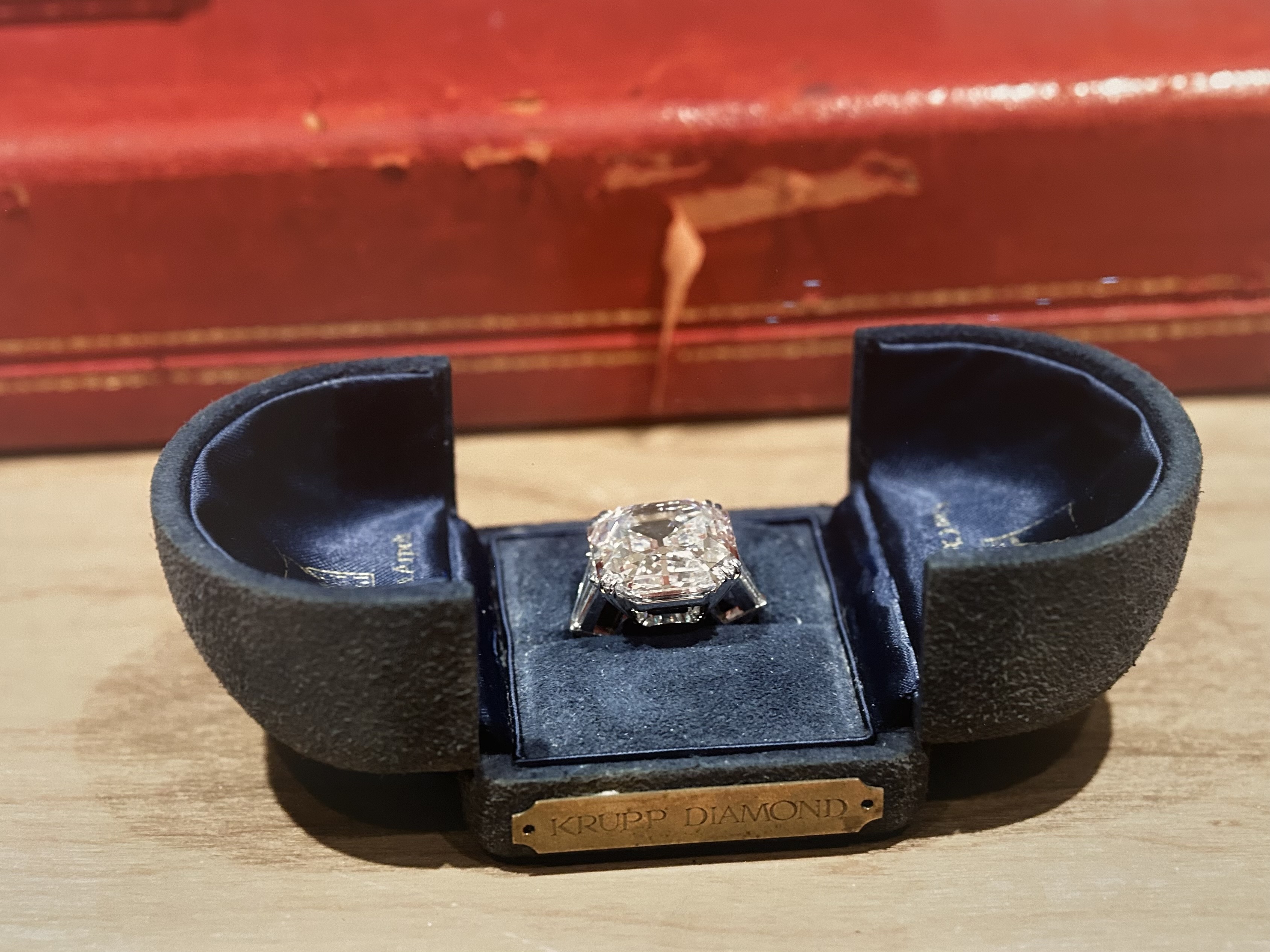
The jewellery, in particular, belonged to an era when great jewels were not merely investments or carefully selected accessories. They were gifts of astonishing extravagance, frequently accompanied by equally extravagant stories.
And Taylor wore them.
She understood that magnificence was meant to be enjoyed.
Looking at Opie’s photographs, one is reminded how much pleasure there once was in the sheer spectacle of Hollywood. Great stars dressed for premieres, dinners and parties as though the occasion demanded a little fantasy.
The effect could be absurd, excessive and gloriously beautiful.
The enormous machinery of publicity was already at work, of course, and the reality behind the glamour was frequently less appealing. The studio system exercised considerable control over its stars, particularly women, while the gossip press could be merciless.
Taylor herself experienced the cruelty of celebrity long before social media made continuous public scrutiny a familiar condition.
Nevertheless, the culture of stardom has changed.
Today, famous people are expected to provide almost uninterrupted access to their lives. Their homes, wardrobes, holidays, friendships and daily routines are presented to audiences with extraordinary regularity.
The distinction between public image and private existence has become increasingly difficult to maintain.
Old Hollywood possessed a different quality of distance. Its stars appeared on cinema screens larger than life, and even the most avid readers of fan magazines could only imagine the full extent of the world they inhabited.
That distance created a space for fantasy.
The stars were people, certainly, but they were also figures upon whom audiences projected dreams of beauty, romance, adventure and escape.
The Woman Behind the Legend
Catherine Opie understood that photographing Elizabeth Taylor’s house required considerable sensitivity.
An artist long associated with portraits of friends, queer communities and the complexity of personal identity, Opie approached the residence as an environment through which its owner’s life might be understood.
The project was inspired partly by William Eggleston’s photographs of Elvis Presley’s Graceland, another extraordinary domestic landscape shaped by the presence of a figure whose fame had become almost mythological.
Opie spent approximately six months photographing Taylor’s home, beginning before the actress’s death in March 2011 and continuing afterwards.
The two women never met.
What began as a photographic portrait of a living person gradually became a record of a life that had ended.
Opie’s treatment of the house is restrained, affectionate and remarkably observant.
She gives as much attention to the ordinary objects as to the magnificent ones. A worn cardboard box can possess the same compositional significance as an expensive piece of jewellery. A group of family photographs becomes an intricate arrangement of memory and affection.
In a 2017 profile in The New Yorker, Opie discussed the importance of preserving the human presence within a project that might otherwise have become a catalogue of extraordinary possessions.
This is what makes the photographs so successful.
Taylor’s personality emerges through the things she kept close to her. The objects provide evidence of relationships and experiences that mattered to her, while their arrangements reveal the ordinary habits through which even extraordinary lives are lived.
The photograph of the young Taylor from National Velvet is particularly powerful for precisely this reason.
It has survived within the private world of the woman she eventually became.
An Extraordinary Life, Fully Lived
The glamorous narrative of Elizabeth Taylor’s life can sometimes obscure the remarkable endurance it required.
She experienced serious illness from an early age, underwent numerous operations and lived with periods of severe pain. Her relationships included extraordinary happiness and devastating grief.
In 1958, her third husband, producer Mike Todd, was killed in a plane crash. The loss was profound. Her turbulent relationship with Richard Burton, whom she married twice, became one of the most closely followed romances of the twentieth century.
Her friendships were equally important. Taylor maintained close relationships with some of Hollywood’s most celebrated figures, including Montgomery Clift and Rock Hudson, whose experiences would profoundly influence the direction of her later life.
During the 1980s, as the AIDS epidemic devastated communities while governments and institutions frequently responded with indifference, Taylor became one of the first major celebrities to use her influence on behalf of people living with HIV.
She helped establish amfAR in 1985 and founded the Elizabeth Taylor AIDS Foundation in 1991.
Her commitment extended far beyond ceremonial appearances. She raised substantial funds, challenged political leaders, testified before Congress and spoke publicly against the prejudice surrounding the disease.
It was an extraordinary use of celebrity at a time when association with AIDS advocacy was still considered controversial.
Taylor’s public identity had been shaped by extraordinary beauty and Hollywood glamour, but she understood that fame could become a formidable instrument of social change.
Her courage deserves to be remembered alongside her diamonds.
And it makes the young girl in the National Velvet photograph even more moving. The determination that brought her into the film industry would eventually find expression in causes far removed from cinema.
The Pleasures of Nostalgia
Part of the attraction of 700 Nimes Road lies in the pleasure of revisiting a particular visual world.
The dressing tables, jewellery boxes, softly upholstered rooms and elaborate wardrobes evoke an aesthetic that now belongs largely to cultural memory.
It is tempting to imagine that Hollywood itself was more magical then, that beauty was more extravagant and that the people who inhabited its world possessed a kind of individuality that contemporary fame rarely produces.
Nostalgia is seldom an entirely reliable historian.
The period we romanticise contained considerable injustice, cruelty and constraint. Many of its most celebrated figures suffered under the institutions that created their public identities.
Yet nostalgia can also be a way of recognising qualities that have genuinely diminished.
The old Hollywood star possessed a particular relationship with fantasy. Appearance was carefully constructed, glamour was an art in itself, and mystery was allowed to form part of the public imagination.
There was pleasure in not knowing everything.
Opie’s photographs belong to this history while quietly revealing its human dimensions.
The jewels and gowns are magnificent, but the ordinary possessions become increasingly affecting with repeated viewing. Their arrangements tell us that Taylor valued friendship, family, personal history and the things that reminded her of people she loved.
In that sense, the house becomes a kind of autobiography written in objects.
Every room contains fragments of the person she had been, the people she had known and the experiences that had shaped her.
The Beginning and the End
I keep returning to the photograph of the young Elizabeth Taylor standing between those tall windows.
The production sign beside her recalls the beginning of a remarkable career. The garden beyond the glass belongs to the home in which that career, and the life surrounding it, eventually came to an end.
The open cardboard box and piles of magazines are strangely affecting. They remind us that the remnants of even the most extraordinary existence are eventually ordinary things: books, letters, photographs, clothes and objects that someone once loved.
By the time Opie completed her project, Taylor had died and the house’s contents were approaching dispersal. The intimate arrangement of a lifetime would soon disappear.
The photographs preserve that arrangement for us.
And at the centre of this particular image stands a young girl, determined to become a film actress, unaware of the extraordinary beauty, suffering, love and achievement awaiting her.
She would become one of Hollywood’s greatest stars. She would experience terrible losses, survive serious illness, love extravagantly and use her fame to defend people who desperately needed an advocate.
She would live an immense life.
That is perhaps why Catherine Opie’s photographs become more affecting each time one returns to them. Their beauty lies in the evidence of time passing, of a personality enduring through change, and of the countless ordinary moments that accumulate into a life.
The Hollywood glamour is still there, gloriously intact in the clothes, the jewels and the magnificent photographs.
But looking again at that young Elizabeth Taylor, surrounded by the possessions of the woman she became, one is reminded that the greatest magic was never entirely confined to the cinema.
Exhibition information
Catherine Opie: 700 Nimes Road
28 April 2026 – 10 January 2027
Louisiana Museum of Modern Art
Gl. Strandvej 13, 3050 Humlebæk, Denmark
Official exhibition information
Explore photographs from the series in Vogue
Read more about the photographic project at the University of Michigan Museum of Art

