At Louisiana Museum of Modern Art in Denmark, the first major European retrospective of Remedios Varo reveals an artist whose remarkable paintings bring together science, alchemy, psychology and an imagination entirely her own.
The paintings of Remedios Varo operate according to peculiar but convincing rules. Figures travel through forests in elaborate mechanical vehicles, experiment with mysterious substances and occupy buildings whose architecture appears to have emerged from another civilisation. Every detail is precisely rendered, however improbable the scene.
At the Louisiana Museum of Modern Art, north of Copenhagen, Remedios Varo: Painting Magic presents more than seventy works spanning the artist’s early European career and her extraordinary final decades in Mexico. Running from 18 September 2026 until 10 January 2027, it is the first major European museum retrospective devoted to her work.
Varo has long enjoyed considerable recognition in Mexico, where she settled as a refugee in 1941. In Europe, she has remained less familiar, despite her association with Surrealism and the originality of her contribution to twentieth-century painting.
Louisiana’s exhibition offers a rare opportunity to see these intricate paintings together, and to consider Varo as an artist whose intellectual interests and technical achievements deserve attention beyond the established narratives of Surrealism.
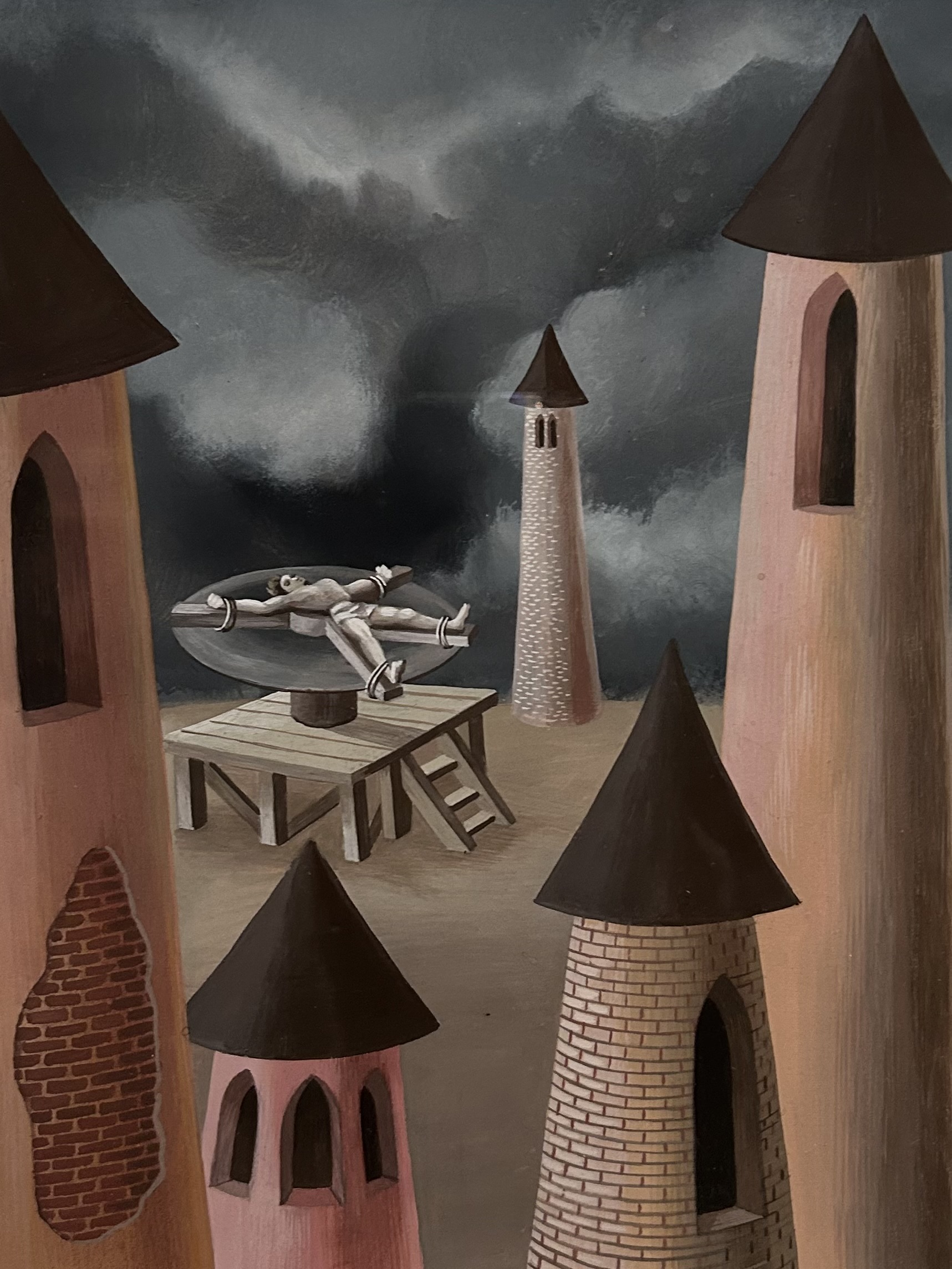
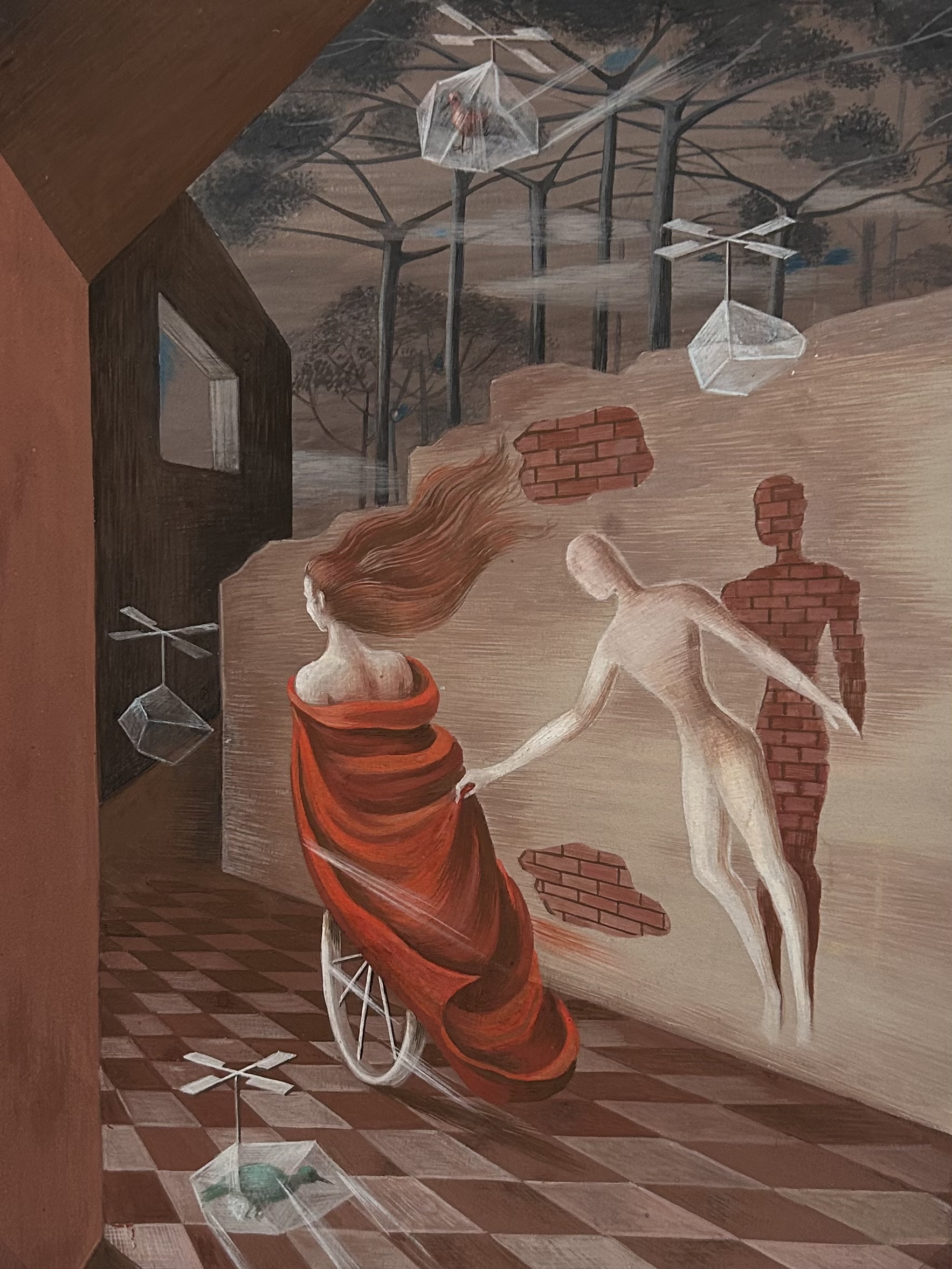
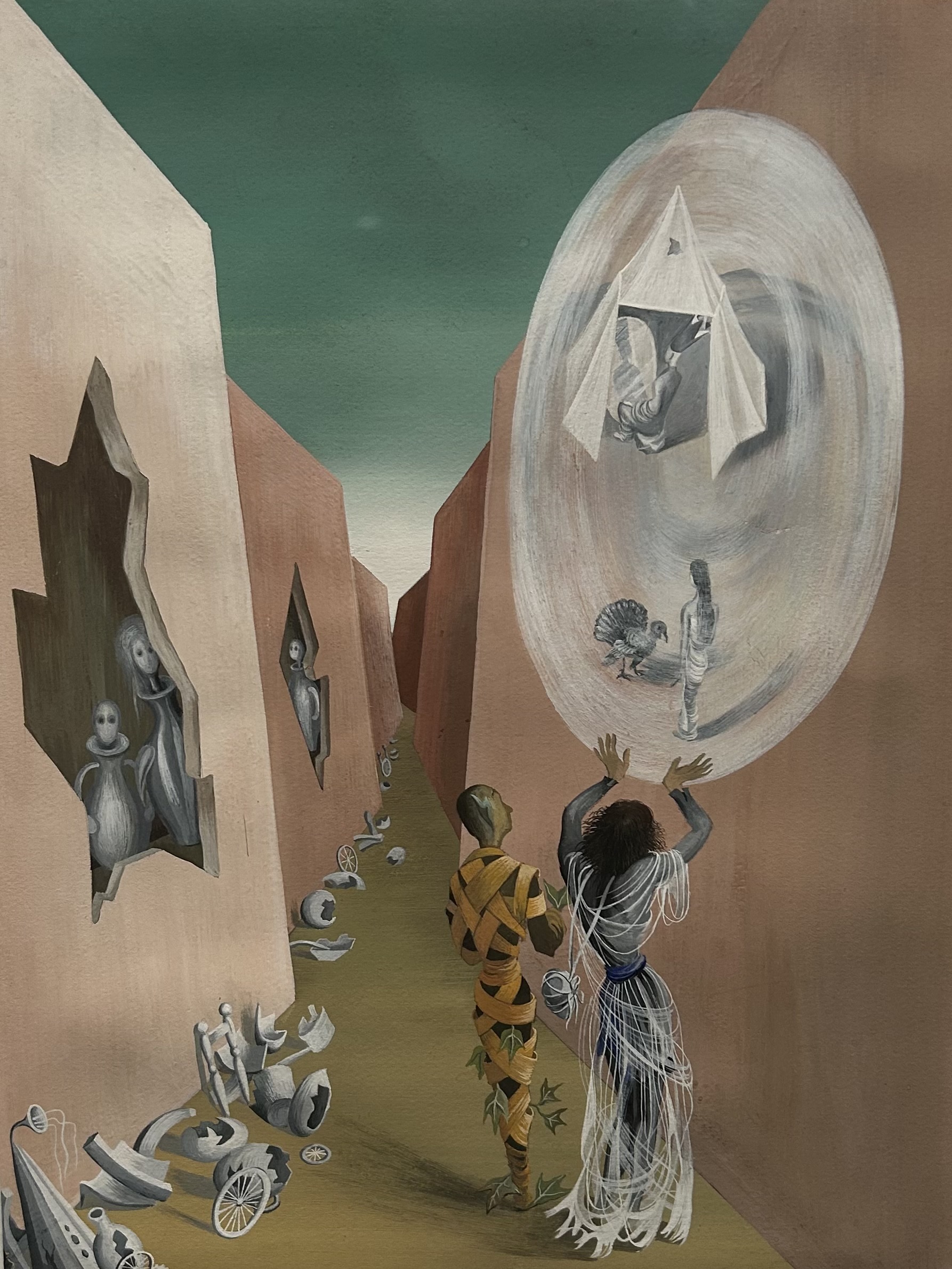
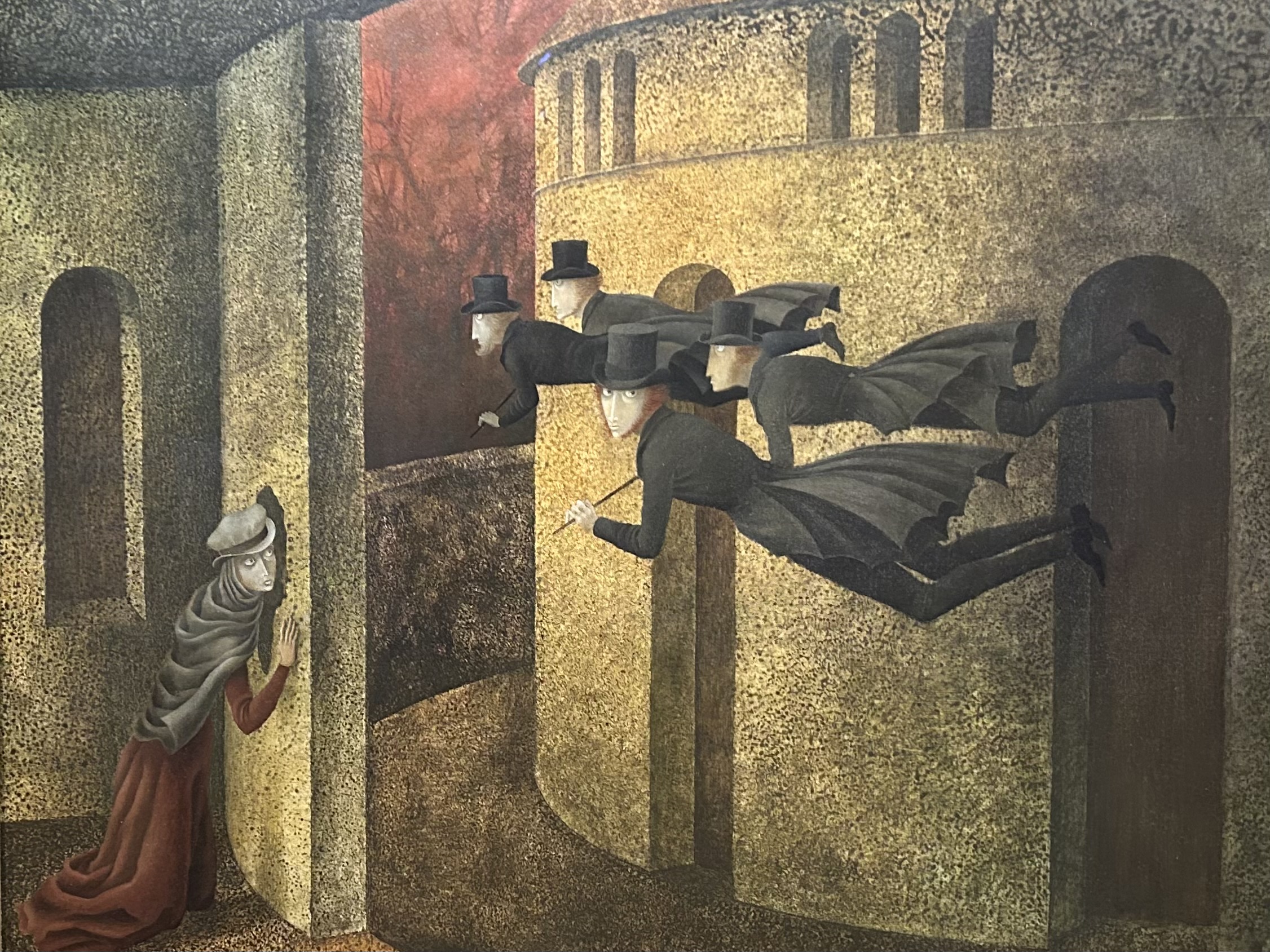
A Universe Constructed with Extraordinary Precision
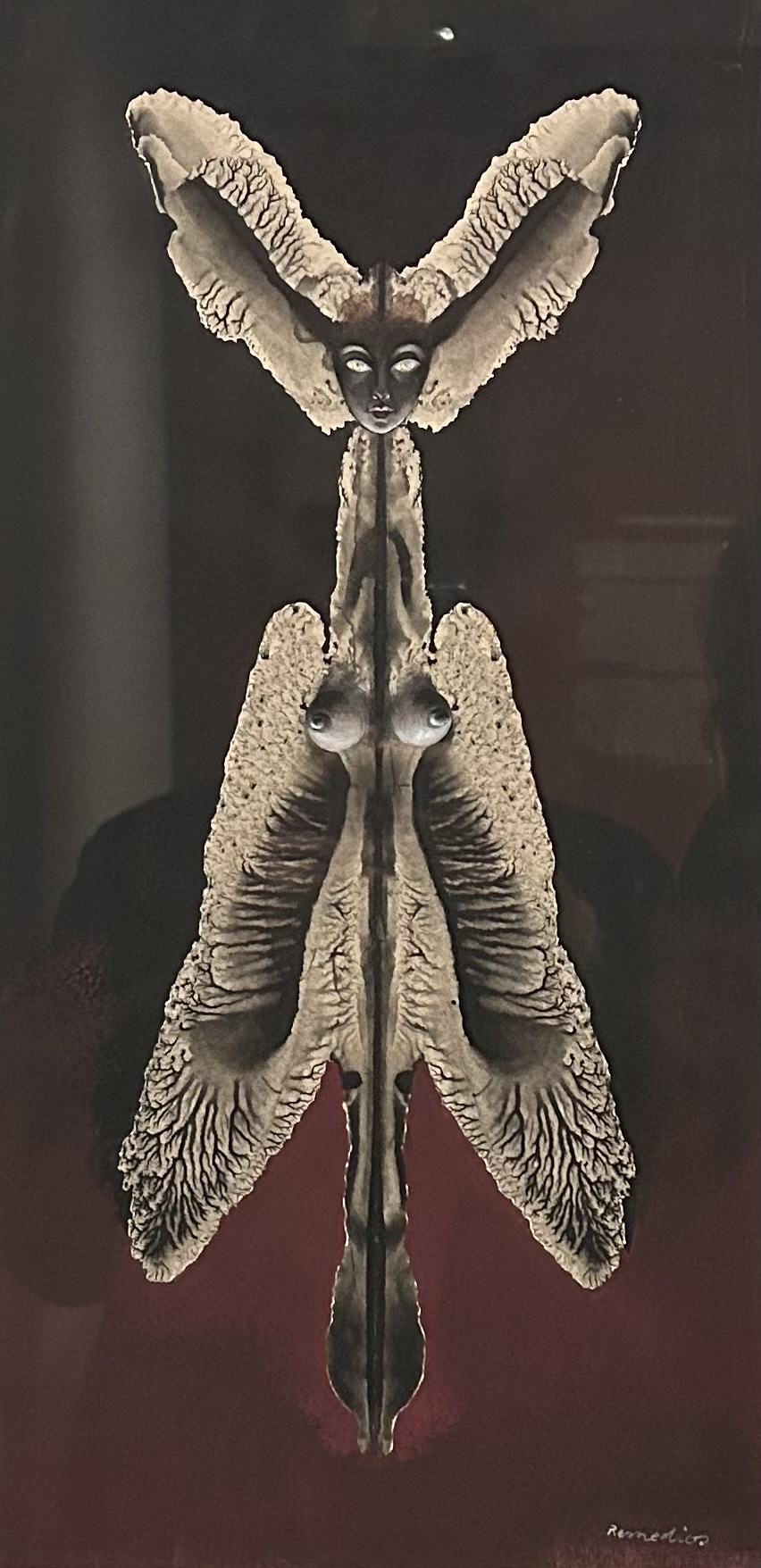
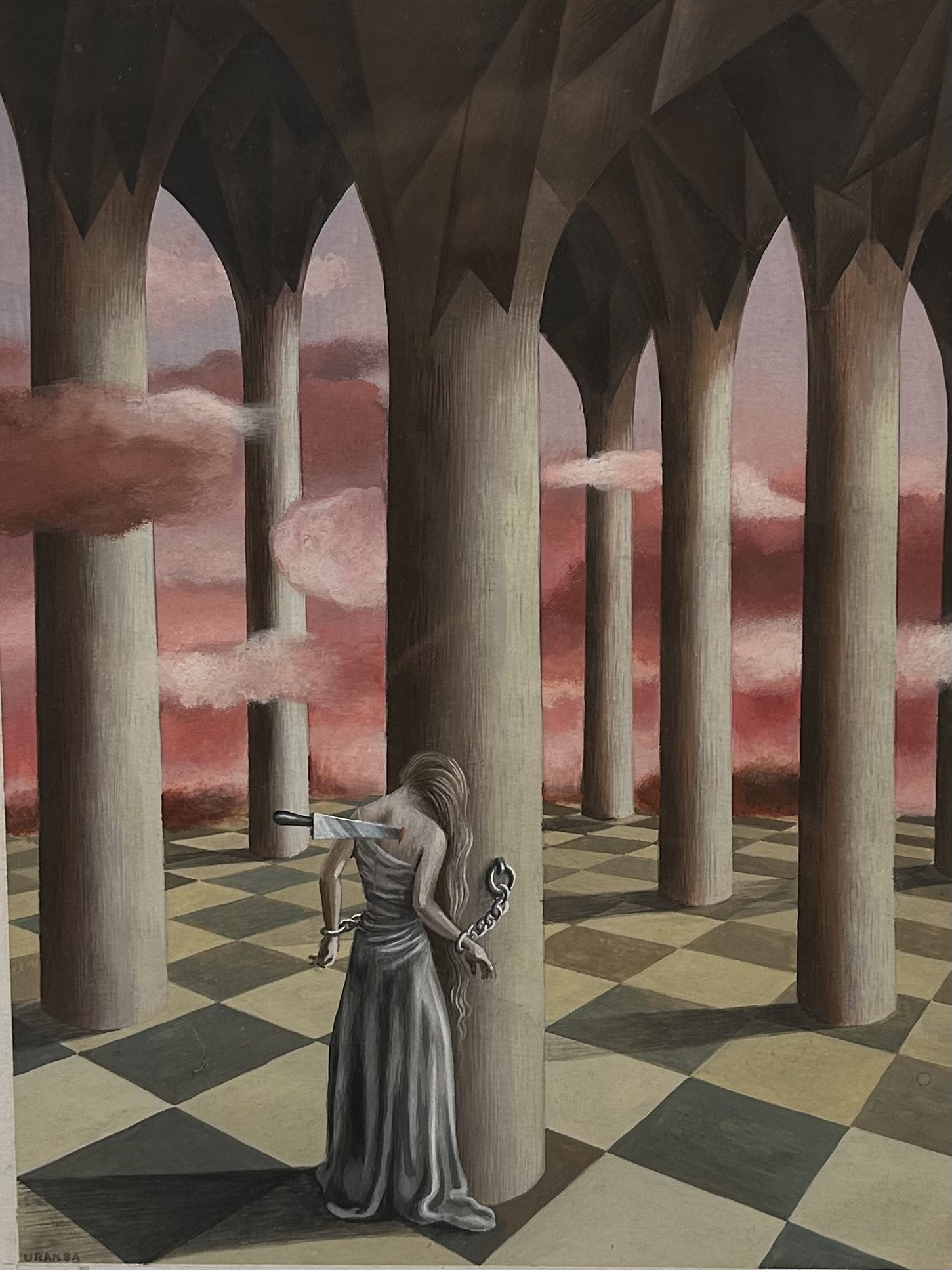
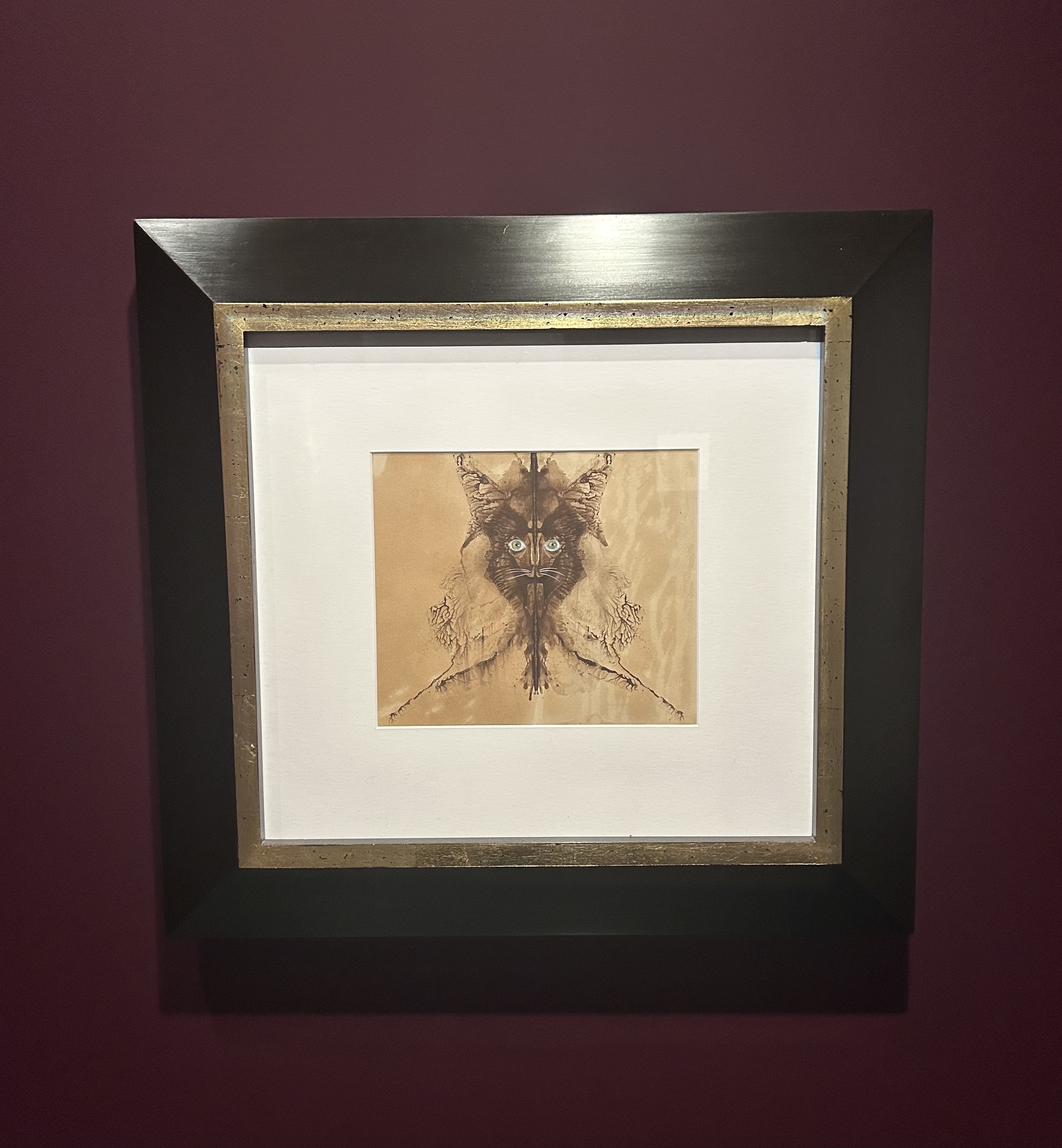
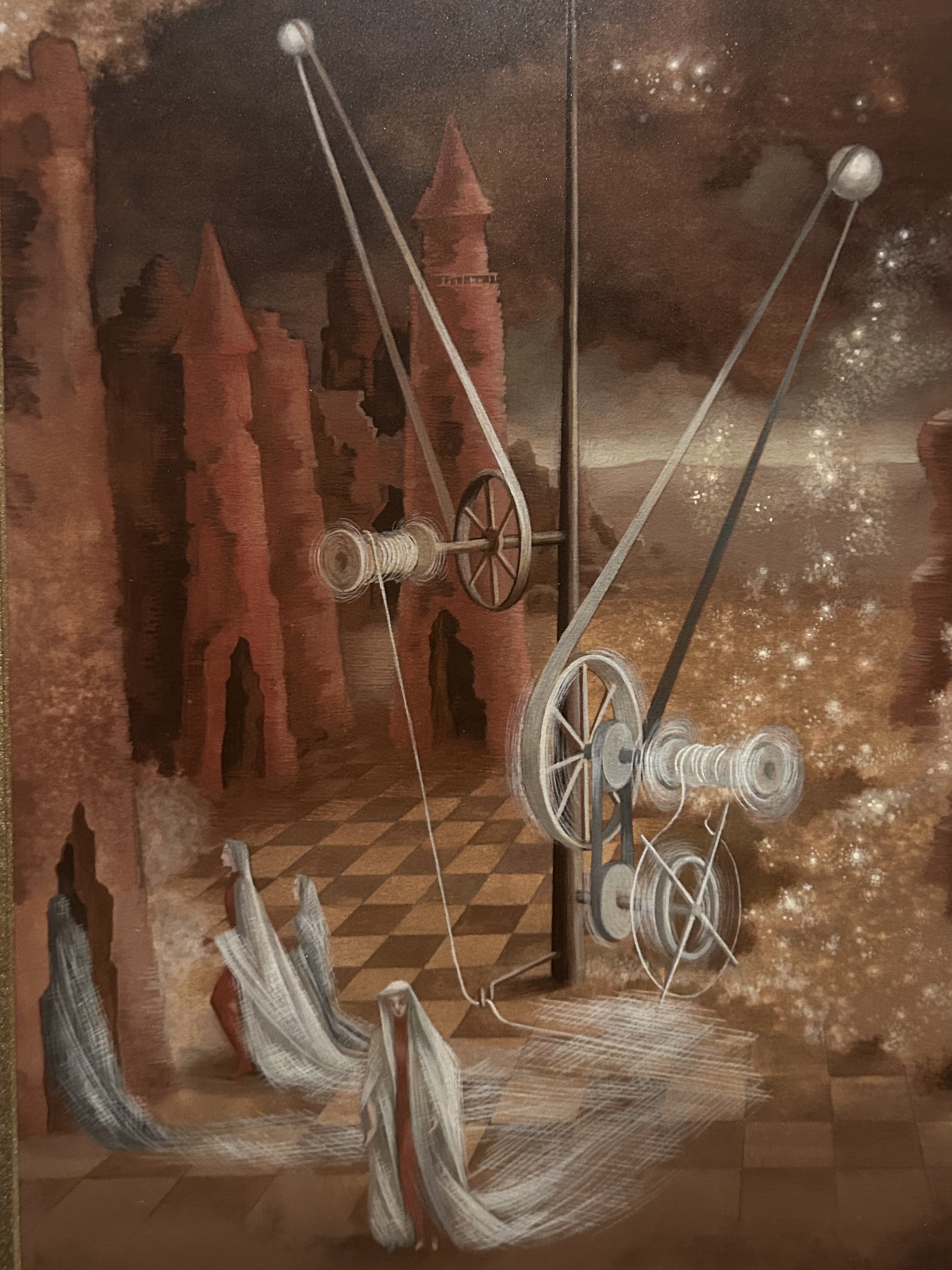
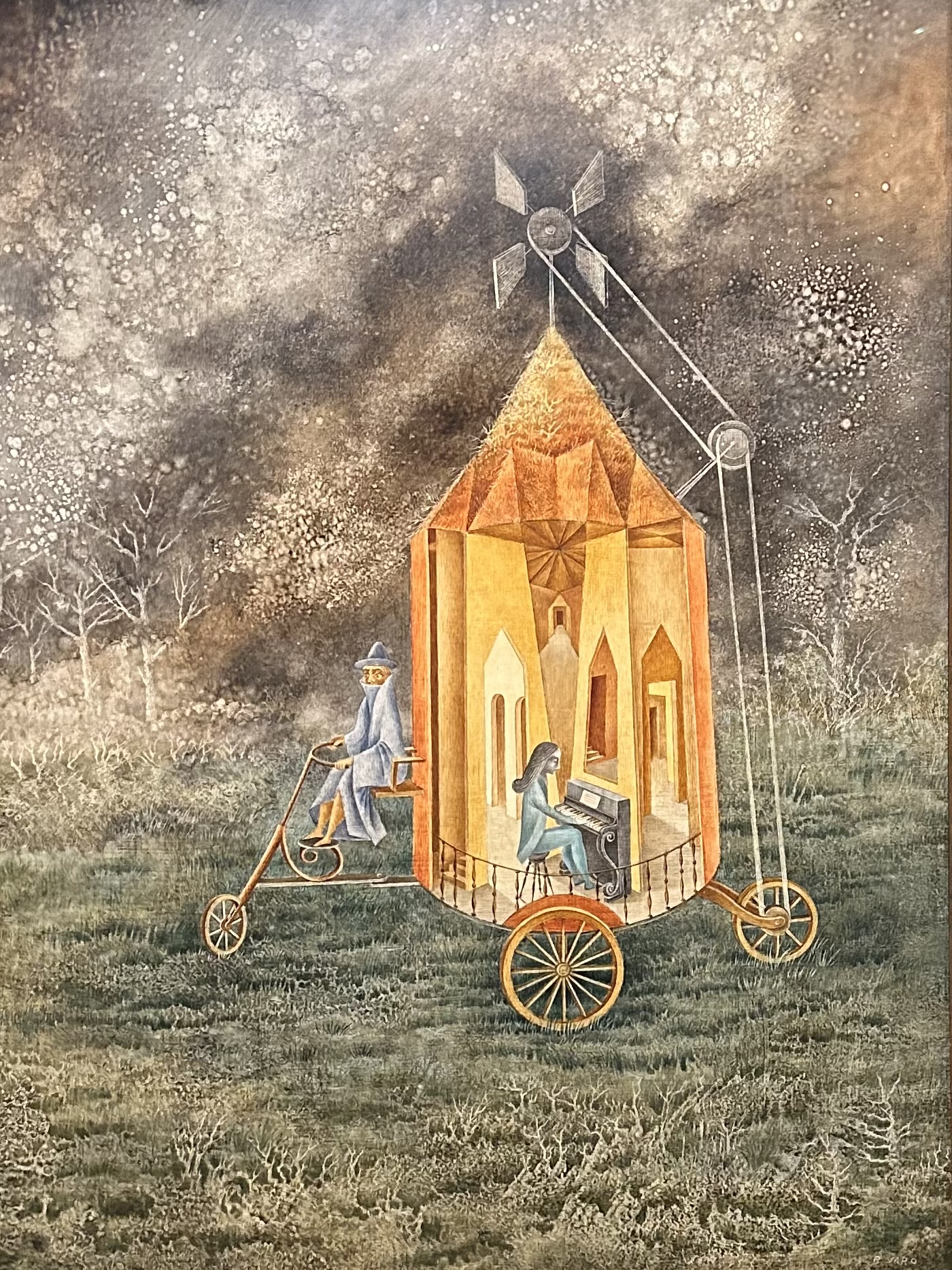
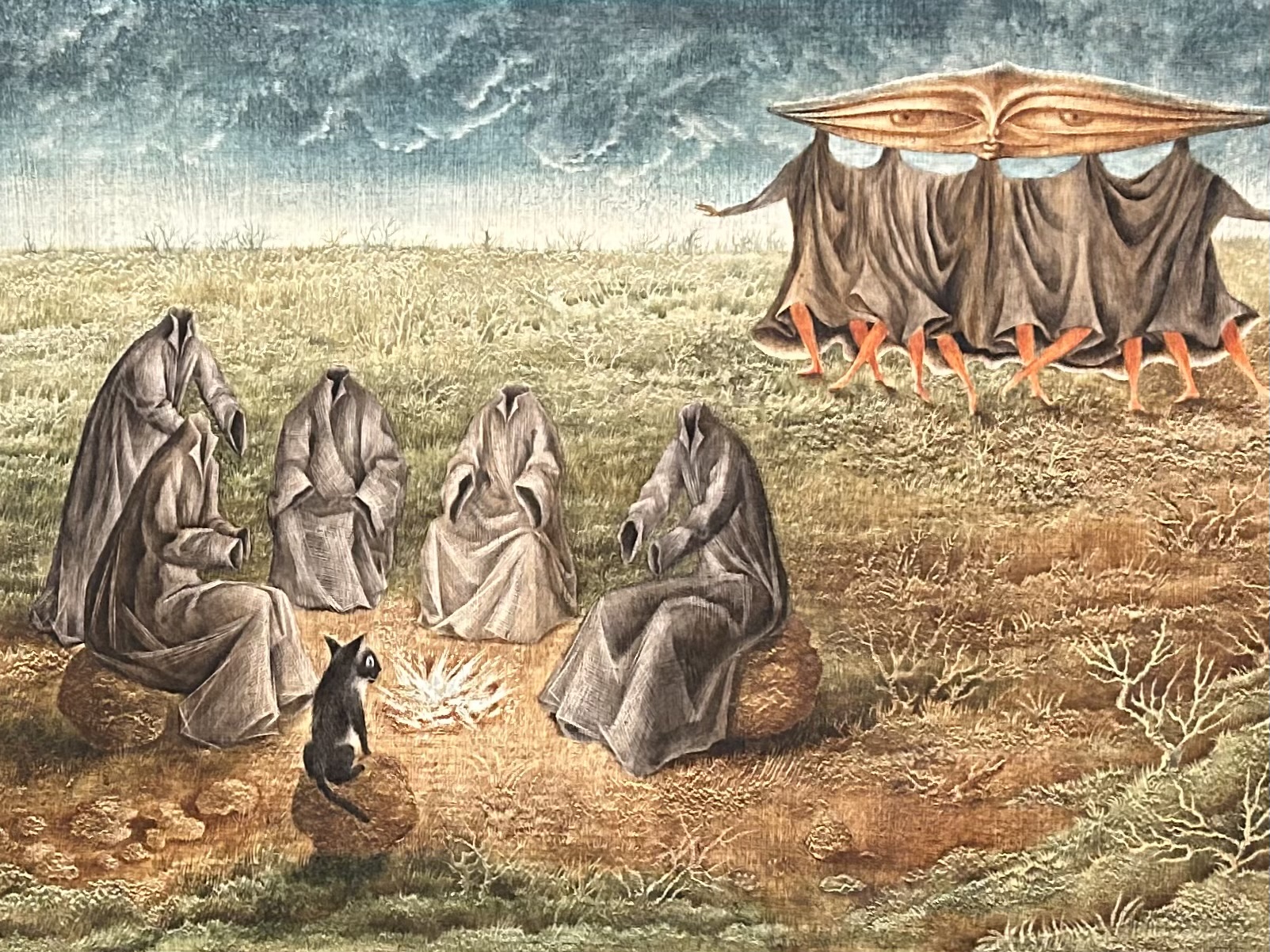
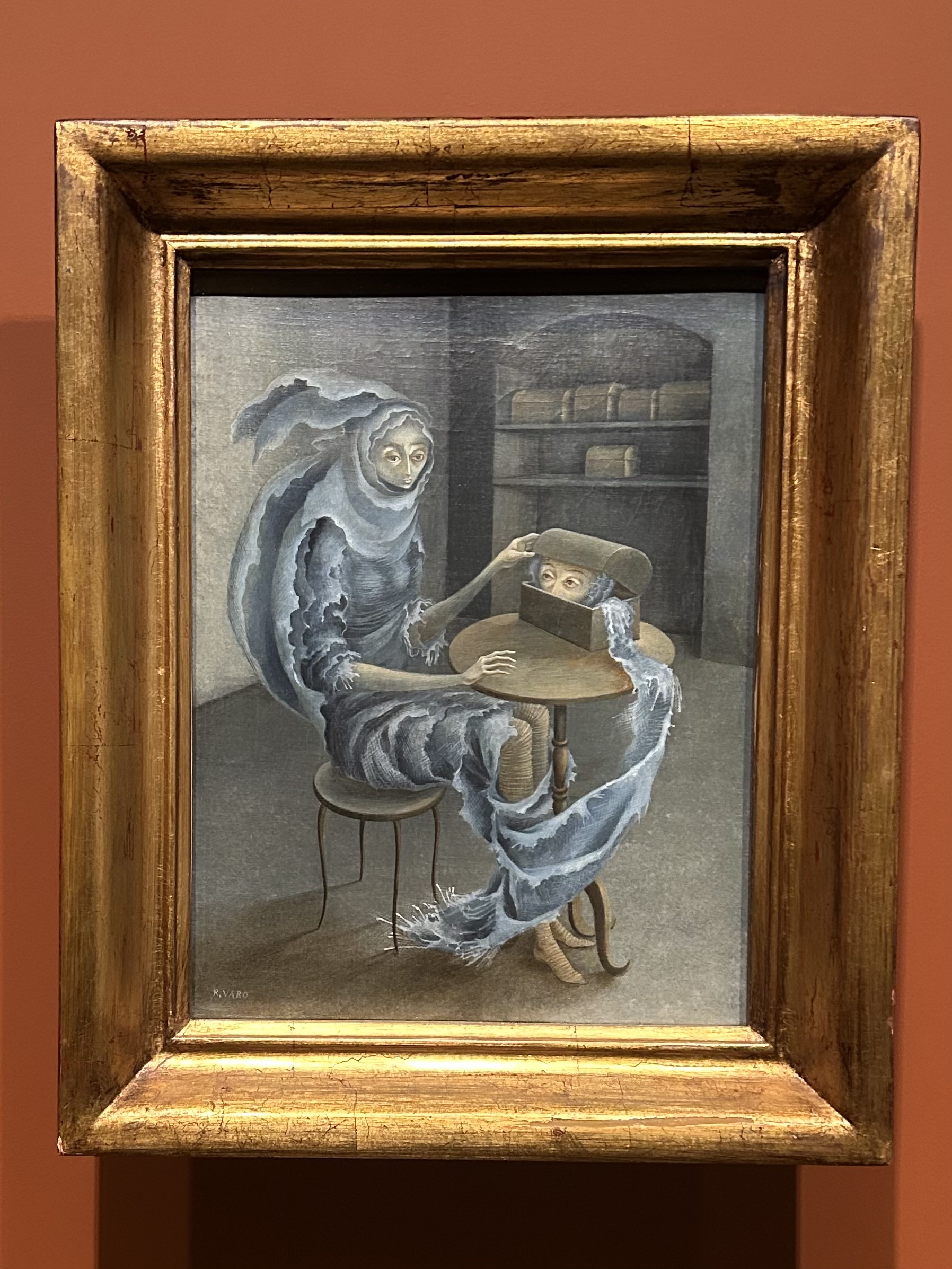
Varo’s meticulous technique is particularly impressive when her paintings are seen at close range. Her architectural interiors, intricate machinery and carefully modelled figures have the precision of Renaissance painting, although the events they depict belong to no recognisable reality.
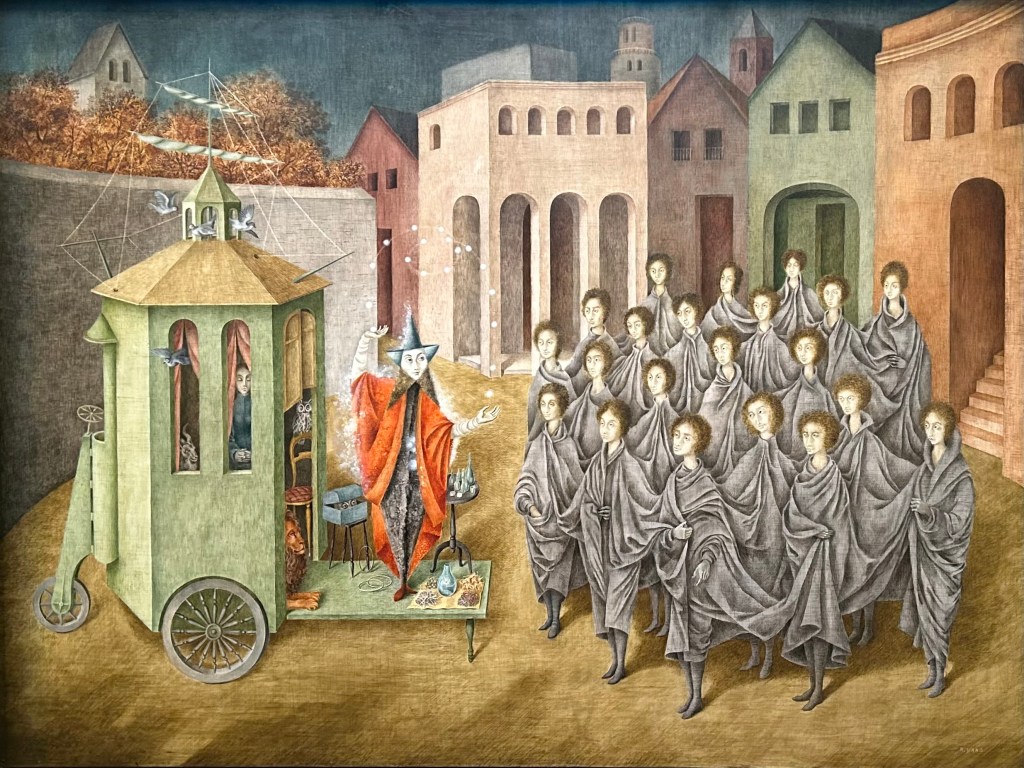
In The Juggler (The Magician) (1956), on loan from New York’s Museum of Modern Art, a performer stands upon a fantastical travelling vehicle before an audience of nearly identical figures. His face is painted onto a five-sided piece of mother-of-pearl, a material Varo associated with heightened awareness.
The painting combines techniques derived from early Renaissance masters with Surrealist experimentation, including decalcomania, in which textures are transferred onto wet paint. The magician’s elaborate costume and the surrounding landscape reveal both approaches.
There is an unsettling difference between the magician and his spectators. While they seem passive and interchangeable, he appears to possess some form of privileged knowledge. Varo leaves its nature unresolved.
This is one of her distinctive achievements: the construction of imaginary worlds that possess their own visual logic. The extraordinary seems entirely plausible because she has considered every detail of its appearance.
The Artist as Alchemist
Born in Spain in 1908, Varo studied at the Royal Academy of Fine Arts of San Fernando in Madrid before becoming involved with avant-garde circles in Barcelona and Paris. Fleeing the Second World War, she arrived in Mexico City in 1941, where she eventually developed the mature style for which she is best known.
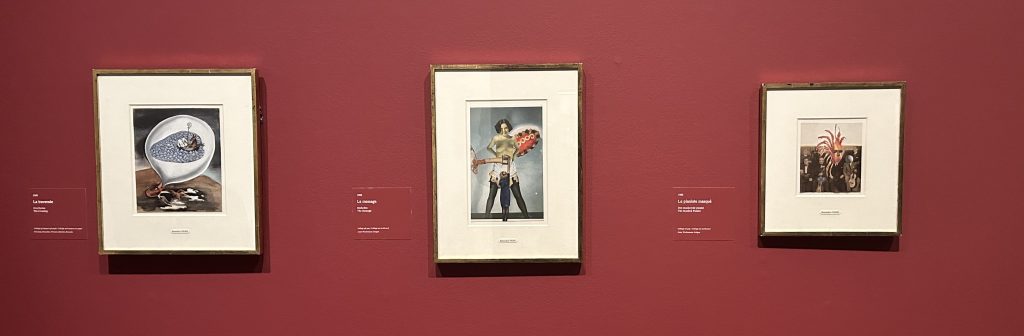
Her friendships with Leonora Carrington and photographer Kati Horna provided an important intellectual and artistic community. Together, they explored interests that ranged from Surrealism and mythology to esoteric philosophy and unconventional forms of knowledge.
Varo was fascinated by astronomy, mechanics, alchemy and psychology. Her paintings reveal a mind equally interested in how the physical world operates and in the possibilities that lie beyond established scientific explanation.
Her female protagonists are often inventors, travellers or investigators, actively engaged in attempting to understand their surroundings.
In Star Porridge (Papilla estelar, 1958), a woman confined within a tower feeds the moon through a narrow opening. The gesture resembles an ordinary domestic task, yet the scene suggests a strange dependency between human life and the cosmos.
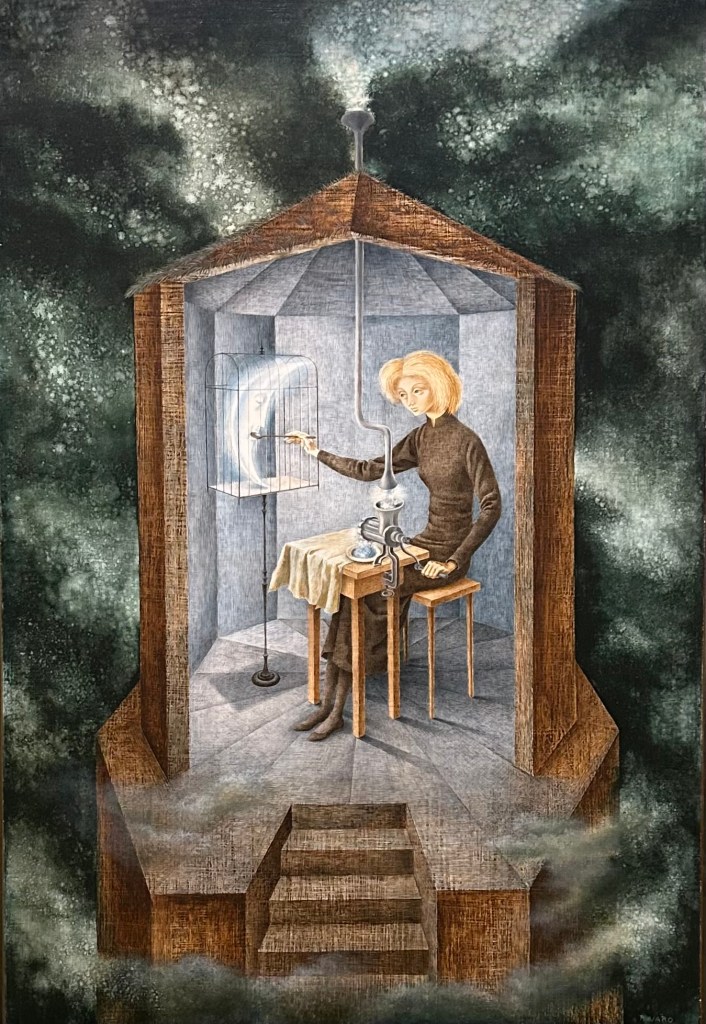
The woman appears simultaneously as caretaker and captive. It is difficult to determine whether she controls the moon or whether the task has become her own form of imprisonment.
Varo repeatedly transformed familiar activities such as cooking, weaving and travelling into investigations of knowledge, freedom and the limits of perception. Beneath their fantastical imagery, her paintings are concerned with recognisably human questions.
Humour, Psychology and Female Independence
For all her interest in mysticism, Varo was also a wonderfully funny painter.
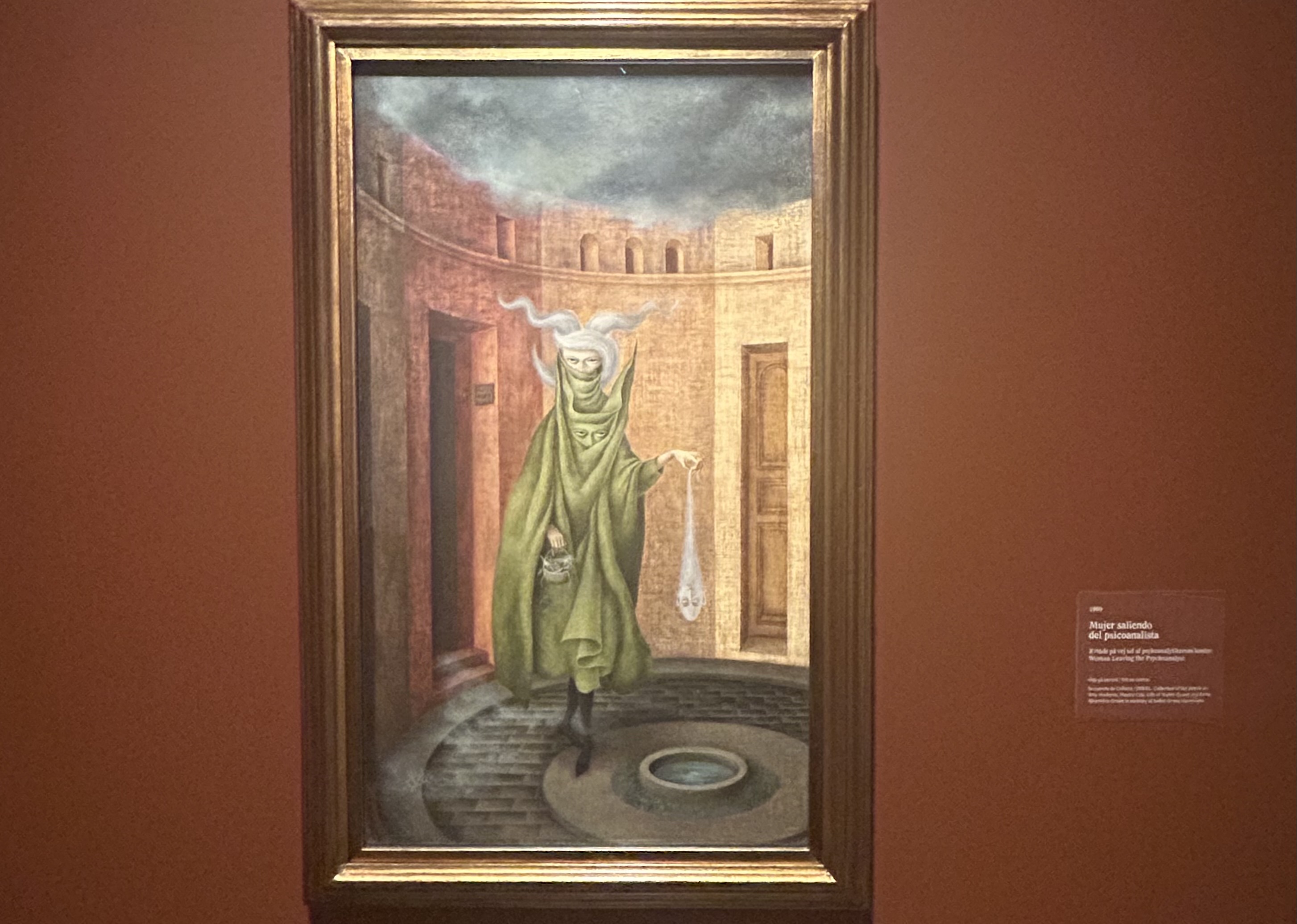
In Woman Leaving the Psychoanalyst (1960), a woman emerges from a consulting room carrying a man’s disembodied head, which she is about to discard into a well.
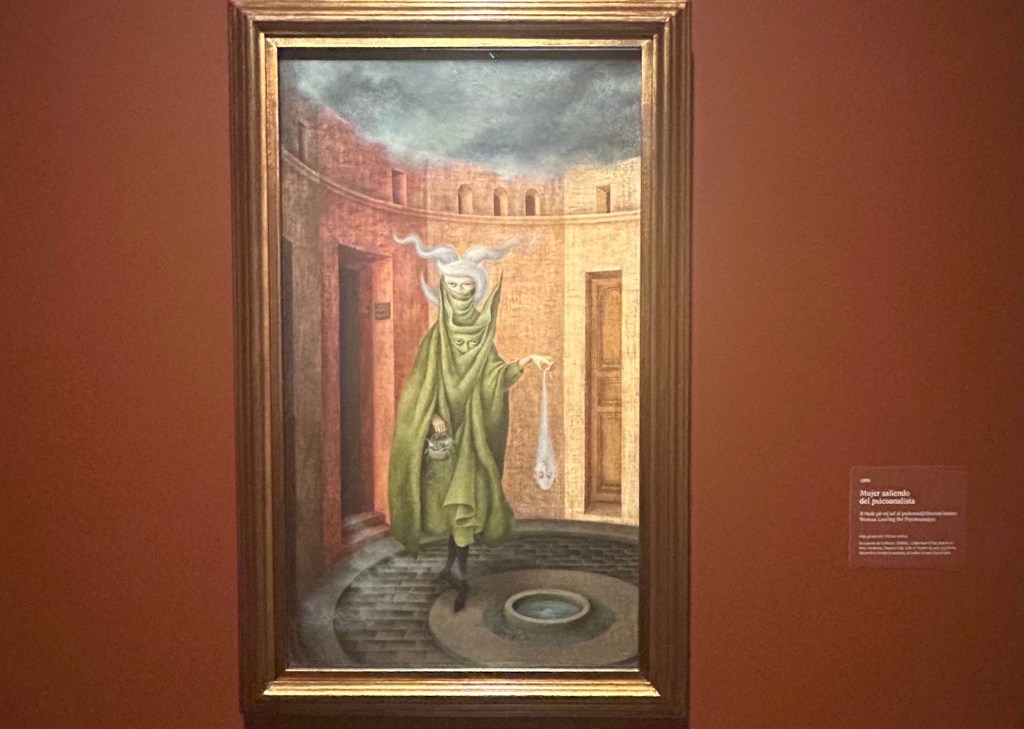
The consulting-room door identifies the doctor as F.J.A., a reference to Freud, Jung and Adler. The joke is pointed: the woman appears to be disposing of the very psychological burdens that these celebrated male authorities might have claimed to explain.
Varo’s humour is part of her larger interest in female autonomy. Her protagonists rarely accept the world as it is presented to them. They experiment, question, escape and occasionally dispose of the figures who once exercised authority over them.
Louisiana’s inclusion of preparatory drawings, notebooks and archival material is especially valuable here. These documents reveal the patient thinking and technical experimentation behind paintings that can initially appear to have emerged fully formed from the imagination.
The Importance of Seeing Varo Now
Louisiana introduced Danish audiences to Varo in its 2020 exhibition Fantastic Women, devoted to women artists associated with Surrealism. This retrospective provides a more complete account of her development, from her years in Europe to the paintings made in Mexico during the 1950s and early 1960s.
Among the exhibition’s highlights is Still Life Reviving (Naturaleza muerta resucitando, 1963), one of Varo’s final paintings, now belonging to the Art Institute of Chicago’s Joseph Winterbotham Collection.
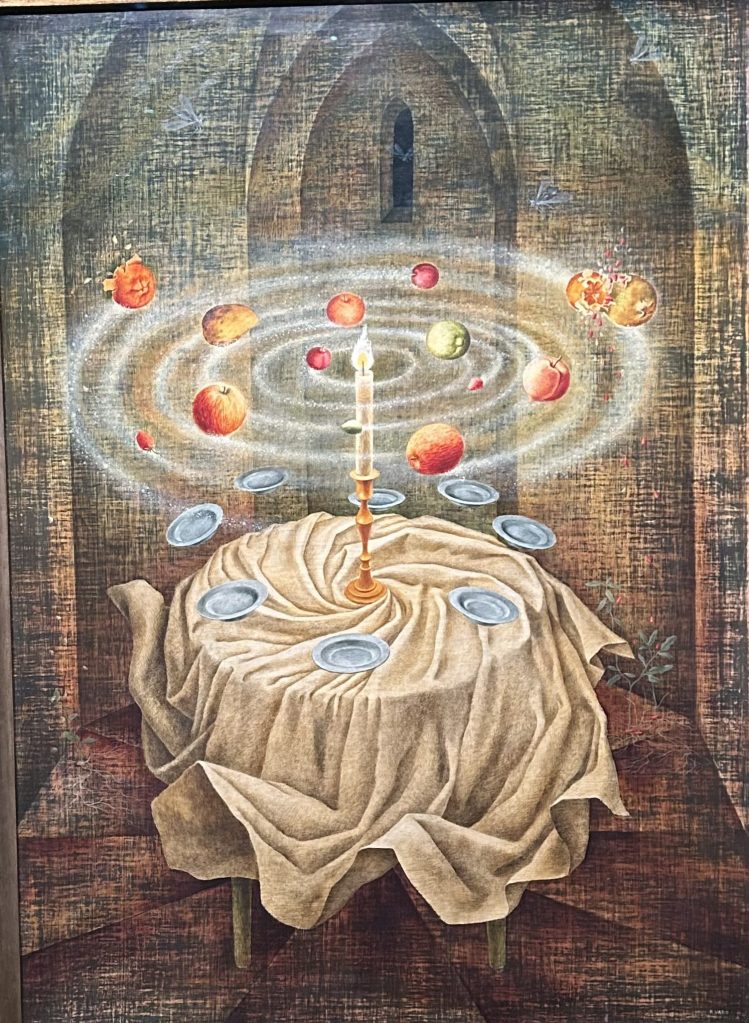
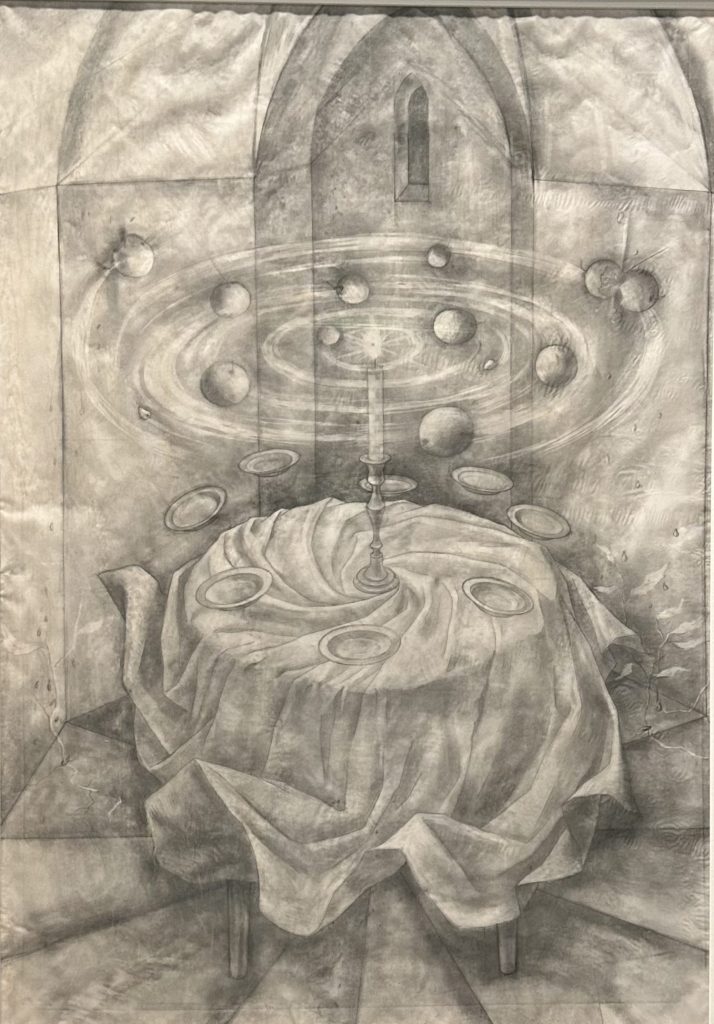
Inside a Gothic chamber, fruit circles above a table as though caught in a miniature planetary system. The familiar arrangement of a still life has been set in motion, governed by forces that remain invisible to the viewer.
The painting is a remarkable culmination of Varo’s interests. Scientific observation, cosmic speculation and an understanding of traditional European painting meet in an image that is both carefully constructed and gloriously improbable.
Organised in collaboration with Moderna Museet in Stockholm, with contributions from Mexican art historian Tere Arcq and curators Kirsten Degel and Lena Essling, the retrospective makes a persuasive case for Varo’s importance within twentieth-century art.
Its greatest strength is the opportunity to examine paintings that are rarely seen together, including works from private collections. Reproductions convey the ingenuity of Varo’s compositions, but they struggle to communicate the delicacy of her surfaces and the precision of her technique.
Seeing the paintings in person also reveals how much Varo shared with older traditions of European painting. Her methods were often painstakingly classical, even when her subjects appeared to defy every known physical law.
By bringing these works together, Louisiana allows us to appreciate the intellectual curiosity, technical discipline and humour of an artist whose imaginative freedom was matched by an exceptional command of her medium.
Read our companion piece on Remedios Varo
Exhibition information
Remedios Varo: Painting Magic
18 September 2026 – 10 January 2027
Louisiana Museum of Modern Art
Gl. Strandvej 13, 3050 Humlebæk, Denmark
Exhibition information and visiting details
The exhibition subsequently travels to Moderna Museet, Stockholm, from 20 February to 9 May 2027.

