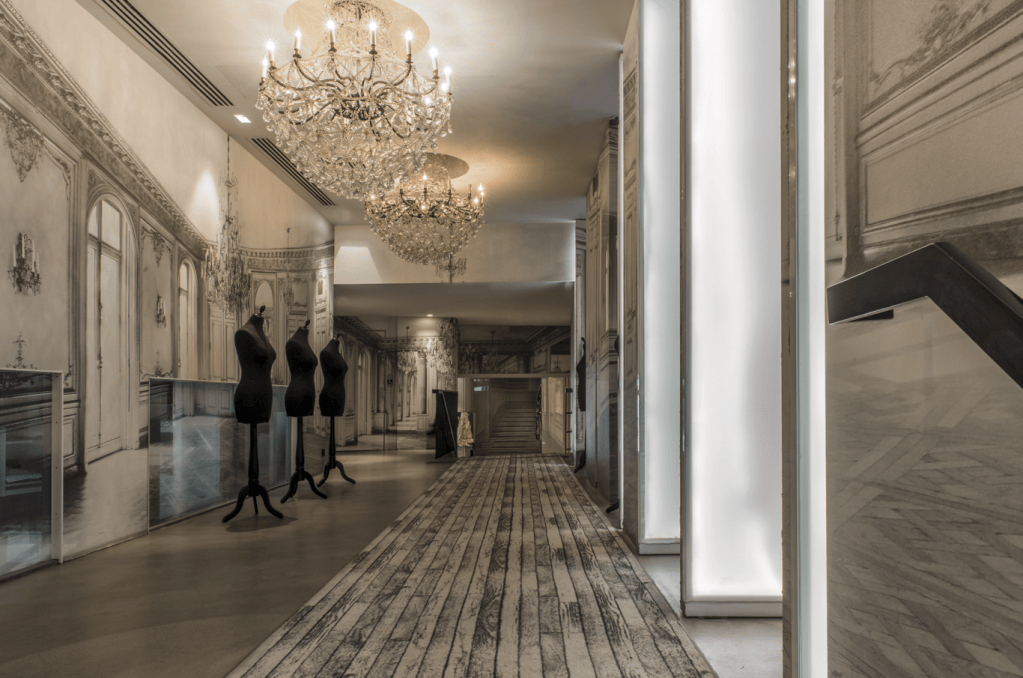
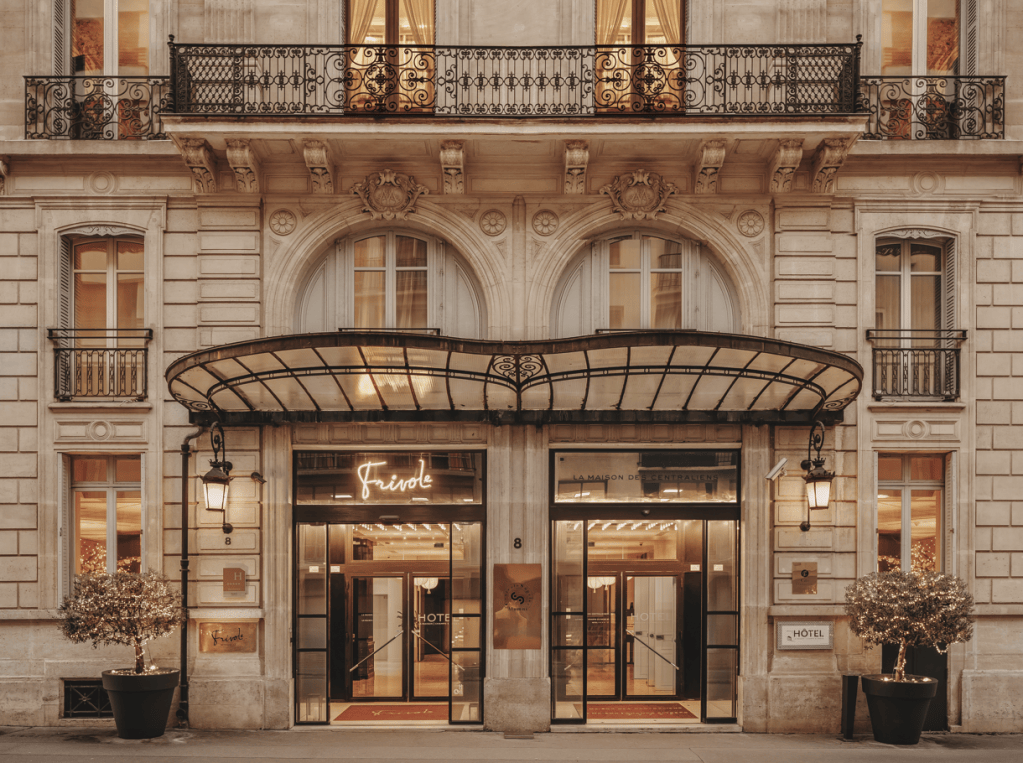
At 8 rue Jean Goujon, a nineteenth-century mansion once reimagined by Maison Martin Margiela has undergone another renovation. Maison Malapert’s new interiors introduce a markedly different decorative language to a hotel with an unusual design history.
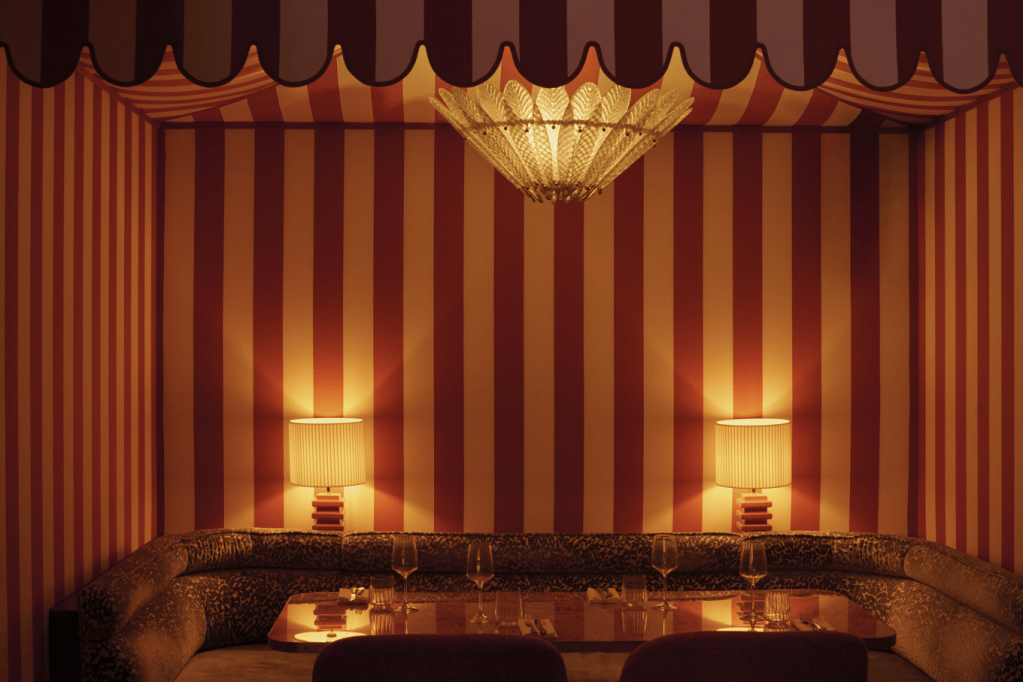
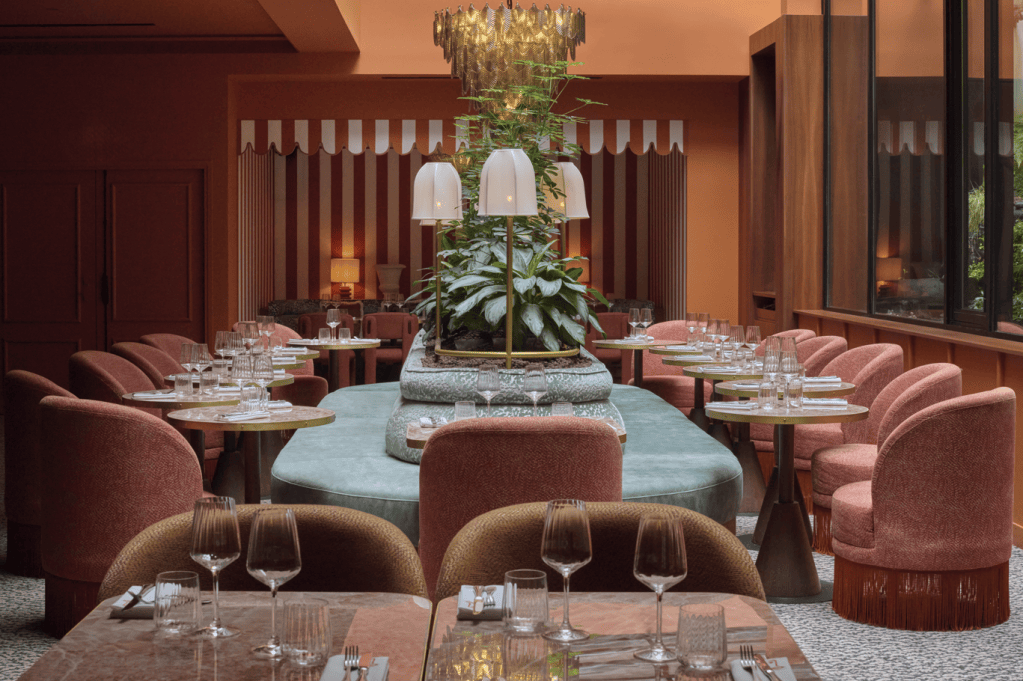
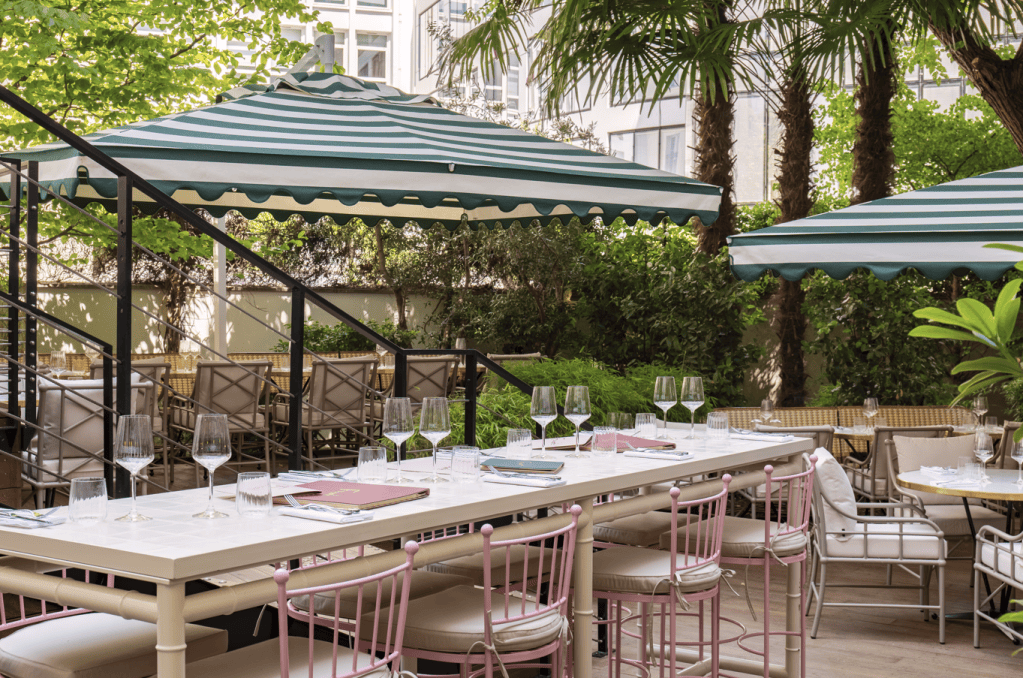
Broad salmon-pink and cream stripes cover one section of Frivole, the restaurant at La Maison Champs Élysées, a five-star hotel near Avenue Montaigne in Paris. A striped fabric canopy with scalloped edges introduces an almost theatrical informality, while deep green banquettes, upholstered chairs and carefully arranged planting soften the room’s geometry. The design is unusually expressive for a neighbourhood where luxury interiors frequently favour discretion.
The restaurant forms part of a recent renovation by the Parisian interior architecture studio Maison Malapert. Its decorative exuberance is particularly interesting in a building with a distinguished architectural history and an earlier interior designed by one of fashion’s most unconventional houses.
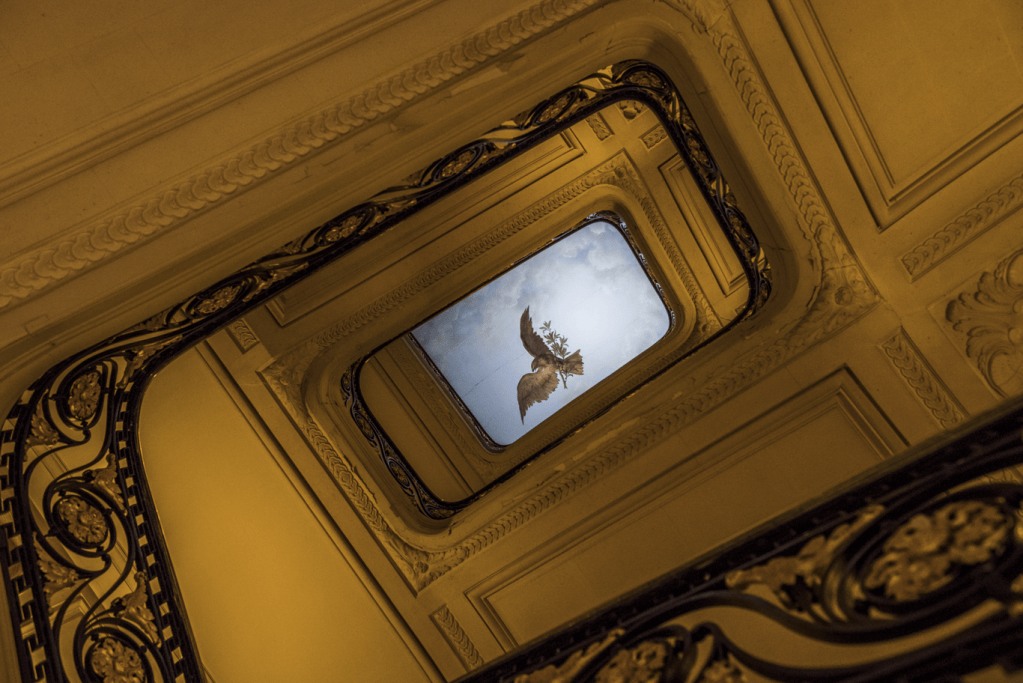
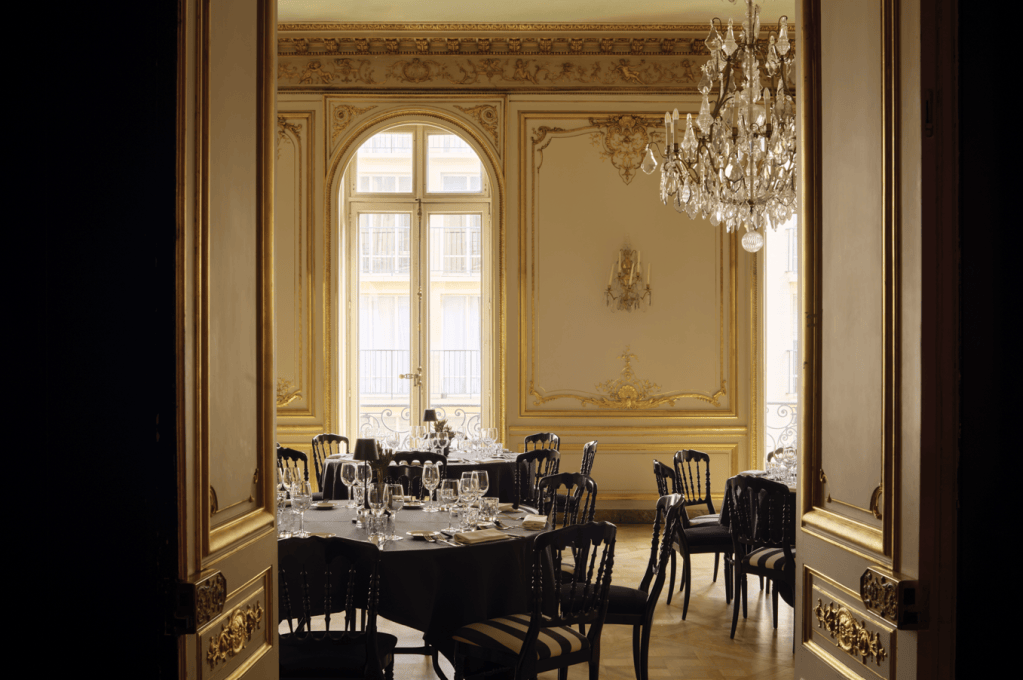
The property at 8 rue Jean Goujon was commissioned in 1864 by Anne Debelle, Duchess of Rivoli and Princess of Essling, who served as Grand Mistress of the Household to Empress Eugénie, wife of Napoleon III. Completed in 1866, the hôtel particulier belonged to the world of Second Empire Paris, when aristocratic residences were designed around elaborate reception rooms and the formal requirements of fashionable society.
Its subsequent history is documented in the archives of Centrale-Histoire. In 1919, the property was acquired by an organisation representing graduates of the École Centrale des Arts et Manufactures, becoming the Maison des Centraux, subsequently known as the Maison des Centraliens. The building was adapted and enlarged over the following decades. A substantial restructuring between 1989 and 1991 included the development of hotel accommodation, extending into the former garden.
Its most celebrated modern reinvention came in 2011, when the fashion house Maison Martin Margiela was commissioned, alongside architect Danièle Damon, to redesign the principal reception areas and seventeen bedrooms and suites.
The Margiela Years
Martin Margiela himself had left the house he founded in 2009, making the hotel a project by the design team that continued his aesthetic vocabulary rather than one personally directed by the Belgian designer.
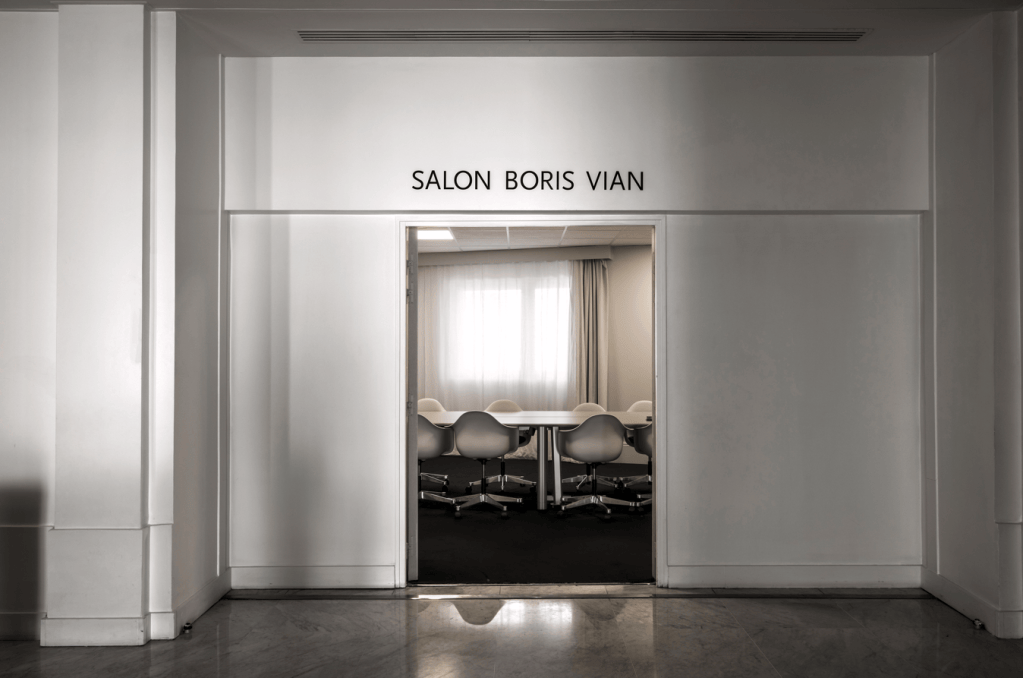
The interiors were unmistakably associated with the house’s established language of concealment, visual deception and the reworking of familiar objects.
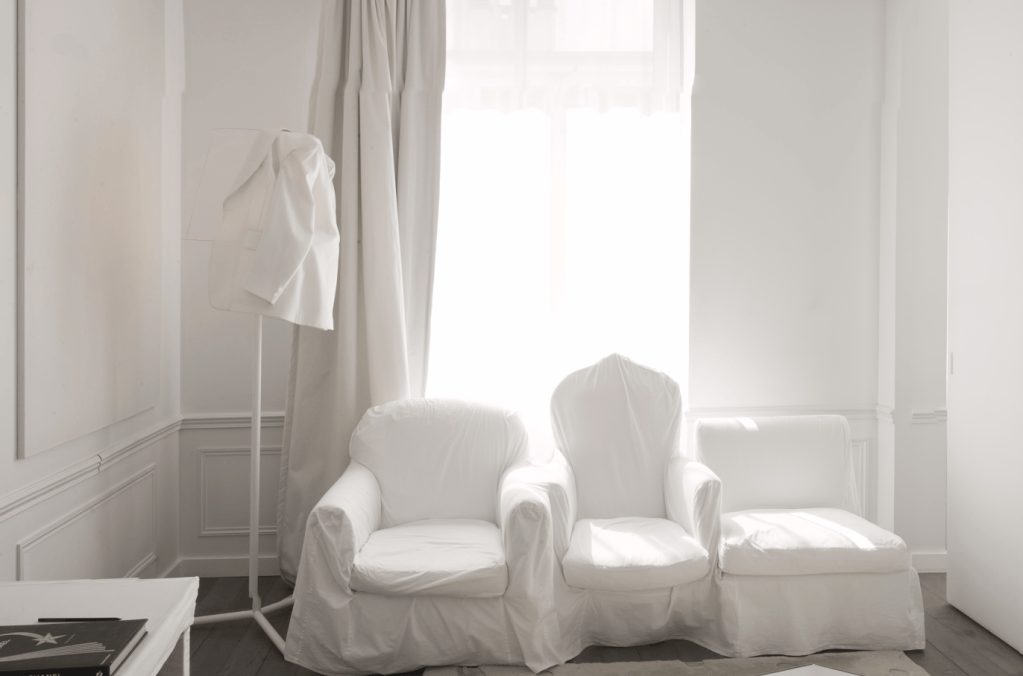
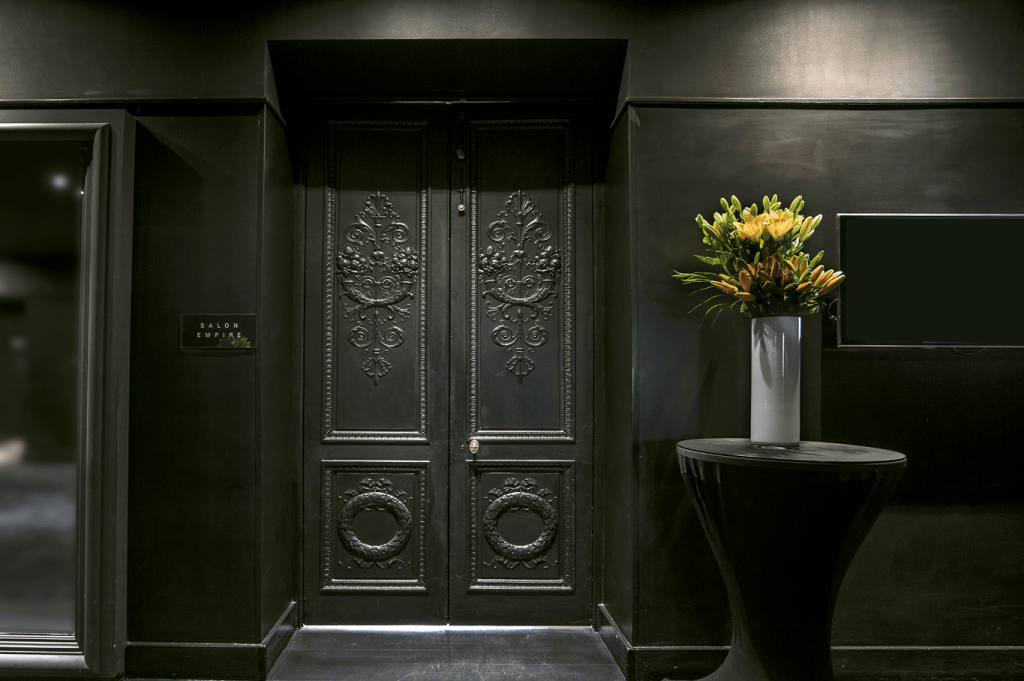
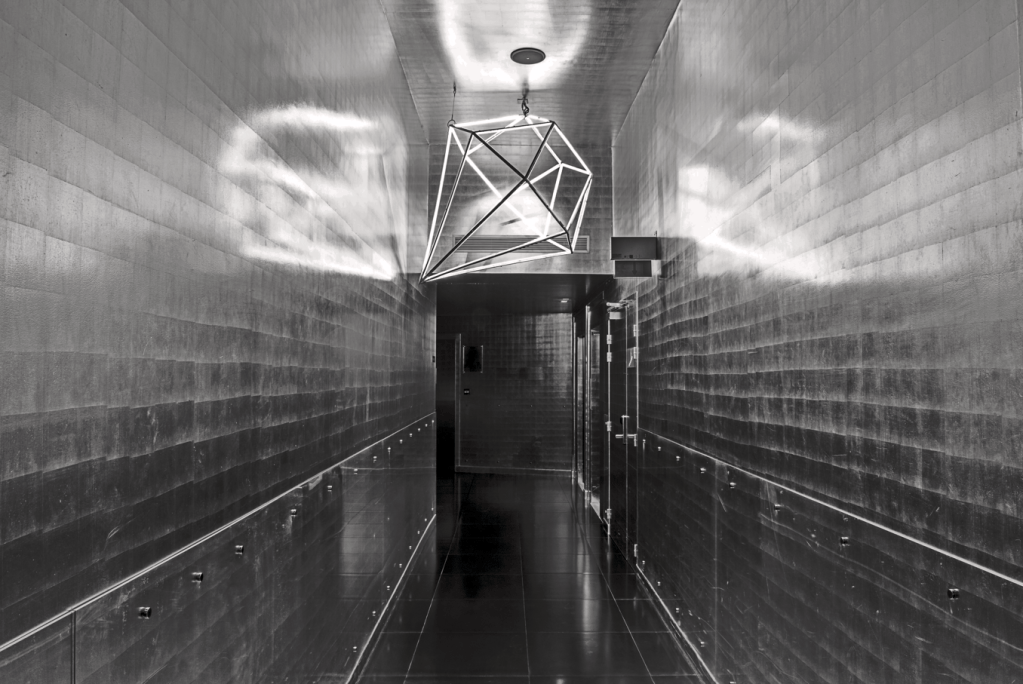
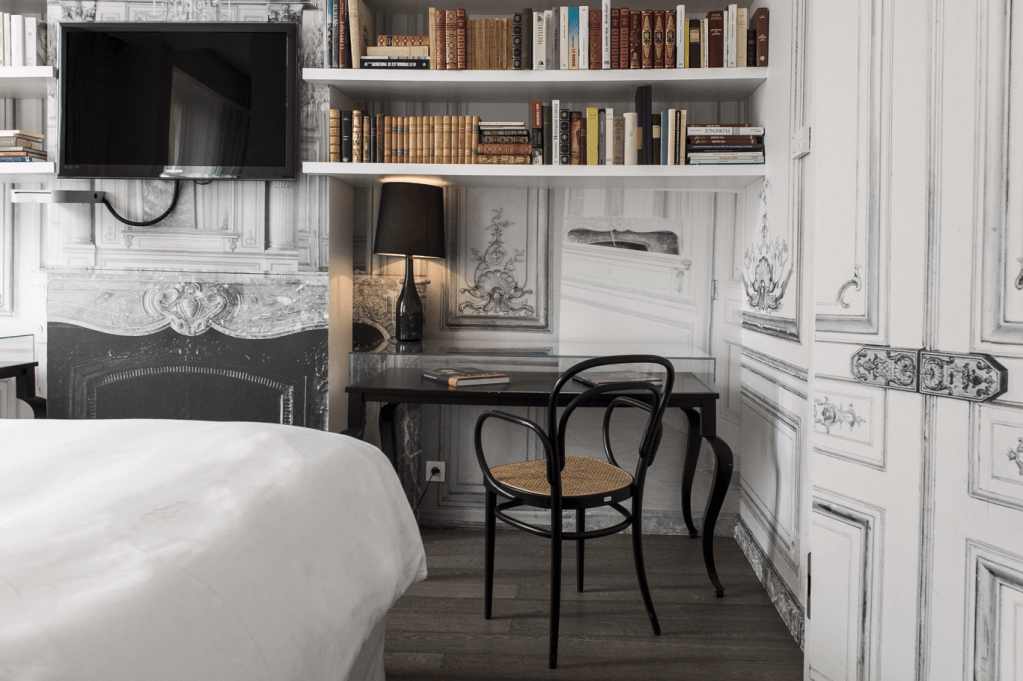
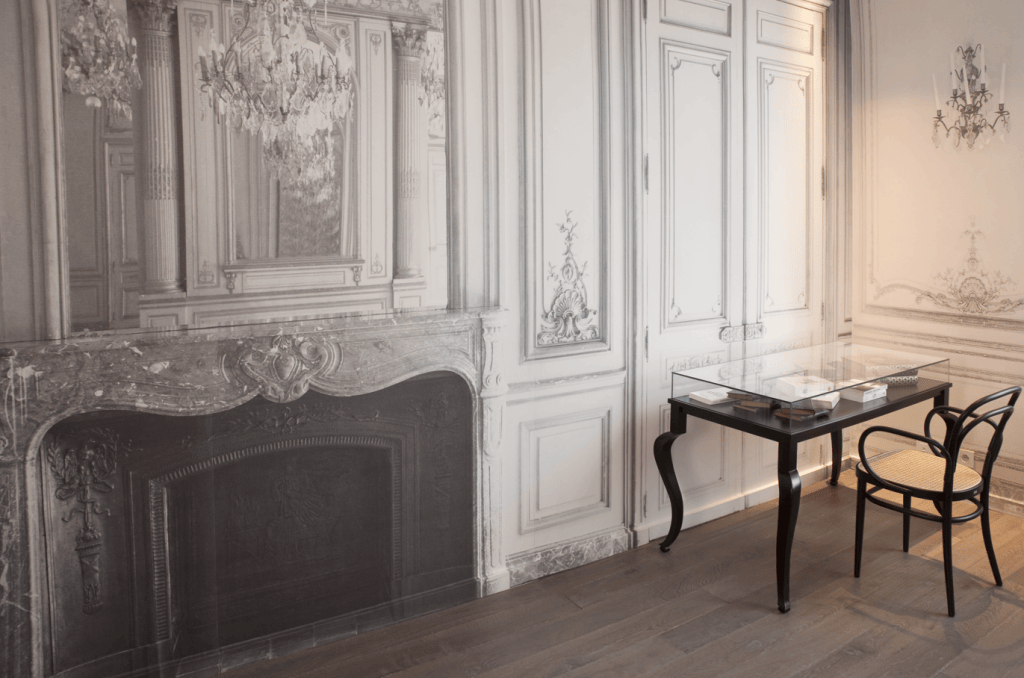
Black-and-white trompe-l’œil patterns reproduced architectural details, including mouldings inspired by the building’s historic interiors. Furniture was covered in white fabric, while mirrors and unexpected changes of scale complicated the reading of otherwise conventional rooms.
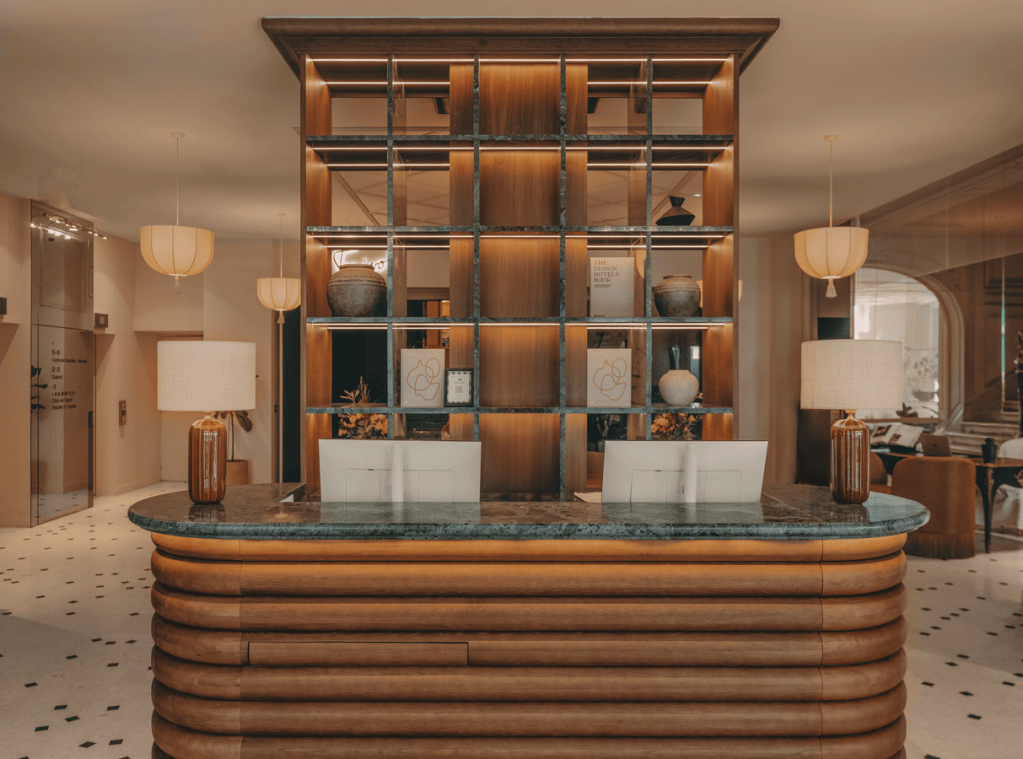
Even the limestone floor of the entrance participated in the deception. Small black slate inlays, ordinarily arranged in a regular pattern, appeared scattered across the pale stone, as though blown out of position by a gust of wind.
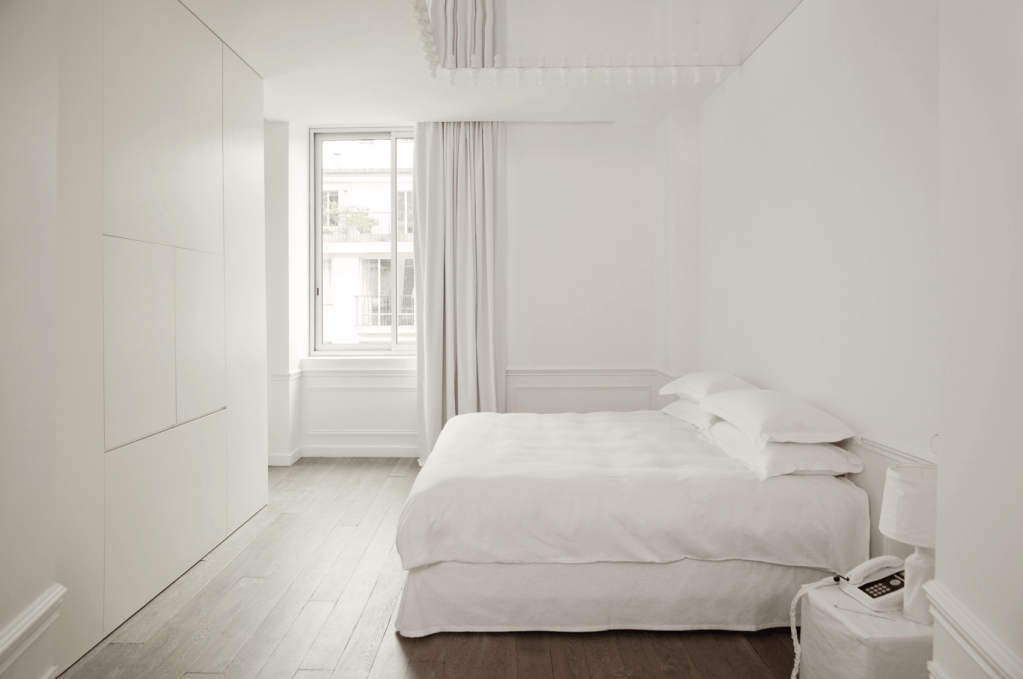
Elsewhere, telephones were wrapped in linen, photographs disappeared behind fabric covers, and certain armchairs appeared to hover above the floor because their supports were concealed. The interventions were playful, although their cumulative effect could become unsettling.
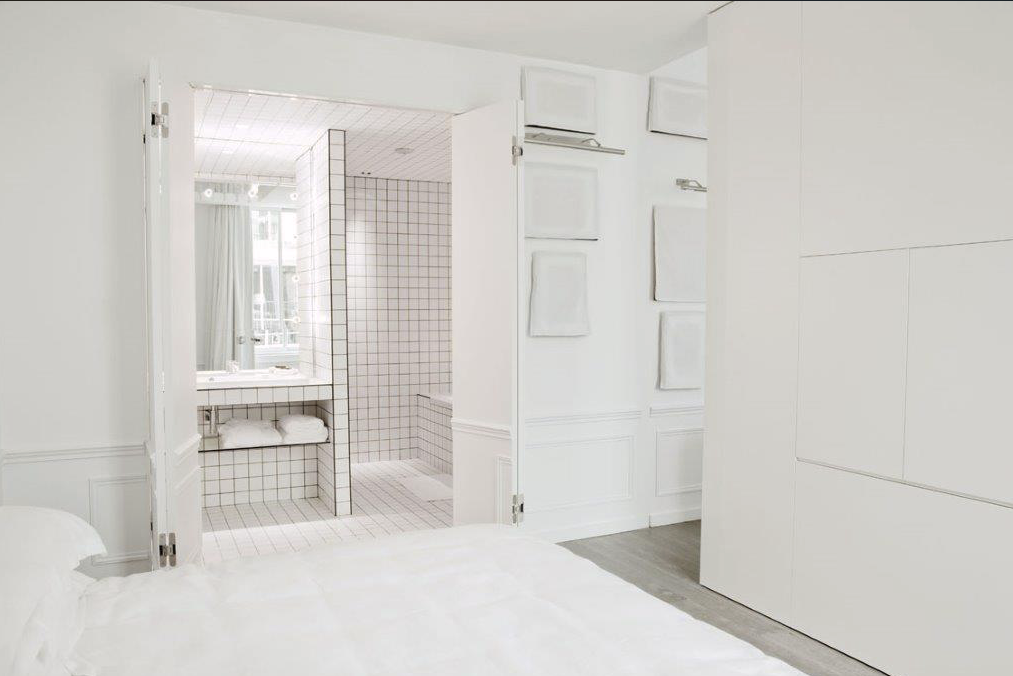
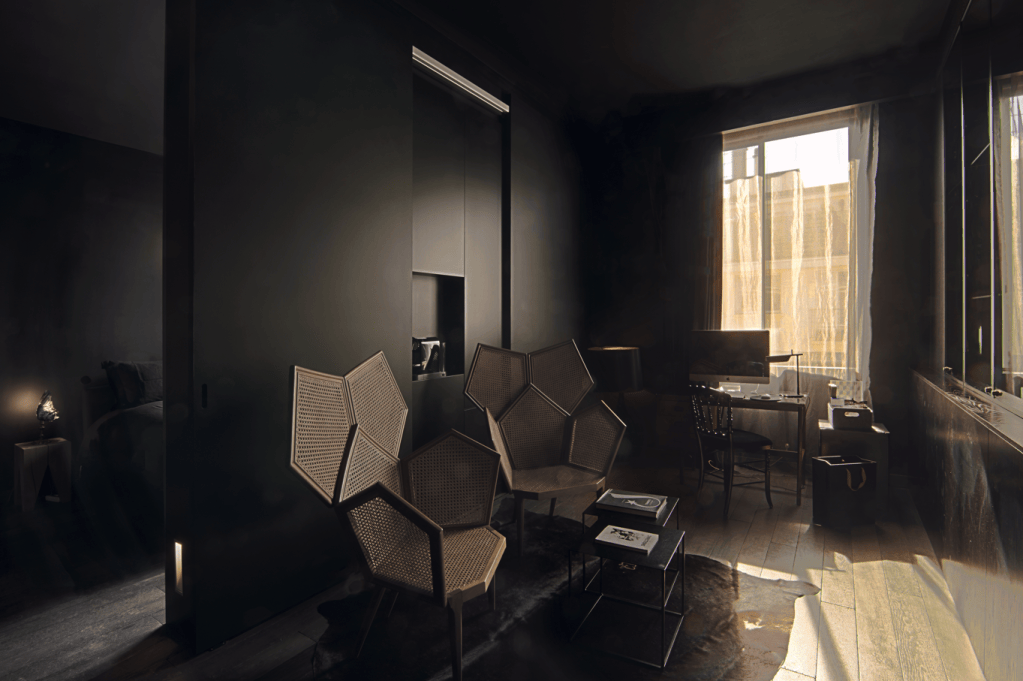
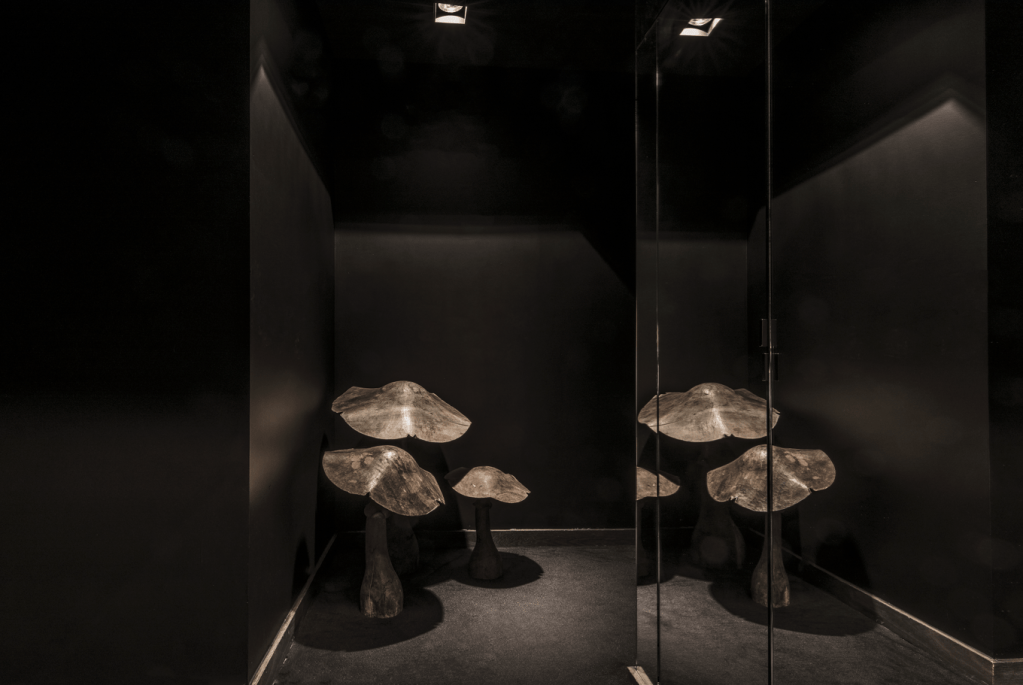
Writing in ICON in February 2012, critic Fatema Ahmed found the results uneven, admiring the elegance of the predominantly white rooms while criticising others as excessively elaborate. The almost entirely black smoking room, with burnt-oak walls and leather furniture, was particularly oppressive in her assessment.
The criticism points towards an interesting difficulty in translating the conceptual language of fashion into a functioning hotel. Margiela’s experiments with concealment, displaced details and the disruption of familiar forms could be highly effective as visual statements. In a bedroom, however, the same devices had to coexist with the rather ordinary requirements of spending a comfortable night somewhere.
A Winter Garden in the Golden Triangle
Maison Malapert’s recent renovation introduces a different emphasis, most clearly expressed in Frivole, which opened in June 2025.
The studio, founded by interior architect Michaël Malapert, has developed a substantial portfolio of hotels and restaurants. Its work frequently makes use of strong colour, specially designed furnishings and changes in lighting to accommodate different activities throughout the day.
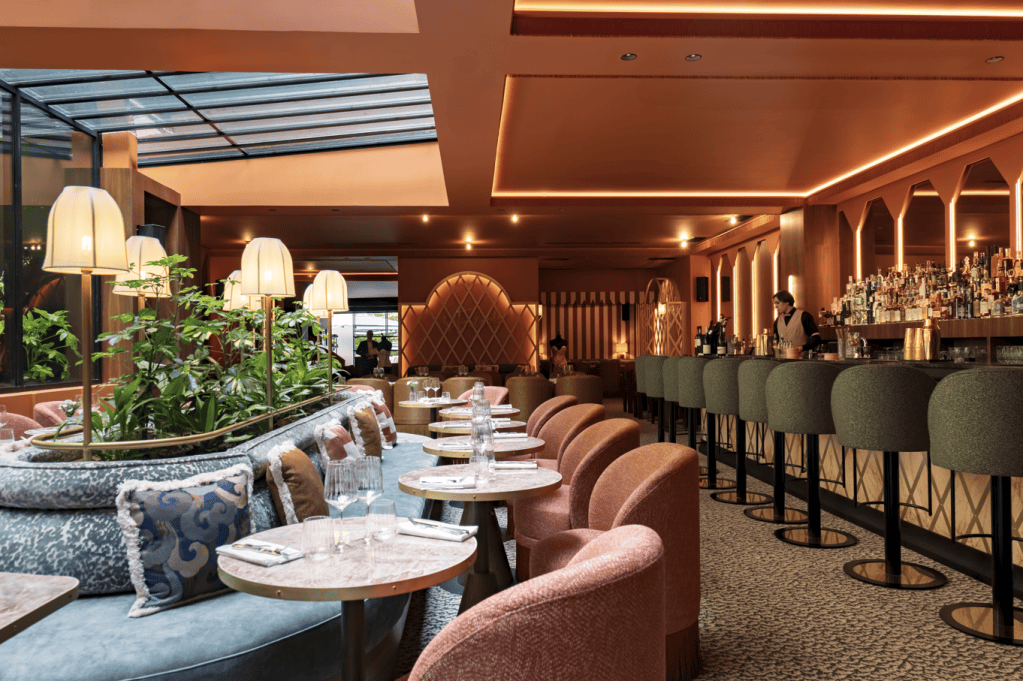
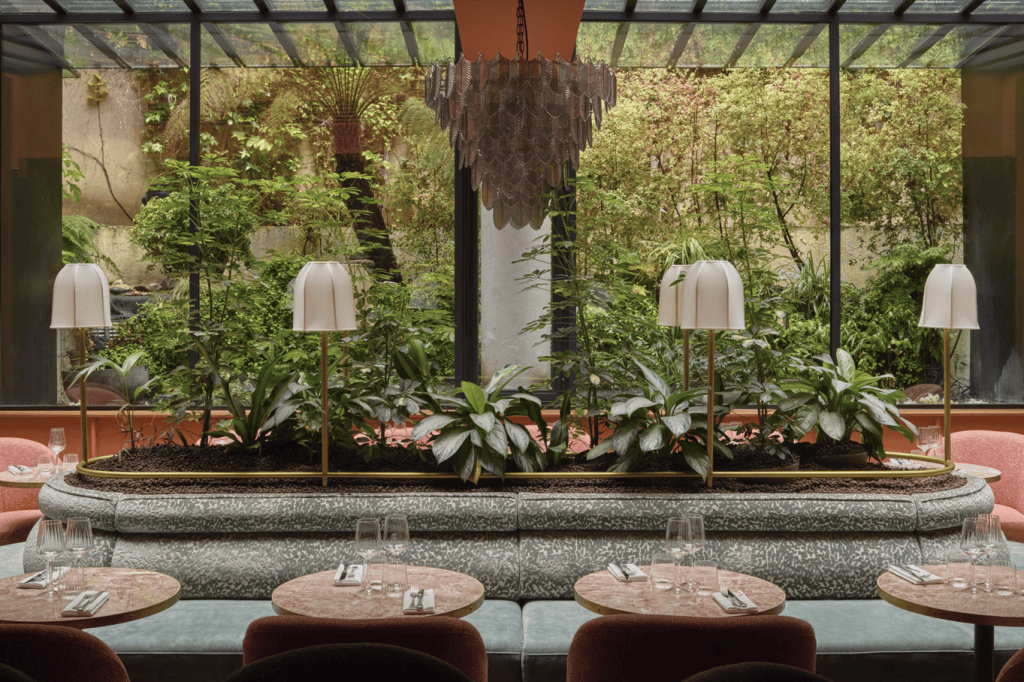
For Frivole, Malapert conceived a richly furnished winter garden, taking advantage of the planted courtyard that provides an unexpected green outlook within the dense urban fabric of Paris’s eighth arrondissement.
The striped walls and awning-like details suggest garden pavilions and temporary summer structures. Pink upholstery is balanced by darker green seating and timber, while the planting becomes an important element of the composition.
Textiles are central to the scheme. French fabric house Lelièvre supplied materials from its Kyrielle, Lhassa and Alizé ranges for the hotel renovation, alongside a carpet adapted from its Écrin design. The latter reinterprets the ikat patterns associated with nineteenth-century textiles from Bukhara and Samarkand in Central Asia.
These are carefully chosen materials with distinct textures and surfaces. The textiles introduce an emphasis on touch and physical comfort, reinforced by the substantial upholstered seating.
The proximity of Avenue Montaigne’s couture houses provides an obvious reference, although the relationship with fashion is now expressed chiefly through the fabrics themselves rather than the conceptual devices associated with Margiela.
In a December 2025 interview with Maison à part, Malapert described Frivole as a somewhat Baroque winter garden, specifically conceived to make the most of the building’s planted courtyard.
He also discussed the changing role of hotel restaurants and communal areas. Increasingly, he observed, such spaces are expected to attract people from the surrounding city, accommodating dining, socialising and entertainment rather than serving hotel guests alone.
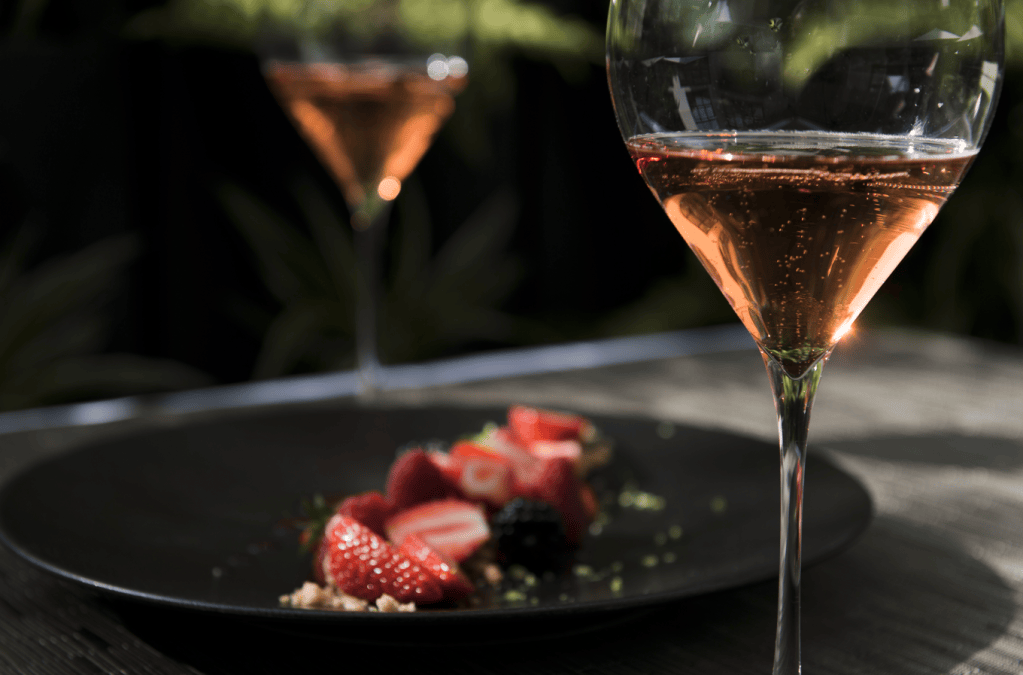
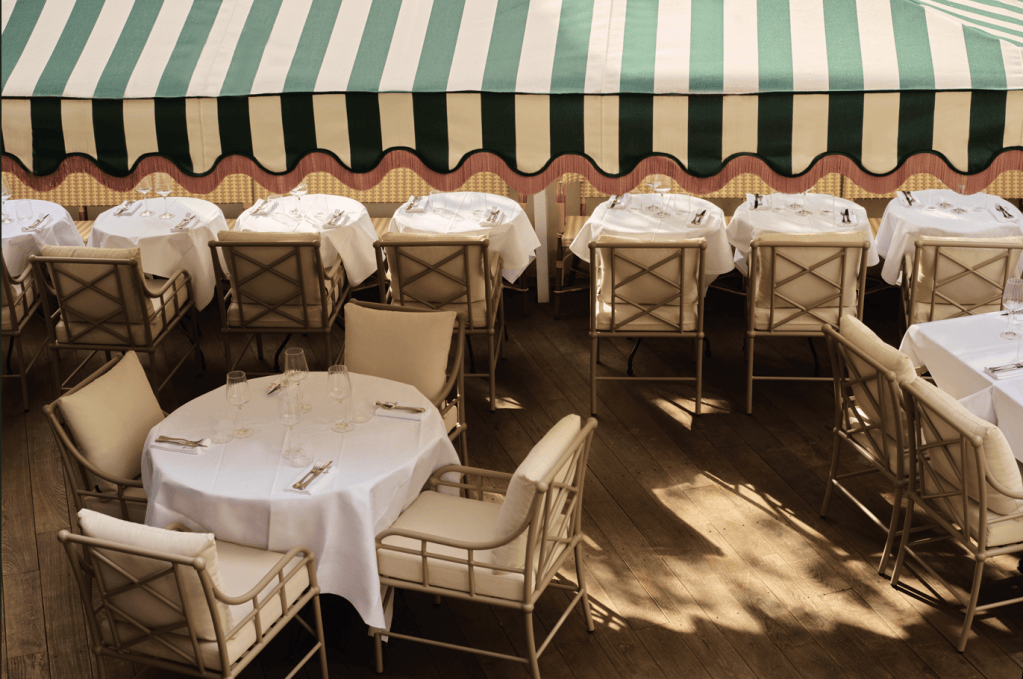
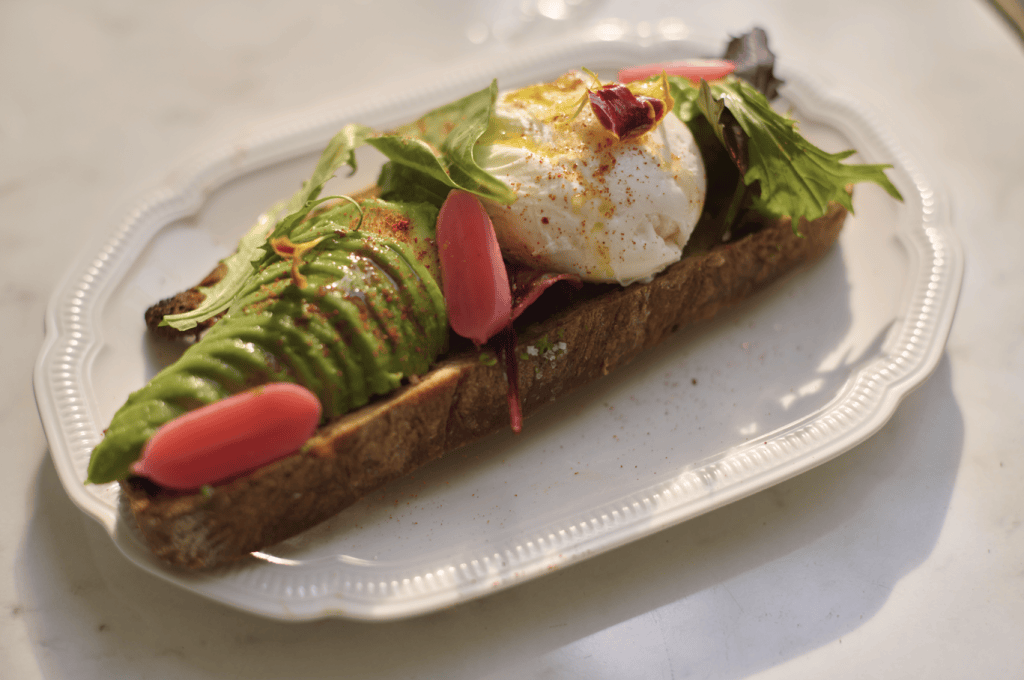
Frivole reflects that approach. With its own entrance, garden terrace and evening cocktail service, it operates as a restaurant in its own right. Lighting, music and the arrangement of the seating have been considered in relation to its changing use throughout the day.
The recent renovation extends beyond the restaurant to the hotel’s public spaces, while the accommodation continues to be offered through distinct collections.
What Remains of Margiela?
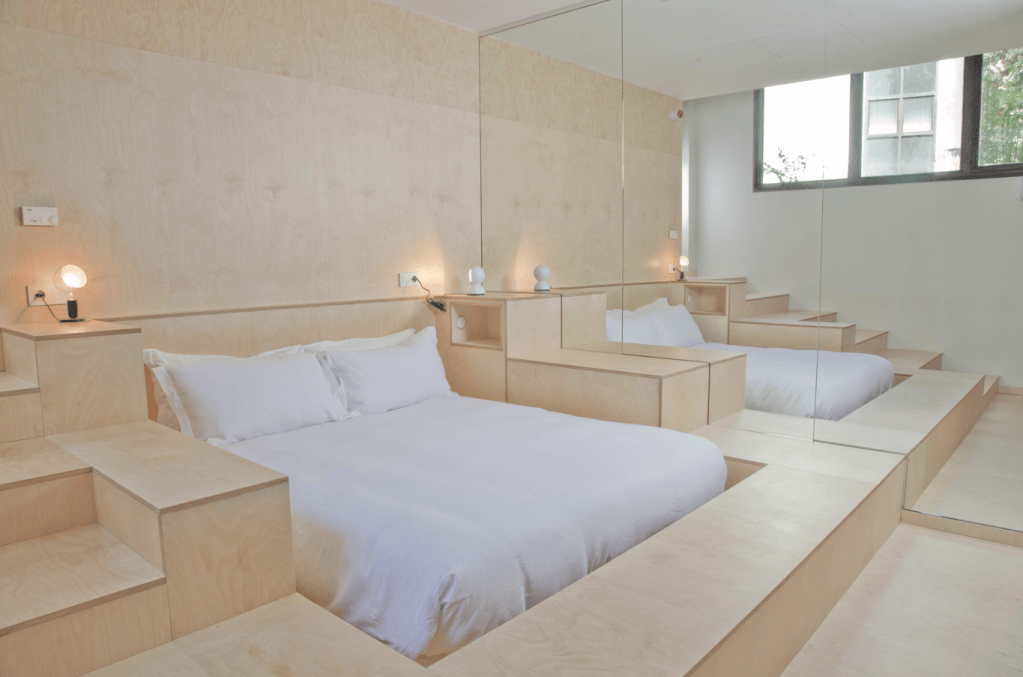
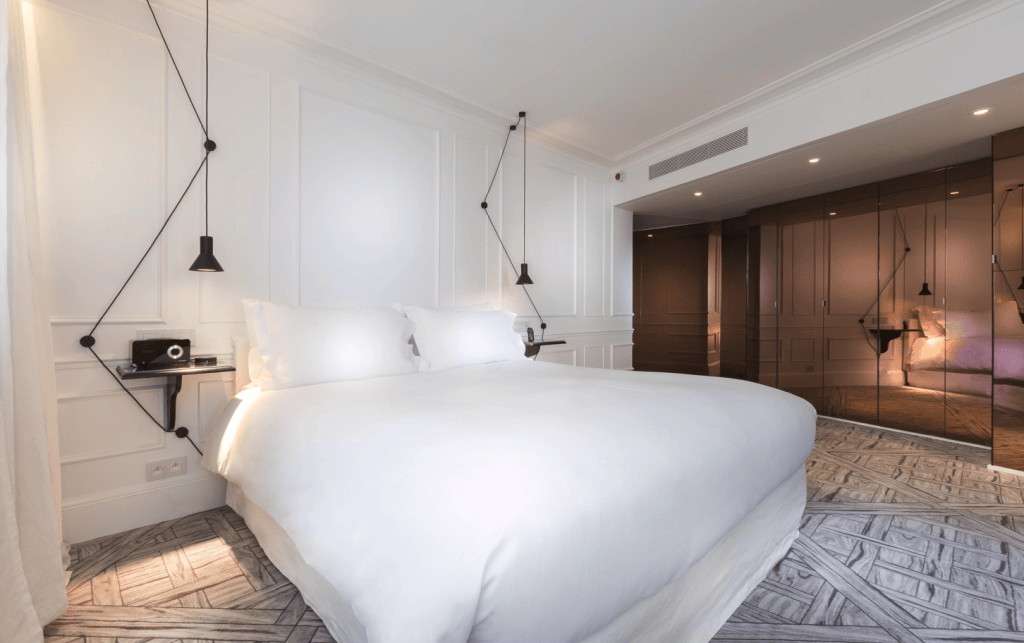
The earlier design has not entirely disappeared from the hotel’s presentation. Its current Couture Collection still draws on the surrealist and trompe-l’œil vocabulary associated with the 2011 project, alongside the more restrained Boutique Collection.
The hotel’s available documentation does not establish precisely how much of the original Margiela scheme survives unaltered. Nevertheless, the continuing presence of the Couture Collection is significant. The fashion house’s contribution remains sufficiently distinctive to form part of the hotel’s appeal fifteen years after its introduction.
There is a revealing difference in the furniture of the two restaurant interiors. Contemporary accounts of the 2011 design described chairs apparently suspended above the floor, their supports hidden from view. At Frivole, low banquettes and generously padded armchairs make their upholstery conspicuous, with fringed details and patterned fabrics that invite closer inspection.
Both interiors employ theatrical effects, but they use them differently. Margiela’s design invited guests to question what they were seeing. Malapert’s places greater emphasis on colour, material and the arrangement of spaces for dining and conversation.
In a building that has accommodated an aristocratic household, an association of engineers and several generations of hotel interiors, the latest renovation is another adaptation to the changing expectations of its occupants.
La Maison Champs Élysées
8 rue Jean Goujon, 75008 Paris, France
Official website
Photography: Courtesy of Design Hotels.

