Almost fifty years after his death, Elvis Presley remains the centre of an extraordinary international devotion. From candlelit pilgrimages to Graceland to thousands of impersonators across the world, what explains the enduring cult of the King?
In August 2026, an eighteen-year-old from Missouri was crowned the world’s ultimate Elvis tribute artist. Finley Watkins, the youngest winner in the competition’s history, had successfully recreated the voice, movements and stage presence of a man who died decades before he was born. His victory took place in Memphis, where performers from around the world compete each year for the title of Ultimate Elvis Tribute Artist.
A few days later, thousands of fans gathered outside Graceland for the annual candlelight vigil commemorating Elvis Presley’s death on 16 August 1977. Carrying candles, they walked up the driveway towards his grave in the Meditation Garden. The procession began on the evening of 15 August and continued into the early hours of the following morning, as it has done for decades.
The combination of competitive impersonation and solemn remembrance is peculiar to Elvis culture. Almost fifty years after his death, the singer commands a worldwide community whose activities encompass pilgrimage, collecting, elaborate rituals and an apparently inexhaustible desire to reproduce his image.
In January 2026, approximately 26,000 people descended on the small Australian town of Parkes for its annual Elvis festival. For five days, the town hosted more than 200 events, including tribute performances, a street parade and ceremonies at which couples renewed their wedding vows. Every September, the Welsh seaside resort of Porthcawl undergoes a similar transformation. Its festival, established in 2004, now attracts tens of thousands of visitors, with approximately 150 tribute artists performing across the town.
These gatherings are often wonderfully absurd. They are also remarkably persistent. Elvis has become the focus of a form of collective enthusiasm that resembles religious devotion in its rituals, iconography and sense of shared identity.
Why him?
A man with several lives
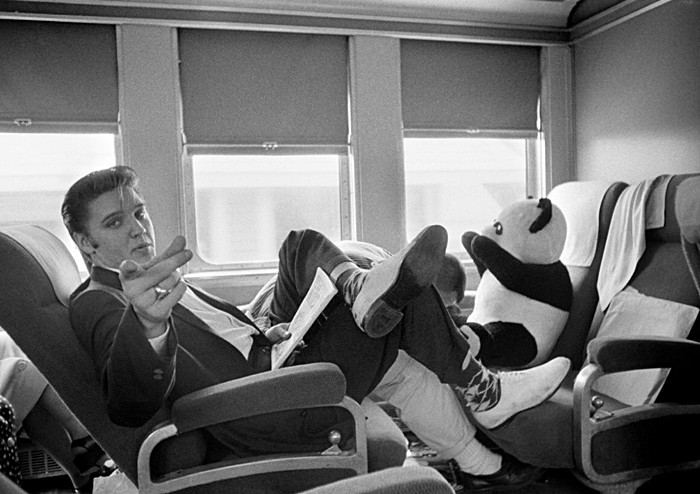
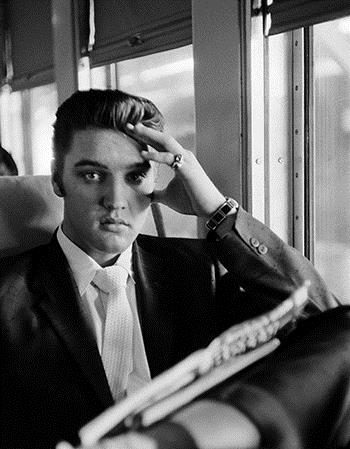
Part of the explanation lies in the unusually varied nature of Elvis Presley’s public image. There was the startlingly beautiful young singer from Tupelo, Mississippi, whose performances provoked moral outrage in the 1950s; the clean-cut film star and American serviceman; the black-leather-clad performer of the 1968 television comeback; and finally the extravagant Las Vegas entertainer in rhinestones and enormous collars.
Each incarnation has acquired its own admirers, iconography and mythology. The Elvis impersonator can choose a particular period, just as the fan can choose a preferred version of the man.
Cultural historian Erika Doss explored this phenomenon in her influential 1999 book Elvis Culture: Fans, Faith, and Image. Having spent years interviewing fans, visiting their homes and attending Elvis gatherings, she examined the remarkably different meanings attached to the singer. For some he remained an erotic figure; others emphasised his Christianity, his generosity or his rise from poverty.
Doss observed that Elvis’s image could accommodate contradictory desires. His appeal crossed generations and sexual identities, while his public identity combined respectability with rebellion. The wholesome Hollywood star and the sexually provocative young performer occupied the same cultural imagination.
This versatility helps explain why the image has remained so productive after his death. The enormous visual archive of photographs, films, television appearances and stage costumes provides material from which successive generations can construct their own Elvis.
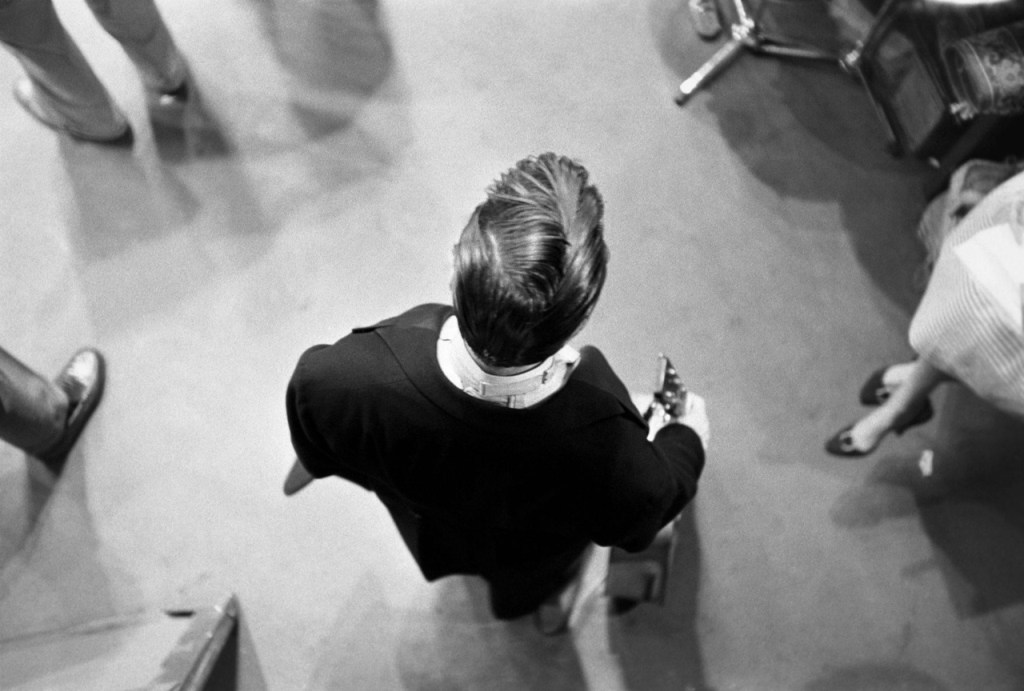
The distinctive physical vocabulary is equally important. The raised lip, dark hair, exaggerated sideburns and characteristic stage gestures make him unusually recognisable. His visual identity can be communicated through a handful of details, a considerable advantage in a culture sustained through imitation.
Yet beneath the spectacle was an exceptional musical talent.
When Presley recorded That’s All Right in July 1954 at Sun Studio in Memphis, he transformed Arthur Crudup’s blues composition through an energetic combination of country inflection and rhythm-and-blues phrasing. The recording sounds spontaneous and remarkably fresh, particularly in the way Presley’s vocal slips between relaxed conversation and excited exclamation.
His musical education had been unusually broad. Growing up in the American South, he absorbed country music, Black rhythm and blues, gospel singing and popular ballads. His early recordings incorporated these influences with a vocal flexibility that was difficult to categorise.
There is a complicated racial history here. Presley became extraordinarily successful partly because white audiences and the American entertainment industry were willing to embrace forms of Black musical expression when performed by a white singer. Black artists who had helped create the musical foundations of rock and roll did not receive comparable opportunities or recognition.
The history of Hound Dog illustrates the problem. Willie Mae Big Mama Thornton recorded the original in 1952, releasing it to considerable rhythm-and-blues success the following year. Presley subsequently adopted a substantially rewritten arrangement performed by Freddie Bell and the Bellboys. His 1956 recording became an international sensation.
The difference between the two versions is revealing. Thornton’s original, written by Jerry Leiber and Mike Stoller, is a forceful blues performance directed at an unfaithful man. Presley’s version is faster, more playful and more rhythmically aggressive, with the sexual implications of the original lyrics largely removed.
Recognising the inequalities underlying his success does not require dismissing his artistry. It does, however, complicate the familiar mythology of Elvis as the solitary inventor of rock and roll. He was an extraordinary interpreter working within a musical culture already transformed by Black American performers.
The religion of Elvis
The comparison between Elvis fandom and religion has a substantial scholarly history.
In Elvis’ Gospel Music: Between the Secular and the Spiritual?, published in 2015, cultural scholar Mark Duffett questioned the tendency to describe Elvis fans as members of a quasi-religious cult.
Drawing upon the sociology of Émile Durkheim, Duffett argued that collective devotion need not involve a literal belief in the divinity of its subject. Shared rituals, repeated gatherings and emotionally significant objects help communities express and sustain their sense of belonging.
The distinction is important. Someone who visits Graceland every August may be deeply moved by the experience without regarding Presley as a supernatural figure. The ritual provides an opportunity to remember, meet friends and participate in an activity whose significance is understood by others.
It can also offer a connection with personal history. For older admirers, Elvis may be inseparable from adolescence, first love or a particular period of social change. Younger fans encounter him through inherited records, family traditions, film and the enormous archive of his performances.
The pilgrimage to Graceland is especially revealing. Presley bought the Memphis mansion in 1957, and it became his principal home until his death. The property opened to the public on 7 June 1982, when approximately 3,000 visitors paid five dollars each to tour the house.
Its interiors have become part of the Elvis legend. The Jungle Room, with its green carpeting, carved wooden furniture and artificial waterfall, represents the singer’s enthusiastic taste for domestic theatricality. The television room, with its multiple screens and striking colour scheme, reveals a fascination with technology and entertainment.
These are unusually intimate surroundings in which to encounter someone whose public existence was so elaborately staged. Visitors can examine the furniture he chose, the rooms in which he lived and the objects he surrounded himself with.
The Meditation Garden contains the graves of Elvis and members of his family. The first anniversary candlelight vigil took place in 1978, establishing a ritual that continues today.
There is an interesting relationship between the domestic and the sacred here. The house remains recognisably a home, yet its rooms have acquired the status of historical exhibits. Ordinary possessions have become relics, while the gravesite provides a physical destination for acts of remembrance.
Presley’s own religious interests deepen the association. Gospel music remained a lifelong passion, and all three of his Grammy Awards were earned for religious recordings, including How Great Thou Art and He Touched Me. He frequently sang gospel privately with fellow musicians, and incorporated sacred songs into his concert repertoire.
His performances could be deeply emotional. In the 1968 television special, If I Can Dream, written in the aftermath of the assassinations of Martin Luther King Jr. and Robert F. Kennedy, allowed him to express an unusually direct response to contemporary events. His voice becomes increasingly forceful as the song progresses, culminating in a performance that remains among the finest of his career.
The emotional intensity of such recordings helps explain why some listeners experience his music in spiritual terms. But Duffett’s research offers a useful corrective: most fans do not confuse musical admiration with religious belief. They find personal meaning and emotional comfort in the music while recognising the singer’s human limitations.
A thousand Elvises
The world of Elvis impersonation introduces another dimension to his afterlife.
Unlike most popular musicians, Presley has generated an enormous international performance tradition devoted specifically to recreating his appearance, voice and mannerisms. Some performers concentrate on a particular historical period, while others assemble elements from several stages of his career.
There are technically accomplished tribute artists whose performances require considerable vocal discipline and detailed knowledge of the original arrangements. There are amateur enthusiasts whose enjoyment lies in the costumes and spectacle. The distinction between professional performance and affectionate parody is often surprisingly fluid.
Since 2007, Elvis Presley Enterprises has organised an official international tribute competition, with preliminary rounds held across the world. Competitors are judged on vocal ability, style and stage presence, effectively establishing standards for what constitutes a convincing Elvis.
The irony is difficult to miss. A performer whose early appeal depended heavily upon his apparent spontaneity has become the subject of an elaborate system of faithful reproduction.
Yet these performances accomplish something recordings cannot. They allow audiences to experience the familiar gestures and musical arrangements in the physical presence of another person. The performer provides a temporary approximation of the live encounter that has been impossible since 1977.
The culture also extends well beyond the commercial organisation responsible for the Presley estate. The festivals in Australia and Wales have developed their own traditions, drawing on local communities and encouraging participation from people whose enthusiasm may be as much social as musical.
Porthcawl’s transformation is particularly extraordinary. The festival originated as a fundraising event intended to support the town’s Grand Pavilion. It has since become one of the most recognisable events in the Welsh seaside calendar, with Elvis costumes appearing in pubs, streets and holiday accommodation throughout the resort.
There is considerable humour in seeing American rock-and-roll iconography transplanted to a Welsh coastal town. But the annual repetition has established a genuine local tradition. Elvis, an American singer who died in Memphis, has become part of Porthcawl’s cultural identity.
The problem with preserving a legend
Any account of Elvis’s enduring popularity must also acknowledge the enormous commercial apparatus that maintains his presence.
Since his death, the Presley estate and its commercial partners have developed an extensive business involving licensing, tourism, merchandising and audiovisual productions. His image is carefully protected, while new interpretations continue to introduce him to younger audiences.
The difficulty with this arrangement is that Elvis’s actual life was considerably less comfortable than the legend often suggests.
His relationship with his manager, Colonel Tom Parker, restricted aspects of his professional development. The long succession of formulaic Hollywood films frustrated his artistic ambitions, while the demands of his later touring career coincided with deteriorating health and dependence on prescription medication.
The singer who died at forty-two had experienced extraordinary success, but his life also revealed the personal costs of celebrity on an exceptional scale.
Some of these contradictions have been explored in recent cinema. Baz Luhrmann’s Elvis (2022) examined the relationship between Presley and Parker, while his 2026 film EPiC: Elvis Presley in Concert draws on rediscovered footage from Presley’s Las Vegas performances and rehearsals.
The newer film is particularly interesting because it returns attention to the performer rather than the established mythology. Presley appears joking with musicians, rehearsing arrangements and working through the practical demands of live performance. His humour and musicianship are more apparent than in the familiar caricature of the declining Las Vegas entertainer.
A 2025 scholarly collection, Rethinking Elvis, edited by Mark Duffett, examines the singer’s changing reputation through questions of race, geography, fan participation and commercial ownership. Its publication reflects a continuing academic interest in Elvis as a figure through whom the history of twentieth-century popular culture can be reconsidered.
The commercial industry and the fan community are closely connected, but their interests are not always identical. Official representations tend to favour recognisable and marketable versions of Presley. Fans, meanwhile, continue to construct their own interpretations, sometimes embracing precisely the eccentricity or vulnerability that official publicity would prefer to minimise.
This may be one reason the phenomenon has survived so long. Elvis is an image that can be endlessly reproduced, but he was also a complicated individual whose life resists being reduced to a single satisfactory story.
The recordings themselves remain an essential part of the explanation. The early Sun sessions, the extraordinary emotional range of the 1968 comeback and the commanding vocal performances of his later years demonstrate an artist capable of communicating directly with an audience across very different musical settings.
The fan who attends a candlelight vigil, the teenager studying his movements and the visitor examining the Jungle Room may be interested in different aspects of Elvis. Their shared fascination does not depend upon agreeing about which version was the authentic one.
That is perhaps the most distinctive feature of Elvis culture. The singer has been dead since 1977, but the performances, rituals and interpretations have continued to multiply. Each generation encounters an already elaborate mythology and finds new ways of participating in it. The eighteen-year-old crowned in Memphis in 2026 belongs to that history as surely as the fans who gathered outside Graceland in the days following Presley’s death.
Elvis left the stage nearly half a century ago. His audience, it seems, has never entirely accepted the announcement.