
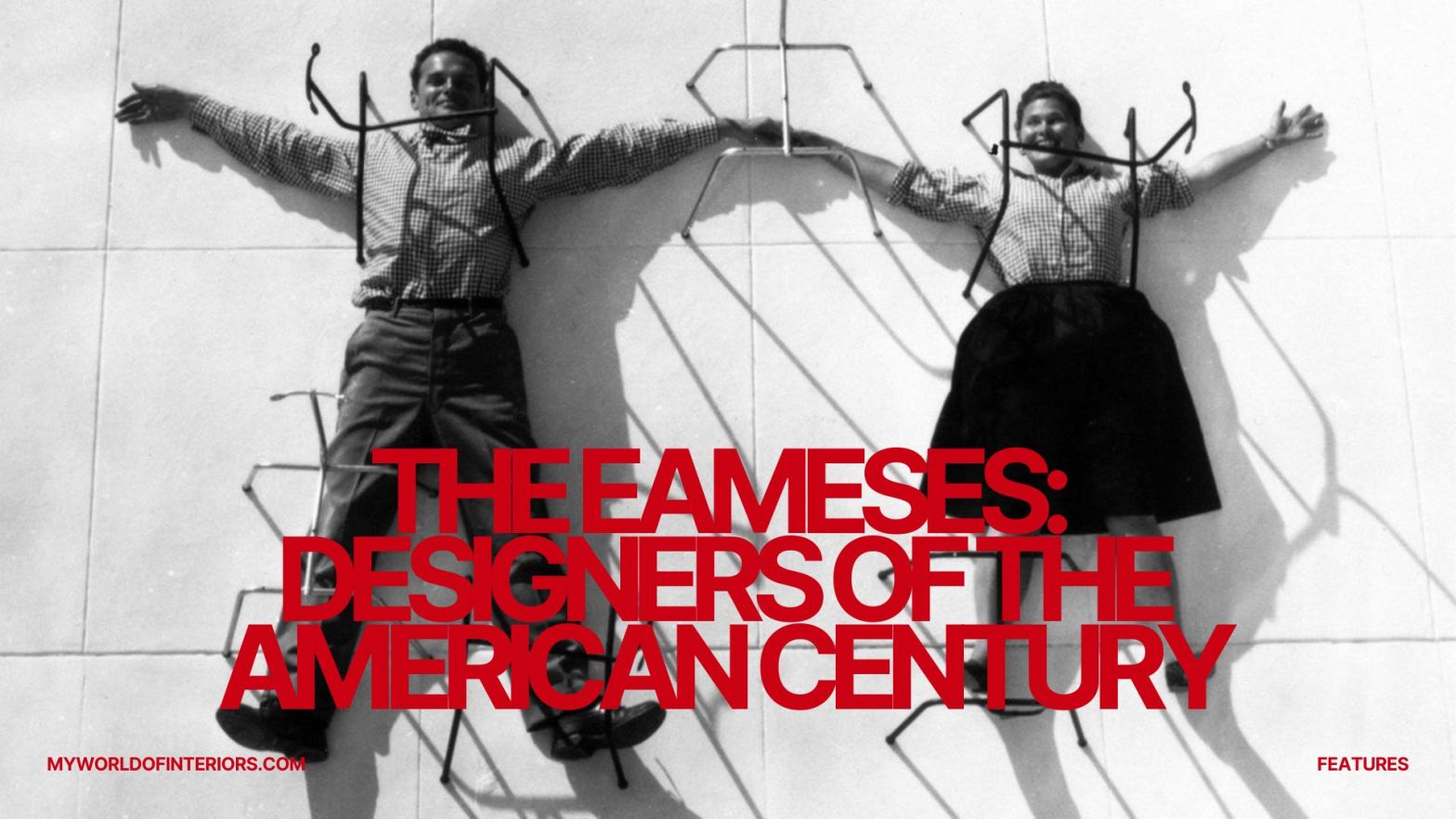
In the light-filled hills above the Pacific, a glass-and-steel house stands as a manifesto. Inside, shelves of books and folk art mingle with modernist chairs in plywood and fiberglass. It is not simply a home, but a vision: how design could be democratic, playful, rigorous, and alive. This is the world of Charles and Ray Eames, partners in life and work, whose designs came to define the optimism and elegance of mid-century America.
Their creations — the Eames Lounge Chair and Ottoman, the molded plywood and fiberglass chairs, the Case Study House, films like Powers of Ten — remain icons. But their legacy is more than objects. It is an approach: design as problem-solving, design as play, design as a way of living.
Charles and Ray: An Unlikely Pair
Charles Eames, born in St. Louis in 1907, trained as an architect and absorbed the lessons of modernist structure. Ray Kaiser, born in Sacramento in 1912, studied painting in New York under Hans Hofmann, exploring abstraction and color. They met at the Cranbrook Academy of Art in Michigan, an incubator of American modernism, where Charles collaborated with Eero Saarinen and Ray honed her artistic sensibility.
Married in 1941, the couple moved to Los Angeles and began a collaboration that blurred boundaries between art, architecture, and design. Every work was signed “Charles and Ray Eames.” To them, authorship was shared; creativity was conversation.
The Language of Plywood and Plastic
Their breakthrough came with molded plywood, a material they adapted from wartime technology. Using heat and pressure, they bent plywood into organic curves, producing chairs that were light, strong, and visually striking. The Molded Plywood Chair (1946) was celebrated by Time magazine as the “best design of the 20th century.”
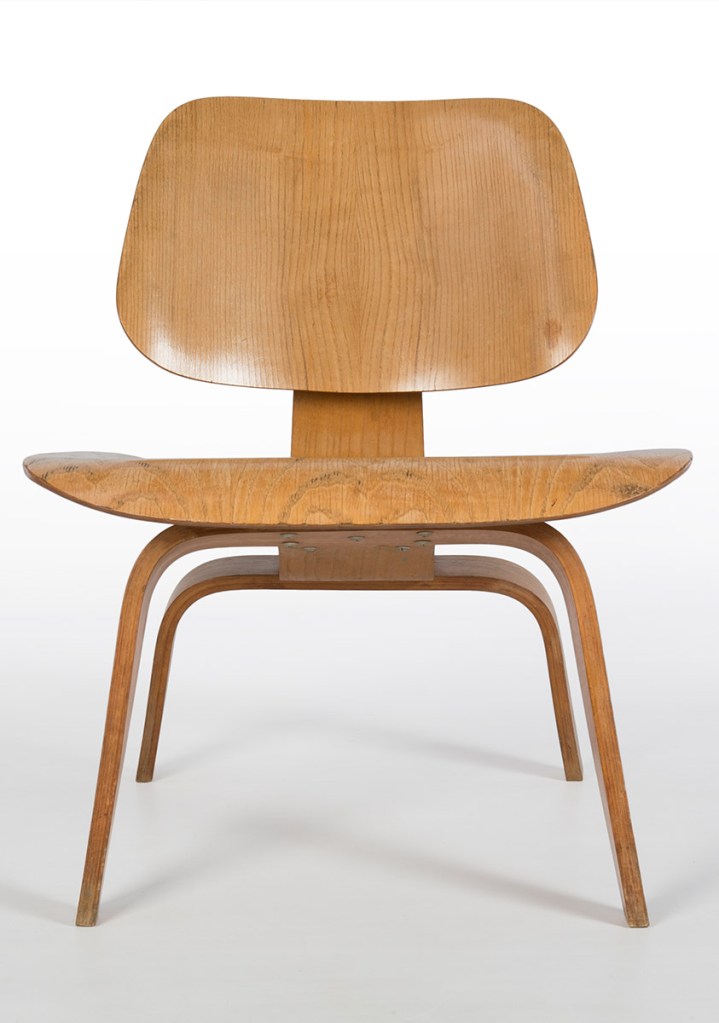
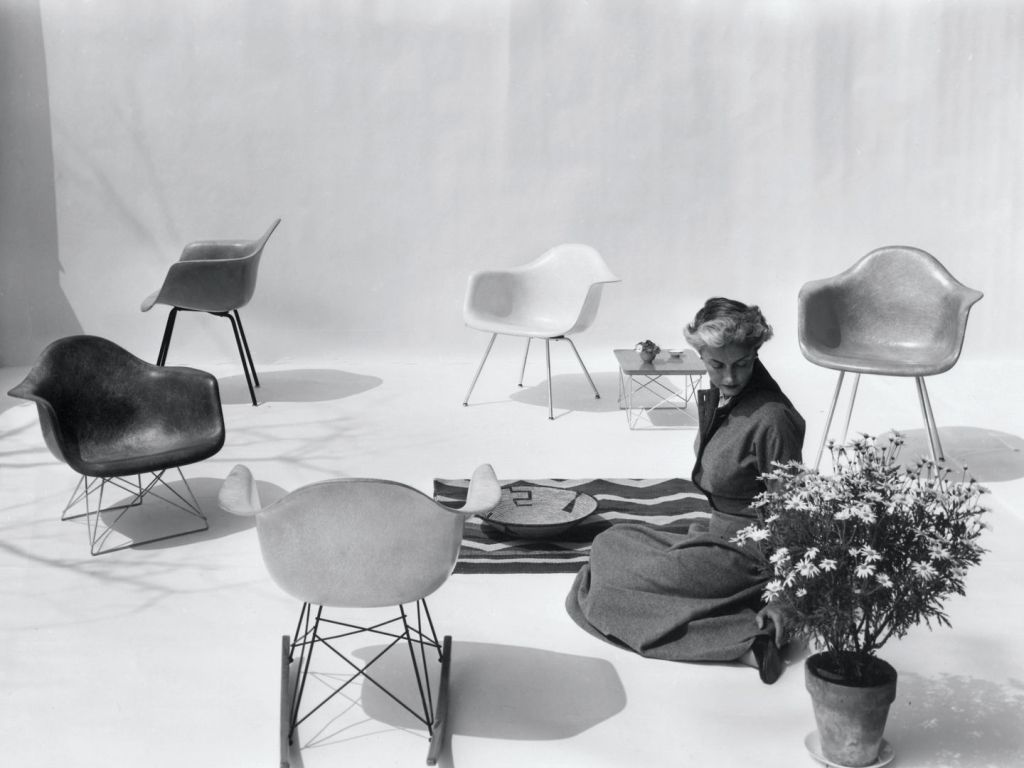
From plywood, they moved to fiberglass, pioneering mass-produced chairs that could be stacked, adapted, and sold affordably. Yet their work was never cold. Unlike Bauhaus austerity, Eames furniture was playful: curves invited the body, colors delighted the eye.
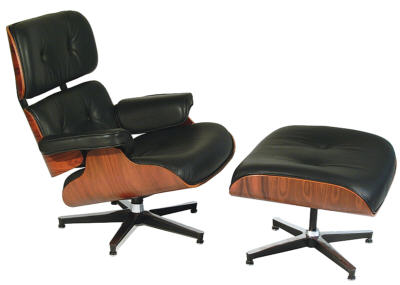
In 1956, they unveiled the Eames Lounge Chair and Ottoman, an American reinterpretation of the English club chair. With its plywood shells and supple leather, it married comfort with elegance. It remains a symbol of mid-century luxury — simultaneously modern and timeless.
The Eames House: A Case Study in Living
In 1949, the Eameses built their own home in Pacific Palisades as part of the Case Study House Program. Known as Case Study House No. 8, it was composed of prefabricated steel and glass panels, perched in a eucalyptus grove overlooking the ocean.
Inside, modernist minimalism coexisted with abundance: folk objects, textiles, plants, and artworks animated the rational structure. The house became a laboratory of living, demonstrating that modern design could be functional and humane, industrial yet intimate.
Today, the Eames House endures not only as an architectural landmark but as a lived philosophy of balance between clarity and warmth.
Beyond Furniture: Films, Exhibitions, and Toys
The Eames Office was a workshop of ideas that extended far beyond furniture. The couple made more than 125 short films, from whimsical studies of tops spinning (Tops, 1969) to the vast cosmological journey of Powers of Ten (1977), which visualized scale from galaxies to atoms.
They also designed groundbreaking exhibitions for IBM, the Smithsonian, and world’s fairs. These immersive environments combined graphics, film, and architecture, anticipating the multimedia installations of today.
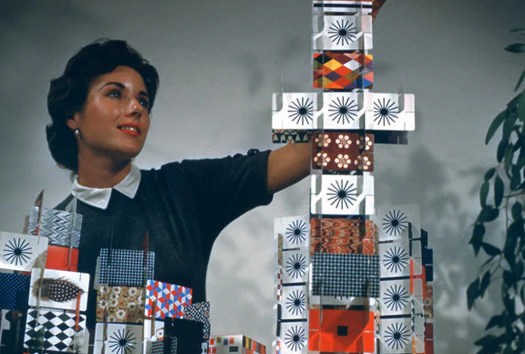
Play was central. Their House of Cards (1952), a set of printed slotted cards for building, and the Eames Elephant (1945), a plywood toy, captured their belief that play was essential to creativity.

Philosophy: The Best for the Most for the Least
The Eameses saw design as a form of service. Charles often described the designer as “a good host, anticipating the needs of his guests.” Their maxim — “the best for the most for the least” — distilled their mission: to create objects that were beautiful, useful, affordable, and enduring.
This democratic ethos resonated with postwar America, a society newly affluent and optimistic, eager for homes, furniture, and lifestyles that expressed modernity. Their designs found their way into universities, offices, airports, and living rooms, embedding modernism into daily life.
Legacy
Charles Eames died in 1978, Ray in 1988 — on the same date, ten years apart. Together, they left an oeuvre that has only grown in stature. Their furniture, still produced by Herman Miller and Vitra, remains in continuous demand. The Eames House is preserved as a museum, a pilgrimage site for design lovers.
But their influence transcends objects. They reshaped how design is taught and understood: interdisciplinary, experimental, deeply human. They showed that design could embrace both science and art, rigor and play, practicality and poetry.
Essential Works of Charles and Ray Eames
- Molded Plywood Chair (1946) – Radical in its economy, elegant in its form.
- Fiberglass Shell Chair (1950) – The first mass-produced plastic chair, endlessly adaptable.
- Eames Lounge Chair and Ottoman (1956) – An icon of modern comfort and luxury.
- Eames House (Case Study House No. 8, 1949) – Architecture as philosophy, a home as manifesto.
- Powers of Ten (1977) – A visionary film of scale and perspective.
- House of Cards (1952) – Design through play and imagination.
The Eameses Today
In an age of fast design and disposable products, the Eameses’ work feels even more relevant. Their furniture endures because it was never about trends but about the essentials of human experience: comfort, delight, adaptability. Their films and exhibitions prefigured the multimedia age, showing how design could mediate between complexity and clarity.
Most of all, they left a model of creative partnership: a reminder that design is not about ego but about dialogue, not about objects but about the lives they shape.
The Eameses taught us that modernity could be warm, playful, and generous. And in every curve of plywood, every zoom of a camera, every toy, house, and chair, their vision of a humane modern life remains vivid.
Discover more from My World of Interiors
Subscribe to get the latest posts sent to your email.
 My World of Interiors