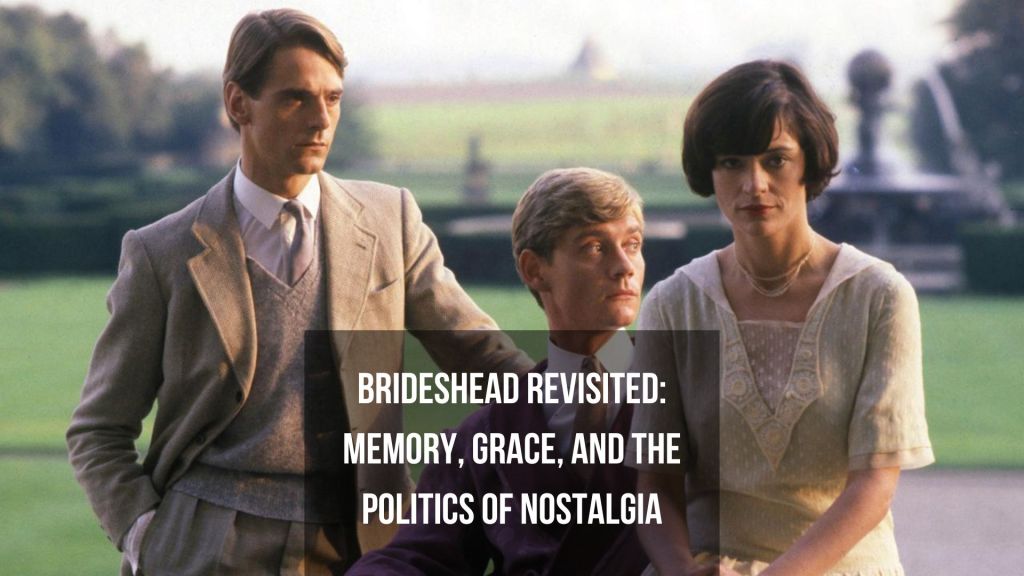
To approach Brideshead Revisited is to enter a layered architecture: a country house that is also a theology, a love story that is also a meditation on class, and a memoir that is also an argument about memory. Evelyn Waugh published the novel in 1945, in the wreckage of war and rationing; he later pruned its luxuriance in a revised edition, but the book’s baroque sensibility remains unmistakable. Framed by a wartime billet—Captain Charles Ryder’s company is quartered, by chance, at Brideshead—this is a story told in retrospect, where the present is colorless and the past arrives drenched in light.
At its most elemental, Brideshead is about desire and grace. Desire: for persons, for places, for beauty, for belonging. Grace: the unbidden movement of a sacred order that overrides human plans. Waugh’s boldness lies in binding these together, making the very mechanics of memory (how we gild what we have lost) serve a Catholic account of how love wounds and saves.
Part I — The Book: Waugh’s House of Memory
Structure and Voice
The novel is divided into two books—Et in Arcadia Ego and A Twitch upon the Thread—bracketed by the wartime prologue and epilogue. It is narrated by Charles Ryder, painter and unbeliever, whose voice blends crisp observation with Proustian recall. The opening bivouac at the anonymous country house that turns out to be Brideshead is more than coincidence; it is narrative fate. The army commandeers the estate; memory commandeers Ryder.
Waugh’s choice of first-person retrospective narration is decisive. Charles is an elegant but unreliable curator of his own past. The gilding of Oxford’s summer and the melancholic afterglow of later years are acts of composition as much as recollection. In this sense the book is profoundly modern: it exposes how memory edits, poses, frames.
Arcadia and Its Loss
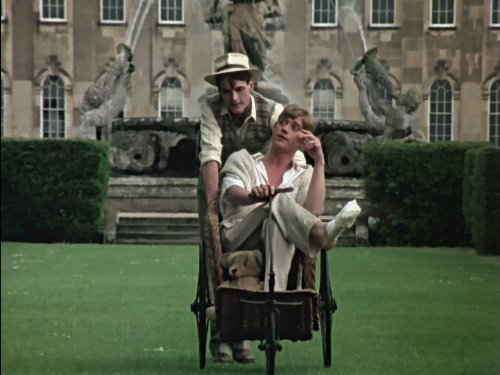
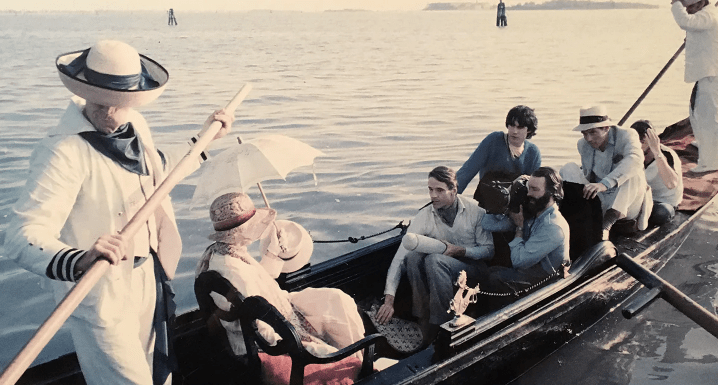
Et in Arcadia Ego gives us Oxford as pastoral—a sensual education conducted in quad and meadow, with champagne picnics and languid afternoons. Sebastian Flyte enters, teddy bear and all, at once icon of privilege and emblem of unworldly fragility. The language blooms; the settings shimmer. Yet this Arcadia carries its memento mori in the title: even in paradise, death speaks. Sebastian’s drinking is not a quirk but a doom, his charm inseparable from evasion. Oxford spills into Venice, then back to Brideshead; the enchantment endures, then curdles.
Catholic Plotting: Grace as Intrusion
In A Twitch upon the Thread, the narrative contracts around the Marchmains’ religion and the adult entanglement of Charles with Julia. Waugh’s Catholic dramaturgy is subtle but relentless: grace arrives not as comfort but as contradiction. Lady Marchmain’s piety is both commanding and sincere; Bridey’s pedantry is comic and irritating; Cordelia’s charity is the novel’s quiet conscience. Lord Marchmain’s deathbed scene—the sign of the cross that Charles insists cannot have happened and yet did—rearranges all the human arithmetic. The title phrase (borrowed from G. K. Chesterton) names the mystery: grace pulls, lightly but inexorably, on the heart’s hidden line.
Desire and Form
Waugh refuses to sort desire into tidy categories. Charles loves Sebastian, and later Julia; the novel registers the continuum without prosecuting it. The house itself—Brideshead—is a body desired. Charles’s painterly gaze fetishizes architecture as much as faces: a sacristy of stone, stucco, stair, and chapel lamp. Art is not escape here; it is evidence. That Charles becomes a painter matters less for biography than for poetics: he looks, composes, and in composing reveals his complicity with nostalgia.
Class, Empire, and Decline
The book is often read as nostalgia for the aristocracy, and it surely relishes aristocratic ease: cellars, silver, ritual. But it is also an elegy for a world that cannot justify itself except in theological terms. Without the theology, the great house is simply a machine for exclusion. With the theology, the house becomes a stage where persons take on eternal stakes. Waugh’s conservative modernism lies in this paradox: the visible social order is unsustainable; only an invisible order can redeem its wreckage.
Style and Revision
Written in 1944–45 under wartime austerity, the novel’s sensual excess—food, wine, fabrics—works as counterpoint to deprivation. Waugh later trimmed the rhetorical bloom (1960 revision), but readers remain divided: the “baroque” original can feel like the appropriate medium for longing, and the leaner version can feel like a more precise instrument. In either case, the prose wants to intoxicate without losing discipline.
Part II — The Granada Television Series (ITV, 1981): Fidelity, Performance, and the Heritage Debate
If Waugh built a house of memory, the Granada adaptation let viewers live in it. Directed primarily by Charles Sturridge (with Michael Lindsay-Hogg initiating the project), produced by Derek Granger, scored by Geoffrey Burgon, and filmed at Castle Howard standing in for Brideshead, the eleven-episode series became a landmark of British television. It remains the rare adaptation that seems to grow inside the novel’s voice rather than paraphrase it.
Form as Faithfulness
The series is unusually textual: Jeremy Irons’s voiceover draws heavily from Waugh’s prose, allowing the narration’s moral and musical intelligence to steer the images. The long form—some 13 hours in original broadcast—lets secondary characters breathe: Bridey’s scrupulousness, Cordelia’s gravity (Phoebe Nicholls), Anthony Blanche’s camp and defiance (Nickolas Grace). The result is not summary but exegesis.
Performance as Interpretation
- Jeremy Irons (Charles Ryder) gives us a performance calibrated to the adaptation’s thesis: the narrator is both participant and curator, seduced by his own recollection. His voice—measured, rueful—makes nostalgia audible.
- Anthony Andrews (Sebastian Flyte) achieves the near-impossible: Sebastian is not merely charming or pitiable but luminous and doomed, his alcoholism played as a spiritual malady rather than a social faux pas.
- Claire Bloom (Lady Marchmain) embodies maternal command with theological seriousness; what could be caricature becomes human and formidable.
- Laurence Olivier (Lord Marchmain), in one of television’s great late-career turns, renders the deathbed conversion as tremulous grace rather than melodrama.
- John Gielgud (Edward Ryder) as Charles’s father supplies wit and acid, a comedic counterpoint that sharpens the novel’s social intelligence.
The Look of Longing
The cinematography (filmed on 16mm) alternates between sunkissed Oxford and the hushed interiors of Brideshead, between Venetian languor and wartime drabness. Burgon’s score—elegiac without syrup—returns like a leitmotif of remembrance. The house is not backdrop but protagonist: it shines, then decays; it is lost, then rediscovered under army tarpaulins and dust.
Desire and Reticence
For a 1981 broadcast drama, the series is unusually frank about the erotic undertow of the Oxford years, while maintaining the novel’s decorum. It understands that the erotic, the aesthetic, and the sacramental are entangled. The affinity between Charles and Sebastian is neither denied nor sensationalized; it is treated as the axis along which the whole plot turns.
Catholicism on Television
The adaptation takes religion seriously—astonishing in any era, radical on commercial television. Cordelia’s “tiny twitch upon the thread,” Marchmain’s tremulous sign, the chapel’s sanctuary lamp in the epilogue: these moments are staged as encounters, not props. They resist both piety and cynicism, holding viewers in a demanding middle.
Heritage, Ideology, and Critique
Because it is beautiful, the series was conscripted into the “heritage drama” debate of the 1980s: did it sell aristocratic nostalgia as national identity? The charge is not trivial. Yet the production’s very length complicates the postcard: beauty is shadowed by waste; glamour by melancholy; the house by its chapel. Rather than advertisement, it feels like reckoning. If Thatcher-era Britain borrowed Brideshead’s surfaces for soft power, the drama itself presses deeper, insisting on the spiritual cost of those surfaces and the insufficiency of class without grace.
Reception and Afterlife
Acclaimed in the UK and the US (where it aired on PBS), the series helped define the prestige miniseries and altered expectations for literary adaptation on television. It made international stars of Irons and Andrews, reinvigorated interest in Waugh, and turned Castle Howard into a pilgrimage site. More importantly, it established a template: fidelity isn’t mere quotation; it is the imaginative transfer of a work’s governing intelligence into a new medium.
Comparative Notes: Page and Screen
- Narrative Authority
The novel’s first-person voice complicates sympathy; the series honors that interiority by letting the prose speak. Irons’s voiceover functions not as crutch but as epistemology. - Theology and Plot
Waugh embeds Catholic doctrine in narrative; the series stages it in performance and image—particularly in the rhythm of the final episodes, where conversion is whispered rather than thundered. - Nostalgia’s Double Edge
On the page, nostalgia is an aesthetic problem (how memory edits). On screen, it is also a visual temptation (how beauty seduces). The series leans into this danger and, unusually, does not capitulate to it. - Desire’s Continuum
The book trails desire across persons and places; the series respects this continuum, refusing to adjudicate with 20th-century labels what the novel leaves exquisitely indeterminate.
Why It Endures
Brideshead Revisited endures because it fuses three difficult projects into one: a sophisticated novel of memory and class; a serious work of Catholic art that dramatizes grace without sermon; and, on television, an adaptation that takes prose, performance, and pacing equally seriously. The book asks whether beauty can save us and answers: only if beauty is sacramental. The series asks whether faith can make sense of loss and answers: only if loss is acknowledged without flinching.
In both forms, the house is the metaphor we keep returning to. It is art itself—capacious and compromised; a museum of loves; a chapel for the mystery that interrupts our plans. When, in the epilogue, Ryder lights a candle in the army-commandeered chapel, Waugh gives him (and us) the novel’s quiet thesis: the visible orders crumble, but some lamp keeps burning.
If nostalgia is the temptation, grace is the interruption. And that is why Brideshead—on the page and on the screen—still feels alive: it remembers beautifully, and then it asks what beauty is for.