
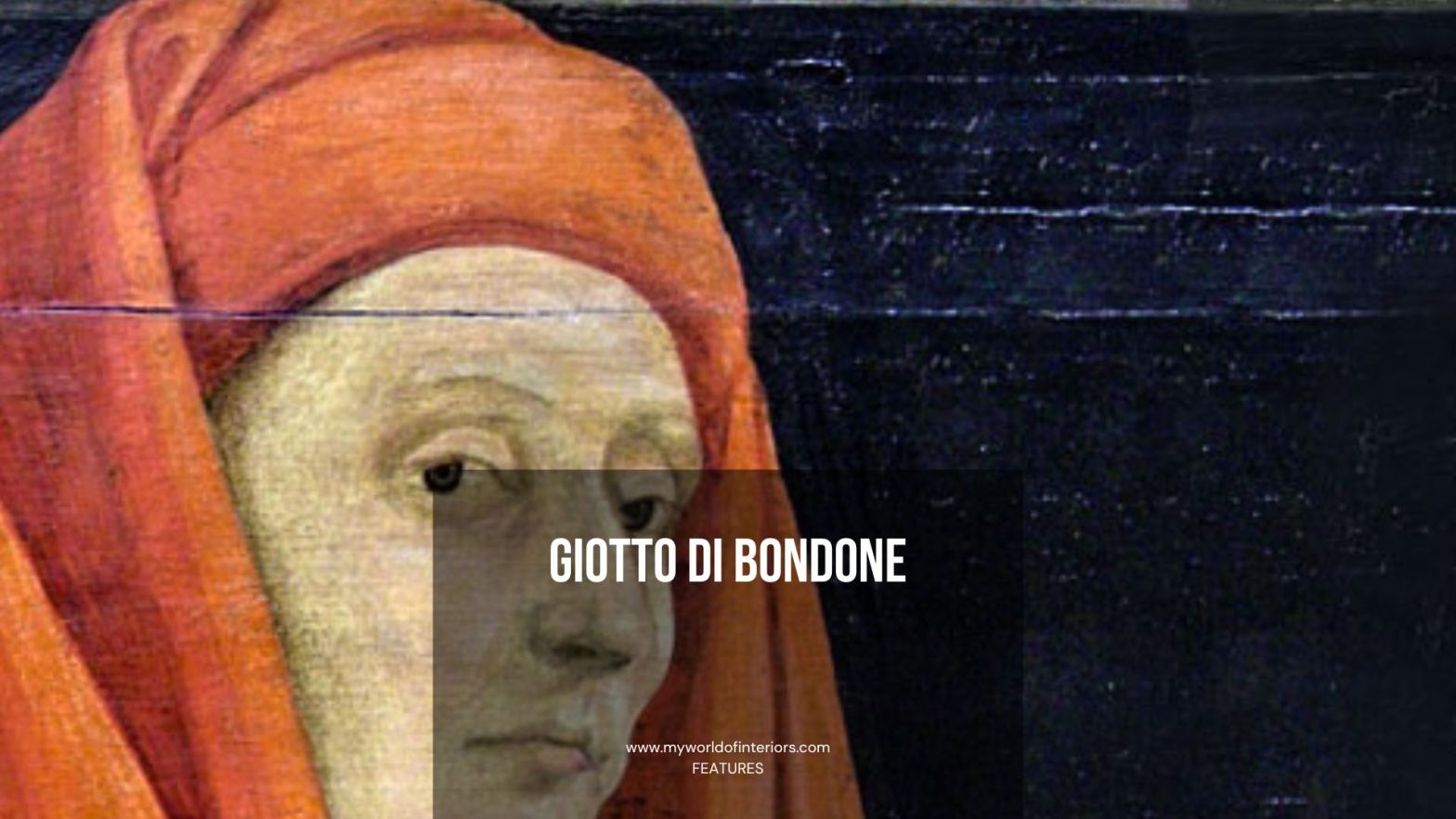
When Giorgio Vasari published his Lives of the Artists in 1550, he began the history of Renaissance painting not with Leonardo or Michelangelo, but with Giotto di Bondone. For Vasari, Giotto was the one who “translated painting from Greek to Latin” — that is, who moved art from the flat hieratic conventions of medieval iconography into the living, breathing space of human experience. To look at Giotto’s frescoes today, more than seven centuries later, is to see the birth of modern painting: figures with weight and presence, emotions rendered with tenderness, space suggested with depth.
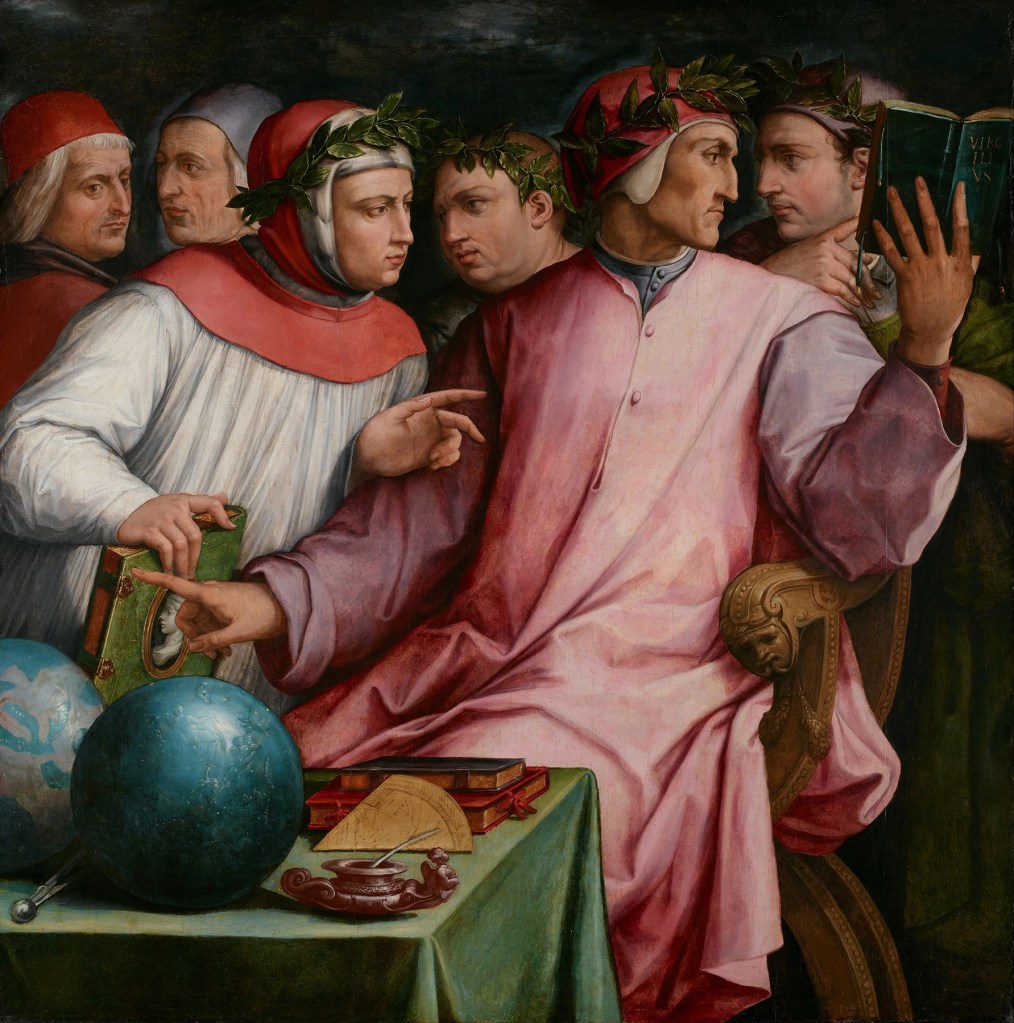
Born around 1266 near Florence, Giotto lived in a world still dominated by Byzantine conventions: gold backgrounds, rigid forms, saints hovering in abstraction. Yet his work, from the frescoes of the Scrovegni (Arena) Chapel in Padua to the monumental figures in the Basilica of St. Francis in Assisi, broke decisively from these traditions. He gave bodies weight, faces emotion, and narratives drama. Giotto’s art did not abolish the sacred — it humanized it.
The World Before Giotto
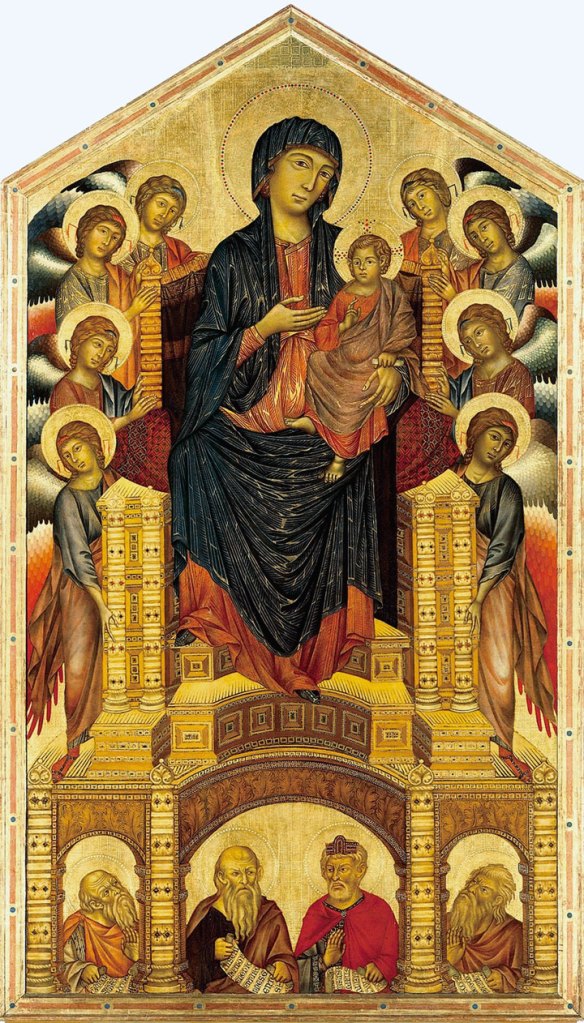
Medieval art in the 13th century was steeped in stylization. Icons functioned as spiritual symbols rather than depictions of earthly reality. The human body was flattened into hieratic form, spatial depth denied in favor of heavenly abstraction. Cimabue, Giotto’s supposed master, was already moving toward greater naturalism, but his figures remained ethereal, more symbols than beings.
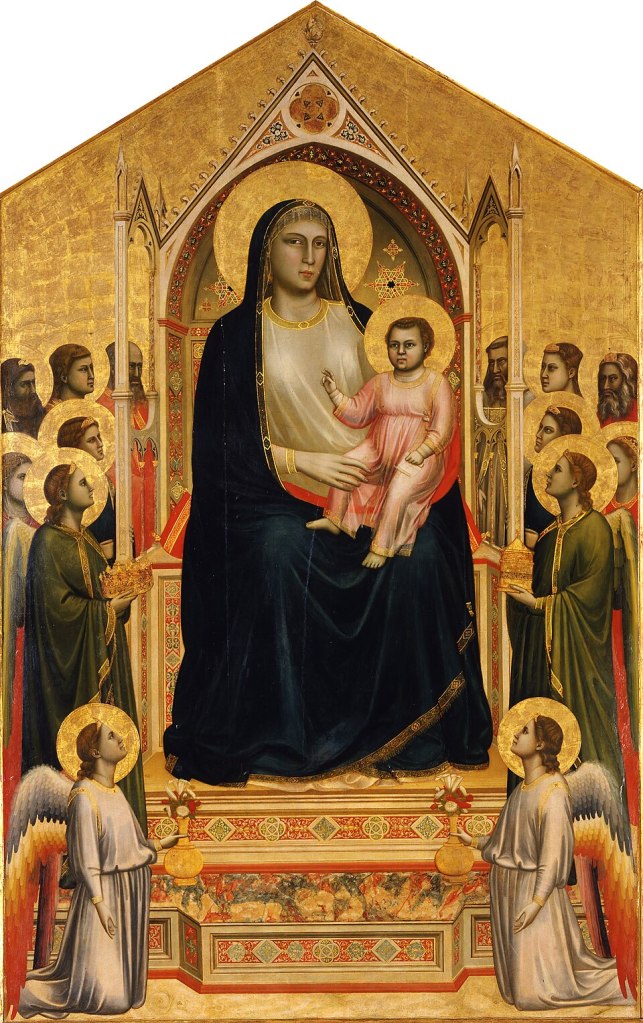
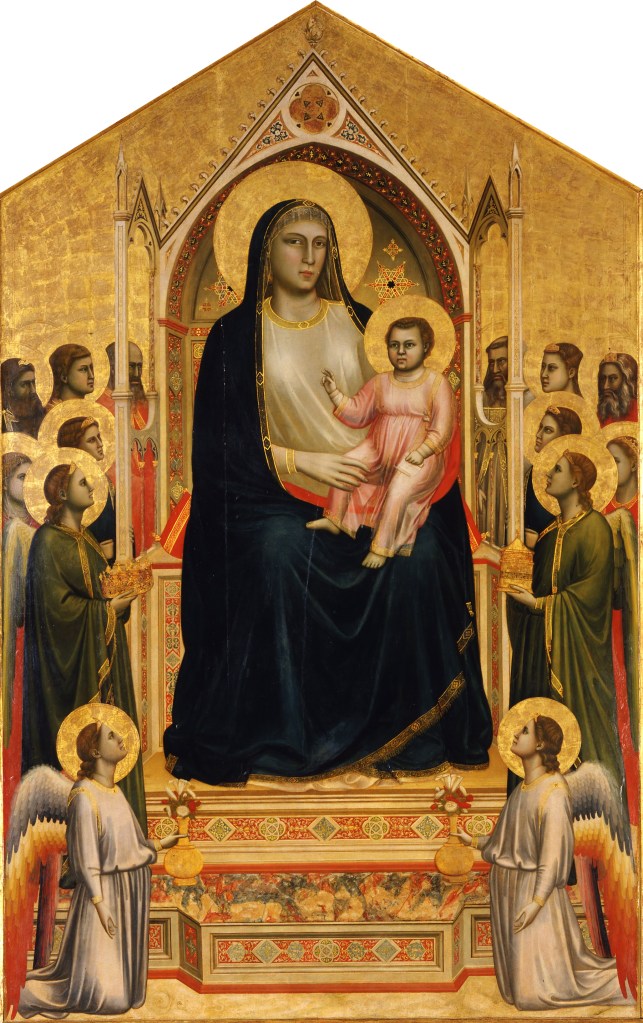
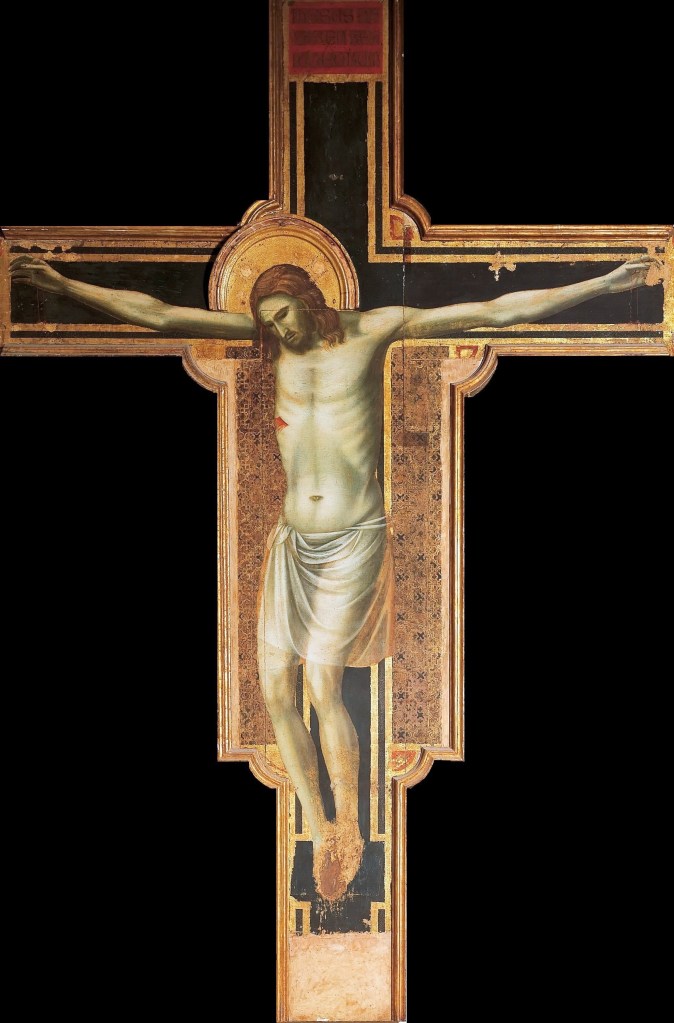
Giotto’s genius was to go further. Where Cimabue’s Madonna hovers, Giotto’s Madonna sits solidly on a throne, her body given mass, her robes draped with convincing folds. Where earlier crucifixions presented Christ as serene, Giotto showed him sagging with the heaviness of death, mourned by disciples whose faces contorted in grief.
It was not illusionism for its own sake. It was a recognition that the divine could be conveyed most powerfully through the human.
The Scrovegni Chapel: A New Vision
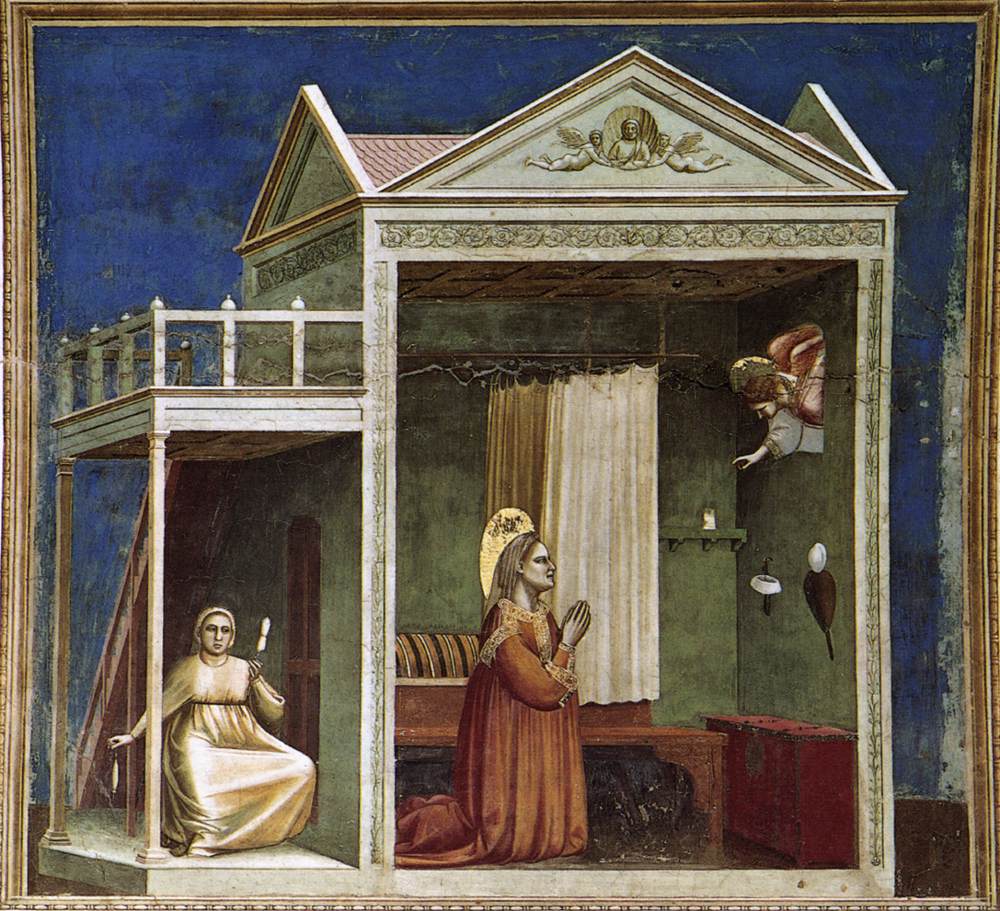
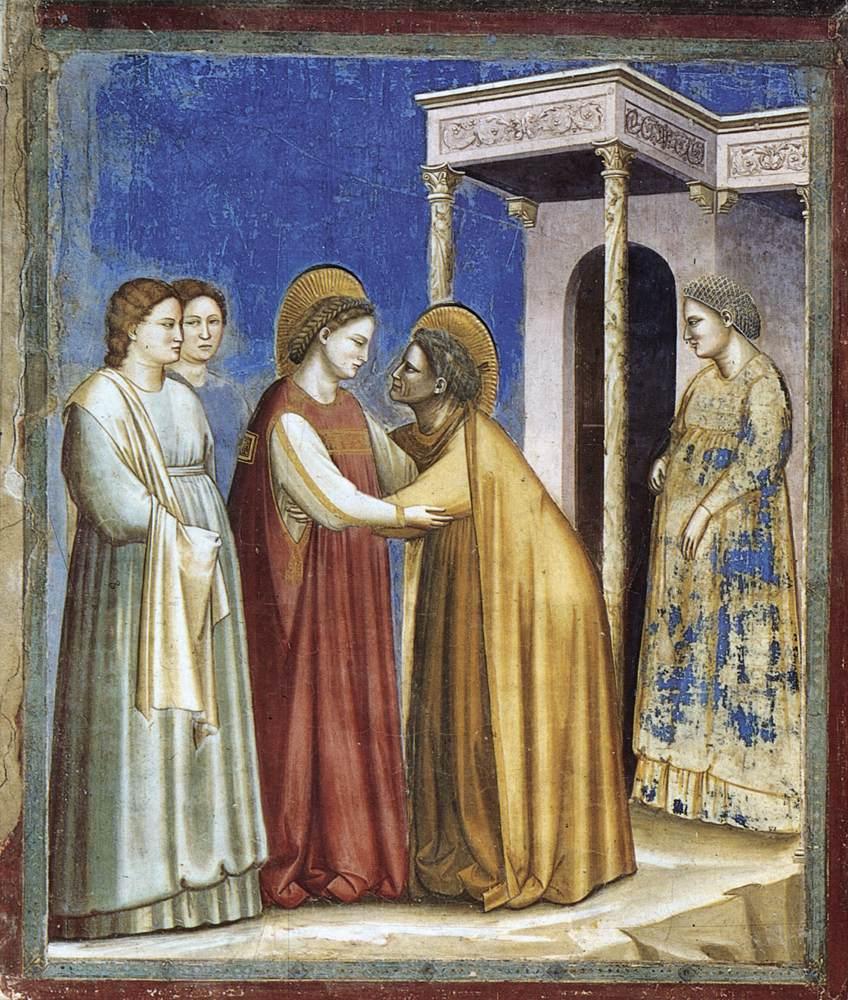
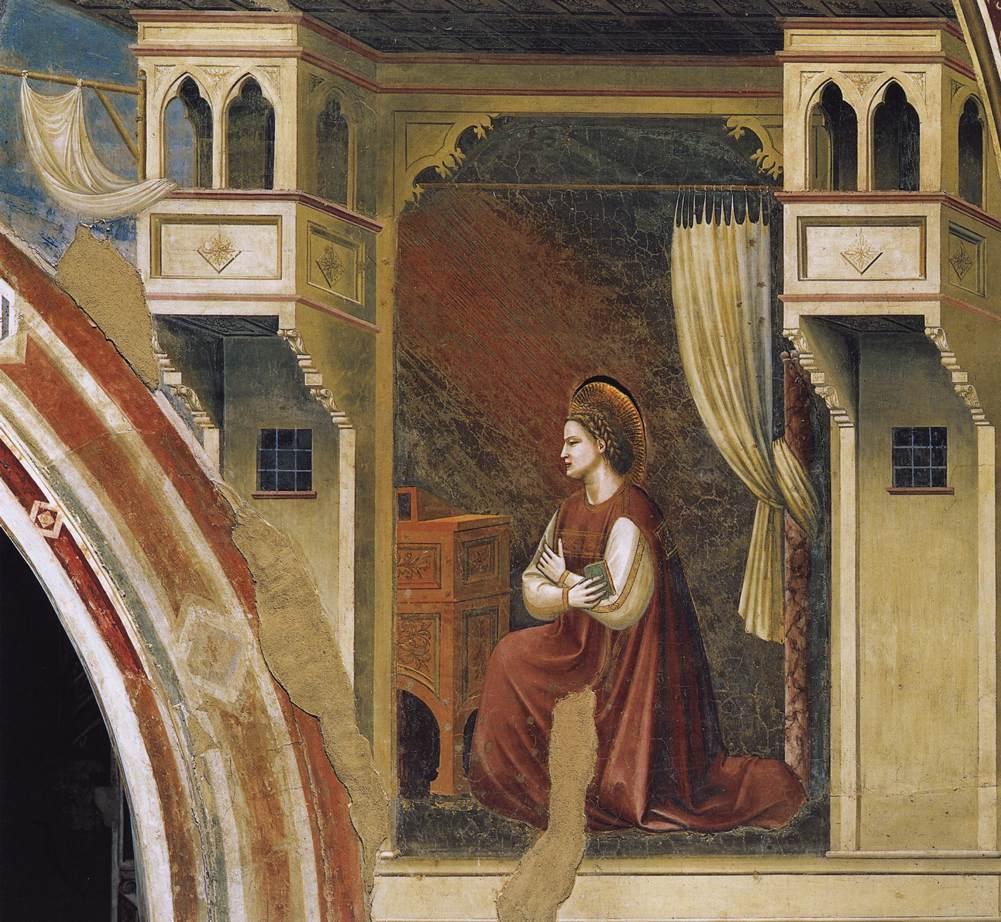
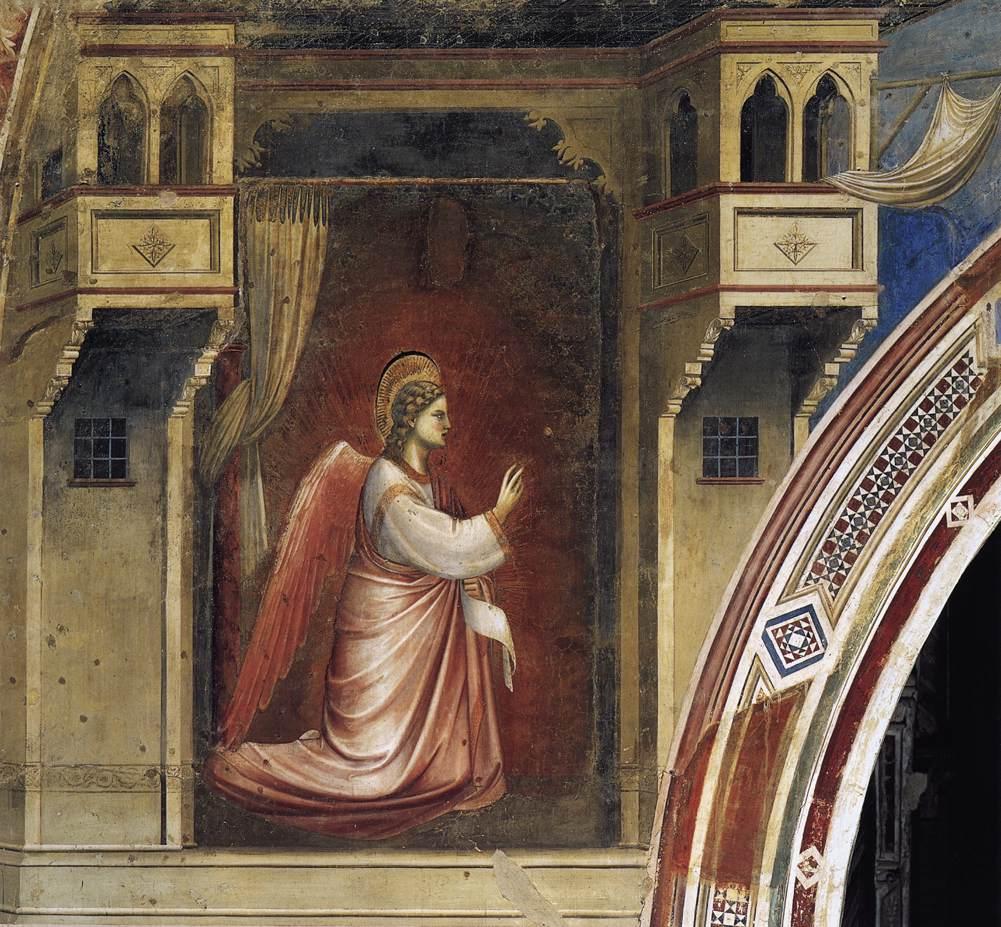
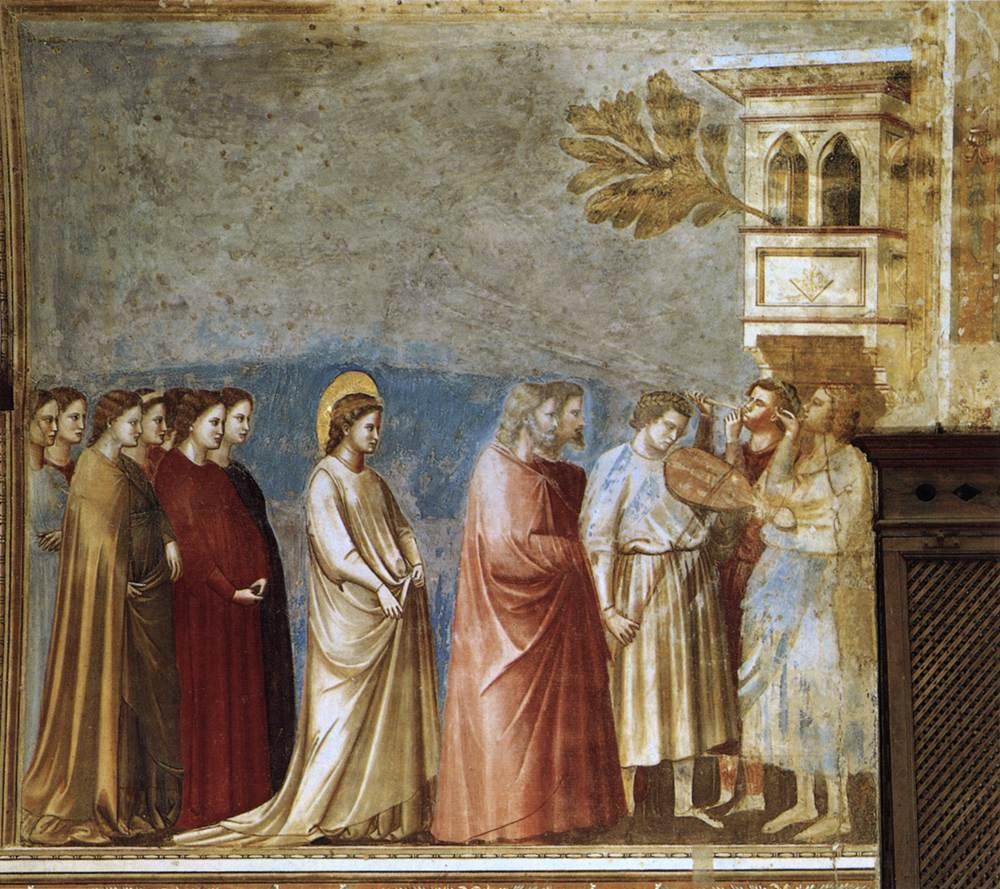
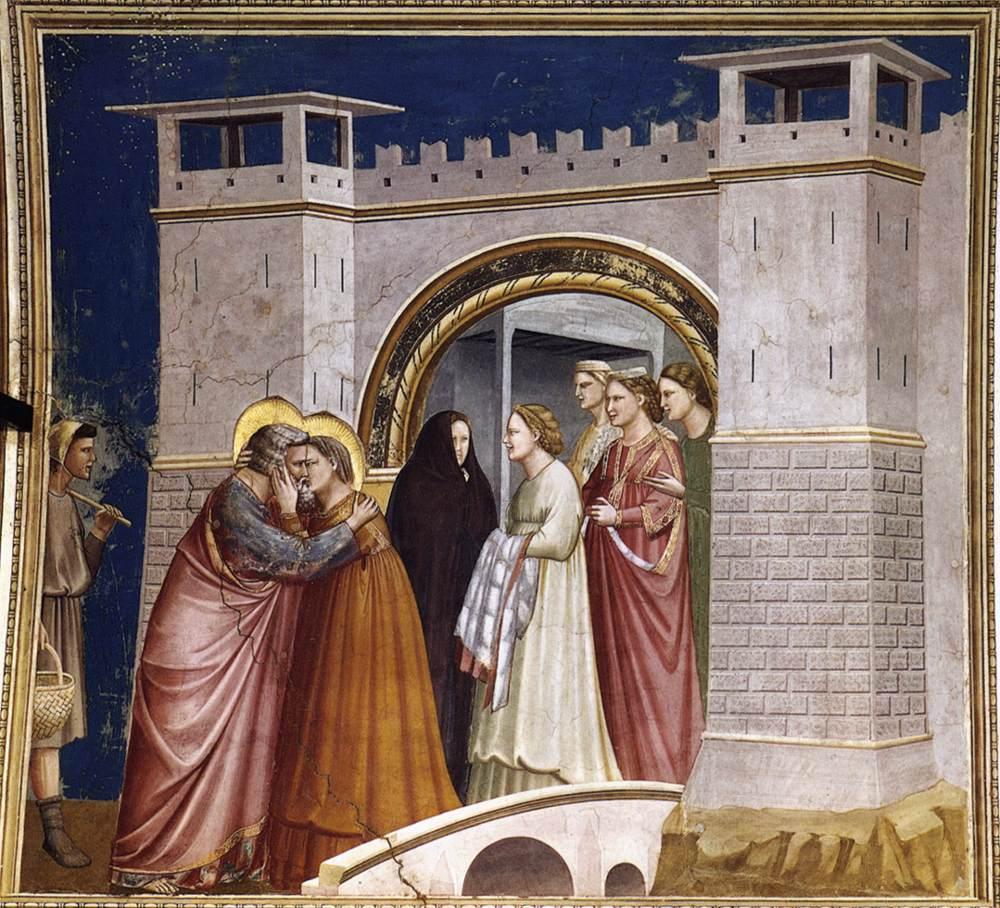
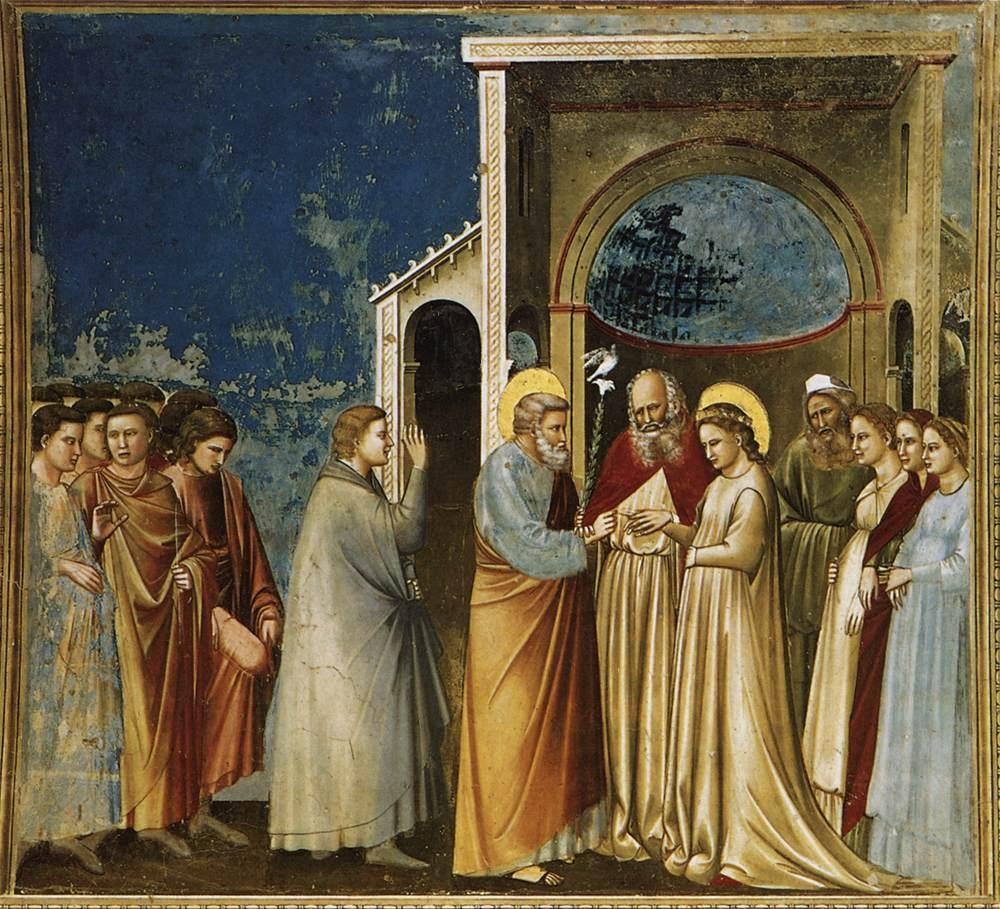
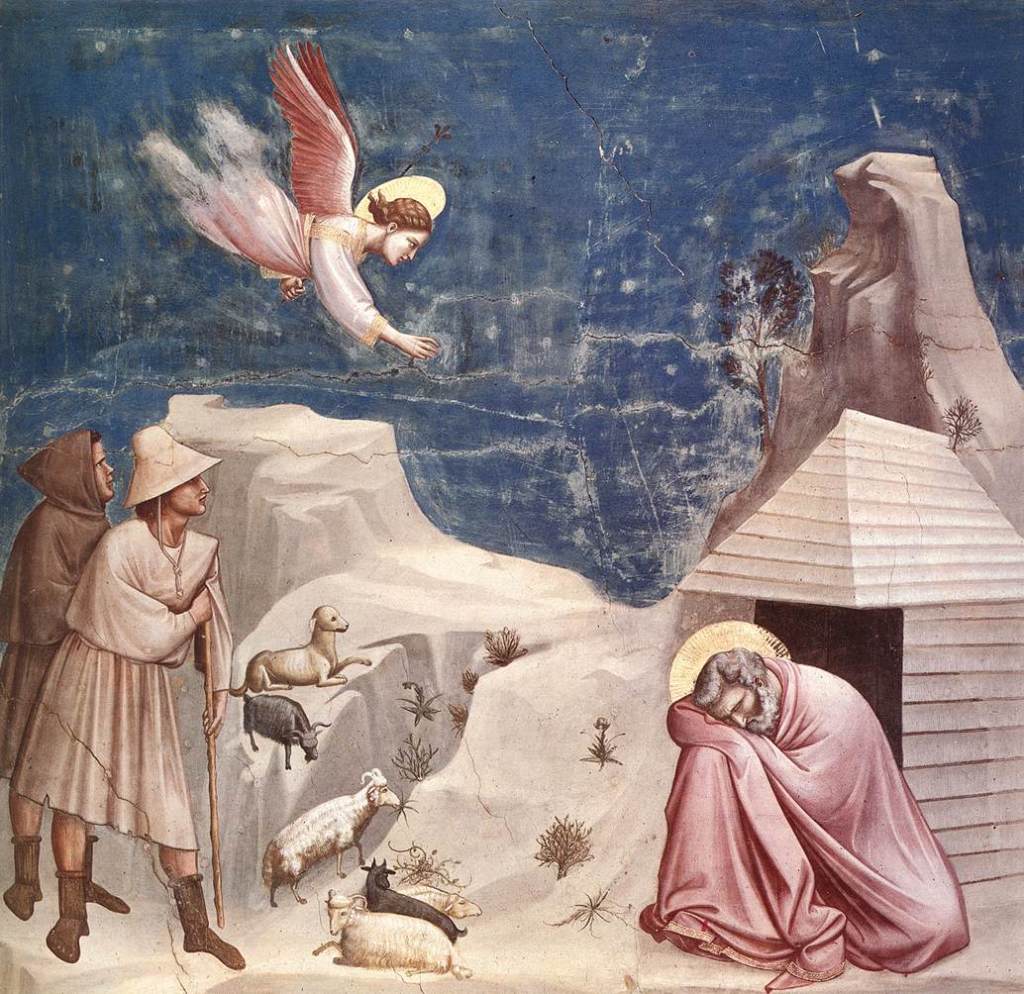
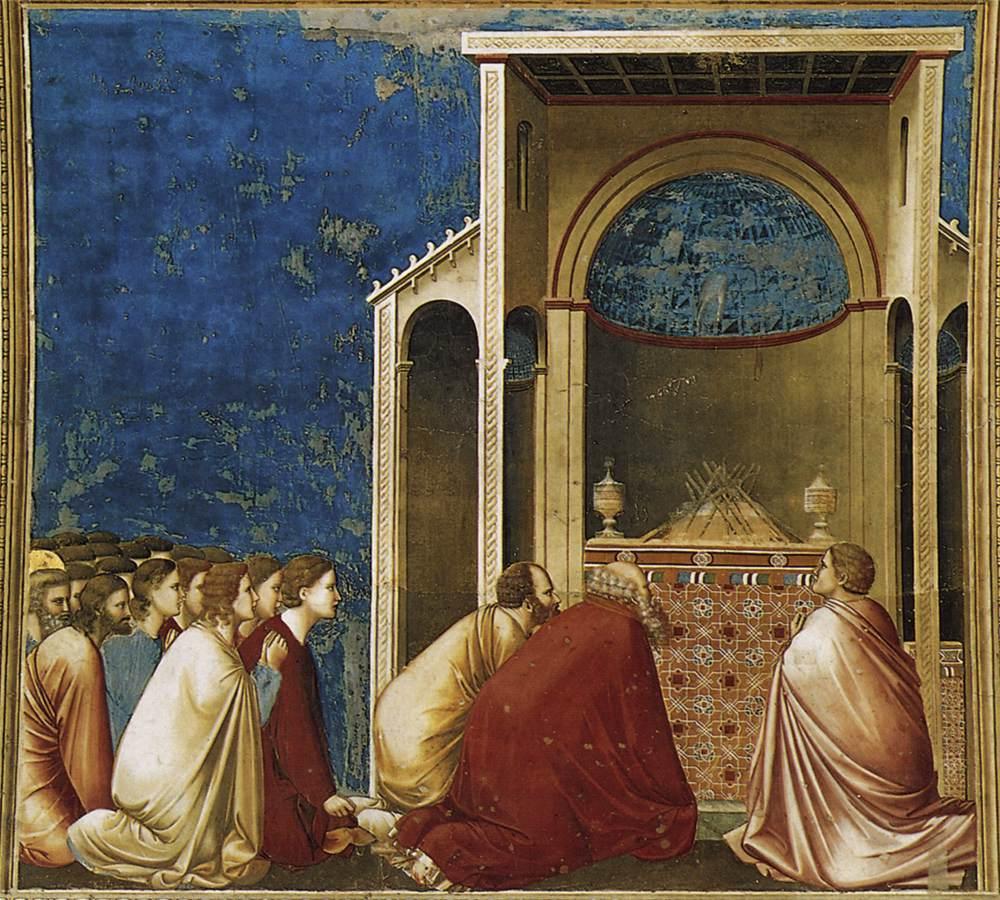
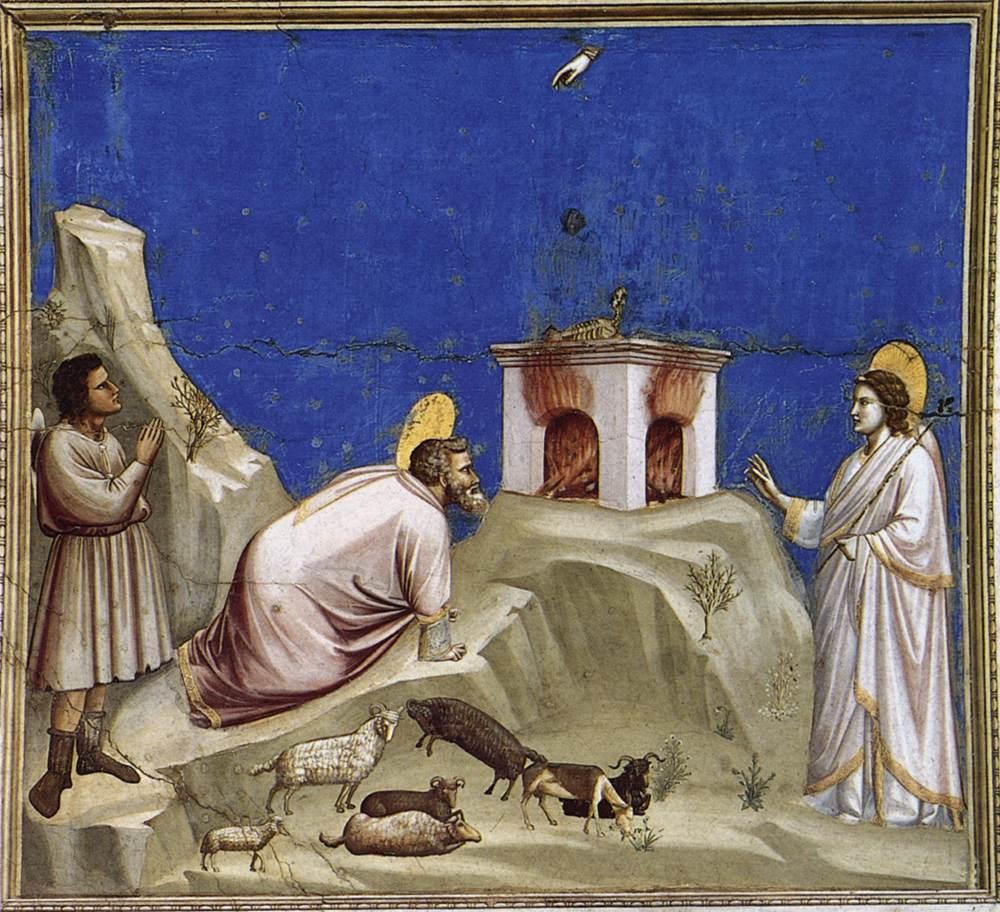
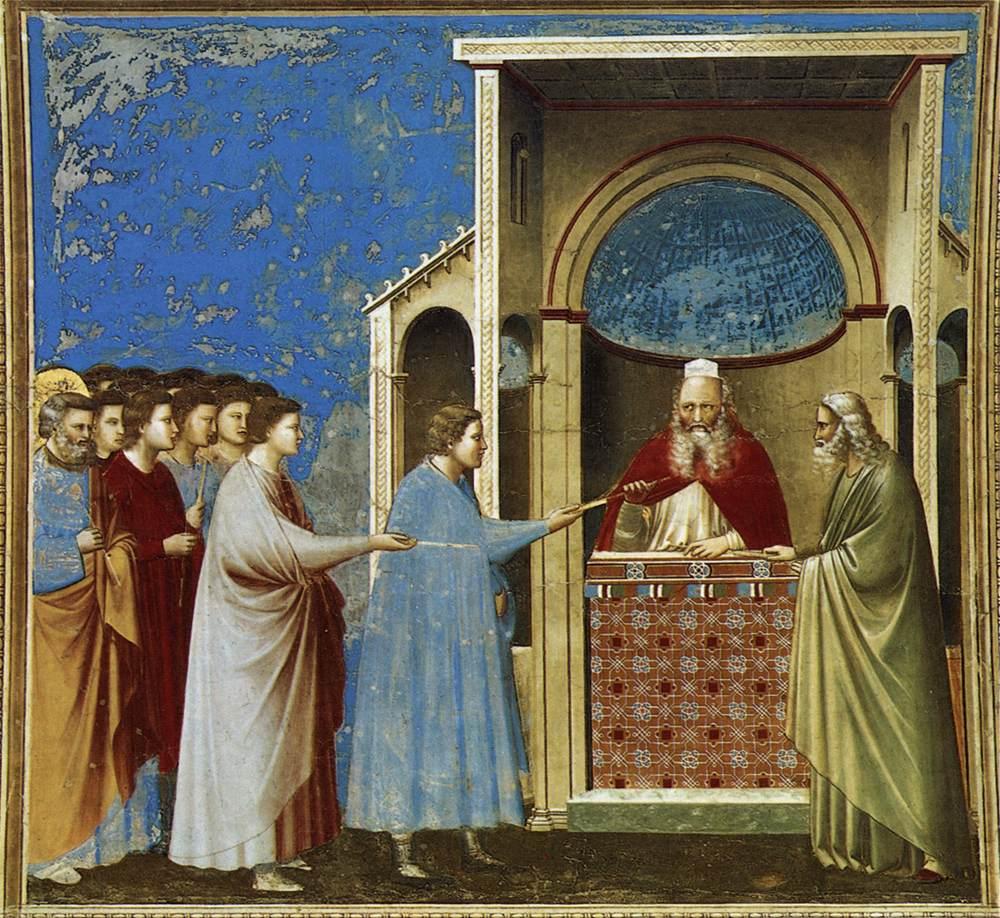
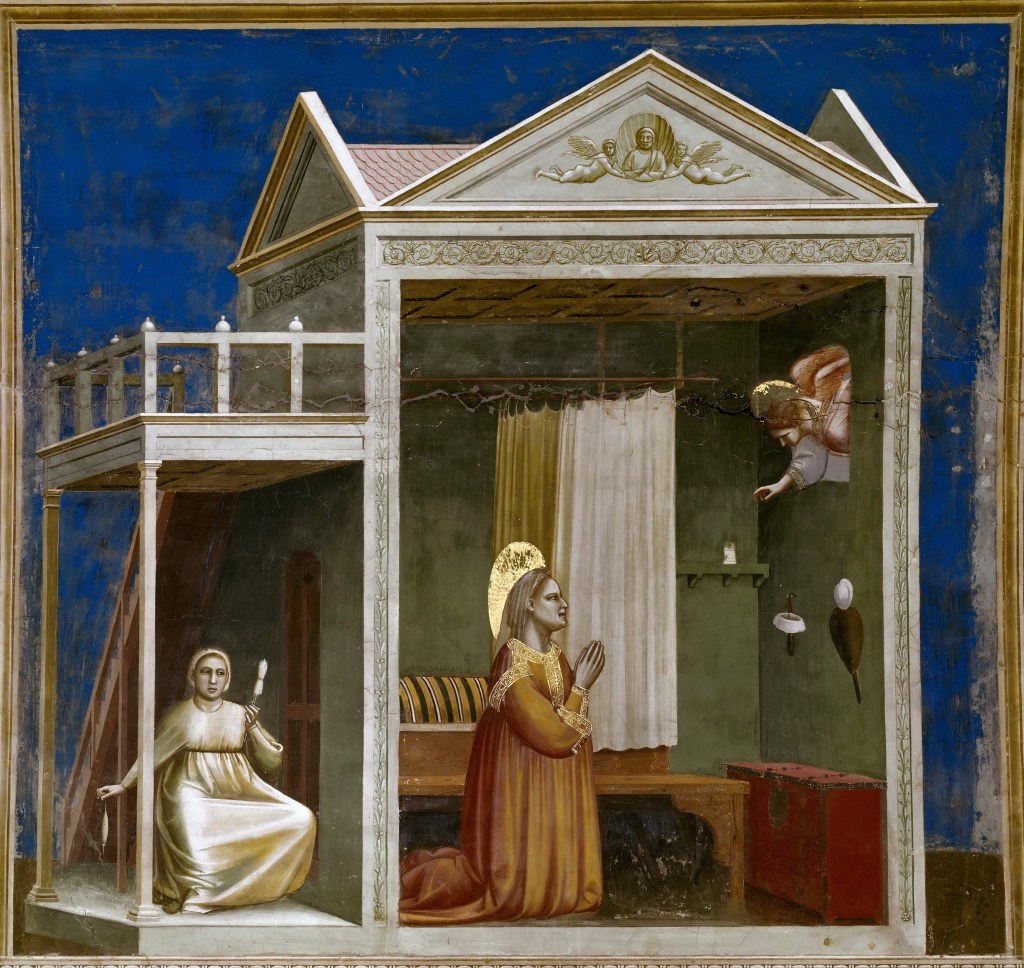
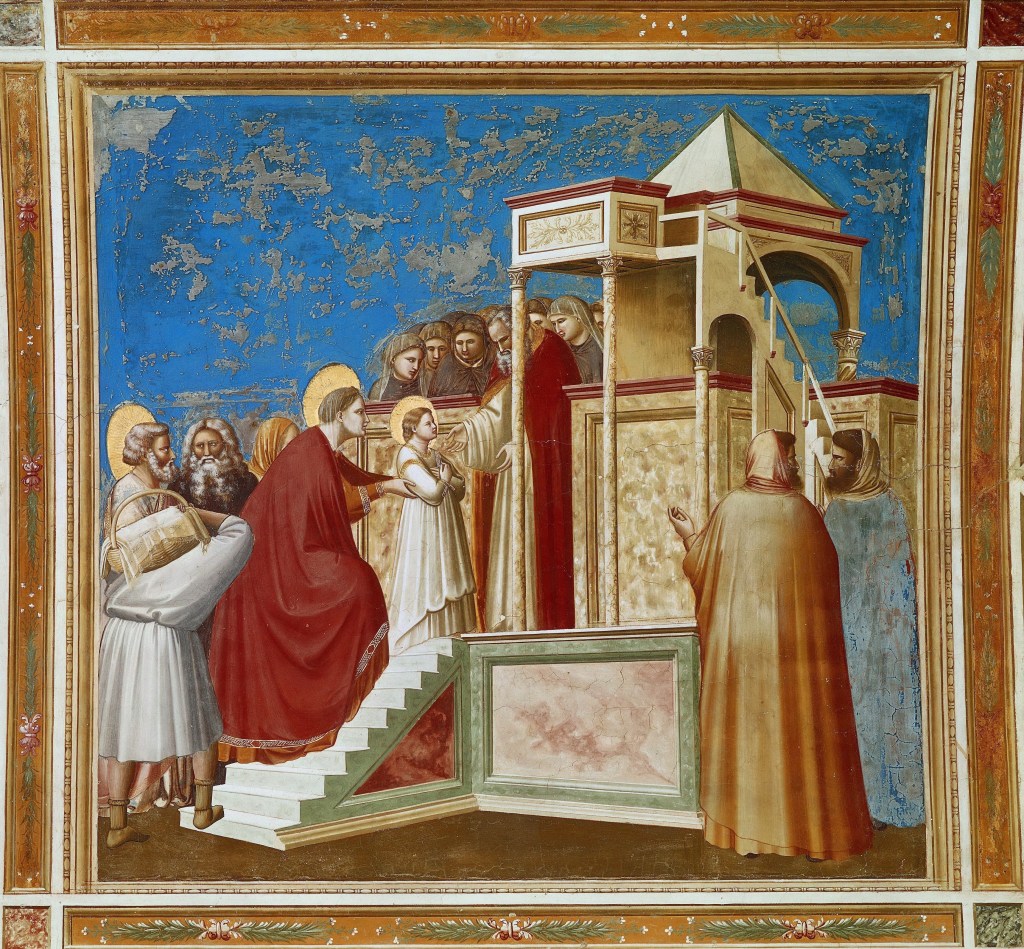
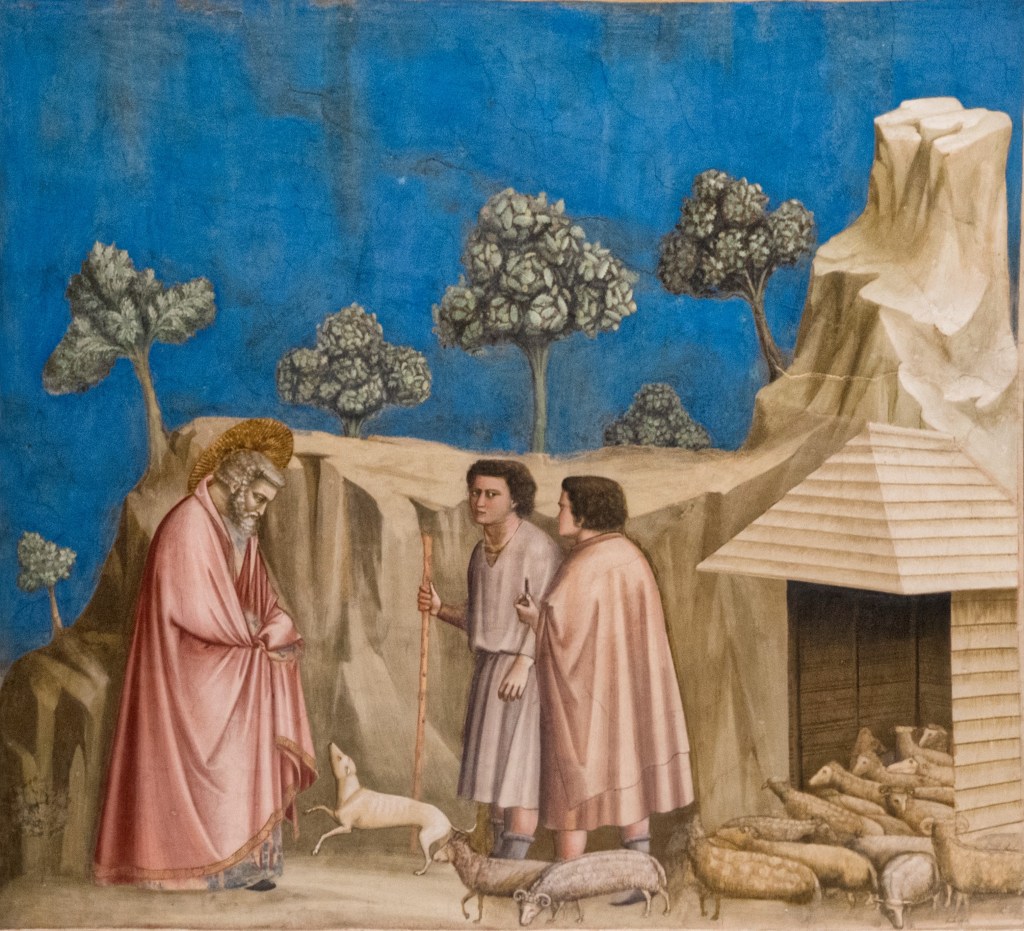
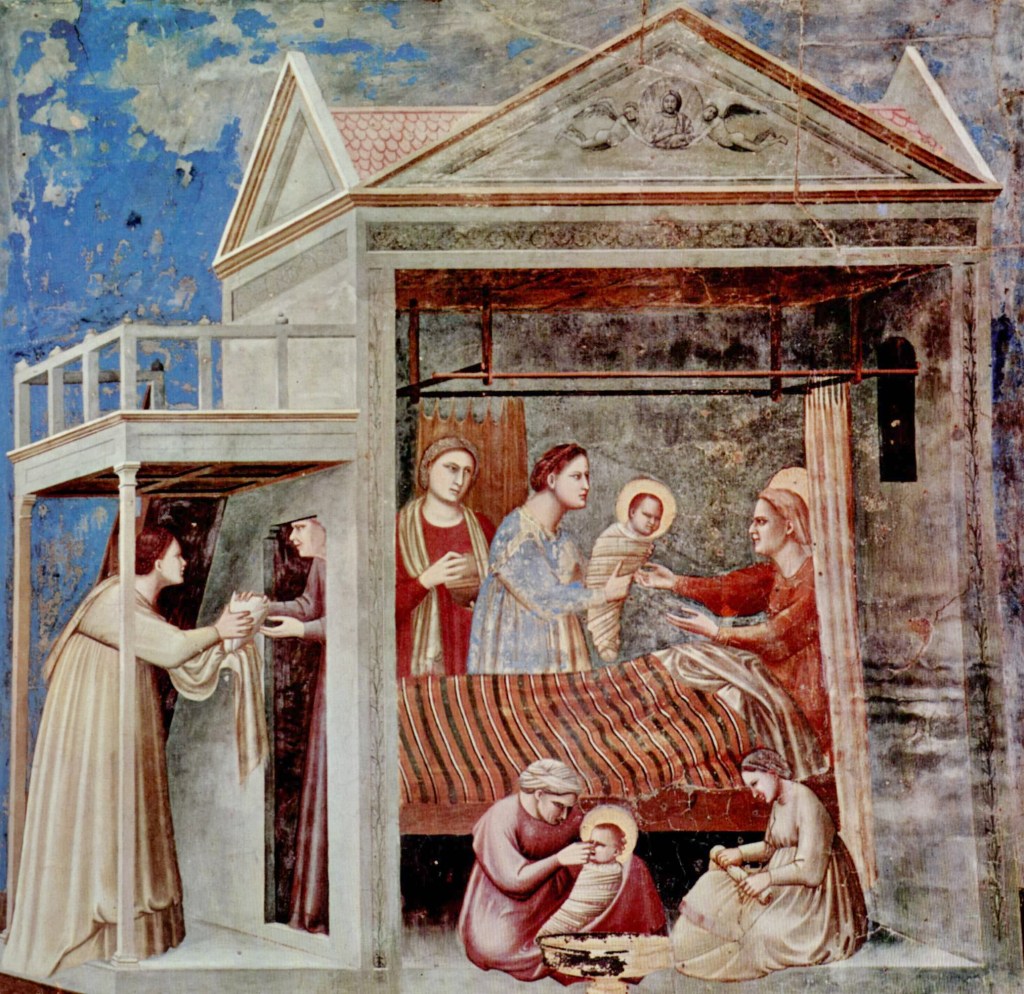
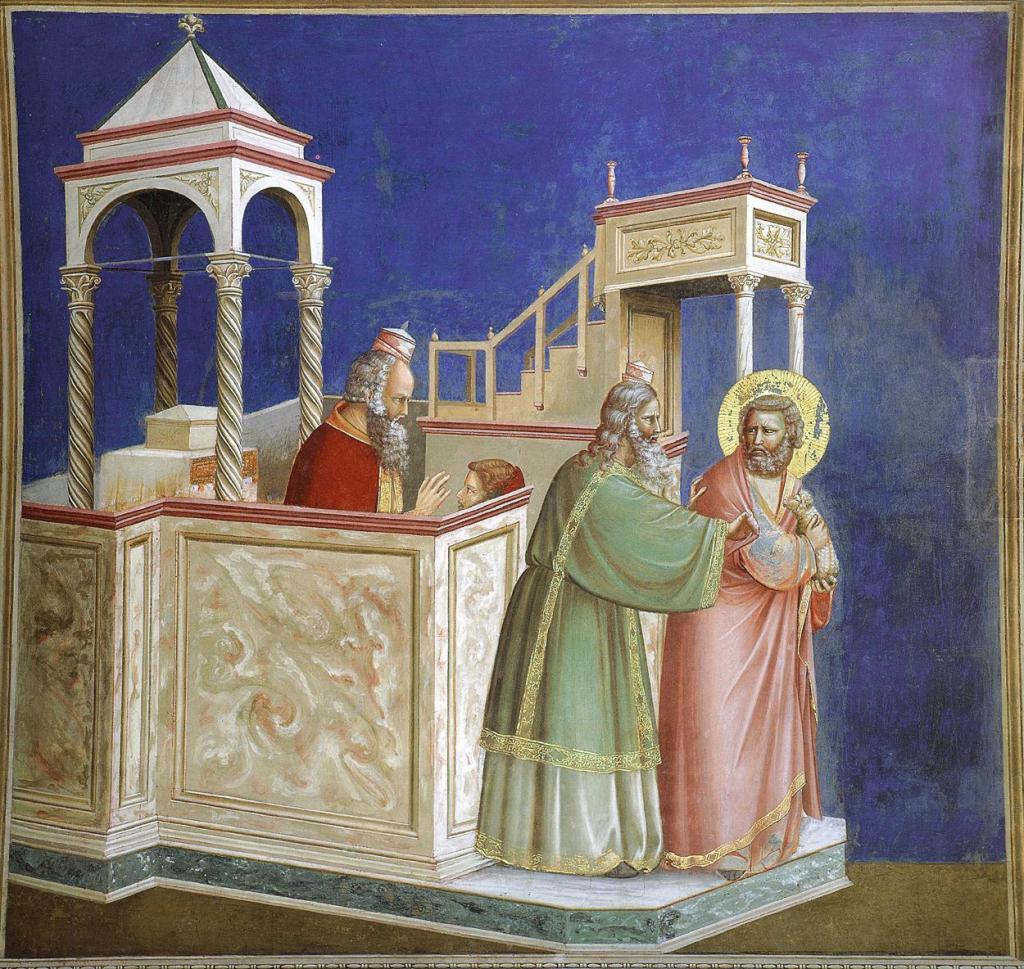
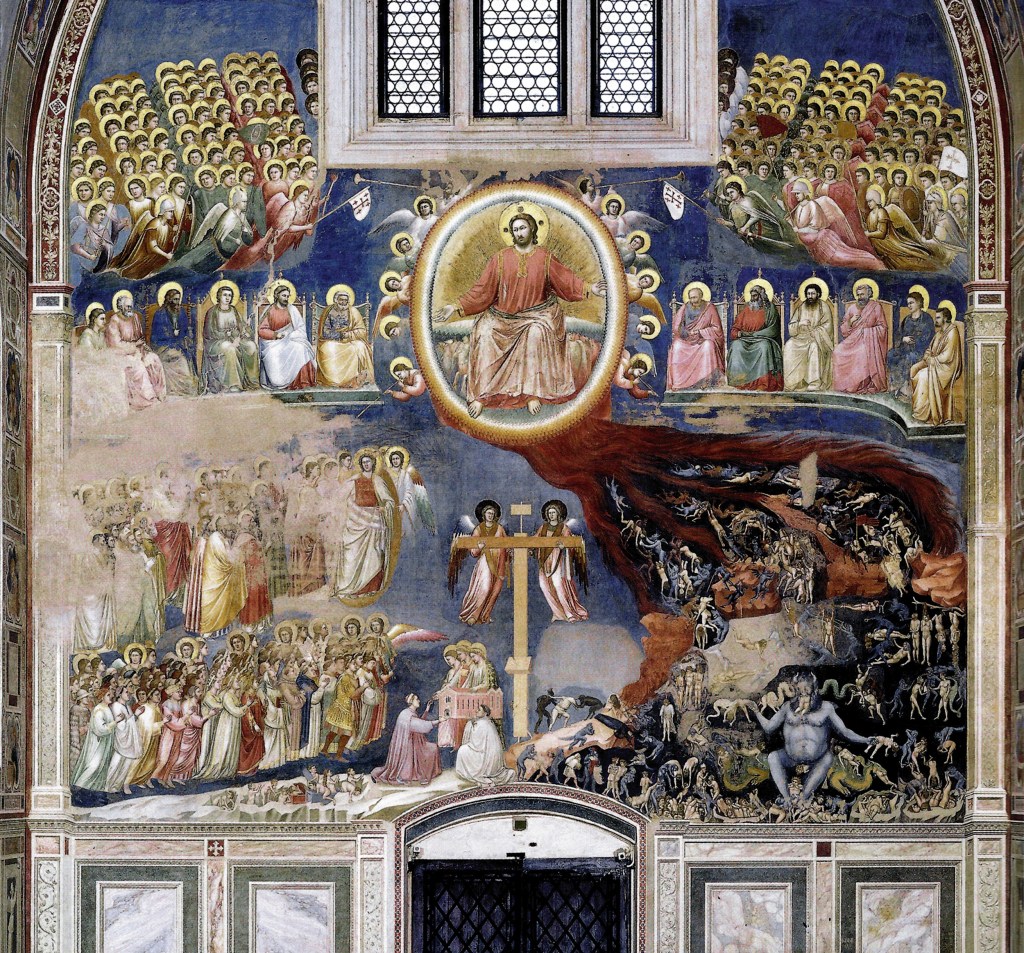
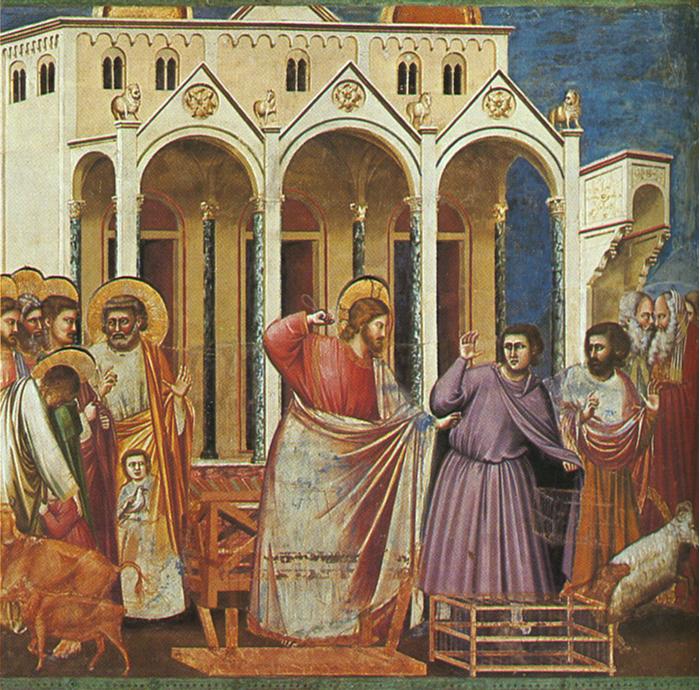
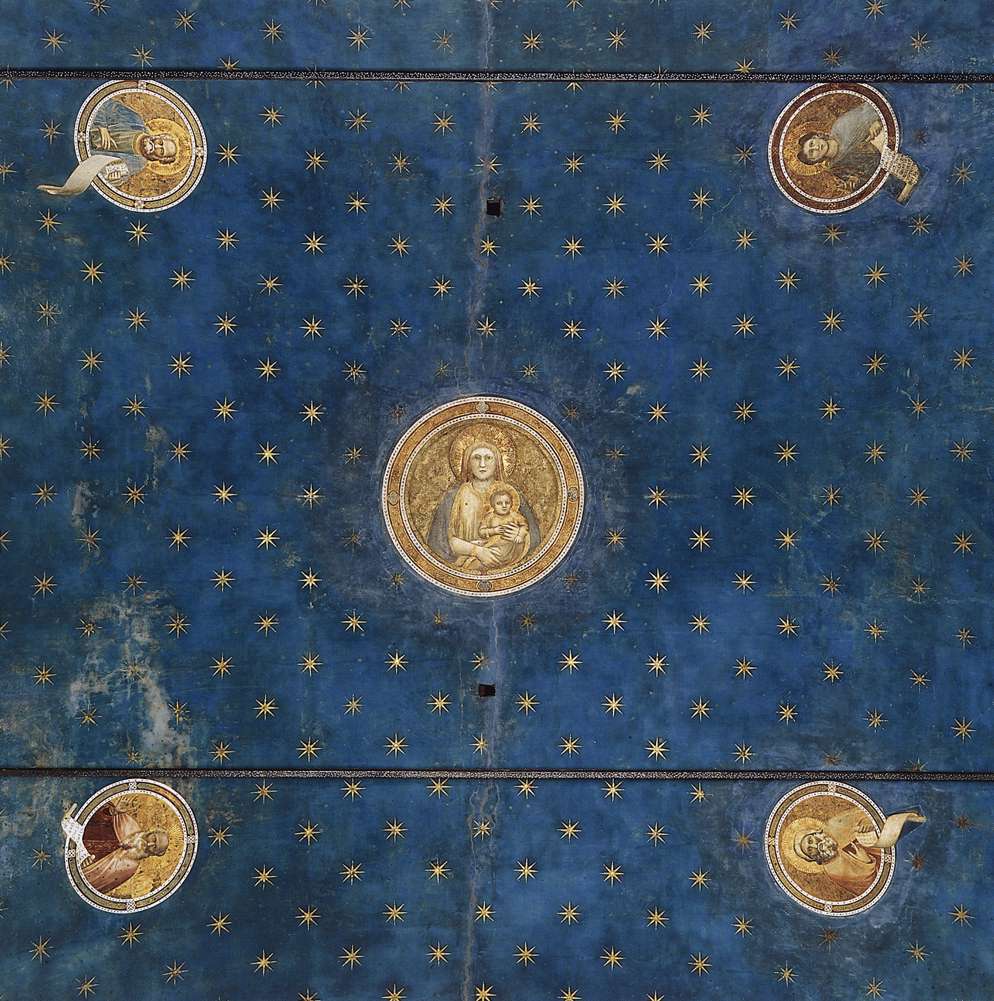
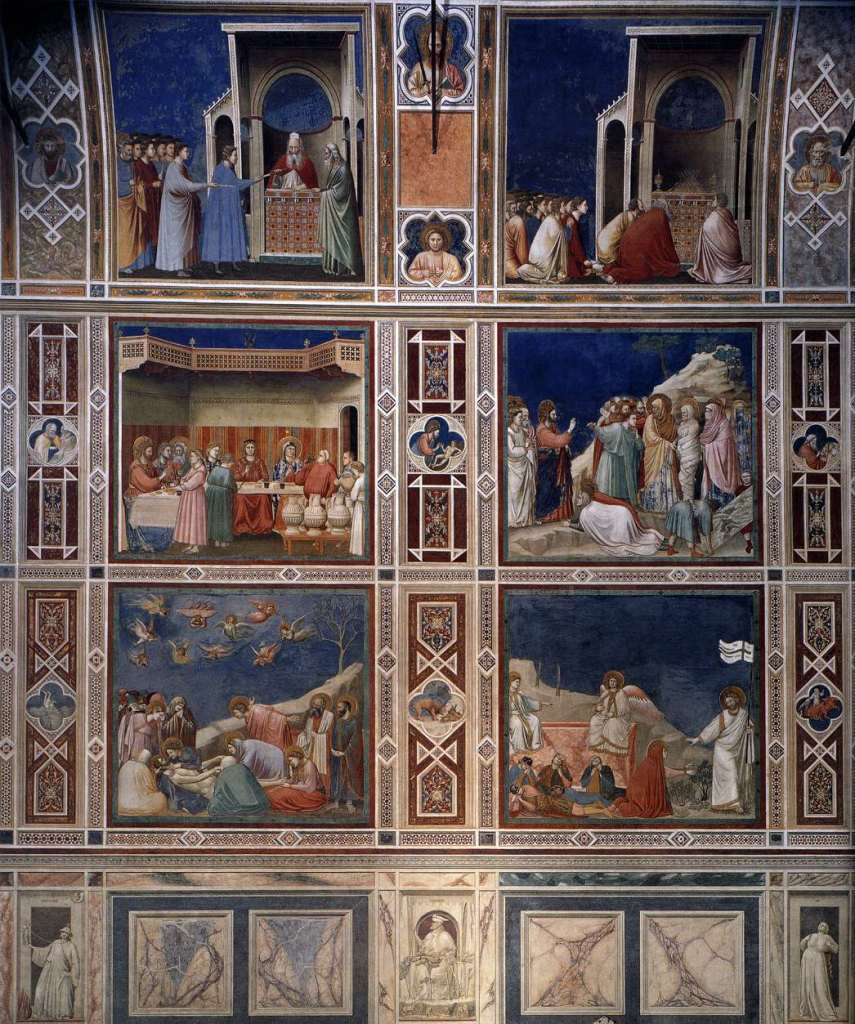
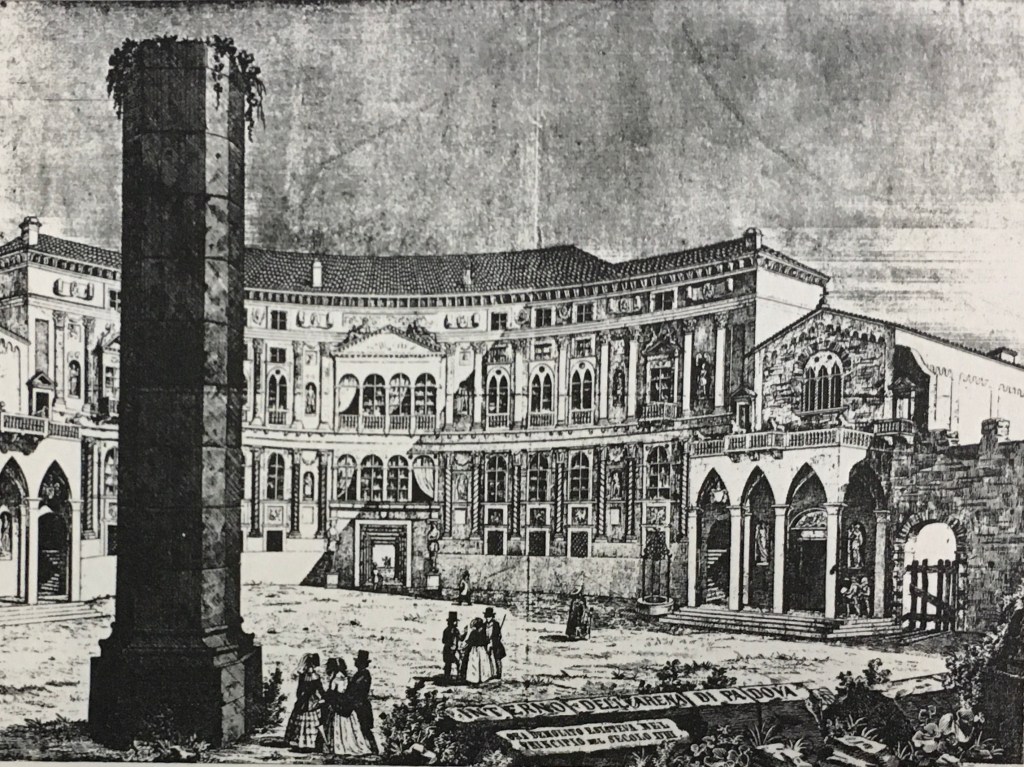
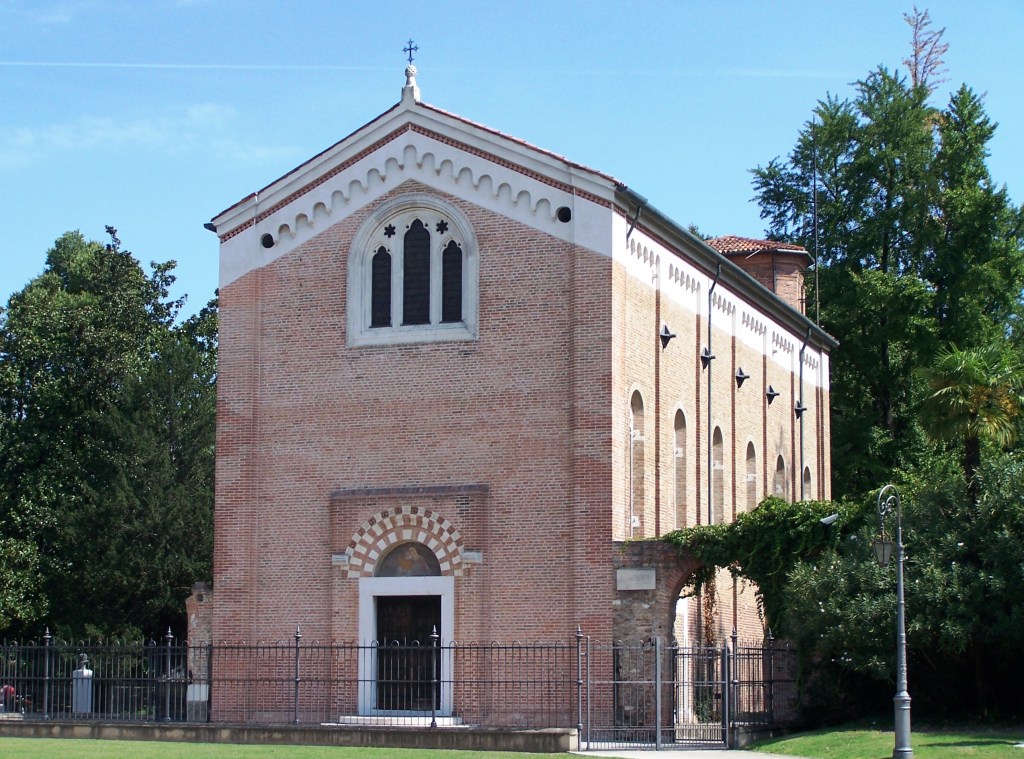
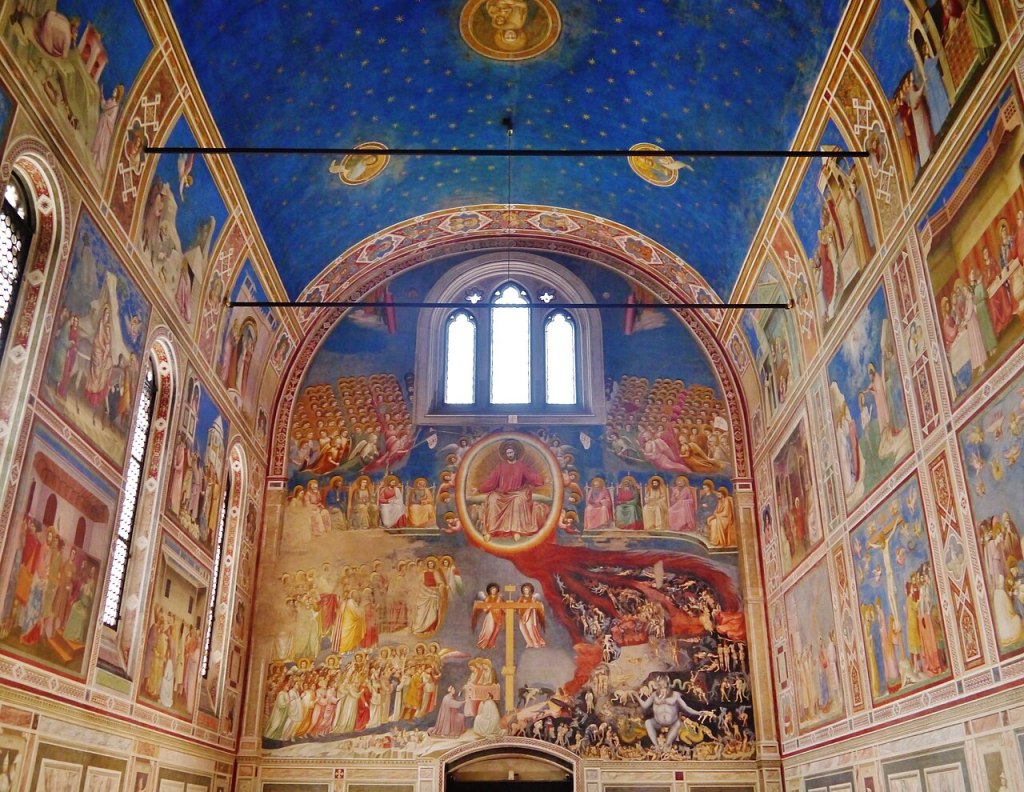
Giotto’s most celebrated work is the Scrovegni Chapel (c. 1305), commissioned by Enrico Scrovegni in Padua. The cycle of frescoes narrates the lives of the Virgin and Christ in over thirty scenes, culminating in a monumental Last Judgment.
Here Giotto created something unprecedented: a sustained narrative in paint, unfolding with dramatic pacing and emotional resonance.
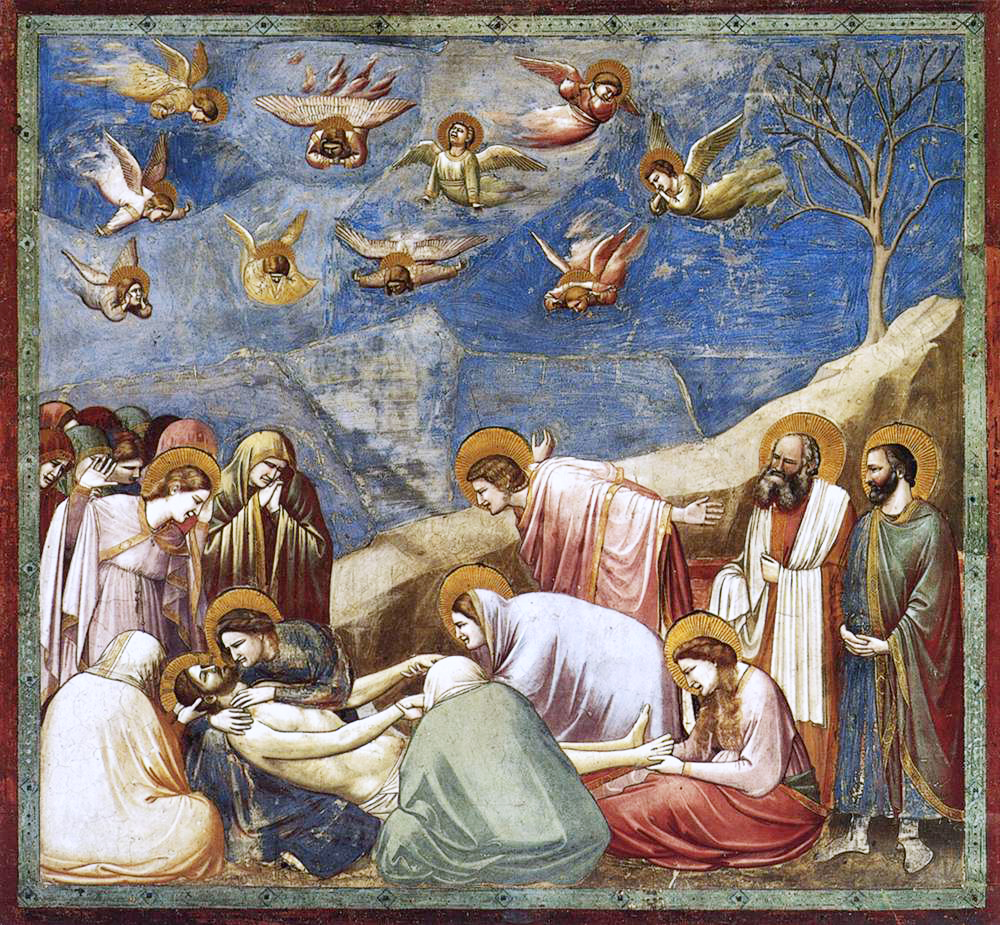
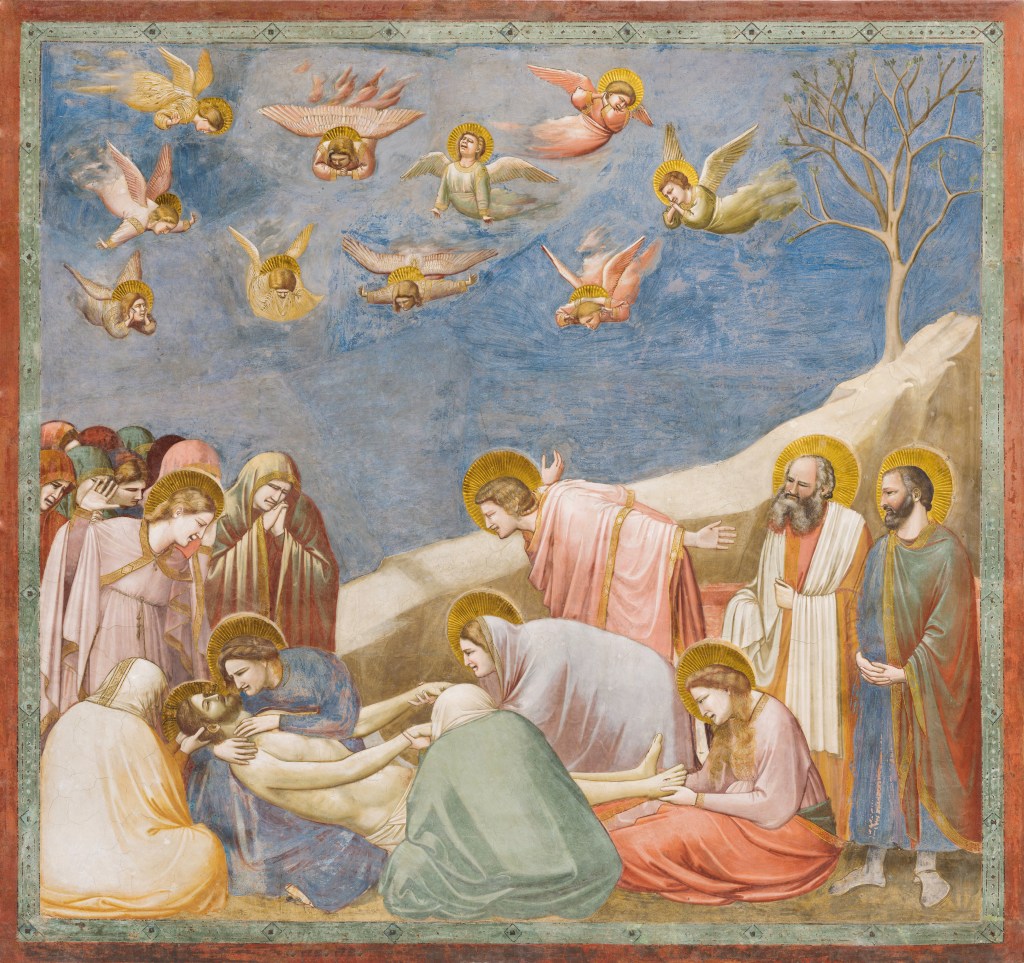
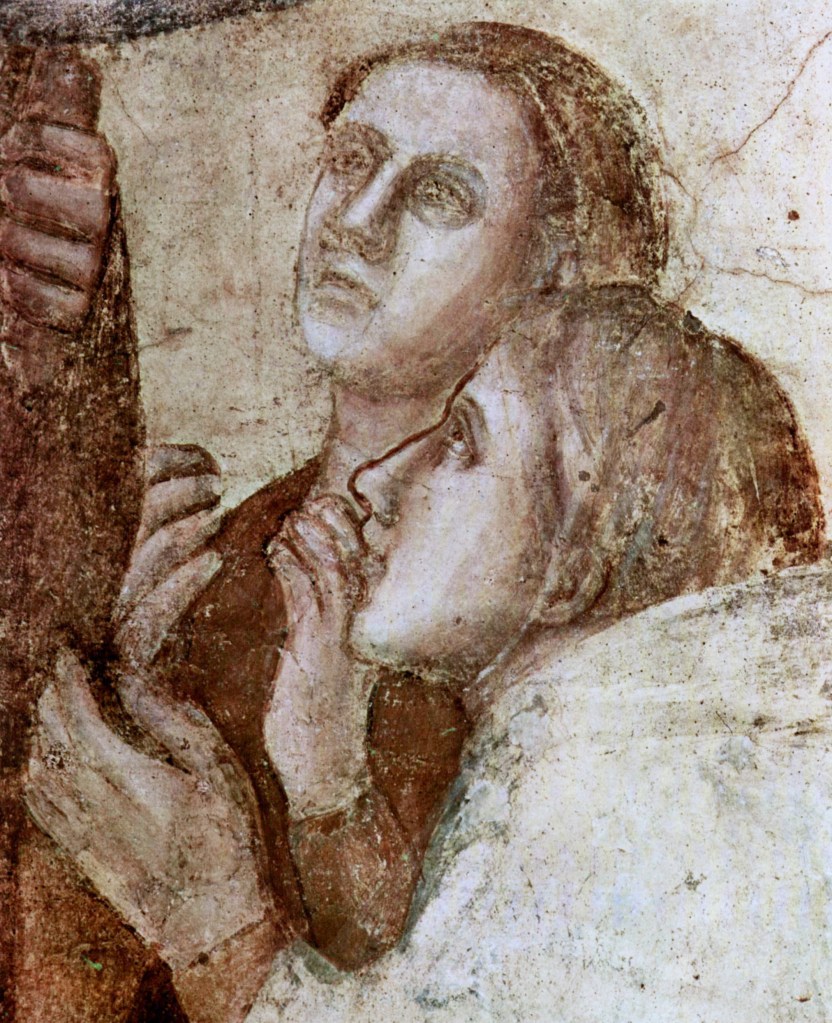
- In the Lamentation, Mary cradles Christ’s dead body, her face pressed to his, surrounded by grieving disciples. The figures occupy a rocky landscape angled toward the viewer, guiding the eye into the scene. Emotions are not symbolic but individual: anguish, tenderness, despair. Angels swoop above, their bodies twisting in the air with grief.
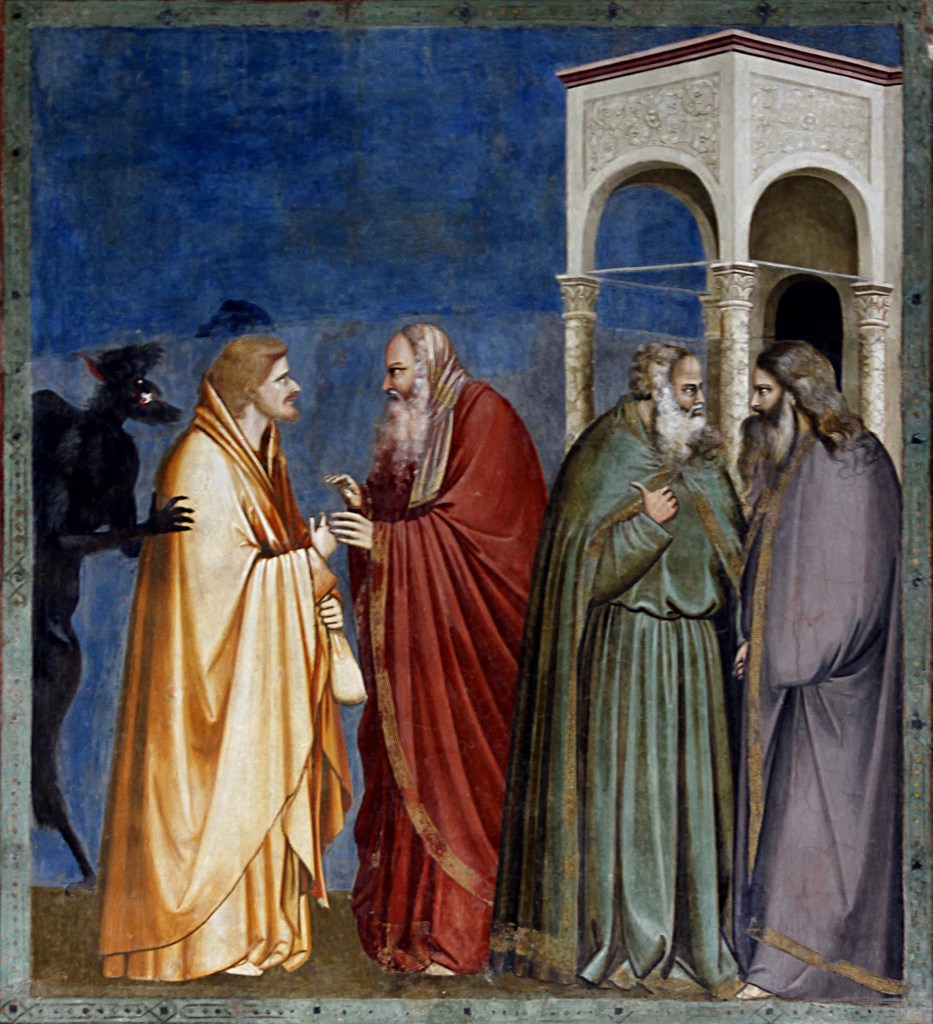
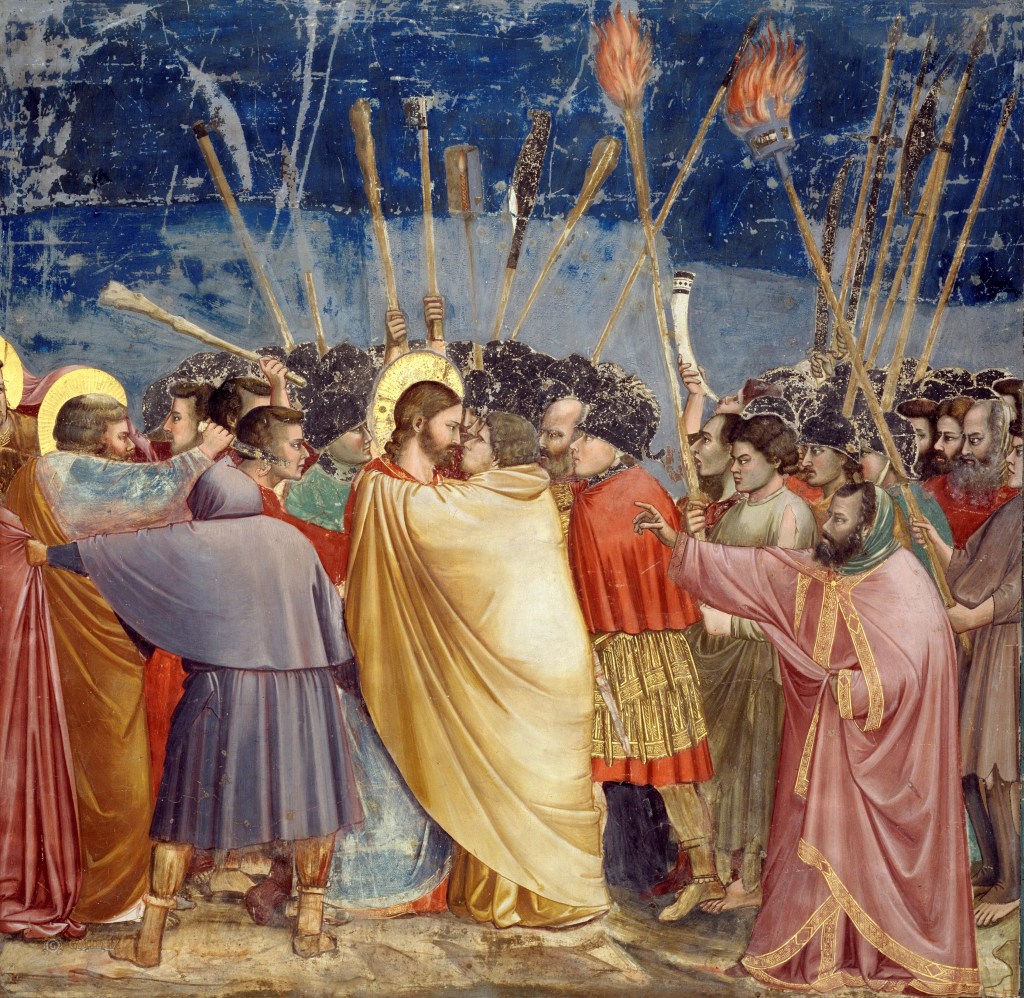
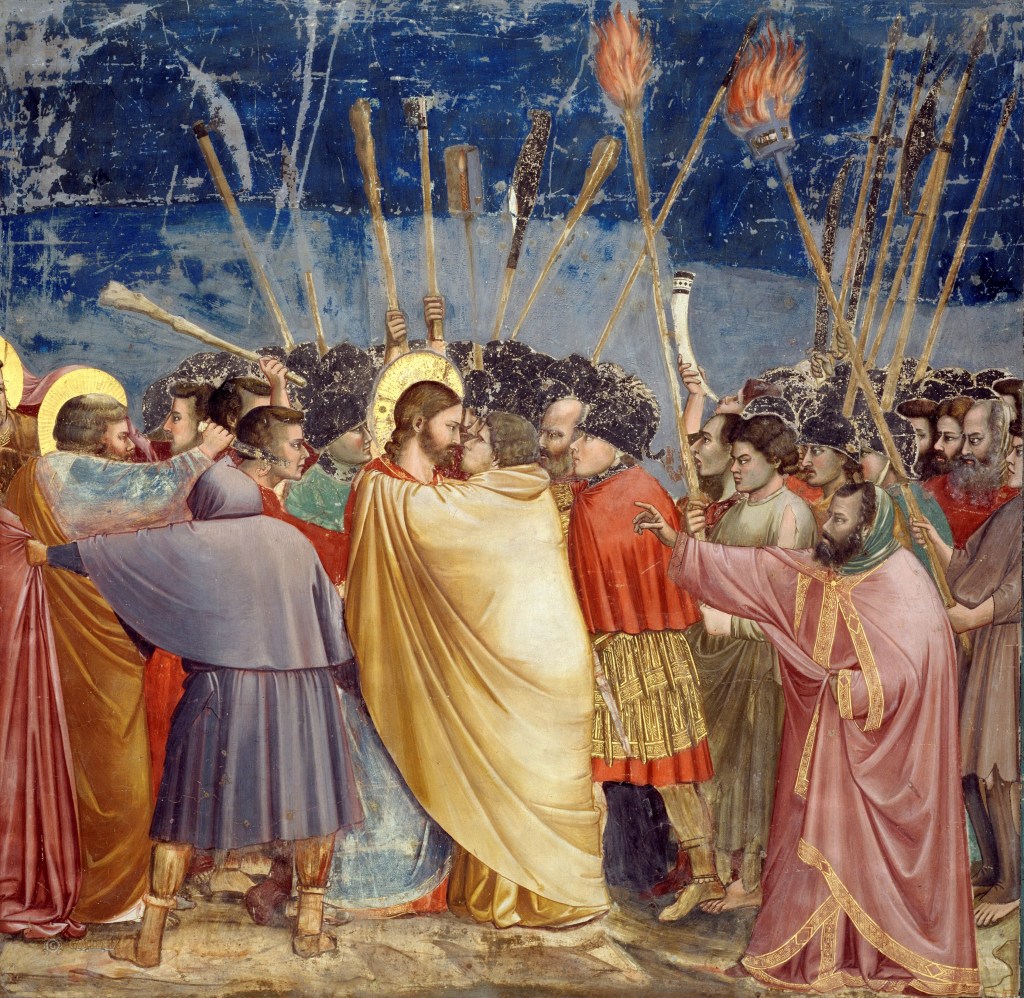
- In the Kiss of Judas, the drama pivots on the intimacy of a single gesture: Judas grasping Christ’s robe, Christ gazing into Judas’s eyes, a moment of betrayal captured with psychological force.
- Throughout the chapel, Giotto experimented with chiaroscuro — modeling figures with light and shadow — and with architecture that defined space. These were not flat icons but human dramas staged in convincing environments.
The cycle is both devotional and revolutionary: a theology made visible through human feeling.
Assisi and Florence: Monumentality and Civic Art
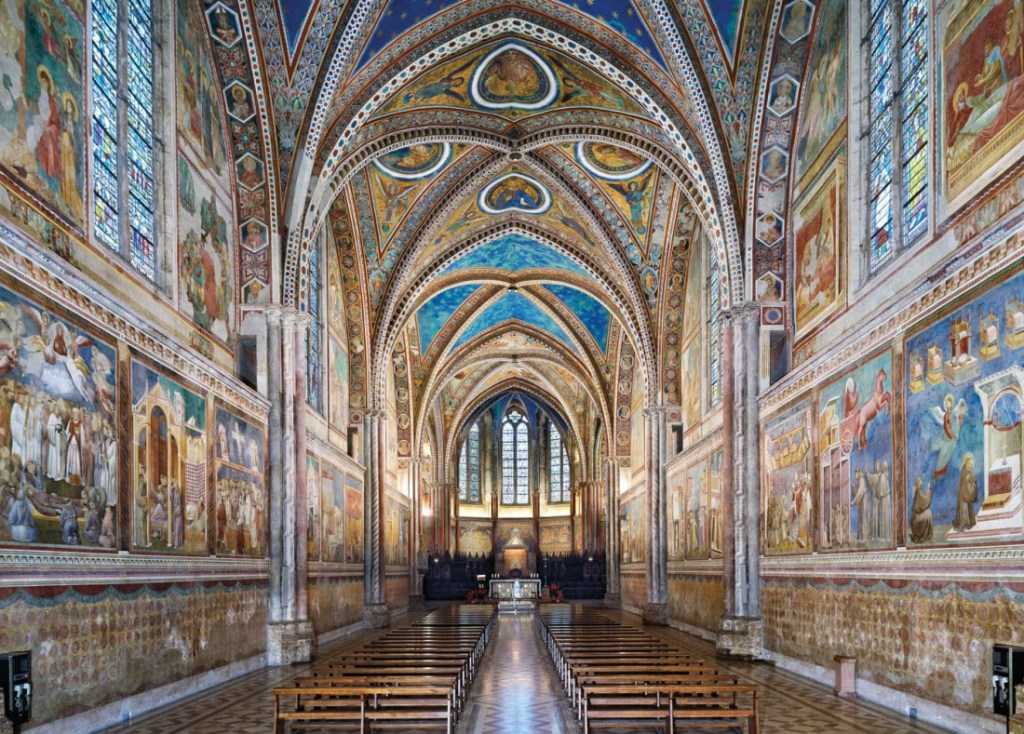
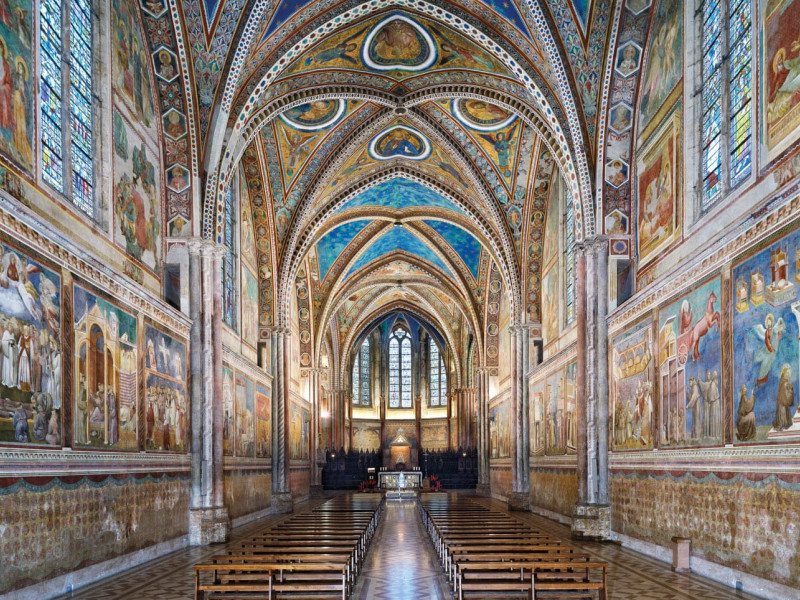
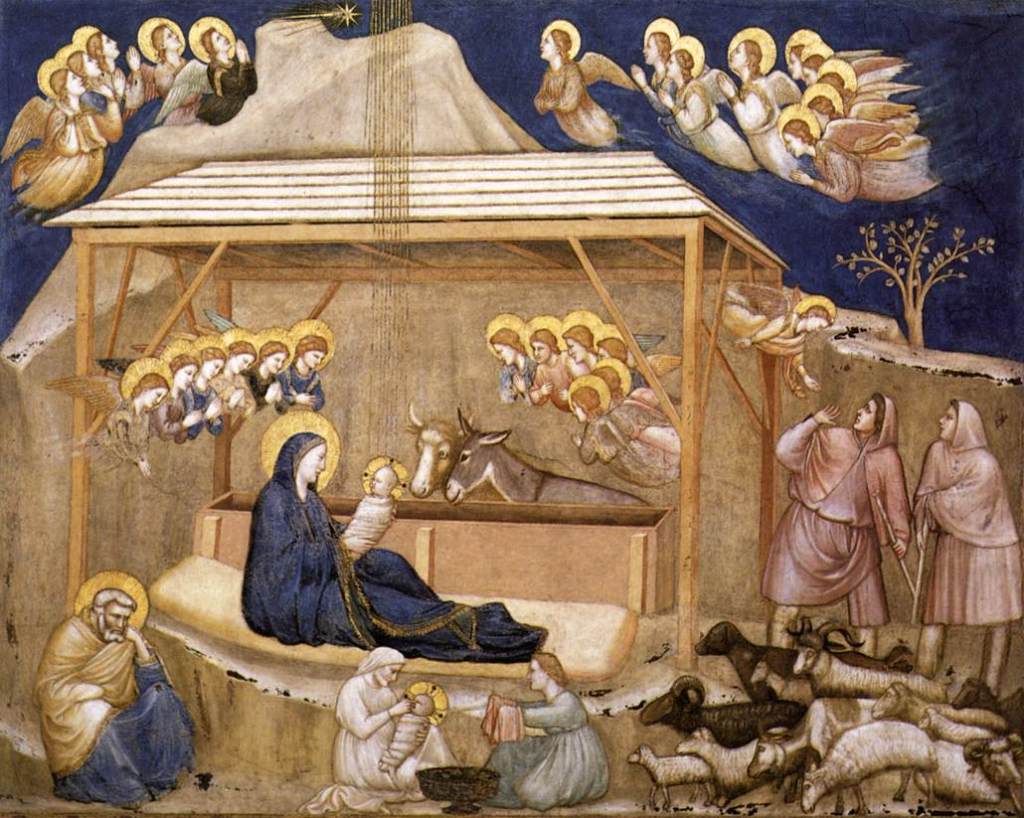
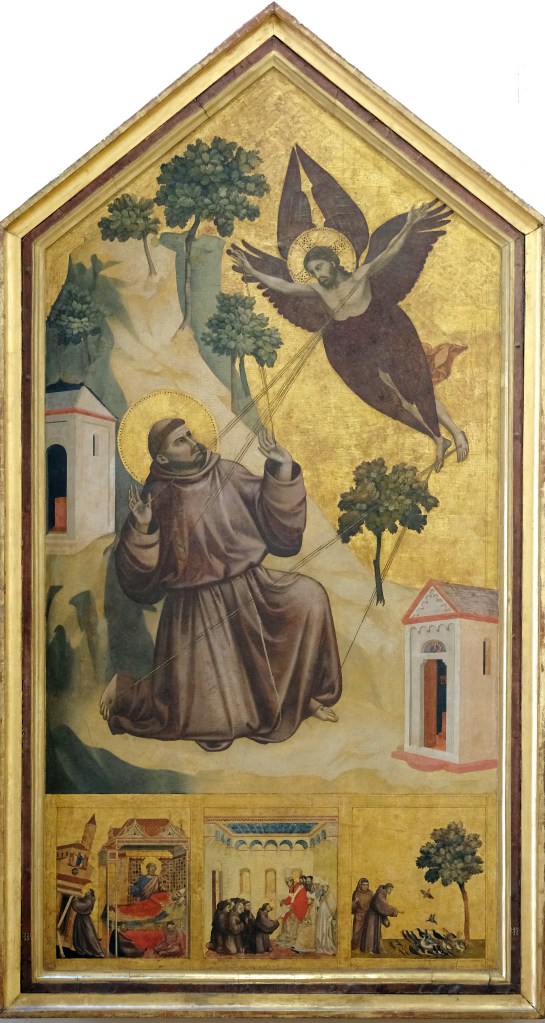
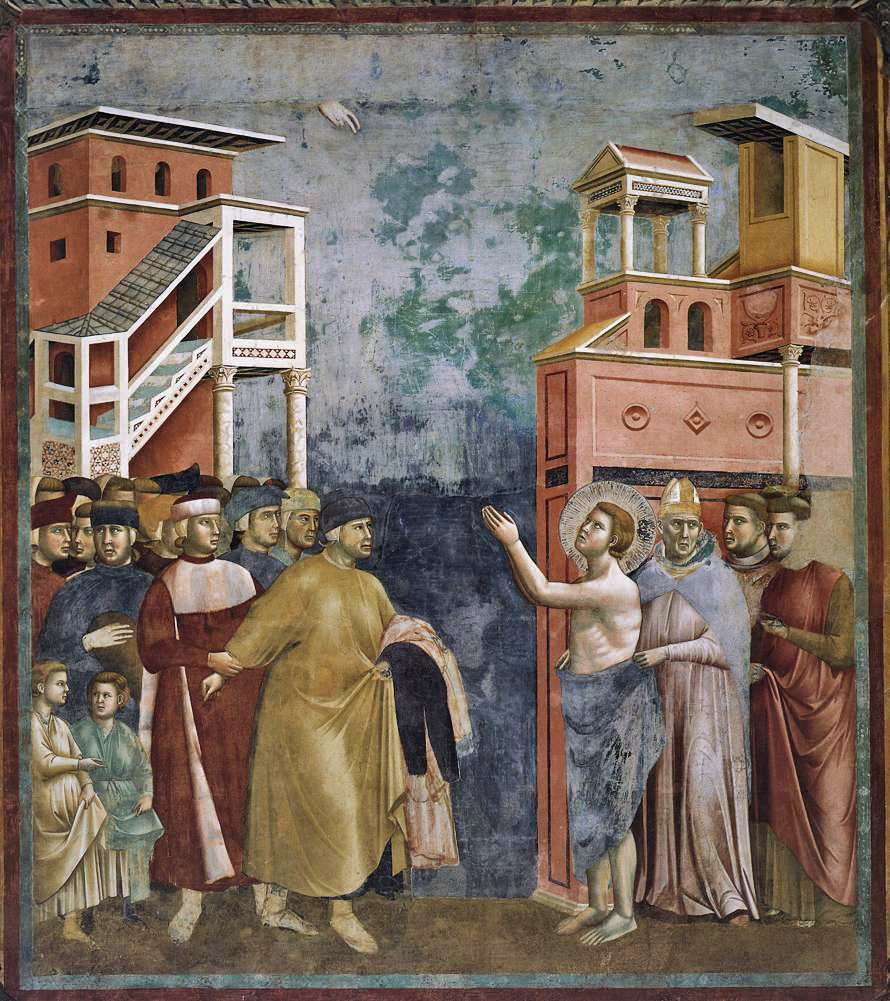
Earlier, Giotto had likely worked on the frescoes in the Upper Basilica of San Francesco in Assisi, illustrating the life of St. Francis. There, the saint is shown preaching to birds, renouncing worldly goods, receiving the stigmata — all in settings populated with attentive, expressive figures. The naturalism may not yet be as refined as in Padua, but the seeds are visible: narrative clarity, human presence, spatial coherence.
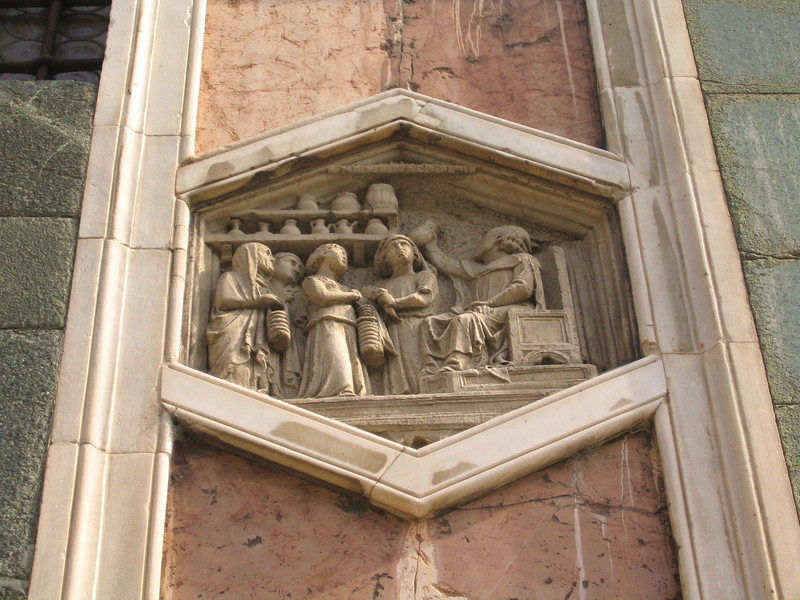
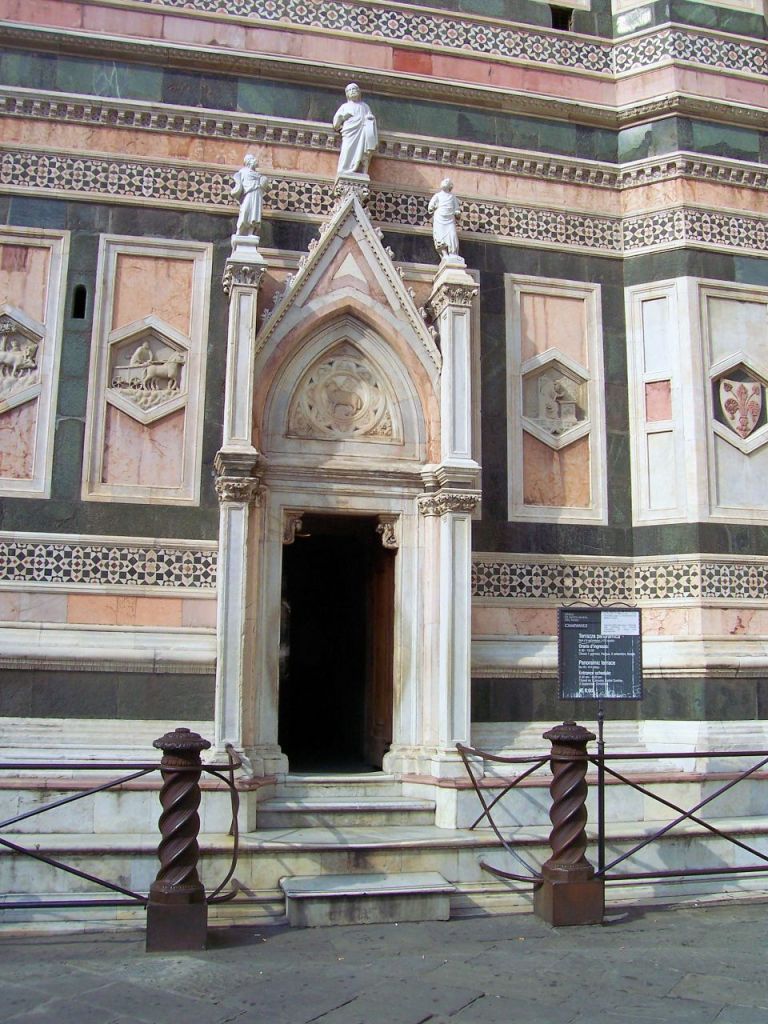
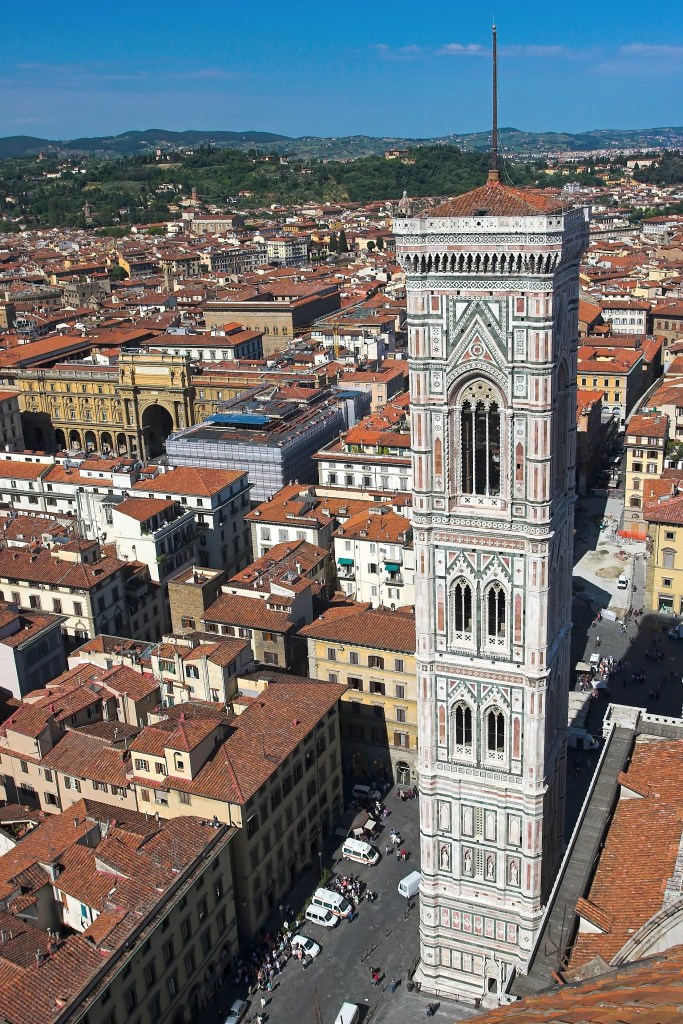
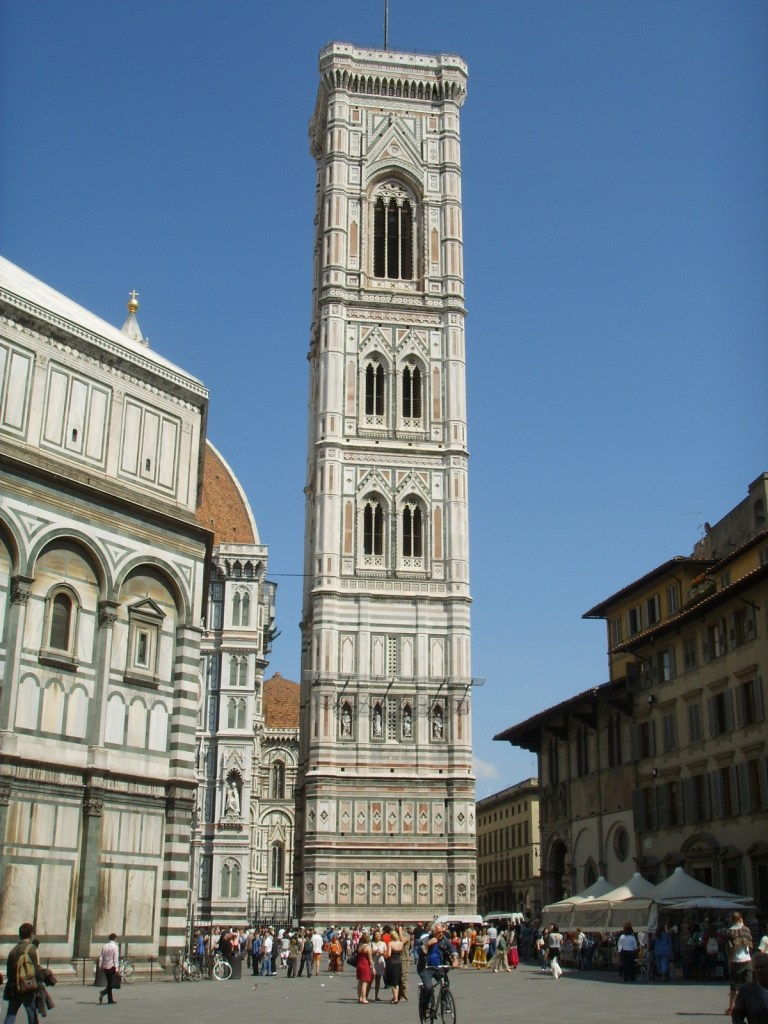
In Florence, Giotto designed the Campanile of Santa Maria del Fiore (the bell tower of the cathedral). Though completed after his death, its sculptural program reflects his concern for harmonizing architecture and narrative. That Giotto was chosen as “capomaestro” — chief master — of the cathedral project demonstrates his stature not only as a painter but as a civic artist.
The Human Turn
What makes Giotto’s art so pivotal is not simply technical innovation, but humanism avant la lettre. His figures are not types but people: mothers grieving, disciples embracing, soldiers grasping. The sacred remains central, but it is embodied in human form, bridging the divine and the earthly.
This shift anticipated the Renaissance by a century. Masaccio, Fra Angelico, Piero della Francesca, Leonardo — all worked in Giotto’s shadow, developing perspective, anatomy, and narrative naturalism. Giotto was not yet Renaissance, but without him the Renaissance would not have been imaginable.
Legacy
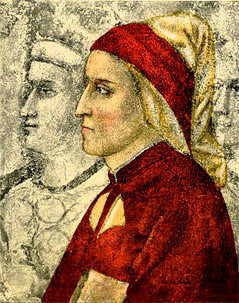
Giotto died in 1337, but his reputation never faded. Dante, a near contemporary, mentions him in the Divine Comedy, noting how he eclipsed Cimabue in fame. Vasari later enshrined him as the founder of Italian painting. For modern viewers, his work retains a startling immediacy: to stand before the Lamentation in Padua is to feel grief across seven centuries, as raw and intimate as if it were happening now.
Today, Giotto’s frescoes remind us of the moment when painting turned from symbol to experience, from abstraction to empathy. His art is not merely historical; it is perennial, speaking to our enduring need to see ourselves — our bodies, our emotions, our humanity — in the images we revere.
Essential Works by Giotto
- Scrovegni (Arena) Chapel, Padua (c. 1305) – The pinnacle of his narrative and emotional style.
- St. Francis Cycle, Basilica of San Francesco, Assisi (c. 1297–1300) – Early demonstration of his naturalistic storytelling.
- Ognissanti Madonna, Florence (c. 1310) – Monumental panel painting; the Virgin enthroned in solid, sculptural form.
- Crucifix, Santa Maria Novella, Florence (c. 1290s) – Christ rendered with corporeal weight and human suffering.
- Campanile of Santa Maria del Fiore, Florence (begun 1334) – Architectural project marking his civic importance.
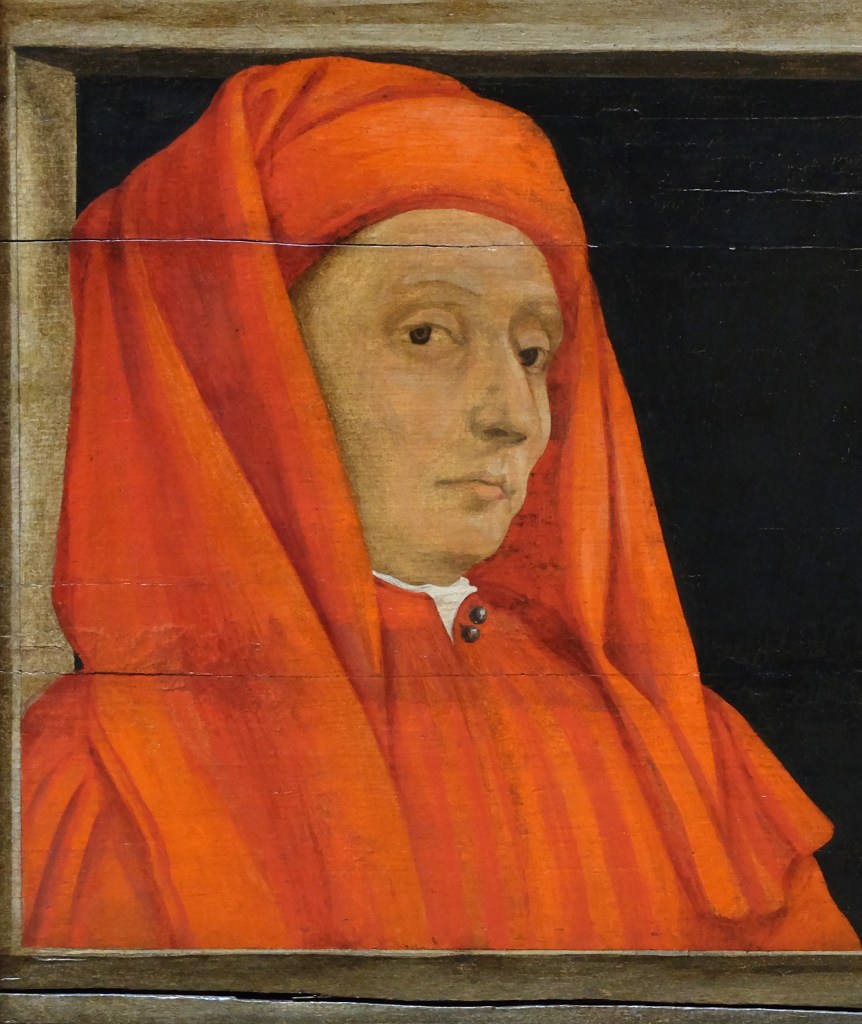
Giotto Today
To encounter Giotto is to encounter the moment art began to look at the world — and ourselves — differently. He did not abolish the sacred, but brought it closer, rooting it in human form and earthly space. His figures inhabit not eternity alone, but time; not heaven only, but history.
Giotto was, in Vasari’s words, the artist who “restored to painting the art of nature.” More than seven hundred years later, that restoration still feels like a revelation.
Discover more from My World of Interiors
Subscribe to get the latest posts sent to your email.

