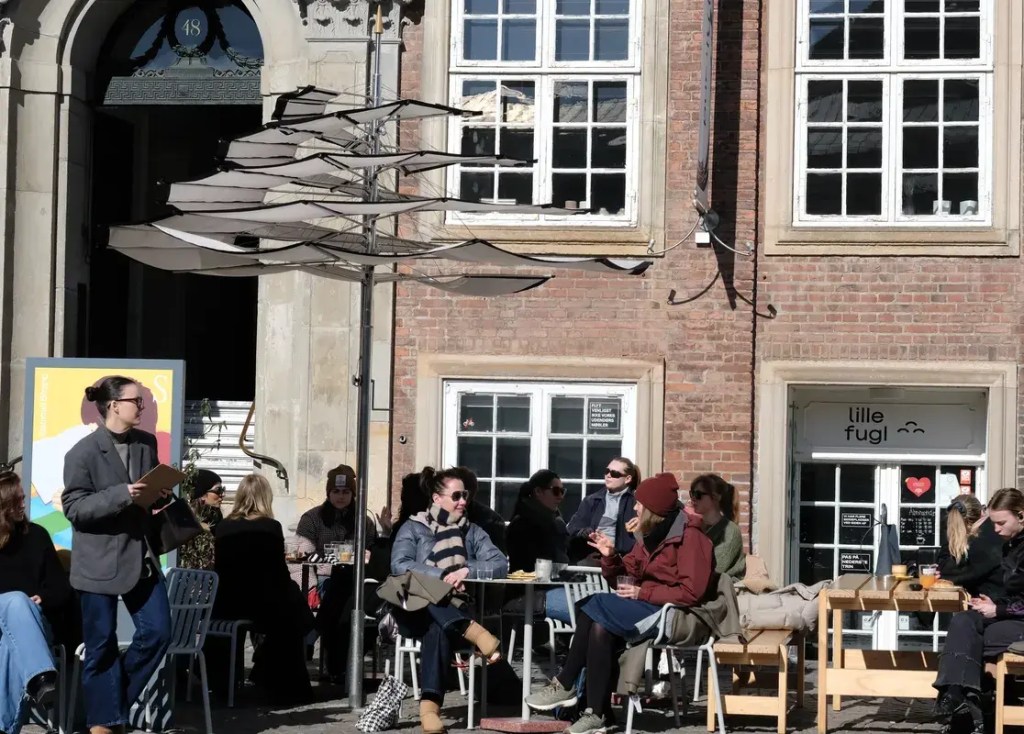
Behind the Baroque façade of a beautiful eighteenth-century townhouse, one of Copenhagen’s oldest cultural institutions continues to reinvent itself. This season, Gammel Strand presents two exhibitions that explore courage, imagination and the persistence of joy in an uncertain world.
The sandstone entrance to Gammel Strand 48 has stood overlooking Copenhagen’s canal since 1751. Its elaborate sculptural details, red-brick façade and distinctive curved gable belong to a period when wealthy merchants were transforming the city’s waterfront into an elegant residential quarter. The building survived the devastating Copenhagen fire of 1795, and more than 270 years later, it remains one of the most beautiful examples of eighteenth-century domestic architecture in the Danish capital.
Today, it houses Gammel Strand, an independent contemporary art centre whose history stretches back to 1825. The institution’s exhibition programme moves between Danish art history and international contemporary practice, often bringing overlooked artists into dialogue with the political and cultural questions of the present.
Its present exhibitions, devoted to the extraordinary Danish modernist Olivia Holm-Møller and an international group of artists responding to the war in Ukraine, offer an especially compelling introduction to this remarkable institution.
A House with a History
The building was designed in 1750–51 by the Dutch-born architect Philip de Lange for the merchant Peter Isenberg. Its architecture reflects the influence of Dutch Late Baroque design, which shaped much of Copenhagen’s eighteenth-century reconstruction.
Behind the richly decorated façade, the interiors retain elegant panelled rooms, decorative plasterwork and beautifully proportioned windows overlooking the canal.
The story of the institution is almost as interesting as that of the building.
Kunstforeningen, the Danish Art Association, was founded in 1825 by a group of citizens that included the painter and professor C. W. Eckersberg. Its purpose was to make art accessible beyond the relatively restricted world of the Royal Danish Academy of Fine Arts, establishing a connection between professional artists and the wider public.
The association acquired the Gammel Strand building in 1941 and moved into it in 1952.
Its exhibitions have since introduced Copenhagen audiences to generations of Danish and international artists. Unlike a conventional museum, Gammel Strand does not maintain a permanent collection; its identity is shaped by a changing programme of exhibitions, artistic collaborations, lectures and public discussions.
The historic house has also undergone a series of thoughtful architectural interventions.
In 2010, Vilhelm Lauritzen Architects completed an extensive renovation, restoring its historic interiors while introducing contemporary exhibition facilities, improved circulation and a glass lift within the courtyard.
The architectural approach was deliberately restrained. Original floors, panelling and decorative ceilings were carefully conserved, while newer materials remained distinguishable from the eighteenth-century fabric.
A further transformation followed in 2024, when the institution adopted its present name and introduced a renewed curatorial identity.
Working with Copenhagen architecture practice Archival Studies, Gammel Strand reimagined its ground floor, removing accumulated interior additions and creating a more welcoming entrance, exhibition-related bookshop and flexible space for cultural events.
The result is a particularly attractive combination of historic architecture and contemporary cultural life. The intimate scale of the building encourages a different relationship with art from that experienced in Copenhagen’s larger museums.
Olivia Holm-Møller: Soft as Butter, Brave as a Hare
18 September 2026 – 10 January 2027
The painter and sculptor Olivia Holm-Møller (1875–1970) occupies a distinctive position in the history of Danish modernism, although her work has never enjoyed the international recognition accorded to some of her contemporaries.
Born in Homå on Djursland, she grew up in a Grundtvigian household and initially worked as a teacher before pursuing an artistic education in Copenhagen.
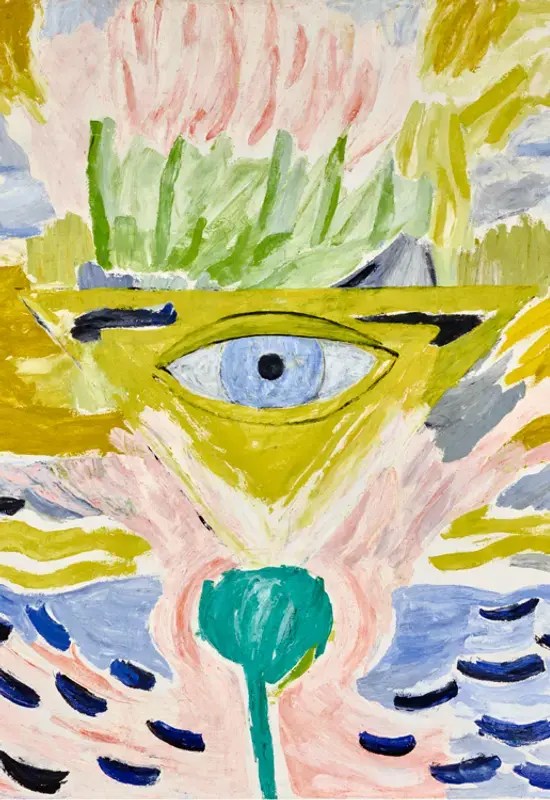
Her early practice centred on sculpture, but she gradually developed a highly personal form of expressive painting, characterised by strong colour, emphatic brushwork and an extraordinary imaginative vocabulary.
Suns, stars, mythological figures, animals and cosmic landscapes populate her pictures, their forms frequently approaching abstraction.
Her work resists straightforward classification. Elements of Symbolism, Expressionism and early modernist experimentation coexist within paintings that seem primarily concerned with the artist’s own spiritual and emotional understanding of the world.
The paintings are often strikingly direct, their compositions organised around vivid colour relationships and powerful rhythms rather than conventional representation.
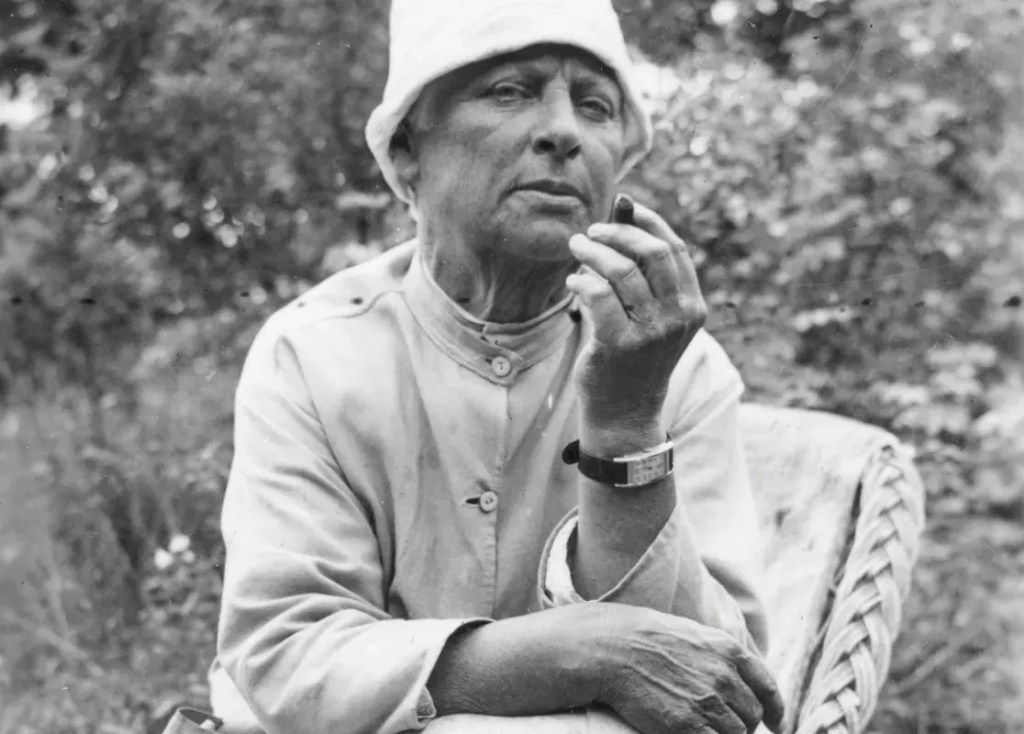
Holm-Møller travelled extensively, visiting European museums and later journeying much further afield. These encounters expanded her visual vocabulary, although she remained remarkably independent of prevailing artistic movements.
Her work has sometimes been understood as a bridge between early Danish modernism and the more expressive painting associated with the later CoBrA generation.
The current exhibition, Soft as Butter, Brave as a Hare, takes its title from a letter she wrote to a friend in 1911, describing herself as simultaneously sensitive and courageous.
That apparent contradiction provides the exhibition’s central argument.
Holm-Møller’s art suggests that emotional sensitivity and artistic independence can be mutually sustaining qualities. Her willingness to pursue unfamiliar imagery, experiment with colour and develop a personal symbolism was itself a form of courage.
The exhibition is an opportunity to reconsider an artist whose work feels unexpectedly contemporary, particularly in its exploration of uncertainty, spiritual curiosity and the individual’s relationship with a changing world.
For those interested in discovering more, Holstebro Kunstmuseum holds an important collection of her work and her extensive correspondence, providing exceptional insight into the development of her artistic life.
Still Joy: Art from Ukraine and Beyond
18 September 2026 – 10 January 2027
The second exhibition approaches the question of human resilience from a radically different historical perspective.
Still Joy brings together new works by eleven Ukrainian and international contemporary artists, developed in collaboration with the PinchukArtCentre in Kyiv.
The exhibition began with testimonies collected from people in Ukraine, including soldiers reflecting upon the meaning of joy during wartime.
Their accounts describe ordinary experiences that acquire extraordinary significance under conditions of uncertainty: friendship, physical closeness, memories of childhood, encounters with nature and the persistence of communal life.
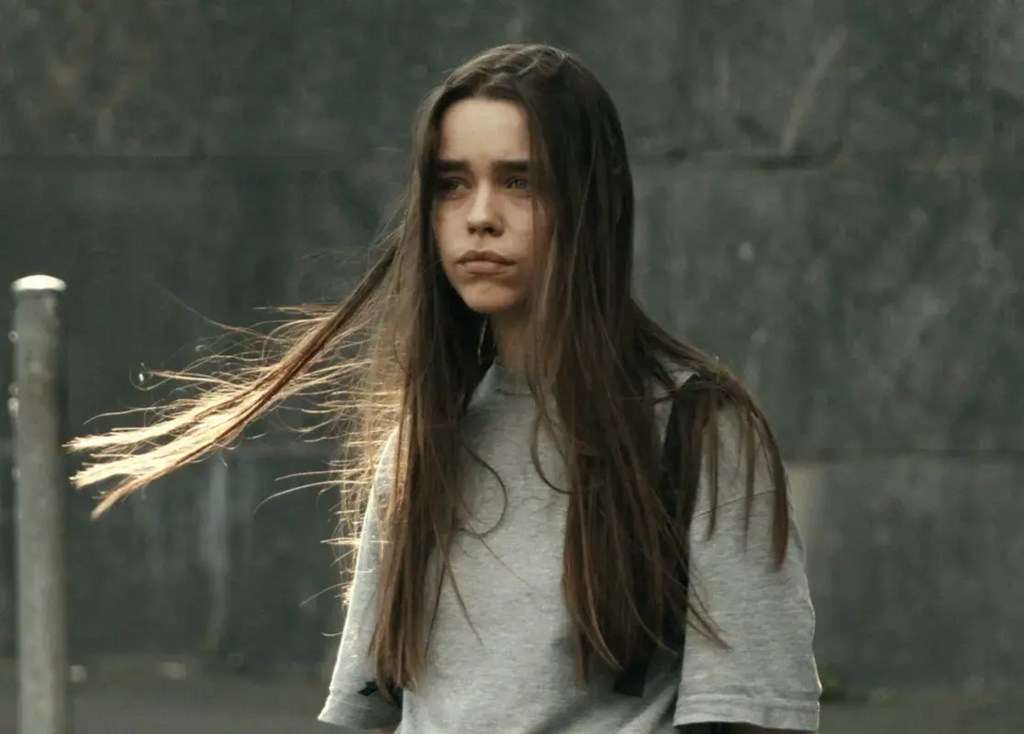
Responding to these testimonies, the participating artists have produced works across sculpture, painting, installation and moving image.
The exhibition includes chandeliers constructed from pastel-coloured sweets, footage of underground techno gatherings in Kyiv, painted skulls and brass bells bearing the fingerprints of displaced people.
Such materials and imagery might initially appear incongruous within an exhibition concerned with war.
Yet the underlying proposition is sophisticated. Joy need not represent an escape from difficult circumstances; it can become an assertion of human dignity and continuity within them.
Among the participating artists are Ukrainian practitioners Zhanna Kadyrova, Kateryna Lysovenko and the filmmaking duo Roman Khimei and Yarema Malashchuk, alongside internationally recognised figures such as Álvaro Urbano, Ashfika Rahman and Dutch designer and artist Simone Post.
Post’s extraordinary use of confectionery as a sculptural material introduces a fragile, deliberately temporary quality to objects associated with celebration and pleasure.
Khimei and Malashchuk’s images of Kyiv’s underground music scene explore collective experience through the physical presence of bodies moving together.
These approaches offer contrasting interpretations of joy, ranging from intimate recollection to exuberant public expression.
Curated by Björn Geldhof and Oleksandra Pogrebnyak, Still Joy was first presented in Kyiv before appearing as an official collateral event of the 2026 Venice Biennale. Its Copenhagen presentation has been further developed with Gammel Strand.
The exhibition is especially significant because it challenges the familiar visual language through which war is usually represented.
Rather than treating its subjects exclusively through suffering and destruction, it considers the experiences, relationships and imaginative capacities that continue to define human existence during conflict.
More Than an Exhibition Space
One of Gammel Strand’s particular attractions lies in the way its cultural programme extends beyond the galleries.
The ground-floor shop offers a carefully selected collection of art books, publications, prints and design objects, while the building’s charming courtyard provides a quieter contrast to the busy streets of central Copenhagen.
In the basement, Café Lille Fugl serves coffee, pastries, natural wines and seasonal food. It is a pleasant place to continue a conversation after an exhibition, especially when the weather allows visitors to sit outside.
The institution also organises artist conversations, guided tours, readings and events that explore the wider ideas behind its exhibitions.
On Thursday 3 December, Danish journalist and former foreign correspondent Matilde Kimer will lead a masterclass entitled Ukraine in Focus, responding to the themes of Still Joy. Drawing upon her extensive experience reporting from Russia and Ukraine, Kimer will reflect upon the country before the war, its present circumstances and the uncertainties surrounding its future. The discussion offers an opportunity to consider the exhibition’s central questions of resilience, hope and human experience within a wider political and historical context. The event takes place from 17:00 to 18:00, with tickets available through Gammel Strand’s events programme.
Among its other programmes are Kunst & Kaffe, combining exhibition tours with a visit to the café, and Midweek Meditation, which brings sound and contemplative practice into the galleries.
These activities reflect Gammel Strand’s ambition to function as a cultural meeting place rather than solely an exhibition venue.
There is a certain historical continuity in this approach.
When Kunstforeningen was founded two centuries ago, its central purpose was to encourage a broader public relationship with art. Its contemporary programme continues that ambition, even as the artistic questions and cultural conditions have changed dramatically.
The present exhibitions make that continuity particularly apparent.
Olivia Holm-Møller’s intensely personal images of courage and uncertainty sit alongside contemporary responses to the consequences of war, displacement and political upheaval.
Separated by generations and working within very different artistic traditions, the artists nevertheless share an interest in the ways human beings preserve imagination, sensitivity and a sense of possibility when confronted with the unknown.
It is a thoughtful pairing within an institution whose historic rooms have witnessed more than two centuries of cultural and social change.
For visitors to Copenhagen, Gammel Strand is worth discovering for its architecture alone. Its current exhibitions provide an even stronger reason to step inside.
Plan your visit
Gammel Strand
Gammel Strand 48
1202 Copenhagen K, Denmark
Current exhibitions
Soft as Butter, Brave as a Hare — Olivia Holm-Møller
18 September 2026 – 10 January 2027
Still Joy
18 September 2026 – 10 January 2027
Upcoming event
Ukraine in Focus — Matilde Kimer
Thursday 3 December 2026, 17:00–18:00
Event information and tickets
Opening hours
Tuesday–Wednesday: 10:00–17:00
Thursday: 10:00–20:00
Friday–Sunday: 10:00–17:00
Monday: Closed
Admission
Adults: DKK 100
Under 27: DKK 75
Under 16: Free
The gallery is approximately two minutes’ walk from Gammel Strand Metro station. Step-free access is available via the courtyard entrance on Læderstræde.
Official website
Events and guided tours
Accessibility and practical information
Press materials and exhibition images
All images courtesy of Gammel Strand
