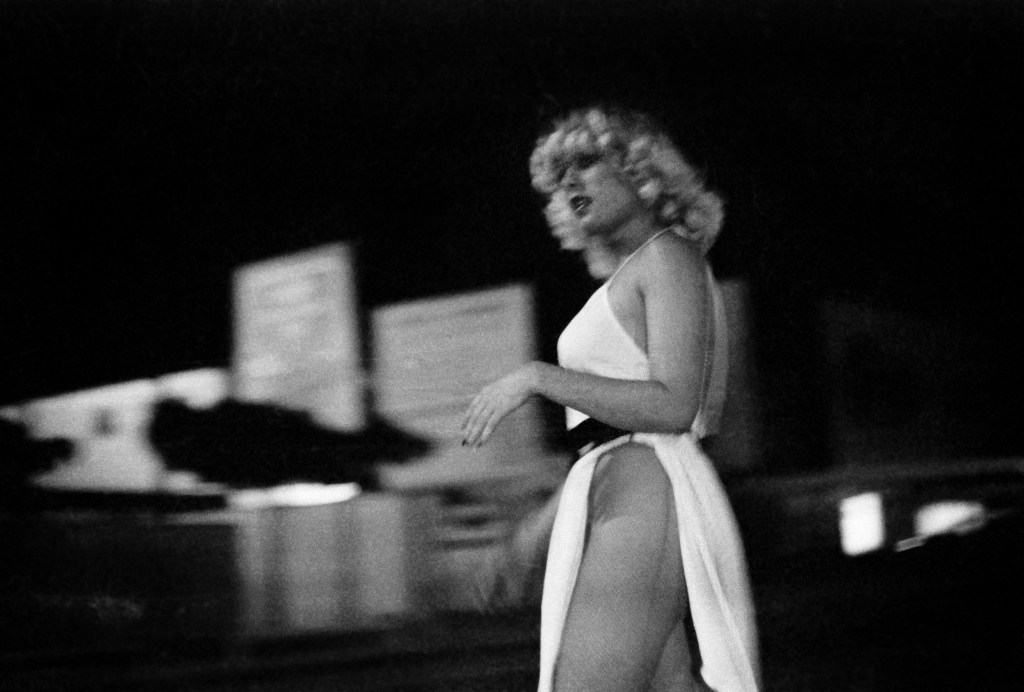
More than four decades after its production, a pioneering Venezuelan documentary returns to public attention at the Museu de Arte de São Paulo, bringing the streets, nightclubs and transformistas of early 1980s Caracas back into the history of Latin American cinema.
In 1982, two young Venezuelan filmmakers, Manuel Herreros de Lemos and Mateo Manaure Arilla, turned their camera towards a community of women whose presence was conspicuous in the nocturnal landscape of Caracas but whose experiences rarely entered the country’s cultural record. Working in 16mm, they produced a documentary of twenty-two minutes entitled TRANS.
Combining street scenes, nightclub performances and interviews, the film documented the lives of women who identified as transformistas, a term with particular cultural and historical associations in Venezuela. Many supported themselves through sex work, negotiating a society in which femininity was publicly celebrated while their own expressions of it exposed them to discrimination and violence.
Following decades of severely restricted circulation, the restored film has begun to find new audiences. On 27 November 2026, the Museu de Arte de São Paulo (MASP) opens an exhibition presenting the film’s Brazilian premiere alongside seventy-five photographs taken by Herreros during its preparation.
Entitled Manuel Herreros & Mateo Manaure: Mi nombre es Venezuela, the exhibition is curated by Glaucea Helena de Britto and Matheus de Andrade as part of the museum’s programme dedicated to Latin American histories.
Caracas after Dark
During the middle decades of the twentieth century, Venezuela’s petroleum economy financed an ambitious transformation of its capital. Caracas acquired modernist residential developments, monumental public buildings, expansive motorways and commercial districts that projected an image of national prosperity.
By the early 1980s, that prosperity was becoming increasingly precarious. The economic difficulties that would culminate in the currency crisis of February 1983 were already developing when Herreros and Manaure began filming.
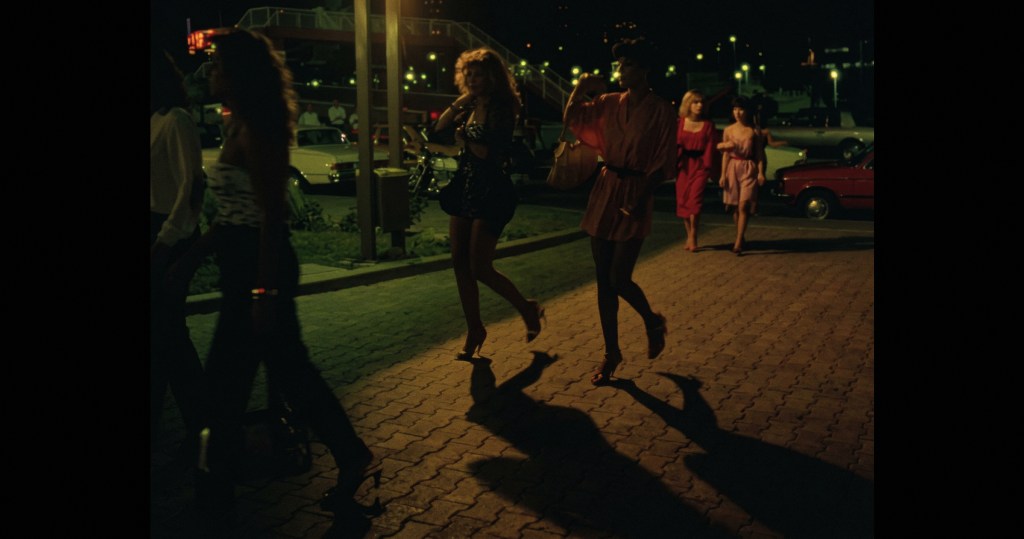
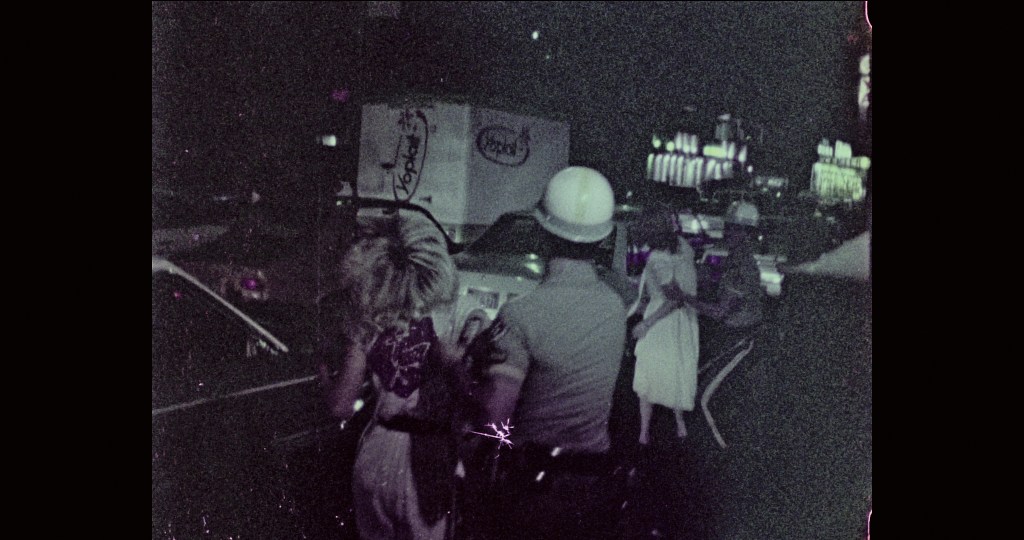
Avenida Libertador, one of the city’s principal thoroughfares, provides an important setting for the documentary. Its illuminated commercial surroundings and passing traffic formed part of the working environment of the transformistas.
The anthropologist Marcia Ochoa has examined the cultural significance of this urban geography in Queen for a Day: Transformistas, Beauty Queens, and the Performance of Femininity in Venezuela, published by Duke University Press in 2014.
Ochoa considers the relationship between Venezuela’s internationally celebrated beauty pageants and the ways in which transformistas fashioned their appearances and occupied public space. Her research provides a particularly valuable context for understanding the documentary. In Venezuela, feminine beauty had become closely associated with national achievement, popular entertainment and commercial aspiration.
For the women portrayed in TRANS, the cultivation of beauty carried considerably different social consequences. The streets of Caracas were places of employment and companionship, but also of surveillance and exposure to violence.
The documentary preserves an aspect of the modern Latin American city that rarely appears in architectural histories of the period: the alternative social worlds that developed within the spaces created by economic expansion and urban planning.
The Cinematic Language of TRANS
Herreros and Manaure approached their subject through a combination of observational documentary and experimental visual strategies.
Writing for the Institute for Studies on Latin American Art (ISLAA), researcher Irene Rihuete-Varea draws attention to the film’s opening images of nocturnal Caracas, where illuminated advertisements, moving vehicles and the coloured lights of the Plaza Venezuela fountain establish a distinctly metropolitan visual atmosphere.
The documentary moves between streets, beauty salons and nightclub performances, recording the preparation and presentation of feminine appearance alongside the women’s accounts of their lives.
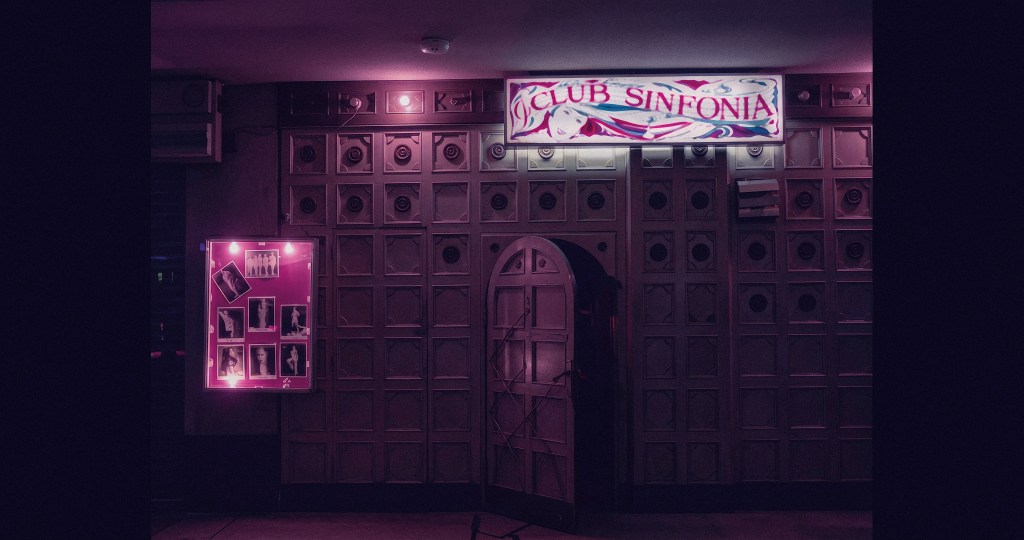
One of its protagonists, who calls herself Venezuela, performs to Irene Cara’s Fame at Club Sinfonía in the Sabana Grande district.
Released in 1980, the song had already acquired international recognition through Alan Parker’s film of the same name. Its appearance in TRANS situates the documentary within the popular culture of its period while lending particular significance to Venezuela’s performance and aspirations.
The soundtrack is also used to challenge the authority of some of the documentary’s interviewees. Representatives of the police and the Church appear on screen, but their words are gradually displaced by music.
In his essay Desire, Deferral, and the Failings of Filmic Representation, Joseph Shaikewitz examines the contradictions inherent in this approach. Although the filmmakers question the prejudices expressed by institutional authorities, the documentary still grants those authorities considerable power to define the terms of the discussion.
The inclusion of these perspectives reveals something of the conditions under which the film was made. It also complicates its position within documentary history. Even sympathetic filmmakers must contend with the conventions of representation available to them and the unequal relationship that can exist between a camera and its subjects.
The women themselves frequently exceed the framework established for them. Through their performances, humour and accounts of their ambitions, they emerge as individuals whose lives cannot be adequately explained by the institutional opinions placed alongside them.
The Photographs
The seventy-five photographs accompanying the documentary at MASP constitute an important body of work in their own right.
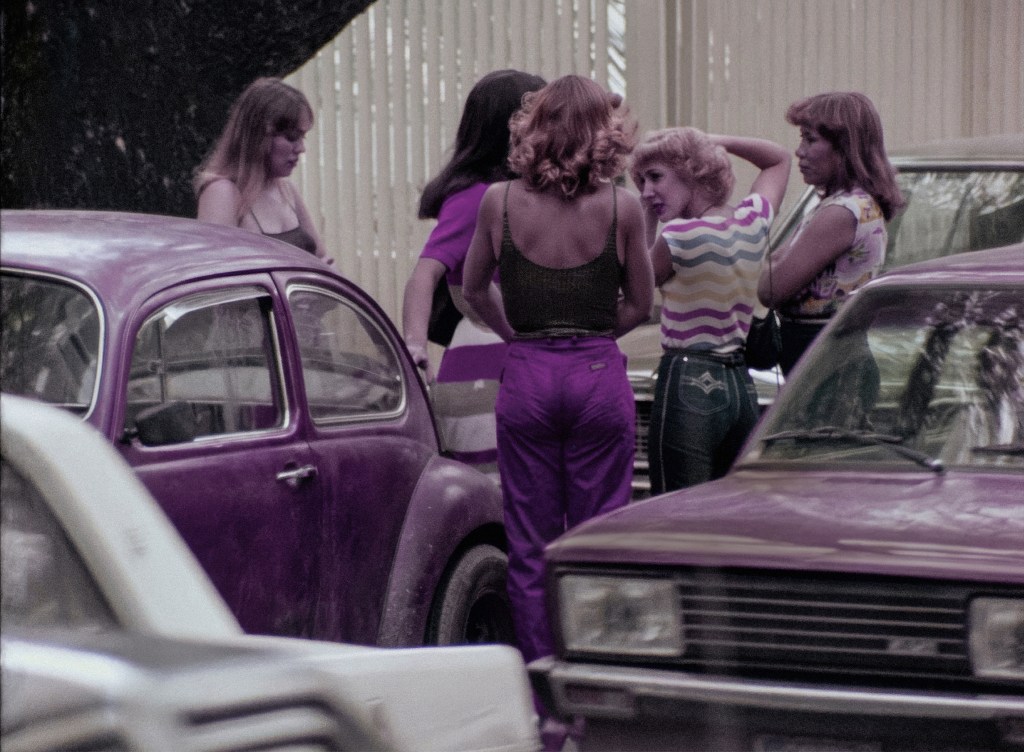
During preparations for the film, Herreros photographed members of the community. Some portraits were produced through an exchange in which the women received photographs in return for their participation.
The resulting images preserve a visual culture largely absent from conventional photographic histories of twentieth-century Venezuela. Clothing, hairstyles, cosmetics, gestures and poses reveal the aesthetic decisions of the women themselves. The surrounding streets and interiors document the material character of Caracas during the same period.
The photographs also have a different relationship with their subjects from that of the documentary. Where a moving image is shaped by editing, sound and duration, the individual portrait allows the viewer to attend to the particularities of a face, a gesture or an expression.
Among the works entering MASP’s collection is Untitled (Marilin), a black-and-white photograph from 1982.
The preservation of these photographs is particularly valuable because their original purpose extended beyond the production of a film. They were also personal images made through encounters between the photographer and the women who agreed to participate.
Their subsequent entry into a museum collection gives them a new public existence, several decades removed from the circumstances of their creation.
A Film Nearly Lost
At its 1983 premiere at the Cinemateca Nacional de Venezuela, TRANS attracted a substantial audience. The screening was followed by a discussion involving the filmmakers and participants. According to accounts of the evening, police subsequently arrived intending to detain those involved.
Although the documentary received local press attention and further screenings, opportunities to exhibit it became increasingly restricted.
Its physical survival was equally precarious. Writing for Screen Slate, film historian and archivist Elizabeth Purchell notes that the surviving release prints held by archives had been destroyed. The film’s eventual recovery depended upon deteriorating original materials.
Herreros undertook its restoration, enabling the documentary to circulate again in digital form.
In 2022, the Institute for Studies on Latin American Art acquired digital copies of the film, facilitating further research into its production and historical context.
The first United States presentation followed in 2023 at the Center for Curatorial Studies at Bard College. An expanded exhibition, Dueñas de la Noche: Trans Lives and Dreams in 1980s Caracas, was presented at ISLAA in New York from September 2024 to April 2025.
The exhibition brought together the documentary, photographs and surviving production materials. Its accompanying publication included research by the curators, a text by Marcia Ochoa and an interview with Herreros.
The recovery of TRANS belongs to a wider history of independent cinema in which the survival of a film frequently depends upon the efforts of individual filmmakers, collectors and researchers. Works produced outside established commercial distribution networks are particularly vulnerable to the disappearance of original materials and the loss of their historical contexts.
The restoration of TRANS has made it possible to study both the film and the circumstances of its production. Its surviving photographs, promotional material and other archival documents now provide a fuller account of an episode in Venezuelan cinema that might otherwise have been forgotten.
My Name Is Venezuela
The title of the MASP exhibition derives from the self-introduction of one of the documentary’s protagonists.
By presenting herself as Venezuela, she associates her public persona with the name of the country in which she lives. The gesture carries particular force within a society accustomed to presenting carefully regulated images of femininity as expressions of national achievement.
Her performance of Fame, recorded in a Caracas nightclub in 1982, acquires an additional poignancy when considered alongside the subsequent disappearance and recovery of the film itself.
The São Paulo exhibition marks another stage in that recovery. Both the documentary and the seventy-five photographs entered MASP’s collection in 2025, through donations involving ISLAA and Manuel Herreros.
An accompanying bilingual catalogue brings together curatorial research, an essay by Rolando J. Carmona, a text by Marcia Ochoa and a previously unpublished interview with the filmmakers.
For contemporary audiences, the historical distance of TRANS offers an opportunity to encounter an earlier generation of Latin American documentary filmmaking within the social and visual culture from which it emerged.
The film preserves the appearance of a changing city, its popular music, its nightlife and the aspirations of women whose experiences were seldom considered worthy of cinematic attention.
Their participation in the documentary ensured that something of those experiences survived. More than forty years later, the film’s restoration and the preservation of Herreros’s photographs have secured a place for them within the cultural history of Venezuela.
Manuel Herreros & Mateo Manaure: Mi nombre es Venezuela
27 November 2026 – 4 April 2027
MASP — Museu de Arte de São Paulo Assis Chateaubriand
Lina Bo Bardi Building
Avenida Paulista, São Paulo, Brazil
Curated by Glaucea Helena de Britto and Matheus de Andrade.
Further reading
- Dueñas de la Noche: Trans Lives and Dreams in 1980s Caracas — ISLAA
- Marcia Ochoa — Queen for a Day, Duke University Press
- Elizabeth Purchell — Trans, Screen Slate
All images: Manuel Herreros & Mateo Manaure, TRANS, 1982. Photography by Manuel Herreros and Mateo Manaure Arilla. Courtesy of MASP — Museu de Arte de São Paulo Assis Chateaubriand. Untitled (Marilin) photographed by Manuel Herreros, gift of the artist, 2025.
