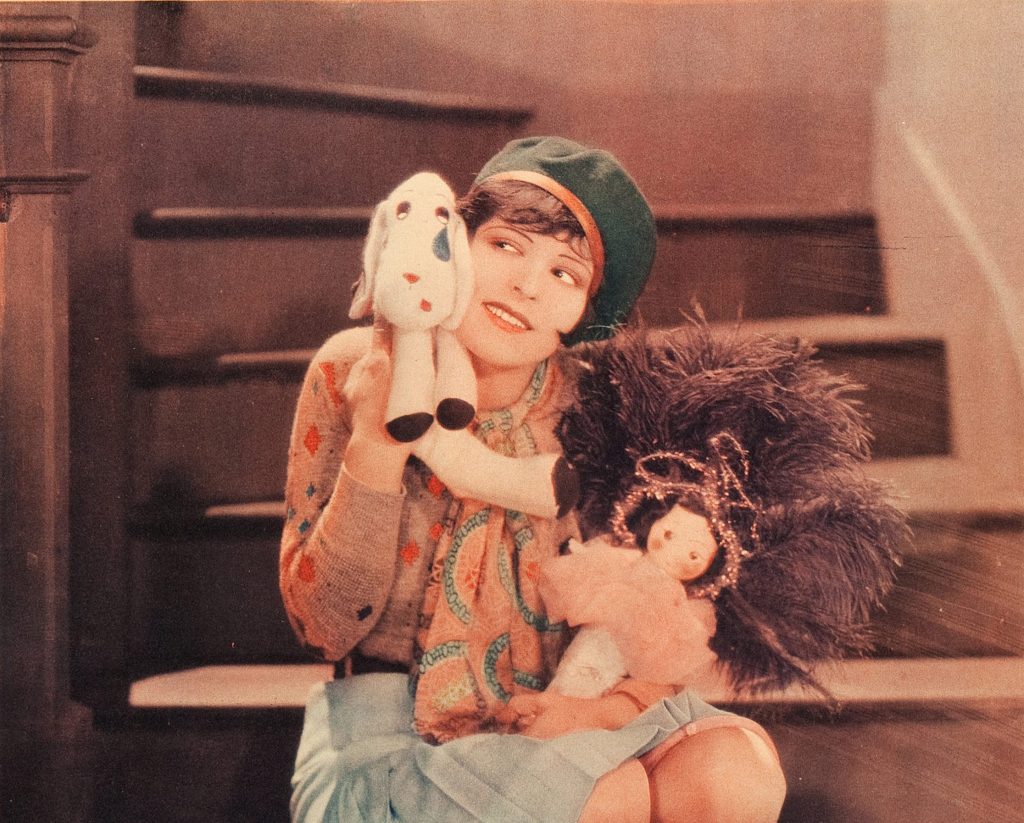
How a 1927 romantic comedy gave Hollywood its original It Girl — and revealed the contradictions of the Jazz Age.
The opening sequence of It (1927) establishes its setting with an enormous sign: “Waltham’s, World’s Largest Store.” The camera moves from the building towards the busy street below, introducing a modern city organised around commerce. Inside, salesgirls attend to customers. Among them is Betty Lou Spence, played by Clara Bow, who works behind the lingerie counter.
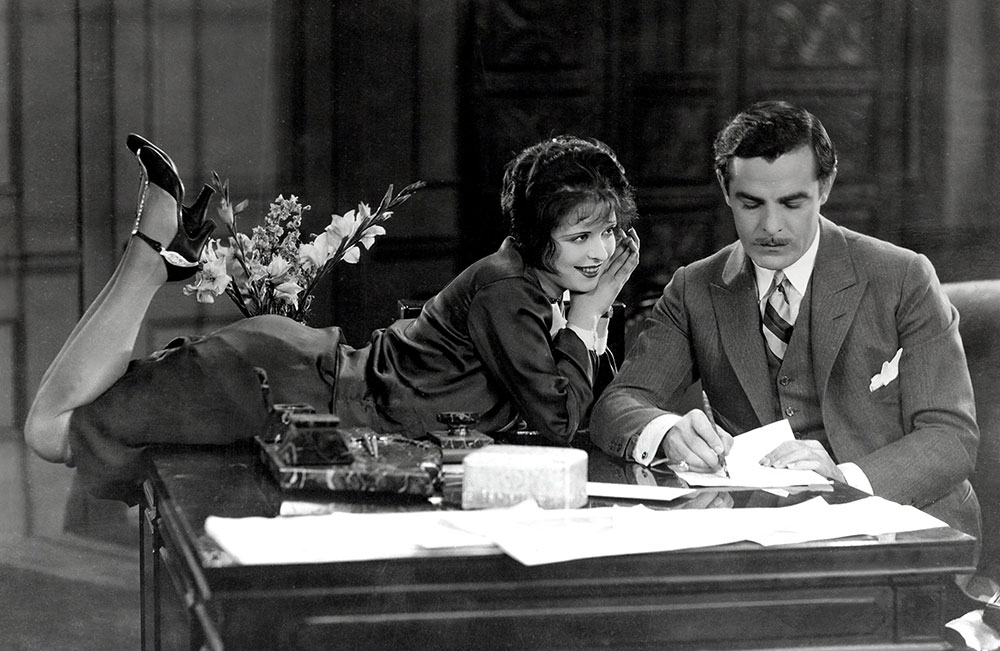
When the store’s handsome new owner, Cyrus Waltham (Antonio Moreno), appears, Betty Lou stops what she is doing. She looks at him with undisguised interest. An intertitle supplies her reaction: “Sweet Santa Claus, give me him!”
It is a small reversal of the usual romantic arrangement. The wealthy man is the desirable object, and the working woman has decided to acquire him. Over the following seventy-two minutes, Betty Lou will pursue that ambition with considerable ingenuity.
Directed by Clarence G. Badger and released in February 1927, It became the defining film of Bow’s career. She had already established herself in Hollywood through pictures such as The Plastic Age (1925), Dancing Mothers (1926) and Mantrap (1926). Her vitality, expressive face and unusually direct manner of acting had made her popular with audiences. It gave those qualities a memorable name.
The expression “It Girl” would outlive both the silent cinema and the society that produced it. Yet the film itself is considerably more interesting than the celebrity label it created. Its comedy depends upon a young working woman’s ability to negotiate a world in which money determines opportunity and sexual freedom remains subject to strict conditions.
Elinor Glyn and the invention of ‘It’
The concept originated with Elinor Glyn, the British novelist whose commercially successful romances had been unsettling respectable readers since the Edwardian period.
Glyn had made her name with Three Weeks (1907), a sexually suggestive novel involving an affair between a young Englishman and an older, married woman. By the 1920s, she had established herself in Hollywood as a writer, adviser and authority on attraction.
Her story It, published in Cosmopolitan in February 1927, attempted to define a particular quality of personal magnetism. Physical beauty was insufficient. Possessors of “It” had confidence, vitality and an apparent indifference to the impression they made on others.
Interestingly, Glyn had originally associated the quality primarily with men. In a 1926 interview with Photoplay, she described it as a largely masculine attribute, characterised by an almost unconscious personal magnetism. Her fictional treatment of the idea centred upon an aristocratic woman and a powerful, self-made man.
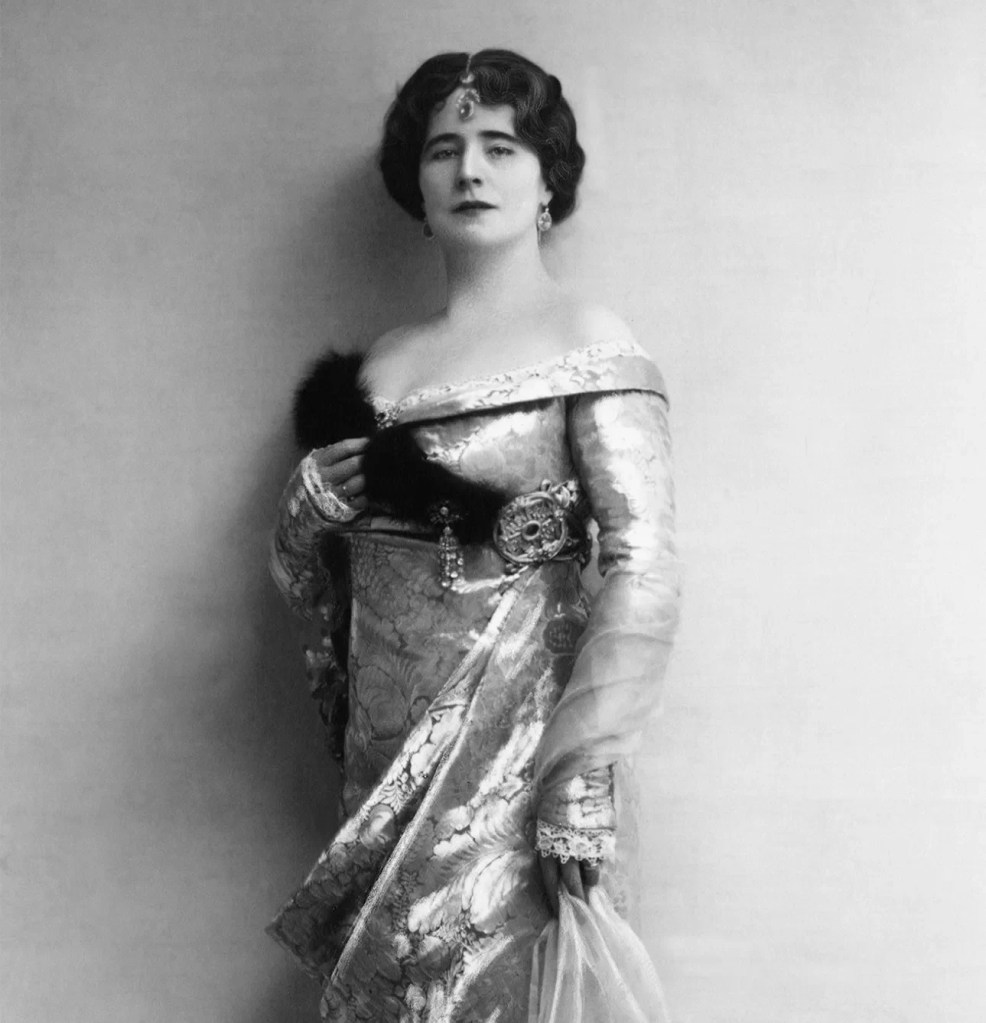
Paramount recognised the commercial possibilities of transferring the concept to a young actress. Producer B. P. Schulberg arranged a deal with Glyn, reportedly worth $50,000, and the writer endorsed Bow as the embodiment of her theory.
The arrangement proved effective publicity. The same concept could be promoted through popular fiction, newspapers, film advertisements and the personality of a rising Hollywood star.
Glyn even appeared in the film as herself, seated at the Ritz and explaining the elusive quality to a group of fashionable diners. Elsewhere, Cyrus’s friend Monty (William Austin) reads about “It” in Cosmopolitan before setting out to find a woman who possesses it.
The film is therefore openly advertising the publication from which its central idea emerged. Glyn supplies the definition, Paramount supplies the star, and the audience is invited to decide whether the experiment works.
There is an amusing contradiction here. Glyn regarded “It” as something essentially unconscious. Betty Lou, on the other hand, is acutely aware of the effect she wishes to produce. She studies opportunities, chooses her clothes strategically and manipulates social situations with cheerful determination.
Bow makes the distinction between natural charisma and deliberate performance almost impossible to maintain.
A shopgirl makes her own evening dress
One of the film’s most revealing sequences begins when Betty Lou secures an invitation to dinner at the Ritz through Monty, whom she has recognised as a useful intermediary in her pursuit of Cyrus.
The difficulty is that she has nothing appropriate to wear.
Returning to the modest apartment she shares with her friend Molly (Priscilla Bonner) and Molly’s baby, Betty Lou takes a pair of scissors to the dress she has worn at work. With Molly’s assistance, she cuts away fabric and transforms the garment into something suitable for an evening out.
Bow moves rapidly through the scene, admiring herself, adjusting the dress and experimenting with the theatrical possibilities of her new appearance. She has none of the possessions associated with fashionable society, but she understands how to imitate its visual codes.
The sequence provides a striking contrast with Cyrus’s wealthy companion, Adela Van Norman (Jacqueline Gadsdon), who is shown being dressed by her maid. Adela possesses the expensive clothes and social position that Betty Lou lacks, yet her movements are comparatively restrained.
Betty Lou’s improvised elegance has an energy that money cannot purchase.
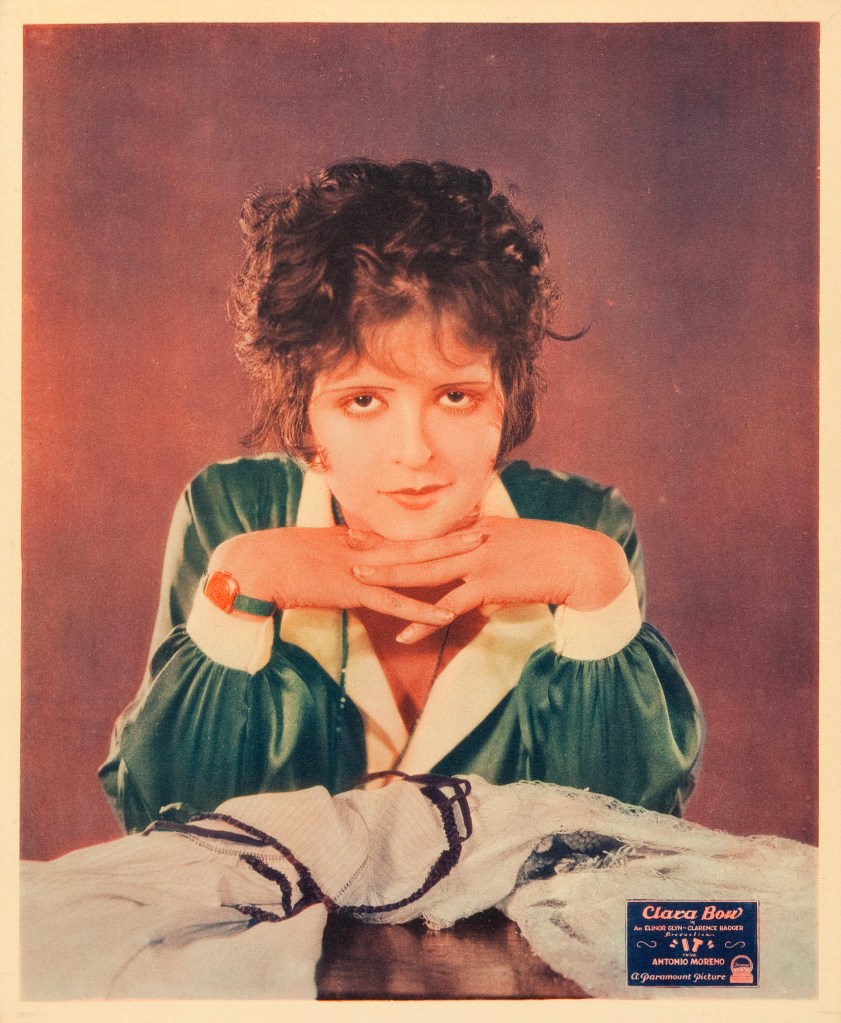
During the 1920s, department stores helped make fashionable clothing available to a widening consumer market. Yet the women employed to sell these goods were not necessarily able to afford them. Betty Lou’s situation is particularly revealing because the store that employs her is also owned by the man she wishes to marry.
While altering her dress, she notices a newspaper advertisement for Waltham’s promoting the latest Paris fashions, including dresses priced at $11. The advertisement is a reminder of the clothes she cannot buy, and of Cyrus himself. His name appears on the building, on the merchandise and in the advertisement. He represents a world of consumer possibilities from which she remains largely excluded.
Film scholar Tamar Jeffers McDonald discusses Betty Lou’s improvised outfit in Hollywood Catwalk: Exploring Costume and Transformation in American Film. Unlike the conventional cinematic makeover, in which a woman acquires an entirely new wardrobe, Betty Lou changes her appearance herself. She has no benefactor and no money for an expensive dress.
At the Ritz, her performance of sophistication is tested. Monty attempts to place her at a discreet table, but she insists upon sitting somewhere Cyrus can see her. When she notices that Adela has pinned her corsage high on her chest, rather than near her waist, Betty Lou quietly adjusts her own.
The detail is comic, but it also exposes the social knowledge that class privilege confers. Betty Lou can remake her dress, but there are conventions she has never been taught.
Her resourcefulness offers the audience a satisfying fantasy of social mobility. Nevertheless, the film makes clear that attraction alone cannot abolish the distinctions separating the woman behind the counter from the man who owns the store.
A different kind of screen heroine
What distinguishes Bow from many of her contemporaries is the speed and variety of her performance.
Her expressions change almost instantaneously. She can move from apparent innocence to unmistakable sexual interest and back again, often within the same scene. Her body is rarely still. She leans, twists, gestures, laughs and makes extraordinary use of her eyes.
In Making It in Hollywood: Clara Bow, Fandom, and Consumer Culture, published in Cinema Journal in 2003, film historian Marsha Orgeron examines the way It reverses conventional patterns of looking in cinema.
The opening department-store sequence is especially revealing. Betty Lou and her fellow salesgirls openly inspect their new employer. Cyrus, oblivious to their attention, becomes the object of their collective gaze.
For several moments, the women possess the visual freedom normally granted to men.
Orgeron points out an interesting discrepancy between the film and its publicity. A photograph in Paramount’s press materials showed Bow surrounded by men staring at her. The image reproduced precisely the arrangement that the film’s opening had reversed. Betty Lou might be allowed to look at a man, but the studio still marketed its female star as the object of male attention.
Bow’s performance develops this reversal throughout the film. Betty Lou initiates the romance, arranges meetings and repeatedly redirects situations towards her desired outcome. Even Monty, who imagines himself a sophisticated man about town, finds himself enlisted in plans he barely understands.
When Betty Lou eventually takes Cyrus to Coney Island, the social contrast becomes physical comedy. Away from fashionable restaurants and their elaborate rules, the couple eat hot dogs and experience the amusement park’s attractions.
In one particularly memorable sequence, they are thrown together on a revolving platform called the Social Mixer. They tumble, collide and struggle to remain upright. Cyrus has little control over the situation, and Bow uses the opportunity for the kind of physical clowning usually associated with male comedians.
Yet when Cyrus attempts to kiss Betty Lou at the end of their date, she slaps him. She has encouraged his attention, but she also understands the dangers of appearing too accommodating. Back at home, she privately enjoys the memory of the kiss.
The contradiction is deliberate. Betty Lou’s behaviour is governed by what she wants and by what she knows she is expected to refuse.
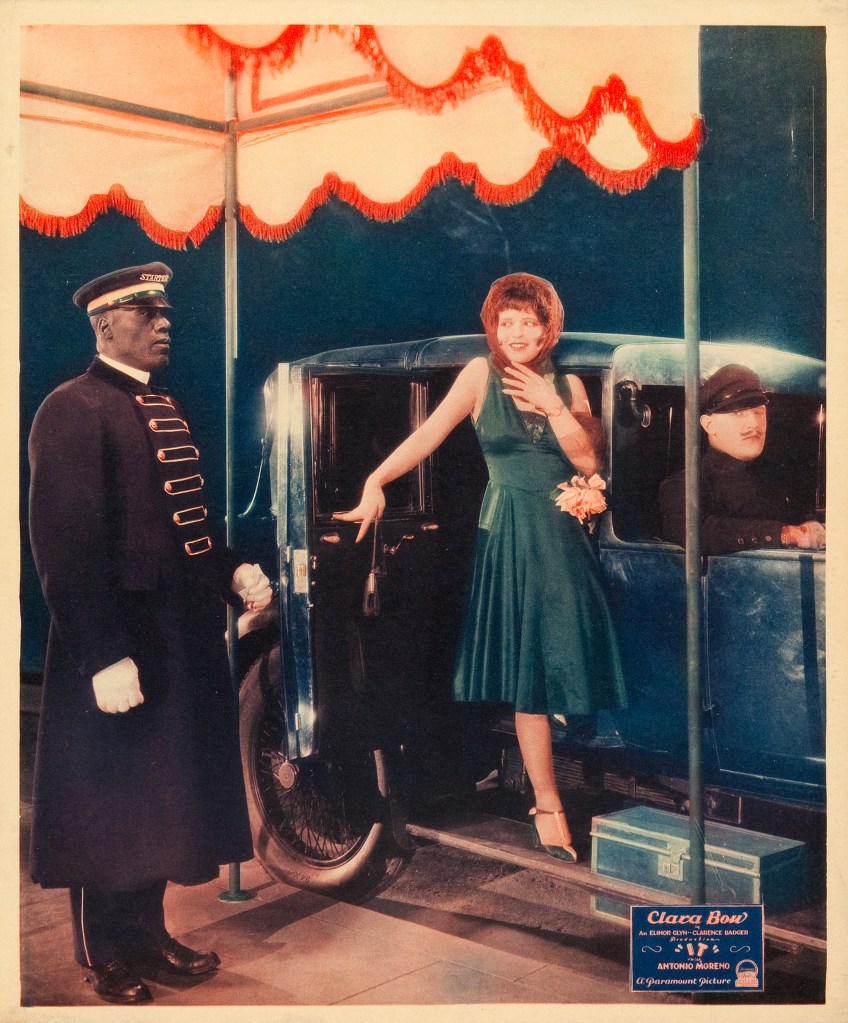
The limits of the modern woman
The complication that interrupts Betty Lou’s romance has little to do with flirtation.
Her roommate Molly is an unmarried mother struggling to care for her baby. When welfare workers threaten to remove the child, Betty Lou intervenes, claiming to be the mother herself and using her employment as evidence that she can provide support.
The action is compassionate and courageous. It also places her reputation in immediate danger.
A newspaper reporter witnesses the incident, and the resulting misunderstanding reaches Cyrus. Believing Betty Lou to be an unmarried mother, he changes his attitude towards her. Her sexual attractiveness, previously so appealing, has suddenly become morally suspect.
He offers her the position of mistress rather than wife. Betty Lou indignantly refuses.
Here the comedy exposes a familiar double standard. A wealthy man can pursue a working woman without necessarily endangering his position. For her, the suggestion of sexual experience outside marriage threatens the possibility of respectable advancement.
The film’s sympathetic treatment of Betty Lou depends partly on the audience knowing that she has done nothing conventionally improper. Her friend Molly, whose circumstances are more difficult, cannot escape the consequences of social judgement so easily.
Film historian Christina Burr has examined this contradiction in Bow’s screen image: the flapper could embody new forms of female freedom while remaining subject to established expectations of innocence and respectability.
Betty Lou’s response to Cyrus is revealing. Furious at his treatment of her, she leaves her job and resolves to make him fall in love with her again, only to reject his proposal. When she succeeds, she carries out her threat, laughing in his face. Her triumph is brief, and she soon regrets having hurt him.
The final scenes take place aboard Cyrus’s yacht, where a collision sends Betty Lou and Adela into the water. Betty Lou helps save her rival before swimming to safety. Cyrus follows her, and the couple finally kiss while clinging to the yacht’s raised anchor.
The ending leaves their marriage to the imagination, but its romantic direction is clear. Betty Lou has won the wealthy man without surrendering her capacity to act independently. Molly’s circumstances, however, remain a reminder of how differently society treats women whose lives fail to conform to respectable expectations.
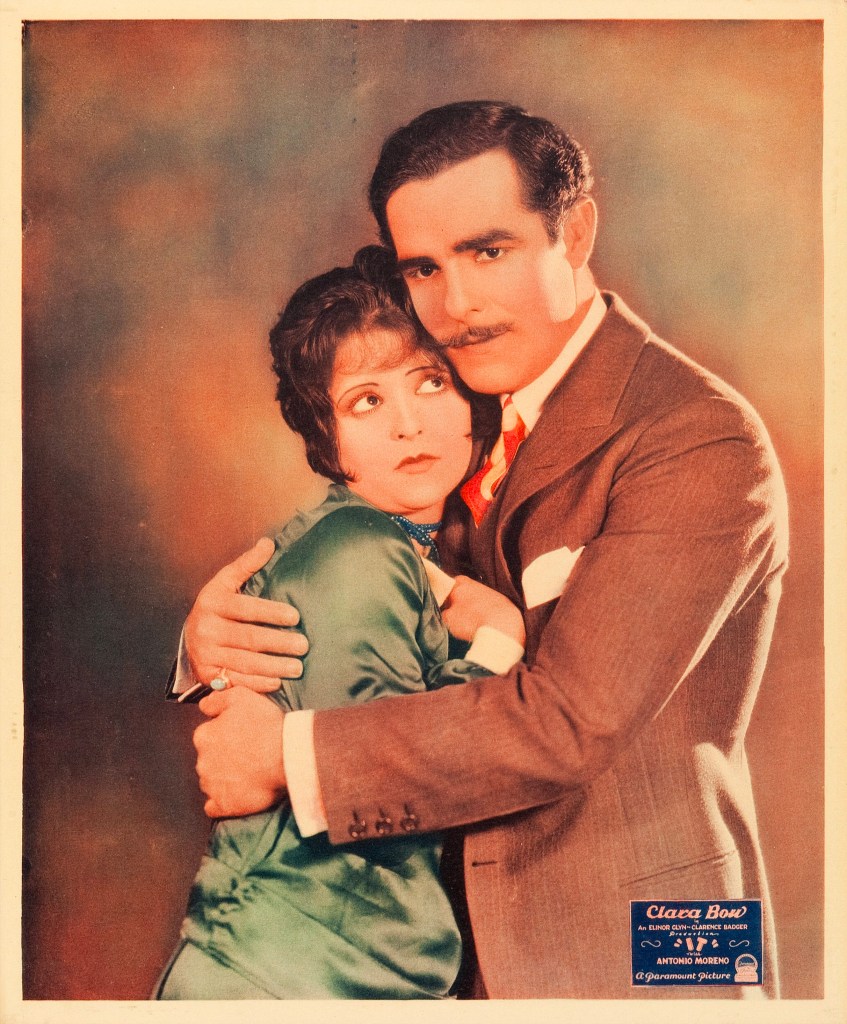
Hollywood creates a celebrity
Clara Bow’s own experience complicates the film further.
Born in Brooklyn in 1905, Bow grew up in poverty and entered the motion-picture industry after winning a magazine competition in 1921. Her career became one of the most remarkable examples of a young film enthusiast entering the world she had previously admired from the audience.
As the Library of Congress documents in its Clara Bow research guide, she became one of the defining personalities of American silent cinema.
Her appeal was bound up with the perception that she was unusually genuine. Unlike stars whose images depended upon carefully cultivated refinement, Bow appeared spontaneous, energetic and untroubled by convention.
The industry enthusiastically marketed those qualities.
Fan magazines published accounts of her clothes, relationships, habits and personal circumstances. Readers were invited to imitate her appearance and to believe that they knew the woman behind the screen.
Her famous red hair offers an illuminating example. Audiences watching her black-and-white films could not see its colour, yet magazine descriptions made it a defining feature of her appearance. Fans could purchase the dyes and cosmetics that promised to bring them closer to her image.
The term “It Girl” was particularly useful because it made celebrity appear to depend upon an indefinable personal quality rather than the organised work of studios, photographers, publicity departments and journalists.
The irony was that Bow’s supposedly effortless attraction required considerable commercial effort to maintain.
And the same publicity that celebrated her independence could turn against her.
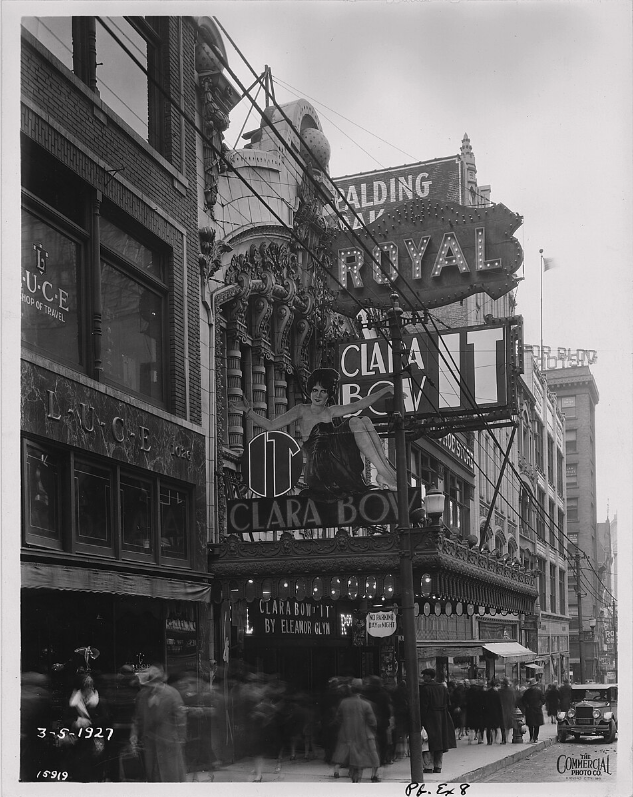
U.S. National Archives and Records Administration
Her romantic relationships became subjects of sensational reporting. Behaviour that might have been tolerated in a male star was treated as evidence of moral irresponsibility in Bow. The freedom marketed through her screen persona was subjected to much harsher judgement when associated with her private life.
The arrival of sound created additional pressures, although the familiar claim that Bow’s Brooklyn accent destroyed her career is misleading. Her first talking picture, The Wild Party (1929), directed by Dorothy Arzner, was commercially successful. Audiences accepted her voice, and she continued making successful sound films.
The transition demanded different working methods, however, while the pressures of studio employment and relentless publicity became increasingly difficult. After leaving Paramount, Bow made two further films for Fox before retiring in 1933, aged twenty-eight.
The public continued to remember the “It Girl,” even as the actress herself left Hollywood.
In 2001, It was selected for preservation in the United States National Film Registry, recognising its cultural and historical significance.
Its importance lies partly in how effectively it brings together the cinema, fashionable consumption and the developing culture of celebrity. A novelist’s theory of attraction became a magazine sensation, a film title, a publicity campaign and eventually a label that could be transferred to successive generations of fashionable young women.
Nearly a century later, “It Girl” remains a convenient expression for someone whose appeal seems impossible to explain. Its continued popularity suggests how readily celebrity is understood as a mysterious personal gift, even when the machinery producing it is plainly visible.
Elinor Glyn had insisted that “It” was unconscious. Yet Betty Lou spends much of the film carefully considering how she is seen. She cuts her dress, copies a corsage, engineers an introduction and knows when a kiss must be refused. Bow makes all this calculation look spontaneous, which may be the most persuasive demonstration of the elusive quality Glyn was trying to define.
The film is in the public domain. You can watch it in its entirety here:
Cover image: Lobby card for the film “It” (1927), Image in the public domain.
All images in this feature are in the public domain.
