From sculptural ceramics to experimental lighting and a new collection in metal, Brooklyn-based designer Virginia Sin has spent nearly two decades reconsidering the objects we live with. Her work suggests that even the most ordinary domestic necessities deserve serious design attention.
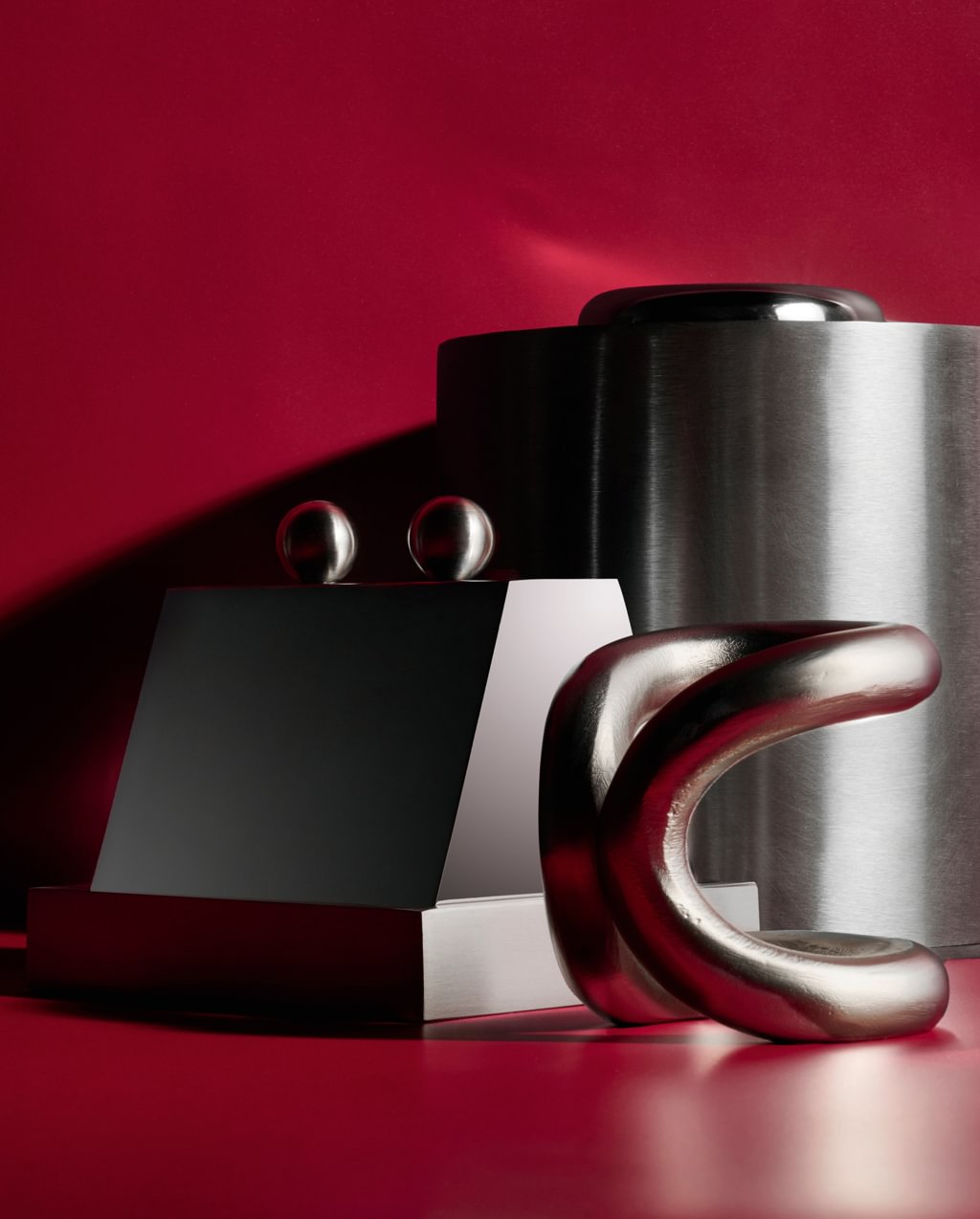
A butter dish is not generally the object through which a designer announces a significant change of direction. Yet this October, Brooklyn-based design studio SIN introduced Indulgence, a stainless steel butter dish with a domed lid, contrasting brushed and polished surfaces, and an almost architectural presence.
It belongs to Ritual, a collection of six domestic objects that marks founder Virginia Sin’s first sustained exploration of metal after nearly twenty years working primarily with ceramics.
The collection includes a tray, storage box, waste bin, tissue cover and toothbrush holder. Their functions are resolutely ordinary; their forms are not. Each object has been considered as a small piece of sculpture, although one intended to be touched, handled and used repeatedly.
It is a useful introduction to Sin’s wider practice, which operates in the increasingly interesting territory between functional design and collectible objects. She has developed a distinctive sculptural vocabulary without abandoning the practical requirements of everyday life.
From Advertising to Clay
Virginia Sin moved from Los Angeles to New York in 2006, establishing her independent design practice the following year while pursuing a career in advertising.
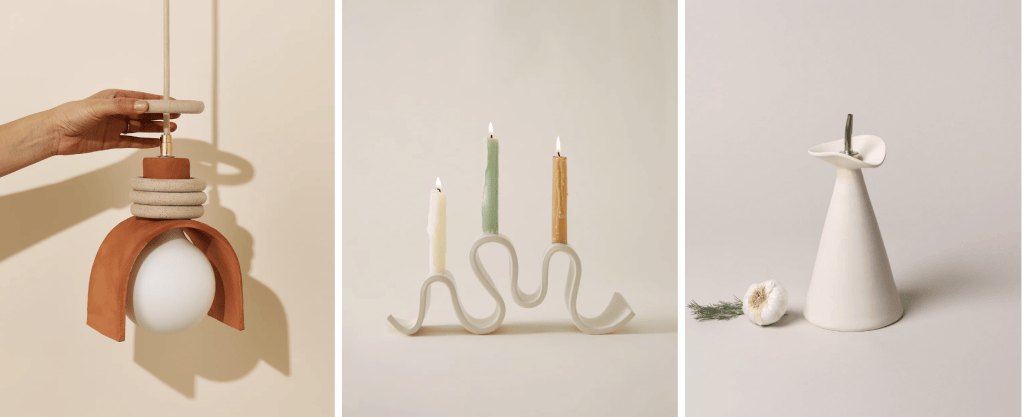
Her earliest work demonstrated an interest in transforming familiar objects through unexpected materials. The Porcelain Paper Plate, developed in 2007, reproduced the disposable paper plate in ceramic, retaining its recognisable shape while fundamentally changing its material character.
The original versions incorporated recycled paper into a porcelain mixture, an experiment that earned recognition in a Design Within Reach competition. The plates were subsequently used at Eleven Madison Park in New York, and in 2017 the design entered the collection of the New-York Historical Society.
It was a clever inversion of conventional product design. An object ordinarily intended to be thrown away became something durable, while the visual language of disposability remained intact.
For more than a decade, Sin developed the business alongside her advertising career, working evenings and weekends in Brooklyn studios. In 2016 she committed herself to SIN full-time.
The transition was important, allowing her to expand a personal ceramic practice into a design and manufacturing business. Today the studio operates from Brooklyn’s Navy Yard, where a team of ceramicists produces the company’s hand-built lighting and homewares.
Its expansion has not diminished the significance of the hand in the making process. Each ceramic piece is individually formed, dried, fired and finished, with the small variations inherent in handmade production treated as part of the design rather than imperfections to be eliminated.
Sculpture That Earns Its Place
The distinctive character of SIN’s ceramics emerged through experiments with coiling, one of the oldest ceramic techniques.
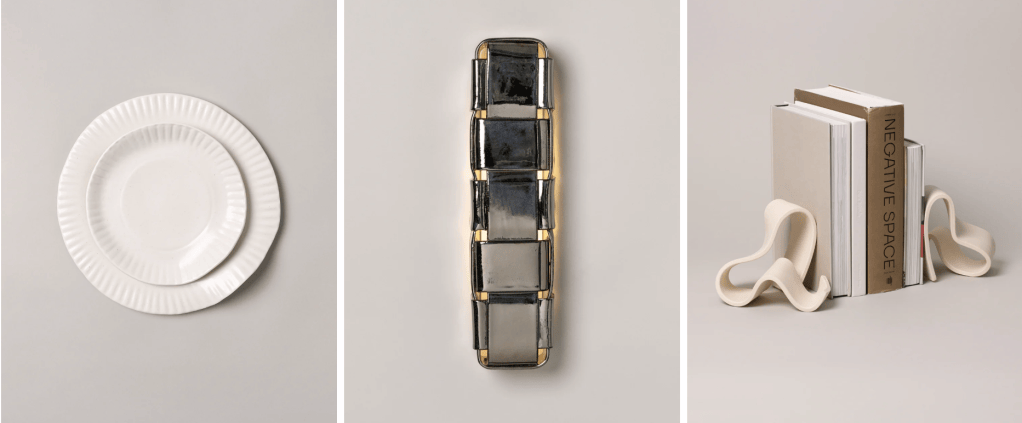
In 2015, after receiving a clay extruder as a gift, Sin began exploring the possibilities of long, continuous lengths of clay. These experiments produced the studio’s Prong Fruit Bowl, an open framework of looping ceramic forms that allows air to circulate around its contents.
The design is almost diagrammatic. Rather than constructing a conventional solid vessel, Sin uses a series of connected curves to suggest the necessary supporting structure.
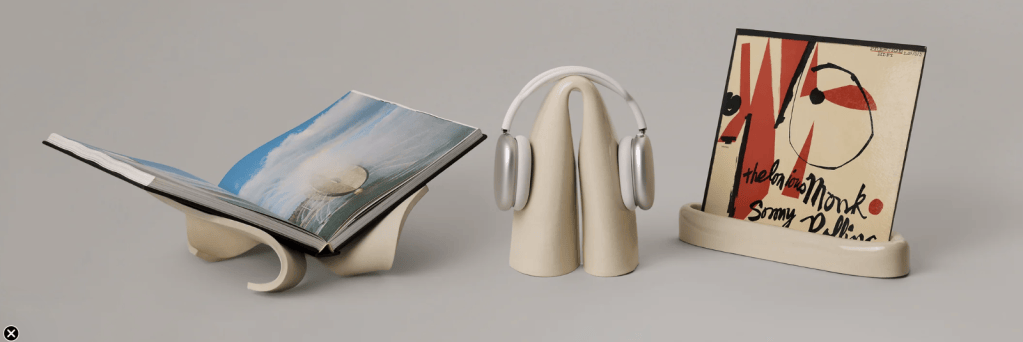
Elsewhere, the Fettu Bookends resemble lengths of ribbon or soft pasta transformed into self-supporting ceramic sculptures, while the Lumbra Book Stand uses a continuous ceramic coil to support a book or tablet.
These designs invite comparison with the organic modernist tradition, particularly the willingness of designers such as Isamu Noguchi to move between sculpture, furniture and functional objects.
But Sin’s work is generally less concerned with monumental expression than with the domestic encounter. The question is not merely whether a ceramic form is visually appealing, but whether it can hold a book, support a candle or accommodate fruit without surrendering its sculptural character.
This produces an interesting tension between expressive freedom and practical constraint. The object’s usefulness imposes a discipline upon its form.
When Clay Becomes Light
SIN’s development into architectural lighting has brought a greater technical and spatial ambition to its work.
In 2025, the studio introduced three important lighting directions: OBEL, drawing on the geometry of ancient Egyptian obelisks; STRIA, inspired by weaving; and an expansion of GAMI, informed by Japanese origami.
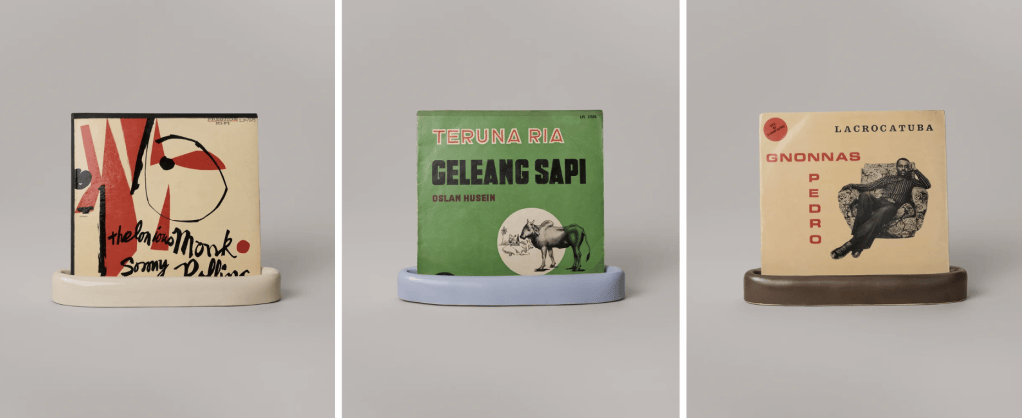
The GAMI fixtures are particularly accomplished. Thin sheets of clay are manipulated into folds that appear almost weightless despite the substantial nature of the material.
The resulting pendants, sconces and table lamps preserve the impression of paper caught in motion, with light illuminating their curved interiors and deepening the shadows between folds.
STRIA takes a different approach. Its ceramic strips are individually placed to construct lattice-like frameworks, creating a rhythmic interaction between solid material, empty space and illumination.
Both collections demonstrate an understanding of lighting as something more complex than a decorative fitting containing an electrical source. The ceramic structure determines how light travels, how shadows develop and how the surrounding architecture is perceived.
In 2026, this investigation continued with FIELD, a modular lighting system that combines ceramic backplates, diffusers and hardware in 120 possible configurations.
Rather than developing a succession of unrelated silhouettes, FIELD examines how variations in colour, finish and translucency alter a consistent geometric form.
The approach is notably architectural, concerned with the atmosphere created by illumination rather than the independent appearance of the fixture.
A New Material Language
The arrival of Ritual in October 2026 represents a significant moment in SIN’s development.
Its objects are fabricated in stainless steel and aluminium, materials that demand different processes and impose different limitations from clay. The collection is hand-formed and hand-welded by specialist metal artisans, with carefully differentiated polished and brushed surfaces.
The six pieces are organised around the ideas of indulgence, gathering, keeping, release, comfort and practice.
The Indulgence Butter Dish draws upon the familiar shape of a serving cloche. The Gathering Tray uses a recessed brushed-steel centre within a polished surrounding surface, while the Keeping Lidded Box explores the relationship between storage and display.
The most revealing piece may be Practice, an aluminium toothbrush holder whose cantilevered structure and open coil allow water to drain naturally. Its form recalls the studio’s earlier ceramic language, but the new material permits a finer, more precise geometry.
The collection does not simply reproduce ceramic objects in a more industrial material. It investigates whether SIN’s established ideas about touch, usefulness and sculptural form remain convincing when translated into metal.
The result is more restrained and geometrically exact than much of the earlier work, although the underlying interest in everyday behaviour remains evident.
Sin has described clay as the material through which the studio developed its design language. Metal now provides an opportunity to test the limits of that language.
The Importance of Everyday Use
What distinguishes SIN from much contemporary decorative design is its sustained interest in actions that receive very little attention: placing a book on a stand, setting out breakfast, storing small possessions or switching on a lamp.
These actions are too familiar to appear significant, yet they constitute much of our experience of domestic life.
In a June 2026 interview, Sin discussed the emotional importance of objects that acquire meaning through repeated use, including the possibility that well-made contemporary pieces might eventually become family heirlooms.
It is an ambition worth examining. A domestic object becomes valuable over time through qualities that cannot be guaranteed by its designer: durability, usefulness, familiarity and the associations acquired through living with it.
SIN’s work attempts to create the conditions for that attachment.
The objects are deliberately expressive, occasionally playful and sometimes considerably more elaborate than their functions require. Yet they retain a practical purpose that distinguishes them from sculpture intended exclusively for display.
With Ritual, Virginia Sin has extended this philosophy into a new material territory. The significance of the collection lies less in the introduction of stainless steel than in the continuity of the questions behind it.
How much consideration should be given to a butter dish, a lamp or a toothbrush holder? SIN’s answer, developed over nearly twenty years, is that the things we use most frequently may deserve the greatest attention.
All images courtesy of Virginia Sin’s website.

