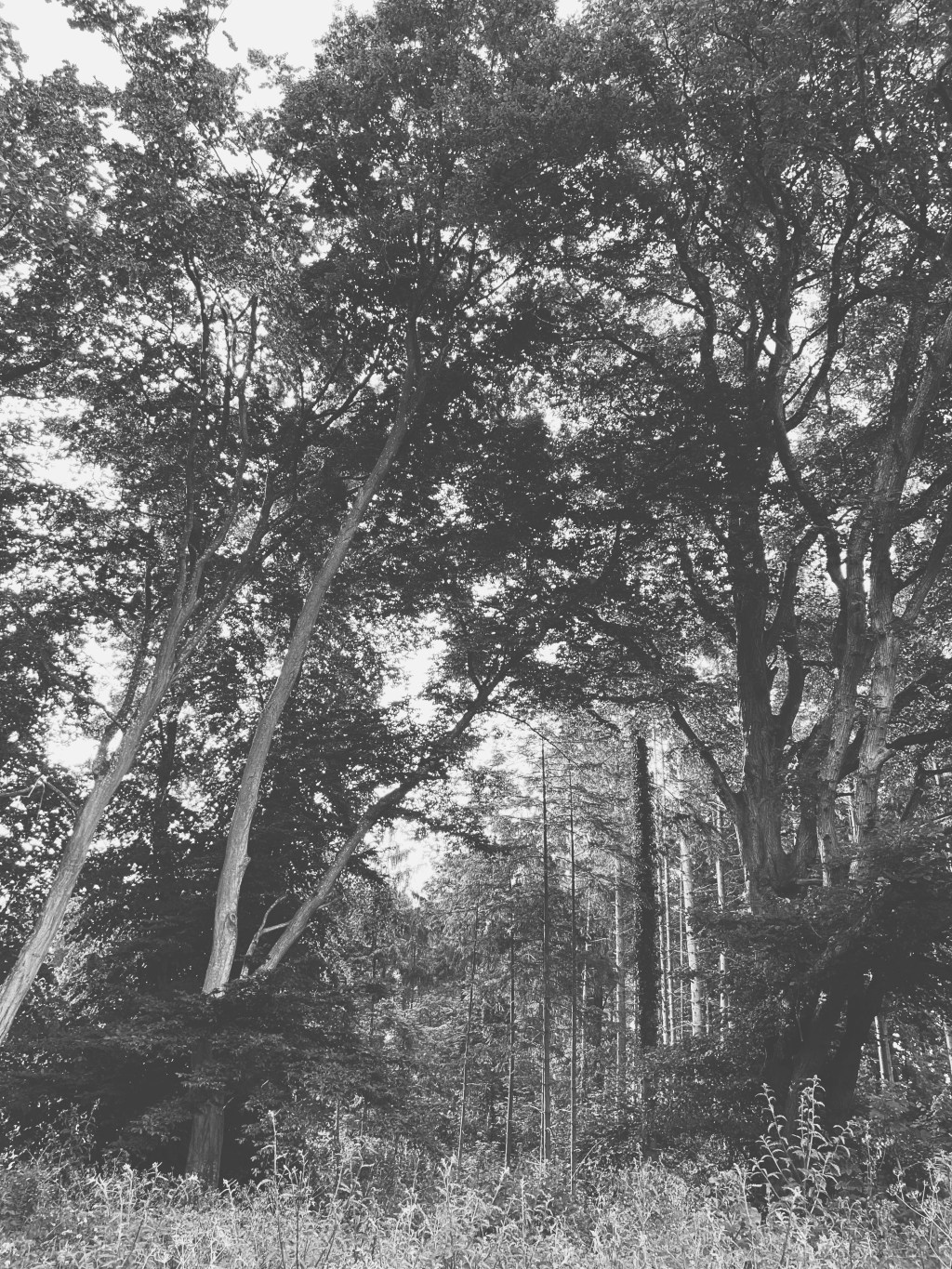
From the writings of Aya Kōda to the psychology of attachment and the biology of forests, an exploration of the extraordinary relationships human beings develop with trees.
In an essay called Poplars, the Japanese writer Aya Kōda describes encountering a cypress with a rectangular opening cut into its trunk. The opening appeared to have been made to help transport construction materials up a slope. Resin was emerging from the exposed wood, and Kōda found herself distressed by what had been done to the tree. She imagined the resin as tears, responding to its injury with genuine sorrow.
The episode appears in Tree, a collection of Kōda’s essays first published in Japanese in 1992, two years after her death, and translated into English by Charlotte Goff in 2026. Throughout the book, she approaches trees as individual beings whose lives merit sustained attention. Their injuries disturb her, their peculiarities fascinate her, and she travels considerable distances to examine particular specimens.
Her response to the wounded cypress raises an intriguing question for psychology and philosophy. Trees possess no recognisable facial expressions, and there is no convincing evidence that they experience emotions as animals do. Nevertheless, people develop profound attachments to them, sometimes describing individual trees as friends or experiencing their destruction as a personal loss.
The psychology of these relationships is an emerging subject of scientific research. Trees are particularly interesting because they occupy familiar places for decades or centuries, changing through the seasons while undergoing more substantial alterations over timescales that often exceed a human life. We can become intimately acquainted with their appearance while knowing remarkably little about the biological processes taking place beneath their bark.
The Trees We Become Attached To
In 2024, a group of Finnish researchers published a study in the journal People and Nature with the unusually direct title Do You Have a Tree Friend?.
The researchers surveyed 1,758 people about their relationships with trees, analysing 1,659 responses that identified a particular favourite. Twenty-three per cent reported a special relationship extending over several decades, while another 22 per cent described a relationship lasting their entire lifetime.
The trees themselves varied considerably. Some were exceptionally old or large, while others grew in gardens, near former homes or in familiar holiday landscapes. Most of the selected living trees stood alone rather than as part of a forest.
When asked what made their chosen tree special, respondents frequently mentioned its location, age, branches, trunk shape or bark. The emotional associations were revealing: 61 per cent identified joy, 50 per cent admiration, and 49 per cent a feeling that the tree represented something greater than themselves.
Some respondents described turning to a particular tree for strength or regarding it as a companion with which they could share their concerns.
The researchers distinguished between three principal kinds of relationship. Nurturing relationships generally developed around trees that people had planted or cared for themselves. Nostalgic relationships centred on trees associated with earlier periods of life, sometimes continuing long after regular contact had ceased. Admiring relationships were often directed towards impressive old trees whose physical characteristics inspired wonder.
The study was based on a self-selected sample of people already interested in trees, so its findings cannot be taken as representative of the Finnish population. It nevertheless provides evidence that individual trees can become objects of sustained emotional investment.
The researchers also asked how participants would respond if someone proposed cutting down their favourite tree. Almost a third indicated that they would try to prevent the felling by any means available, while others expressed willingness to organise or participate in collective opposition.
A 2025 study published in Ambio, drawing on 158 respondents in the Netherlands, examined similar relationships through the concept of affordances: the possibilities for action offered by an object or environment. A tree might provide somewhere to sit, something to climb, an organism to care for or simply a familiar presence to observe.
The researchers identified nostalgic, nurturing and empowering relationships. Their analysis suggests that attachment develops partly through the opportunities people find in their encounters with trees.
This helps explain why an ordinary tree may acquire enormous personal importance. Its significance need not depend upon botanical rarity or exceptional beauty. It may simply have been present throughout a substantial part of someone’s life.
The question of whether such attachments reflect something innate in human nature has occupied researchers for decades.
In 1984, the American biologist Edward O. Wilson published Biophilia, proposing that human beings possess an evolved tendency to attend to other living organisms. He argued that our long evolutionary dependence on natural environments may have left us with psychological dispositions that continue to influence our preferences.
The hypothesis became influential in environmental psychology and architecture, helping to popularise the idea that contact with living systems is important to human wellbeing.
Its evolutionary claims, however, remain difficult to demonstrate. A 2023 critical review by Vanessa Woods and Melinda Knuth found that empirical support for Wilson’s original hypothesis was inconclusive. The researchers proposed investigating biophilia as a temperament trait, allowing for substantial individual differences in attraction to biodiversity.
The Finnish findings are consistent with this complexity. People attach themselves to trees through different experiences, and those relationships can change over time. Someone who once climbed a tree as a child may later associate it with family history, while another person may come to admire its physical form after learning something about its age.
Attention, Awe and the Human Mind
The effects of natural surroundings on human cognition are better understood than the evolutionary origins of our affection for them.
Psychologist Stephen Kaplan’s Attention Restoration Theory, developed with Rachel Kaplan, proposes that certain natural environments help relieve the fatigue associated with sustained concentration.
Kaplan described the quality of attention encouraged by such environments as soft fascination. Moving leaves, patterns of light and other small changes in the landscape can occupy our attention without demanding continuous conscious effort.
A 2025 meta-analysis in the Journal of Environmental Psychology, examining 80 studies, found that exposure to natural environments produced small average improvements in cognitive performance compared with non-natural settings. The most reliable benefits concerned working memory and attentional control, although results varied considerably between studies.
These findings provide a plausible explanation for the mental relief many people experience among trees. They cannot fully account for the affection someone might develop towards a particular oak or cedar.
Another relevant field of research concerns awe.
In experiments published in 2015, psychologists Paul Piff and his colleagues investigated how experiences of awe influence people’s sense of self and their behaviour towards others. In one experiment, participants spent a brief period looking up at towering trees.
Compared with a control group, those exposed to the trees subsequently demonstrated greater helping behaviour and a reduced sense of entitlement. The researchers proposed that awe can temporarily diminish the perceived importance of the individual self.
The experiment concerned a short-term psychological response, and it would be premature to infer lasting changes in personality or behaviour. Its relevance lies in the distinctive experience produced by an encounter with something that exceeds ordinary human scale.
An ancient tree presents several such challenges to perception. Its dimensions may be physically overwhelming, while its age requires an imaginative effort of a different kind. A tree that has survived for a thousand years has been growing throughout the lives of generations of people who are now gone.
Kōda was particularly sensitive to these differences in duration.
Born in 1904, she began writing professionally after the death of her father, the novelist Kōda Rohan, in 1947. In later life, she became fascinated by ancient cedars whose trunks had developed enormous distortions over centuries of growth. She imagined the physical effort involved in surviving for so long, finding evidence of hardship in their irregular forms.
Her observations frequently move between admiration and discomfort. An ancient tree may be magnificent, but its appearance can reveal a history of injury and difficult growing conditions.
Kōda worked within the Japanese literary tradition of zuihitsu, a loosely structured form of personal essay in which observations lead into recollections and associations. Her encounters with particular trees suggest questions that extend into human experience, although she rarely loses sight of the organism that first attracted her attention.
Her approach has a contemporary cinematic counterpart.
In Wim Wenders’s Perfect Days (2023), the Tokyo public-toilet cleaner Hirayama, played by Kōji Yakusho, repeatedly photographs sunlight passing through the leaves of trees. He collects the small black-and-white photographs and carefully stores them at home. In another scene, he discovers Kōda’s book in a second-hand shop.
The film’s original working title was Komorebi, the Japanese word describing sunlight filtering through foliage. Wenders later explained that the title changed during filming after he and co-writer Takuma Takasaki heard Lou Reed’s Perfect Day.
Hirayama’s photographs record fleeting variations of light, while Kōda’s writing attends to the more enduring physical characteristics of individual trees. Both are concerned with the experience made possible by repeated observation.
Research into nature connectedness provides an interesting parallel. In a 2017 study published in PLOS ONE, Ryan Lumber, Miles Richardson and David Sheffield investigated experiences associated with stronger psychological connections to nature.
Their findings suggested that sensory contact, emotional engagement, personal meaning and compassion were important predictors of connectedness. Activities primarily concerned with acquiring factual knowledge did not show the same relationship.
Botanical knowledge can certainly enrich an encounter with a tree. The research suggests, however, that learning to identify a species does not necessarily produce the emotional response that comes from sustained personal attention.
What a Tree Actually Experiences
Kōda’s sympathy for the injured cypress raises a difficult scientific question. What can we reasonably say about the experience of a tree?
Plants possess sophisticated systems for detecting and responding to their surroundings. Trees respond to gravity, light, temperature, moisture, mechanical damage and chemical signals. Their growth reflects changing conditions, sometimes producing striking structural adaptations.
The resin emerging from Kōda’s cypress is part of a defensive system found in many conifers. Resin can help protect exposed tissues and resist attacks by insects and pathogens. Its production involves specialised structures and biochemical processes, as examined in research into conifer resin canals.
The response is biologically significant, but resin production does not establish that a tree experiences suffering. Kōda’s comparison with tears expresses her own reaction to the injury.
The distinction becomes important when discussing the increasingly popular idea that plants possess consciousness.
In a 2019 review in Trends in Plant Science, Lincoln Taiz and colleagues challenged claims that plants experience emotions or pain in ways comparable to animals. They argued that the evidence for plant consciousness was highly problematic, particularly given the absence of the complex nervous systems associated with conscious experience in animals.
Some researchers disagree with such a restrictive understanding of plant cognition, but evidence that plants respond to stimuli should not be confused with evidence of subjective experience.
There is already much to discover without attributing human psychology to trees.
Consider the shape of a leaning trunk. Trees can develop specialised tissues known as reaction wood, which help correct their orientation after displacement. In many broadleaf species, tension wood generates forces that pull the trunk towards a more upright position. Conifers generally produce compression wood, which helps push the stem upwards.
The mechanisms are examined in a 2016 review by Andrew Groover in New Phytologist. They reveal how the irregular forms admired in ancient trees can result from accumulated physical responses to gravity and environmental disturbance.
A twisted trunk may contain evidence of how a tree has continued to grow under difficult conditions. This gives a precise biological dimension to Kōda’s fascination with the deformed cedars she encountered.
Research has also revealed elaborate relationships between trees and other organisms.
Many form associations with mycorrhizal fungi that assist in obtaining nutrients. Some fungal networks can connect the roots of different plants, and experiments have demonstrated transfers of certain resources under particular conditions.
These discoveries have inspired popular accounts of forests as communicating communities, sometimes described through the expression wood-wide web.
The scientific evidence is more complicated.
In a 2023 paper in Nature Ecology & Evolution, Justine Karst, Melanie Jones and Jason Hoeksema examined claims about common mycorrhizal networks. They found insufficient evidence to generalise about their widespread ecological effects and challenged the popular suggestion that mature trees preferentially supply their offspring with resources and defensive signals through these networks.
The researchers were particularly concerned about preliminary findings being repeated as established facts, both in scientific literature and popular writing.
Describing trees as communicating, cooperating or caring for their young makes their biology immediately relatable to human experience. Yet such language can conceal important distinctions between physiological processes and intentional behaviour.
Kōda’s writing is interesting precisely because her descriptions are openly personal. Their emotional force does not depend upon proving that a tree possesses human feelings.
Indeed, one of the less familiar aspects of her biography complicates any attempt to portray her simply as a sentimental admirer of forests.
During the 1970s, Kōda became involved in the reconstruction of the historic three-storey pagoda at Hōrinji temple in Nara, helping to raise funds for the project. The wooden pagoda, destroyed by fire in 1944, was rebuilt in 1975 under the direction of master carpenter Tsunekazu Nishioka.
Kōda’s interest in wooden architecture developed alongside her observations of living trees. In Tree, she speaks with timber specialists and carpenters, encountering attitudes very different from her own. A camphor tree she admires may be considered unsuitable for timber. Another carpenter complains about the practical nuisance of camphor leaves accumulating on roofs.
These encounters interest Kōda because they reveal how differently the same organism can be understood. A forester recognises qualities that escape a casual observer, while a carpenter’s understanding of timber involves knowledge of wood that continues to expand and contract in response to moisture long after the tree has been felled.
Her relationship with trees encompasses their lives as growing organisms and their material presence in the human world.
Trees, Kinship and Responsibility
The scientific study of human attachment to trees is relatively recent, but relationships founded on obligations towards particular species and forests have existed within societies for centuries.
In Māori thought, trees are situated within whakapapa, the genealogical relationships connecting human beings with the wider natural world. As explained by Te Ara, the Encyclopedia of New Zealand, trees descend from Tāne, a child of Ranginui and Papatūānuku.
These genealogies establish relationships through which forests are understood as part of an interconnected world of ancestry and responsibility. Such understandings have their own intellectual foundations and cannot adequately be described as early versions of contemporary ecology.
In the Khasi Hills of Meghalaya in northeastern India, the protection of sacred forests is maintained through religious traditions and customary governance.
At Mawphlang Sacred Grove, local restrictions prohibit visitors from removing objects from the forest, including fallen branches and stones. The rules arise from beliefs concerning the sacred character of the site and the responsibilities of those who enter it.
The Meghalaya Biodiversity Board recognises the conservation importance of sacred groves, many of which provide refuges for rare and endangered species. Their preservation demonstrates how cultural obligations can have substantial ecological consequences.
A particularly striking historical example comes from Rajasthan.
In 1730, members of the Bishnoi community resisted an attempt to cut down khejri trees at Khejarli. According to the historical account, Amrita Devi Bishnoi and her daughters were among 363 people killed while protecting the trees.
The event is examined in research published by the Environment & Society Portal. The Bishnoi religious tradition, originating in the fifteenth century with the teachings of Guru Jambheshwar, includes obligations to protect living trees and show compassion towards other organisms.
The khejri tree (Prosopis cineraria) is especially important in the arid environments of the Thar Desert, where it provides fodder, supports agriculture and survives conditions that many other species cannot tolerate. Its cultural significance is closely connected with its ecological importance.
The history of Khejarli reveals an understanding of trees in which protection is a religious and communal responsibility, even when that responsibility involves considerable personal sacrifice.
These traditions differ profoundly in their histories and beliefs. What makes them relevant to the psychological study of attachment is the way relationships with trees can influence behaviour.
The Finnish researchers found that many respondents were prepared to oppose the destruction of their favourite tree, sometimes through organised action. Emotional attachment was associated with a willingness to intervene, although the study could not establish how people would behave in an actual confrontation.
People may value an individual tree intensely while remaining indifferent to the management of a larger forest. Conversely, ecological protection sometimes requires decisions that are emotionally difficult, including the removal of particular trees to address disease or habitat management.
The Different Time of Trees
Some bristlecone pines in the western United States have survived for nearly five thousand years. Their ages can be established through dendrochronology, the analysis and cross-dating of tree rings.
These rings record successive growing seasons, allowing researchers to reconstruct chronologies and investigate past environmental conditions. The US National Institute of Standards and Technology explains how ring patterns can be compared across specimens to establish age and historical sequences.
A tree’s physical structure is therefore partly a record of the conditions through which it has lived. Changes in growth may reveal periods of drought or environmental disturbance, while wounds and unusual structural developments can preserve evidence of earlier events.
Human beings encounter these records at a different temporal scale. A tree planted by grandparents may survive long enough to become familiar to grandchildren who never knew them. In cities, mature trees can remain standing through successive changes in architecture and land use.
The emotional effects of losing such trees have begun to attract closer scientific attention.
A 2026 study in Urban Forestry & Urban Greening examined the effects of long-term tree-canopy decline in the Puget Sound region of Washington State. Researchers compared 14 years of canopy data with survey responses from 1,532 residents and conducted additional qualitative research.
Greater canopy loss was associated with reduced psychological restoration and weaker attachment to place. Respondents described the disappearance of familiar vegetation as changing the sensory qualities of their surroundings and diminishing the character of places they knew.
Interestingly, the study found no corresponding significant relationship between canopy decline and beliefs about environmental governance. Feelings about the loss of trees did not necessarily translate into changes in institutional trust.
This complicates the assumption that emotional connection automatically produces environmental action. Attachment may provide a motive for protection, but practical decisions are shaped by competing interests and political circumstances.
Kōda’s wounded cypress offers a useful final point of reference.
The opening cut into its trunk had apparently been made for a human purpose, while the resin emerging from the exposed wood was part of the tree’s biological response. A botanist could explain the defensive function of the resin, and a carpenter might understand the practical reason for making the cut.
Kōda was troubled by the injury itself. She recognised that people used trees for timber and construction, and her involvement with the reconstruction of Hōrinji’s pagoda had given her a practical understanding of their value as building materials. Yet she remained unusually attentive to the individual tree from which those materials came.
Modern biology can explain how trees respond to damage. Psychology can investigate why such an encounter might move an observer so deeply. Neither can determine how much consideration people ought to give an organism whose experience differs so profoundly from their own.
Kōda approached that question through the examination of particular trees. She studied the extraordinary roots beneath an ageing cherry tree, the deformed trunks of ancient cedars and the exposed wood of the injured cypress, paying close attention to the physical evidence of their lives.
Her writing offers a way of appreciating trees that requires no assumption that they think or feel as we do. Their biology, their age and the conditions under which they survive provide quite enough to occupy a lifetime of observation.
Photography © Birgitte / My World of Interiors

