Two major reissues in 2026 have returned one of the twentieth century’s most unsettling writers to the literary conversation. Anna Kavan’s fiction of psychological captivity, environmental catastrophe and arbitrary power seems remarkably attuned to our present moment.
In September 2026, Pushkin Press published a new edition of Anna Kavan’s I Am Lazarus, a collection of stories about war, mental illness and the machinery of institutional control. It followed the March reissue of Sleep Has His House, her hallucinatory examination of childhood and psychological escape.
The timing is striking. Kavan, who died in 1968, wrote about worlds governed by forces their inhabitants could neither understand nor resist. Her characters inhabit collapsing societies, confront bureaucracies indifferent to suffering and struggle against people who insist that domination is a form of protection.
Today, when environmental instability, displacement and the exercise of institutional power occupy so much of our political consciousness, her work has acquired an uncomfortable immediacy.
But Kavan was never simply a prophet of catastrophe. Her great subject was the psychological experience of living in a world whose apparent order conceals something profoundly irrational.
The Woman Who Invented Herself
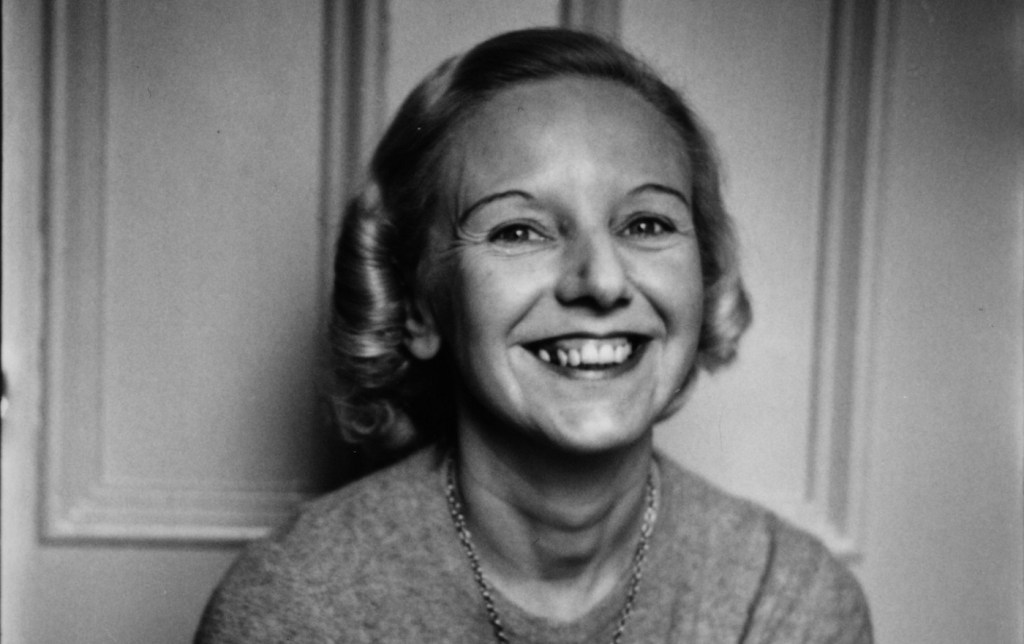
Born Helen Emily Woods in Cannes in 1901, Kavan was the daughter of wealthy British expatriates. Her childhood involved frequent travel, boarding schools and emotional isolation. Her father died by suicide while she was still a child.
At nineteen, she married Donald Ferguson, a railway engineer working in colonial Burma. The marriage proved unhappy, and she eventually returned to England with their son.
Beginning with A Charmed Circle (1929), she published six novels under the name Helen Ferguson. Their apparently conventional domestic settings concealed themes that would dominate her later work: coercion, alienation, unhappy relationships and the difficulty of establishing an independent identity.
Following the breakdown of her second marriage and psychiatric treatment in Switzerland, she adopted the name Anna Kavan, borrowed from the protagonist of Let Me Alone (1930) and A Stranger Still (1935).
Her appearance changed, as did her literary method. The realist narratives of Helen Ferguson gave way to compressed, disorientating fiction in which the distinction between external events and psychological experience frequently disappeared.
This was not simply an attempt to escape an unhappy past. Kavan had discovered a literary language capable of expressing experiences that conventional realism struggled to accommodate.
The Architecture of Fear
Asylum Piece (1940), her first publication under the new name, announced that transformation.
Its interconnected stories describe individuals caught within systems of inexplicable authority. Institutions issue contradictory instructions, accusations arrive without explanation, and those supposedly offering assistance frequently become instruments of persecution.
Kavan’s psychological insight owed something to her own experience of psychiatric hospitals and severe depression. She also lived with a long-standing dependence on heroin.
Yet the tendency to interpret her writing primarily through addiction or mental illness has obscured its political and literary intelligence.
Like Franz Kafka, she understood that power becomes particularly terrifying when its rules cannot be understood. The individual is required to submit to an authority that cannot be questioned, partly because its intentions are never adequately explained.
Her I Am Lazarus (1945) developed these ideas during the Second World War.
In the story “Our City”, a refugee attempts to escape a devastated metropolis, only to encounter an administrative system whose procedures seem almost designed to prevent departure.
It is difficult to read this story in 2026 without considering contemporary displacement. According to UNHCR’s Global Trends report, published in June 2026, 117.8 million people were forcibly displaced worldwide at the end of 2025.
Kavan’s fiction is not a straightforward account of the modern refugee experience. Its relevance lies in something more specific: her understanding of how vulnerability increases when survival depends upon institutions that refuse to recognise individual circumstances.
Ice: The End of the World as We Know It
Kavan’s masterpiece, Ice (1967), is among the strangest novels of the postwar period.
An unnamed narrator travels through a disintegrating world in pursuit of a young woman. Governments collapse, violence becomes commonplace and enormous glaciers gradually swallow the landscape.
The woman, known only as “the girl”, is also pursued by the Warden, a powerful figure whose authority seems almost limitless.
The narrator claims to want to rescue her, yet his fantasies repeatedly involve her suffering and destruction. His apparent opponent gradually comes to resemble another expression of the same possessive impulse.
The resulting novel is simultaneously an environmental apocalypse, a psychological nightmare and a study of domination.
Written during the Cold War, Ice can be understood partly through contemporary fears of nuclear destruction. But its landscape also resonates with twenty-first-century environmental anxiety.
The parallel is not literal. Kavan imagined an advancing frozen world, whereas our climate emergency involves rising global temperatures and disappearing ice. Nevertheless, the novel’s central premise — that the environmental conditions sustaining civilisation might cease to be reliable — has become disturbingly familiar.
The World Meteorological Organization’s report published in March 2026 confirmed that 2015–2025 were the eleven hottest years on record.
For contemporary readers, the terror of Ice may therefore reside less in its specific catastrophe than in its depiction of humanity continuing to pursue power, possession and violence while the physical world disintegrates around it.
Kavan offers no reassuring distinction between personal brutality and collective destruction. Both emerge from the assumption that the world, and the people within it, exist to be controlled.
The Surrealist Imagination
Kavan was also an accomplished painter, and her visual imagination deserves greater attention.
Her fiction frequently describes rooms, landscapes and architectural spaces with extraordinary precision, even when their physical arrangements are impossible.
In Sleep Has His House, a young girl retreats from an unhappy domestic environment into an elaborate dream world. Spaces multiply, rooms change position, and the familiar architecture of the home becomes something strange and threatening.
The novel is not merely an account of escapism. It examines the imagination as a territory in which freedom and psychological captivity coexist.
Kavan’s drawings and paintings reveal a related fascination with unstable identities and fractured forms. Her 1966 self-portrait, preserved in the University of Tulsa’s Anna Kavan archive, offers another perspective on the relationship between her visual and literary work.
This combination of disciplined description and extraordinary imagery distinguished her from many experimental contemporaries. Her prose rarely becomes obscure. Instead, the sentences retain their clarity while the reality they describe becomes progressively less dependable.
Why Anna Kavan Matters in 2026
Kavan’s literary reputation has developed slowly, supported by dedicated scholars, publishers and a readership attracted to the unsettling originality of her work.
The publication of Machines in the Head, a selection of her short writing edited by Victoria Walker, helped introduce her wider achievement to new readers. Walker’s subsequent academic study, Anna Kavan: Mid-Century Experimental Fiction, has further challenged the tendency to treat her as an eccentric figure outside the literary mainstream.
The two Pushkin Press reissues of 2026 continue that reassessment.
Kavan belongs within the broader history of modernist experimentation, but her work also speaks directly to contemporary discussions of psychological vulnerability, gendered power, institutional authority and environmental breakdown.
What makes her particularly important is her refusal to separate these questions. The psychological and political are never entirely distinct; nor can the individual be understood independently of the structures governing everyday existence.
Her fiction repeatedly asks what happens when those structures cease to offer protection and instead become sources of danger.
Nearly sixty years after her death, Anna Kavan remains a writer of unusual relevance, not because she predicted the particular crises of our century, but because she understood the human experience of living through a world that no longer makes sense.