Obituary
She Painted to Stay Alive. She Stayed Alive for Ninety-Seven Years.
Yayoi Kusama, 1929–2026. She covered the world in dots because the world was already covered in them and she was the only one honest enough to show it.
By Bergotte · August 27, 2026
Yayoi Kusama · born March 22, 1929, Matsumoto, Japan · died August 14, 2026, Tokyo · aged 97
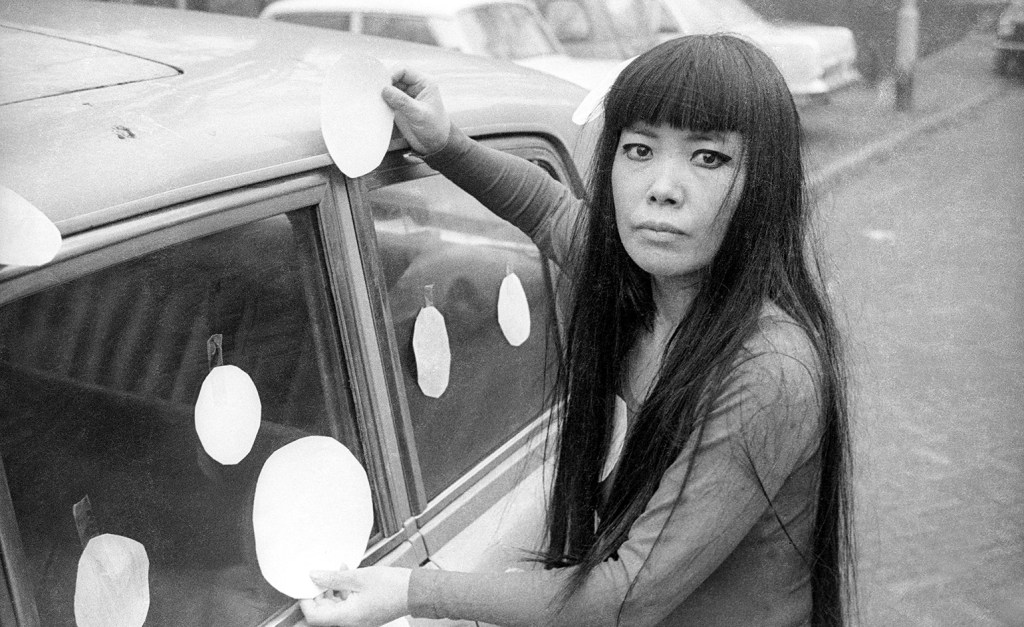
She painted until the end. This is the detail that matters most. Not the auction prices, not the queues outside the Infinity Mirror Rooms, not the Louis Vuitton collaboration or the Lancôme lipsticks or the fact that she became, in her final decades, the most visited living artist in the world — all of those are true, and all of them are secondary to the fact that on the morning of August 14, 2026, Yayoi Kusama was still painting. The Yayoi Kusama Museum confirmed it: she never set aside her brush. She continued to paint until her final days. She was ninety-seven years old, and the hallucinations that had followed her since childhood — the dots multiplying across every surface, the flowers that spoke, the world dissolving into pattern — were still arriving, and she was still doing the only thing that had ever kept them manageable, which was to put them on paper and show them to whoever wanted to look.
The announcement came from her representative, David Zwirner, and from the Yayoi Kusama Museum in Tokyo: she died on August 14 from multiple organ failure at a hospital in the city where she had lived for more than fifty years. The news broke publicly on August 26, twelve days after her death — a delay that feels, given everything she made and everything she endured, entirely appropriate. The world has been catching up with Kusama her entire life. It is still catching up now.
The hallucinations that had followed her since childhood were still arriving, and she was still doing the only thing that had ever kept them manageable — putting them on paper and showing them to whoever wanted to look.
What She Survived
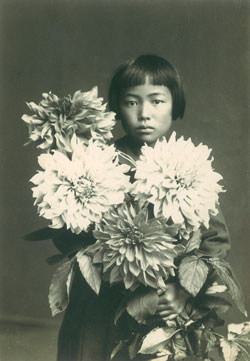
The list is long and it matters. She survived a childhood in a prosperous but deeply unhappy family in Matsumoto, where her mother deployed her as a spy against her father and where the flowers in the garden began, when she was ten years old, to speak. She survived the burning of almost all her early work before she left Japan for New York in 1957, a gesture of rupture that cost her the evidence of her beginnings. She survived New York in the 1960s — the art world’s systematic undervaluation of her work, the routine appropriation of her ideas by artists who were male and therefore more visible, the loneliness and the financial precariousness and the hallucinations that did not stop just because she was in a foreign country producing some of the most original art being made anywhere in the world. She survived her own mind, which was the hardest thing, and the survival required daily effort — the obsessive making, the thousands of hours of repetitive mark-making, the dots accumulating canvas by canvas, year by year, as a practice of self-preservation that was also, incidentally, a practice of genius.
She returned to Japan in 1973 and voluntarily entered a psychiatric institution in Tokyo in 1977, where she lived for the rest of her life — crossing the street each morning to her studio, returning each evening to the institution, the rhythm of the crossing and the working and the returning the structure that held everything else together. She described this arrangement without self-pity and without false cheerfulness. It was what worked. It was what allowed her to continue. She continued for forty-nine more years.
What She Made
The Infinity Net paintings came first — the large canvases covered from edge to edge in obsessive, repeated arc strokes, each arc applied by hand, the surface built up over days and weeks into something that shimmered and receded and would not let the eye rest. They were made in New York in the late 1950s and early 1960s, at scales that no one had attempted — some of them thirty feet long, the repetition becoming, at that scale, something between meditation and endurance. The art world looked at them and saw Abstract Expressionism, which was what the art world was looking for, and missed what they actually were, which was a mind externalising its own experience of the world in the only form that experience could take.
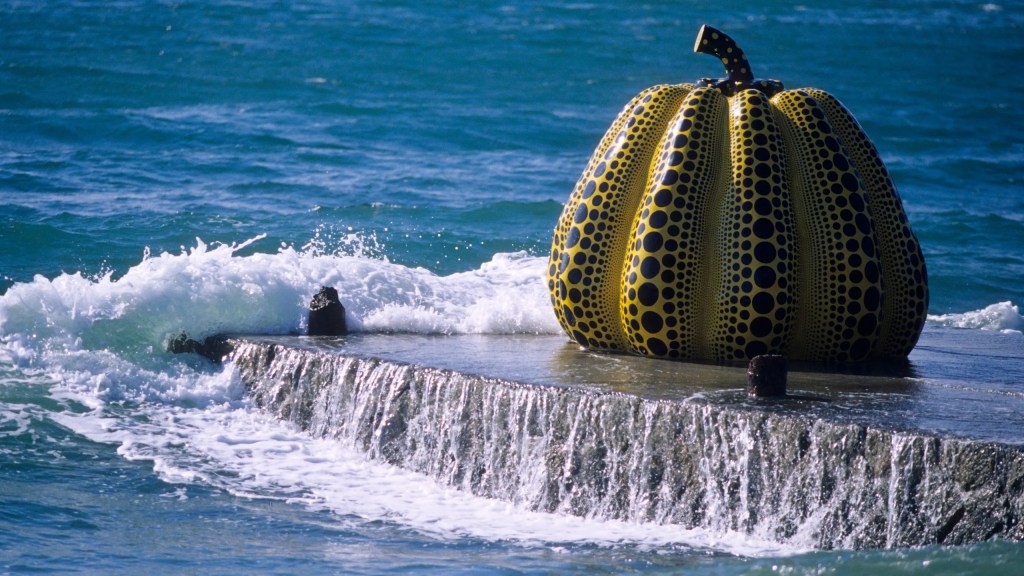
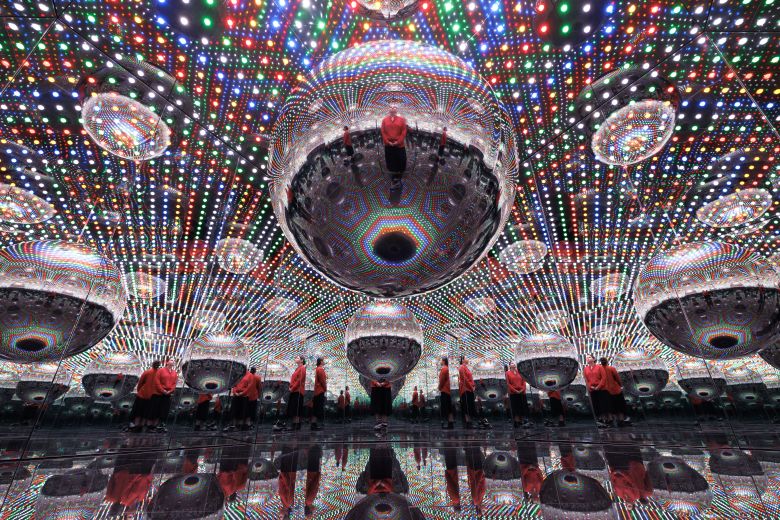
Then the soft sculptures — the accumulations of phallic forms covering furniture and boats and gallery floors, the visual language of sexual anxiety transformed into something that was simultaneously alarming and, at a certain angle, very funny. Then the Infinity Mirror Rooms, beginning in 1965 with Phalli’s Field and continuing for six decades, each room a different version of the same essential experience: the viewer placed inside the hallucination, the mirrors multiplying whatever was inside them into an apparent endlessness, the effect being simultaneously beautiful and slightly terrifying and — once you knew what drove it — something more than either of those things. Then the pumpkins, which she began painting in the 1940s and never stopped, the rounded forms with their polka dot skins become one of the most recognisable images in contemporary art, reproduced everywhere and still, in person, strange.
She described the pumpkin as a comforting, healing presence. After ninety-seven years in which comfort and healing were things she had to fight for daily, she painted them until the end.
She described the pumpkin as a comforting, healing presence — rotund, unglamorous, rooted, possessed of a certain dignity that the art world’s more fashionable subjects did not have. After ninety-seven years in which comfort and healing were things she had to fight for daily, she chose to spend much of her working life painting pumpkins. The choice tells you everything you need to know about the relationship between the work and the life.
What She Said
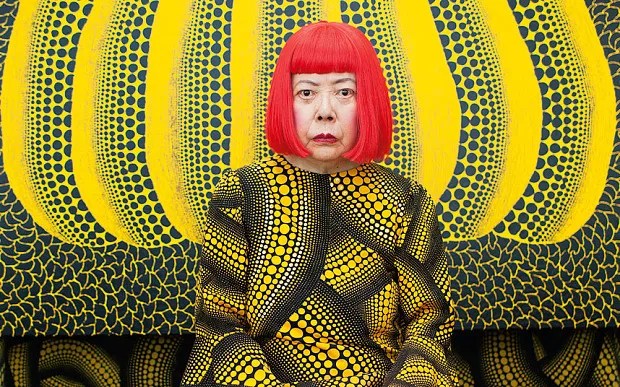
She said: Art saved my life, and through art I saved myself. She said: If it were not for art, I would have killed myself a long time ago. She said: Dots come flying everywhere — on my dress, the floor, things I’m carrying, throughout the house, the ceiling. And I paint them. She said, late in life: As we soar through the heavens, we’ll paint each other with polka dots, lose our egos in timeless eternity. She said these things repeatedly, in interviews and artist statements and in the autobiography she published in 2002, without embarrassment and without the performance of suffering that the art world sometimes requires of its difficult and visionary figures. She said them because they were true, and the truth of them was the whole of the work, and she wanted you to know it.
What She Was Owed
More than she received, and earlier than she received it. The art world of the 1960s looked at a Japanese woman making radical work in New York and saw, at best, a curiosity and at worst, a source. Warhol absorbed her ideas. Others followed. The critical recognition that should have arrived in the 1960s arrived instead in the 1990s, when retrospectives at the Centre Pompidou and the Museum of Modern Art and the Guggenheim Bilbao finally placed her work in the context it had always deserved. By then she was in her sixties. By then the waiting had been long enough that the recognition, when it came, had a slightly corrective quality — the art world acknowledging not just the work but the failure to have seen it sooner.
She took the recognition and continued working. She did not appear to require the recognition in order to work — she had been working without it for decades, and the working had its own logic, its own necessity, entirely independent of what the art world had decided to notice. This is, for an artist, an unusual condition. Most artists need the recognition to sustain the practice, need the feedback loop of attention and response to keep going. Kusama did not need it. She needed to make. The making was for her own survival first and for the world second, and the order of those priorities never changed.
She took the recognition and continued working. She did not appear to require it in order to work — she had been working without it for decades. The making was for her own survival first and for the world second. The order of those priorities never changed.
What She Leaves
The dots. The nets. The pumpkins. The mirror rooms, in their dozens, in institutions across the world, still generating the queues and the photographs and the experience that cannot quite be conveyed by a photograph — the experience of standing inside an apparent infinity and understanding, briefly and viscerally, that the infinity is also a room, that the endlessness has walls, that the person standing at its centre casting reflections in every direction is both dissolving and entirely present.
She leaves the autobiography. She leaves the written statements and the poems. She leaves the Yayoi Kusama Museum in Tokyo, which opened in 2017 and which she oversaw with the same obsessive attention she brought to everything. She leaves a body of work that is, at its deepest, about the relationship between a mind and the world it cannot stop seeing — about what it means to be flooded with images you did not choose and to find, in the act of making them visible, something that is not quite peace but is at least survival. Something that is not quite joy but is at least the thing that keeps you going to the studio each morning for ninety-seven years.
She crossed the street to the studio. She covered the surface. She went back to the institution when the day was done. She did this for forty-nine years. On August 14, she did not cross the street anymore. The dots are still there. The nets extend across the canvases, still shimmering, still refusing to let the eye rest, still saying what she was always saying: that the world is more than the world appears to be, that the surface is not the end of it, that there is something beyond the visible that she could show you if you would only stand close enough and look.
She showed us. For ninety-seven years, she showed us. The brush is down. The surface holds.
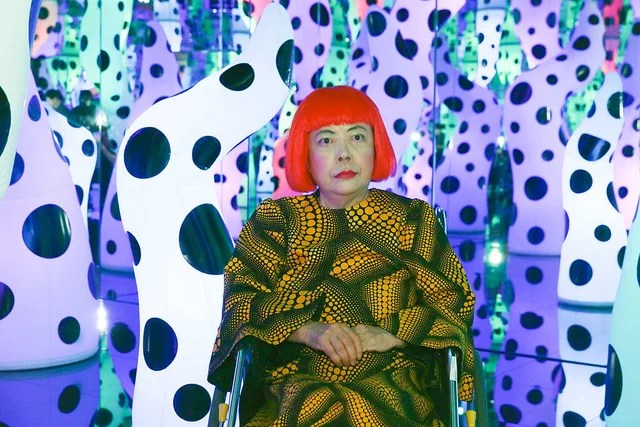
Yayoi Kusama (1929–2026). The Yayoi Kusama Museum, Tokyo, confirms she continued to paint until her final days. Her work is held in permanent collections at the Tate Modern, London; the Museum of Modern Art, New York; the Hirshhorn Museum, Washington D.C.; the National Museum of Modern Art, Tokyo; and many others. Her autobiography, Infinity Net, was published in Japanese in 2002 and in English translation (Tate Publishing) in 2011. An earlier essay on Kusama’s practice appeared in this series: Infinity, One Dot at a Time.
You can read our deep dive into her life and work here.

