Patricia Highsmith’s The Talented Mr. Ripley is one of the most enduring crime novels of the twentieth century. Published in 1955, it introduced Tom Ripley, a young conman who insinuates himself into the lives of the wealthy and, through a combination of charm and violence, takes their place. The book was a revelation: not a whodunit, but a psychological exploration of duplicity, desire, and identity.
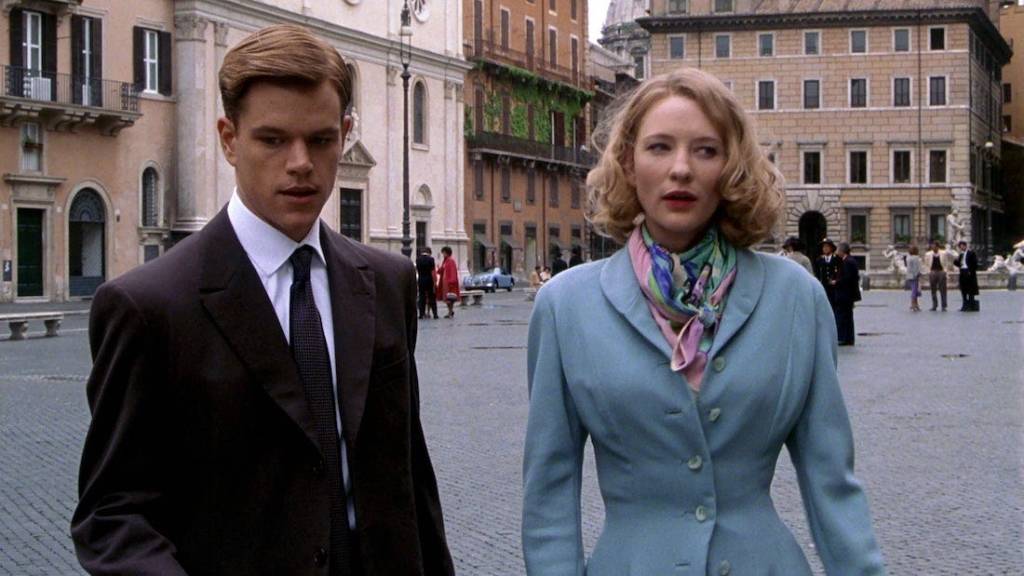
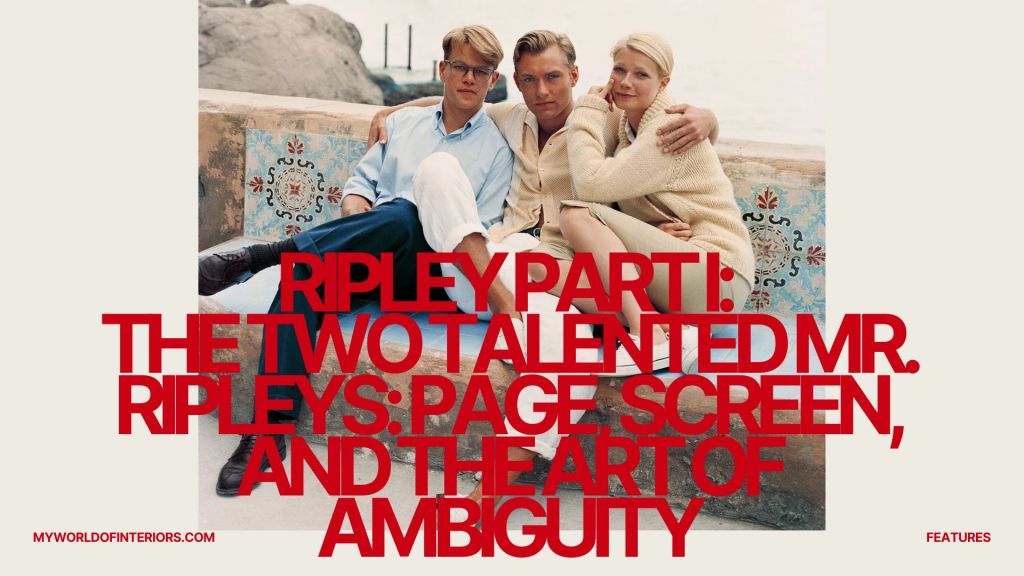
Decades later, in 1999, Anthony Minghella adapted the novel into a lavish film starring Matt Damon, Jude Law, and Gwyneth Paltrow. While faithful to Highsmith’s premise, Minghella reshaped the material for a different cultural moment, emphasizing eroticism, queerness, and moral tension in ways that both honor and complicate the novel.
Together, the two versions form a fascinating dialogue about crime, desire, and the slippery nature of selfhood.
Highsmith’s Ripley: A Chameleon Without Conscience
In the novel, Tom Ripley is a cipher. Highsmith presents him with unsettling neutrality: he is insecure, envious, but also resourceful and quick-witted. Invited by wealthy Herbert Greenleaf to persuade his son Dickie to return from Italy, Ripley travels abroad, befriends Dickie, and gradually becomes obsessed with his lifestyle. When rejection threatens his access to this glamorous world, Ripley kills Dickie and assumes his identity.
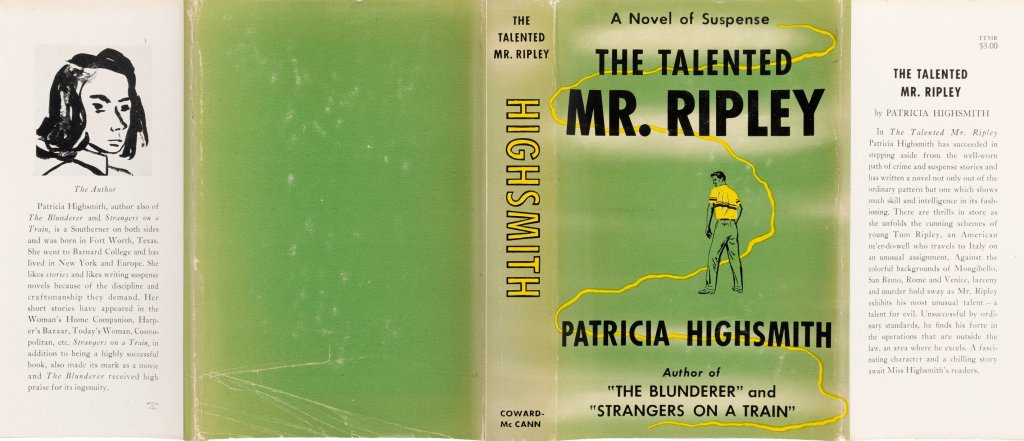
What is striking is Highsmith’s refusal to moralize. The narrative is told largely from Ripley’s perspective, allowing the reader to inhabit his calculations, his fears of discovery, his moments of exhilaration as he successfully deceives police and friends alike. Unlike most crime fiction of the era, there is no detective protagonist to anchor the reader in justice. Instead, the criminal is protagonist, and the reader is implicated in his survival.
Ripley is not punished. On the contrary, he thrives, escaping suspicion and inheriting Dickie’s fortune. Highsmith thus creates a new kind of antihero: charming, ruthless, and disturbingly triumphant.
Minghella’s Ripley: Desire and Tragedy
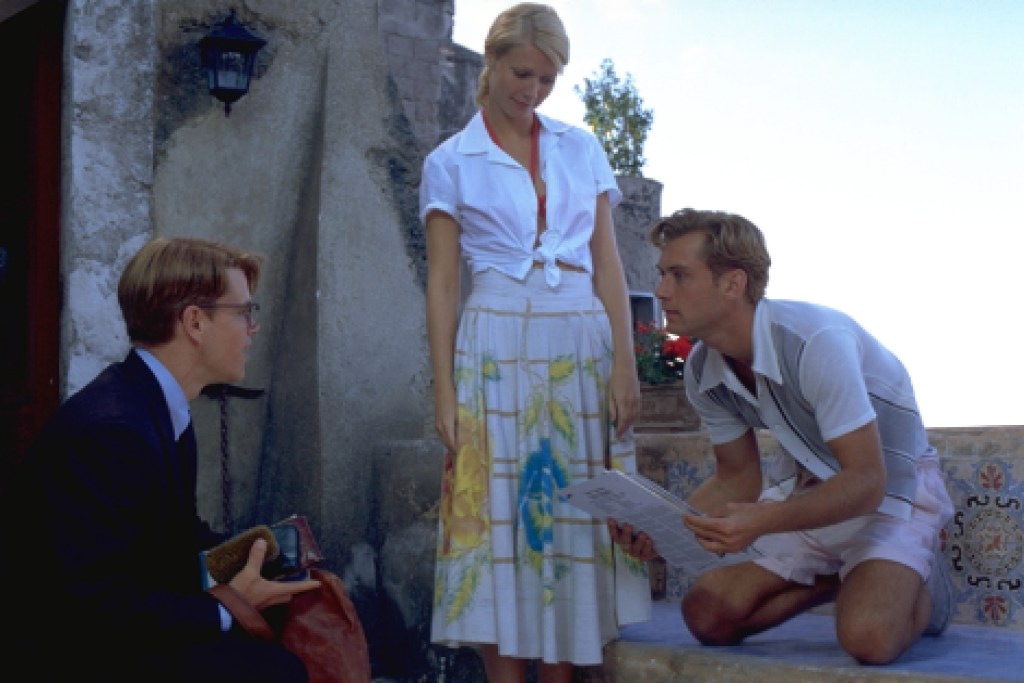
Anthony Minghella’s adaptation arrives in a different era, and his Ripley is more sympathetic, more tragic. Played by Matt Damon, Ripley is not only an opportunist but a repressed young man from modest origins, painfully aware of class divisions. Minghella adds layers of homoerotic desire absent — or only faintly implied — in the novel. Ripley is drawn to Dickie (Jude Law) not merely as a lifestyle to imitate but as an object of longing, both erotic and social.
The film luxuriates in the glamour of 1950s Italy: sunlit piazzas, jazz clubs, coastal villas. Against this backdrop, Ripley’s alienation is heightened. His yearning for inclusion, intimacy, and love becomes palpable. When rejection comes — Dickie mocking him, Marge (Gwyneth Paltrow) suspicious — Ripley’s violence emerges not from cold calculation alone but from wounded desire.
Minghella also alters the ending. Whereas Highsmith’s Ripley sails away free, Damon’s Ripley is trapped in a prison of guilt. Having murdered not only Dickie but also Peter, a gentle man who truly loved him, Ripley is left alone in darkness, whispering: “I always thought it would be better to be a fake somebody than a real nobody.” It is an ending of tragedy, not triumph — a Ripley consumed by his lies.
Style and Substance: Highsmith vs. Minghella
The contrast between the novel and the film is one of perspective.
- Highsmith’s Novel: Clinical, unsettlingly amoral. Ripley’s psychology is explored in cold detail, his lack of conscience as chilling as his adaptability. The prose is stripped-down, tense, devoid of glamour.
- Minghella’s Film: Lush, sensuous, operatic. The camera lingers on Mediterranean landscapes, on Law’s golden body, on Damon’s tense, yearning face. Where Highsmith withholds judgment, Minghella frames Ripley as a tragic outsider, a man destroyed by desire.
The result is two very different experiences. The novel unsettles because Ripley survives unpunished. The film devastates because Ripley cannot escape his own self.
Ripley as Cultural Mirror
Each version reflects its moment.
- 1950s Ripley speaks to postwar anxieties about identity and class mobility. In a world of American affluence and European sophistication, Ripley is the imposter who slips through borders. His triumph unsettles Cold War ideals of morality and order.
- 1990s Ripley embodies anxieties about sexuality and authenticity. Minghella’s emphasis on queer desire reflects late-20th-century cultural debates about repression, longing, and the costs of secrecy. Ripley becomes not just a conman but a figure of tragic queerness, punished by his own inability to reconcile love and deception.
Legacy
Together, the novel and the film create complementary portraits of the antihero. Highsmith’s Ripley is cold-blooded, a mirror held up to a society unwilling to admit its own moral compromises. Minghella’s Ripley is tender, tragic, a man undone by desire. One story ends in liberation, the other in entrapment.
That both continue to resonate speaks to the brilliance of Highsmith’s creation and Minghella’s adaptation. Ripley remains one of modern culture’s most fascinating figures — a man who reveals how fragile identity is, how thin the line between imitation and authenticity, and how desire can lead both to triumph and to ruin.
Conclusion: Two Ripleys, One Question
What makes Ripley so enduring is not only the crimes he commits but the questions he poses: How far would we go to escape our origins? What masks are we willing to wear? And is authenticity ever possible in a world built on performance?
Highsmith answers with cold triumph: Ripley survives because society itself is complicit. Minghella answers with tragedy: Ripley destroys himself because love cannot be built on lies.
Together, the two Talented Mr. Ripleys offer not contradiction but complement — a reminder that the most dangerous con is not the one Ripley plays on others, but the one he plays on himself.