
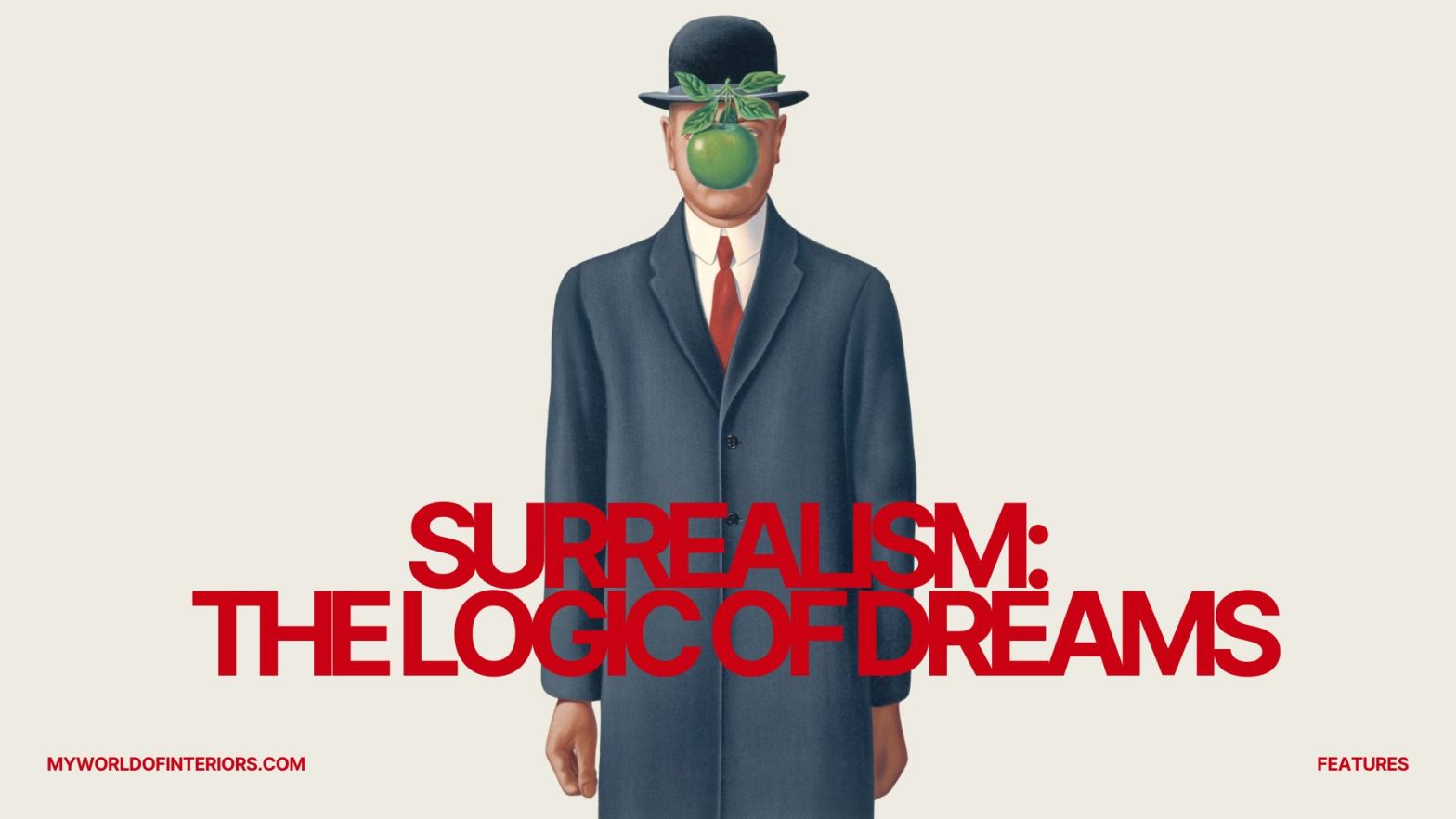
Few movements in 20th-century art captured the imagination as forcefully, or as lastingly, as Surrealism. Emerging in the 1920s from the embers of Dada and the disillusionment of World War I, Surrealism sought not only to revolutionize art but to liberate human consciousness itself. It was not a style, but an attitude — a way of reconciling the rational with the irrational, the conscious with the unconscious, waking life with the dream.
As André Breton, the movement’s self-appointed leader, declared in the First Manifesto of Surrealism (1924): “I believe in the future resolution of these two states, dream and reality, which are seemingly so contradictory, into a kind of absolute reality, a surreality.”
Surrealism was therefore never confined to galleries or museums. It was a project of life, politics, and revolution. It sought to break down the tyranny of reason and bourgeois order, and to discover within the irrational the possibility of freedom.
Historical Origins
Surrealism was born in Paris in 1924, when Breton — a poet and former medical student interested in Freud’s psychoanalysis — published the movement’s manifesto. He and fellow artists and writers (Louis Aragon, Paul Éluard, Philippe Soupault) had emerged from Dada, the anti-art movement that mocked logic and embraced chaos.
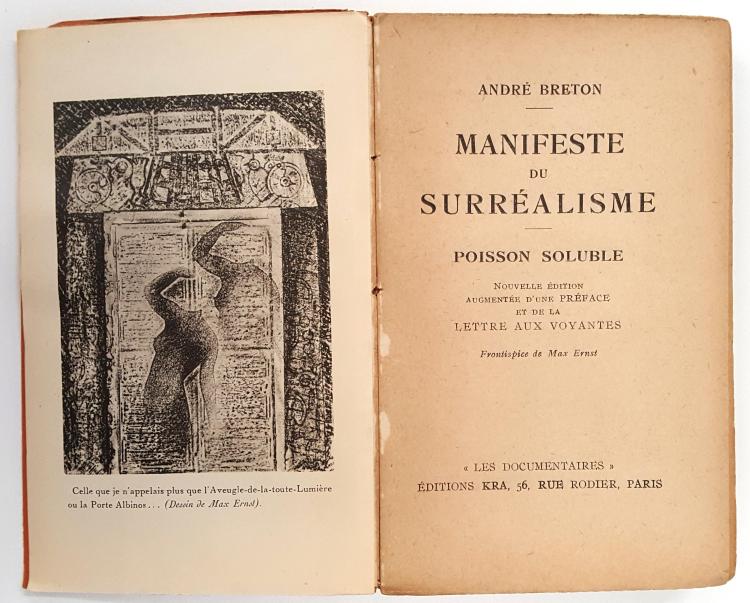
Where Dada had been destructive, Surrealism was constructive. If Dada tore down reason, Surrealism sought to build a new logic of dreams. Its intellectual foundation rested on Sigmund Freud’s theories of the unconscious, dream symbolism, and free association. Automatic writing, chance, and the irrational became not accidents but privileged methods of creation.
The Visual Language of Surrealism
Surrealist art is immediately recognizable for its juxtapositions — strange, uncanny, dreamlike combinations that destabilize the familiar. But beneath the eccentric imagery lies a rigorous exploration of psychology and philosophy.
- Automatism: Some Surrealists pursued “pure psychic automatism,” letting the hand draw without conscious control. This led to the biomorphic abstractions of artists like Joan Miró and André Masson.
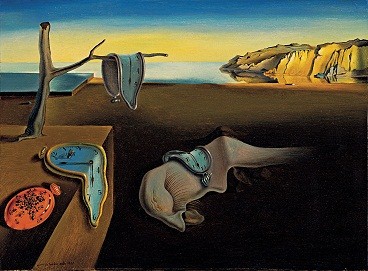
- Illusionism: Others adopted a hyperrealistic style, rendering dreamscapes with photographic precision. Salvador Dalí’s melting clocks in The Persistence of Memory (1931) exemplify this tendency: the irrational presented in meticulous detail.
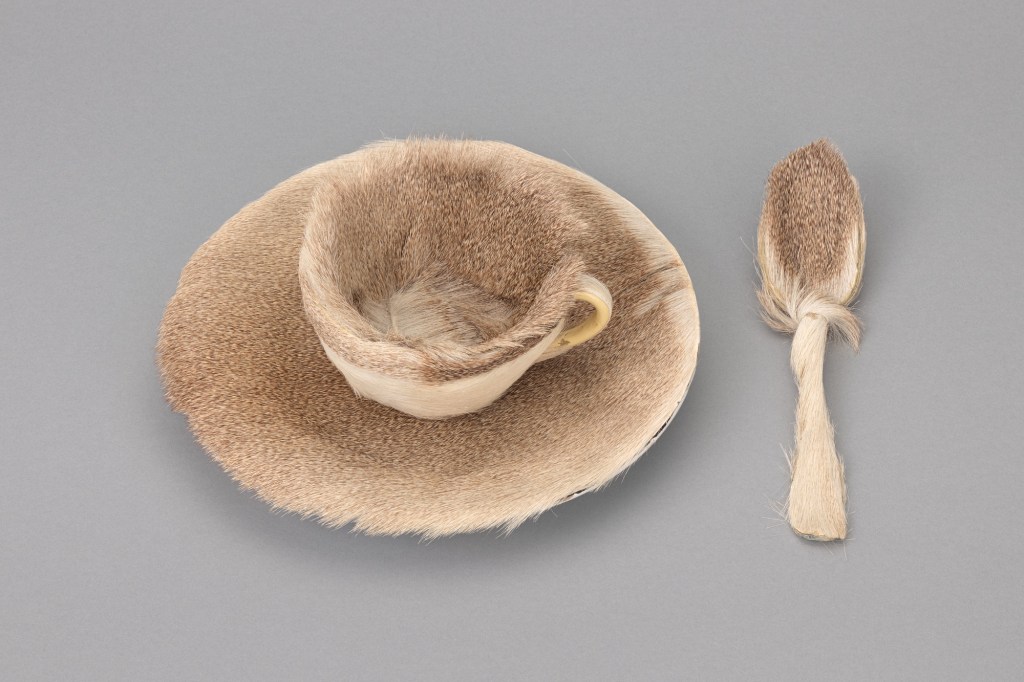
- The Uncanny Object: Surrealists also embraced sculpture and the “objet trouvé” (found object), turning everyday items into estranged, erotic, or threatening presences — as in Meret Oppenheim’s Object (1936), a teacup lined with fur.
The result was not a unified style but a multiplicity of approaches, all aimed at tapping the unconscious.
Key Figures
- André Breton (1896–1966): The theorist, whose manifestos defined the movement.
- Salvador Dalí (1904–1989): The most famous Surrealist, whose flamboyance and hallucinatory paintings made him a household name.
- René Magritte (1898–1967): Belgian painter of the uncanny ordinary — pipes that are not pipes, bowler hats obscuring faces. His calm realism cloaked philosophical puzzles.
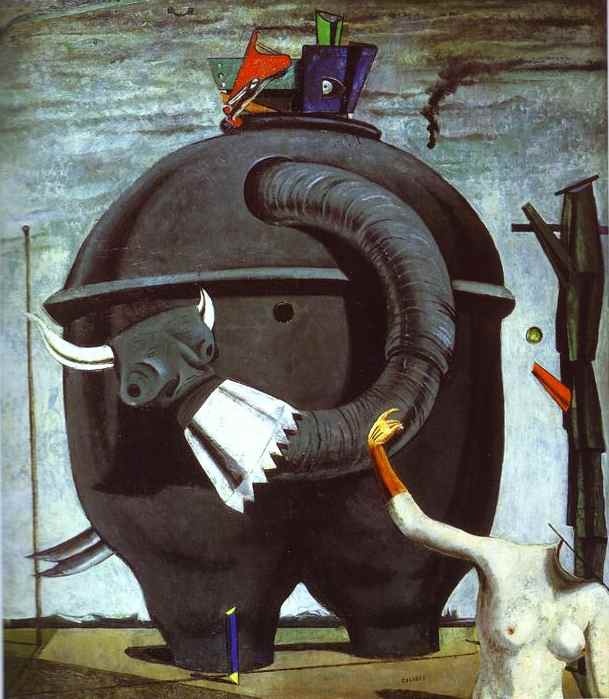
- Max Ernst (1891–1976): Innovator of collage and frottage, blending Romantic landscapes with monstrous forms.
- Joan Miró (1893–1983): Spanish painter who translated automatism into lyrical abstraction.
- Meret Oppenheim (1913–1985): Swiss artist, creator of eroticized domestic objects, challenging gender and perception.
- Man Ray (1890–1976): Photographer and object-maker, whose images like Le Violon d’Ingres remain icons of Surrealist wit.
- Leonora Carrington, Remedios Varo, Dorothea Tanning: Women Surrealists who expanded the movement beyond Paris, infusing it with feminist, mystical, and magical narratives.
Surrealism and Politics
Breton insisted that Surrealism was not merely aesthetic but revolutionary. Many Surrealists aligned with leftist politics, including Communism. The movement’s manifestos called for liberation not only of art but of society, linking psychic freedom with political emancipation.
This alliance was fraught. Breton’s authoritarian leadership led to schisms, and Surrealism’s relationship to Marxism and psychoanalysis remained unstable. Yet its political ambition is crucial: it was never only about paintings of dreamscapes but about dismantling the structures of rationalist modernity that, in their eyes, had led to war and repression.
Surrealism in Literature and Film
Surrealism flourished beyond the canvas. In literature, Breton, Aragon, and Soupault pursued automatic writing. In film, Surrealism found one of its most enduring expressions. Luis Buñuel and Salvador Dalí’s Un Chien Andalou (1929) and L’Age d’Or (1930) remain shocking for their dream logic and assault on bourgeois sensibility.
Surrealist cinema influenced everything from Maya Deren’s Meshes of the Afternoon to David Lynch’s dreamscapes. Poetry, theatre, and photography all became Surrealist arenas, reflecting the movement’s ambition to encompass total life.
The Legacy
By the late 1940s, Surrealism as a movement had fractured, its members dispersed by war and exile. Yet its influence has never waned. Postwar art movements — Abstract Expressionism, Pop Art, Conceptualism — all carried Surrealist DNA. Fashion, advertising, and cinema continually borrow its imagery: melting objects, uncanny juxtapositions, dreamlike montage.
Today, Surrealism resonates because it articulates something essential about modern life: the instability of reality, the intrusion of dream into waking consciousness, the irrational lurking beneath the everyday. In the digital age, with virtual reality, AI, and algorithmic logic shaping our world, the Surrealist project of destabilizing the “real” feels more prescient than ever.
Essential Surrealist Works
- Paintings
- Salvador Dalí, The Persistence of Memory (1931)
- René Magritte, The Treachery of Images (1929)
- Max Ernst, The Elephant Celebes (1921)
- Joan Miró, Harlequin’s Carnival (1924–25)
- Leonora Carrington, The Inn of the Dawn Horse (1937)
- Remedios Varo, The Juggler (1956)
- Objects & Sculpture
- Meret Oppenheim, Object (Le Déjeuner en fourrure) (1936)
- Man Ray, Gift (1921)
- Film
- Luis Buñuel & Salvador Dalí, Un Chien Andalou (1929)
- Luis Buñuel, L’Age d’Or (1930)
- Texts
- André Breton, First Manifesto of Surrealism (1924)
- Paul Éluard, Capitale de la douleur (1926)
Surrealism’s Enduring Relevance
Surrealism was more than an avant-garde movement; it was an experiment in living otherwise. Its artists sought to tear down the walls between dream and waking, art and life, object and desire.
Its legacy endures because it reminds us that reason alone cannot explain the world — that we are driven by dreams, obsessions, and the unconscious. In every floating apple, every melting clock, every fur-lined teacup, Surrealism whispers that the irrational is not a threat but a truth, one we ignore at our peril.
Discover more from My World of Interiors
Subscribe to get the latest posts sent to your email.

