
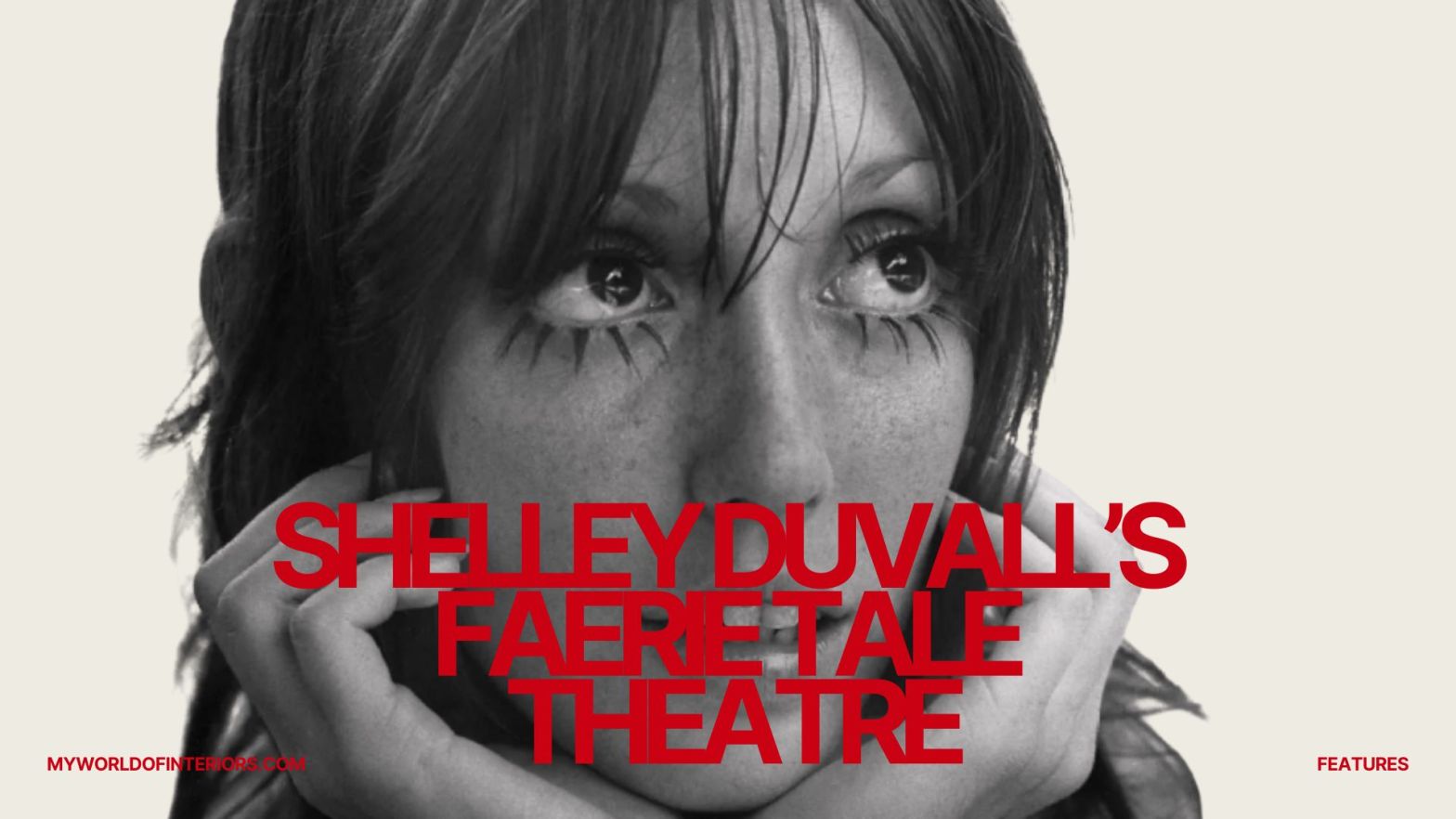
When Shelley Duvall launched Faerie Tale Theatre in 1982, few could have predicted its cultural afterlife. The anthology series — running for six seasons, with 27 episodes aired until 1987 — brought classic fairy tales to life with an ensemble of Hollywood royalty. Robin Williams, Mick Jagger, Susan Sarandon, Jeff Bridges, Liza Minnelli, Vanessa Redgrave, and dozens more appeared in adaptations of Cinderella, Rapunzel, The Frog Prince, and The Princess and the Pea. What looked like whimsical children’s programming was in fact a quiet revolution: a woman in Hollywood producing, curating, and commanding a star-studded series at a time when such control was rarely granted to actresses.
Whimsy as Serious Business
Duvall had already established herself as Robert Altman’s muse and Kubrick’s haunted Wendy in The Shining. Yet Faerie Tale Theatre revealed another dimension of her artistry: producer, visionary, hostess. With HBO as an early platform and Showtime eventually carrying the series, Duvall built an anthology that blurred boundaries between children’s entertainment and adult art.
Each episode was introduced by Duvall herself, framed with her gentle Texas cadence. She played not merely narrator but conjurer: guiding viewers from living rooms into worlds of castles, forests, and enchanted towers. Beneath the whimsy lay a bold assertion: fairy tales, often dismissed as trivial or juvenile, were rich cultural texts worth re-telling with seriousness and imagination.
A Starry Ensemble
What made the series exceptional was its cast. Duvall convinced actors at the height of their fame to join her project. Robin Williams appeared as The Frog Prince. Mick Jagger, improbable yet charming, played a trickster in The Nightingale. Teri Garr, Jeff Bridges, Bernadette Peters, and Susan Sarandon lent their star power. The directors, too, included celebrated names like Francis Ford Coppola, Tim Burton, and Éric Rohmer.
In assembling such talent, Duvall inverted the Hollywood hierarchy. Instead of scrambling for roles in male-directed projects, stars came to her — to play, to experiment, to lend themselves to stories usually relegated to nursery books.
The Feminist Dimension
Faerie Tale Theatre was subversive precisely because it looked innocent. In the early 1980s, Hollywood rarely entrusted women with producing power. Duvall not only produced but branded the series around her own name. She became both face and architect, creating an anthology that was artistically ambitious, commercially viable, and distinctively hers.
The stories themselves often emphasized female agency. Episodes like Rapunzel and The Snow Queen showcased heroines as active figures rather than passive damsels. While the show never abandoned enchantment, its tone was knowing — a blend of sincerity and irony that made it resonate with both children and adults.
The Cultural Legacy
For a generation of children, Faerie Tale Theatre was a first encounter with storytelling as spectacle. Long before streaming, it offered prestige television for families, blending literary heritage with Hollywood glamour. It also bridged high and low culture: Shakespearean actors shared the screen with pop stars, art direction met camp, and fairy tales became serious performance.
Critically, it remains one of the earliest instances of a female star using her cultural capital to create, not just perform. Decades before Reese Witherspoon, Nicole Kidman, and others built production companies for women-led stories, Shelley Duvall used her platform to curate narratives for a wide audience.
Why It Endures
Today, revisiting Faerie Tale Theatre is to glimpse a project that was both ahead of its time and deeply of its era. The costumes are exuberantly 1980s, the production design theatrical, the acting pitched between sincerity and parody. Yet its charm is intact, and its significance even sharper: Shelley Duvall proved that whimsy could be power, that fairy tales could be re-cast as serious art, and that a woman in Hollywood could orchestrate her own cultural world.
Her work on the series completes her legacy. Not only the fragile radical of 3 Women and the terrorized Wendy of The Shining, Duvall was also a producer, curator, and storyteller who built a world where imagination ruled — and invited some of the biggest stars in Hollywood to play within it.
Discover more from My World of Interiors
Subscribe to get the latest posts sent to your email.

