
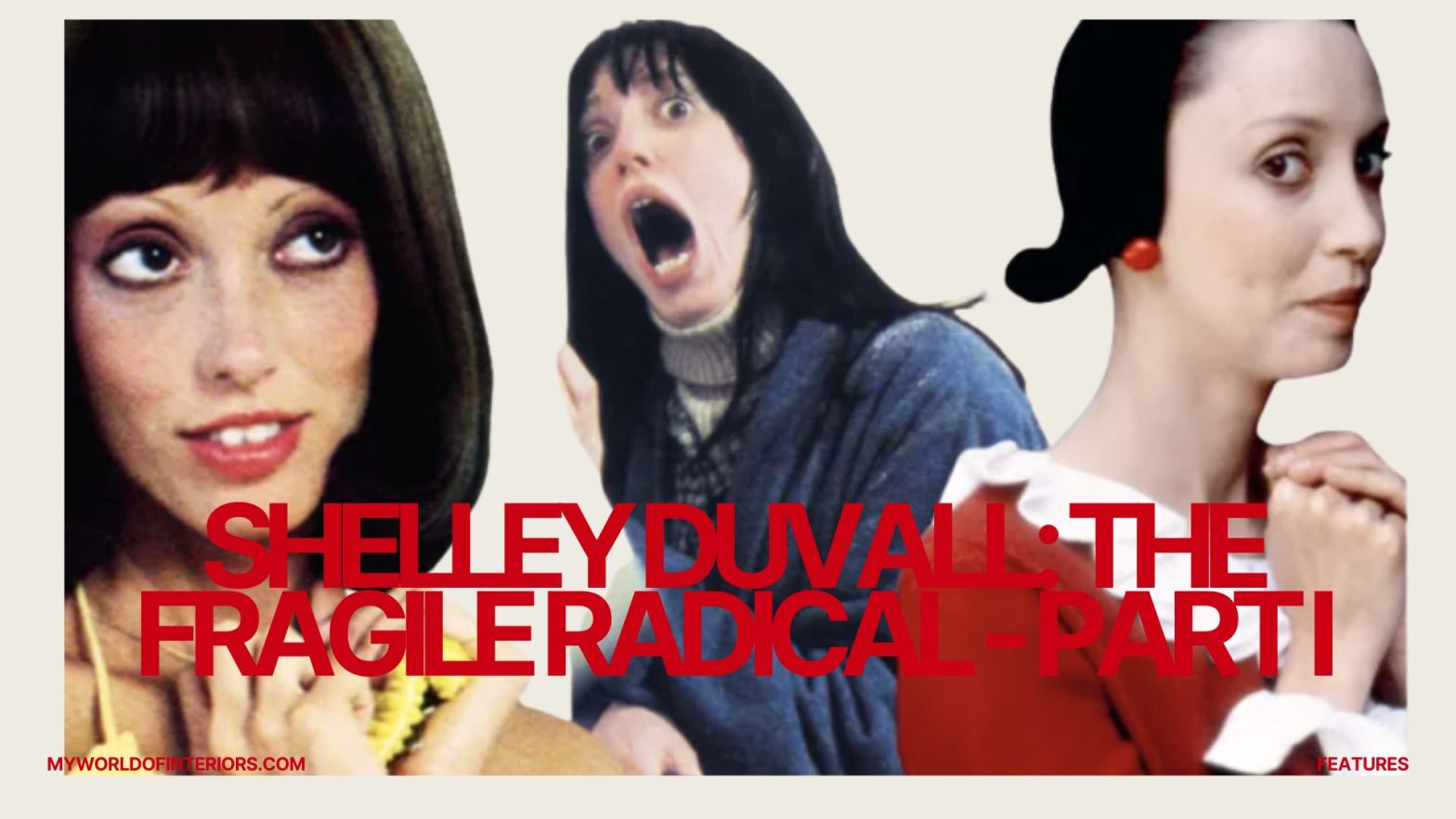
In the kaleidoscope of 1970s and 80s American cinema, Shelley Duvall stands out as one of the most singular presences ever to grace the screen. Long-limbed, wide-eyed, with a voice pitched somewhere between whisper and twang, she embodied a kind of fragile radicalism: at once ethereal and earthy, nervous and knowing. Her career, from Robert Altman’s ensemble experiments to Stanley Kubrick’s The Shining, offers a portrait of an actress who defied conventional glamour and yet became unforgettable precisely because she could not be mistaken for anyone else.
Today, as her legacy is reassessed, Duvall represents not just a moment in American film history but a larger question: what do we ask of actresses, and what do they give us when they refuse to conform?
Altman’s Muse: Discovery and Transformation
Shelley Duvall was not trained for Hollywood. Discovered by Robert Altman at a party in Houston, she was pulled into his orbit and became, for a time, his muse. Altman recognized what few others might have: that Duvall’s unconventional beauty, her angular frame and owl-like eyes, could anchor an ensemble in ways more obvious stars could not.
In Brewster McCloud (1970), McCabe & Mrs. Miller (1971), and especially 3 Women (1977), Duvall revealed her ability to oscillate between vulnerability and eccentricity. 3 Women remains her masterpiece: as Millie Lammoreaux, she plays a woman desperate to be liked, filling her speech with recipes and chatter, unaware of her social invisibility. The performance is both comic and tragic, making Millie one of the most painfully recognizable characters in American cinema.
Altman’s improvisational style suited her. Duvall was not a performer who thrived on polished scripts or rigid blocking; she shimmered in spaces where awkwardness, silence, and accident were allowed to live on screen.
The Shining: Endurance as Performance
For most audiences, Duvall is remembered for her harrowing role as Wendy Torrance in Stanley Kubrick’s The Shining (1980). The production is infamous: Kubrick subjected her to dozens, even hundreds, of takes, isolating her, exhausting her, demanding hysteria until it became real. Critics at the time were divided, some dismissing her performance as shrill. But time has shifted perception.
Today, her Wendy is understood as one of the great performances of horror — not a caricature of fear but the portrait of a woman unraveling in real time. Her wide eyes, her strangled cries, her trembling body: these are not theatrics but endurance captured on film. She gave Kubrick what he wanted, but she gave the audience something more: the spectacle of fragility becoming resilience.
Beyond the Auteur: Whimsy and Popular Culture
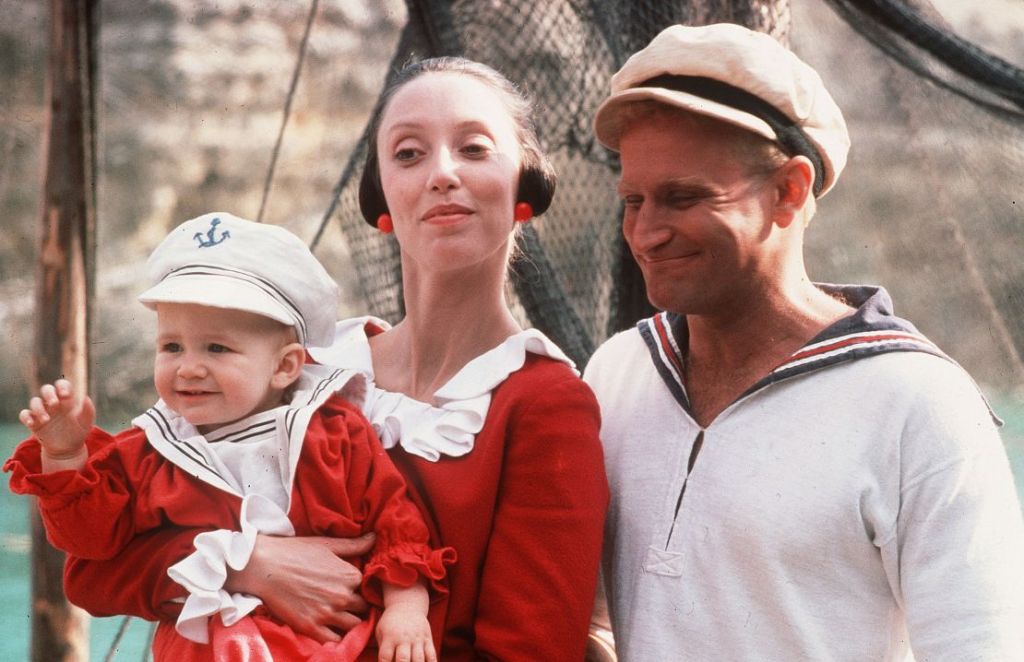
Duvall was not confined to auteur cinema. She had a gift for children’s storytelling, producing and hosting Faerie Tale Theatre in the 1980s, a star-studded anthology series that introduced a generation to fairy tales through her whimsical narration. She also appeared in more commercial fare: Woody Allen’s Annie Hall (1977), playing a free-spirited Rolling Stone reporter; Popeye’s Olive Oyl (1980), a role that seemed written for her, with Altman again recognizing that Duvall’s gawky grace could become comic poetry.
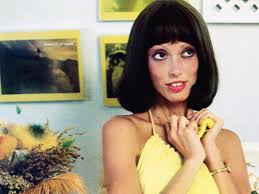
Her career traced a line from countercultural art cinema to mainstream eccentricity, always preserving her difference.
Retreat and Return
By the 1990s, Duvall began retreating from Hollywood. Stories of exploitation, isolation, and eventual personal struggles have since circulated, sometimes sensationalized. For years she lived quietly in Texas, far from the spotlight that had once defined her. When she re-emerged in recent years — giving interviews, returning briefly to acting — it prompted not tabloid curiosity but a reconsideration of her contribution to film.
Her withdrawal is itself part of her myth: the actress who gave us unforgettable performances, then vanished, reminding us that the industry is as cruel to individuality as it is hungry for it.
What Made Shelley Duvall Special
- Unconventional Beauty: At a time when Hollywood still demanded uniform glamour, Duvall’s presence was unrepeatable. Her look was not adaptable; it was entirely hers.
- Fragility as Power: She embodied nervousness, awkwardness, and vulnerability without apology, transforming them into forms of truth.
- Collaboration with Visionaries: With Altman, she became the emblem of ensemble experimentation. With Kubrick, she became the vessel of terror. With her own productions, she channeled whimsy and imagination.
- A Cultural Archetype: Duvall represents the outsider who became icon. She did not fit the mold; instead, the mold shifted around her.
Where to Begin with Shelley Duvall
1. 3 Women (1977, dir. Robert Altman)
Her defining performance. As Millie, she is heartbreaking and hilarious, a study in social invisibility and quiet desperation.
2. The Shining (1980, dir. Stanley Kubrick)
A performance once maligned, now recognized as one of the great depictions of terror. Wendy Torrance is fragility made indelible.
3. Popeye (1980, dir. Robert Altman)
As Olive Oyl, she turns awkwardness into comedy. The role feels like a cartoon written for her body and voice.
4. Faerie Tale Theatre (1982–87)
Her passion project, producing and hosting an anthology series that combined Hollywood stars with timeless tales, forever linked with her childlike wonder.
5. Annie Hall (1977, dir. Woody Allen)
A small role but a perfect glimpse of her charm: the free-spirited Rolling Stone reporter whose presence feels both breezy and offbeat.
Legacy: The Poetry of Fragility
Shelley Duvall’s legacy lies in the refusal to be ordinary. She offered cinema an alternative to the polished, the glamorous, the expected. She showed that an actress could be unforgettable by leaning into strangeness, fragility, and sincerity.
In an age increasingly attentive to stories of exploitation and resilience, Duvall’s career also forces us to reckon with the cost of genius: the toll taken on performers who are used as instruments rather than collaborators. Yet to reduce her to victimhood would miss the force of her artistry.
Her performances still breathe. Watch 3 Women and see the ache of invisibility. Watch The Shining and see terror made flesh. Watch Olive Oyl and see awkwardness elevated to joy.
Shelley Duvall remains singular because she was never a type — only herself. And in that singularity, she gave cinema something irreplaceable: the poetry of being fragile, and the strength of making fragility unforgettable.
Discover more from My World of Interiors
Subscribe to get the latest posts sent to your email.

